We visited Turkey – Istanbul 26 Apr 2015


Istanbul 26 Apr – 02 May
When we visited Greece in 2005, somehow we missed visiting Turkey. Bad planning, I suppose. While making travel plans one should keep in mind that air fare forms a major chunk of your over all expenditure. It is better to combine a few neighboring countries to derive the best value for money.
Our travel group has remained more or less intact and we decided to do Turkey this year. Dore and Lalita, Sunder and Saroja, Kats and Naveen, Nair and Sudhi, self and Jai journeyed together.
In 2013, Turkey was ranked as the 6th most popular destination in the world. Its ancient civilization, rich history and mosaic of cultures makes Turkey a truly remarkable tourist destination.
The geographical location of Turkey has always been the most important factor in determining its history, culture, traditions and way of life. Turkey is bordered by eight countries: Bulgaria to the Northwest; Greece to the West; Georgia to the Northeast; Armenia, Iran and the Azerbaijan; and Iraq and Syria to the south. The Mediterranean Sea is to the South; the Aegean Sea to the West; and the Black Sea to the North. The straits of Bosphorus separate Europe and Asia. Turkey’s location at the crossroads of Europe and Asia makes it a country of significant Geostrategic importance. India is actually more than 4 times the size of Turkey. Over the centuries, Turkey has been a melting pot of various religions and cultures and this has left an indelible mark on its people and their way of life.
Turks trace their origin to Mongolia and interestingly Korean and Japanese are accepted as distant relatives ofthe Turkish language.
Turkey has a robust economy and this was very evident, as we travelled around the country. Apart from its beautiful scenery and delicious Mediterranean cuisine, Turkey has been viewed as a model of secularism and democracy in the Middle East.  Western nations often point to Turkey to demonstrate that a secular government is possible in a country with a majority Muslim population.  In addition, Turkey’s economy has soared in the last ten years and it has become a permanent member of the G-20.Turkey is dependent on oil from Russia, Iran and Azerbaijan ; only 10% is produced within the country. As of February 2015, Turkey has become the world’s biggest refugee hosting country with 1.7 million Syrian refugees and it has spent more than US$6 billion on direct assistance to refugees. Syrians move to Turkey for better job opportunities. One of the most serious problems is the issue of Syrian refugees who are often found engaged in begging.
A Turkish Airlines flight from Milan to Istanbul made an emergency landing at Ataturk Airport on 25th April, resulting in a very long delay at Mumbai airport for us. We arrived in Istanbul at 2.30 PM local time – totally drained and tired. Our guide for the next 8 days Mr Arshzumardan (modified to Mr Arjun, for purposes of brevity and ease of pronunciation) – welcomed us and whisked us off to visit various places.
Istanbul is a very trendy city, well laid out with shops, malls, cafes, road side restaurants and more. To some extent, it resembles the old Bombay, albeit much cleaner and better organized. Many high rise buildings dot the sky line. One can see a large number of minarets staking their claim in the sky. The city roads are in excellent condition and the traffic is extremely orderly. Buses, three-car trams, metro, taxis and cars complete the commutation scene.
In 1923, Turkey changed over from the Arabic to the Roman script. Their public school system is free up to University level.These government run institutions are good and the people are happy with it. In Turkey, health care is free up to 18 years of age. In 2014 Turkey registered 35 million population. India has 382 persons per square kilometer as against Turkey’s 97. Very few people can be seen on the roads and even lesser in the country side. 99% of the population are Muslims and they live in total harmony with other faiths. Turkey, over a period of time, has developed into an extremely tolerant and accommodating society. Their religion has no conflict with alcohol, belly dancing, women smoking, western attire, public display of affection and so on.
People look happy, contented and at peace with themselves and their surroundings. One does not notice undue anxiety or disquiet writ on their faces. They do not appear to be in any hurry.
Another outstanding feature about Turkey is their food – fresh and rich in taste. Their salads are exceptional in every way. Proximity to the Mediterranean Sea makes their fruits and vegetables all the more delectable. Mr Arjun took us to a local restaurant and we ate a very satisfying Turkish meal.’ We had ‘Testi Kebab’ a dish made out of Lamb, selected vegetables and spices which are cooked in a clay pot (‘Testi’ means jug, in Turkish) over fire. The seal of the pot is broken at your table, right before eating, and it is certainly a unique experience. I have never eaten such succulent meat. Next on the menu was ‘Cutmer’ a paratha-like bread stuffed with spinach and cheese, followed by a sweet dish ‘Antep Katmer ‘ a pastry kind of preparation stuffed with pistachio powder, sugar, cream and semolina. Its melts in your mouth when eaten fresh out of the oven – a memorable experience. All our lunches were simple and very tasty, with lots of meat, salad, a variety of bread and a delicious array of Turkish desserts.
The service industry staff can be bit uncouth at times – may be due to the pressure of work.
Incidentally Tulipsmade their way from Istanbul to Europe—specifically Holland. There are Tulips all over the city and in fascinating colours, ranging from the recognizable red to a near-black purple. tulips are grown round practically every tree on the road. Every now and then, we spotted roundabouts and small areas patterned by Turkish gardeners into lovely designs. We were spot on for the April May Tulip festival.
The overall impression one gets of Turkey is one of contentment, charm and calm. The markets are full and vibrant, bursting with garden fresh produce.
The weather was good and the temperature varied from 11 deg to 17 deg C.
The tourism industry has an integrated approach and is extremely well organized. Dorak is efficient and the tour was well organized.
In Istanbul we stayed at the “Imperial Business Hotel Bomonti”. Centrally located, it provides a satisfactory stay.
Figure 1 – The gang
Our internal travel was in a 40 seater AC coach.The 10 of us stretched out to our heart’s content.It could not have been any better. Same vehicle – and guide throughout our 8 days stay.
Glimpses of Istanbul – 26 Apr
Hagia Sophia
The first place of visit was the Hagia Sophia, a former Greek Orthodox patriarchal Basilica, later an imperial mosque, and now a museum. Construction of the Church began in 337D and additions, alterations and renovation continued for the next two hundred years. With the conquest of Istanbul by the Ottoman Sultan Mehmed II in 1453, the Hagia Sophia was converted into a Mosque. In 1935 it was opened to the public as a Museum.

Figure 2 – A distant view of Hagia Sofia – unforgettable

Figure 3 – Byzantine mosaics of Hagia Sophia uncovered in 1934

Christ and Leo VI the Wise, mosaic, Hagia Sophia, late 9th or early 10th century

Figure 4 – Jai, Sudhi and Naveen looking fresh in spite of a very long journey.

Figure 5 – A carpet of tulips

Figure 6 – Another distant view

Figure 7 – The Obelisk of Theodosius in the Istanbul Hippodrome
Figure 8 – German Fountain
 
It was constructed to commemorate the second anniversary of German Emperor Wilhelm II’s visit to Istanbul in 1898

Figure 9 – A Bit of rest
Bosphorus cruise
In the evening we went on the Bosphorus cruise. The cruise yacht sails around the strait for three hours, whilst we are entertained by local artists performing traditional dances and a round of belly dancing. The programme includes a sumptuous dinner with lots of local wine and beer. On the whole, the cruise was a good experience and value for money. Many of the buildings are lit up along with the famous Fatih Sultan Mehmet  and Bosphorus bridges, making the cruise truly fascinating.  

Figure 10 – Enjoying the dinner

Figure 11 – Rest of the gang – Where are Nair and Kats ?? I don’t know !!

Figure 12 – View from the deck

Figure 13 – Belly dancer- very pleased with me !! Is it my belly ??
Glimpses of Istanbul 27 Apr
Blue Mosque
Our first visit in the morning was to the 400 year old ‘Sultan Ahmed Mosque’ a historic mosquein Istanbul. The mosque is popularly known as the Blue Mosque for the blue tiles adorning the walls of its interior. This beautiful 16 century mosque has floral tileson its walls and frescos on its high ceilings. It has 4 huge pillars in the main hall which are drolly called ‘elephant feet’.The view both inside and out is so impressive that one goes overboard while taking photographs.

Figure 14 – Once in a life time view – Blue Mosque

Figure 15 – Closer view

Figure 16 – Inside the Blue Mosque

Figure 17 – Intricate art work in the dome

Figure 18 – Mosaic work inside the mosque

Figure 19 – On the streets of Istanbul

Figure 20 – Proof of visit
Grand Bazar
The Grand Bazaar in Istanbul is one of the largest and oldest covered markets in the world, with 61 covered streets and over 3,000 shops which attract between 250,000 and 400,000 visitors daily. Today the Grand Bazaar is a thriving complex, employing 26,000 people.This bazaar, full of jewellery, handicrafts, carpets and porcelain, is a haven for shopaholics. Extremely tempting, but fairly expensive.
Figure 21 – Nuruosmaniye Gate of the Grand Bazaar

Figure 22 – Inside the market – modern brands compete side by side with traditional shops

Figure 23 – The colours of Turkey
Topkapi Palace

The Topkapı Palace is a large palace in Istanbul, that was the primary residence of the Ottoman sultans for approximately 400 years of their 624-year reign.The Topkapı Palace was constructed between 1460 and 1478 by Sultan Mehmet the Conqueror. The palace complex consists of four main courtyards and many smaller buildings.


Figure 24 – The main Imperial Gate 


Figure 25  Church of Hagia Eirene in the First Courtyard


Figure 26 – The Gate of Salutation, entrance to the Second courtyard of Topkapı Palace.

Figure 27 – Tower of justice

Figure 28 – The Gate of Felicity is the entrance into the Inner Court, also known as the Third Courtyard, marking the border to the Outer Court. The Third Courtyard comprises the private and residential areas of the palace.

Figure 29 – Yet another lovely bed of tulips

Figure 30 – Lovely Tulips from India

Figure 31 – A very old hollowed tree adding beauty to the inner court yard

Figure 32 – City view from Topkapi from the palace

Figure 33 – The Bosphorus sea view from the palace
Thereafter we went for a lovely traditional lunch and thoroughly 
enjoyed”Testi Kebab” and “Antep Katmer”.

Figure 34 – A girl preparing Turkish flat bread stuffed with cheese and spinach called ‘Cutmer’

Figure 35 – Testi kebab in the earthen ware – enough meat for four

Strange Incident

I returned home after a very satisfying game of golf only to find my cupboard in a state of total disarray. All the aftershave bottles were upturned and some of the covers were randomly torn. Few shirts and trousers which were hanging neatly by the hanger had been pulled down along with a few ties. My initial reaction was one of intrigue – why would anyone want to look in my cupboard for something specific. I quickly opened the drawer to check on the passports – they were safe. I then rang up my wife and narrated the incident. She, in turn, wanted to know if anything had happened to her cupboard. When I informed her that her belongings were safe, she immediately lost interest in this spy thriller and told me to ask the domestic help for an explanation.  
Ruby came in shortly and expressed total ignorance of the “cupboard break-in”. After 18 holes and a good lunch at KGA, my aching body was ordering me, in no uncertain terms, to hit the bed – which I did immediately. After a refreshing nap, I got up and went to the kitchen to fix myself a cup of coffee. That’s when I found ‘Spotty’ the cat perched neatly on the kitchen table top. I opened the main door and shooed away the naughty puss. I was once again intrigued to find the cat inside the house. I checked and rechecked all the doors and windows for any sign of a ‘cat break in’ – all ingress was closed. I simply could not fathom how the cat could have come in when I was asleep.
Ever since the time our neighbors’ full time ayah ‘Shantamma’ shifted permanently to Coonoor , her pet cat ‘Spotty’ was abandoned and orphaned. Taking pity and with lots of gentle coaxing from my granddaughter, we used to feed her once in a way. It was not uncommon to find “Spotty” sneaking into the house through the kitchen window and relishing a bit of chicken from the waste or dragging away frozen Basa kept for defrosting. Milk, bread and eggs were also on the menu.
In one earlier instance, the cat had played merry hell inside the house, as the main door was accidentally shut by the wind. Not knowing the way out, the cat had upset and broken many things kept near the windrow, in her many attempts to exit. That’s when I thought, this incident also fell in the same category.
By then, wifey dear arrived and inspected the crime scene and rebuked me squarely for keeping the windows open – ‘you and your fresh air’. Collective intelligence of wife, self, Suresh the driver and Ruby the maid concluded that ‘Spotty’ was responsible for all the mess and confusion. Putting the incident behind me once and for all, I embarked on rearranging the cupboard and salvaging the aftershave lotion. 
As I started to reorganize my stuff in the cupboard, my hand touched something soft and woolly. Even before I could comprehend what had happened, I heard a soft sound. This was accompanied by my high pitched scream –filled with surprise, shock and unadulterated fear.
Lo and behold there were two kittens, eyes yet to open and barely a few hours old – snugly resting amidst my ties, shirts, trousers and socks. ‘Spotty’ had done the unthinkable delivered two kittens in my cupboard!

God please help me – I want to walk alone

To me, walking is a very personal affair. I prefer to do this daily ritual alone, whenever I feel like it and at my own pace. It gives me an opportunity to forget the complex world around me and be myself amidst nature and the elements. I go on a walk without any lofty aims or goals to be achieved. I walk for the heck of it. It is extremely therapeutic. One can indulge in mindless day dreaming – build a beautiful house on my first round, advice Modi on ‘Swatch Bharat’ during the second round, cook a delicious chicken dish on the third and so on. When I return home, I am refreshed, exhilarated and full of cheer to take life head on.

It is not always possible to walk alone in a gated community. There are hordes of people indulging in the same activity and occupying the same ‘time and space’ continuum. It is but natural to come face to face with these people forcing each other to exchange pleasantries. How are you or good evening, hello or a wave of your hand or even a smile or a nod should normally suffice to acknowledge each other’s existence and acquaintance. Most of the time, these simple exchanges are adequate to ward off the ordinary – unfortunately there are a few seasoned walkers who insist on invading your privacy by design or deceit. In a close loop walk in any gated colony, it’s pretty nigh impossible to avoid these abominable creatures. They pounce on you with ominous intentions to kill your freedom.

God please help me – I want to walk alone. 

If that is not possible give me a dog to walk with.

Only the other day I was walking alone peacefully to be accosted by Mr Bhondopadya a school teacher and an ardent admirer of Rabindra Sangeet. He is normally accompanied by a ferocious looking pie dog to prevent any of his prey from getting away. Once in his clutches and constantly under the surveillance of the watchful dog, you find no way out but to listen as he starts spouting many a poem from the collection of the great Tagore; all this in chaste Bengali. With great courage and presence of mind, I am able to extricate myself in a record time of 39 minutes. 

I once met a fitness freak on my walk who wanted to know what my goal is. When I told her I had no goals, she was so astonished, she returned the next day with a pile of instructions. She thundered; buy a pedometer to keep track of the distance covered, time taken, pace and many other things – set a goal. She wanted to know if I had measured my BP before commencement of my walk and that on completion – said that it would give you an indication of your metabolic rate. ‘How come you are not listening to any music while you walk – I could give you any number of songs to keep your mind calm and collected,’ she roared. When I did not respond, she felt very disappointed and said my walking was aimless. She left the colony a short while ago.

You are walking alone and this man pounces from behind and says ‘Do you mind if I join you?’ Oh God! How do I tell him I mind – please leave me alone. He immediately starts imposing his will on you – ‘you should walk briskly not like the way you amble’ – asks if I have any issues with my leg and so on. I long to tell him that I do have issues, but not with my leg; however, I have been told it may not be politically correct.  

There is this fellow who makes a call to find out where I am and pins me down with deadly accuracy, shaming even the swooping of a Golden Eagle. This man is full of jokes – so he thinks – and he will invariably start the conversation by saying ‘listen to this joke’ – these little yarns neither have a beginning or an end nor for that matter any punch line. When he is finished with his loud laughter, you gather that the joke is over and has gone over your silly head. A nonstop joke session for an hour can exterminate any species.

The most dangerous predator in the colony is the ‘Boring Babu’. He hides behind electric poles, tree trunks and parked cars waiting to pounce on unsuspecting prey. Without any prompting he will enthrall you with his achievements, victories and conquests. He will set forth and proudly narrate an incident when he told the foreman some thirty years back, that the 34 size nut is what is needed to hold the ‘L’ joint in place. In the same breath he will recount how a wooden plug with a 3cm dia leather washer saved a boat from sinking and so on. Even if you try to interrupt him and draw him away from his discourse, by changing the subject – you know… ‘Babu, the cat population in the colony has gone up’. He will say ‘I know it’s gone up but listen to this’ and continue from where he stopped. 

A very senior citizen stops you to enquire about your health and thereafter holds forth and lists out all his innumerable pains and aches in excruciating detail. –By the end of his narration you are bound to hear your own bones screeching and rumbling. This encounter once in a way is fine (we are all getting there) but certainly not on a daily basis.

The ones I have a massive problem with are those who walk past you at an impossible pace, leaving you with the feeling that you have been demoted to the kindergarten level for not maintaining a healthy stride. Once is bad enough, they overtake you twice, completely demoralizing you in the process. Of course, the fact that they are probably ten years younger doesn’t help.

Mobile phone with those blue tooth devices add a lot of fun to your daily dawdle. There you are walking peacefully, when the guy coming from the opposite direction suddenly says, ‘No, you can’t do that!’ He’s looking at you, he’s walking towards you and just when you feel you should ask him what on earth he means, you see the ear plug attached to his dratted ear!

This is what makes walking very interesting – if you can walk alone without any form of interruption – you have won the battle

Goodbye 2014 Wishing all the readers of my blog a happy 2015. Grand children, barbeque, Pondicherry and other stories


Figure 1 – The Prabhakar Clan – 31 Dec / 01 Jan 2015

2014 was a great year. We travelled a lot – both overseas and domestic. Our trip to South Africa and Zimbabwe was outstanding. Both the countries offer a lot to any tourist. SA is extremely well organized for tourism and one returns with a lot of all round satisfaction. Domestic travel included visit to Mumbai and Kodagu for Golf at the ‘Coorg Golf Links Club. The company, weather and the lush Koduva surroundings made the trip a very memorable one. Any travel for that matter is very welcome and breaks the monotony of day to day routine living. It is invigorating and provides great opportunity to unwind, bond with friends and enjoy the bounties of nature.

2014 was indeed a very great year for our children Vivek and Shubhra – Akhila and Anirban. They celebrated their 10th wedding anniversary in August. How time flies! There was a round of celebrations in Bengaluru. We joined them with utmost pride and happiness. In addition, Akhila and Anirban hosted a party for their friends in Mumbai. Anirban decided to secretly fly us to Mumbai for the function – it was a complete surprise for Akhila. Both Jai and I wish all of them many more years of happily married life.

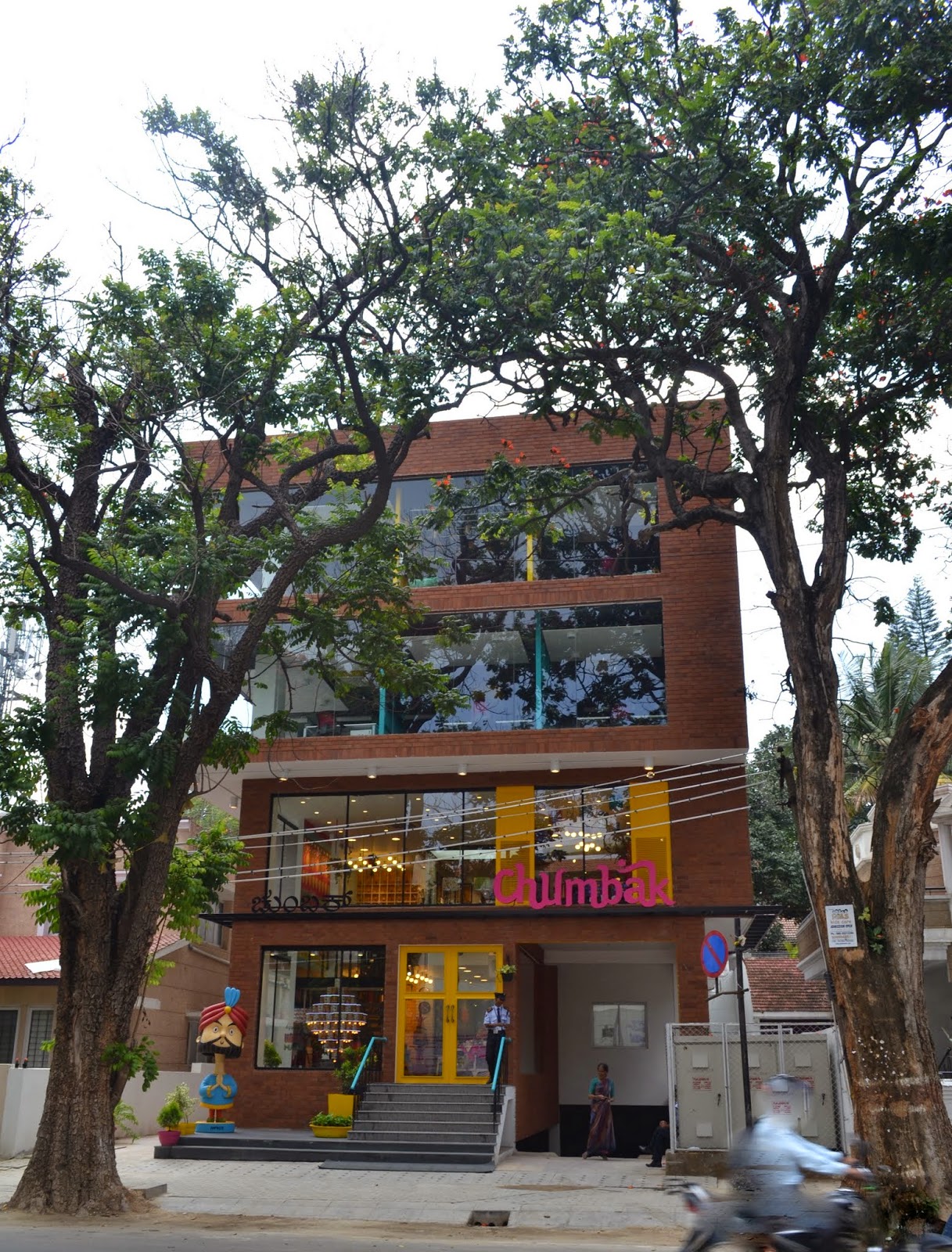
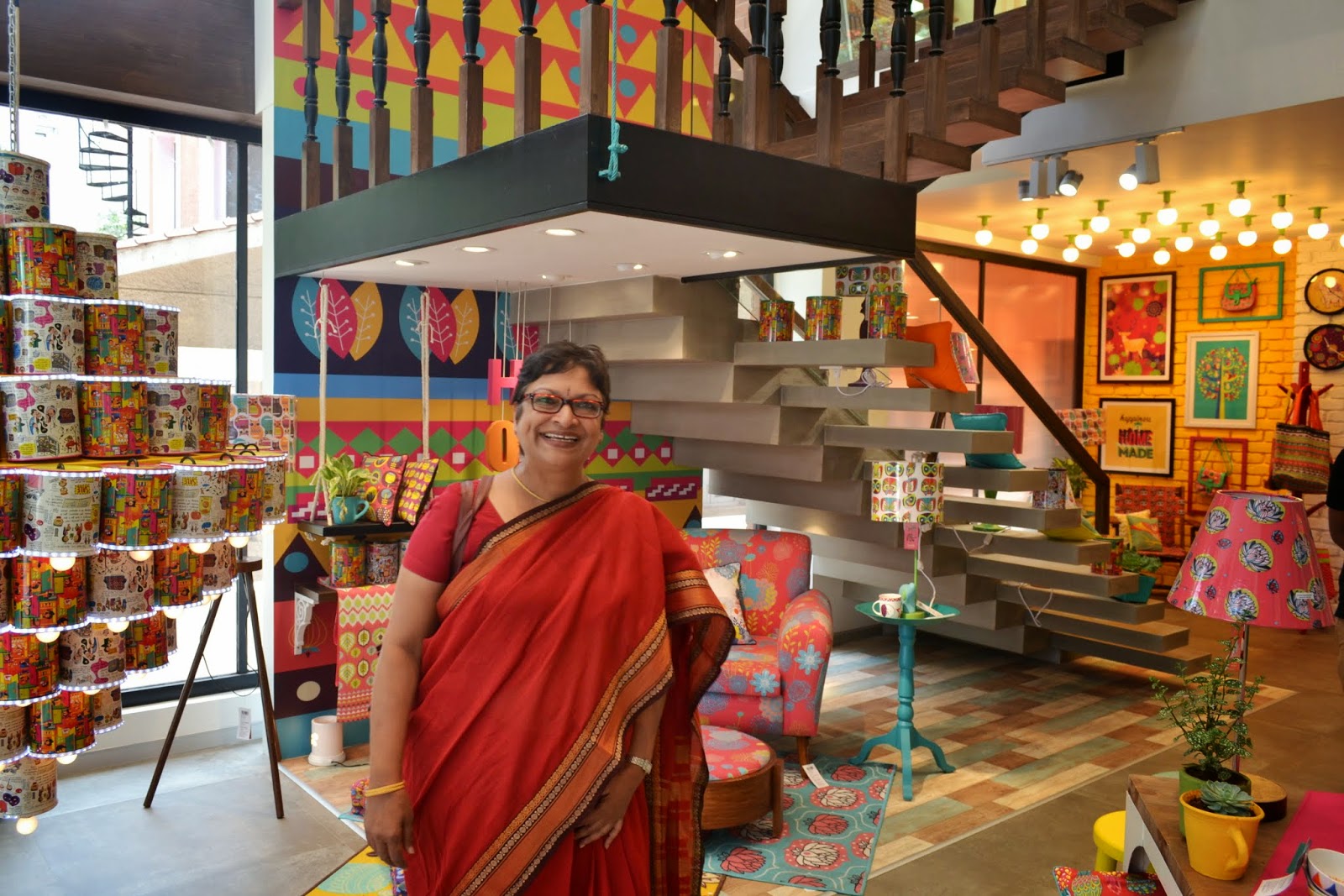
October was a very special month for Vivek and Shubhra. Chumbak opened their ‘Flag Ship’ store on CMH Road Indiranagar,Bangalore. The store was inaugurated on 26 Sep 2014. It also houses their various offices and the design centre. Chumbak – http://www.chumbak.com now has 100 stores across India. Their footprints are also found in Japan and Dubai. The flagship store is an epitome of kitsch design, appealing especially to the younger generation. In a matter of four and a half years Chumbak has established itself as a front runner in kitsch design in India. Their India-themed souvenirs are extremely popular. They have now moved on from being ‘India Centric’ to ‘India Inspired’. With this great leap, Chumbak is expected to expand very rapidly across India and abroad. Chumbak’s success attracted many domestic and international media to stand up and take notice – Foremost being ‘Forbes India’ which did an elaborate article on Chumbak in their Sep 2014 issue. However the highest recognition of Chumbak came from none other than  Sheryl Kara Sandberg Chief Operating Officer of Facebook when she quoted Chumbak as part of Facebook’s  Earning Call in July 2014.The credit goes to Vivek and Shubhra who have toiled very hard all these years with amazing passion and utmost belief in themselves and their dreams. Jai and I wish them “Godspeed, fair winds and following seas .Bravo Zulu.”
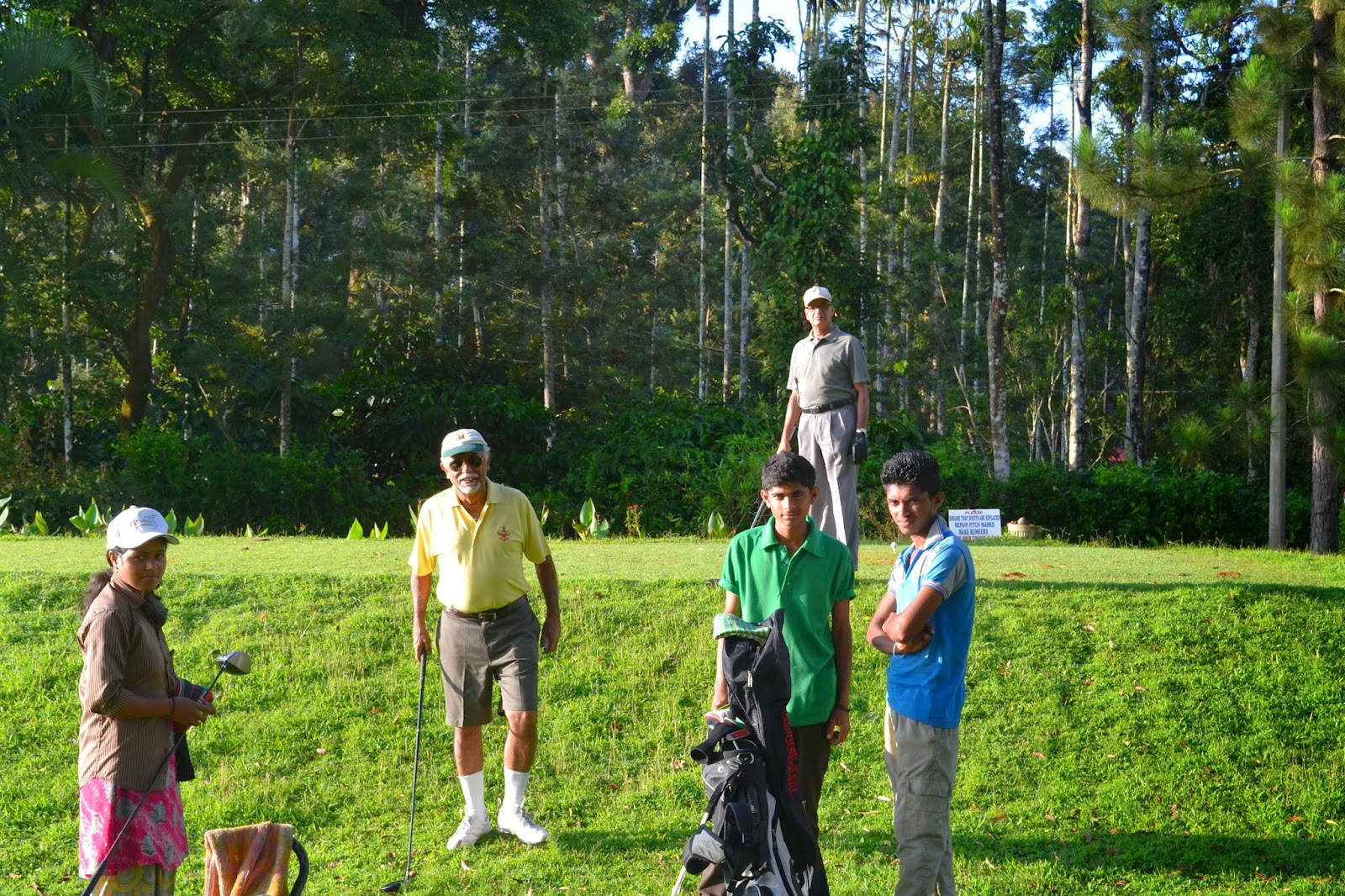


Figure 2 – Front view


Figure 3 – Jai’s happiness is all evident

We eagerly look forward to this time of the year, for daughter dear to arrive from Mumbai in end December with her ‘Marine Commandos’ – Ayaan, Agastya and Aarin. The local ‘GI Jane’ Samara enthusiastically joins us to receive the cousins at the airport. The fun and frolic starts in right earnest from the airport – no time wasted. In the ensuing two weeks the house becomes a bee hive of endless activities. Each year, the inevitable change in the children is evident. As they grow older, their activities also change, posing different challenges to the parents and to the grandparents (for a shorter duration). They are more independent, especially the twins and do things on their own. They proceed to the park on their own to play and ask for food when they are hungry, sleep when tired and so on. Akhila now has freer holiday time to indulge in watching TV, reading books and having endless cups of tea with Jai while catching up on their lives. Our neighbour’s children Sanika and Sambhav join the ‘Strike Force’ from the very outset. The six children get along very well and enjoy each other’s company.


Figure 4 – Sambhav and Ayaan at the back. Saanika, Samara, Aarin and Agastya seated

Having the family with us is extremely therapeutic. It gives us an opportunity to be young once again and indulge with them in picnics, storytelling, participating in their activities – be it gardening, feeding cats or gathering fallen tree twigs for the bonfire. It is great fun resolving their internal fights and arguments – who will sleep next to tata and aggi, who will drink from the green glass, who will have the first dosa and so on. I suddenly get a surge of pride and feel very important, sitting in judgment over these ‘complex’ social problems. 

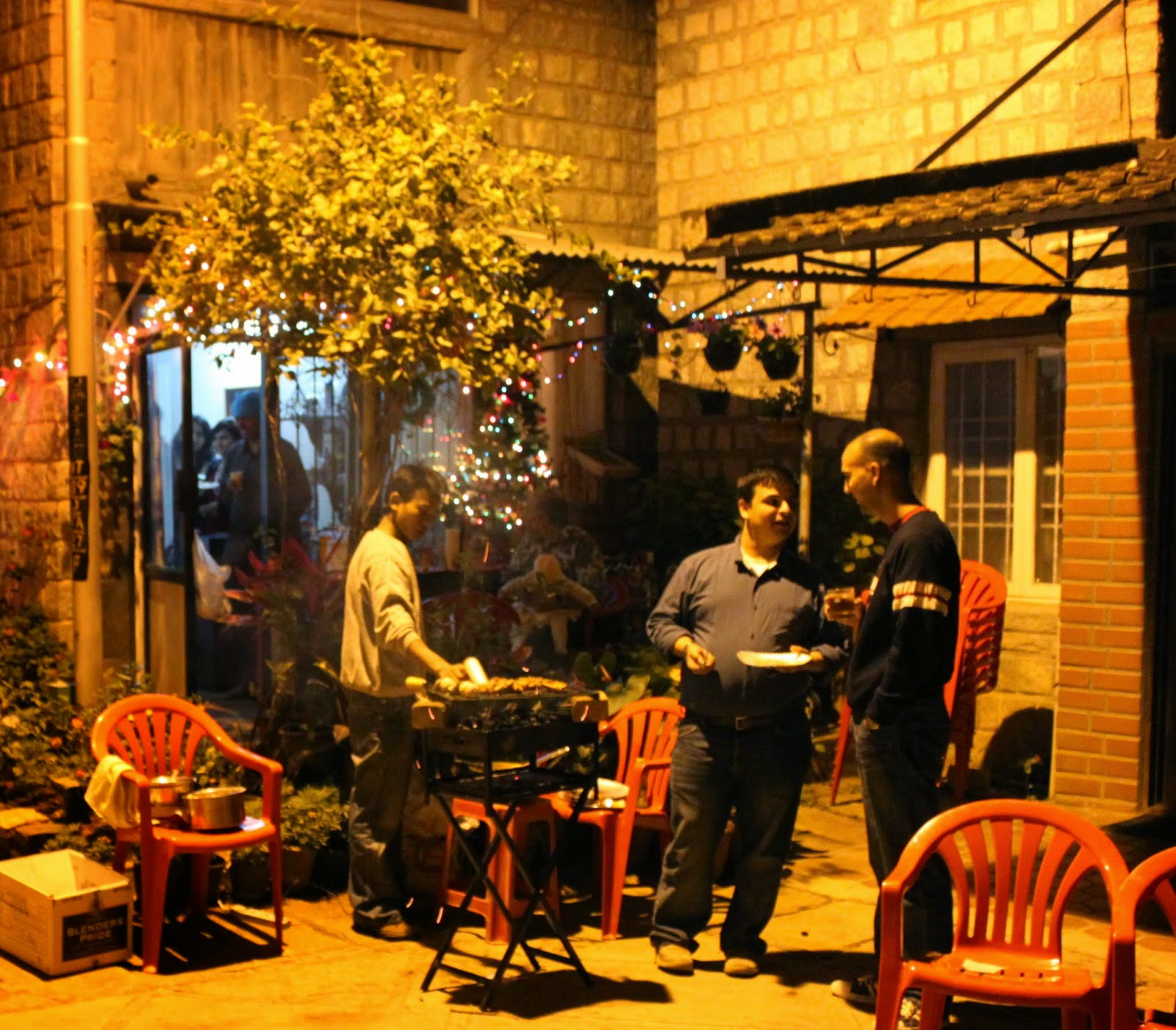
As per the Prabhakar household tradition, we had the ‘Grand Christmas Barbeque’ on the 24th of Dec along with a large number of friends and family. Barbeque adds a special meaning to any get together – the fire, smoke, starry sky and aroma of barbecued chicken act as a catalyst to enhance the level of merriment. The children love any night outdoor activity and participate in it fully. It is very important to have a proper barbeque stand and dry charcoal. This year I got a new stand made to my specifications. Right type of marination and the duration are very critical. Another vital point is to separate the ember and the meat by at least 6 inches – this will ensure slow and steady cooking. A good basting sauce will certainly add extra zing to the dish. Paneer, potatoes, mushroom and onions provide a good vegetarian fill up.


Figure 5 – Barbeque in full swing


Figure 6 – Opening gifts from Santa


Figure 7 – Setting the X’mas mood

This year we went to Pondicherry for our family reunion in three cars. The roads are in very good condition and the drive was smooth throughout. We went via Kolar, Chittoor, Arcoat ,Tindivanam to Pondicherry. While travelling with children one has to cater for more number of stops along the way. In all, we took approximately eight hours to reach our destination.

We stayed at the ‘Red Lotus’ hotel in the city run by a German couple. The hotel has been done up very well with each room having a different colour scheme with matching decor. The hotel is very well maintained – clean and tidy. The USP of the hotel is ‘Danielle and Chris’ the owners – they are excellent hosts – very friendly and approachable. They go all out to interact with the guests and make them feel comfortable. The breakfast is tasty, sumptuous and interesting – with a combo of delectable idli, sambar, eggs, a variety of breads and croissants with relishing coffee and tea. The hotel has a well appointed terrace to eat and relax. The children had a whale of a time running around the terrace, the older ones lying down with their kindle and the twins playing with their toys. The staff is very helpful and courteous. Overall the ‘Red Lotus’ was a very good experience.


Figure 8 – Danielle and Chris’ the owners of ‘Red lotus’


Figure 9 – Feeling totally at home on the terrace – Red Lotus


Figure 10 –  Exploring French quarters


Figure 11 – On the promenade – Agastya and Samara


Figure 12 – Impromptu French Street Play?

Pondicherry in itself was a bit of a disappointment. We had visited the city way back in 2004 and we were very impressed then. The city is bursting at the seams – extremely over populated with far too many two wheelers and cars on the road. The ‘French Quarter’ is now all but a name. The quality of food seems to have dipped a notch or two in the last ten years. Travelling with two foodies Vivek and Anirban meant, eating at exotic places – our share included dinner at ‘La Maison Rose’ and lunches at Naturellement Garden Café in Auroville and  ‘Theevu Plage’ on Bodhi beach. While the children explored different restaurants to whet their dinner appetite, the grandparents (in all five) stayed at the Red Lotus with the grandchildren and enjoyed a bit of quiet and solitude and comfort food. 


Figure 13 – Ayaan in – La Maison Rose


Figure 14 – at Naturellement Garden Café in Auroville


Figure 15 – Samara striking a pose with mama and Poonam nani at Naturellement


Figure 16 – Theevu Plage


Figure 17 – A private moment on the Bodhi beach for Vivek


Figure 18 – Colorful companions – Shubhra, Akhila and Jai – Theevu Plage


Figure 19 – Samara and Ayaan showing off their Taekwondo prowess – getting drenched with no extra set to wear. We had to buy fresh clothes on the way back!! 

Last year my daughter Akhila had given me the task of decoding rituals and pooja to render it understandable, meaningful and interesting to the children. It was a very huge task indeed. In the past, whilst the mantras and devotional songs were played on the laptop, the children just sat there – bored and anxiously waiting for the rituals to get over. We find ourselves just going through the motions without understanding very much. Both the adults and the young find it difficult to sit through the entire proceedings.

This year we observed a different format. The entire ‘Satyanarayana Pooja’ was in English and narrated to the children in an extremely understandable fashion by me. The idea of seeking God’s blessing for undertaking all activities in life and thanking the God in return, was conveyed to the children in an interactive fashion. They participated in the proceedings willingly and enthusiastically. The narration was laced with stories which related to the present context and were easily understood. The entire festival was video graphed by Akhila. It has come out very interesting. I plan to improve upon this year’s performance and put up a better performance for ‘Ganapati Pooja’

We celebrated the New Year party on 31st Dec at home with the children and grandchildren. A Bonfire generated lots of bonhomie into the beginnings 2015. We bid farewell to the old year and welcomed the New Year by letting go two Chinese lanterns. 

Taking stock of 2014 – Akhila continues to be a successful home maker and strives very hard to run a taut ship. She had her hands full looking after three young children and creating an excellent home atmosphere. Her involvement with the family is total. With the twins entering their fifth year, she will have some spare time now onwards to rekindle her creative pursuits. 

Through the year Jayanti worked unstintingly to ensure Freedom International School- http://www.freedom-international.in/ – consolidated its position of being one of the best schools in Bengaluru. The school will be starting its 11thand 12th standard from June 2015.The school has steadily and firmly made its mark in the field of education.

Anirban was busy throughout the year. http://www.caakwan.com.They continue to do well and consolidate their position as leaders in celebrity and sports management.


Figure 20 – Rita and PK in a very contemplative mood


Figure 21 – Akhila and Shubs lighting the bonfire


Figure 22 – Daughter and Mother all pleased


Figure 23 – All the pretty girls – Priyanka, Akki and Shubs


Figure 24 – The Lions – Anirban and Vivek


Figure 25 – Samara with mamma and dada


Figure 26 – Farewell dear 2014


Figure 27 – Ayaan with his Tata – Cubbon Park


Figure 28 –Train ride into 2015


Figure 29 – Twins back to the Jurassic Age


Has human kind evolved over the last 65 million years – yes, no, maybe?


I have always been interested in animals, nature and other creations of God. National Geographic and other similar channels whet one’s interest in this area to the hilt. Whenever I have some spare time, I watch animal serials. My desire to watch these serials has increased manifold in recent times.( a big thanks to Arnab Goswami, Barkha and their ilk) Watching NEWS is a no no – it’s a #@$%# world. When one watches a serial on leopards – there is no screaming from Arnab – no Singhvi, Maroof Raza, Salman Kurshid, Manish Tiwari to offer expert comments – more importantly there is no debate – the viewer is left alone to watch something interesting and form their views peacefully and without duress. The leopard is also left alone and not subjected to a barrage of questions – “Nation wants to know why you have been repeatedly killing harmless antelopes” your channel wants to know “God” – “are you secular?” etc. Anyone familiar with the Big Fat Indian TV scene will vouch that we are used to watching ‘Breaking News’ only – it is surprising that my TV set is still intact after so many bits of breaking news flooding the scene. Fortunately there is no breaking news from Kruger, Masai Mara or Serengeti National Parks.
Coming back to the point, after repeated viewing, I have been able to summarize the purpose of all animal life as follows – the foremost being, to continue the bloodline. The rest of their activities support the main aim. Eat to survive, rest to recoup, mark and defend one’s own territory at all cost, exercise and impose one’s authority and finally find a mate to procreate and continue the blood line. Anything the animal does in pursuit of these requirements is justified by the laws of nature. They have evolved over millions of years to use stealth, camouflage, cunning, violence, opportunity, greed, stealing, scavenging, alluring, bullying, grouping, protection of offspring, social hierarchy to survive – you name it – it’s all there in the animal kingdom.  
Around 65 million years ago humans started to evolve and we are here today as masters of the world around us. We have made great strides in medicine, transportation, communication and in every field that is associated with the human species. These magnificent achievements separate us from the animals. If one looks closely at all these achievements, you realize that they are all “outside of us”.
What about the evolution of the “inside of us”? I hardly find anything changed in all these years. In spite of 65 million years of evolution, we still fight over territory more ferociously than lions. Almost all the current wars are over territorial disputes. Closer to home, India is embroiled in land disputes with Pakistan and China, draining our economy, growth and destroying any possibility of harmonious living. Land grabbing has become a fine art and so has encroachment. Property disputes ruin families, brothers are pitted against each other, husbands and wife fight over a piece of land and the list is endless. Have we evolved?
When it comes to sex crimes, we are worse off than animals. There is a strict code of conduct in the animal world. There are none in the evolved world. If the recent spate of child rapes in Bengaluru and cab rape in New Delhi are any yard stick to go by, then we are way behind the animals. Atrocities against women put a big question mark on the theory of evolution. Sex related crimes are very common in all parts of the world.
The recent incidents involving white policemen and African Americans in the US, questions the very development of our society. It is very common in India to see hate crimes against people from the North East. Recently a mid day meal scheme near Mysuru was abandoned as the food was being cooked by a Dalit. It cannot get any worse than this. All our societies are replete with such horrific transgressions.  
Dadagiri is rampant in India. Political clout is displayed with utmost flamboyance on a day to day basis. Silverback apes will think twice before they can compete with any of our Political heavyweights. Political workers can walk into any restaurant and create havoc – loot, damage and physically hurt people with impunity – and get away with it. This is straight from the TV serial ‘Animal Planet’ wherein our closest relative, the chimpanzees, attack another community for no reason. Chimps are known to indulge in wars lasting up to four years.
We as humans are yet to find a single God in all these millions of years. In his name, we shed blood and hatred without any hesitation. When it comes to religion our most basic and primordial instincts seem to take charge and possess us. The present day world is preoccupied with religious intolerance and bigotry. Half our time and effort goes into resolving these issues. 
One could deliberate on this issue endlessly. It suffices to say that the “evolution within” seems to have made very little progress. In fact, compared to our predecessors, it has regressed. Where is the equanimity with which they took the world and its problems into their stride? Where is the sense of right and wrong, the innocence of the young, and the contentment of the aged? Most of our age old wisdom and tradition seems to have been lost in transition.
If I were to take ‘Science Fiction’ as some sort of a window into the future, the emerging scene does not augur well for coming generations. Star Wars, Star Trek, Terminator, Alien, Guardians of the Galaxy and others revolve around present day themes – warring nations are replaced by wars between planets and galaxies. Hatred, dominance, personal prejudice, stealing and other such 2014 attributes still continue to play a major role in the ‘reel’ future too.
Where are we headed?


Change-the only constant!

It is not the strongest or the most intelligent who will survive but those who can best manage change. –Charles Darwin
In my earlier blog http://samundarbaba.blogspot.in/2010/09/festivals-ganapati-pooja.htmlI had very briefly touched upon the aspect of ‘Change’- while commenting on festivals in India I had noted –‘Religions and festivals are products of the social requirements of the day. The social environment dictates the level, nature and variety of worship in almost all the religions. Society is constantly evolving and dynamic – what was in fashion a generation earlier may not be of any significance today’.
Extending the argument to all aspects of life, I notice that change is inherent and constant.
The other day, I was watching David Attenborough’s ‘Rise of Animals’– a landmark series about the astonishing evolutionary advances over last 500 million years. In Episode 1: ‘From the Seas to the Skies’ he traces how primitive fish once swam in ancient seas but remarkable advances allowed them to make the radical move onto land, and then they took to the skies with the advent of flight. In Episode 2: Dawn of the Mammals he unlocks the meteoric rise of mammals that led to an astounding diversity of life and laid the foundations for the ascent of man.
We are a product of change and living in a world which is constantly changing and evolving. All of us need to understand this very basic fact of life. Change embraces all aspects of our life – be it parenting, schooling, education, employment, marriage, religion, politics, urban development, warfare, statehood, food, health, travel, leisure, retirement and so on. We cannot escape this all encompassing universal phenomenon.
In our day to day life, I come across some people who find it very difficult to accept change. They either turn a blind eye or pretend that there is no change. Such people live in a world of contradiction, which does not solve any problem but only adds to the overall confusion. I do not know if this attitude is correct or otherwise .But what I do know is that these people are in constant struggle to cope up with the change which is taking place around them with or without their acknowledgement.
Take for instance the question of marriage – we raise our children with liberal ideas, freedom of action, international exposure, sense of fair play, natural justice and so on – and in the end insist on choosing a partner for our sons and daughters. Here lies the dichotomy. A girl child is given the best of education but prevented from working after marriage. 
Post marriage, both the partners should understand the changes that have taken place around this institution. Gone are the days of husband being the only provider and wife confined to the house. Equal sharing of responsibilities, chores around the house, parenting duties are the rule rather than the exception. Our attitude and mind set has to be re booted to establish a new platform which will support modern marriages. Look around, and you will notice most of the present day divorces are as a result of our inability to come to terms with the new set of rules.
People who notice these small changes that are taking place around them and adopt themselves to these changes are the winners.
Parenting is a very serious and difficult chore – especially today. Busy parents, emergence of the e-child with computers, smart phones, the internet, face book, twitter and the rest. How does one balance the equation? Are children being robbed of their childhood with all this e-dust around them? Are they in a fast forward mode? Parents need to sense this change and react accordingly. A new set of rules have to be framed.
Education in India is another aspect which has remained extremely stagnant over many decades. We have failed to embrace change and unwittingly continue to rely on processes which suited a different time frame and mind set. Lord Macauley introduced modern education in India. It was the introduction of Wood’s dispatch of 1854, known as the Magna Carta of Indian education that laid the foundation of the present system of education.The main purpose of it was to prepare clerks for running the local administration (white collar workers). It is easy to surmise that the spirit of inquiry was not propagated or encouraged. Generations of educated Indians emerged without once asking ‘why’. If the grant of patents, number of inventions and discoveries are any indication – we have lost the race. We need to change. Hope the new bill on education under preparation and due in 2015 will address these issues. 
Finally retirement is an excellent issue for a case study in ‘Change’. Nowhere else is the acceptance of change so paramount! Work quotient, earnings, status, symbols of power and wealth, health, libido and the like take a nose dive. On retirement we enter a new realm, which is totally different from what we have been used to in all the previous forty years or so. There are only two options – brood and live unhappily or change and make merry.

Chill maadi and move with the tide of change.

I will end it here; it’s time for a good chilled beer – Cheers!

Golfing in Kodagu – ‘Coorg Golf Links’

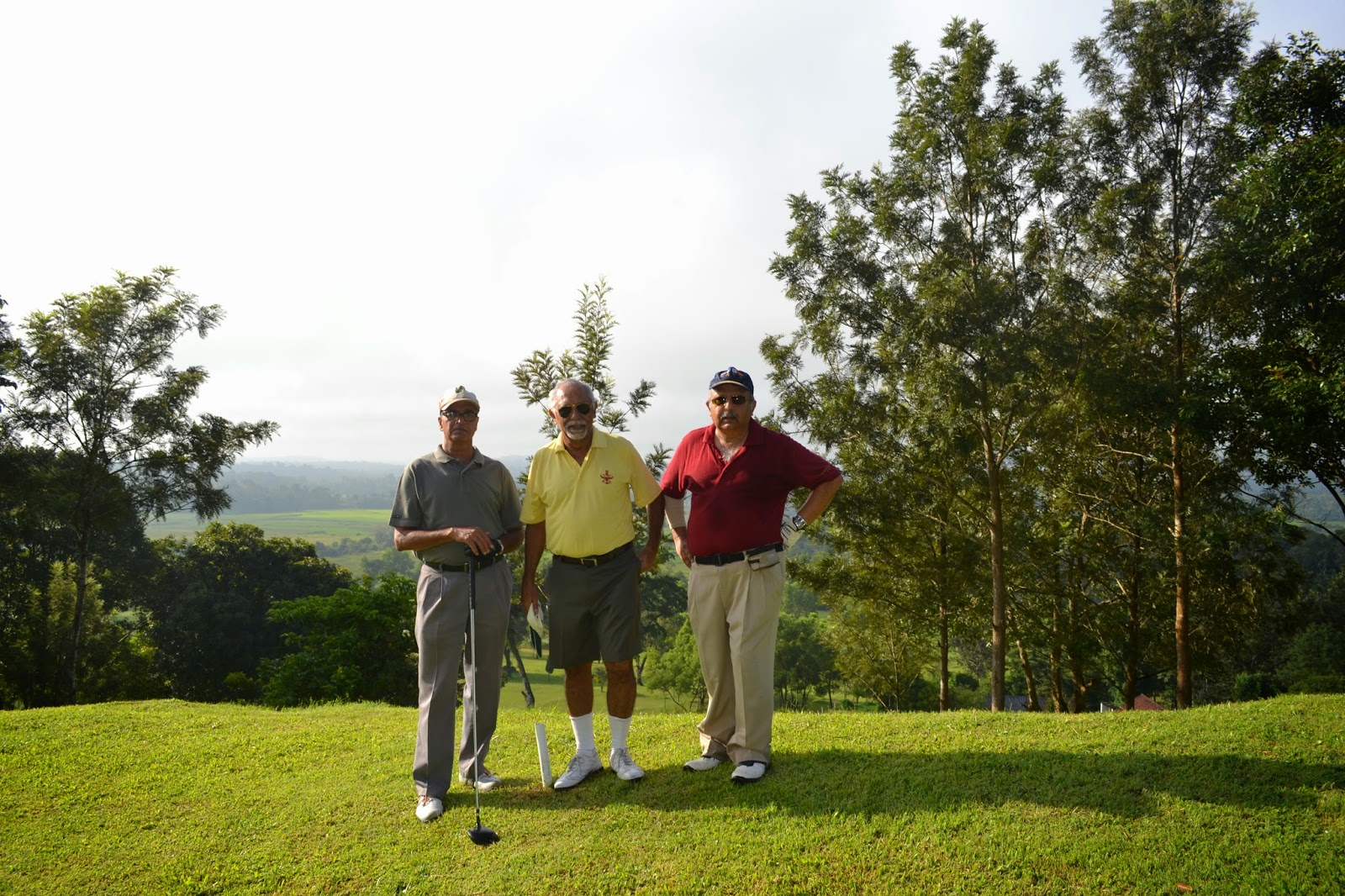
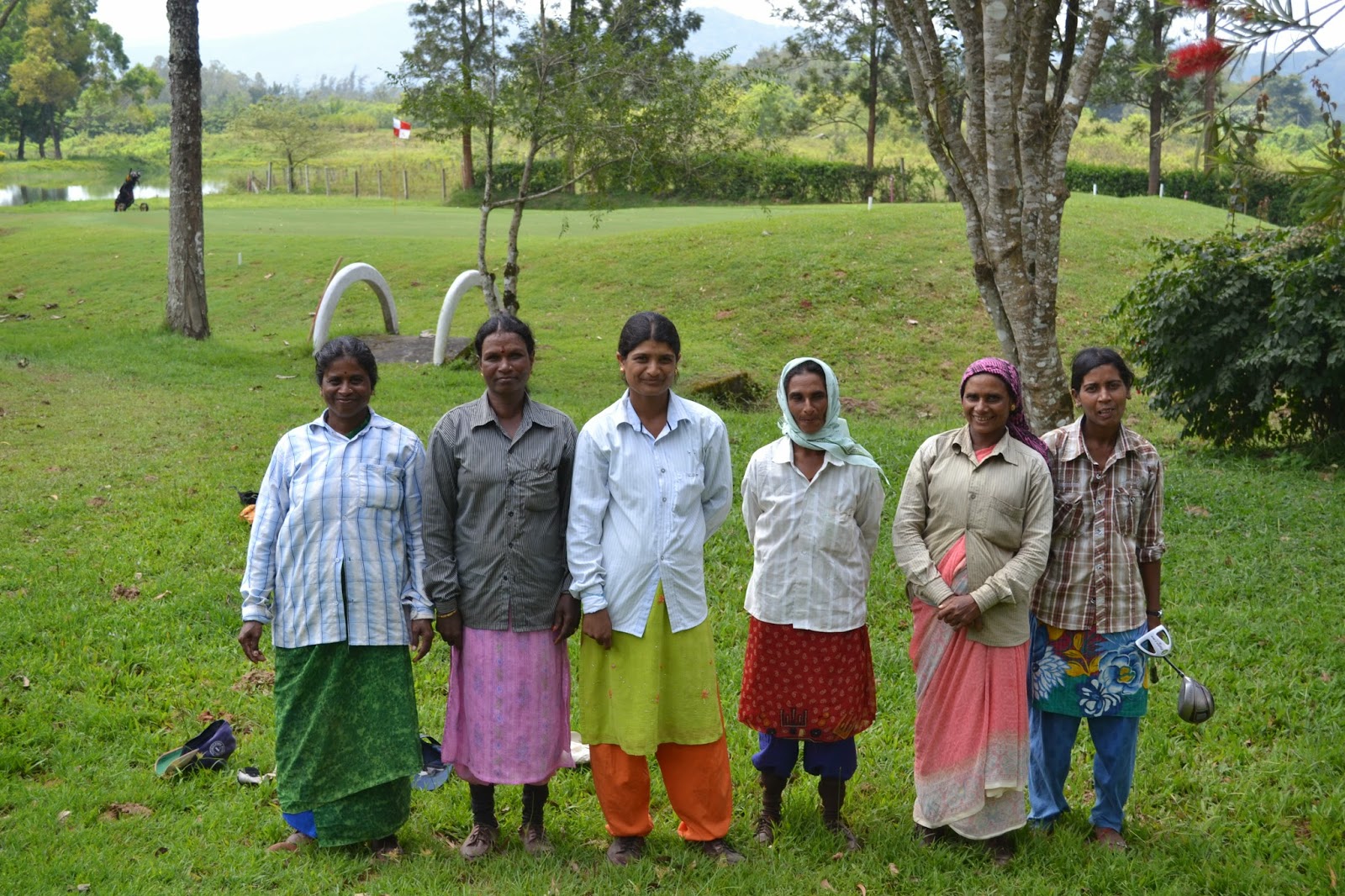
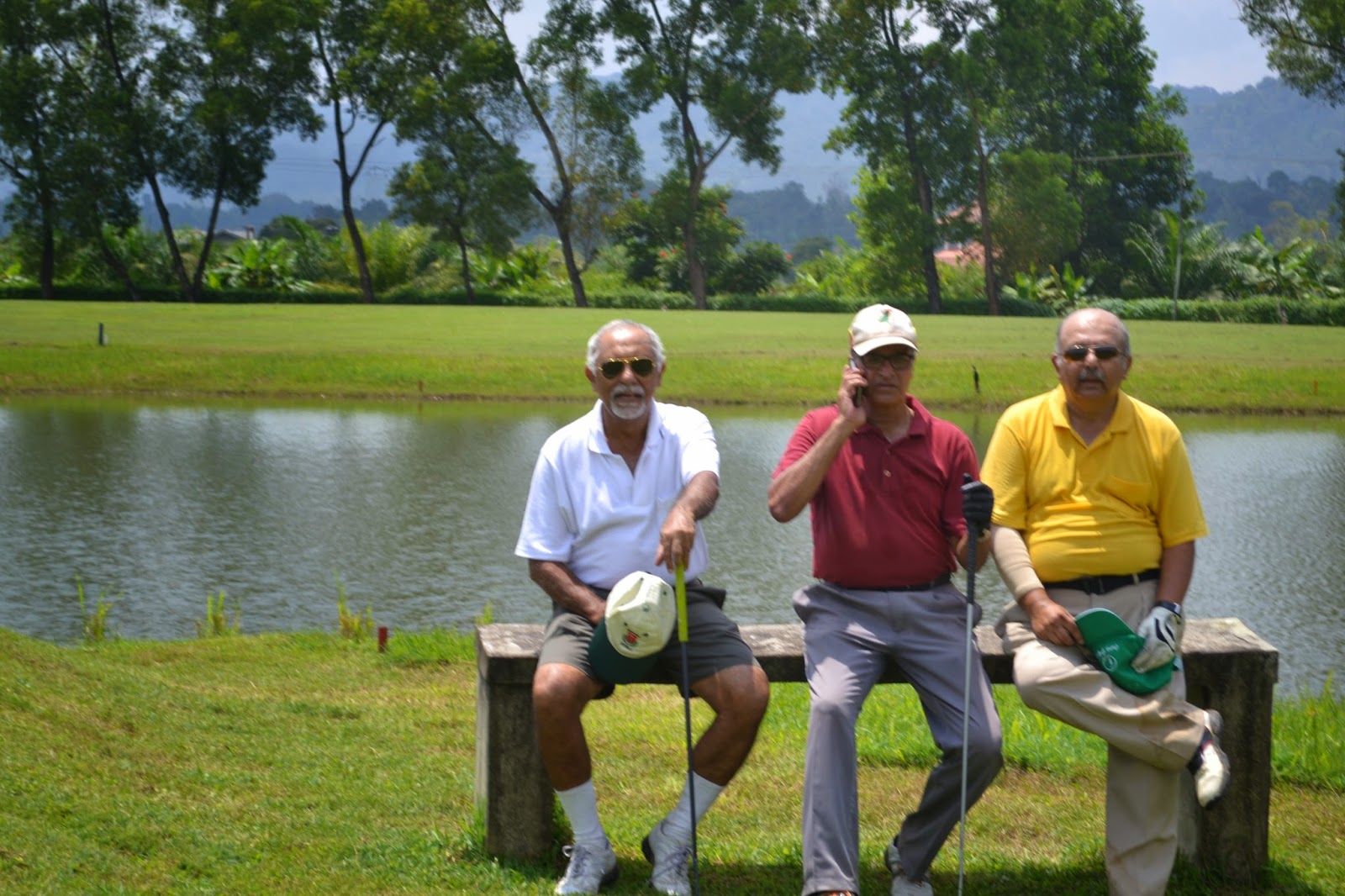
Come September, the Indian landscape changes rapidly. As the rains withdraw, it ushers the end of monsoon. The countryside looks squeaky clean and dry-cleaned; the people are out on the streets once again in bright and colorful clothes. As if the heavens were just waiting to celebrate, September and October hosts a number of important festivals. Ganapati, followed by Onam, Dussera, Navaratri and Deepavali bring in gaiety and merriment all over the country. Children and parents step out of their routine and make feverish plans to proceed to holiday destinations. We were no different and decided to go to the Coorg Golf Links Club for a golfing holiday. Sampath and Saroja readily agreed to come on board. Ashok and Push joined us from Delhi. Dore and Lalitamma most graciously lent their valuable company in spite of being ‘non golfers’. All in all, eight of us left Bangalore in the early hours of 25th Sep in two cars towards Virajpet –  Bittangala – Ambatty Village and finally the club. The village is located at an elevation of 3000ft and about 80 kms from the Arabian Sea. The weather is a bit muggy, with so much of rain and proximity to the sea. It is very comfortable in the mornings and late evenings but hot and humid during the sunny hours. The drive from Bangalore to the club is fairly smooth– except for one bad patch in the forest area prior to Gonikoppal. It took us about 6 hrs to travel 240 Kms.*( Lovely breakfast enroute at Kamath’s)
Jai and self wanted to go some place nearby to celebrate our 25th wedding anniversary in May 2002 and that is when, a close friend, Air Commodore Ganapathy suggested that we visit Coorg Golf Links Club. At that point of time I was a non golfer and went there to absorb the ambiance, weather, Koduva hospitality et al. The club had only one room at that time and very meager facilities. In spite of all that, our stay was wonderful and we had the opportunity to meet Gana’s sister and brother-in-law Mr. K.K.Aiyappa, the Patron of the Golf course and Club. We had a wonderful time and came back with a bag full of sweet memories. This time around, I once again zeroed in on the place where we had, had such a lovely time. Thanks Gana once again.
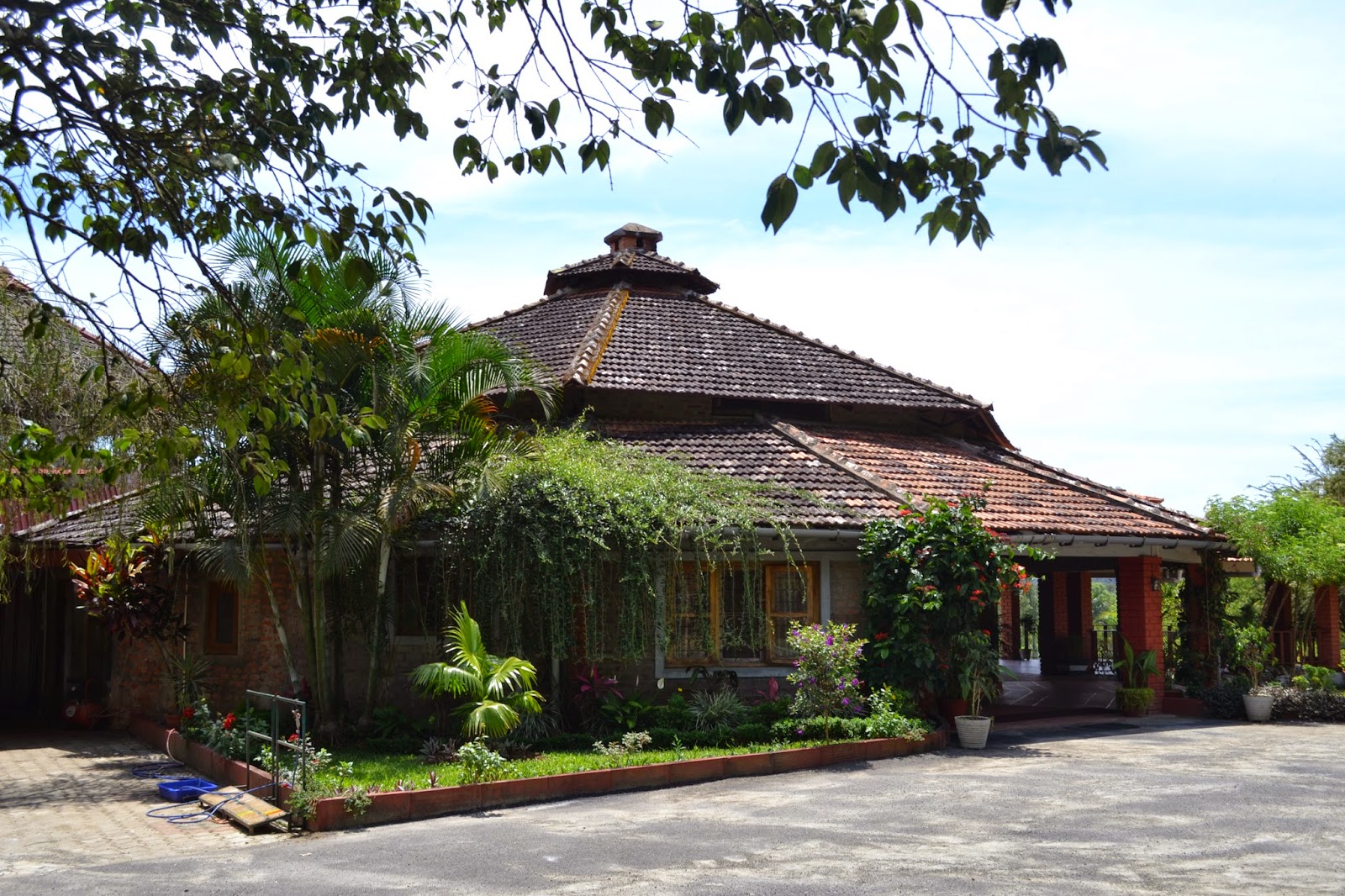
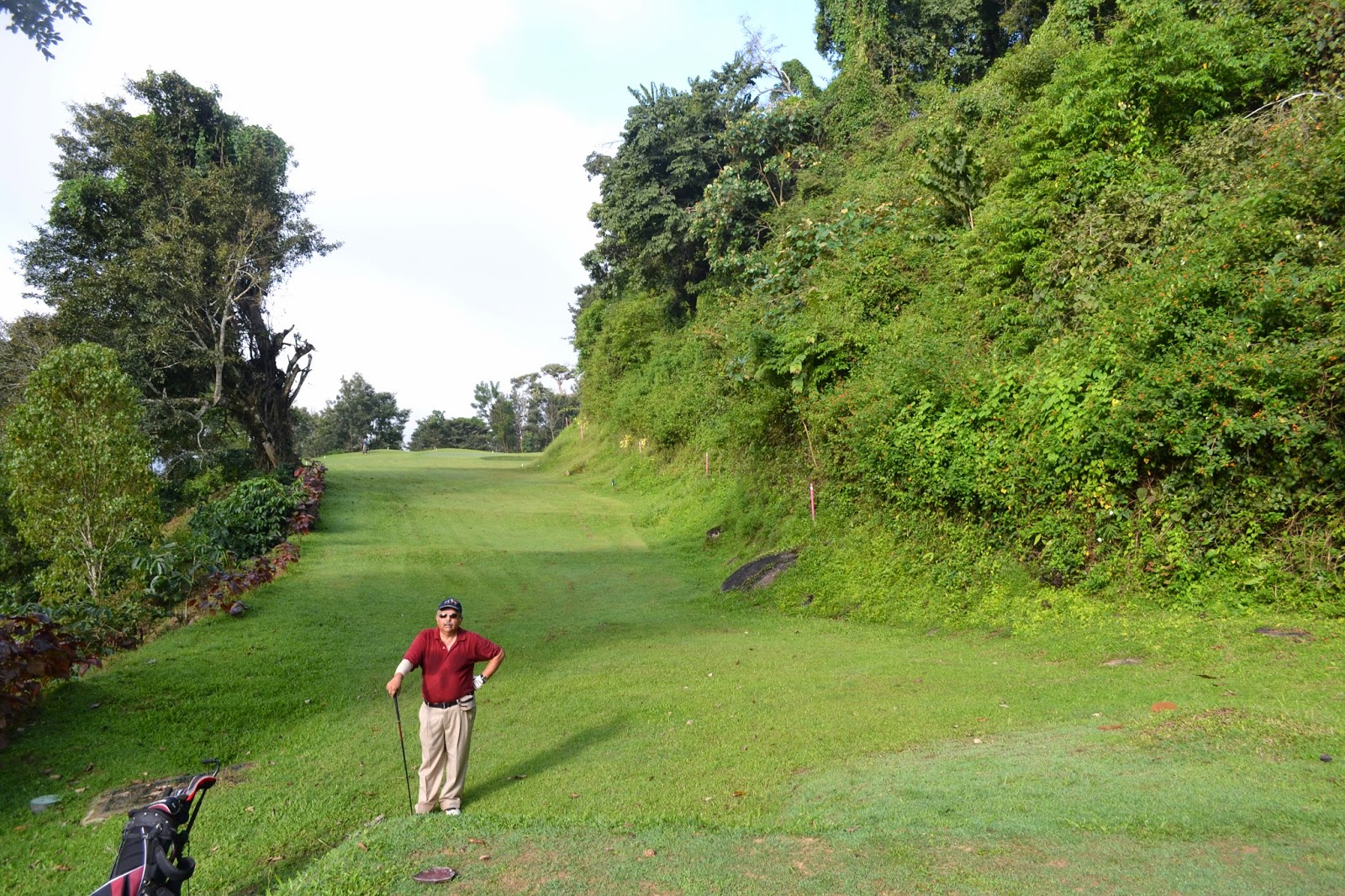
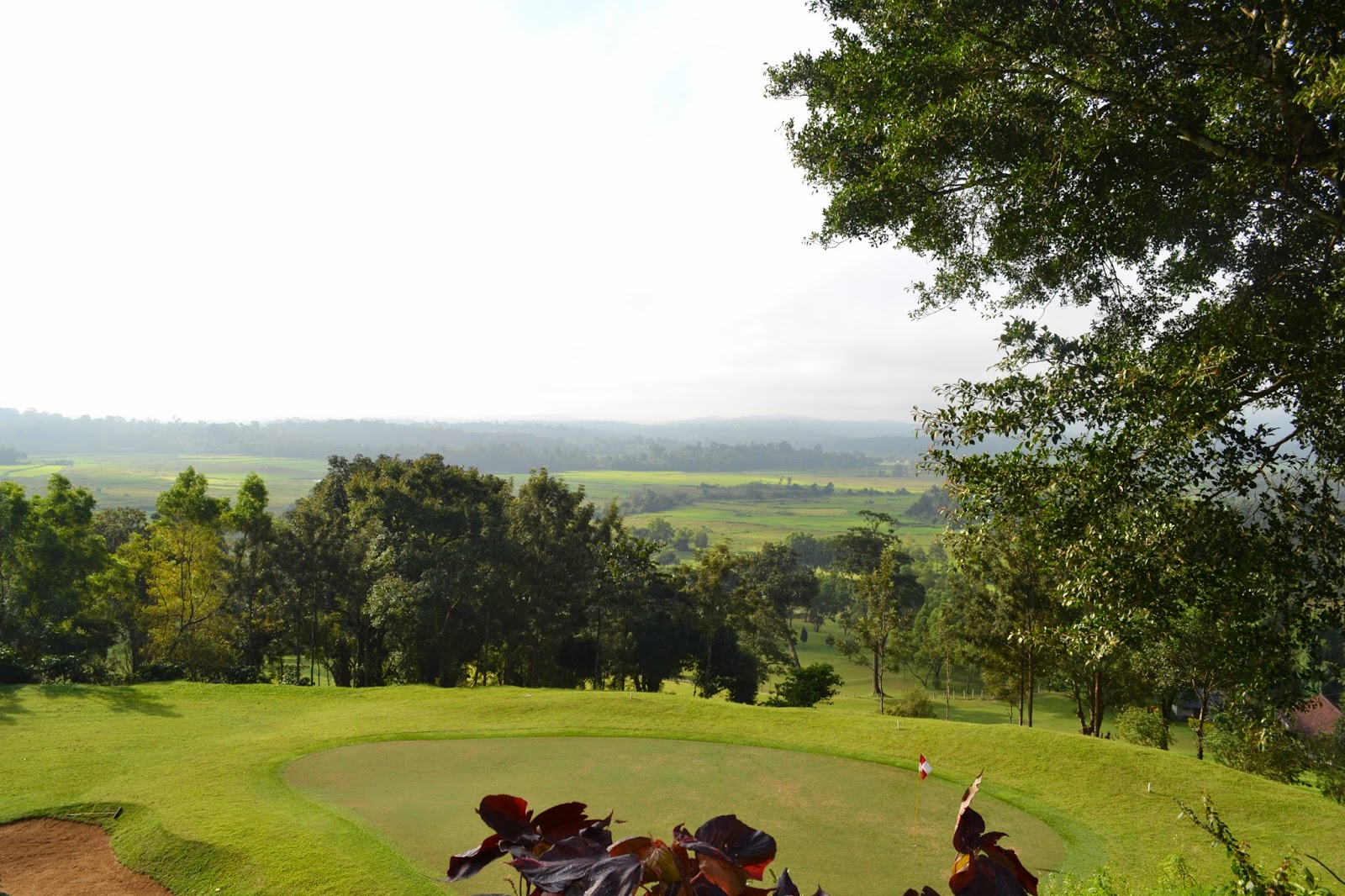
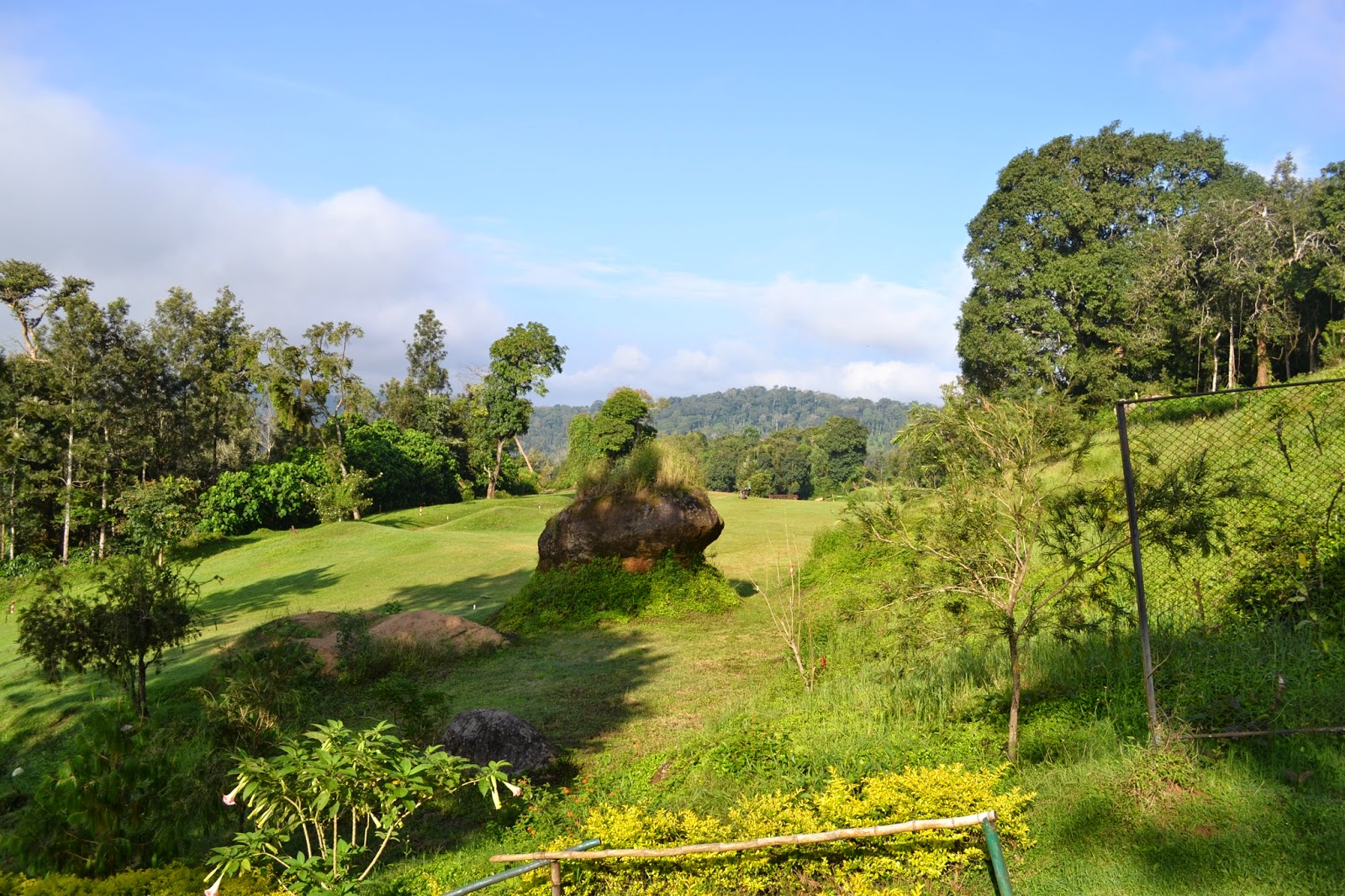
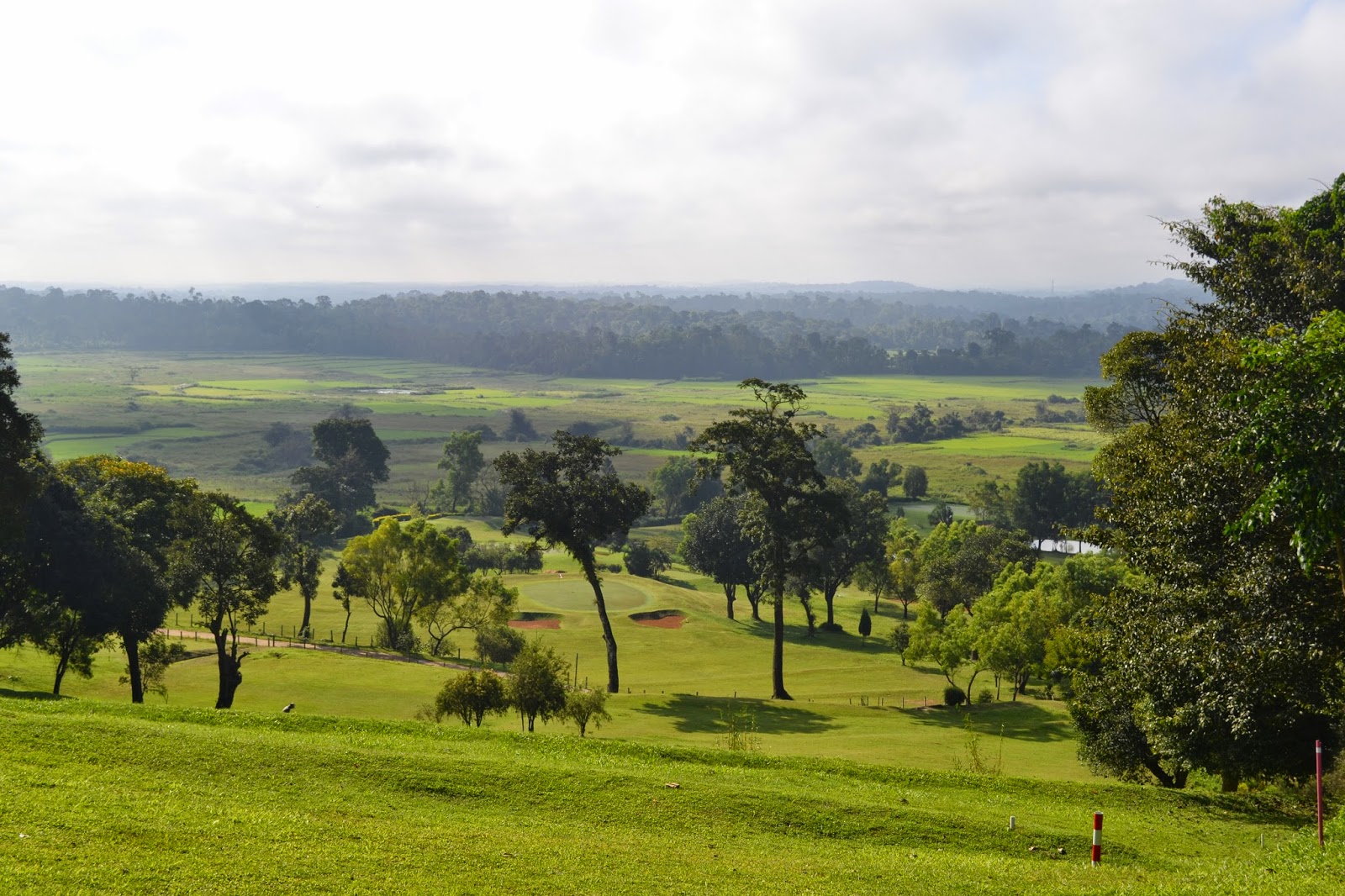
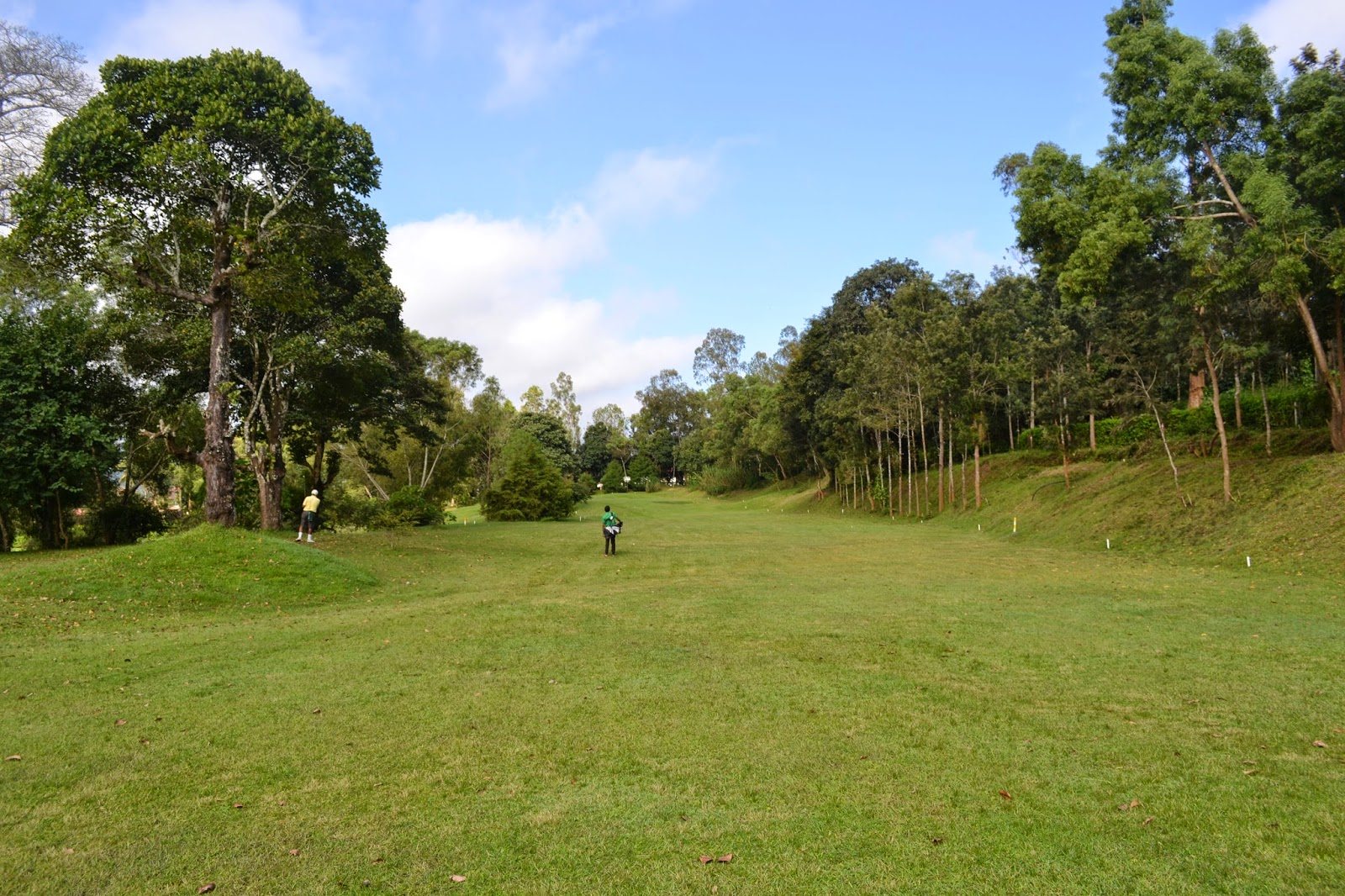
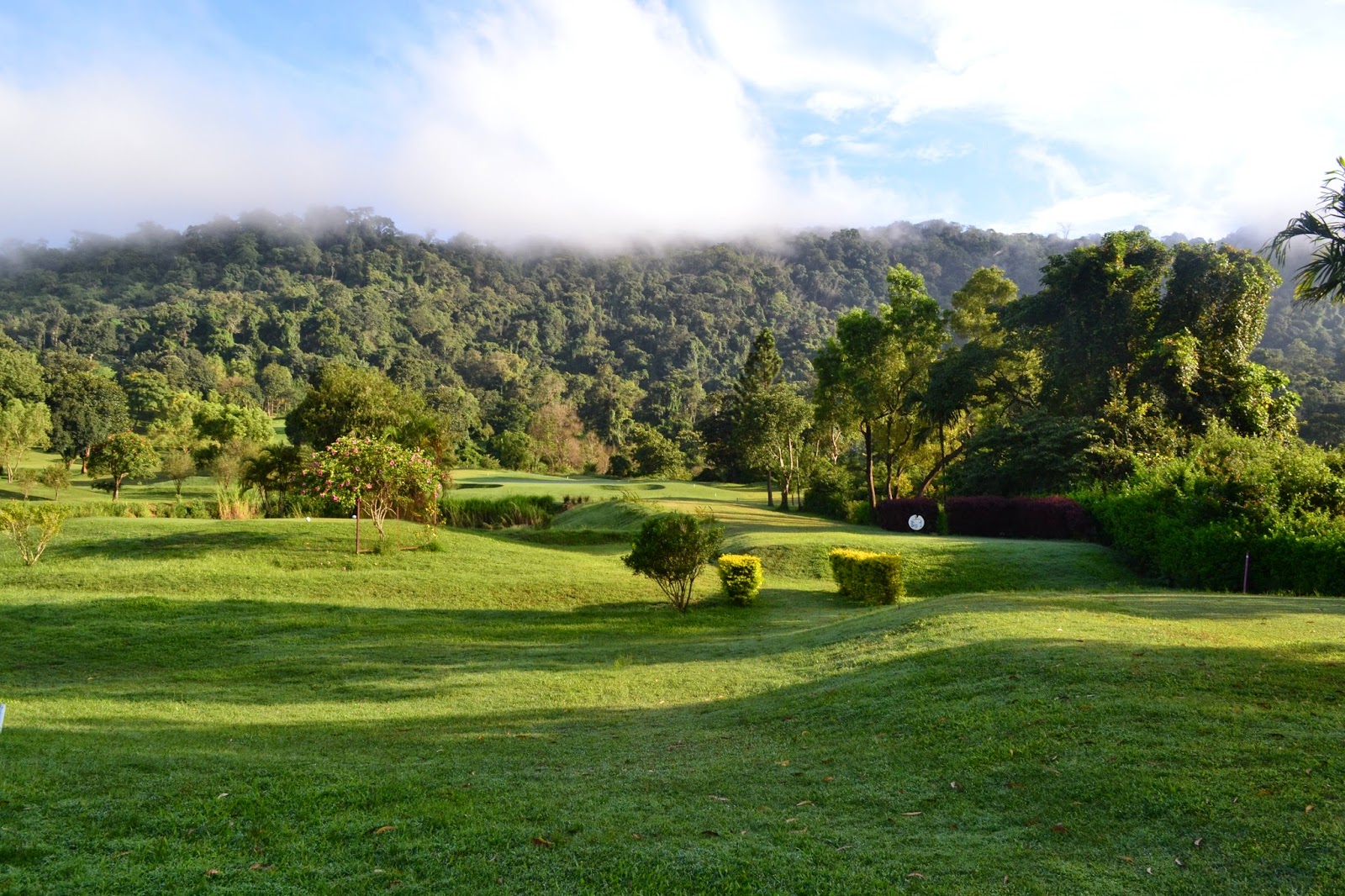
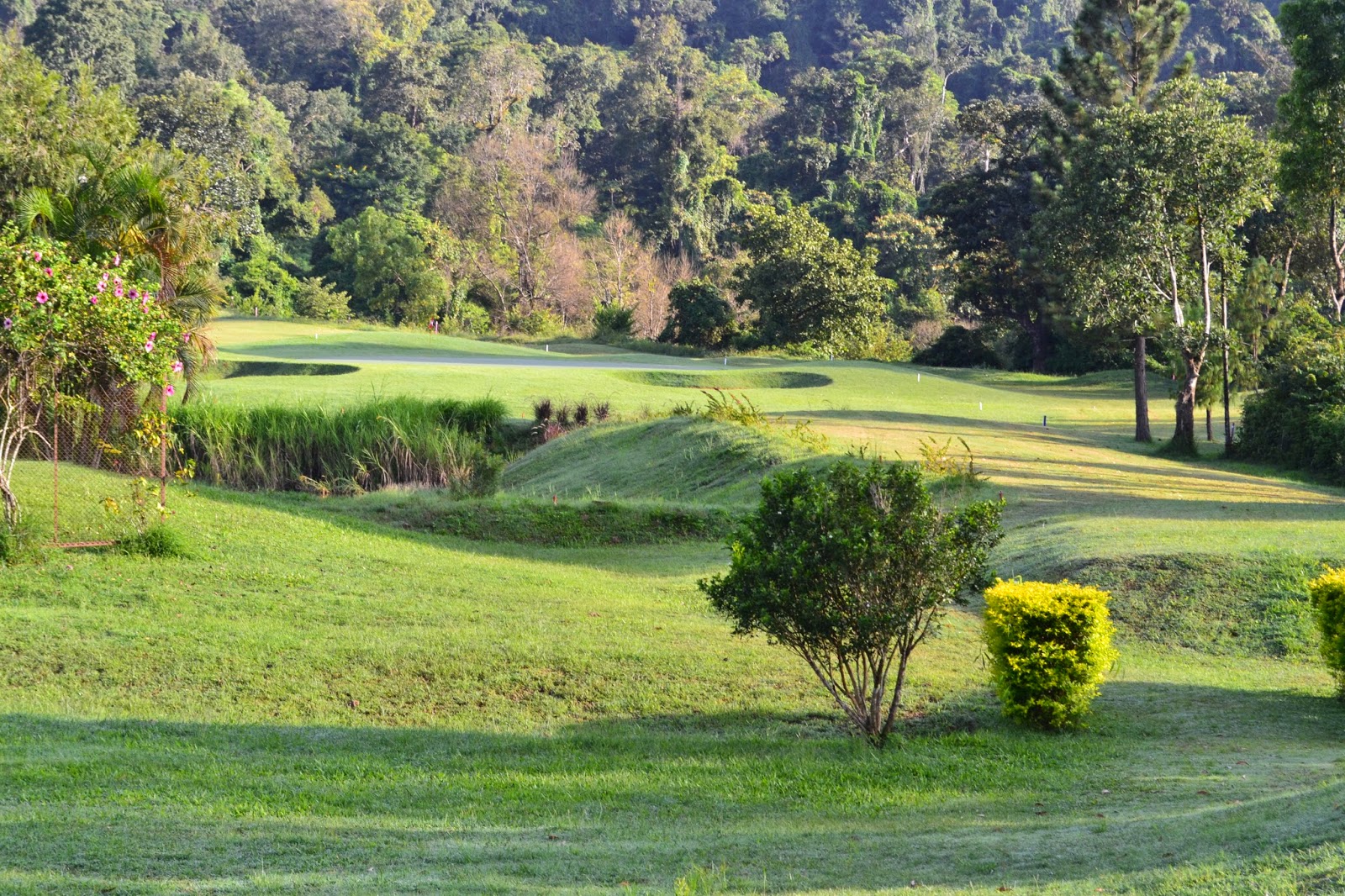
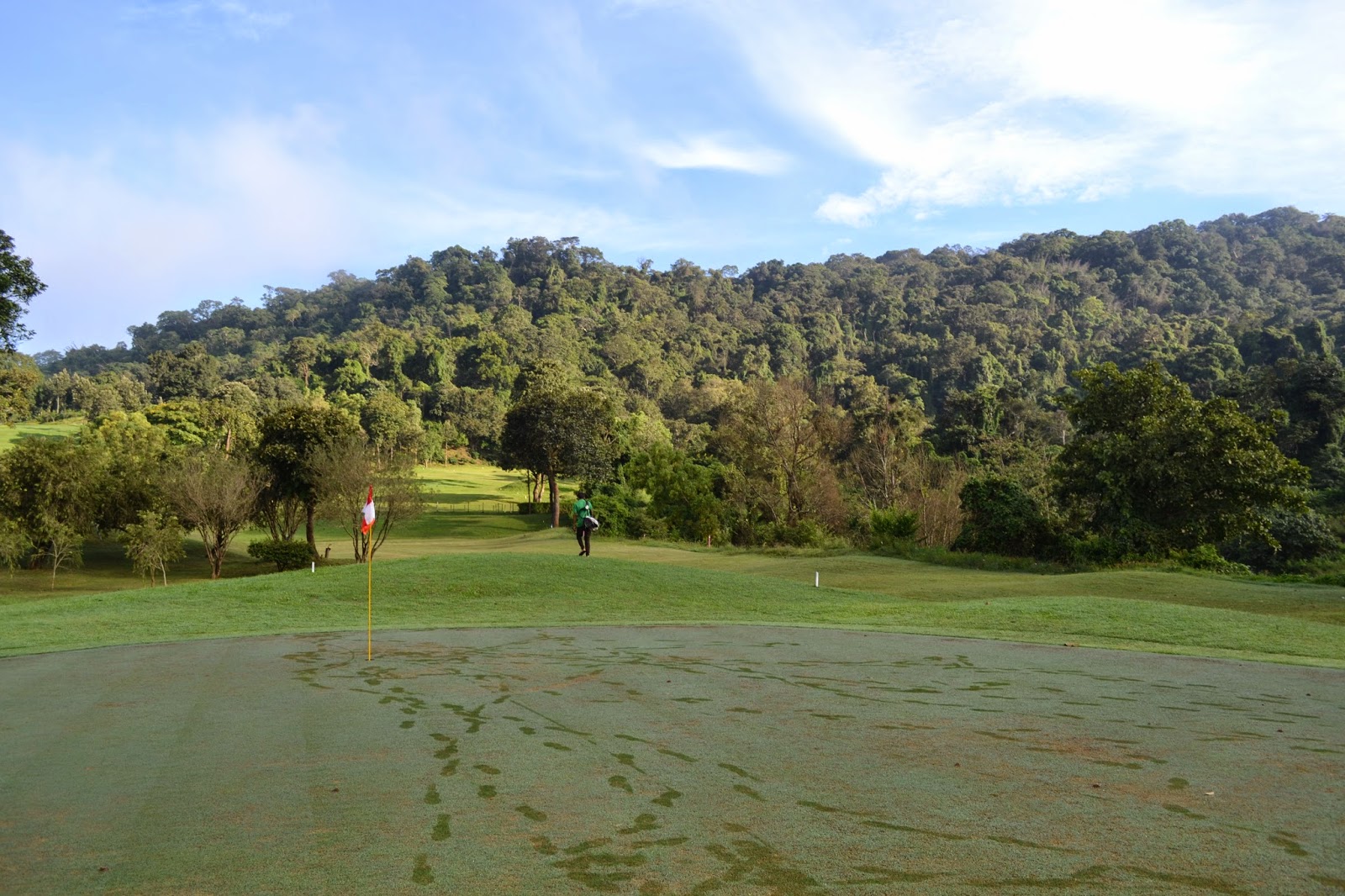
Over time, the club buildings and golf course has developed by leaps and bounds thanks to the passion and flair shown by the management. Their desire to provide a good clubbing experience is evident in all its facets. The club house is situated at an elevation overlooking the golf course, which is nestled in a valley. The club is fairly old – it started as a 9 hole course in 1991 and later developed into 18 holes 6950 yard, par 72 course. The course is well maintained and provides a degree of challenge to all the golfers as the course winds its way up from the plateau to the hills and back. The front nine and the back nine are totally different in character. The first five holes creep up the steep gradient of the hill, extracting all one’s energy. All along the course the view is simply lovely. Tall trees regally line both sides of the fairway adding a bit of old world charm to the course. 
The early morning view is one of extreme peace and tranquility. Early risers are greeted by hill tops covered in a blanket of cloud, wet flora and fauna, the fresh smell of the earth and the never ending chirping of different birds. We went golfing on all the days, whilst Dore and all the ladies went sightseeing, shopping and most importantly for dawn and dusk strolls.
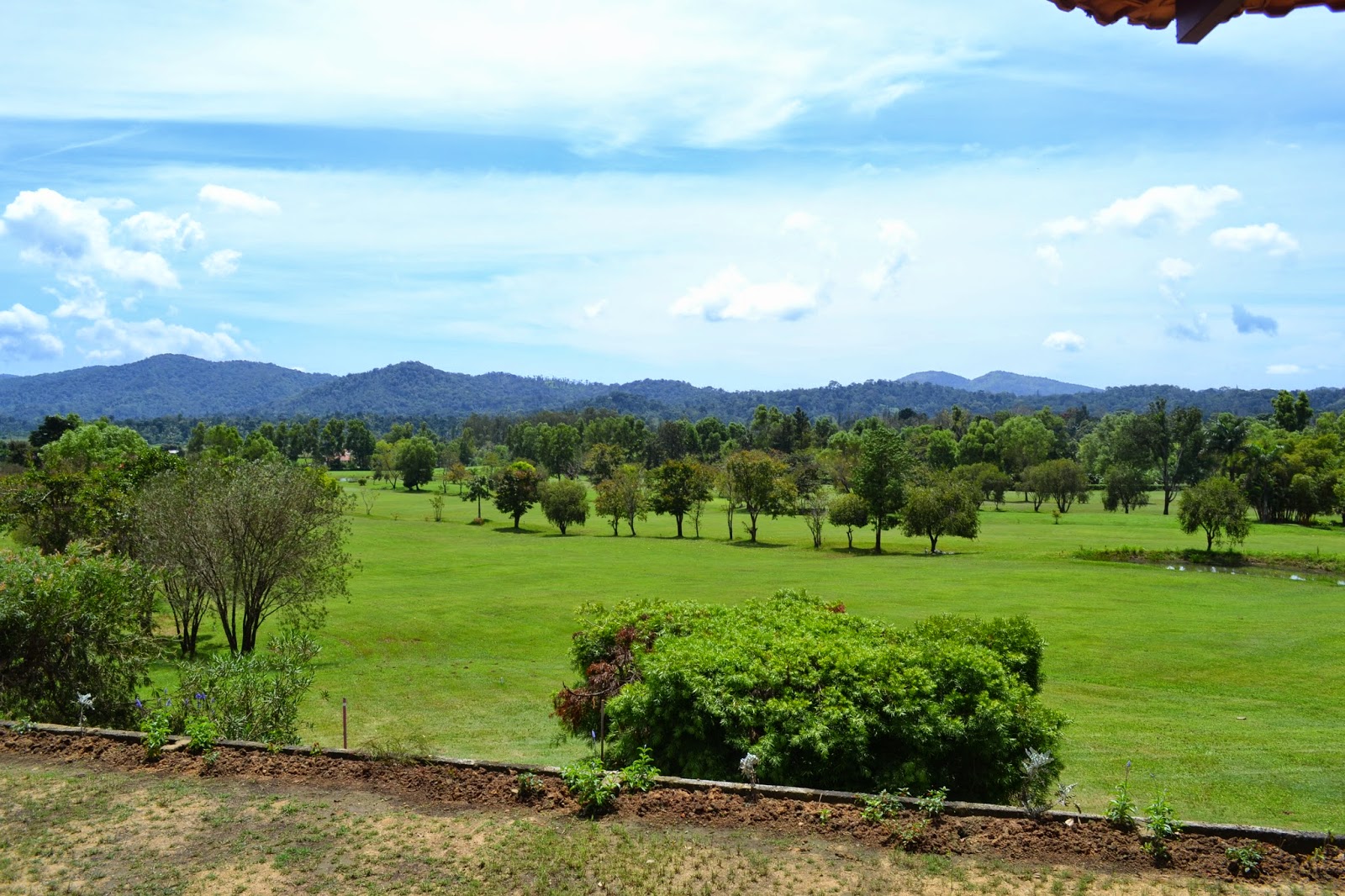
Having all the meals in the club house provides you an opportunity to gorge on the wonderful ambiance. The Western Ghats are clearly visible from the club house. The overall mood quickly enhances the appetite and one tends to indulge in gluttony. The food prepared by the club is simple and tasty. The club has a well stocked bar to nurse any flagging golfer back to good cheer.   
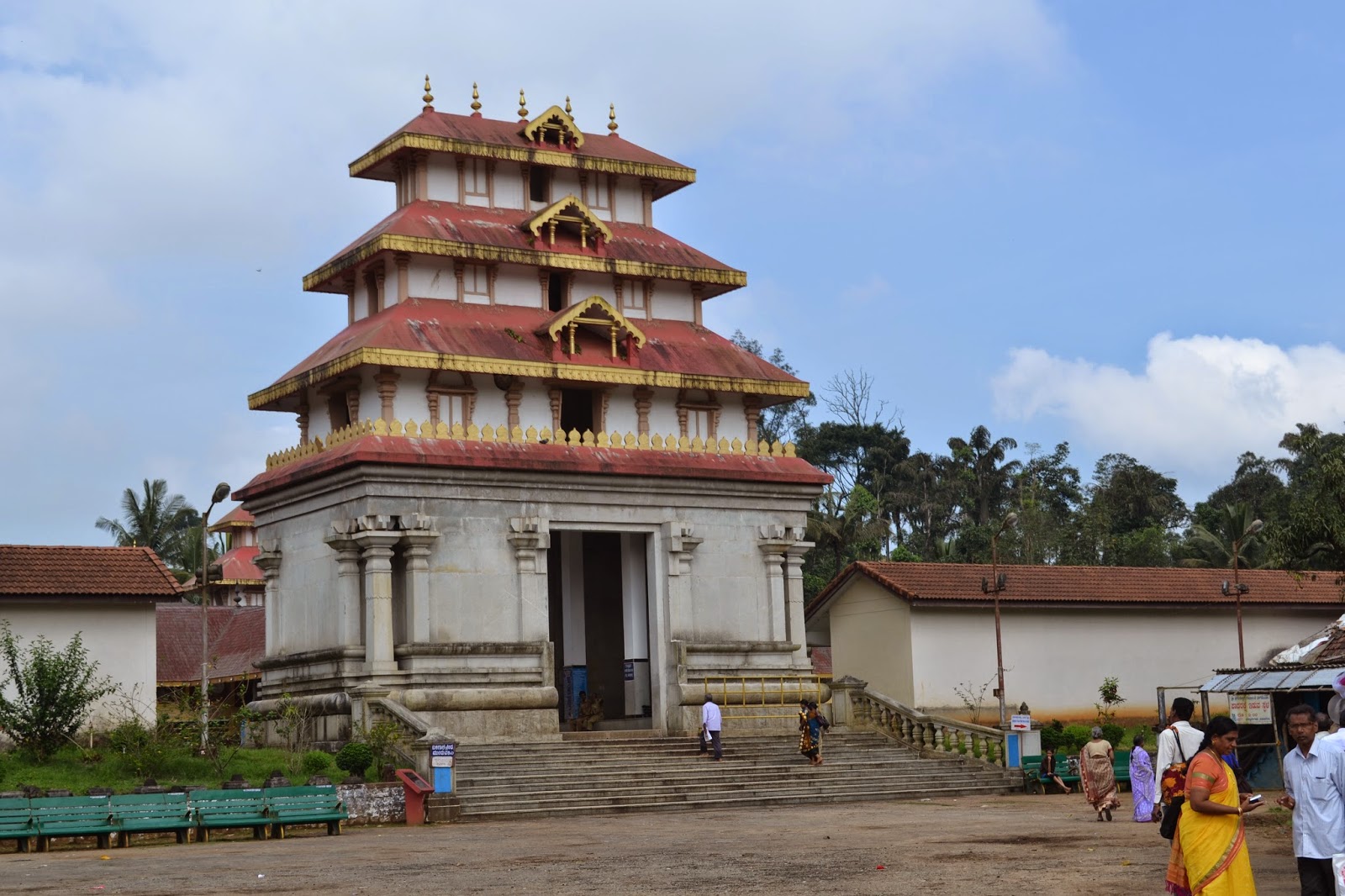
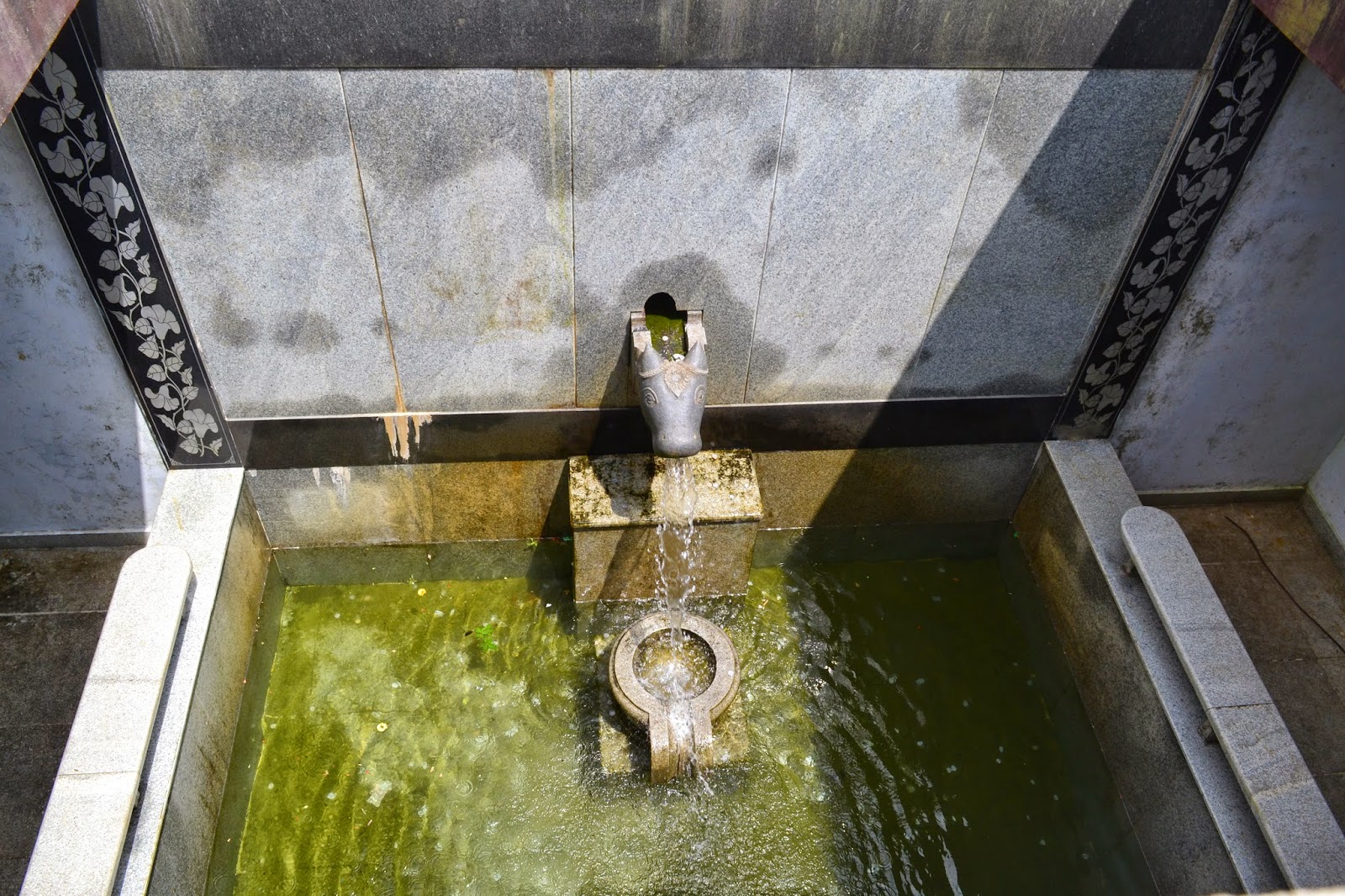
On 28th Sep, we visited Bhangandeshwara – Shiva temple at Bhagamangala. At this place, the river Cauvery is joined by two tributaries, the Kannike and the mythical Sujyoti river. Lots of devotees visit this auspicious place and take a holy dip at the ‘Triveni Sangam’. Thereafter we went to Talakaveri, the source of the river Cauvery.
Overall the holiday was full value for money – going with old friends is akin to getting into a pair of old shoes – tested and tried, totally comfortable, warm and familiar. Having rested body, mind and soul, we returned to good old Bangalore on  29th Sep.
We were a tad disappointed to enter Bangalore and to face  the ground reality – over crowded streets, traffic jams, filth strewn all over the place and the accompanying ills of a growing metropolis.
Swachh Bharat campaign commencing 02 Oct 2014 initiated by our Prime Minister Mr Narendra Modi is a very welcome step; just hope it works.


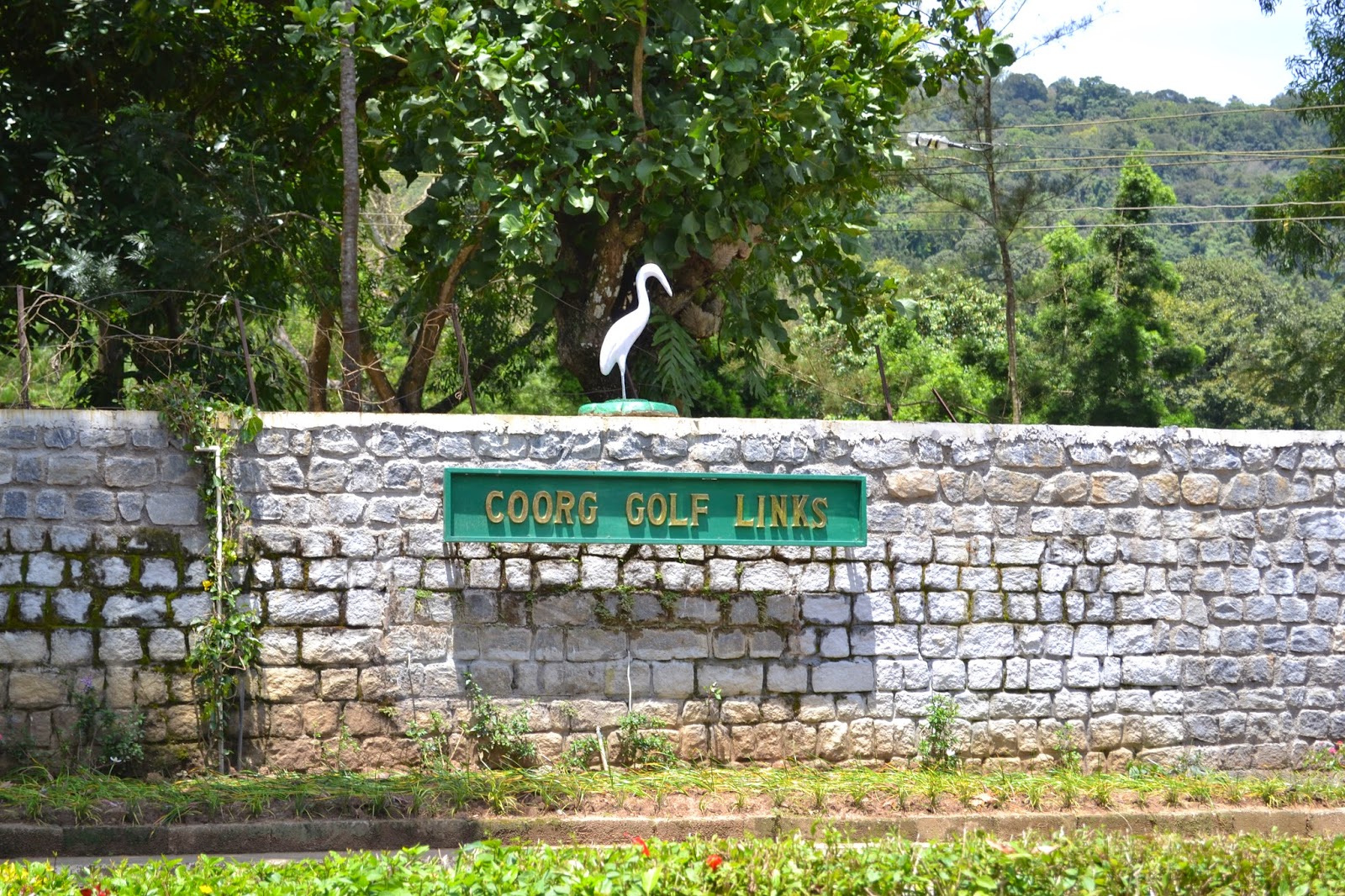
Figure 1– Proudly proclaiming its presence

Figure 2 – Club House

Figure 3 – View from the club house


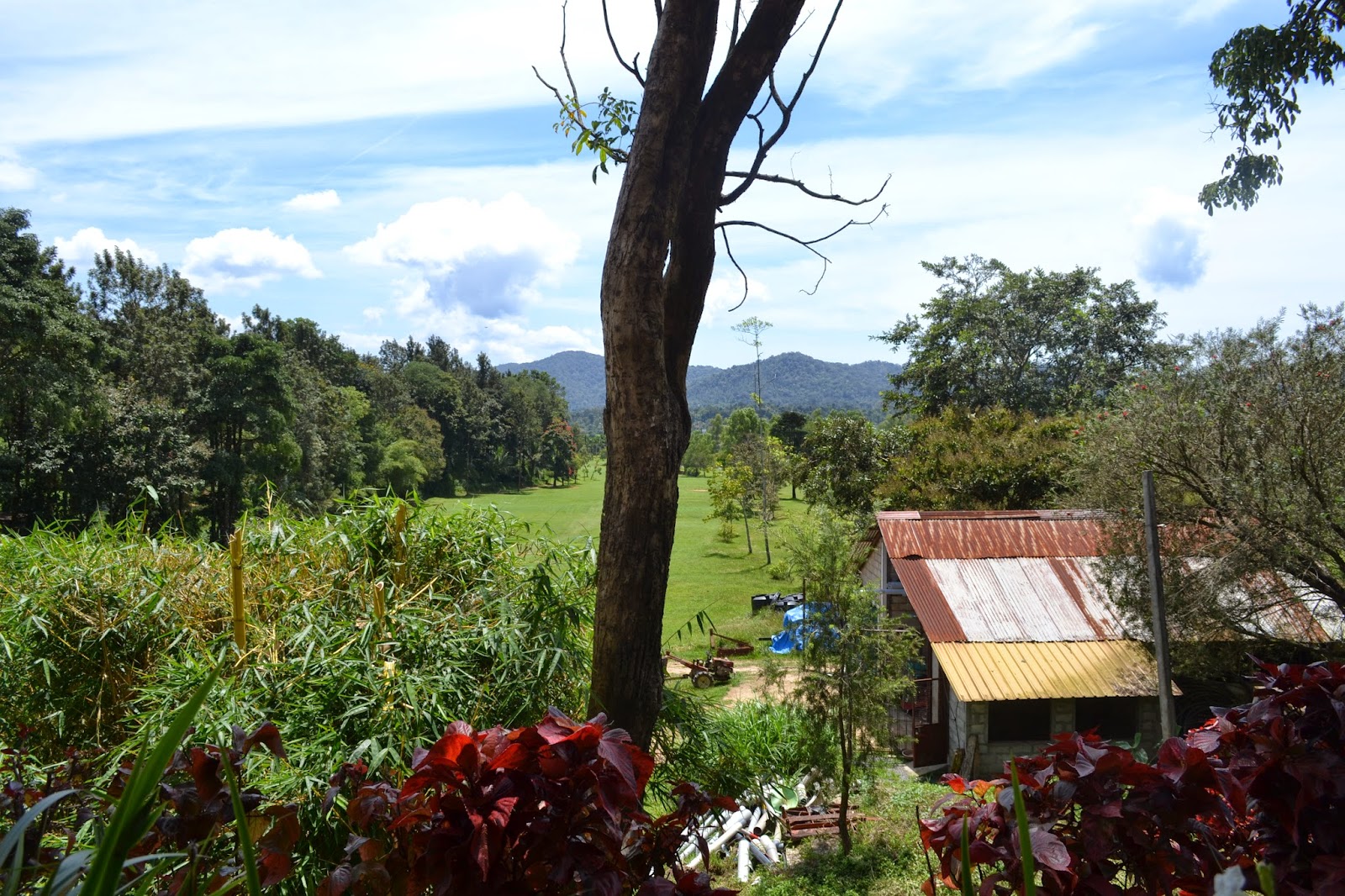
Figure 4 – View from the room


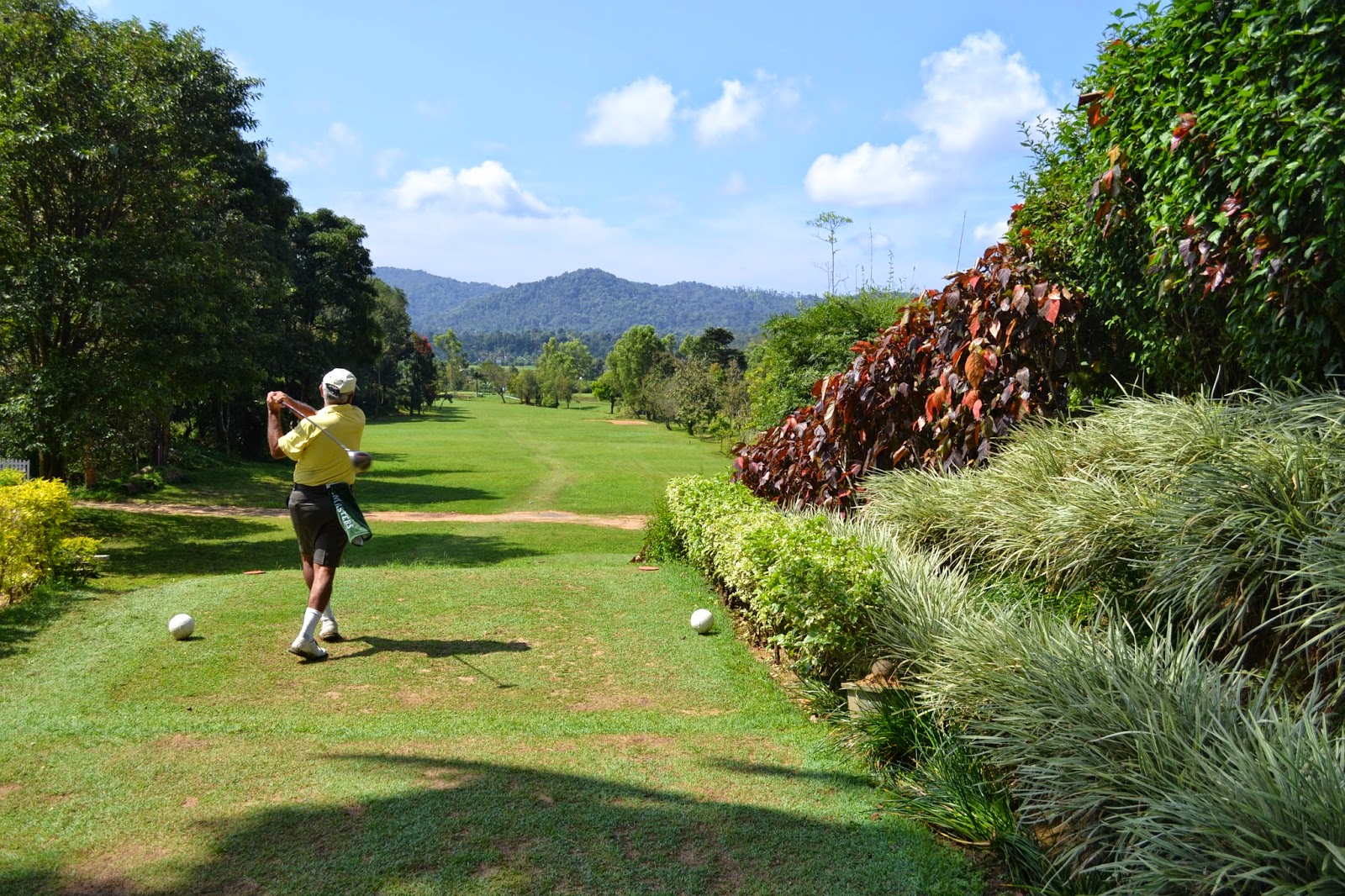
Figure 5 – Ashok and Sunder – Hole No 1


Figure 6– Cloud caped hills – Hole No 2


Figure 7 – Fascinating Greens


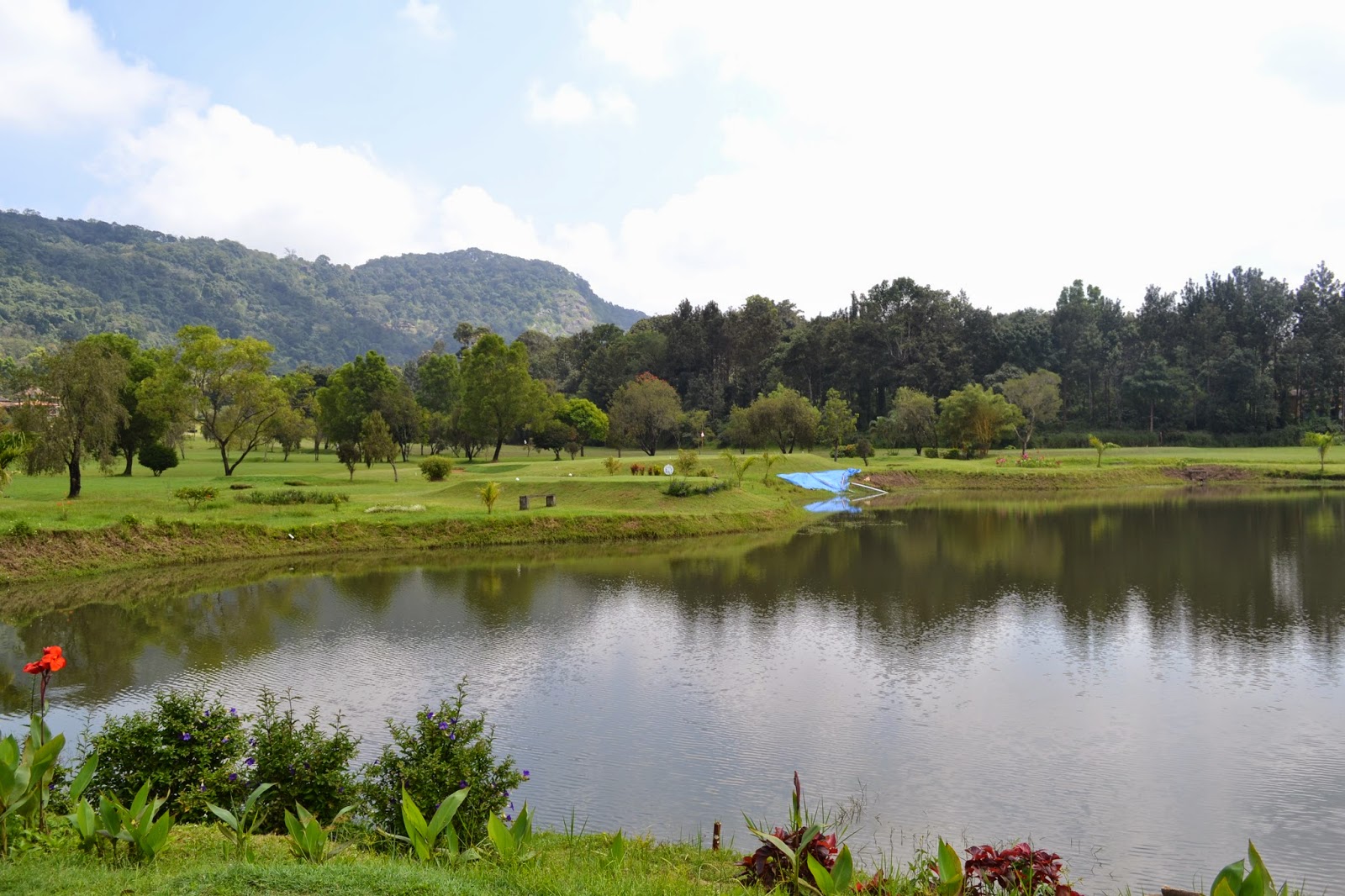
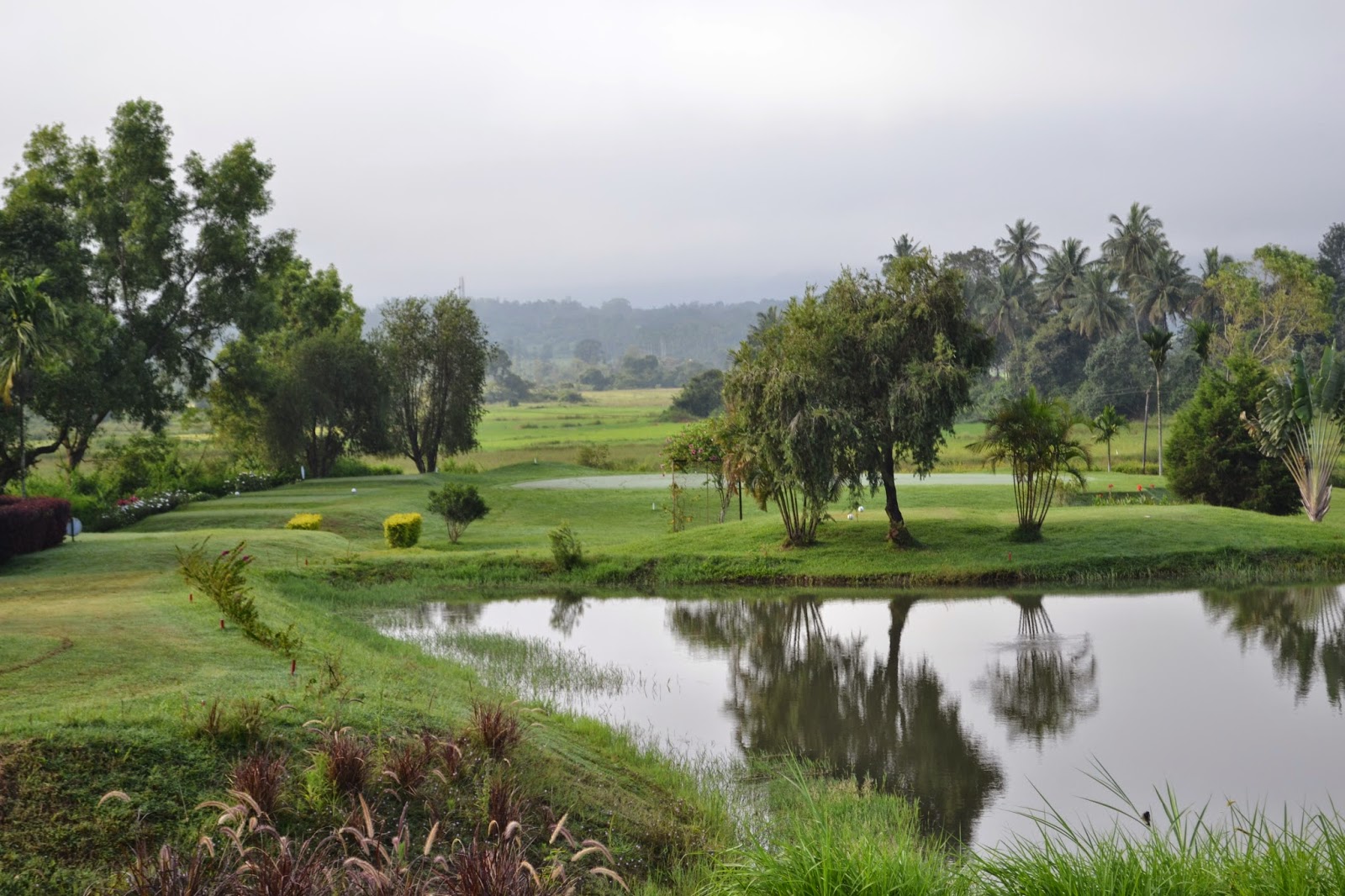
Figure 8 – Water body near Hole No 4


Figure 9 – Immaculate green

Figure 10 – The climb takes its toll


Figure 11 – A bit of rest at Hole No 5


Figure 12 – Very helpful caddies – Sumitra, Samir and Jaffer


Figure 13 – Looking down into the plains


Figure 14 – Hole No 6 winds its way through


Figure 15 – As the ball rolls to Hole No 6


  Figure 16 – Longish Hole No 7

Figure 17 – Text book Tee off at Hole No 10 by Ashok
Figure 18 – Water body near Hole No 12


Figure 19 – The staff of CGL and my caddy Zeenat with Putter and Driver – far Right

Figure 20 – Photo op

Figure 21 – Pushpa and Ashok all set to return to Bangalore a day earlier


Figure 22 – Evening sky over CGL


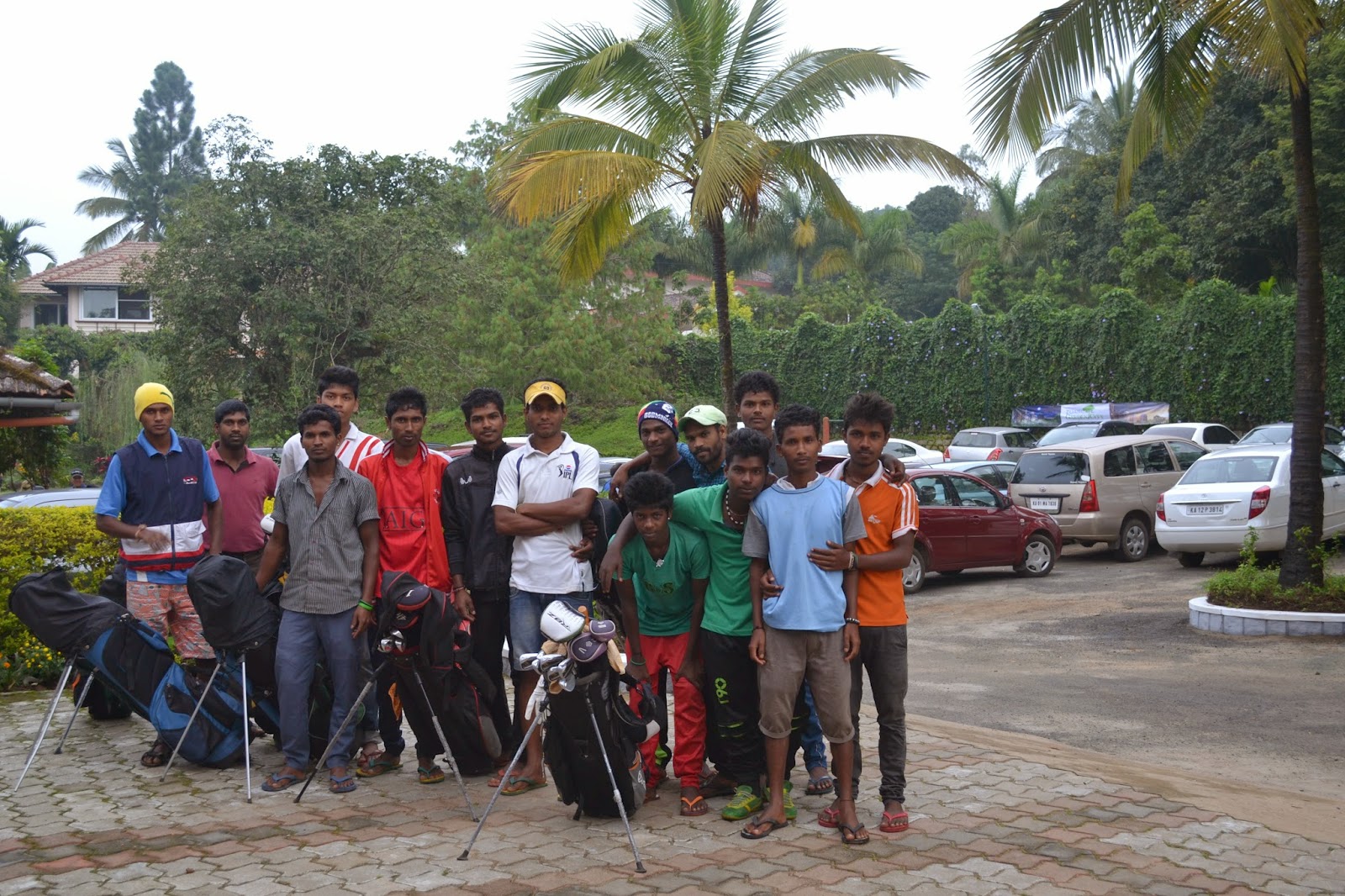
Figure 23 – All the caddies for the championship on 28th Sep


Figure 24 – Bhangandeshwara – Shiva temple at Bhagamangala


Figure 25 – Source of River Cauvery

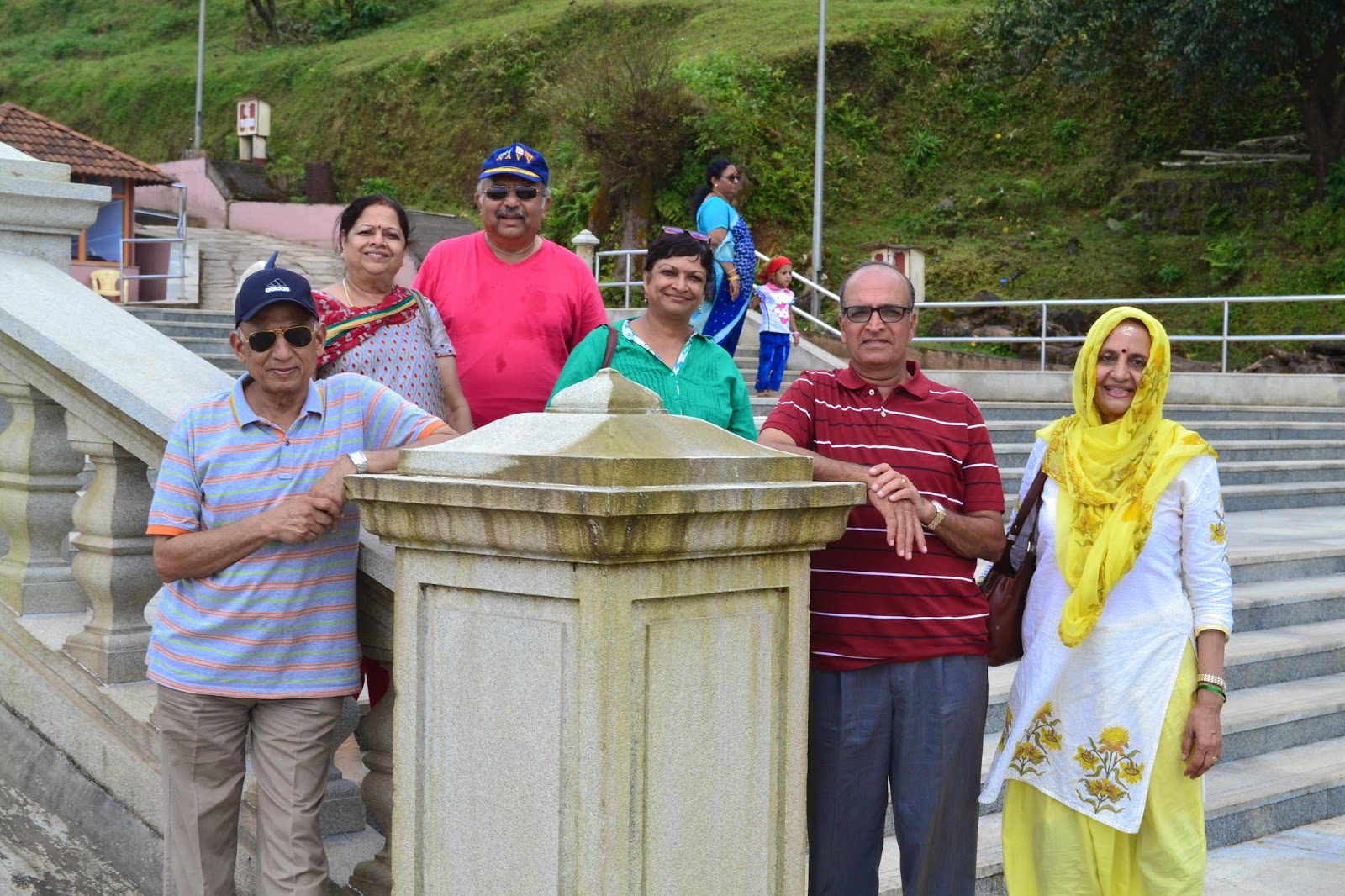
Figure 26 – The gang after receiving Cauveri devi’s blessings

A Typical Indian Trait

    
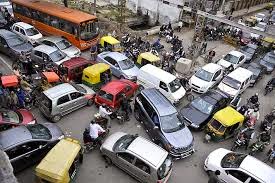
It was late in the evening and we were returning home after a good dinner at my cousin’s place. The traffic from South to North Bangalore at 9 pm is generally moderate and flows smoothly – provided all the traffic lights are functioning. Traffic lights in Bangalore represent an invisible superior force controlling and regulating our movement. Ninety percent of the people obey the rules without a second thought. They stop when it is red and start moving when it is green without any additional prompting. The presence of a policeman is another effective motivator.
We were cruising along Kasturba Road listening to some exotic Latino music that night. As we reached the end of Mahatma Gandhi Circle, all hell broke loose. The most dreaded thing happened – the traffic lights failed.


The moment the invisible superior force was removed, the ever dormant primordial behavior – to grab, rush, sneak, squeeze, took over the entire fleet of cars, buses, two wheelers and autos. Within a minute, orderliness gave way to random chaos and Mahatma Gandhi Circle, a junction of six roads resembled peak hour traffic on a suburban train in Mumbai. May his soul rest in peace. A traffic grid formed within a very short time and all vehicles came to a grinding halt. Every inch of real estate was occupied by extra eager drivers elbowing their way out ahead of others. No maneuvering was possible. To make matters a whole lot worse, there was no policeman in sight.

If you look closely at this incident – one thing stands out loud and clear – ‘the moment there is no supervision we lose all self control – group behaviour is replaced by each individual’s survival instincts – each one for himself and to hell with rules, orderliness and teamwork. The same type of behaviour is true in bus stands, self help food counters, reservation booths and so on. This type of conduct is a typical ‘Indian Trait’.

In a macro sense this trait applies to every aspect of our daily lives. Without supervision students copy in exams, we forego official receipts to skip taxes, throw garbage anywhere we like, a deserted spot becomes a certain and convenient urinal and so on. We care for ourselves and are least concerned about the community we live in.

I am beginning to believe that as Indians, we require supervision at all times. Somewhere in our genetic coding ‘self discipline’ has been left out. Supervision and policing helps tremendously in turning an Indian from a greedy individual to a team person. If the supervision is from a foreign source it is even better.

There is nothing else that can explain our phenomenal success on foreign soil. Uncle Sam’s omnipresence has helped Indians to excel in every field in the US of A. Strict Singapore laws ensure that we obey all the rules and regulations to the ‘T’.

The time has come to stop blaming the BJP or Congress for our fate – it is up to each one of us to work without a ‘danda’ (stick) behind us or a carrot in front of us.
             

Soup for your soul

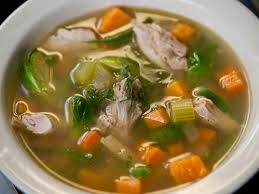
Ever since I joined the NDA a bowl of soup has been on my menu. Later on in the navy, soup was a regular item on the dinner carte du jour. Many glorious evenings were spent sipping ‘Mulligatawny Soup’ – an Anglo Indian invention- it is a combination of the Tamil words molaga (pepper) thanni (water).Cream of Almond soup was for important functions – heavy but a very delectable soup. Mixed vegetable soup (grated leftover vegetables cooked in water) was a regular feature along with its miserable partner ’Cabbage Foogath’ during the lean seventies. Chicken soup was for parties and there were many others.

Soup has been around all through the ages. In times when food was scarce, dumping various ingredients (often left overs or just the bones stripped of all its meat) into a pot to boil was not only cheap, it was filling. Its simple constitution made it accessible to rich and poor alike, and plain ingredients made it easy to digest for both the healthy and the sick. Military hospitals are very adept in dishing out soups to nourish a sick soul. Naval duty free canteens had ‘Maggie’ soup powders long before it hit the Indian market. Our children grew up having Maggie chicken and tomato soups.  


Ordering Sweet Corn Chicken soup in a Chinese restaurant was mandatory. I loved this soup and never let go of an opportunity to slurp it up. On the other hand my very dear friend KM Nair would always say, ‘No soup for me, thanks!’ and then end up quietly instructing the waiter to get an empty bowl – to devour half my soup –to my utter annoyance! Prem, my brother Sudhir and I went to attend Nair’s wedding in Thiruvananthapuram and on our way back we ordered SCC soup in Alleppey. The three ingredients namely – corn, chicken and sweet arrived separately and to add further misery the soup was luke warm. Tomato soup has been mercilessly butchered over a period of time in all Indian B grade restaurants, ‘Sagars’ and ‘Darshinis’.

In Russia they served us hot and steaming ‘Borshch’ made out of tomato, beetroot, cabbage etc. Soup probably has something do with cold weather. Rasam is an excellent soup to have when one is sea sick. All Indian naval ships serve rasam liberally at sea.

Over the years the art of souping has waned in the navy, in our homes and in restaurants. Along the way, soup somehow got attached to sitting in dinners, formal state dinners, cold weather and so on. People hardly drink soup any longer.

Of late, along with salad ‘Soup’ has become an integral part of our dinner at home. Salad, soup and toast are all a part of our ‘bill of fare’ on most nights. Soups are very nutritious, low on fat and calories and extremely filling.

In the French tradition, soups are classified into two broad groups: clear soups- ‘bouillon’ and thick soups –‘consommé’. The choice is entirely yours. I normally make soups with ingredients which are easily available in the market. My regulars are tomato, sweet corn with coriander, mushroom, celery, spring onion, mixed vegetable and on rare occasions cream of almond soup. Keep the preparation simple and easy to make.

One can improve the taste of the soup by using a stock. Chicken stock is generally used in all soups in lieu of water. Maggie chicken soup stock cubes can also be used in lieu. Vegetarian stock can be made by boiling celery, leek/onion and cucumber.

Try and avoid flour, instead use boiled potato, pumpkin or cauliflower mash to provide the required foundation. Ensure there are no lumps or residue in the soup. Use judicious amount of coriander, parsley, spring onion, dill, mint etc to garnish. Cheese and cream go very well as topping prior to serving. Use only butter or olive oil for cooking or sautéing. Hot soups should be served hot and cold soup – cold – no shortcuts are allowed. At the end you should be able to retain the taste of the vegetable intact. It is wise to use slightly less salt and pepper. Freshly ground pepper is a taste multiplier. One may add a little more from the table to suit one’s individual preferences. Sauces in a very small measure add zing to the soup. Try Chili, Tabasco, Worchester and soya sauce. You can also try using herbs, but with utmost care, as they tend to take away the original flavour and overpower the soup with their own.

I heard this story in the early seventies from a test cricketer friend. “Once the Indian cricket team was having dinner and one of the players was very audibly slurping his soup, ‘fruk, fruk!’ Very annoyed at the new comer and his bad table manners, the famous Farook Engineer is reported to have said, politely but sarcastically, “Yes, excuse me? Did you call out my name?”
I strongly recommend you start souping from today. To help you in joining the ‘Soup for your Soul’ club, I have given you a few recipes which are basic and simple. The rest is left to your imagination, daring and keenness on experimentation.

Visit my other blog http://recipebaba.wordpress.com/ to read recipes for Sweet corn with Coriander Soup, Mushroom Soup, Celery Soup, Tomato (egg drop) soup and Mixed Vegetable Soup.

Similarly, you can make onion or spring onion soup. The veggies are cut fine and sautéed in butter. Add either maida or potato for foundation and the rest is simple – do not grind. Spinach needs to be cooked, ground into a paste and strained. Add two or three cooked garlic pods while grinding.


Happy souping!!!


My Salad Days

I have always relished salads and have been making a variety of salads for ages and ages. The word “salad” comes from the Frenchsalade of the same meaning, from the Latinsalata (salty), from sal (salt). In English, the word first appeared as “salad” or “sallet” in the 14th century (wiki).
In Karnataka, salads go by the name of ‘Kosambari’ or ‘Gugari’. Elsewhere in India it is often called Kachumber. I am sure there are many more names and avatars in every part of India. We have a plethora of ‘Raitas’ – which in a broad sense may be termed as a ‘salad with loose dressing’. With a slight stretch of the imagination ‘Chaats’ may also come under this classification.

In my salad days (pun intendedJ) I used to make salads for parties, but now it has become an integral part of our daily dinner menu. It is healthy, with lots of freshness to provide the zing factor and above all, it lets you relish each and every ingredient. In addition, it provides all the required fiber, essential vitamins and minerals. It also helps to fill up your stomach – especially when your eyes are bigger than your stomach. There is no better way to keep your weight under check.


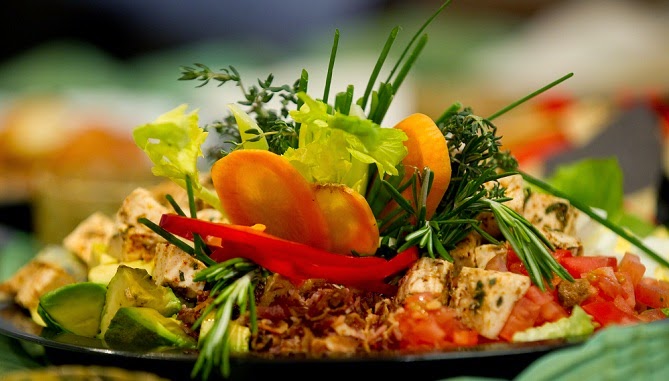
I use tomato, cucumber, carrot, onion, capsicum, radish, mushroom and cabbage from the vegetable basket. Varieties of lettuce and rocket leaves make up the greens. One should use fruits to complete the salad. Apple, grapes, raw mango, star fruit, pineapple, black berry, pomegranate, water melon, pear or avocado taste great in a salad. Mint, basil, dill, celery, parsley, coriander or spring onions provide the required flavour to the salad. Never even think of making salad with left over vegetables –that would be sheer blasphemy! Never store a prepared salad overnight and serve – it would have lost all its aforementioned zing. Whatever you use, make sure it is crisp and fresh.

If you are trying to make a full meal out of the salad and would like to incorporate some protein, add shredded and cooked chicken, hardboiled eggs, prawns, ham etc. To get a crunchy feel, add walnuts, almonds or pistachios in small quantities. Cheese is an inescapable part of any salad, especially parmesan, feta and goat cheese; there are many others to suit every palate – paneer and tofu do the job equally well. Olives, garlic, ginger, gherkins and jalapenos add the necessary punch. Salt, pepper, lime juice, vinegar and honey complete the picture. Dry herbs also give subtle overtones to the salad. One can use a number of sprouted lentils too. I often add American corn to throw in a bit of carbs. For a change, you can also use rock salt and chaat masala- why not? Edible flowers are another unusual option – try rose petals for colour and a subtle flavour. Before I windup – booze is a big game changer – both in the cook and in the salad. A bit of wine can add a lot of fizz.
Salads can be served plain or with a dressing or sauce which may be light, moderate or heavy. One may experiment with various dressing combos; olive oil, tomato ketchup, mustard sauce, butter, eggs and cheese along with salt, pepper, honey and vinegar are distinct possibilities. Do not attempt to use anything other than olive oil.

The preparation of salad is all about maintaining the freshness and individual flavors till it is on the table. I use four to six ingredients at any given time. Keep it simple – I recently served pomegranate seeds on rocket leaves with a hint of salt and pepper, lime and olive oil. For the dressing I used liberal amounts of feta cheese. I also like Greek salad with Tzatzki. Adding one fruit will go a long way to improve the basic taste of the salad. Garnishing should be sparingly used as it has the tendency to overpower the taste of vegetables. Similarly dressing should be used in moderation or kept on the side.

Wash all the vegetables well, especially the leafy ones and dry them thoroughly before using. (Use a salad spinner)  Lettuce should be absolutely dry to give the correct texture. Cut the veggies and fruits into cubes, rings, ellipses or julienne or shred them to a comfortable size. Tear the leaves and let them remain whole if possible. 

Salad as a rule should be served fresh, meaning – cut, garnish, dress, toss and serve. If it is not possible to serve the salad immediately, for instance during parties- cut the vegetable except greens, lettuce and store it in the fridge and add the G & D just prior to serving. If you don’t, the leaves wilt, mint and basil become dark and look unpalatable.

Raitas are fresh vegetables finely cut or shredded and mixed with thick curd. Coriander, green chili, and grated coconut are used for garnishing. Whereas cucumber and tomato are used raw, cut onions, capsicum, grated carrot, beetroot and radish are half cooked. Aloo raita is delicious.  At times garnishing with red chili, curry leaves, mustard and cumin is also done. Another great option is to grind mustard, green chillies and coriander leaves, add curd and put the usual raita veggies in.

Another very important aspect of any salad is its presentation. Food is all about one third presentation, one third taste and of course one third hunger. Try to make it into a beautifully designed work-of-art on a plate, full of bright colours, different textures and hidden delights. Use the net for more information but create your own salad to suit your taste, using what is easily available in the market. There are no boundaries in choosing the ingredients – be creative. Do not be afraid to experiment.

I often use pesto sauce on the side, mustard sauce with cheese and butter, olive oil with lime and honey, hung curd with dill, garlic Tzatzki etc. You require –  honey, sugar, vinegar, red wine, olive oil, curd, butter, cheese, cream, eggs, lime, Worchester sauce, Tabasco and lots of courage and imagination to churn out the best sauces.

There are no rules in the making of salads– make what you like, but become a “Saladarian” today.

Here’s a PJ for you:
Q: What is a Honeymoon Salad? A: Lettuce alone, with no dressing J