
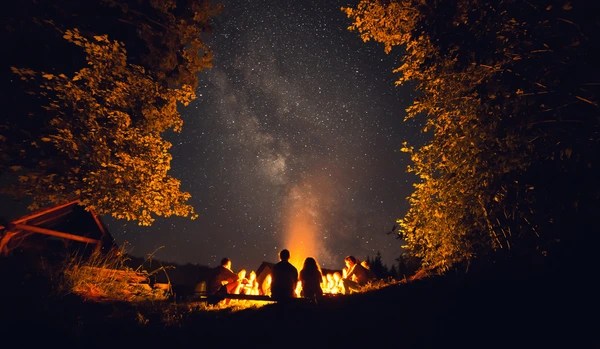
In the month of March, the festival of Holi is celebrated all over India. It is a traditional spring festival. It is mainly held on the full moon day in March and celebrates the arrival of spring. Holi is also known as the festival of colours. The revelers throw coloured powder or splash coloured water on each other in gay abandon, wishing each other an exuberant “Happy Holi!”. The day before Holi , Holika Dahan or Choti Holi is celebrated wherein a bonfire is held to burn all the evil deeds of the past and make a new beginning from the next day forth.
There are many ancient legends associated with the origin of Holi. Legends vary with geography and community. The underlying reasons remain the same – celebrating the harvest, the triumph of good over evil and an opportunity for the community to get together and enjoy a day full of merriment.
In the fifties, our family resided in Gavipuram in South Bengaluru. Basavanagudi, Gavipuram and Shankarpuram were the bastions of old Mysore. Come spring and summer, these localities observed many cultural and religious functions. Popular among them were Kamana Habba, Ramanavami, musical concerts and Hari Katha.
In South Bengaluru Kamana Habba meaning ‘festival of Kama’(God of lust ) was celebrated on the day of Holi. A day before the habba (festival), all the youngsters of the locality used to form a team and visit houses singing the Kamana Song in Kannada ‘Kamana kattige bheemana berani, adike gotu, yekkada detu, kaamana makkalu kalla soole makkalu yenyenu kaddaru soude berani kaddaru yatakke kaddaru kaamannana sudakke . Isati kamana hingaytu, asati kamana hangaytu! Varshek omme baruvaru navu, sada baruvaralla. Kodo mamuli kotta bittare, matte baravaru alla!’
In essence, this means, “The children of Kamana stole fire wood, dried cow dung cakes, areca nut husk and burnt Kamana. We come only once a year so if you give us the usual stuff, we will go away!”
I was around 10 years old and the Kamana Habba meant a lot to me. More than the religious fervour, it was the idea of collecting fire wood from houses and in some places stealing them which added a sense of adventure and mischief to the whole exercise. We visited all the houses in the locality singing the Kamana song and exhorting the house owners to donate willingly or face the wrath of the thieving children of Kamana. Most of the houses gave the firewood willingly. In them days, every house had coconut trees and there were enough dried fronds stored to be given away on such occasions.
Three incidents are permanently imprinted in my memory. In our locality there was an excellent coconut tree climber, who would climb the tree in a jiffy and break loose a frond or two, while still hanging on the tree. On one such climb, he unfortunately slipped and fell from the tree.
In another incident, a very angry and unwilling owner, when asked to donate firewood, brought out a double- barreled gun and fired into the air.
My cousin Anuradha, a year younger to me had come to our place during the Kamana Habba festivities. Being a very spirited and fun loving young girl, it seemed natural for her to join me for collecting firewood. However, her presence did ruffle a few feathers. Girls very rarely joined the foray in those days.
The entire loot was shifted to the Kohinoor Grounds in Gavipuram. In the evening a huge bonfire was prepared. Many sugar cane stalks were also placed on the bonfire. My grandfather used to draw an effigy of Kamana, which was placed right on top of the heap. A prominent personality from the locality was invited to light the bonfire.
All of us would run around the bonfire singing the Kamana song for the last time. The crackling of the fire wood, its high flames and innumerable sparks flying in all directions, added to the glory of the night. The entire proceedings was watched by a benevolent full moon. The excitement peaked when the sugarcane stalks burst and flew out. Getting hold of a hot piece of stalk and eating the sugarcane was a well-earned reward.
The finale was the distribution of ‘prasada’ in the form of Bisi bele huli anna and curd rice given to all in a donne. (a cup made out of dried palm leaves)
Later, as the city grew and became more cosmopolitan in nature, this fascinating tradition of old Bengaluru was relegated to obscurity. Kamana Habba was a joyful activity which brought the whole community together for a day. It made us forget all our differences and served as a community binder.
 Captain's Corner