Big is Better and More Beautiful

Recently, there was a report in TOI that Starbucks has introduced a 916 ml coffee cup. Until now, coffee retailer Starbucks offered 3 sizes: ‘tall’, ‘grande’ and ‘venti’. The coffee giant is adding a new size, which will hold more than the contents of a normally full human stomach. The new ‘trenta’ size will hold 31 ounces, or 916 ml of select Starbucks beverages, and will top the current largest offering (‘venti’) by 7 oz. To put this in perspective, the average capacity of a human stomach is 900 ml. The quantity is much more than a 750ml bottle of beer.


A report states that over the past few decades, portion sizes of everything from muffins to sandwiches have grown considerably in America. In a matter of 20 years, two slices of Pizza has gone up from 500 to 850 calories, coffee from 45 to 400 cal, popcorn from 270 to 630, bagel 140 to 350, cheese burgers from 390 to 590. To top it all, when McDonald’s first started in 1955, its only hamburger weighed around 1.6 ounces; now, the largest hamburger patty weighs 8 ounces, an increase of500percent.

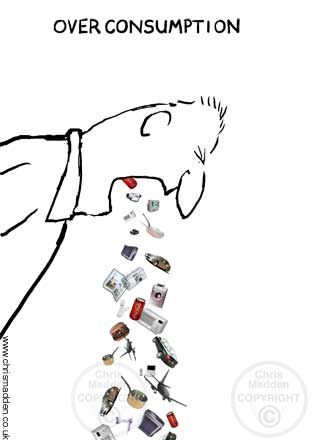
Consumerism has entered all facets of American life forcing the people to eat more, buy more and spend more. The disease is not just restricted to food alone; bigger cars, larger houses with no relation to the number of occupants are some of the examples of over consumption. It is reported, ‘The marketing industry is forcing children to grow up quickly. Industry research reveals that children 11 and older don’t consider themselves children anymore. The Toy Manufacturers of America have changed their target market from birth to 14, to birth to ten years of age’. Similarly, ‘By treating pre-adolescents as independent, mature consumers, marketers have been very successful in removing the gatekeepers (parents) from the picture—leaving them vulnerable to potentially unhealthy messages about body image, sexuality, relationships and violence.’

At 246 pounds per capita (carcass weight), people in the United States and Hungary are the largest consumers of meat, followed by those in Australia (234 pounds) and Canada and Belgium-Luxembourg (201 pounds).USA represents 5% of the world’s population, yet it consumes over 30% of its resources. Over consumption of energy, oil and other natural resources are well documented.


In his books ‘The Waste Makers and The Hidden Persuaders’, Vance Packard, the late journalist and social critic, suggested that Americans have been seduced and manipulated by corporations and businesses into becoming ‘wasteful, debt-ridden, permanently discontented individuals’ through the weapon of choice – too much choice -this is after all, a country which offers 400 kinds of breakfast cereal!! Manufacturers and advertisers have managed to seduce and persuade consumers to buy things they don’t need and don’t know they want. This including bringing in the ‘two-of- everything’ syndrome, from cars to refrigerators to television, often because it came in an upgraded version or new colour or design. Soon obsolescence, including planned or manipulated obsolescence (such as advancing the use-by date on perfectly good and usable food, medicine, and other goods) became the ‘in’ thing in persuading people to throw things out. A ‘death date’ was built into products so that they wore out quickly and needed to be replaced. By manipulating the public into mindless consumerism, Packard believed corporations made Americans ‘more wasteful, imprudent, and carefree in our consuming habits’, thus using up natural resources at an alarming rate.


While the US consumes 24% of the world’s energy, the average American is said to use as much energy as 13 Chinese, 31 Indians and 128 Bangladeshis.


In all this, where is India headed? As regards consumption, we are yet to catch up with the West. No doubt, we have registered an increase in per capita consumption in various sectors in the last 20 to 30 years –but it relates primarily to our population acquiring minimum purchasing capacity for survival. Today a large number of Indian populations can afford to buy – cycles, hawaii chappals, battery torches, tooth paste, tooth brush, fans, watches, clothes etc.


Fortunately there is a ‘thread of thrift’ running in the Indian DNA. Somewhere along the evolution chain we have developed a habit of ‘making do’ with whatever we have. This spirit of adjustment has manifested itself in more ways than one. One look at our food assures us that we will not go the American way.


Masala Dosa has remained the same size – 8 to 9 inches in dia for almost 40 years – if at all, the dia may have reduced in some hotels. MTR now serves mini dosas in their thalis. Even our idli and vada has remained the same. I cannot imagine eating an idli which is five times bigger than its present size. Tea and coffee continue to be served in 120 to 140 ml size standard ‘lota’ (cup) – in fact in Bangalore we have a unique way of serving coffee – ‘one by two’ meaning one cup of coffee divided into two servings and served to two people. The term ‘one by two’ is a USP of Bangalore. Instead of increasing our consumption, we have gone around and decreased, by introducing – Mini Thalis, Plate Meals and Executive Lunches – less strain on the pocket and the stomach too.


If rice is left over, we make ‘chitra anna’ (lemon Rice) the next morning or mix it with water and have ‘kanji’ or add it to idli batter to get better texture and so on. Left over and dried bread slices are cut and made into ‘Bread Uppit’ – a remarkably tasty dish for breakfast. Nothing is wasted – refrigerator is manna from heaven for Indians – store and eat later on. Sour curd is used to make ‘majjige huli” (curd curry) with vegetables or for making ‘rava idli’ and in uppit to provide additional zing. The list is endless. In some cuisines even the inner part of the outer skin of fresh peas is used to make a tasty vegetable dish.

The other day both my Bata hawaii chappals’ strap got cut. My American cousin would have rushed to the shop and bought two new pairs. I also ran, but to a shoe repair chap and got the strap stitched – they are working fine. My washing machine is 11 years old and performing well – why go in for a newer model, which can talk, walk, sing, and dance? Talking about washing machines – all the old semi automatic washing machines are used to churn curd to extract butter in many parts of Delhi and Punjab. I find discarding good electronic computers and software, just because they have become obsolete or been overtaken by obsolescence, is a criminal act. Courtesy Mr Bill Gates and the like – it’s the ‘in’ thing today to discard and embrace new technology mindlessly. Cell phones are an excellent example of use and throw. I squeeze toothpaste and shaving cream tubes till my fingers pain or use a ball pen to sqeeze out every bit to ensure no finished product is ever wasted. Newspapers are re-used for vegetable waste collection, plastic bottles are used over and over again from storing food to growing money plants to pen holders for the kid’s room, banana leaves are used for all festivals and functions involving the feeding of larger numbers- the list is endless. The teachers in my wife’s school use old used notebooks as scrap books in which they stick important new paper cuttings that they want to share with the class. If Pepsi cans are bought at all, they are later used to collect coins in. Old perfume bottles are kept in the drawer containing ‘unmentionables’ in order to give them what’s left of their fragrance. Mugs with broken handles are used as pencil holders. I have started a campaign to make Jal Vayu Vihar Association into a paperless office.


The Tata group has recently started a budget hotel chain ‘Ginger’ which gives the basic minimum with no frills. The rooms are small, clean and having only the bare essentials. It’s a welcome change from the very opulent and exorbitantly priced five star hotels. Similarly their small car ‘Nano’ – an ideal car for Indian conditions- ‘small is savvy’.


Enrico Fabian is a German-born, Delhi-based photographer whose work is on display at the India Habitat Center. Fabian spent three months in 2008 working alongside the NGO Chintan documenting the daily life of the Kabariwala, a general term used for people in India who collect and sell recyclable materials. Some of his findings are truly astonishing and an eye opener to many. He notes” Recycling is done to make money by low-level Kabariwalas who sift through dirt, food and shit to collect plastic bottles, paper, glass, and metal”. According to Fabian, there are about 1,50,000 Kabaris total in Delhi alone who recycle about 59% of the city’s waste to support themselves and their families. Further, landfill trash- pickers collect what street-level trash-pickers miss. Over a million people in India earn their livelihood through waste recycling.


At the heart of Mumbai city – surrounded by posh, luxurious skyscrapers – is Asia’s largest slum, Dharavi. It spreads over 525 acres (212 hectares) and is home to more than a million people. Recycling is one of the slum’s biggest industries. Thousands of tonnes of scrap plastic, metal, paper, cotton, soap and glass revolve through Dharavi each day. Roughly 6,000 tonnes of rubbish produced each day by a swelling Mumbai continues to sustain an estimated 30,000 rag pickers, including many residents of Dharavi. The slum is also host to some 400 recycling units. Walking through Dharavi, home to an estimated 15,000 single room factories, it is difficult to find anything that is not recycled here. A new estimate by economists of the output of the slum is as impressive as it seems improbable: £700m a year.
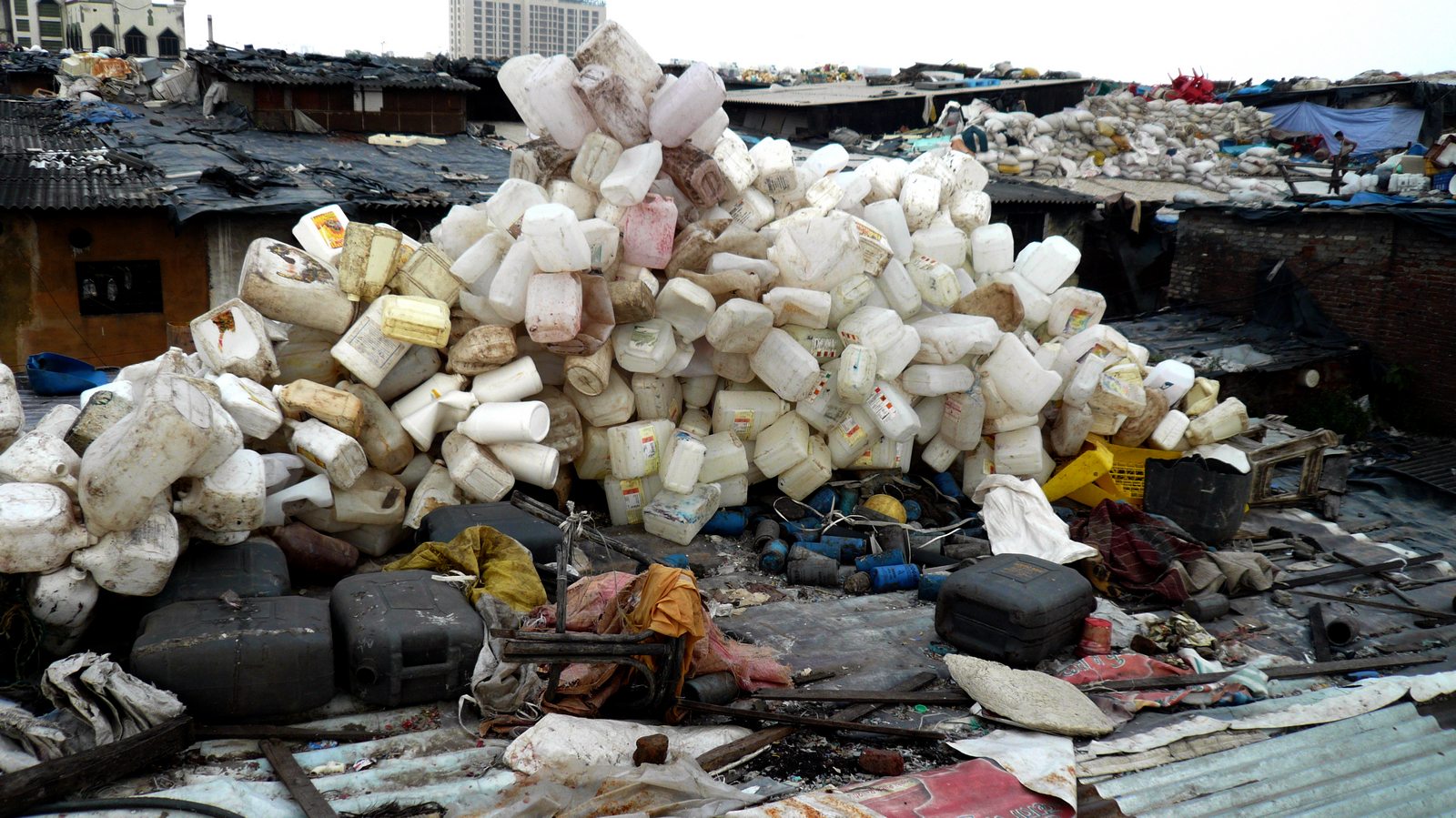


Figure 1 Dharavi Plastic Recycling Scene


Western analysts link recycling to poverty – I am not very sure. Recycling is intrinsic to us and we need to not only continue but cherish this very valuable social habit. The danger lies in our children becoming wasteful and our industry using more packaging than is required, forsaking the environment for good looking products on super market shelves.


Hope and pray that the Indian corporate sector does not blindly follow the Americans in encouraging people to over consume and disguise chicanery as a marketing gimmick.
A Rustic Day Out With Our Grand Children

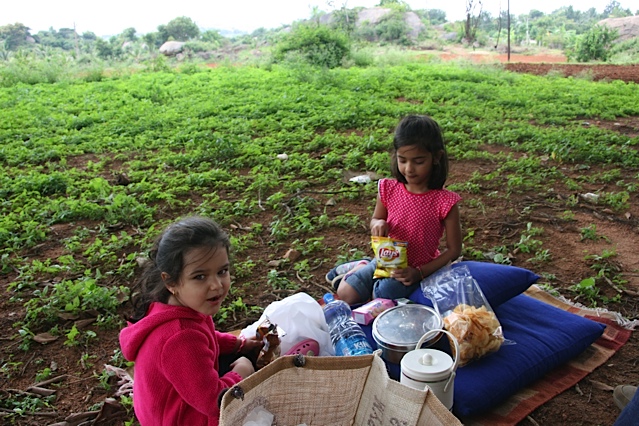
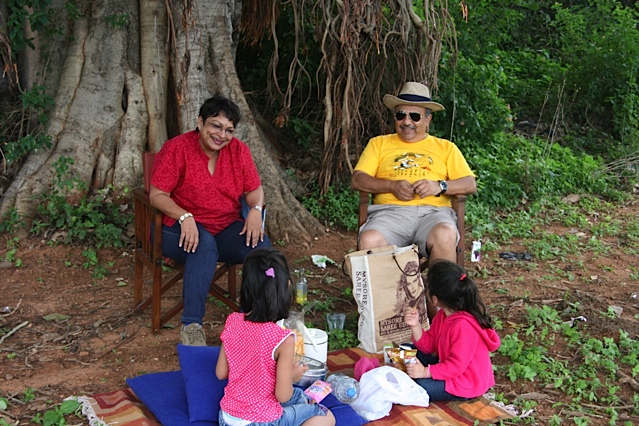
Picnics are a great way of bonding with children. There is something elemental about any outdoor activity. Picnics give all of us an opportunity to embrace nature and bask in the glory of god’s creation. Jai and I planned a picnic with our granddaughter Samara and her very dear cousin Isha. The plan was to take them out of the house and spend a day in the rustic country side – far away from the city, its noise, crowd, cement and pollution. They were told to bring their food in Tiffin box, along with water bottle, napkin, a pair of sun glasses, hat, umbrella and a change of clothes – just in case they get wet in the rain. The girls were really excited and followed the instructions to the T. They pestered their parents and got all the items packed and ready the previous night. On our part – we carried two chairs, ground sheet, cushions, a simple lunch consisting – idly, Puliyogare (Tamarind Rice) and curd Rice, potato chips, soft drinks and other knick knacks like plates ,spoons, napkins etc. Ooops I almost forgot – ice box and restorative potion.


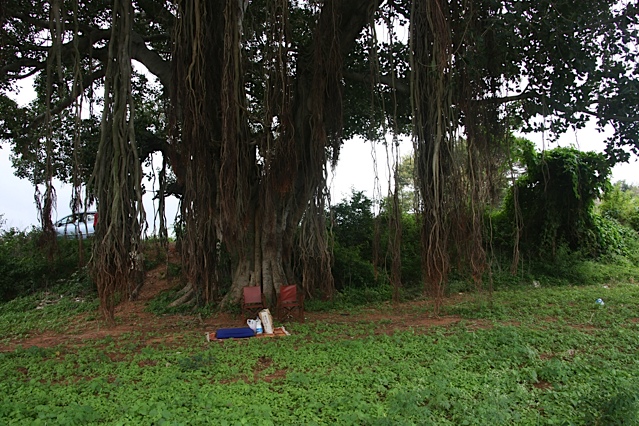
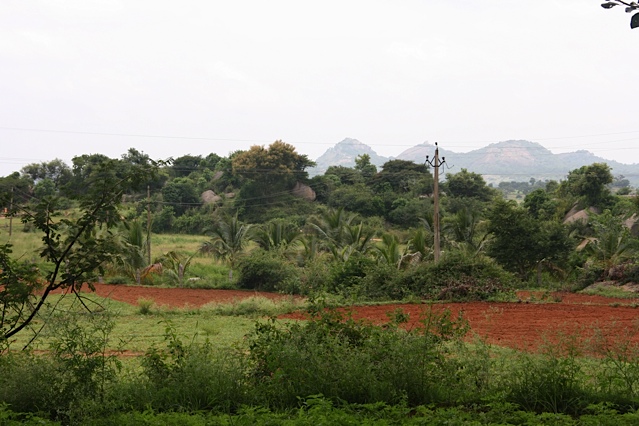
The original plan was to visit Thippagondanahalli Reservoir, also known as T G Halli Dam or Chamarajsagar, located at the confluence of the Arkavathy River and Kumudavathi River, 35 km west of Bangalore. After a lovely drive on the NICE Road and a very well maintained SH 85 – Magadi Road, we reached the dam area by 1200 noon. We could not go inside due to security restrictions. However, we selected a spot under a huge banyan tree and established our outdoor camp. Our driver Suresh helped us bring all the things from the car and set up the picnic.


Figure 1 – View from the Picnic Spot


Figure 2 – The ambiance “not for a million bucks”


Figure 3 – The spot from a distance


Figure 4 – Children at ease


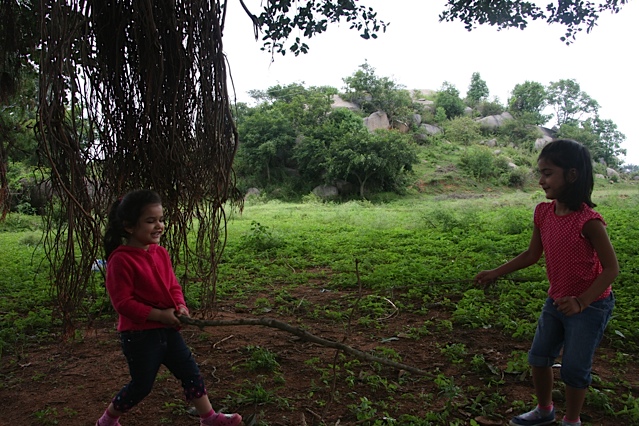
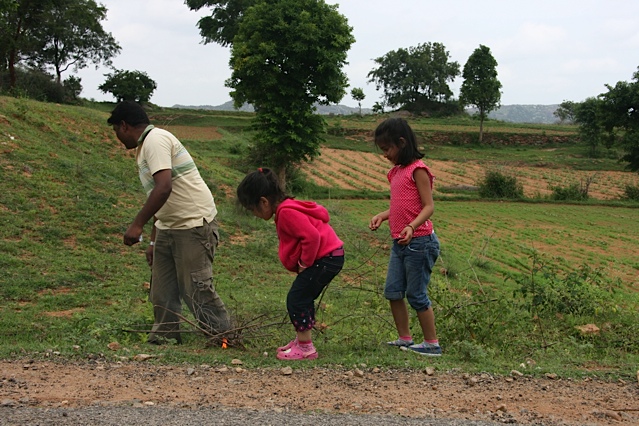
Figure 5 – Collecting fire wood


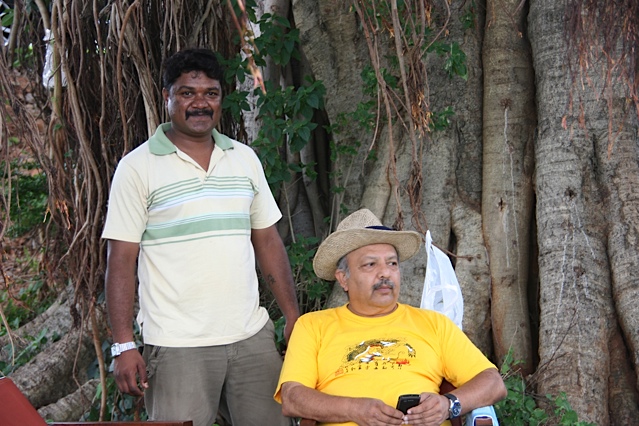
Figure 6 – With Suresh


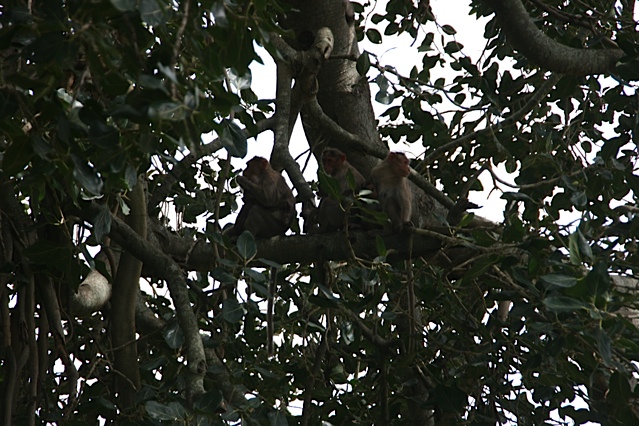
Best part about this kind of picnic, is its simplicity. No planning, booking, payment, check in and out and the usual rigmarole. All that one has to do is to drive out of the city in any direction and choose a quiet and clean place – preferably with a view and settle down. Make sure you have an able bodied person like Suresh with you – just in case some monkeys decide to join your picnic. All of a sudden, as if from nowhere, a hoard of monkeys descended on us. We, very politely gave away a packet of chips and biscuit. While they were busy enjoying the fare, we made a hasty retreat into the car. A pack of strays joined us post haste and chased away our ancestral cousins.


Figure 7- The proverbial three monkeys

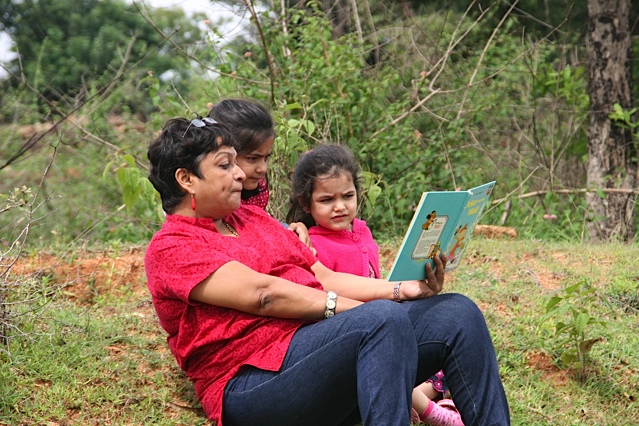
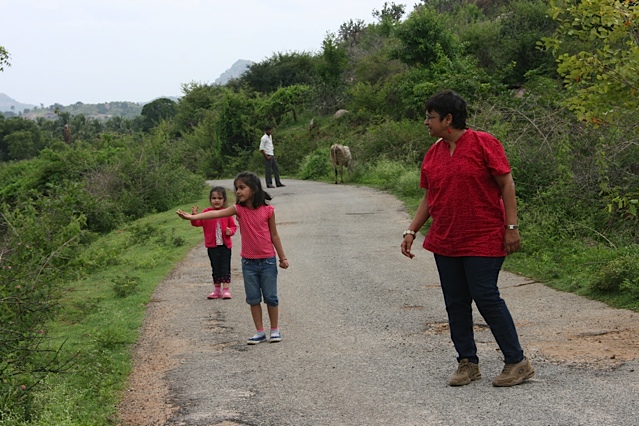
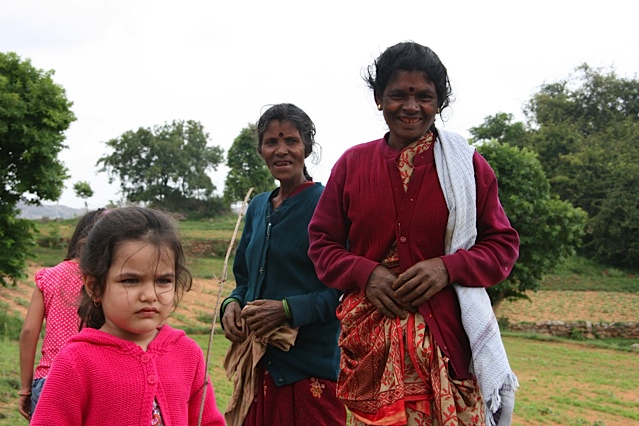
We shifted our camp site little further away and continued picnicking. Jai read some stories, went for a walk, saw some wild flowers, talked to the locals and finally lit a camp fire. All in all the outdoor experience was great fun – ‘Bang for the Buck’. It was something very different and out of the ordinary for the children.


Figure 8- Story reading session


Figure 9 – A walk in the wilderness


Figure 10- Interacting with the locals


Figure 11 – Finally a bit of fire


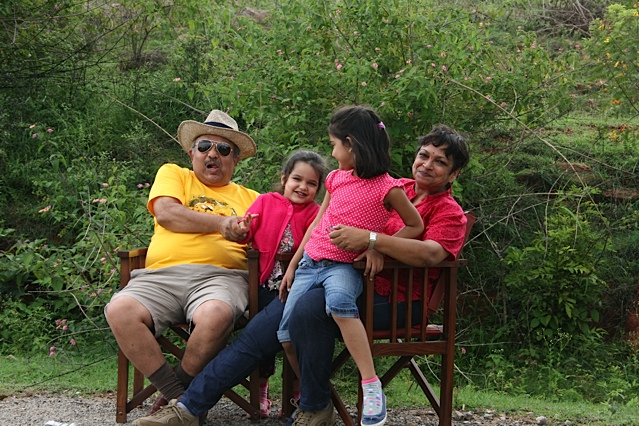
Figure 12 – Photo op with the children


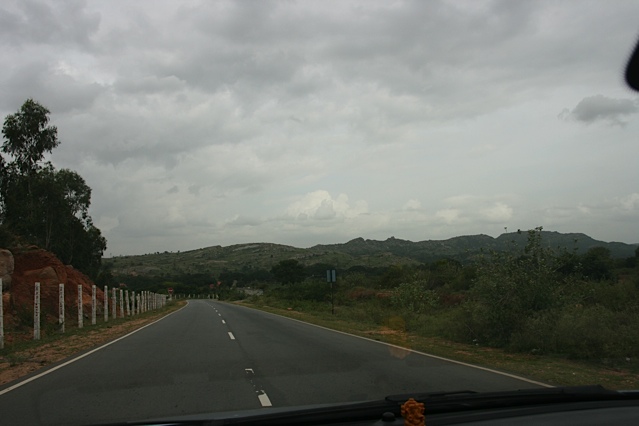
Figure 13 – Very well maintained Magadi Road – SH 85


We finally packed up the camp by 1600 hours – not before dispensing a bit of ‘gyan’ –from the book ‘Cheaper by the Dozen’ – wherein the author lays stress on leaving the camp site garbage free, no litter and so on. I strongly recommend readers of my blog to read this delightful novel. Time and Motion Study started with the producer of 12 children – Mr Frank Bunker Gilbreth.


A day well spent – great value for money.

Try it out.


Post Card, Inland Letter, Notes to E – Mails and SMSs

Sixty years back all matters related to life were through post cards or through an inland letter. Arrival of a new born, announcement of a marriage, an intended programme, visits, routine exchange of information and so on. Telegrams were mostly reserved to announce the passing away of an aged relative or friend. Very few owned telephones and its use was very restricted.


In those days, letter writing was an art. I still remember a distant relative – Mr Nagaraj who was famous for writing all his love letters on a scented paper with a quill. I am told he had a way with words and his handwriting conquered many hearts. For some unknown reason he remained a bachelor all his life. If he had got married, his letter writing would probably have come to a complete stop.


My MIL used to receive long letters running into several pages from her sister– How are you? We are all doing well here. How is the weather in Mumbai? It’s raining in Bangalore. We went and saw Mughal e Azam. Have you seen it? All the children are studying well; I hope it’s the same with you and would continue using the same format of Q & A for several more pages. I am told she never wasted a single bit of paper- she would write all over it – horizontally, vertically and diagonally. On the other hand my MIL wrote the cutest and shortest letters. One such letter to my son said it all “study hard or else – lots of love – yours aggi”.


People had all the time and patience in the world to sit and write long letters to their near and dear ones.


In the early sixties, having a girl friend in South Bangalore was very rare. I had made friends with a girl who wrote a very short and sweet letter to me, whilst I was attending a NCC camp in Mangalore. I was the happiest boy on earth and carried a permanent smile on my face. When I returned, I went and promptly thanked her for writing. She shook the very ground under my feet violently when she said “What letter?” and quickly walked away. Disappointed and grim faced, I returned to my gang to narrate the sad story. They were in splits as GR Mallesh, my neighbour (who went on to become an ace pilot in the IAF) owned up to the gag.


I went to the Services Selection Board (SSB) in Meerut in 1966 and got selected for the navy. I came back home and waited for my letter to join the NDA. Days passed into weeks and there was no news of the joining instructions. Every morning at 10 a.m., I used to stand near the gate and eagerly wait for Mr Narayana Swamy the post man. Our conversation was short and simple – ‘Any letters?’ I would ask and he would just shake his head sideways, indicating a big ‘NO’. Then one day, to my utter delight, he nodded his head up and down, with as great an excitement as mine.


During my courting days, I once wrote a letter to Jai which had only three immortal words – (Hic, Hic, Hic? – thank the Lord not) “I love you – I love you” written several times all over the inland letter. It was accidently opened by her mother and to make things more complicated, her strict father wanted to know what I had written. Poor MIL had to make up the contents of the letter on the spot (with her famous letter writing prowess, it was not easy) – which went as follows –“I am fine – how are you, it’s raining here – what about there? I saw a movie – Have you seen any? and on and on she went, till interrupted by FIL who is supposed to have said ‘How dreadfully boring – what is wrong with this young boy?’.


Within months of marriage I went off to the USSR leaving behind my LOH who was by then 5 months pregnant. The only way we could keep in touch with each other was through letters. The ‘monkey mail’ in Phantom comics, probably took less time to reach its destination than our mail. Jai addressed her letters to ‘Naval Headquarters, New Delhi’. The letters would then be put in a diplomatic bag and handed over to the Ministry of External Affairs. They would send it by air to the Indian Embassy in Moscow. After sorting out the mail meant for the Riga detachment, it would reach us almost a month later. A ship mate of mine Sashi Khera who was also newly married, used to receive an extraordinarily large number of letters – much to the dismay of others like me. Prem Suthan, a bachelor, was at the other end of the spectrum and received no letters at all.


When I was posted in Port Harcourt, Nigeria in early Dec 1986,I received a letter from my father, which was written almost a month earlier in November. The letter was very unusual – it advised me on how to maintain a good relationship with my only sibling, how the property was to be shared, deepest regards to my wife and the grand children – it had certain finality about it. As I sat reading the letter and wondering what prompted him to write in such a tone and tenor – I received a telephone call informing me that my father was extremely serious. The next morning, he passed away. Premonition, I guess.


When children grew up and reached adolescence, communication did pose a problem. Children were young and at an impressionable age. In the early nineties, I used to travel a lot on work and at times it was very difficult to sit and talk with the children. Timings used to clash and it became increasingly difficult to find a common time patch. The art of letter writing was fading out fast. I then devised a method wherein I used to post messages on the fridge for the children to read and hopefully follow. I have preserved these posts all these years. The children themselves have now become responsible parents and I thought it was time to make the posts public. The stickers reflect the anxieties of parents at that time. Television seems to have been ‘Enemy Number ONE’. 20 years later when I hear my children telling their children that their quota of TV for the day is over, I feel relieved. Some examples of the notes I used to stick on the fridge are given below:-


-*-

IN 12TH YOU HAVE TO DO BETTER

CAUSE IT’S YOUR BREAD AND BUTTER

PUSTAK KHOLDE

TV, TELEPHONE BUND KARDE

NAHI TO DANDA

FOR MY MUNDA


-*-


I HOPE THE MESSAGE IS LOUD AND CLEAR

MV

DOES NOT LIKE

TV

(MV meaning me)

-*-
 

WHEN ASKED WHAT DO YOU THINK OF

TV

MJ SAID

IT’S

‘DANGEROUS’

-*-

CUT THE CABLE

IT’S THE

RIGHT CHOICE

BABY

-*-

HOW DID JC ENSURE ALL HIS DISCIPLES ATE

ON THE DINING TABLE FOR THE LAST SUPPER ?

SIMPLE –

THERE WAS NO

TV!

-*-

I HAVE A BIWI

WHO SAYS NO TV

HOW ABOUT METRO

SHE SNAPS BUS KARO

WHY NOT BBC

SHE BARKS YOU GO AND SEE

WHY NOT STAR

SHE YELLS I WILL GO BAHAR

WHAT ABOUT ZEE

SHE SAYS HANJEE

IT’S CHEE CHEE

WHAT ABOUT DOOR DARSHAN

NAHI APKA DARSHAN

-*-

FAMOUS SAYINGS OF THE 20TH CENTURY

CHANGE THE CHANNEL

PUT IT ON

DON’T SWITCH OFF

INCREASE VOLUME

-*-

GIVE TV A BREAK THEY ALSO HAVE A LIFE”

BY

I .M. ELEC – TRONIX

-*-

There were other concerns too

LOVE IS

PRESERVING THE ONLY CHOCOLATE

FOR

YOUR KID SISTER

-*-

LOVE IS

PROMISING NOT TO EAT

ICE CREAM

WHEN YOUR BROTHER HAS

A COLD

-*-

NEXT BEST TO MODELLING CLOTHES

FOLDING CLOTHES

BY

I.M. COTTON

-*-

FINISHED HOME WORK?

START WITH HOUSE WORK

~ ANON

-*-

MY DEAR YOUR FEET

SHOULD BE NEAT

CHAPPAL SHOULD BE WORN

SOLE NOT TO BE TORN

THIS GENERATION, GIRLS SAY IT’S INFRA DIG

WEARING IT, THEY DO NOT CARE A FIG

IF YOU SAY NOT

YOUR FEET WILL ROT

I WILL NOT LEAVE YOU ALONE

CAUSE YOU WILL CRY WITH PAIN IN YOUR BONE

PLEASE WEAR FOOT REST

OR I WILL PROTEST

-*-

FEVER APPROVED BY ALL PARENTS, ADULTS AND DOCS —-

EXAM FEVER

-*-

IS THERE ANY LIFE AFTER SCHOOL?

YES,

NIGHT SCHOOL

-*-
I enjoyed this sticker war – a totally different way of letter writing and communication. After my retirement, I did a short stint in the merchant navy, which kept me away from the family for long durations. Letter writing once again came to my rescue. I used to write long and detailed letters from sea. Jai has preserved all the letters which I wrote from sea – they make extremely interesting reading – reflecting the thoughts and concerns of the moment.

With the arrival of E mails and SMS – the art of writing letters has taken a back seat. Letters of yesteryears represented a way of life – full of leisure, details, desire to share information, concern and expression of emotions. Whereas E mails and SMS convey sense of urgency, brevity, curtness and a sharp under tone of ‘that much and no more’. A pity, as they are deleted after reading and hence will never be looked at ten, fifteen years down the line with a nostalgic sigh, taking you back to the moments in time that you had practically forgotten.

GM, how r u imbc TC LOL CU (:

Summer holidays with the Grand Children – Most rewarding experience

My daughter dear (DD) rang up to say that our GS had got selected to the Dhirubhai Ambani International School in Mumbai. All of us were mighty thrilled. The downside of the deal was that his holidays would start when Grand Mother’s School opened after the summer holidays.GM the princi screamed at the top of her voice, “THIS IS REALLY MOST UNFAIR – I WILL NOT BE ABLE TO SPEND TIME WITH THEM – WHY CAN’T ALL SCHOOLS IN INDIA HAVE THE SAME ROUTINE?” etc. Daughter consoled her by saying that she would bring the children to Bangalore and spend their entire summer holidays bonding with the grandparents, mama, mami, cousin and all the kith and kin.


The next task on hand was to ready the house to receive DD and the grand sons – Ayaan, the twins Agastya and Aarin. Normally, whenever military commanders move about in their operational area they take their personal entourage with them. Similarly DD announced that she would be bringing along her support staff – Durga Bai and Rohan to Bangalore to assist in looking after the ‘Three Man Army’.

Immediately a high level logistics meeting was scheduled and held to discuss all aspects of their four weeks stay with us. Our 2 BHK and study apartment is comfortable for two people but certainly not big enough for the army and support staff. Various ideas were bandied about and finally we hit upon a plan which was implementable and acceptable to LOH.I spoke to my dear friend Balu and asked him, if I could use his garage to store my drawing room furniture for a month.

A week prior to their arrival the house was given a thorough scrub down and made ‘Child Safe’ – Believe me, it is a very daunting task. Firstly, all the plug points had to be rendered safe by sticking them with cello tape – all artifacts were removed and packed away – knives, forks, scissors and other such objects of warfare were removed and stored in inaccessible places and boric powder liberally used to keep ants and other creepy crawlies away.


The entire drawing room was shifted to Balu’s garage and a huge additional bedroom made out of it. The entire room was one big bed on the ground for the twins to crawl about.

Fruits, biscuits, chocolates, corn flakes, butter, jam and other such things were stocked in humungous amounts to last their entire stay.


On the domestic front the cook and the help were bribed by LOH to ensure punctuality. She told them, “You come to work every day without skipping when they are here and I will give you a month’s salary as bonus”. The incentive worked beautifully and throughout their stay both the helps came more or less regularly.

Having sorted out the logistics issues, our attention was focused on operational aspects – It was unanimously decided by the LOH that there would be no golf for me during their stay. This was very vehemently supported by the DD and Son in L. It was an extremely harsh restriction placed on me, violating the entire frame work of democracy, ethics and fair play – I pleaded with LOH and said, “Take away my freedom of speech and expression instead,” and she said, “Nothing doing – in any case you have already surrendered those a long time back.” – “DD and I have decided that the children need you most in the morning – as daughter will be looking after the twins at night and I would have to leave for school very early”. When you realize your chips are down in a family battle – the best thing to do is to honorably retreat to the bar or wherever one stores the ‘elixir’ and quickly down a glass or two to restore yourself to your original size and regain confidence to fight again another day.

The army arrived exactly at 1630 hours on 9th June 2011.Six suitcases of assorted sizes and one ‘Twin Pram Travel System’ were loaded into the cars along with their owners – the convoy reached home safely with shrieks of welcome, endearments and nursery rhymes blaring away in the background.


Immediately on arrival, DD declared that converting the drawing room into the twins’ abode was not a good idea as it lacked privacy – there would be constant traffic to the kitchen and other two bedrooms, disturbing them – totally impractical and unacceptable – the motion was instantly supported by LOH, “I told you this won’t work”, I wanted to remind her that all the decisions were jointly taken – better sense prevailed and I decided to let the matter rest; discretion being the better part of valour!


Within an hour, Shetty the Gardener and his gang of helpers came and rearranged the setting. All the furniture from the master bedroom was removed and relocated to the drawing room – to enable the twins to move about freely. Once asleep the door was shut from the outside; thus protecting them from outside noise and ensuring privacy. Just about the time the twins decided to sleep – Grand Daughter Samara was heard loudly proclaiming her arrival – “Ayaaaaaan! Ayaaaaaan! Where are the babies?” this was enough for one of the twins – Agastya, to let out a deep – ear wrenching cry, soon to be followed by Aarin – The party had begun. After about three hours of merrymaking, bonding and generally having an uncontrolled ball, all the GC’s decided to call it quits. GD went back home promising to come back the next morning. Ayaan and I slept together. The twins slept with their mother and so on. Quiet and peace slowly descended on the Prabhakar household. Except for an occasional cry, the fridge door opening and the sound of the micro wave heating the milk – the night peacefully turned to dawn and to daylight.


Normally the twins do all their activities together. They sleep and wake up at the same time, feed together, go out in the pram, potty, bath, cry and so on. As long as they act in tandem – all is well – the air is full of merriment and gaiety. The mother dear can predict the sequential activities correctly and plan in advance. Catch a cat nap when they are asleep, go out for a walk when they are gallivanting in the pram. The grandfather can also find time to indulge in a brief spell of’ Gin & Tonicing and a bit of Zzzzzz.’ If for some reason this jointmanship fails due to reasons such as – fever, crankiness, stomach upsets, mosquito bites and such other acts of god and nature – normally referred to as ‘Force Majeure’ – (In this case only one party – the twins are free from any liability or obligation from fulfilling the contract), there is mayhem and confusion in the house. Normal command and control fails and the mother is forced to recall all the forces under her command. Household emergency is declared and fresh duties allocated to cope with the situation. Within a fraction of a second the joint decibel level can reach an alarming intensity – waking up the entire household, the neighborhood and triggering the colony dogs to bark endlessly. Fortunately these ‘out of step’ occasions were few and we were able to handle them.


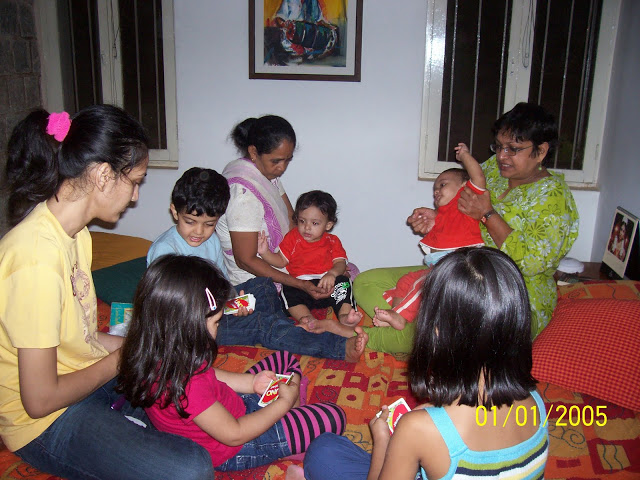
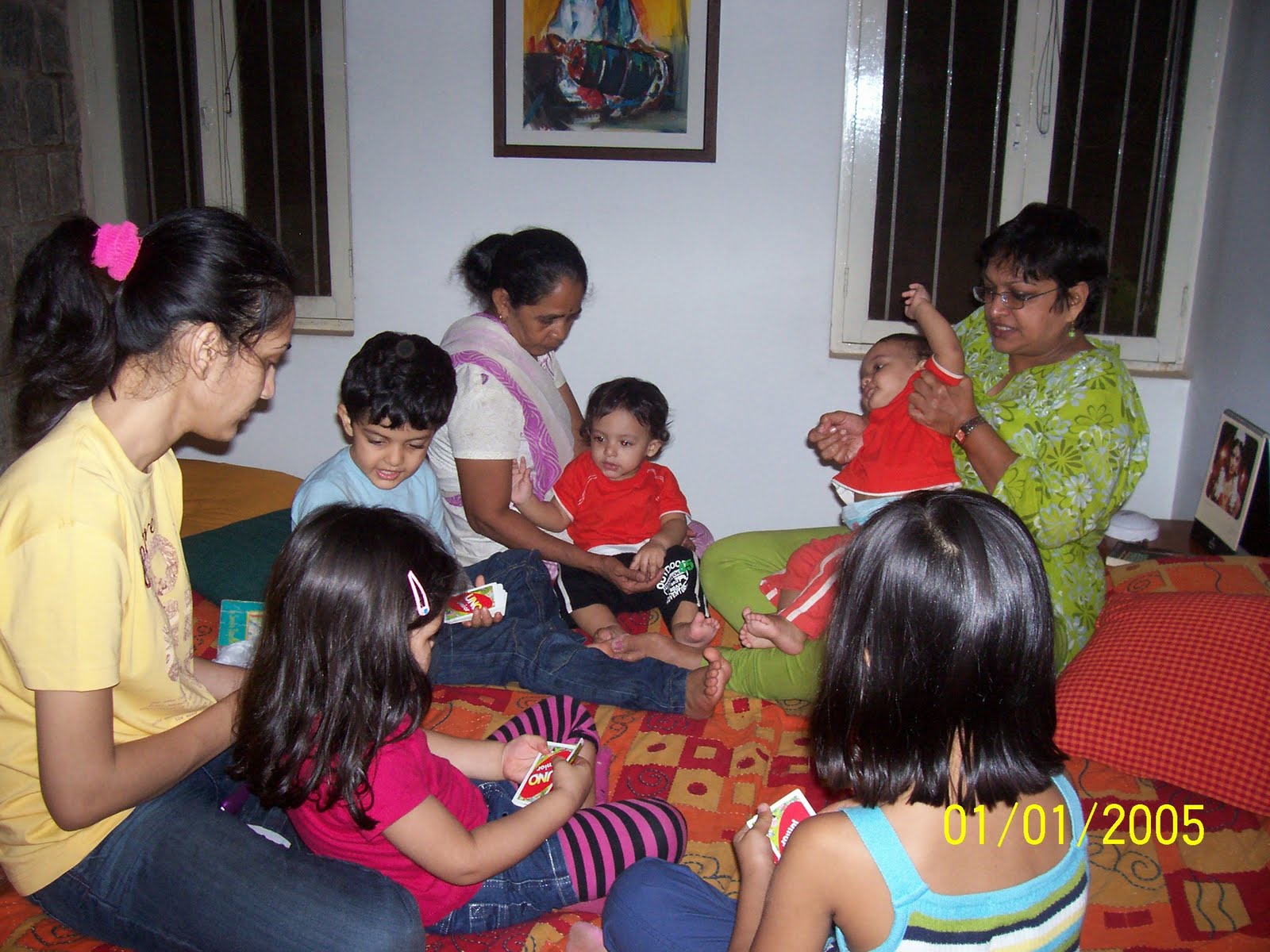
Figure 1 – Playing Uno in the hall turned bedroom (for the grownups)


Twins can either be identical, meaning that they develop from one zygote that splits and forms two embryos, or fraternal because they develop from two separate eggs that are fertilized by two separate sperm. Agastya and Aarin are fraternal twins, having their own identity, looks, likes and dislikes, behaviour traits and so on. It’s extremely interesting to observe them – one is outgoing the other is reserved, one is friendly, whereas the other is cautious, one likes mango the other does not relish it, one experiments with food and the second one sticks to his favourites. One takes time to get used to new faces, whereas the other has no problem, both like playing in water and going out nonstop in the pram, both enjoy playing in the grass and catching ants – the list is endless. They are two different persons, but with a very special bond between them.


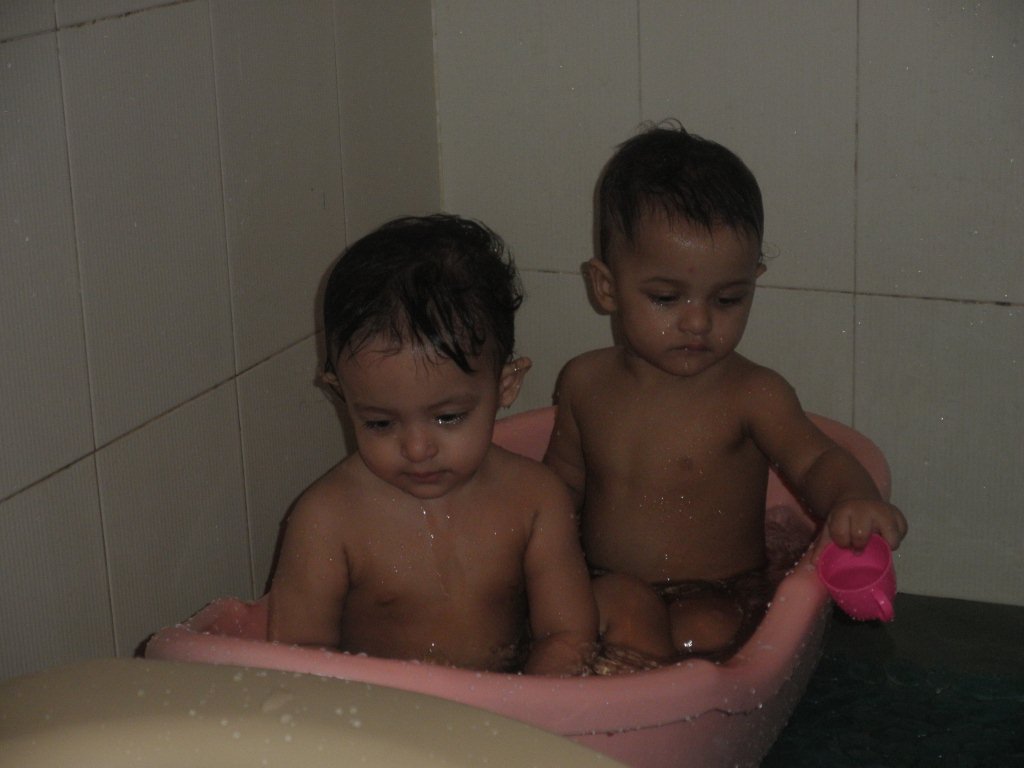
Figure 2 – Enjoying bath time


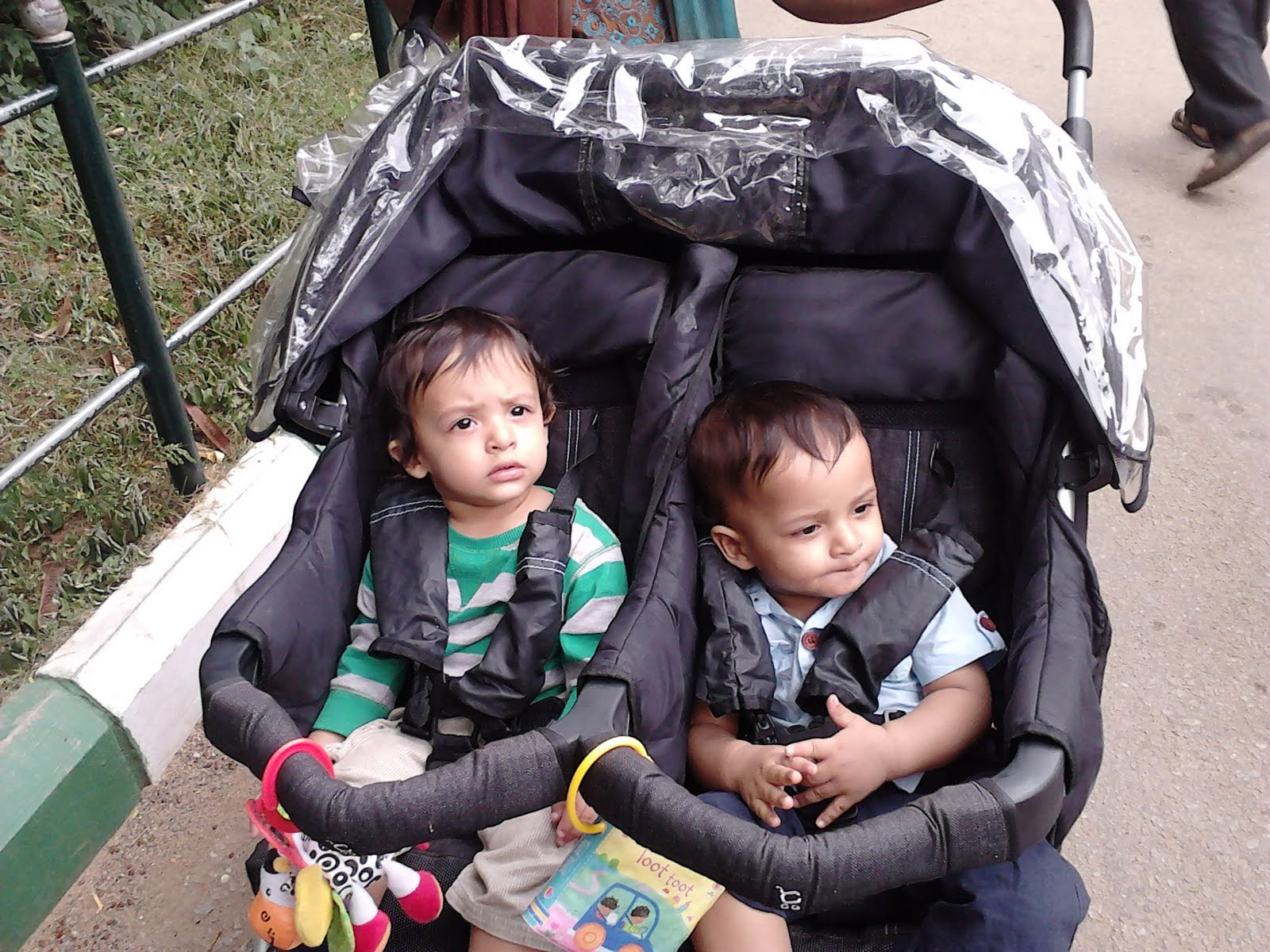
The next morning followed by all other mornings – the twins roamed free in their pram all over Jal Vayu Vihar. Before breakfast, followed by post BF and then pre lunch, evening, late night rides kept them occupied. They sat comfortably in their pram- watching cats, dogs, squirrels, chirping birds, falling leaves, friendly residents and slowly falling asleep.


Figure 3 – Favourite pastime – Pram rides

Now my daughter is finding it extremely difficult in Mumbai locating the almost forest like ambiance, which the twins had got used to in JVV. One of the twins refuses to come home after a pram ride in the park.


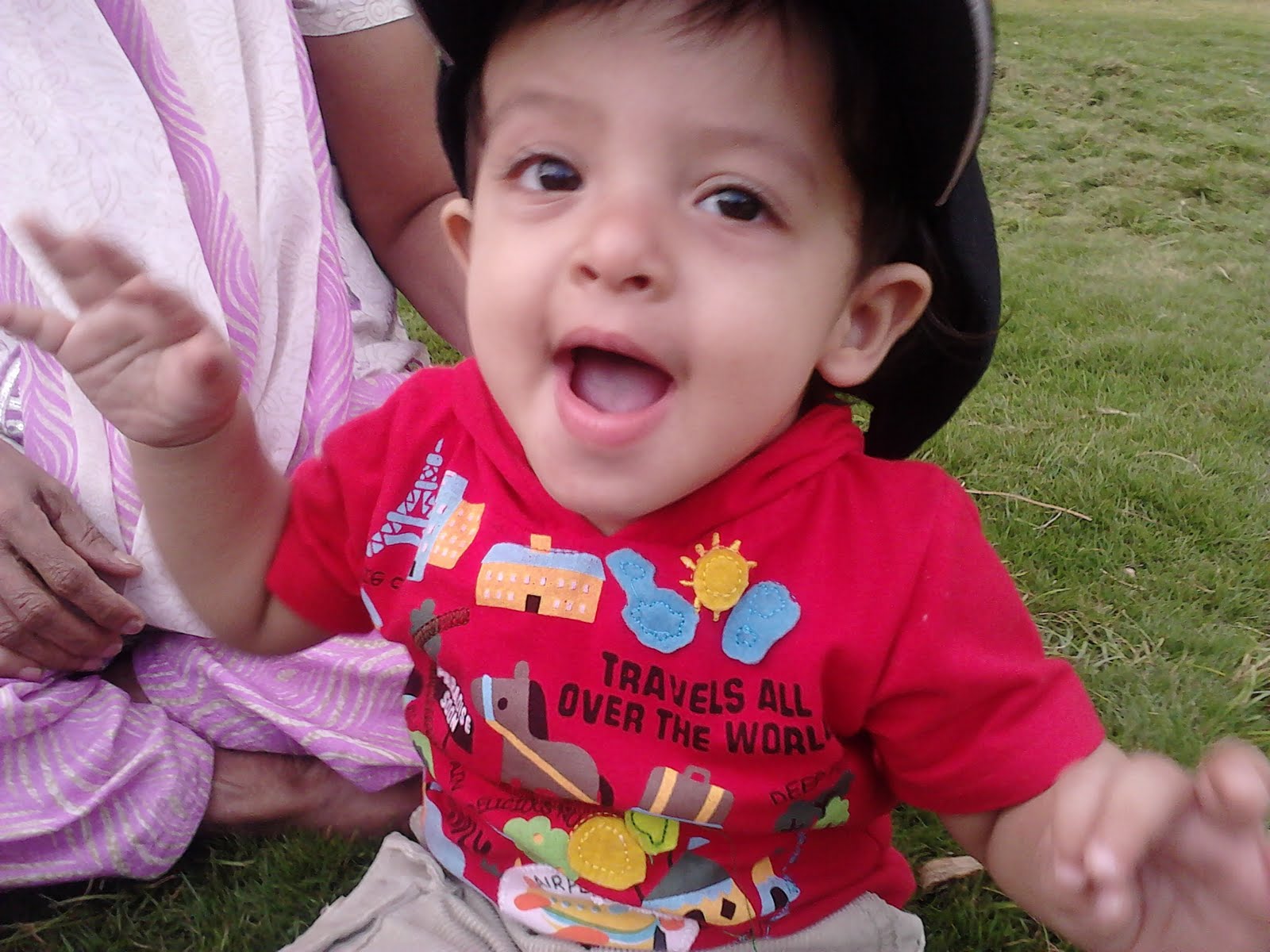
Figure 4 – Agastya enjoying the park


Figure 5 – Aarin giving a cheeky grin


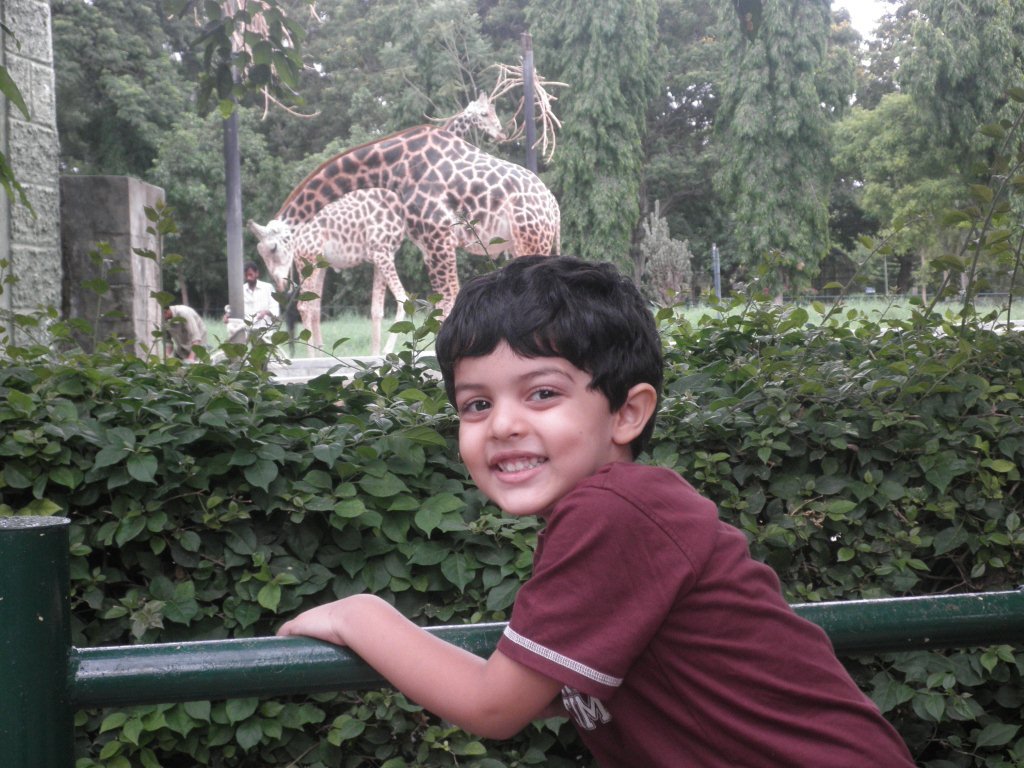
The twins soon became the cynosure of all eyes in the colony. I had to cope with endless admiration, cheek pinching, queries, coochicoos, so ‘chweet’ and much more. One set of teenagers wanted to know if they could take away the twins. I gave them a very firm and formidable reply and said “Hey girls, listen – it’s a package deal – the grandfather comes along with the twins.” – that was enough to make them scoot. The whole family went to Mysore for a holiday and while visiting the zoo, the twins were mobbed by tourists. Mother sensing trouble ran towards the twins and was trying to get in edgeways. One of them rebuked her, “Can’t you see we are all waiting to see them? – Get in line!”

In spite of all our efforts to clear the battle zone of all mines, the twins were able to penetrate all our defence mechanisms and cause severe attrition. They repeatedly attacked the fridge magnets, managed to pull out all the drawers in the kitchen, and examine the OTG on a daily basis. One day when our troop strength had drastically reduced and defenses were down, they sneaked up to the bar and started removing the single malts from the trolley – that’s when I reacted in the fastest possible way –the alacrity with which I responded was enough to put to shame any feline on a hunt. They got used to Tata’s praying and would crawl to the pooja room as soon as they heard the bell ring. They thoroughly enjoyed the prayers, the bell and finally the mangalarati.


Figure 6 – A taste of things to come – God help!


Figure 7 – Mum mum time for the twins


Looking after Ayaan – four and Samara–three and a half, is a different ball game.


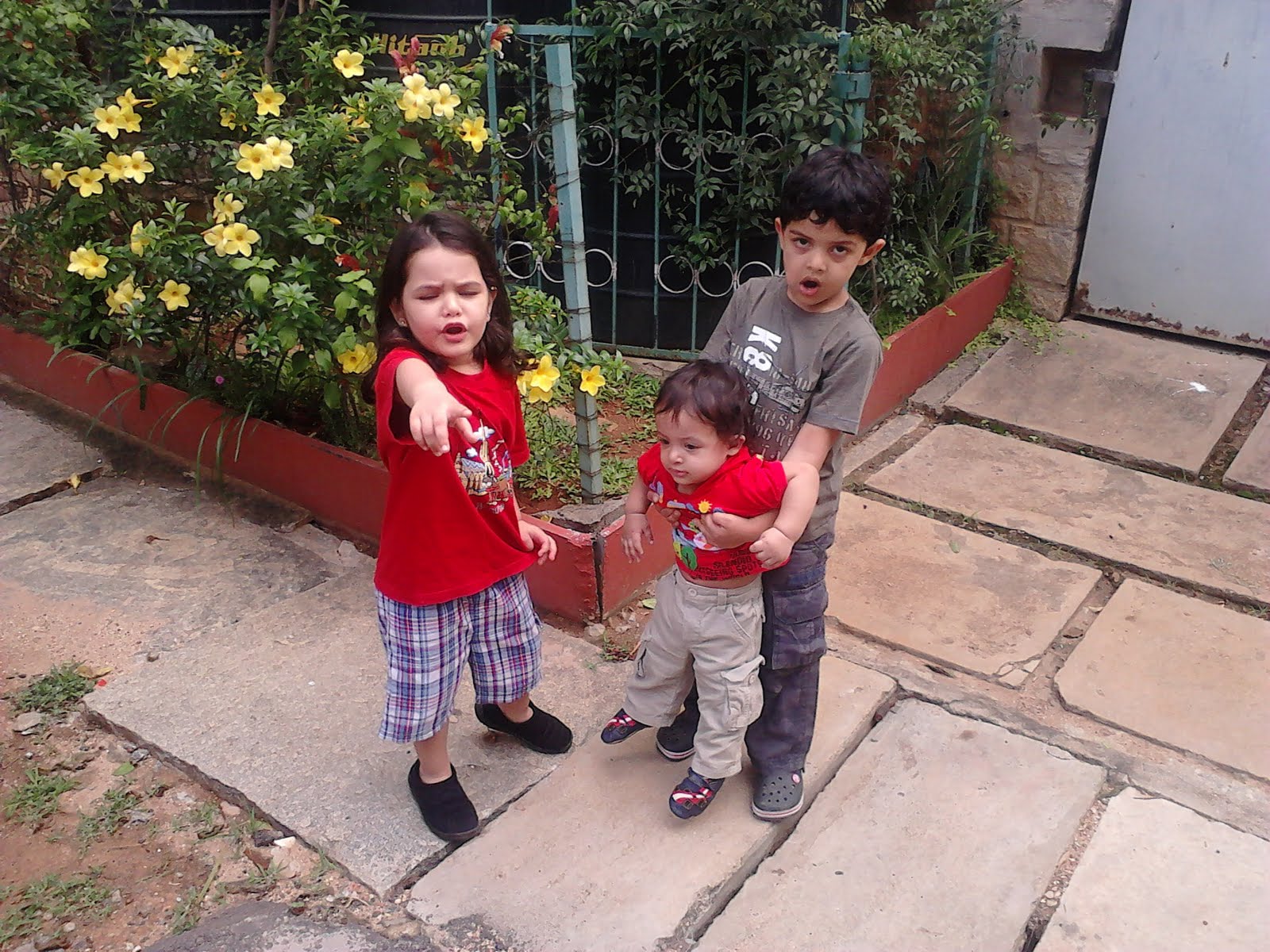
They are in the “Y” stage – anything and everything has to be suffixed with a why? I told them no more TV and they should go outside and play – Why? The Spider is making a web – Why? Don’t drop your food on the floor – Why? And so on. One requires unlimited patience to answer these endless volley of questions. This year grand fathering was a tad different, in that, both of them have become tech savvy. One afternoon Ayaan told me, “Tata, firstly it is not ‘I Pod’, its ‘I Pad’ – secondly, I have not been using it the whole day, I have used it only for one hour.” All their stories, games, puzzles and a host of other children’s entertainment avenues are now available on the I Pod. There was less demand for Tata’s stories. Both were quite content using their I Pod and falling asleep on their own after a hard day’s play. Ayaan, Samara along with her cousin Isha were a riot – and the trio became uncontrollable when joined by their new found friends from JVV – Sambhav and Saarika – another pair of twins. One very adventurous neighbour used to invite all these children home to play- a very courageous act indeed.


Figure 8 – Rain dance


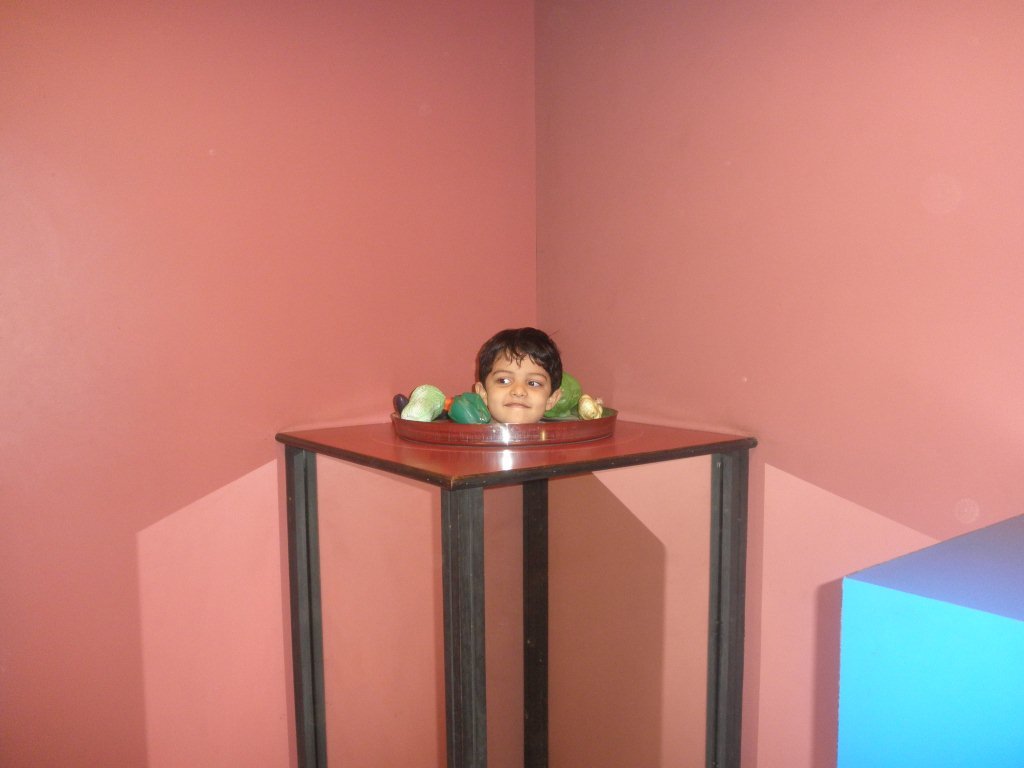
In addition there were visits to Vishweshwaraiah Museum, Cubbon Park, Planetarium, Swimming pool etc.


Figure 9 – Illusion – Vishweshwaraiah Museum- grandson on a platter


Figure 10 – In the Mysore zoo


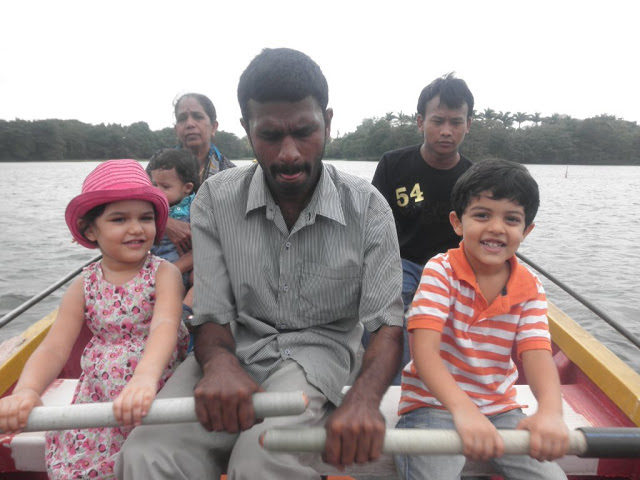
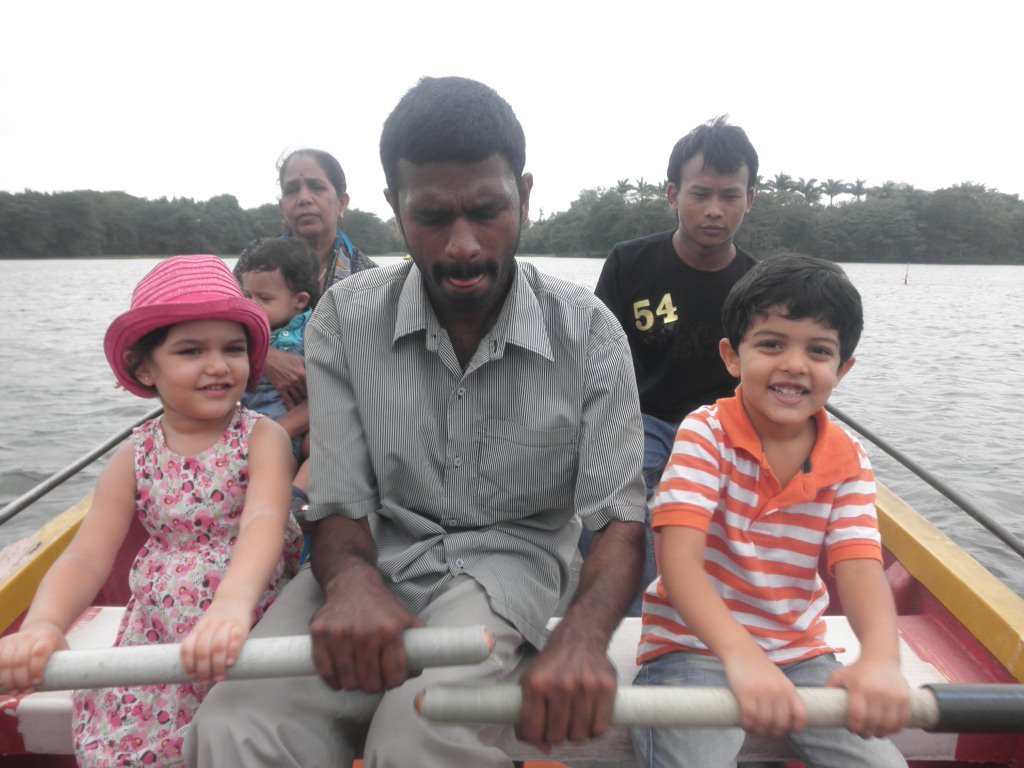
Figure 11 – Boating experience

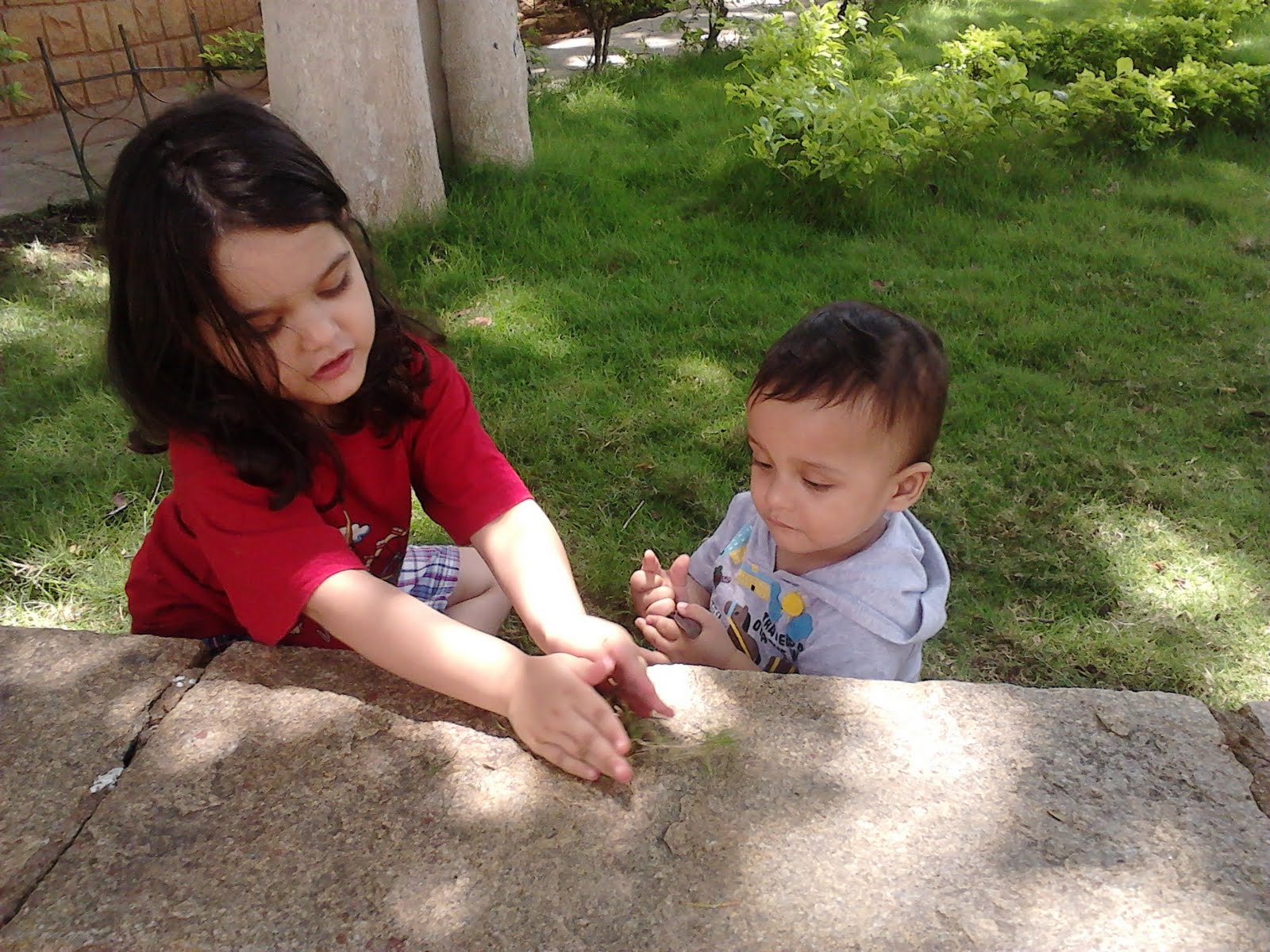
Being on the ground floor provided the children with unlimited access to open ground – which is in abundance in JVV.To them; the entire colony was Tata’s garden and forest. The open grounds were a boon, as they spent less time indoors – they played hard, ate well, slept soundly and more importantly had a whale of a time.


Figure 12 – Playing with grass


Figure 13 – Playing outside the house

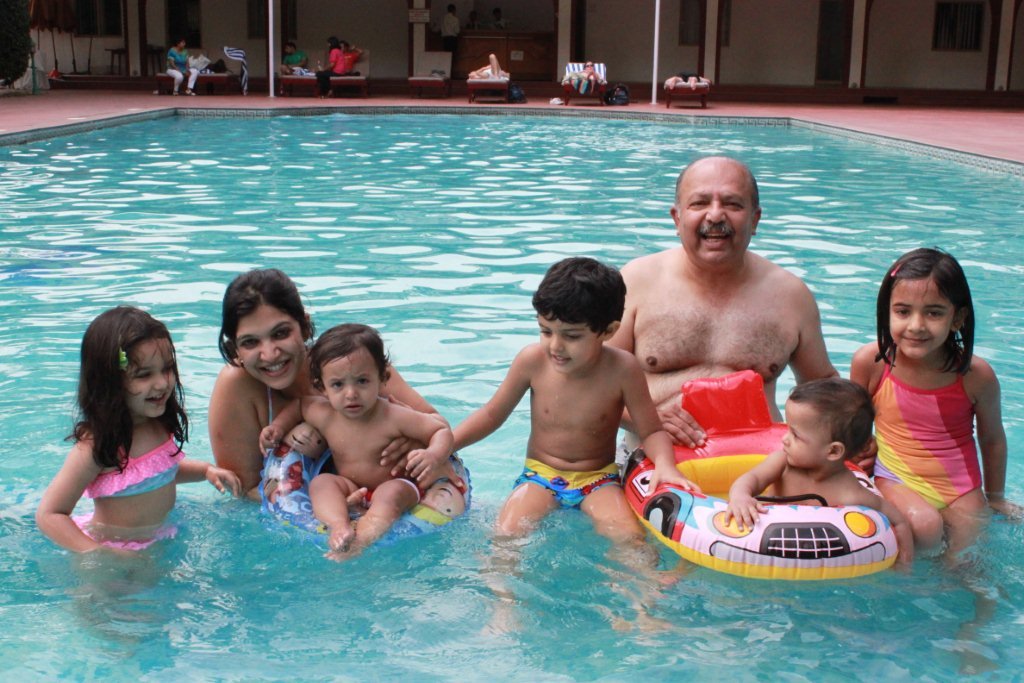
We also celebrated the first year birthday of Agastya and Aarin in Hotel Jayamahal Palace. The children once again had a fun filled afternoon in the pool, running around the abundant open space in gay abandon and generally extracting value for the money their father had paid.


Figure 14 – Birthday party in the pool


Today’s children are very smart. One day DD called out, “Ayaan, come and meet an aunty who is here to see you.” – To which he replied while continuing to play, “Is she interesting?” Samara once said, “I am to have only one scoop of ice cream – but, if you don’t mention it to mama, I will have the second one.” They learn faster, are very observant, terribly inquisitive and overall much more intelligent than our generation – evolution, I suppose. They are very comfortable with words like – amazing, cacophony, flabbergasted, disgusting and use them in the most appropriate context.


During their stay with us, our life was like a roller coaster ride – full of excitement and action happening around us 24/7. Never a dull moment – it was fun filled and high intensity bonding. As planned, DD and her children finally left for Mumbai on 06 July 2011.Their departure left us staring vacantly at the walls, there was a sudden void and heavy silence enveloping the house. The two of us were suddenly left aimless.


Every evening we now sit out in the patio, sipping a drink, gazing at the stars and dreaming about their next visit.


Long live the institution of grandparents and grand children.


We visited China – Young Faces

Face to Face

I have always been fascinated by faces – they tell us a lot about the person. A face can convey every type of emotion known to us – anger, indifference, happiness, doubt, fear, contentment and the list is endless. Without uttering a single word, a face can express almost anything. Look at the Mona Lisa – a simple face which has captivated humans for over 500 years. Each face is different and today there are 7 billion unique faces to watch. The face is the most important part of a human being when it comes to conveying emotions, messages, expressions and subtle hints. Faces also represent beauty, sternness, ugliness and innocence. The face that launched a thousand ships – Helen of Troy came to be known as the most beautiful woman in all of Greece. Her spellbinding beauty played a key role in one of the most famous mythological battles of all time – the Trojan War.


Even at work the best form of communication is meeting face to face. No amount of letter writing, e mails, telephone calls, video conferencing can replace the effectiveness of FTF meetings.


When my grandson was three and my granddaughter just two and a half, he used to wait for an opportune moment and suddenly go and pinch her. This would result in a loud cry from her. This went on for some days, till she developed a defence mechanism. During all these encounters, she noticed that he would bite his lower lip just before the pinch! This observation came in very handy and she would let go a loud shriek, whenever she saw his grimace – pinch or no pinch.


While travelling in China, I found the faces of children captivating. Children have the most innocent of faces, devoid of all prejudice and pretention – their faces reflect truth and openness – expressing without inhibitions, the mood of the moment.

Figure 1 – Don’t stare…it’s rude!


Figure 2 – Look there, dear.


Figure 3 – V for victory


Figure 4 – I am not hiding!


Figure 5 – Please release me, let me go…..


Figure 6 – Anyone watching?


Figure 7 – Okay take a shot and get it over with…


Figure 8 – Do I have to pose all over again?


Figure 9 – Family Portrait


Figure 10 – You want my photo?


Figure 11 – Not interested at all


Figure 12 – Zzzzzzzzzzzzzzzzzzzzzzzzzzzzz ………………………….


Figure 13 – Don’t you mess with me!


Figure 14 – A Mono Lisa in China?


Figure 15 – Picture of contentment


Figure 16 – What’s so funny


Figure 17 – Look at my toy


Figure 18 – We are with him


Figure 19 – Nee How! (How are you?)


Figure 20 – Darth Vader’s the man!!!!


Figure 21 – What is it with you foreigners?


Figure 22 – Try and make me smile


Figure 23 -Where is everybody?


Figure 24 – Thanks for the photo op


Figure 25 – Why meeeeeeee?


Figure 26 – Love me, love my dog


Figure 27 – Don’t take my photo, take hers


Figure 28 – Do not disturb me – I am drawing


Figure 29 – Defending China


Figure 30 – – Que sera sera ……….. Will I be pretty?


Figure 31 – Do I look like a nerd?


Figure 32 – One minute and counting…


Figure 33 – Confucius say – ‘Gleen look good in photo’


Figure 34 – What’s that behind your back?


Figure 35 – Like my cut?


Figure 36 – Totally oblivious


Figure 37 – Can I take off pleeease?


Figure 38 – Masti master under control


Figure 39 – Eco friendly transport


Figure 40 – Leave me alone


Figure 41 – Napoleon Bonaparte in the making


Figure 42 – Cute is as cute does


Figure 43 – Tensing? No way. Pun intended


Figure 44 – Why the gloomy face?


Figure 45 – Take as many as you want


Figure 46 –Got a good view from here


Figure 47 – Now tell me – whom do I look like?


Figure 48 – Out of hibernation and starving


Figure 49 – On the prowl


Figure 50 – Coffee tea or me?


Figure 51 – One step at a time


Figure 52 – Who eats with a spoon?


Figure 53 – We don’t for sure

We visited China – Macau

25 April 2011 – Macau


Macau, along with Hong Kong, is one of the two Special Administrative Regions of China. Macau was a Portuguese colony and both the first and last European colony in China. Portuguese traders first settled in Macau in the 16th century and subsequently administered the region until 20 December 1999 . Macau operates with a high degree of autonomy until at least 2049, fifty years after the transfer. Under the policy of “one country two systems”, the PRC’s government is responsible for the territory’s defence and foreign affairs, while Macau maintains its own legal system, police force, monetary system, customs policy, and immigration policy.


Macau occupies an area of 29.5 square kilometers with a population of around 6 lakhs. The territory’s economy is heavily dependent on gambling and tourism but also includes manufacturing. Macau is heavily dependent on imports of all kinds. Macau depends on mainland China for most of its food, fresh water, and energy imports.


The four of us reached Macau around 4PM. We travelled in a turbojet from Hong Kong to Macau. Due to some fault, we were not issued a seat number, which later resulted in us travelling First Class. The journey takes about 40 minutes – I dozed off in the comfortable sofa seats.


As soon as we reached there was a bus waiting to take us to “The Venetian” Macao Resort Hotel. Ms Gowri from Travel Bazaar had insisted that we visit Macau and stay at the Venetian. She had promised a memorable stay at the hotel – by god it was. A stay – which we will never forget.


The Venetian Macao is a hotel and casino resort in Macau owned by the Las Vegas Sands corporation. The Venetian is a 40-story, $2.4 billion anchor for the 7 hotels on the Cotai Strip in Macau. The 10,500,000-square-foot Venetian Macao is modeled on its sister casino resort – The Venetian in Las Vegas – and is the largest single structure hotel building in Asia, The fifth-largest building in the world by area and the largest casino in the world.


The resort has 3000 suites, 1,200,000 sq ft of convention space, 1,600,000 sq ft of retail, 550,000 square feet of casino space – with 3400 slot machines and 800 gambling tables and a 15,000 seat arena for entertainment/sports events.


We had never seen anything so big and magnificent. As you enter the hotel, you stand mesmerized by its grandeur and stare at everything in amazement like a small child. Your earlier impressions of class gets immediately relegated and images and experience of Venetian Macao remains permanently etched in your memory. It sets a new bench mark. The other day I went to see the much hyped and happening place in Bangalore the ‘UB City” for the first time – the gap is as wide as team “Barcelona and Mohan Bagan”


Hotel is a renaissance Venice-themed property featuring stunning replicas of Venice landmarks such as St. Mark’s Square, the Doge’s Palace, Campanile Tower, and three indoor canals with gondolas and singing gondoliers


Venetian is the largest single structure hotel building in Asia and the third-largest building in the world.


We did agmble on the slot machines and the roullett table – NO LUCK. Lot of Chinese from main land China and hong Kong come to macao to gamble in a big way. They constitute 90 to 95 percent of the tourist. At over 550,000 square feet this is the largest gambling floor in the world, and it’s well executed.It is incredibly easy to get lost inside this behemoth.On an “ordinary” weekday The Venetian Macao Resort Hotel attracts up to 86.000 visitors.


Figure 1 – The inside of the dome of the main lobby


Figure 2 – The main lobby with its breathtakingly opulent interior.


Figure 3 – Navin takes a photo


Figure 4 – Waiting while we checked in.


Figure 5 -Replicating the beauty of Renaissance Venice with ornate moldings and lavish decoration


Figure 6 – The gambling tables. Unfortunately we are not allowed to take photographs. This one was by mistake.


Figure 7 – One of the ceilings – replicating some of the frescos of Venice

26 April 2011 – Macau


Figure 8 – Grand Canal shopping


Figure 9 -300 High end shops displaying the latest


Figure 10 – Resting in the Royale Suite


Figure 11 – A different view


Figure 12 – Trying to look for the tea bag


Figure 13 – The sunken living room adds to the splendour of the room


Figure 14 – Canopy-draped king-sized beds and fluffy duvets and choice of pillows – only a phone call away. (Pillow Talk)


Figure 15 – Stunning view and even pretty viewer


Figure 16 – Under different set of lights


Figure 17 – Royal bathroom


Figure 18 – Royal Toilet


Figure 19 – Kats working the accounts – difficult task for him – what with all the addition,subtraction,mutiplication etc


Figure 20 – Cup of tea with Navin and Kats


Figure 21 – Very relaxed


Figure 22 – Quite satisfied


Figure 23 – What else


Figure 24 – Lift lobby


Figure 25 – 1,000 seat food court with artificial sky


Figure 26 – Another view


Figure 27 – Notice the Venice house being replicated


Figure 28 – Deciding what to eat. Kats and I decided to do what the Chinese do in China – the girls decided to have Indian and Italian food


Figure 29 – While they were deciding – a beer if you don’t mind


Figure 30 – Wish we were like the mannequins


Figure 31 – Window dressing is at its very best – so is the cost


Figure 32 – Connecting lobby


Figure 33 – Posing in front of an ad


Figure 34 – On the way to noodle bar


Figure 35 – For a drink and bite


Figure 36 – Simply great atmosphere


Figure 37 – Unlimited choices


Figure 38 – Deciding what to order


Figure 39 – Bigger picture


Figure 40 – Caught my attention


Figure 41 – Bought some things for the grandchildren


Figure 42 – Legs are paining


Figure 43 – Yet another example of fresco ceilings


Figure 44 – My turn to be photographed


Figure 45 – Each floor is connected by an elaborate arrangement of richly decorated stairs and escalators


Figure 46 – Get the idea now


Figure 47 – The size is really mind boggling


Figure 48 – The landing – seeing is believing


Figure 49 – A convention hall


Figure 50 – India’s filmfare award function was held here


Figure 51 – Venetian wedding cake – “I DO’ – not again


Figure 52 – View from the room


Figure 53 – Another view


Figure 54 – Some more hotels under construction


Figure 55 – The other wing of the hotel


Figure 56 – Waiting for the gondola to arrive


Figure 57 – We thought they lost their way


Figure 58 – The Grand Canal. Imagine this on the second floor


Figure 60 – Gondoliers all the way from Venice singing serenades


Figure 61 – A street play for the tourists


Figure 62 – Back to the main lobby. This time to check out.


Figure 63 – End of holiday


Figure 64 – A well earned rest – finally


The travel back from Macau to Hong Kong was another experience in efficiency. The luggage was booked in the hotel room. Thereafter we checked out, drive to coati terminal, immigration, ferry ride straight to HGK airport, immigration at HGK and flight to India. I sighted the luggage only in India. Two days at Macau was a life time experience of hospitality industry at its best.


The opulence and grandeur, combined with taste and elegance is what Venetian is all about. The sheer size of this enterprise makes the hotel stay even more memorable.

26 April 2011 – bact to Bangalore, India
  

We Visited China – Hong Kong

23 April 2011 – Hong Kong


We reached Hong Kong in the early afternoon and went straight to our hotel located in Kowloon district.


Figure 1 – The entrance


After getting used to big hotels with huge lobbies and spacious rooms in all the cities that we had visited – Regal Oriental Hotel in Kowloon district came as a big disappointment. The rooms were extremely small – later on the guide said “One does not need a TV remote in Hong Kong hotels – your toe will do the job equally well”. That explains many aspects of a city where land is literally gold. However the hotel made up for the lack of space with all modern amenities, cleanliness and efficiency.


Jai and I went for a stroll and a bite before proceeding with the evening program.


Figure 2 – Jai posing


Figure 3 – A by lane close by – but very tidy


Figure 4 – Old part of the city


Starting with Ms Francesca with a stern school teacher attitude, we had pleasure of meeting many guides during our stay – Holly,James Bond, Ricky Martin and many others. I somehow felt that the people of HGK are more clinical when compared to main land China. They also carry an attitude – dude! Maybe they learnt it from the stiff upper lipped people. In comparison, I found the mainland people more friendly, warm, enthusiastic, proud and spirited. May be the long association with the Brits has made HJKians more reserved, than what they really are.


Hong Kong is very well known and enough has already been said about the city – I am not going to repeat any of those.


Our first halt was the Ladies’ Market in Tung Choi Street. It is the place for bags, accessories and inexpensive women’s clothing. Men’s and children’s clothing and toys are also on sale.


Figure 5 – Ladies market


After an hour of roaming around, we embarked open air bus for the night tour of the city.HGK is beautifully lit at night to attract the tourists. HGK, once a manufacturing centre, now concentrates more on tourism and finance. The manufacturing has taken flight to the main land.


Figure 6 – Prassu and Jai enjoying the ride


The city night ride kept us engaged for almost an hour, watching well lit shopping malls, business areas and important buildings.


Figure 7 – One of the high rises


Figure 8 – Yet another one


Figure 9 – View of the shopping mall


At dusk, the skyline around Victoria Harbour stands tall among Hong Kong’s must-sees attractions. The harbour cruise offers a great opportunity to take in the awe-inspiring splendour of the Hong Kong skyline at night. Victoria Harbour is one of the world’s most impressive natural harbours. Stunning buildings and landmarks on Hong Kong Island and Kowloon adorn both sides of the busy harbour, a variety of craft including ferries, junks, sampans, cruise ships, freighters and tankers ply the waters and at night time the illuminated buildings provide a colourful and spectacular display. The cruise aboard the luxurious tour boat ‘Bauhinia’ included unobstructed views of the “Symphony of Lights” laser multimedia show and a very well appointed buffet dinner. In spite of some 400 tourists the tour was well managed.

 Figure 10 – Jai joins the crooner


24 April 2011 – Hong Kong


After a very sumptuous breakfast we started our next phase of the visit to Lantau Island which is almost twice the size of Hong Kong Island. With the new development of Ngong Ping Cable Car and Ngong Ping Village, the Island has become a new attraction in Hong Kong. On our agenda included visit to the World’s tallest, outdoor, seated bronze Buddha statue at the Po Lin Monastery,followed by visit to Tai O, a quaint fishing village.


Figure 11 – Strategy time out


Figure 12 – Ladies time out


Figure 13 – Following the guide James into the cable car


Ngong Ping Cable Car connects Tung Chung and Ngong Ping. The 5.7km cable car journey offers visitors spectacular 360 deg panoramic views of South China Sea, Hong Kong International Airport, Lantau North Country Park and the Giant Buddha. The ride in the cable car takes about 30 minutes and it offers a breath taking view of the surroundings. The weather was cloudy and overcast, with a slight drizzle, hampering my photography.


Figure 14 – A view of the adjoining hills


Figure 15 – A foot path to the monastery for trekkers


Figure 16 – Sundar in deep meditation prior to his appointment with Buddha


Figure 17 – A view of the valley


Figure 18 – A housing colony


Figure 19 – View of the harbour


Figure 20 – Pretty pleased with themselves


Figure 21 – A distant view of the airport on the left


Figure 22 – A penny for their thoughts


After a thrilling 30 minute ride in the cable car we arrived at the Ngong Ping village.


Figure 23 – At the village market place


Tian Tan Buddha, also known as the Big Buddha, is a large bronze statue of a Buddha, completed in 1993, and located at Ngong Ping, Lantau Island.The statue is located near Po Lin Monastery and symbolises the harmonious relationship between man and nature, people and religion. It is a major centre of Buddhism in Hong Kong, and is also a popular tourist attraction. The statue is named Tian Tan Buddha because its base is a model of the Altar of Heaven or Earthly Mount of Tian Tan, the Temple of Heaven in Beijing. The Buddha is 112 ft tall, weighs 250 metric tons.


Figure 24 – Buddha from the village


Figure 25 – In memory of


Figure 26 – Hua Yan Dharma Preaching – At the Dharmadhatu Hall on the second floor


Figure 27 – Simply captivating


Figure 28 – Another view


Figure 29 – Close to Buddha


Figure 30 – The Offering of the Six Devas”


They statues of devas offering flowers, incense, lamp, ointment, fruit, and music to the Buddha. These offerings symbolize charity, morality, patience, zeal, meditation, and wisdom, all of which are necessary to enter into nirvana.


Figure 31 – The closest I could get to take a picture. Notice the lotus petals


Figure 32 – Jai is blessed


Figure 33 – Another deva


Figure 34 – In the rain


Figure 35 – Lifting Buddha in her palm


Figure 36 – A grand view


Thereafter we went for a lovely vegetarian lunch at the monastery followed by a visit to Po Lin Monastery.


Figure 37 – At the entrance


Figure 38 – Lovely plant arrangement


Figure 39 – The full view


Figure 40 – Statues of Buddha


Figure 41 – Intricate Chinese lamps


Figure 42 – At the resturaunt


Figure 43 – The monastery bell


Figure 44 – Guess who is the laughing Buddha


Figure 45 – Devotees with incense sticks


We then went to Tai O, a fishing town, partly located on an island of the same name, on the western side of Lantau Island. The village captures all the essential ingredients of a fishing community – variety of products on display, cacophony of the market, loud haggling, and unbearable stench of dried fish. The varieties of fish displayed are really an eye opener. I never imagined there would be so many fish to be eaten. There is also live fish waiting to be bought. I also saw some dried fish being sold for 2400 US $. May be you become a superman after eating it. Unable to digest the smell of dried fish some of the ladies decided to wander around the shopping mall till we came back.


Figure 46 – Variety of fish displayed is fantastic


Figure 47 – Looks like sea cucumbers


Figure 48 – Cannot recognize any of them


Figure 49 – Bags full


Figure 50 – Nicely packed and ready


Figure 51 – Ingredients that go with the fish


Figure 52 – God knows what they are


Figure 53 – The live ones


Figure 54 – Once again the variety


Figure 55 – Some sort of eel


Figure 56 – Snails, shrimp and conches


Figure 57 – Very different


Figure 58 – Some more live ones


Figure 59 – Sea snakes


Figure 60 – The fishing community on stilt houses


Figure 61 – A close up


Figure 62 – Into the harbour


Figure 63 – An extremely costly fish with magical powers. I am sure you would want to know. Cost 2400 US $.


Figure 64 – A variety of star fish


Figure 65 – A very close view – looks rather cute


Figure 66 – They preferred to stay away – interestingly two of them come from the fish eating states of Kerala and West Bengal – something very fishy


Figure 67 – A cup of hot coffee from star bucks at the end of it all


Figure 68 – Last night of the trip together


25 April 2011 – Hong Kong

Finally pretty Jackie joined as a guide. She is originally from from main land china.A big change from the local guides.


 Figure 69 – Waterfront at Tsim Sha Tsui.Sky line of Hong Kong being enriched by Dore and Lalitamma


Figure 70 – Jai and Jackie


Figure 71 Jai and Sudhi


Figure 72 – Jai with Bruce Lee.


The Bruce Lee statue in Hong Kong is a memorial figure of deceased martial artist, Bruce Lee. The Hong Kong memorial was built on behalf of Bruce Lee, who died on 20 July 1973 at the age of 32. A 2.5 metre bronze statue was erected, along the Avenue of Starts attraction near the waterfront at Tsim Sha Tsui. It shows a classic Bruce Lee pose; ready to strike; as seen in the 1972 hit movie Fist of Fury.


Figure 73 – Not bad yeah – Pubs Bellee!!!! With Bruce lee


Figure 74 – Many more fans


Figure 75 – Navin scaring a dragon


Figure 77 – Jackie stole our hearts with her talk and excellent demeanor – not for a moment forgetting her very good looks


Figure 78 – On the way to a pearl shop


Figure 79 – Making best use of the space. Neat and tidy


Figure 80 – Under sea tunnel


Figure 81 – View of the high rise


Figure 82 – Another fascinating view


Figure 83 – Local junk boat


Figure 84 – When Jackie speaks Dore is all attention


Figure 85 – A very satisfied smile


Figure 86 – A view of the harbour from Victoria peak


Figure 87 – Photo op prior to Macau


Thereafter Kats and Navin, Jai and I bid goodbye to the rest of the group and went on our next leg to Macau.

Visited China – Shanghai

21 April 2011 – Shanghai

We were received at the airport by Ms Aileen (Li Ling) and taken straight to Indian Kitchen for dinner, where we were joined by hordes of Sri Lankan tourists. The weather was cold but comfortable, requiring a jacket. After a reasonably good dinner we proceeded to rest our tired limbs in Shanghai – Lansheng hotel located in Hong Kou. An excellent hotel by all standards.

Figure 1 – The main lobby

Figure 2 – Early morning view of the city from our room on 23rd floor

22 April 2011 – Shanghai

Shanghai, Hu for short, is a renowned international metropolis drawing more and more attention from all over the world. Situated on the estuary of Yangtze River, Shanghai serves as the most influential economic, financial, international trade, cultural, science and technology center in East China. Also it is a popular tourist destination; visitors can sense the pulsating development of modern China. With a population of more than 23 million (with over 9 million migrants), is the second largest and most developed city in China.

Despite strict government regulations, foreign trade in China expanded during the late 18th century and early 19th century. As trade grew, the West found they had a large and rising trade deficit with China. They were increasingly anxious to balance their trade. Yet the Chinese, having a self-sufficient economy, showed little interest in Western products. Finally, in 1820, the West found a product which China did not have, opium. Between 1829 and 1855, opium smuggling developed rapidly along China’s South Coast. Faced with this problem, the Chinese government ordered that Canton should be completely closed to foreign trade. This led the British to open hostilities and started the Opium War. The Opium War, which lasted from 1840 to 1842, ended with China losing and signing the ‘Treaty of Nanjing and supplement treaties’ which opened China to the world. Thereafter the port of Shanghai was opened to British trade. Once a small fishing village on the edge of the muddy Huang Pu River, it has become one of the world’s most modern and sophisticated cities.

Figure 3 – Very aggressive salesmen. Jai buying a pair of skates for Grand Son


Figure 4 – Market area. Notice the traditional style of Chinese architecture

Our first place of visit was to Yuyuan garden.

The garden was first established in 1559 as a private garden created by Pan Yunduan, who spent almost 20 years building a garden to please his father Pan En, a high-ranking official in the Ming Dynasty, during his father’s old age. Over the years, the gardens fell into disrepair until about 1760 when bought by merchants, before suffering extensive damage in the 19th century. They were repaired by the Shanghai government from 1956–1961, opened to the public in 1961, and declared a national monument in 1982.

The garden houses – Grand Rockery, Heralding Spring Hall (Dianchun), Inner Garden, Jade Magnificence Hall (Yuhua) and Lotus Pool. We spent close to two hours walking through the garden and enjoying the delicate mix of greenery, flowers, stones and water. Aileen explained the details with great interest and kept us amused with her little antics and jokes. Her laughter is contagious and the good mood permeated to all of us in large measure. The whole time was spent in photography. Once again their penchant for cleanliness stands out. The garden is extremely well maintained and clean, in spite of large number of tourists visiting the place.

Figure 5 – The entrance is through a market


Figure 6 – One of the by lanes


Figure 7 – Sansui hall

Figure 8 – Inside the courtyard of Sansui hall. Window architecture on display


Figure 9 – Lanterns’ of Sansui hall


Figure 10 – Rockery and water body.

Figure 11 – Some more rock garden


Figure 12 – Aileen explaining the details


Figure 13 – Shadows at play


Figure 14 – Pavilions for watching the water flow


Figure 15 – Photo op

Figure 16 – Three dimensional window carving. Windows are not reserved for buildings alone. In Chinese garden architecture they are often placed in the garden wall to either frame a scene or, as in this picture, present a tableau.

Figure 17 – Waiting to be photographed


Figure 18 – Another tableau


Figure 19 – Caves in the rock garden

Figure 20 – Water, stone, greenery and flowers striking a beautiful balance


Figure 21 – Some more


Figure 22 – It’s extremely soothing to watch the rockery


Figure 23 – Four clawed dragon enriching the garden. Five claws are reserved for royalty only.


Figure 24 – Hall of harmony


Figure 25 – Dragon running through the garden


Figure 26 – The dragon and the angels


Figure 27 – Navin takes the broom – Kats better watch out


Figure 28 – Jade plays an important role in Chinese garden architecture. They create a well-balanced composition, which is very important in Chinese garden art.


Figure 29 – A distant view. All peace and tranquility


Figure 30 – A very serious Prassu

Figure 31 – Aileen and I


Figure 32 – This part of the inner garden is home to a number of gold fish


Figure 33 – Another part of the garden


Figure 34 – Complementing the flowers


Figure 35 – Jai at the entrance


Figure 36 – The famous three jade carvings in the backdrop. Covered Bridge on the left. The gardens are designed to experience nature in all seasons and weather.


Figure 37 – Another view


Figure 38 – Dragon tail roofs and lions at the entrance


Figure 39 – Various types of roof tops


Figure 40 – Some more window architecture


Figure 41 – Old meets modern – a sky scraper at the back


Figure 42 – Theatre in the inner garden


Figure 43 – Details of the unique Jing Brick.


Figure 44 – The brick


Figure 45 – A traditional building in the entrance to the garden


Figure 46 – Very very happy


Figure 47 – People waiting in a serpentine queue to relish Nan Xiang buns outside the garden – a very unusual sight. Must be a very popular restaurant.


Figure 48 – To reach the main gate of Yu Yuan, you must cross a zigzag bridge so you don’t bring evil spirits with you.

After a well deserved hamburger from MacDonalds’ and a cup of coffee from Starbucks, we followed Aileen to see the modern Shanghai. We started with the Bund. The Bund, also called Zhongshan Dong Yi, is a famous waterfront and regarded as the symbol of Shanghai for hundreds of years. It is on the west bank of Huangpu River. The most famous and attractive sight which is at the west side of the Bund are the 26 various buildings of different architectural styles including Gothic, Baroque, Romanesque, Classicism and the Renaissance. Before the 1840s, the Bund was a muddy narrow lane with tall reeds. It initially became a British settlement. After Shanghai was established as the trading port in 1846, a street was paved there and the riversides were reinforced. Then, rows of commercial buildings were constructed. As the UK Concession, a building boom at the end of 19th century and beginning of 20th century led to the Bund becoming a major financial hub of East Asia. In the 1990s the Shanghai government attempted to promote an extended concept of the Bund to boost tourism.

The Monument to the People’s Heroes is a concrete structure in Shanghai, China. The structure is located at the confluence of the Suzhou Creek and the Huangpu River, within the grounds of the Huangpu Park. The structure was built to commemorate revolutionary martyrs as well as those who have lost their lives fighting natural disasters by the Shanghai municipal government in the 1990s. The structure stands 24 meters tall, and is built in the stylized shape of three rifles standing against each other. The Monument is surrounded by a paved space used by locals for morning exercises.

Figure 49 – The Monument to the People’s Heroes – Jai and Kats


Figure 50 – Part of the monument


Figure 51 – Having visited


Figure 52 – A distant view


Figure 53 – Controlling the trees


Figure 54 – The famous Western view. Shanghai Pudong Development Bank with a clock tower and Shanghai Customs House


Figure 55 – North Building of Peace Hotel with green top and Bank of China


The British establish a concession by a forced treaty with the Qing Dynasty after China lost the first Opium War. Concessions were governed by the occupying country and were untouchable by Chinese law. The French, Americans and Japanese soon followed the British in establishing territories in Shanghai.


Figure 56 – Remember Ballad estate in Mumbai. Well it is the British Concession


Figure 57 – Notice the cleanliness of the pavement


Figure 58 – Pudong East bank picture. A remarkable view of the ‘Oriental Pearl TV tower ’. This 468 meters (1,536 feet) high tower is the world’s third tallest TV and radio tower surpassed in height only by towers in Toronto, Canada and Moscow, Russia. Tallest building in China – Shanghai World Financial Centre building on the right.(492 meters)


Figure 59 – A big moment


Figure 60 – Not wanting to miss out


Figure 61 – South view


Figure 62 – View from the monument square


Figure 63 – Photo op with a newly married couple


Figure 64 – What next friends – Dore seems to be asking.


Figure 65 – Bridge on the confluence of Huan Pu, Su Zhou and the Yangtze rivers.


Figure 66 – A small group within a group – all of us have something in common. Guess what!!!!!

Aileen took us to the famous shopping malls on Nanjing road. Today Nanjing Road is a must-see metropolitan destination attracting thousands of fashion-seeking shoppers from all over the world. Today over 600 businesses on Nanjing road offer countless famous brands, superior quality, and new fashions. KFC, McDonald’s, Pizza Hut, and other world-famous food vendors line both sides of the street. Upscale stores include Tiffany, Mont Blanc, and Dunhill. In addition, approximately a hundred traditional stores and specialty shops still provide choice silk goods, jade, embroidery, wool, and clocks.

Figure 67 – Shopping Area


Figure 68 – It’s wonderful to stroll


Figure 69 – Models


Figure 70 – All the big names


Figure 71 – Unlimited shopping opportunity


Figure 72 – Electric cars take you around the area


Figure 73 – Expensive options

Figure 74 – Some more shops

After endless window shopping and lots of ice cream we bid good bye to Aileen and Shanghai – truly impressed with its vastness, modernity and cleanliness.

We visited China – " Yangtze River Cruise "

We went on ” Yangtze River cruise “

The Mother River of the Chinese Nation; the Life-blood of China; these colourful descriptions of the Yangtze River are no exaggeration. Over 6,300 kilometres long, the mighty Yangtze is the largest and longest river in China, surpassed only by the Nile of Africa and the Amazon of South America. Born of the melting snows and ice in the Tanggula Mountain chain in the Qinghai-Tibetan Plateau, where it is known as Tongtian He, ‘Travelling-Through-the-Heavens’ River, the torrent flows from West to East through provinces of Qinghai, Tibet, Sichuan, Yunnan, Sichuan, Hubei, Hunan, Jiangxi, Anhui and Jiangsu and the city of Shanghai, finally flowing into the East China Sea. Between the towns of Fengjie (Sichuan Province) and Yichang (Hubei Province) are the magnificent Three Gorges which are regarded as some of the most spectacular scenic attractions in China. (Travel Guide)


Figure 1 – Course of the magnificent river – Yangtze


On Board ‘Princess Sheena’ – 17 Apr 2011


In pursuit of this experience we arrived on board ‘Princess Sheena’ late in the night of 17th April and settled down for the night.

Figure 2 – Princess Sheena


As we entered the ships cabin, we were in for a very pleasant surprise. We were accommodated in Deluxe Cabins – consisting of sitting room, bed room, private bath room and a pantry. Having stayed in cramped spaces all our lives on warships, this was a very welcome change.

Figure 3 – The sitting room


4 – Relaxing in the cabin


The ship cast off around 2300 hrs and shaped course for our first leg of the cruise. We sailed past the city of Wanzhou at night Because of the Three Gorges Reservoir; Wanzhou was inundated partly by the ascended water level. However, the relocated people have made their new home safe and comfortable. Now, Wanzhou ranks as the second largest city in Chongqing Municipality and plays a significant role in terms of economy, policy and culture in this area.


Figure 5 – Wanzhou at night


The Three Gorges Dam (TGD) and associated infrastructure is the largest integrated water project built in the history of the world. The Three Gorges Dam is a hydroelectric dam that spans the Yangtze River by the town of Sandouping, located in the Yiling District of Yichang, in Hubei province, China. The construction of the dam began in 1994. The Three Gorges Dam is the world’s largest capacity hydroelectric power station with a total generating capacity of 18.2 GW. The dam was completed in 2006.There are now 18 generators in commission and 6 more will get added by 2014. By then the project will be generating 22.5 GW of power,which equals the energy produced by 18 nuclear plants or the burning of 40 million tons of coal.

The Three Gorges Dam stretches more than two kilometres across one of the greatest rivers in the world, the Yangtze, which flows 6300 KM to join the sea near Shanghai.The dam was built in a stretch of the Yangtze known as Three Gorges because of the canyons formed by immense limestone cliffs. These gorges—the Xiling, Wu, and Qutang—offer some of the most scenic landscape anywhere in the world and have long been a destination spot for tourists from around the world.

As well as producing electricity, the dam increases the Yangtze River’s shipping capacity, and reduces the potential for floods downstream by providing flood storage space. The Chinese government regards the project as a historic engineering, social and economic success, with the design of state-of-the-art large turbines, and a move toward limiting greenhouse gas emissions. However, the dam flooded archaeological and cultural sites and displaced some 1.3 million people, and is causing significant ecological changes, including an increased risk of landslides. The dam has been a controversial topic both in China and abroad.


The installation of ship locks is intended to increase river shipping from ten million to 100 million tonnes annually, with transportation costs cut by 30 to 37%. Shipping will become safer, since the gorges are notoriously dangerous to navigate. Ships with much deeper draft will be able to navigate 1,500 miles (2,400 km) upstream from Shanghai all the way to burgeoning inland city of Chongqing in the Sichuan Basin. It is expected that shipping to Chongqing will increase fivefold. There are two ship locks installed near the dam


As of June 2008, China relocated 1.24 million residents


On Board ‘Princess Sheena’ – 18 Apr 2011


After a good breakfast we were off to see ‘Fengdu the Ghost city’.


Located on the Ming Mountain on the northern bank of the Yangtze River, Fengdu County is known to most Chinese as the ‘Ghost City’. Having nearly two thousand years’ history, the Ghost City combines the cultures of Confucianism, Taoism and Buddhism with the mystique of ghosts. The climb is pretty steep and tiring, but the good weather made it easier.


Figure 6 – Images at the entrance


Figure 7 – Some more


Figure 8 – Well deserved rest


Figure 9 – The Naihe Bridge


Figure 10 – The three bridges


Figure 11 – Stone carving


Figure 12 – The stones represent the male and the female organ. Whoever is able to lift the massive stone will be blessed with immense virility. Ooops it was too heavy for us.


Figure 13 – Temple painting


Figure 14 – Statue of Buddha


Figure 15 – A Shrine


Figure 16 – Rest station


Figure 17 – Catching up


Figure 18 – Dore taking a bit of rest


Figure 19 – Dore scaring the guide with some banking gyan


The Ghost Torturing Pass is the second test before entry into the nether world. It is said that this is the place where the dead report to the Yama (what a coincidence), the King of Hell, for judgment. In front of the structure there are eighteen sculptures depicting ferocious demons. Each of these devils is quite lifelike creating a feeling of true eeriness


Figure 20 – A ghost guarding the entrance


Figure 21 – Yasha ghost


Figure 22 – Bad Boy’s Demon. Anybody touching the boy’s bottom ensures their children are well behaved. Jai doing it for the grand children


Figure 23 – Ghost of seduction


Figure 24 – Ghost of lust – Kats its first victim


Figure 25 – Old man ghost


Figure 26 – Demon girl


Figure 27 – Ghosts guarding the entrance


Figure 28 – Drunkard ghost. Those who touch his belly are assured of endless supply of liquor.


Figure 29 – Big Ghost


Figure 30 – Torture chamber


Figure 31 – Queue to enter heaven


Figure 32 – Heaven


Figure 33 – Pagoda as the backdrop


Figure 34 – Pagoda standing tall


Figure 35 – Back to the ship and watching Yangtze


Figure 36 – Strategy session on top deck


Figure 37 – It appears the girls won


Figure 38 – Reconciliation photo


Figure 39 – Relaxing in the ante room


On Board ‘Princess Sheena’ – 19 Apr 2011


Figure 40 – Resettlement City on the way


Figure 41 – A much contended lot


Figure 42 – Approaching the Qutang Gorge


Figure 43 – The sheer vastness is breathtaking


Figure 44 – Posing


Figure 45 – Slightly cloudy day with a few drops of rain once in a way


Figure 46 – A great experience


Figure 47 – The crowd is captivated


Figure 48 – The ship making a steep turn to Starboard


Figure 49 – Leaving the gorge


Figure 50 – View of the mountain range


Figure 51 – My turn to pose


Figure 52 – Back on the ship for dinner. Kats is hardly interested in meal. Notice the chopsticks


On Board ‘Princess Sheena’ – 20 Apr 2011


Figure 53 – A local fisher man makes a quick buck selling fresh shrimp and river fish.


We then disembarked at Wushan and were transferred to a smaller yacht for the visit to the ‘Three little Gorges’ – 1st – Longnem – Dragon, then the 2nd – Ba Wu – Misty and the 3rd – Dicui – Emerald. It is a 33 Km ride on the Daning River a tributary of the great Yangtze, with virgin forests on either side of endless virgin nature. All one has to do is pick up a can of beer, sit back and enjoy.


Figure 54 – Wushan arch bridge – 2008 ft long


Figure 55 – Wanxian Bridge – The Wanxian Bridge is longest existing concrete arch bridge in the world.Its arch is 420 metres and it is 864.12 m in length.


Figure 56 – The full view


Figure 57 – On the way to Dragon Gorge


Figure 58 – On the quarterdeck of the yacht


Figure 59 – With Naveen


Figure 60 – The Dragon


Figure 61 – Another view


Figure 62 – An amazing view


Figure 63 – Misty Gorge


Figure 64 – A deep turn to Starboard


Figure 65 – Closer view


Figure 66 – Notice a glass bottom walk way for visiting an ancient shrine in the mountains


Figure 67 – Close up of Emerald gorge


Figure 68 – An unknown grave near Emerald gorge


Figure 69 – Emerald


Figure 70 – Returning


Figure 71 – A massive landslide on the way back


On Board ‘Princess Sheena’ – 21 Apr 2011


Early in the morning the ship entered a series of locks. A lock is a device for raising and lowering boats between stretches of water of different levels on river and canal waterways. Since the installation of the ship locks, shipping through the Three Gorges become much safer, which changed the fact that the gorges were notoriously dangerous to navigate. Each of the two ship locks is made up of five stages, taking around four hours in total to transit, and has a vessel capacity of 10,000 tons.


Figure 72 – Watching the ship go down


Figure 73 – Another view


Figure 74 – After coming out of the lock. The five stages are clearly visible


As the lock operation took more time than anticipated we had to cancel the visit to the dam, instead we disembarked from ‘Princes Sheena’ and went straight to the city of Yichang. Our 402 miles downstream West to East cruise came to an end. It was an excellent cruise and  all of us were able to rest on board,recoup and be ready for the next leg of our voyage.


Figure 75 – The course of Yangtze from Chongqing to Yichang


We visited Yichang – 21 Apr 2011


Yichang is a located in Hubei province. It is the second largest city in Hubei province after the province capital, Wushan. The Three Gorges Dam is located within its administrative area, in Yiling District. Most of the development is recent and has been achieved in the last 16 years. The city has jumped from a small town to a large modern city due to dam construction. The city has a population of 4.1 million supported by mineral and hydro power industry. The local people love music and embroidery.


Ms Holley received us at the City centre and took us to a very fine restaurant for an excellent Chinese lunch. A stew kind of thing prepared from stalk of Celery and Chicken was really great. This was closely followed by Chicken in Honey and Ginger. Dish made out of Chicken, Peanuts, Red chilli and vegetables like Carrot, Beans and Capsicum is very tasty and appears to be a common item. Their fried beans are very simple and delicate.


Figure 76 – Once again an excellent highway to the city from the port


Figure 77 – Some more


Figure 78 – Community housing


Figure 79 – Entering a tunnel


Figure 80 – One of the many tunnels in the rocky district


Figure 81 – Unbelievably clean and tidy


Figure 82 – Hard to believe and comprehend


Figure 83 – We were not the only ones using the road


Figure 84 – As the river flows


Figure 85 – The city centre


Figure 86 – Section of the city


Figure 87 – Shopping area


Figure 88 – Market area


Figure 89 – Petunias all the way


Figure 90 – Some more


We bid goodbye to Holly and Yichang and started the next leg of our journey.

We Visited China – Chongqing

Chongqing – 17 April 2011

Mr Gullit received us at the airport, a handsome young man in his late thirties, married and father of one daughter. His Chinese name was HU (Over cooked) or (Mah-jong). Some Chinese people who emigrate to, or do business with Western countries sometimes adopt a Westernized name. In his case he liked the Dutch soccer player Rudd Gullit. As he grew up he did not play football, instead became a travel guide. Gifted with good English, he did a good job explaining Chongqing in great detail. He was sad about the economic recession in the USA, prior to that he made lots of money, taking American tourists around. He feels, today China is better off.


Located in central China is the mountain city of Chongqing. The name comes from the Jialing River that runs through the city into the nearby Yangtze River. It is the most populated city of China’s four provincial-level municipalities. It is home to 32 million people. (Population of Mumbai, Delhi and Bangalore put together).It is also the sister city of Seattle. Chongqing is one of the emerging Megacities, sprawled over an area of 82 300 km² (this is larger than the Czech Republic, with 78 867 km²)


Chongqing is set to become the most economically important city in West China and is certainly already the biggest inland city of the country with plans for even more massive growth. The city manufactures Volvo, Suzuki, Ford cars and motor bikes. In addition it is home to mining, pharmacy, textile and metallurgy. Hu also talked a lot about the presence of corruption in the government, how youngsters are addicted to Western TV programmes, how difficult it is for a person to own a house, who gets subsidised government accommodation, Black and Green GDP and a lot of ye – wo and all those things.


Chongqing is also the launching point for scenic boat trips down the Yangtze River through the Three Gorges Dam. City was also the capital of China during WWII between 1937 and 1946.


Chongqing is famous for its hot Sichuan cuisine and world-famous hotpot dishes. Street vendors as well as restaurants feature exciting spicy delicacies for the adventurers.


The city is blessed with very good weather and the temperature is generally around 25 to 14 deg C. There is a rule in China, which allows all the workers to go home, if the temperature crosses 40 deg C. Hu says “the government does not allow it to happen and continue to show the temperature as 39 deg C”.


As we had very limited time Hu decided to take it easy and show us around in the city. Whatever I saw in Chongqing – 32 million people were always at the back of my mind.


Figure 1 – On the way from the airport.


Figure 2 – Recently built highrise


Figure 3 – Notice the roads


Figure 4 – Some government accommodation


Figure 5 – Mono Rail to be commissioned shortly


Figure 6 – City surrounded by hills and with excellent weather


Figure 7 – Ancient Tower


Figure 8 – Excellent roads throughout


Figure 9 – Nearing city centre


Figure 10 – Housing and their exorbitant costs are cause for concern


Figure 11 – In the city centre


Figure 12 – Sunday painting classes at the City centre


Figure 13 – Sunday – 32 million people????


Figure 14 – Enough is enough where is the beer


Figure 15 – Here we come for lunch


Figure 16 – Market area


Figure 17 – Yin Hua Hotel for lunch


Figure 18 – Lunch Table


As we sat down, the waitress came across to Lalitamma and asked what she would like to have for lunch. Lalitamma, a hard core vegetarian very bravely said “what do you suggest”, to which the waitress said “what about Crisp fried pig ears”. I have never seen anyone so rattled.


Figure 19 – Sunday afternoon revelers


Figure 20 – A very familiar sight


We then went Eling Park which is at a height of 350 meters and offers a grand view of the Yangtze River to its south, the Jialing River to its north, the city proper to its east and the Futuguan to its west. Eling Park was built in 1909.


Figure 21 – Part of their Bonsai collection


Figure 22 – Jai and dimple


Figure 23 – Part of the garden


Figure 24 – Indian flowers


Figure 25 – Pagoda


Figure 26 – Mah-jong on a Sunday afternoon


Figure 27 – Yangtze on the Left


Figure 28 – Disciplining an errant tree


Figure 29 – Prassu tasting Kabab


Figure 30 – Preet appreciating local flowers


Figure 31 – For a moment I thought they were Idli


Figure 32 – Navin with her dinner


Figure 33 – Poor Prassu carrying beer for all of us


After a bit of Chinese dinner, Hu put us on a bus to catch the ferry for the River Cruise. So ended our visit to the most populous city in the whole world.