Growing up with the Movies

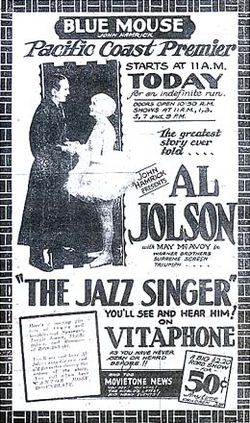
History was made in New York on October 6th, 1927 when the very first spoken voice in a feature film was heard. The voice belonged to Al Jolson and the ground breaking movie – The Jazz Singer. The reaction by the theatre audience was immediate – they rose to their feet, applauding ecstatically.

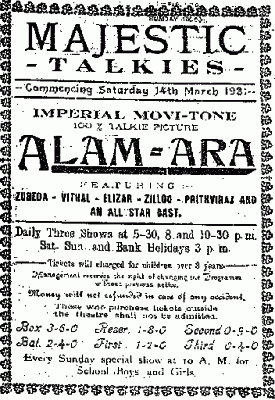
The first Indian talkie, Alam Ara, was released on March 14, 1931, at the Majestic Cinema in Bombay. One report says “There were huge crowds outside the theatre.Tickets were sold ‘in black,Police aid had to be summoned to control the crowds ….Four¬anna tickets were quoted at Rs.4 and Rs.5.” It was advertised as “All Living, Breathing 100% Talking Peak Drama, Essence of Romance, Brains and Talents unheard of under one banner.The audiences went crazy over Alam Ara and Indian films haven’t stopped taking or singing since …

Going to movie halls, talkies, tent cinemas or a theatre was great fun. The very thought of going out added a special dimension to entertainment in the days and times long forgotten – wondering about what to wear, being on time, how to reach the theatre and whether we would get tickets and so on, added an element of suspense to the ensuing excitement. In the absence of any other form of audio visual entertainment in the 50’s, 60’s and 70’s, watching a movie was the ultimate entertainment experience.

Bangalore, being a cosmopolitan city, played host to movies in different languages – Kannada, Tamil, Telgu, Hindi and English. The theatres were mainly located in the Kempe Gowda road, in the Majestic area and in and around MG Road, while a few could be found scattered all over other parts of Bangalore. In its heyday, Bangalore boasted of having the largest number of movie halls in the country – some of them were a treat to watch – The Alankar in the Majestic area and Lido at the end of MG Road were luxurious by any standard and set a new bench mark in movie viewing.

The architect of Bangalore Attara Kacheri (Karnataka High Court) Arcot Narrian Swamy Mudaliar constructed Plaza theatre in the year 1936, modeling it after the Picaadilly Circus in London. It was one of the oldest theaters in Bangalore.


Residing in Shankarpuram, South Bangalore, meant watching movies in close by theatres. All the theatres had to be within walking distance. We were always short of cash and with Rs 5 as pocket money there was very little one could do. So we walked to the movie theatre. Our favorite haunt was ‘Vijayalakshmi’ theatre located in Chickpet which showed English reruns. Seetharam knew a short cut which would take us less than half an hour to reach the theatre. The route was intricate with endless twists and turns often involving going in and out of stranger’s homes – so if Seethu was absent – there was no movie for the rest of us. The best part of watching a movie back then was the cost- the morning show was always at half the price of regular shows and we as students got another 50% off -this meant we paid Rs 1/- per movie. Once there, we invariably bought sliced cucumber with green chili sauce or plain peanuts. If someone felt slightly rich, he would treat us to pineapple slices with salt and pepper. The movies we saw were all action movies – Our hero was Steve Reeves, a WWII Veteran with a Herculean body. We saw Hercules, Hercules unchained, The Trojan Horse, Goliath and the Barbarians and many similar films. Another hero was Victor Mature, starring in Samson and Delilah, Demetrius and the Gladiators, Zarak etc. Another strange Sword-and-Sandal movie we saw was, ‘Hercules, Samson & Ulysses’. The genre that was next in line consisted of war movies such as – The Guns of Navarone, Great Escape, Stalag Seventeen and so on. We also went and saw movies in Bharat – I remember watching a fascinating movie called ‘Living Desert’ , a Walt Disney production there, then there was Minerva and the bug infested Paramount talkies all showing English reruns at half the usual price. I used to enjoy watching Films Division Documentary shows with the golden voice of Melville de Mello reverberating in the theatre. If we were extra lucky we got to watch ‘Tom and Jerry’. And there were always the trailers of movies to come as fillers. In all, we had three hours of guaranteed fun.


We also went and watched Tamil movies in tents – along with a very rustic and earthy audience. Haricharana Babu’s father Mr Narayana Swamy wielded a lot of clout in the Gavipuram area and as a result we got to watch tent movies free. One could go in any attire, at any time, whistle loudly at the drop of a hat, shout, scream and generally immerse oneself in the movie. I did not follow Tamil, but it did not prevent me from watching MGR, Shivaji Ganeshan and the rest, belting out their lines in a bombastic ,theatrical style.


As we entered college, tastes changed and our sights fell on movies screened in theatres, in and around MG Road. Rex, Plaza, Imperial, BRV(Bangalore Rifles Volunteers) and later the Lido became our regular haunts. The genre of movies also changed and we started watching all the classics such as Ten Commandments, Benhur, My Fair Lady, Camelot, Becket, Oliver and many more. It was the turn of Richard Burton, Rex Harrison and Peter O’Toole to become our heroes. ‘From Russia With Love’ was released in BRV.Bond films were a craze by then and getting to see the first show was an achievement. Guru, Kumar, Mallesh and Seethu and self reached BRV at 0300 hrs in the morning and we were among the first 20 in the queue to buy tickets. The booth opened at 1000 hrs under police bandobast and shortly we were in possession of the prized ticket. I vividly remember watching ‘Wait Until Dark’ starring Audrey Hepburn as a young blind woman and Alan Arkin as a violent criminal. During the interval, Mallesh who was till then sitting next to an elderly couple wanted to swap seats. As the second half started, I realized that I was being made a scapegoat. The old man had probably seen the movie many times over and was rendering a running commentary to his wife in Kannada. When it came to the million dollar scene, where Alan Arkin leaps in the dark to catch Audrey Hepburn – the old man warned his lady ‘Do not get scared, he is going to leap any time now – watch, watch, he is about to leap …’ With the exception of the three of us, the entire theatre gasped and jumped up in fright.


Whenever Kumar ran short of funds, he used to sell old news papers to finance his movie ticket.DK Ramu’s father was an Executive Engineer in the State Electricity Board ,with MG Road under his jurisdiction. DK was often the recipient of passes for movie shows distributed by the theatre owners to keep dad in good humor. The largesse extended to some of us; on condition that we met his bus fare and tiffin charges. In this mutually beneficial arrangement ,we saw ‘Kissing Cousins’ an ‘A’ film starring Elvis Presley. For this land mark occasion, four of us dressed up in trousers and shirt to enhance our looks, hoping the ticket collector would allow us into an ‘adult’ movie without any fuss. We got to see a man and a woman kiss on screen for the first time. What an exciting experience! Eating ‘Puffs’ and ‘Peanut Bars’ in Plaza Theatre was the ‘done thing’ in those days.


Subash was the only Hindi movie buff. This put him in a great predicament. To get someone to go along with him meant shelling out for them too. So Subash paid for the bus fare, bought the tickets and got us snacks in the interval. Under his patronage we saw – ‘Rajkumar’, starring Shammi Kapoor and the darling of yester years, Sadhana and many more.


Finally, my adolescent movie going experience ended in NDA. Watching movies on Saturdays in the assembly hall was an extraordinary experience. All of us would be dead tired after all the physical punishments such as front rolling, frog jumping and carrying cycles on our heads. Getting inside the hall with no lights was an instant sleeping pill. I remember watching the titles of ‘Spy Who Came In From The Cold’ and falling asleep immediately thereafter.


In the navy, movies are an integral part of life at sea. In the old days, all ships carried a 30 MM projector and a large collection of movies. Every evening after dinner, a movie would be screened. One watched the movie in open air on the Quarter Deck with all the heavenly objects staring down upon us. The constant hum of the ship’s engines and the noise of heavy winds required extreme concentration if one wanted to follow the dialogues. It was not uncommon to hear ship’s announcements such as ‘Chief Quartermaster Bridge’,’ Fresh water tankey officer’s bathroom’ interupting and ruining a really romantic scene. We took a lot of Hindi movies to Riga and screened them very often .The Russians would come in hordes to watch Raj Kapoor starrers. Watching Russian movies required lots of courage and daring.The title was sufficient to keep one away –‘A Fish Factory in Astrakhan’ or ‘Drama in a gypsy camp near Moscow’ or ’The patriotic mine worker in Siberia’ or ‘Lenin in October ’ and for the more daring there was always ‘Lenin in 1918’ .


Open air movies with attached bars are a big hit in the army stations and clubs. With a little bit of ‘Elbow Bending’ one can get through the most horrible movie with panache. After a few down the hatch, it really did not matter if the movie was in English, Hindi or Swahili.


I used to shed tears very easily while watching sad movies.Watching Koshish was the mother of all crying experiences. My mother swore she would never sit next to me in a hindi film.I wept throughout the movie, into her pallu.


KM Nair had watched Sholay several times and knew the dilogue backwards.Much to our annoyance, he used to frequently render the Sholay dialogue.Being a Mallu, the delivery was very fast and sounded like several marbles shaken in a tin.Finally when self and Kats saw Sholay and heard Gabbar Singh’s slow and deliberate delivery we were a tad dissapointed as he did not speak like Nair.


Movie going as an activity has subsided over the years with TV and DVDs taking over this favoured past time. Most of the theatres in Bangalore have been sold to make way for Super markets, malls and shopping complexes. In their place, ‘Multiplexes ‘have arrived. We went and saw a Bond film in the famous ‘Fame Shankarnag Chitramandira’ with a right mix of style, elegance and opulence. 55 lavishly fitted recliners that stretch to 150 degrees at the press of a button takes you to a different comfort zone. Butlers serve International and local cuisine at your recliner and in the attached Gold Lounge, exclusively for Gold Class patrons.


Watching movies on the big screen has always been great fun and will remain so for many more generations. In a fast paced life, going to theatres once in a way is a great way to bond with – parents, children, grand children, friends et al. A simple packet of pop corn can do the trick.


Cheers to the BIG SCREEN

Life’s Little Ups and Downs

As a child one often dreams about kings, queens, castles, forests, friendly animals, princely frogs waiting to be kissed, unlimited supply of chocolates, finding treasures and many more things. Thinking about them, children go to sleep with a smile on their lips. When they wake up, all is forgotten and a new day starts with a clean slate – waiting for new dreams to be written on it. Nothing gained – nothing lost.


One continues to dream even as an adolescent. As adults, we continue to hope for good things to happen. Life does not always pan out the way you wish – there are surprises waiting to spring upon you from nowhere. The human mind, in some ways, is very naive and is ever ready to accept good tidings. Often we are disappointed as events do not unfold the way we expect them to.


It was the summer of 1960 and, like any other summer, it was hot and humid. I was 11years old with lots of time on hand, foot loose and fancy free. Guru Kumar and I were dawdling aimlessly when we saw a bright and shining object lying on the road. As we stood there examining the object, Kumar said, “I know it’s something to do with cars, let us pick it up and go home”. At home all of us concluded that it was a ‘car silencer’, an item which would fetch substantial money, if we could sell it. The next few days were spent in day dreaming about what we would do with the money once we sold the silencer. Some of the options were – endless dosas at the local restaurant followed by ice cream at Venkateshwara stores or a picnic to Lalbaug, buying an actual leather cricket ball and a good bat and so on – the list was endless. We also swore not to tell the others about this windfall. Having mustered sufficient courage, we went to City Market to flog the silencer. Kumar was supposed do the talking and we were to stand by him in support. The scrap dealer took one good look at the silencer and burst out laughing. It was worthless. Taking pity on us, he gave us 25p to buy some peanuts and return home.


PC Sorcar, the famous magician, had come to town and was performing at the ‘Town Hall’. My dear friend, Ravindra Pandit, gave me a few passes for the show. My friends and I were really excited by the very thought of witnessing a magic show and that too, one by Sorcar. Dressed in our Sunday best, six of us arrived at the Town Hall, only to be told that the passes were invalid as they had been used the previous day. Pandit had done a ‘Sorcar’ on all of us. In total silence we reached home, not knowing what to tell our parents.


In school I used to do ‘Combined Studies’ along with a good friend of mine, DK Sriram, in his empty ancestral house in Vishveshpuram. Viji and I used to carry our dinner to his place. DK ‘s hot dinner came in a tiffin carrier from Chamarajapet, lovingly packed by his aged and absentminded grandmother. Filled with an overpowering hunger and salivating in anticipation, DK would open the tiffin carrier with a lot of expectation– only to find plain rice in all the four containers.


In the early sixties, having a girl friend in South Bangalore was very rare. I had made friends with a girl who wrote a very short and sweet letter to me, whilst I was attending a NCC camp in Mangalore. I was the happiest boy on earth and carried a permanent smile on my face. When I returned, I went and promptly thanked her for writing. She shook the very ground under my feet violently when she said, “What letter?” and quickly walked away. Disappointed and grim faced, I returned to my gang to narrate the sad story. They were in splits, as GR Mallesh, my neighbour (who went on to become an ace pilot in the IAF) owned up to the gag.


My parents and their friends were going to the famous theatre ‘Navrang’ in Bangalore to watch ‘Do Aankhen Barah Haath’ directed by V.Shantaram. Going to a theatre was a privilege and it did not happen very often. I decided to skip the movie and play a tennis ball cricket match in my friend Santaram’s house. What a strange coincidence. Shantu had promised us a ‘Silver Cup’ at the end of the day’s play. He did keep up his word – the only flaw was that the cups were made from the silver foils of used cigarette packs.


When we were young naval officers in Kochi, we met a friend of KM Nair’s over a drink in the club. Late in the evening the friend invited all of us over for lunch the next morning to his house in the city. We were a sizeable lot – eight of us went for lunch. The initial impression was very encouraging – we entered a huge bungalow – the residence of the ‘Commissioner of Kochi Port Trust’ (the friend’s father) to be received by a retinue of people. We met his father very briefly and proceeded straight to their spacious and well appointed dining room. Lunch was served in the finest crockery with all possible pomp and show. The only flaw of the wonderful morning was – the lunch was sufficient for only one person. All of us were shell shocked and stunned at the meagre spread on the table. We thanked the friend politely and prodded on by an empty stomach, made a quick dash to Hotel Woodlands for an ‘Unlimited Thali’ (Lunch served on a plate). Later, we came to know that the family was in the middle of a transfer and had packed, ready to leave for Thiruvanthapuram soon after.


In the Indian Navy, officers are required to specialize in one field or another. I specialized in ‘Gunnery and Missiles’ and was posted in my Alma Mater as the Chief Instructor – a very important appointment indeed. One fine morning the Commanding Officer called me to his office and handed over a signal from Naval Head Quarters, which stated that I had been selected to attend the most prestigious course that any naval office could aspire to – the “Dagger G” course in UK (G short for Gunnery).Only three or four officers in the entire navy had done the course. On seeing the signal I froze and just could not utter a word. It took some time for the message to sink in. I was simply ecstatic and literally on top of the world. As evening approached and the sun started to set, I was plunged into total gloom – in all the excitement of the morning, I had forgotten to note that the day was 1st April, 1980.My short lived happiness was courtesy my very close friend, Lt. Cdr. Vijay Gopal (Viji).


We learn to live and voyage (often a bit wiser) from one experience to another.

The serving and the retired navy – can we do more

While attending a dinner party in a ‘Coffee Decoction’ friend’s house http://samundarbaba.blogspot.com/2010/09/coffee-decoction-friends.html the topic of Navy Day celebrations in Bangalore cropped up.

The first week of December is celebration time for the Indian Navy – during the week, it projects the navy to the Indian public through various activities – ships, establishments and dock yards are opened to the public. Ships at anchorage adorn ceremonial flags during the day and light up at night. In some places they get to see the navy in action. Naval bands enthrall the public with martial tunes. The Navy Ball provides the glamour quotient to the men in white. The navy top brass hold ‘At Home’ parties wherein the city’s politicians, bureaucracy, police, industrialists and veterans get to meet each other over a cup of tea and bask in the glory of Navy Day. In short, it is an opportunity for the navy to bond with Civi Street.

In smaller naval stations such as Bangalore, normally the ‘Navy Day’ reception is held in the Naval Mess. The function is attended by all the serving naval officers and their ladies from the station. In addition a few officers from the sister services are also invited. In the case of veterans, an allocation is made to cover their representation – say 20 or 30 couples etc. The Air Force on the other hand puts out an advert in all the local and national news papers inviting the veterans to attend ‘Air Force Day’ celebrated in their various messes. Some of the senior retired Air Force officers told me that this tradition is in vogue since a very long time.

During the ensuing discussion, I maintained that the navy should be more magnanimous on this occasion and invite all the veterans wherever they are with open arms. There are extremely few opportunities in smaller stations, where in the retired meet the serving. Navy day is one occasion, wherein the veterans will be able to stand (may be displaying their medals) next to the man in uniform and ‘Elbow Bend’ in reminiscence. As one grows old – the need for recognition and to feel wanted is on the increase. The old feel happy when they are invited. Whenever I receive an official invitation from the navy – I feel proud and honoured. I have always enjoyed mixing with young officers and learning about what is new in the navy.

In my opinion, the serving navy has a moral responsibility towards the retired community and should encourage greater bonding between the two. We always go to town proclaiming we are different from the rest – Cradle to Grave, camaraderie, Brothers – in – Arms etc – our claims are true to an extent, but they need to be nurtured and encouraged. The serving navy has all the attributes such as – place, organization, money, manpower and a host of other thing in abundance. Once a year, is all that one asks. Also the today’s serving navy is tomorrow’s retired lot. It stands to reason, that while in service, we build up a healthy tradition.

If the veterans feel that enough recognition has not come our way – let us not blame the government and bureaucracy for all our woes. The phrase ‘charity begins at home’ holds true. The Navy should take the lead and recognize its veterans and showcase the relationship.

In the final analysis all that I ask is “Give me the opportunity to feel connected with the serving navy”.

A bit of history :

21 October 1944– The Royal Indian Navy celebrated ‘Navy Day’ for the first time. This met with considerable success and aroused enthusiasm not only in the ports where parades were held but also in inland centres, where public meetings were organized.

01 December 1945 – Encouraged by its success, it was decided to organize similar functions every year on a larger scale, and later, in the season when the weather was cooler. Accordingly, the second “Navy Day” was celebrated in Bombay and Karachi on December 01, 1945.

15 December 1968 – In due course, “Navy Day” came to be celebrated on ‘15 December’ and the week in which ’15 December’ fell was observed as the ‘Navy Week’

04 Dec 1971 – To go back in time – On December 3rd 1971 in a radio broadcast shortly before midnight, the then Prime Minister, Smt Indira Gandhi, addressed the nation. She said “I have no doubt that by the united will of the people, the wanton and unprovoked aggression of Pakistan should be decisively and finally repelled…..aggression must be met and the people of India will meet it with fortitude, determination, discipline and utmost unity…..” In response to the call of the nation, the Indian Navy planned a most audacious and daring attack in the history of naval warfare ‘Operation Trident’ http://bangalore.citizenmatters.in/articles/view/2586-navy-d  (Celebrating maritime victories – Lessons from the sea for a landlocked city). Each year on the 4th of December, the Indian Navy celebrates ‘Navy Day” to commemorate our courageous attack on the Pakistani ships and harbour.

Epitaph

As I was writing this blog, I received a call from Raghunathan to say that one of our course mates, Gp Capt RPM Nair had passed away. We rushed to the Hebbal electric crematorium to pay our last respects. To bid farewell on his last journey – there were his immediate family, close relatives, friends, course mates and the serving Air Force.

This quote sums up the way America thinks about veterans;

“A veteran is someone who, at one point in his/her life, wrote a blank check made payable to “The United States of America,” for an amount of “up to and including my life.” unknown author.

Remembering Admiral OS Dawson – In Lighter Vein

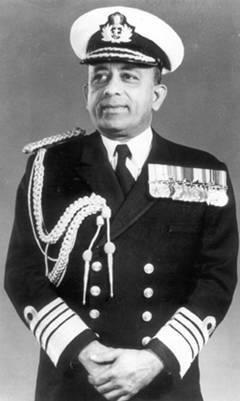
Some people journey through this Earth without creating a single wave or ripple – they come and go unnoticed. When Admiral Oscar Stanley Dawson joined the Indian Navy, he probably had no idea that he would leave such an indelible impression in the pages of Indian Naval history. During his naval service of 41 glorious years, he made a huge impact on the navy of the day, made his presence felt and put his own special and personal stamp of authority wherever he went. In some cases, reputation precedes the person ; in his case – his reputation for strictness, long hours of slogging, working by the rule book and his utter disregard for personal comfort (his and others), used to reach the ship much before he took command. 

In 1973 I became Flags to Rear Admiral Narpati Datta, the Flag Officer Commanding Western Fleet. Captain OS Dawson (OSD) was then the Commanding Officer of INS Nilgiri. On one occasion the Flag embarked Nilgiri for a longish sea sortie to Bandar-Abbas, Iran. As the ship cast off, the FOCWEF realized there was no Captain’s Chair on the bridge. Later on with a mischievous smile OSD informed the Admiral that he himself had got the chair removed and said, “Sir, even the Captain has to be on his toes in my ship”. The Admiral, by now used to the comfort of INS Mysore and the Flag Bridge, decided to shift the Flag to INS Deepak, the spacious tanker.

There was always a hidden lighter side to his normally serious demeanor. In Bandar – Abbas I was informed by the Iranian Naval Liaison Officer that six IN officers could visit Tehran provided they could organize some place to stay. I informed OSD and the Fleet Staff Officers if they were interested in flying to Tehran. The FGO (Lt Cdr K. Pestonji) and FCO (Lt Cdr A. Tandon) were the first to volunteer for mission Tehran and the FGO also invented a Zoroastrian old aunt in Tehran with whom he would stay. When the Admiral asked the then Captain Dawson, “Stan, are you not going to Tehran?” he said, “of course I am going, in fact I am staying with Keki’s aunt”.

Once during an “At Home” on 4th Dec in the Navy House, I had forgotten to carry cigarettes and out of sheer desperation and misplaced courage, I went up to OSD and said “Sir, there is a ‘civilian gentleman’ who wants a cigarette badly, could you kindly give one?”. He put on a stern face that could have destroyed a thousand ships – and said to me “Take me to your civilian gentleman and let me have the pleasure of giving him a cigarette myself”. I did a very fast ‘Carl Lewis’ on him and vanished.

During an Anti Submarine exercise off Mumbai, Nilgiri was busy triangulating the enemy submarine position through ESM detections. At one point of time, FOCWEF on Mysore at anchorage signaled Nilgiri, asking OSD to come. Due to some reason, I was alone on the Quarter Deck to receive him. On embarking, an angry and protocol conscious OSD asked, “Why is FOCWEF not here to receive me?” and went back to his ship. Consequences be damned.

There was hardly any seniority difference between him and the FOCWEF, yet I have seen him treat the Admiral with utmost respect bordering on reverence.

Young Lt SV Gopalachari (late) then the Anti Submarine Warfare officer of Nilgiri was leaving the ship to go home after a hard day’s work. It was his wedding anniversary.OSD however had other ideas in store. He is reported to have told Chari, “measuring presence of CO2 in the compressor room is far more important than your wedding anniversary, which comes every year,” so goes the story and poor Chari had no option but to stay behind. As a result, he also got a measure of the temperature at home!

A little later in time, my wife and I happened to visit INS Amba. During the course of the evening OSD came to the wardroom to play the piano. A mutual acquaintance informed him that Jayanti sings well. Thereafter it was fun musical evening. He loved music and his piano more.

A few years later, he was appointed as the Chairman of Goa Shipyard and visited Mumbai to head a Court Martial. I was appointed his liaison officer. I picked him up in the airport and we drove straight to his residence somewhere in Marine Drive – I forget the exact location. He offered me a glass of rum and talked about old times. He also gave me a cigarette to smoke and added, “How is your civilian gentleman?”. He lived a very simple and frugal life, devoid of anything ostentatious. His house reflected his life style – ‘A bachelor married to the navy’.

He then became the C-in-C Southern Naval Command. During the annual day celebrations at INS Dronacharya – amongst other entertainment items, we put up a very novel children’s fancy dress show – which won accolades from him. He hated depiction of poverty and ugliness on stage. He often said, “There is so much of suffering all around us – why show it on stage too – children should be shielded from the ugly part.”

One fine morning we received a signal stating that the C-in-C would be inspecting Dronacharya very shortly. The signal sent shock waves up every one’s spine – such was the reputation of OSD. Several strategy meetings were held and action plans were drawn – how to counter OSD and win the battle.OSD never followed a set pattern and in his case, predicting was futile. We had to prepare ourselves for the worst. Fear of the unexpected reigned supreme.

As a part of the establishment we kept a well stocked ‘Piggery’ and some of its inmates were as good as Lord Emsworth’s sow, the ‘Empress of Blandings’ (Blandings Castle by PG Wodehouse.However the piggery was a source of constant irritation to a neighbour across the road, who also happened to be OSD’s friend. It was a case of the Onida ad – ‘Neighbours envy, owner’s pride’. We did not want to leave any stone unturned and the Piggery Officer was told to give all his sounder of pigs a good bath and clean up the sty. “No stink should emanate from the sty during the course of the inspection!” was the battle cry. Such were the lengths to which we went.

As the inspection drew closer, the tempo in the establishment reached a feverish pitch. Zero Error Syndrome had set in. The First Lieutenant wanted all the plants near the saluting dais to look green and healthy. He hit upon an extremely novel and original scheme and ordered ‘goats’ droppings’ to be liberally dropped in all the VIP flower pots. The day before the inspection it rained heavily, causing all the droppings to dissolve and become one with the mud in the pot. By nightfall the area near the dais had started to smell worse than our piggery. The First Lieutenant not to be outdone – late at night under cover of darkness, embarked on yet another bizarre rescue mission and ordered ‘Naphthalene Balls’ to be generously used to counter the odour of the ‘goat balls’. By morning the White and Black Ball combo had created an unknown aroma, making normal breathing difficult.

On the day of the inspection as the Admiral ascended the saluting dais, one could see he was overcome with misery, unable to tolerate the stench. In this atmosphere, I marched up and reported, “Parade ready for your inspection, sir!’ – After looking me up and down for several seconds – during which time I had completely frozen in the hot Kochi weather – he asked, “What is the weight of your sword?” – I knew the length of P15 Missile, weight of a 4.5 inch shell, rate of fire of an SLR – I knew many things but unfortunately had no answer to his question. He went on to add, “How can you be the Chief Instructor without knowing the weight of the sword?” The effect of the White and Black Ball combo continued throughout the inspection.

On completion of the parade, he retired to the VIP room to change into working dress and commence the ‘Walk around the establishment’ – which was standard procedure. After absorbing the earlier shock, the visibly wilting Commanding Officer went up to him and reported readiness for his walk around. OSD did the unthinkable and unexpected. He said, “AM 38 Exocet missile attack on INS Dronacharya is imminent! Start defensive measures.” The commanding Officer stood in absolute shock, not knowing what to do next. Technically, Dronacharya was a training establishment with a battery of guns, radars and an operations room. The establishment had never been subjected to any ORI. (Operation Readiness Inspection, wherein the war fighting capability is tested by simulating enemy attacks) Unlike a ship, we did not have any PA system, alarms etc to announce ‘Action Stations’ to enable the radars and guns to be switched on and brought to bear on the enemy aircraft. All the men were closed up in their respective classrooms. The Ops Room was locked and the key with an officer who was, unfortunately short of hearing and unable to get the drift. As all hell broke loose – sailors running helter skeltor, officers shouting unintelligible orders – Dronacharya resembled Pearl harbour after the Japanese attack. The inspection had not even started – such was the impact of OSD!

With great difficulty we all closed up at the GDP (from where the guns are controlled) and started taking charge of the situation. As we were about to settle down the Kerala State Electricity Board decided to make its own contribution to the disaster by cutting the power supply and blanketing Dronacharya in total darkness. The Chief Engineer from MES was summoned and informed that he would have to answer to the whole nation as to why we were unable to shoot down the missile. One thing unique about OSD is his impartiality – he treated us and his staff alike. In all this confusion, the Command Gunnery Officer decided to make his presence felt by appearing wearing his helmet back to front, prompting OSD to inform our CO, “ My CGO will join the next Sub Lieutenant’s Gunnery Course and learn how to wear a helmet properly’.

Beaten and totally battered, we followed as he finally started the ‘walk around’. On the way he saw a garage and wanted to know what was inside; when no answer was forthcoming, he ordered his Flag Lieutenant to open the garage door. The Flags (ADC) went to the garage and started pushing the door. On seeing this, Admiral remarked, “Look at this fellow, it is boldly marked ‘PULL’ and he is pushing it – how do you expect me to run a command with such staff officers?” One did not know where, when and whom he would target next!

We reached an abandoned building with several bills proclaiming ‘cleared for demolition’. OSD wanted to know as to why this could not be used as “Emergency Accommodation’ to tide over the shortage. The prompt reply from us was that there was no water and electricity in the building. He ordered someone to switch on the light and lo and behold! – All the lights came on and similarly the water from the taps gushed out like there was no tomorrow! Know your ship inside out was the lesson.

Our last stop was at the Second World War gunnery observation tower. It stood perched some 6o feet tall with almost vertical stairs leading up to its three observation platforms. At his age climbing the tower was indeed a very difficult and arduous task. On reaching the top he found his generously proportioned Command Medical Officer still at the bottom, wildly gesticulating, laughing and holding audience with a small group of officers. The CMO was immediately summoned up. The CMO took his life threatening journey to the top, one step at a time – he arrived first followed by his stomach. On reaching, OSD wanted to know, “In case Mumbai suffers a nuclear attack, have you made any contingency plan to accommodate the wounded? How many beds do we have? Have you interacted with other civil hospitals in Kochi? What about Coimbatore, etc”. I heard that the CMO lost a lot of weight thereafter, but never recovered from this incident.

Finally, after some three hours of the grueling walk around, we reached the galley – the last stop. He sat next to a pedestal fan and carried out ‘food tasting’. The Supply officer served him a spoon of hot rice, sambar, chicken curry, papad and dahi raita. After a very tiring day in the hot sun, he relished the fare and left.

Hours later we received a signal which – if my memory serves me right, said “Inspection of Dronacharya satisfactory, arboriculture needs improvement etc – an extremely well run galley. All ships and establishments are to send their cooks for training to Dronacharya”.

So ended our inspection – single handedly he had put us and his staff through a very rigorous inspection. Right or wrong, not many are capable of achieving this task – he set very high standards for himself and went about achieving them. Along the way he expected all naval personnel around him to do the same.

Years later, I interacted with him when he was the ‘Chief’ – went on many sorties with him to the Fleet and Command. After retirement, I had the opportunity to “Elbow Bend” with him on many occasions in the Naval Officer’s Mess, Bangalore. Through it all, I found him extremely devoted to the Indian Navy.

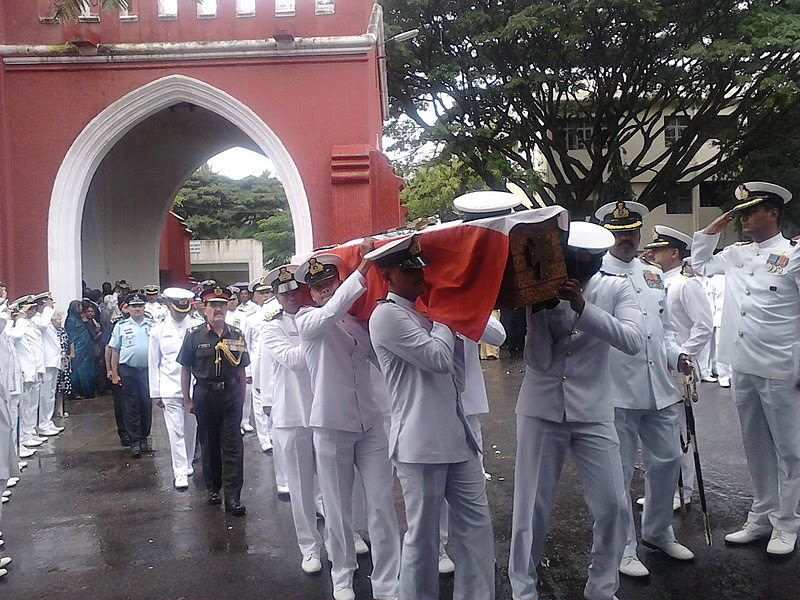
All good things come to an end – so they say. He was 87 years old. Former Chief of Naval Staff, Admiral (Retd) Oscar Stanley Dawson PVSM, AVSM, ADC passed way at 9.50 am at the Command Hospital. When I saw him for the last time at the funeral service in St John’s Church in Cleveland Town, Bangalore on 26th Oct 2011, he looked extremely calm and composed and appeared to be saying ‘I have done my duty’. May his soul rest in peace.

Figure 1 – The Final Journey

We Visited Leh – Part IV – Last day in Leh

Last Day in Leh – 05 Oct 2011
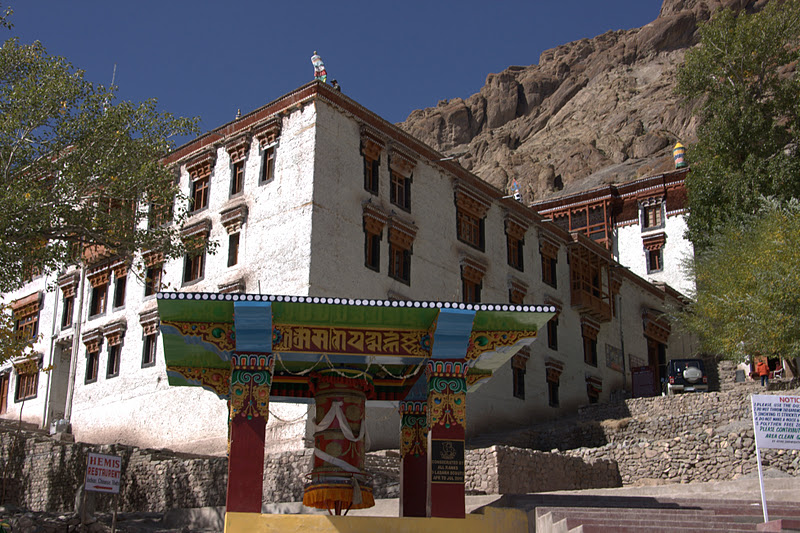
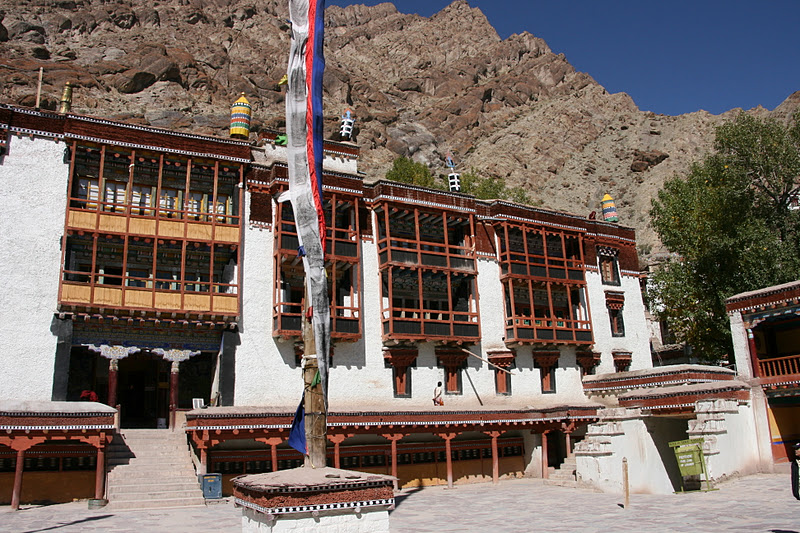
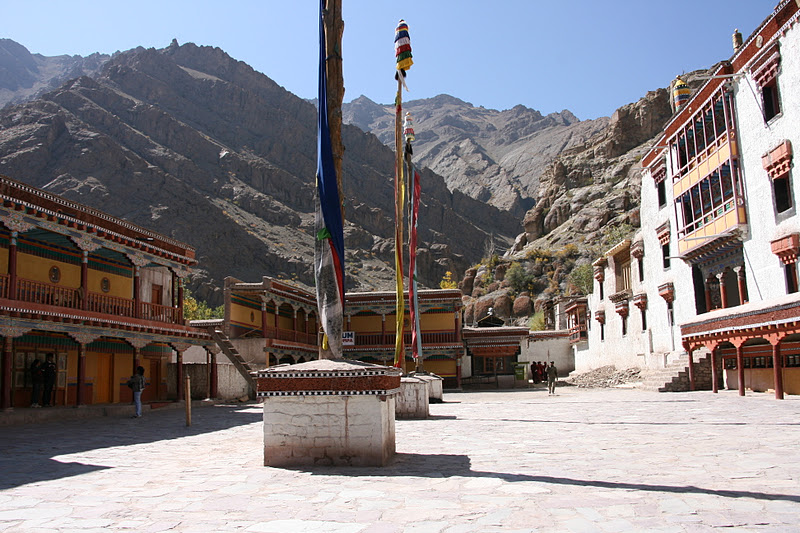
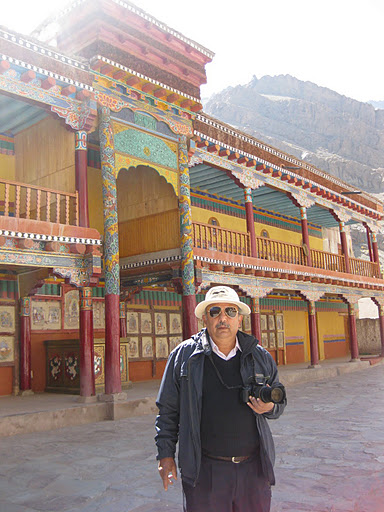
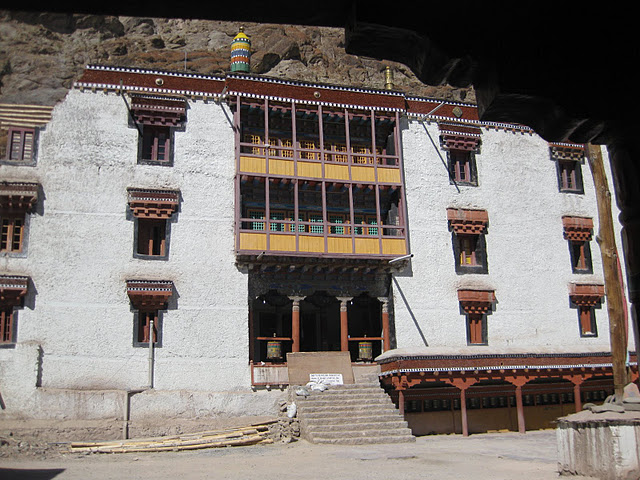
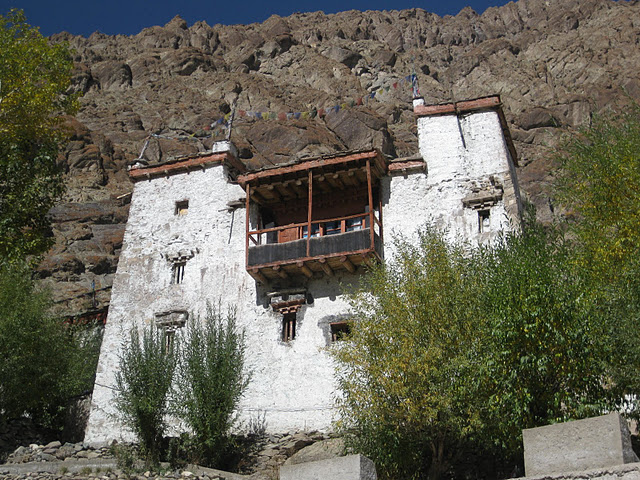
Our first visit of the day was to Hemis Monastery. It existed before the 11th century and is the largest monastic institution in Ladakh. Hemis has more than 200 branch monasteries in the Himalayas and more than 1,000 monks under its care. It is an important living monument and heritage of Himalayas and its people.

As you begin the climb


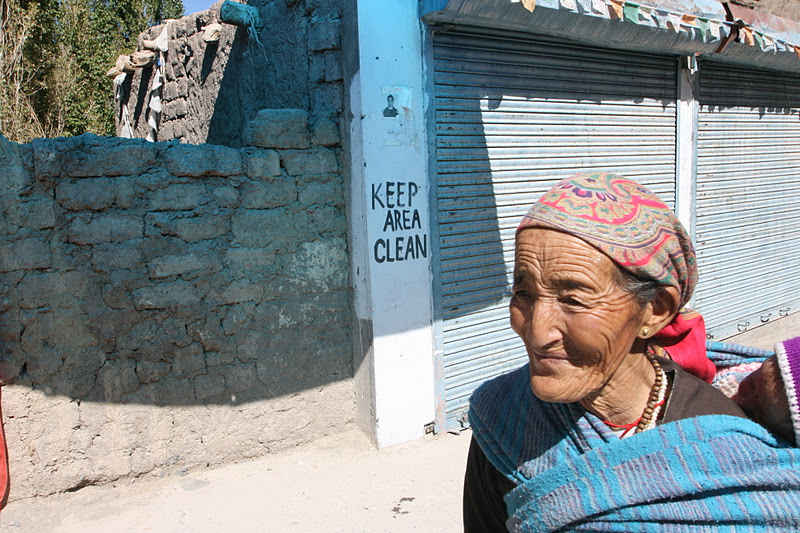
A local  – Her face resembling the contours of the 
Himalayas
View of the rooms
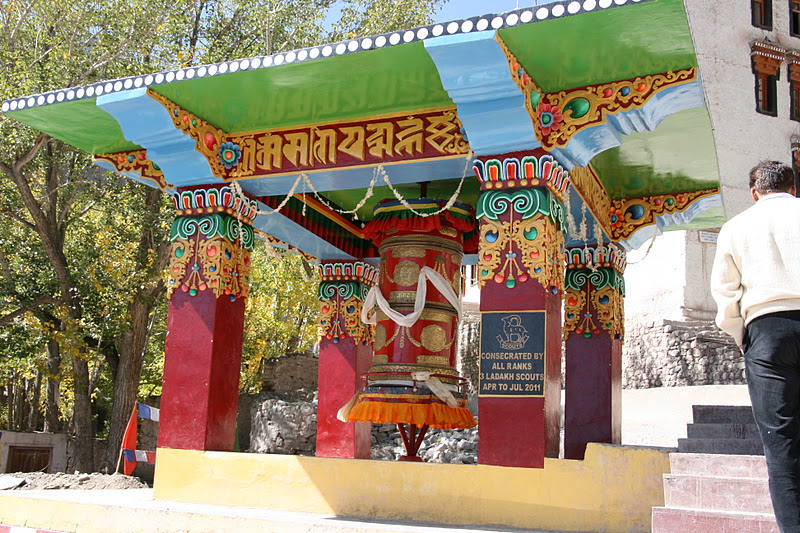
Hemis prayer wheel

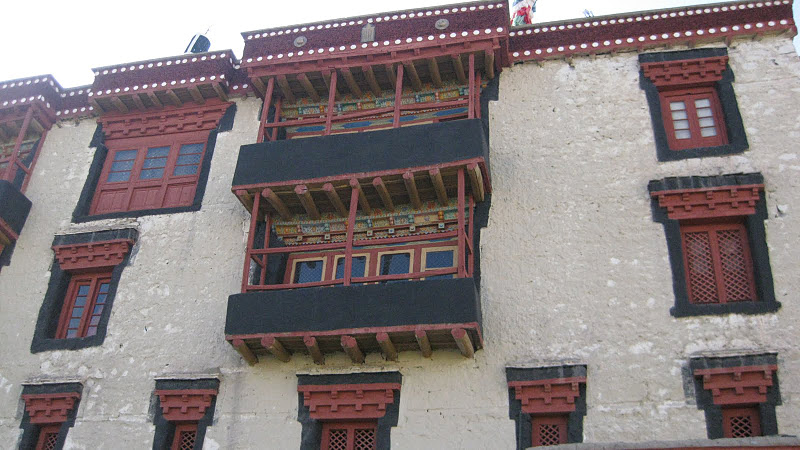
A section of the monastery

Inside the court yard


At the Hemis


A complete view


A section of the monastery

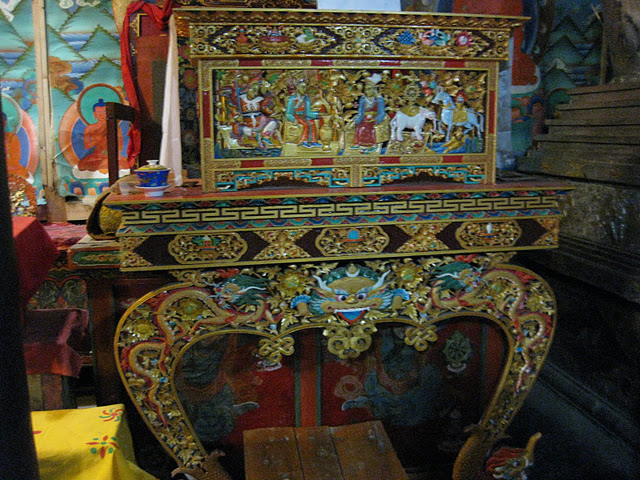
Part of the museum

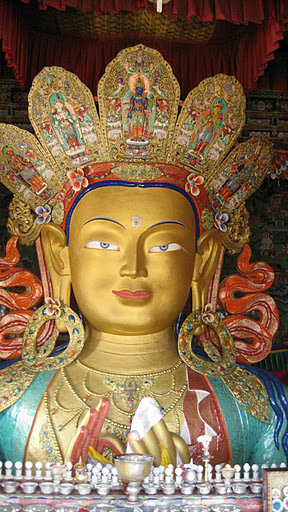
Maitreya Buddha – a two storey high statue
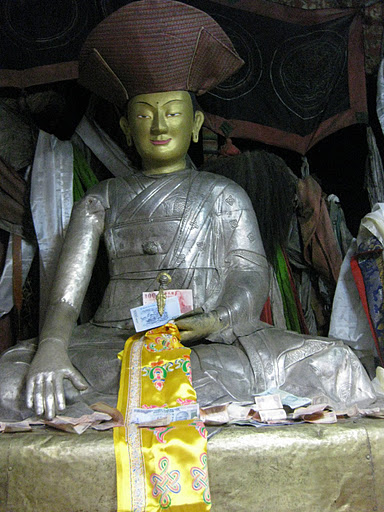
Statue of Buddha
Floral painting
Part of the museum

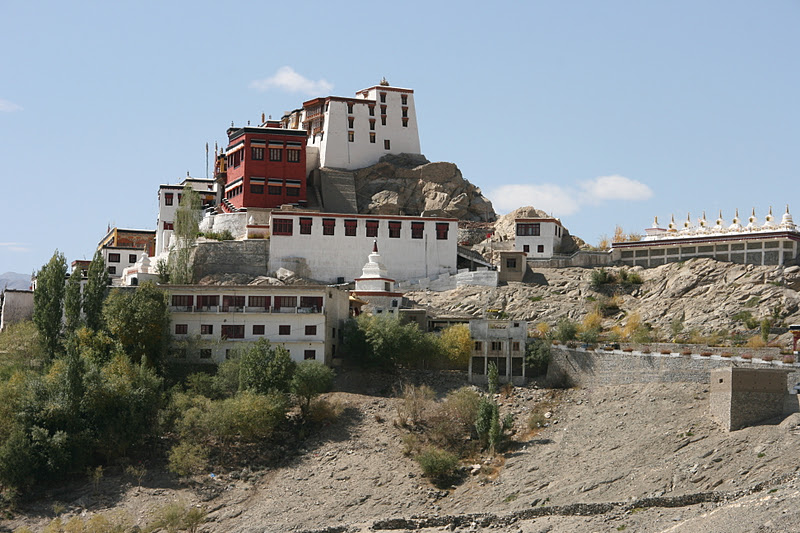
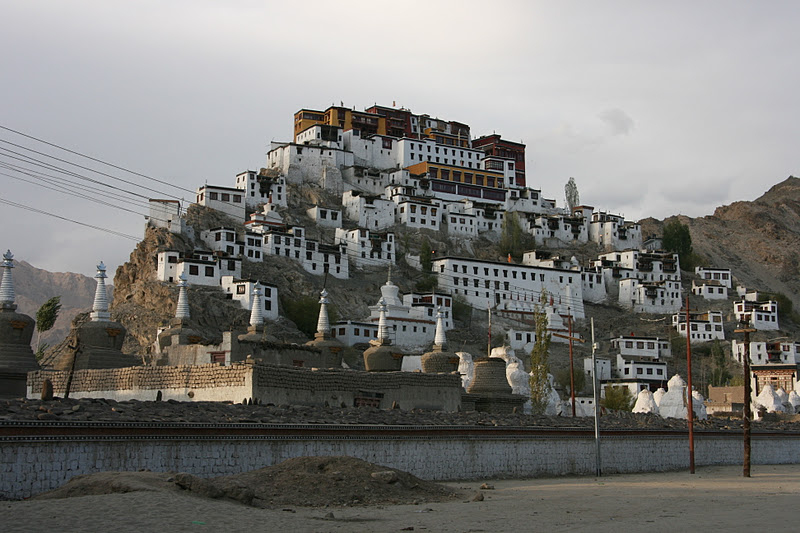
The next on the list was Thiksey Monastery. It is noted for its resemblance to the Potola Palace in Lhasa,Tibet and is the largest Gompa in central Ladakh. The monastery is located at an altitude of 3,600 metres (11,800 ft) in the Indus valley. It is a 12-storey complex and houses many items of Buddhist art such as stupas, statues, thangkas, wall paintings and swords. Here we met a doctor monk and bought some Ladhaki medicines


A view of Thiskey


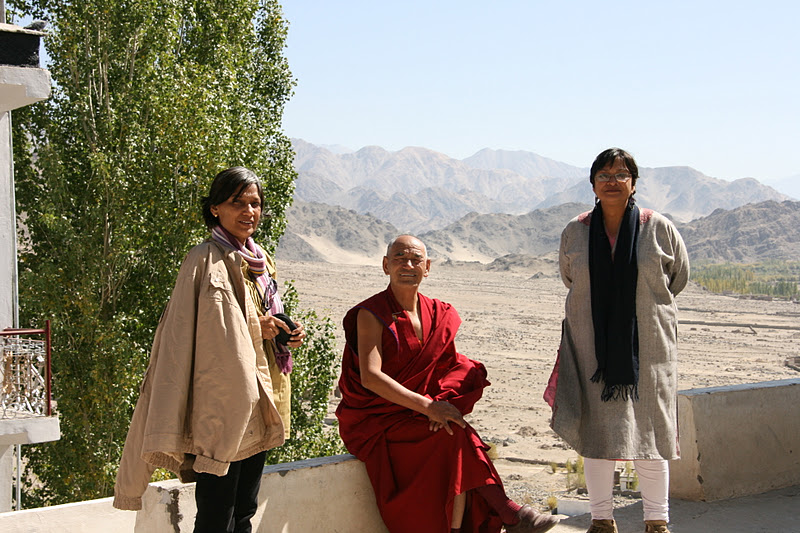
With the Doctor monk

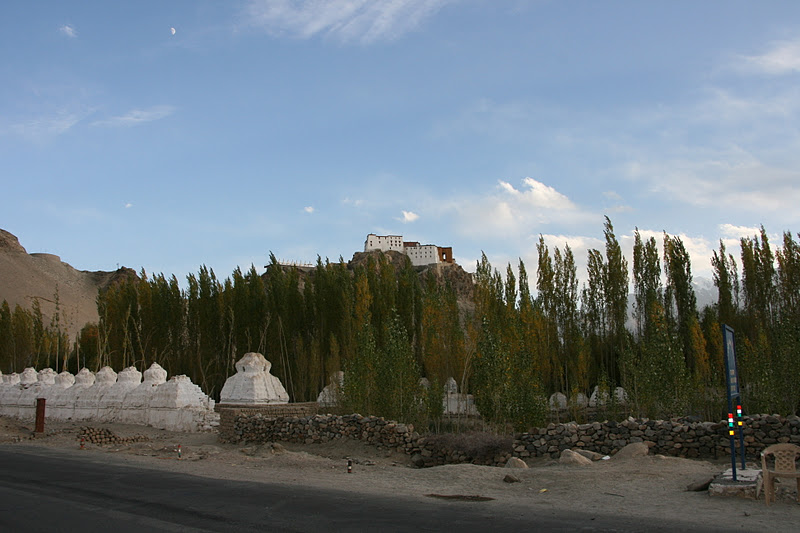
 A distant view 

The Stok Palace Museum is located about 14 kilometers away from Leh across the Choglamsar bridge. This was constructed in 1825 by King Tsespal Tondup Namgyal who was the last ruler of independent Ladakh. The current royal family lives in Stok Palace. The museum at this place has a huge collection of ornaments related to royal family, traditional clothing and a huge collection of thankas

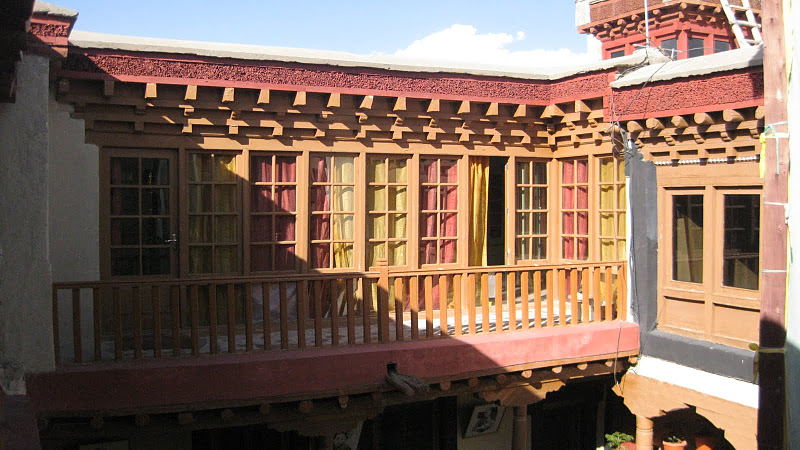
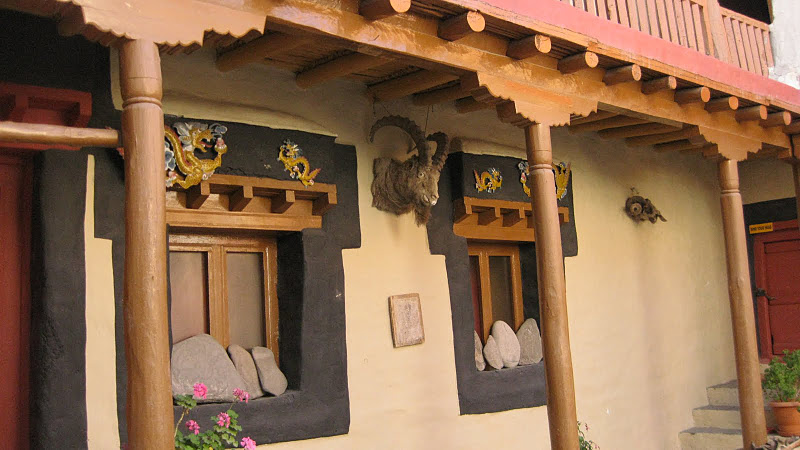
Interiors of the palace


Rooms in the palace


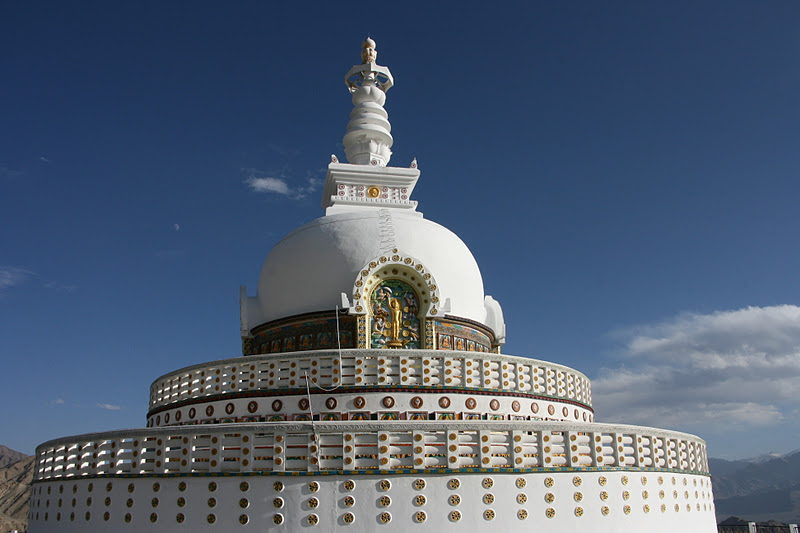
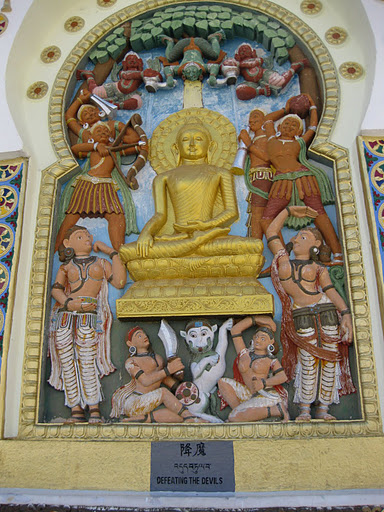
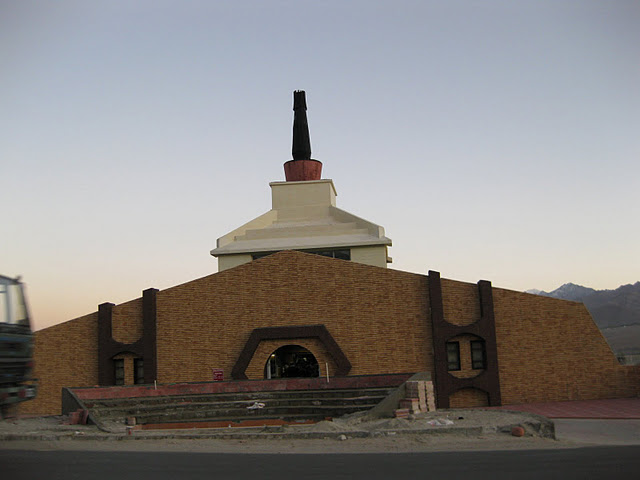
The Shanti Stupa was built by both Japanese Buddhists and Ladakh Buddhists. The Shanti Stupa features the photograph of the current Dalai Lama with the relics of the Buddha at its base. The stupa is built as a two-level structure. The Shanti Stupa was built to promote world peace and prosperity and to commemorate 2500 years of Buddhism. It is considered a symbol of the ties between the people of Japan and Ladakh

The imposing dome of the Shanti Stupa

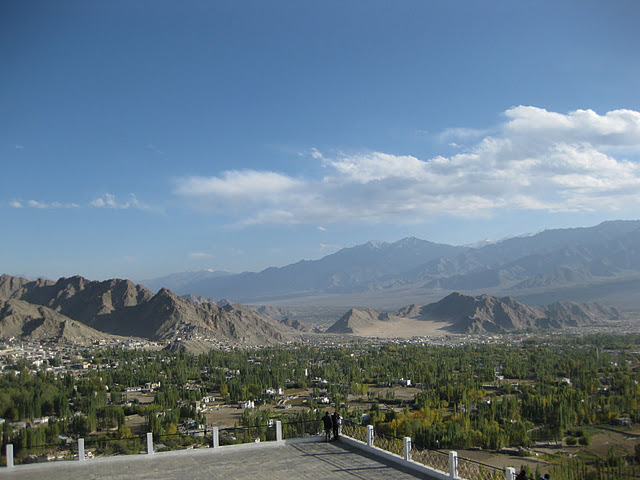
View of Leh from the Stupa
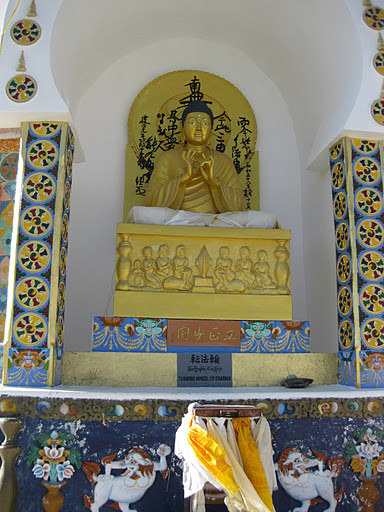
Inside the Stupa – wheel of Dharma
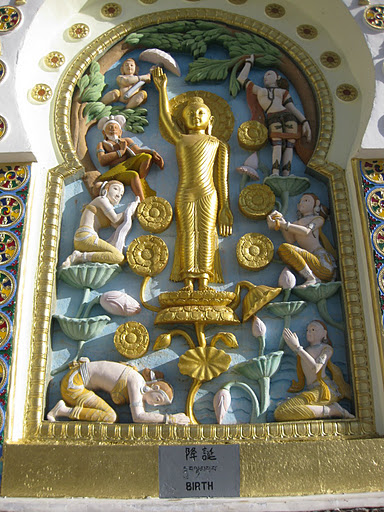
Birth of  Buddha


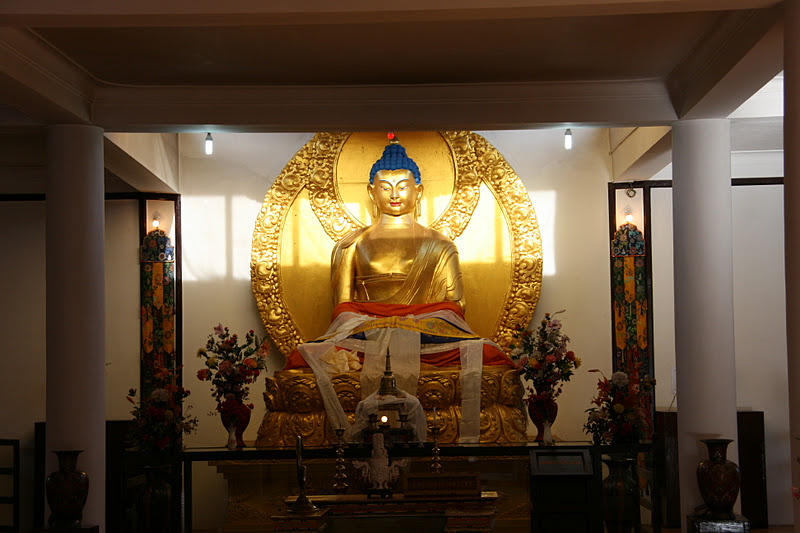
Image of Buddha

Defeating the devils


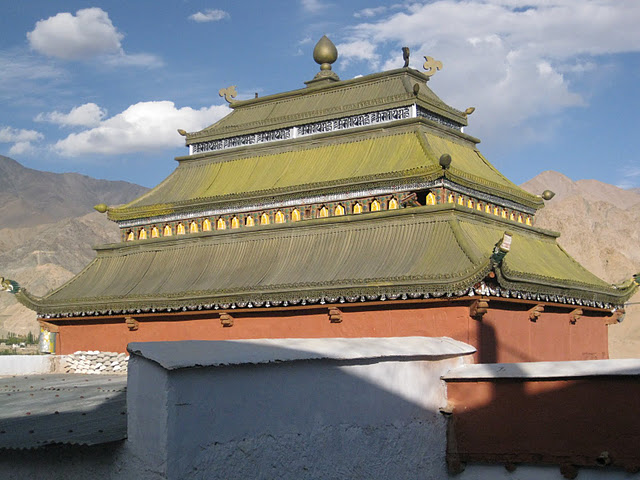
Lovely view of the roof


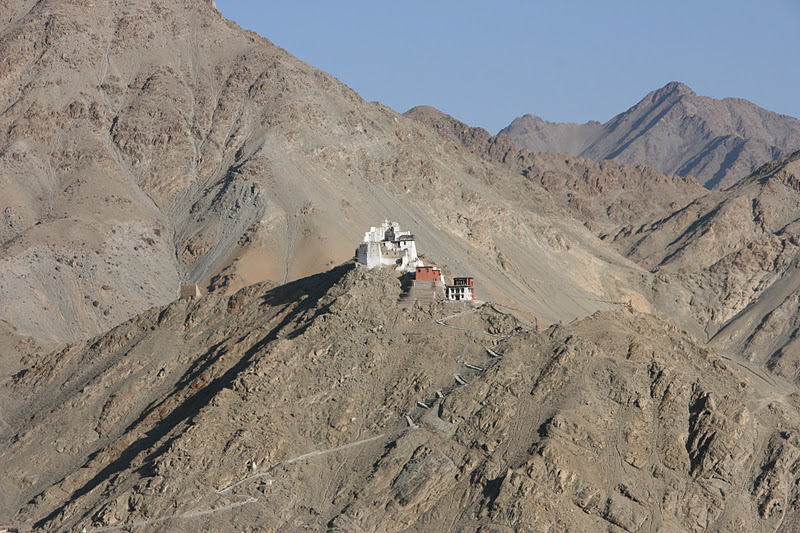
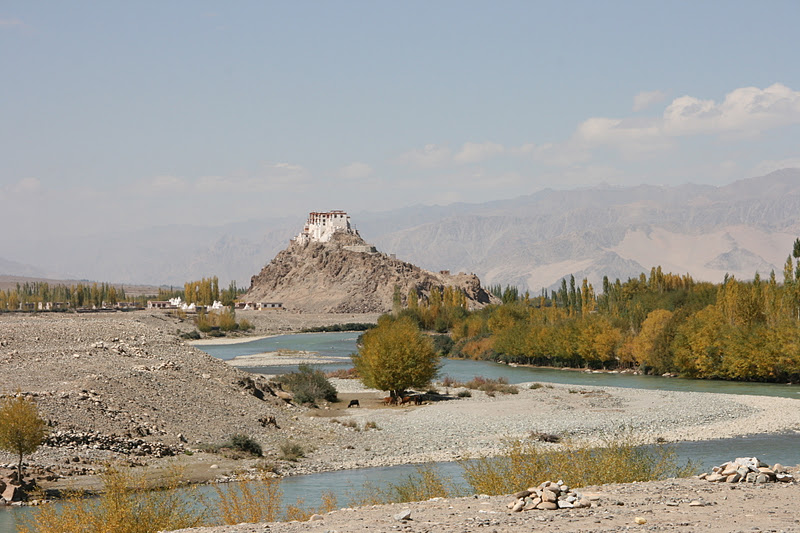
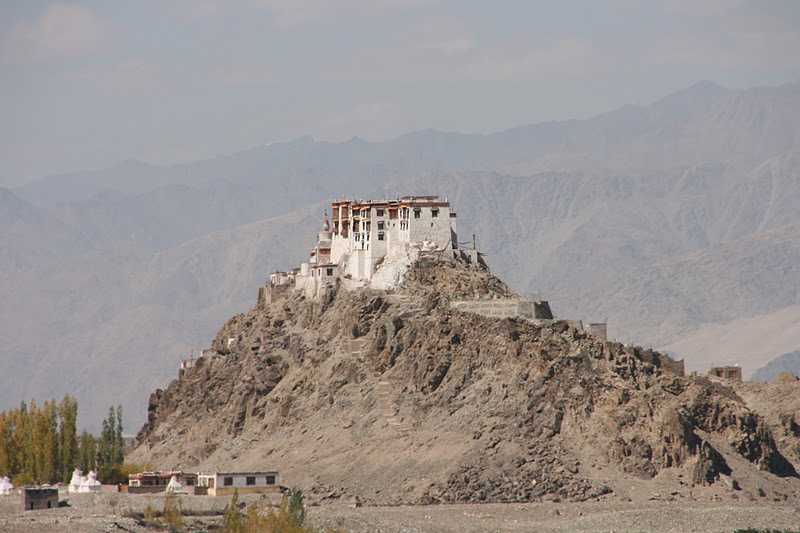
Shey is a town in ladhak that has the old summer palace. It is located 15 km. from Leh towards Hemis. The palace was built more than 555 years ago by Lhachen Palgyigon, the king of Ladakh. The palace has the largest golden Buddha statue in Ladakh.

Shey palace in the back drop of Beas
Shey palace

Shey palace brings out the best in Ladakhi architecture


A distant view


Another view
Last look at the Himalayas – another 10 days the entire range will be white
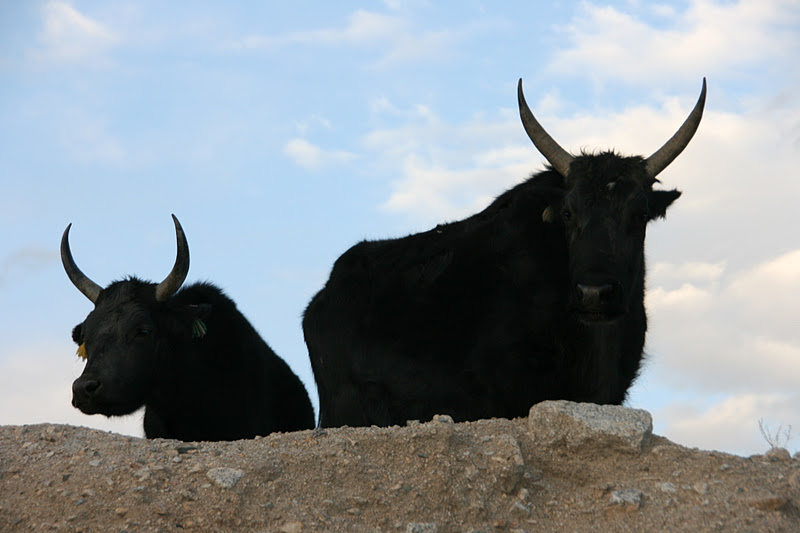
Yaks on the way to the mess. In all we saw Ibex,red fox,black – billed Magpie,Himalayan Marmot,mouse hare
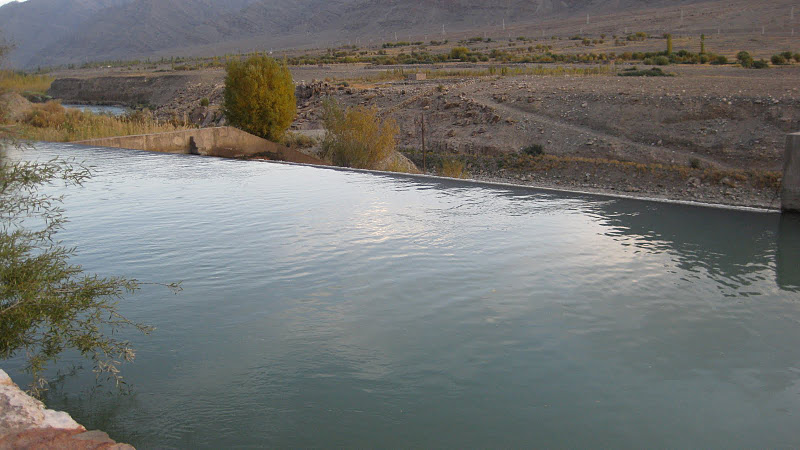
Mirror like Beas channeled for irrigation
The sun is about to set

Never ending fascination with Ladakh

Some of the last impressions of Leh
Way back to the mess


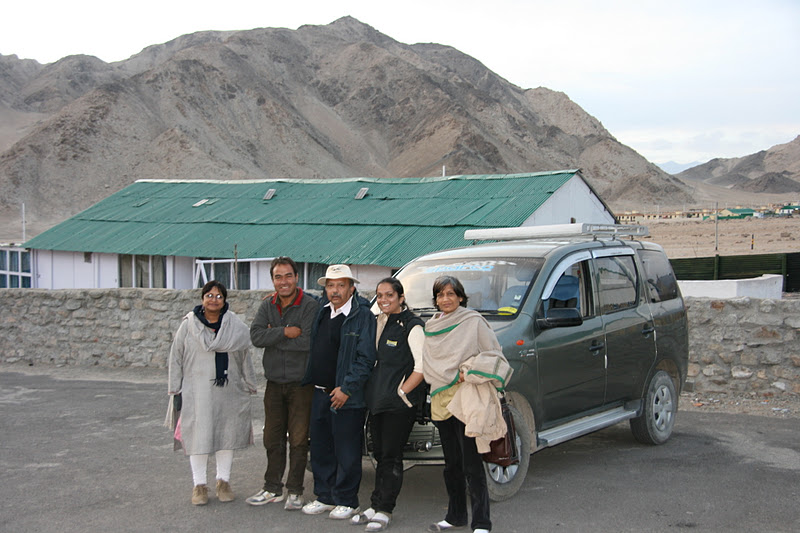
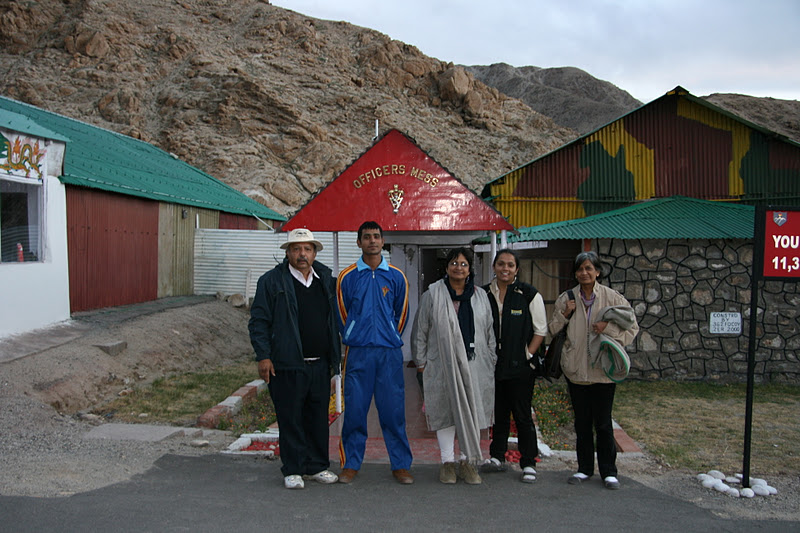
After a tiring day, we returned to 603 EME Battalion Mess and bid good bye to Driver of Xylo Nazeer and our Sahayak Sepoy Vipin Kumar.

With Nazeer our Xylo driver

With Sepoy Vipin Kumar


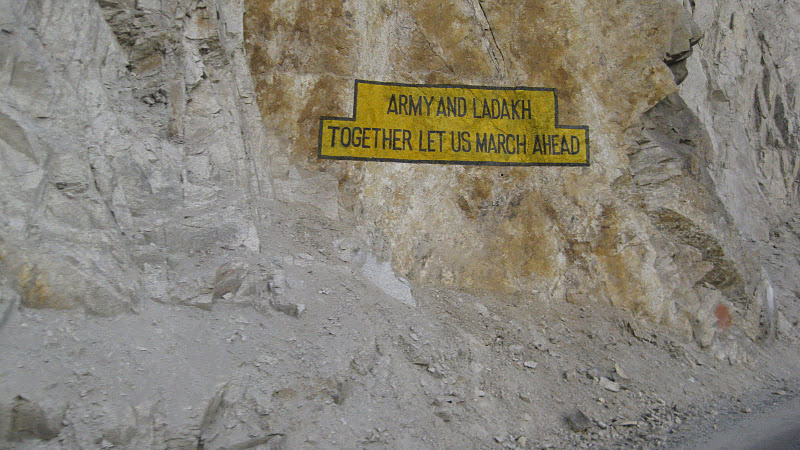
The notice sums up the eternal bond between the Indian Army and Ladakh
Chits sums up the happy feeling at the end of the trip
An extremely contended look


There ended our very fascinating trip to Leh, Ladhak. We returned to Bangalore on 06th Oct fully satisfied and happy we undertook this journey.

We Visited Leh – Part III – In and around Leh


What my wife had to say about the trip to Leh

The trip to Leh was my husband’s idea – planned and executed totally by him for the rest of us. With my crazy work schedule, all I knew before we left was the date of departure and arrival. Leh is a phenomena we have not experienced before during our travels either in India or abroad. The sheer vastness of the landscape, the grandeur of the towering mountains, the isolation and solitude, the endless stretch of rough roads hewn into rock, the breathless (literally) view of mountains against blue skies and the warmth of the Ladakhis will forever be etched in our memories. We had a lot of laughter and fun but I think each one of us also found a certain peace and silence within ourselves that tends to get lost in the noise and bustle of city life. I now understand why sages and saints go to the Himalayas to search for spiritual truths- given time, even simple folk like us could, I think, find ourselves. For me personally, a few things stand out- the solitude and beauty, the exhilarating paragliding experience, the feeling of being so high up in the mountains. This trip also brought home to us what tough lives our jawans lead in high altitude areas. A trip to Leh must be on each person’s bucket list –a must see, once in a lifetime experience.

04th Oct 2011– In and around Leh

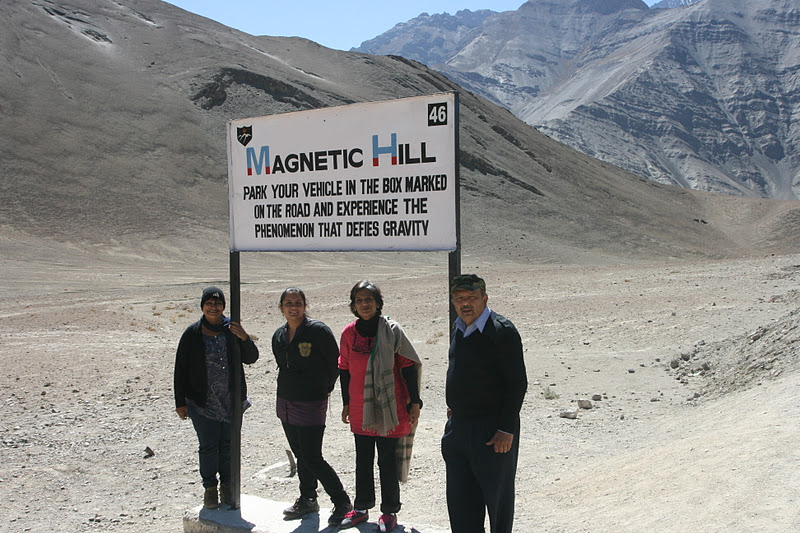
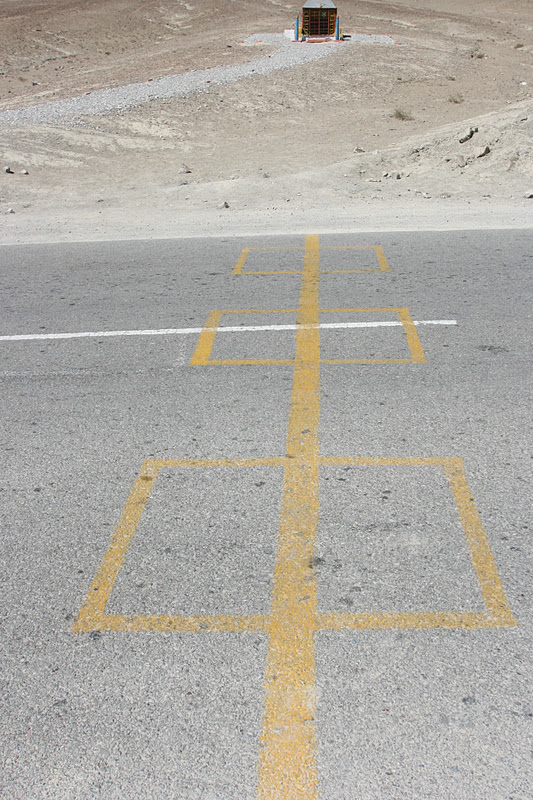
After leisurely breakfast we went sightseeing around Leh. Our first halt was the ‘magnetic Hill’. To experience the magnetic power you have to place your vehicle on a specific spot (Local authority has put up a bill-board to identify the place) and switch off the vehicle. Soon you will notice the vehicle starts moving.

At the magnetic hill

The spot where the car should be stopped

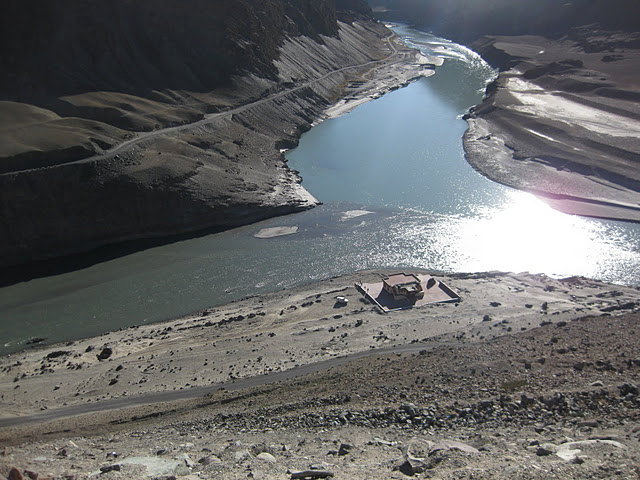
The next stop was to see the Sangam – confluence of Indus & Zanskar Rivers


Figure 1 – Indus is to the Left joined by Zanskar from the top at Sangam and flowing to Pakistan. Really breath taking.


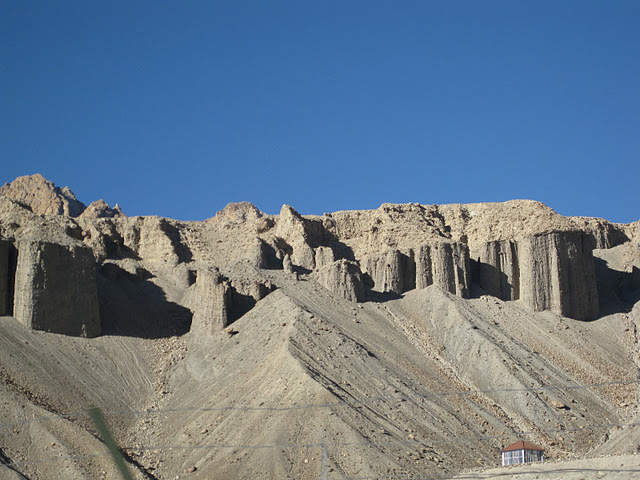
Figure 2 – Strange formations near the sangam

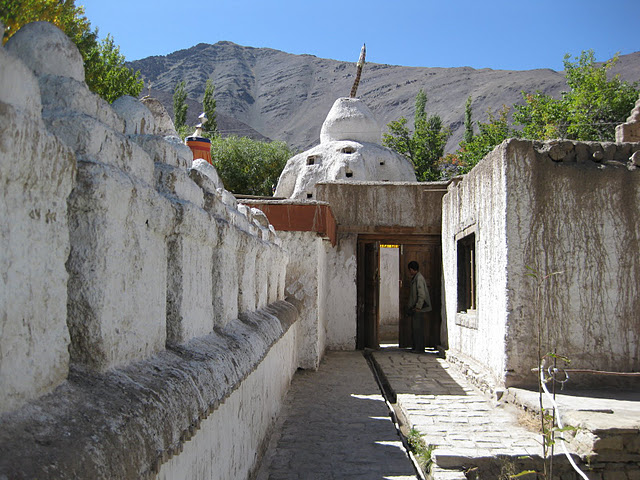
After a long drive we reached 11th century Alchi Choskor, the oldest surviving monastic heritage of Ladakh – a UNESCO listed heritage site. The village of Alchi is situated on the left bank of the Indus, about 70 km from Leh, on Leh-Srinagar highway. It is not visible from the main road, and it is couple of km across the bridge on the Indus.


Figure 3 – Section of the Monastery


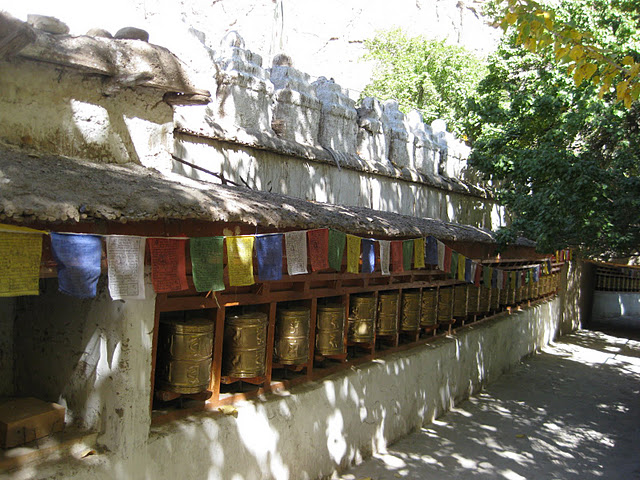
Figure 4 – Prayer wheels


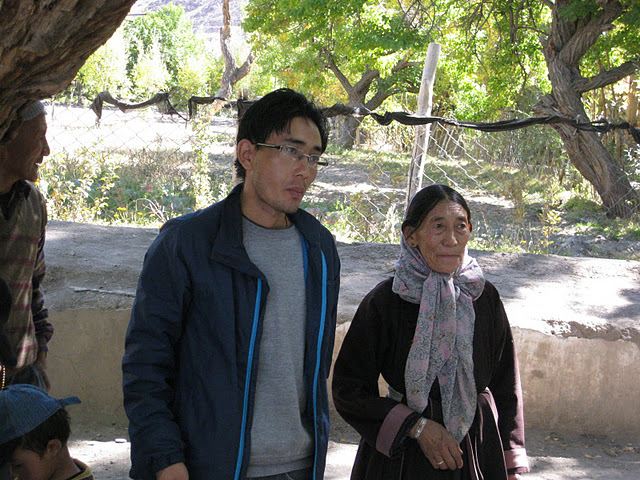
Figure 5 – Local Ladhaki


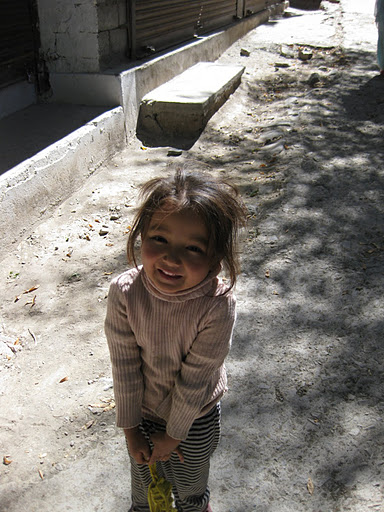
Figure 6 – Child full of cheer


Figure 7 – After a lovely vegetarian lunch

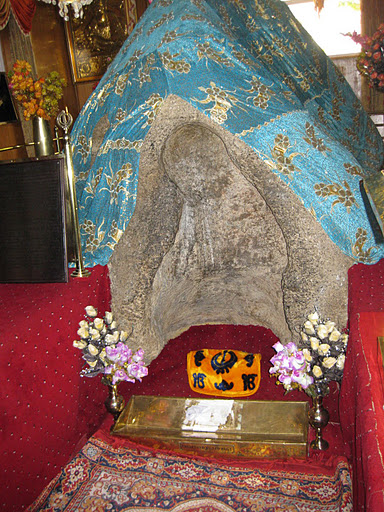
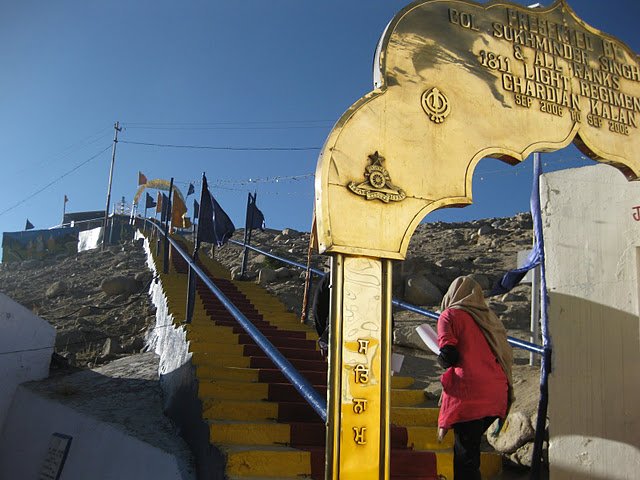
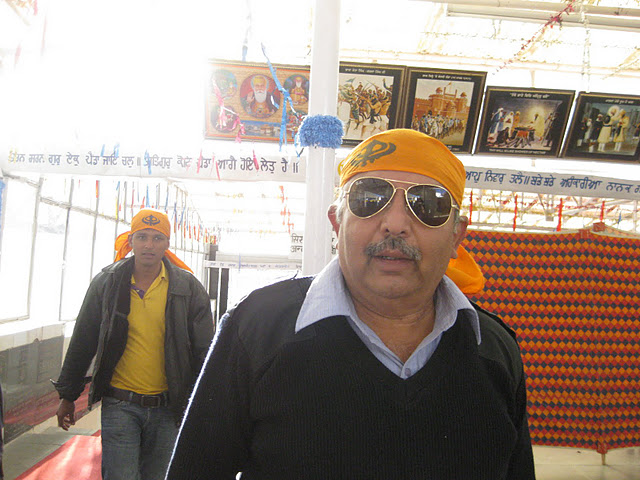
We then went to visit the famous ‘Gurudwara Pathar Sahib’constructed in the memory of Guru Nanak, about 25 miles away from Leh, on the Leh-Kargil road, 12000 ft above sea level. The Gurudwara was built in 1517 to commemorate the visit to the Ladhak region of Guru Nanak Dev, the founder Guru of the Sikh faith. During his lifetime Guru Nanak travelled to many distant places and one such place was Ladhak. Guru Nanak is well respected by Buddhists who consider him a saint. The Gurudwara is now maintained by the Indian Army.


Figure 8 – Impression of Guru Nanak in stone


Figure 9 – Section of the Gurudwara


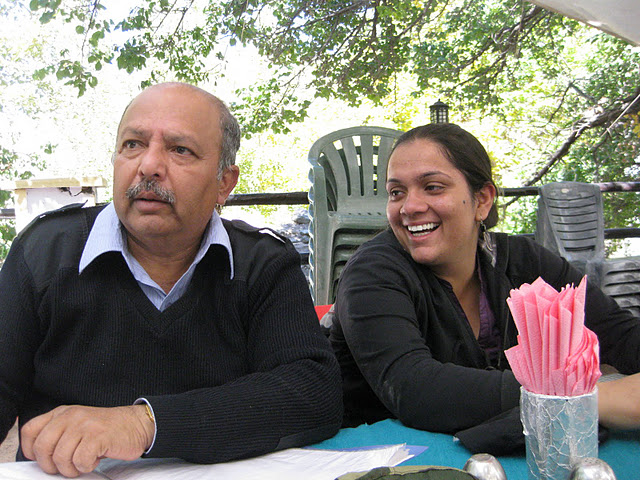
Figure 10 – Yours truly


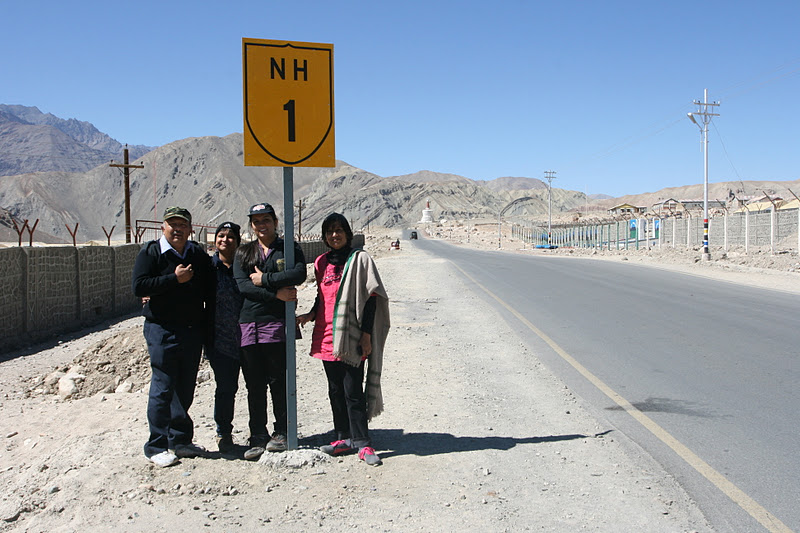
Figure 11 – Photo op at the historic National Highway 1

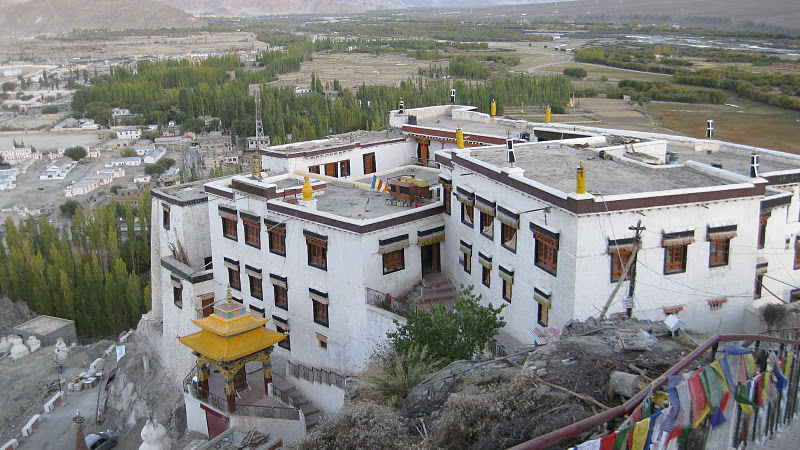
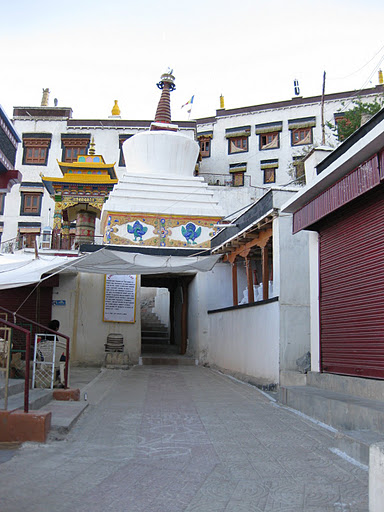
We then proceeded to Kali Mata, Temple of Guardians in Spituk monastery. The monastery contains 100 monks and a giant statue of Kali (unveiled during the annual Spituk festival).


Figure 12 – A view of the Spituk Monastery


Figure 13 – A section of the monastery


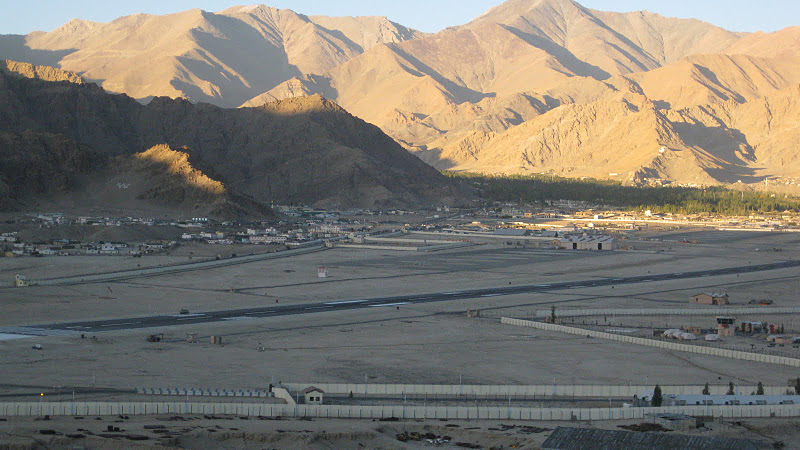
Figure 14 – Leh airport – viewed from the monastery

Our last visit for the day was ‘Hall of fame’ in Leh which was set up by the Indian Army XIV Corps as a Museum cum Memorial to the War Heroes. It is billed as a “Museum of Ladakh Culture and Military Heritage” and houses a War Memorial as well. The ‘Hall of Fame’ is a reminder to all of us of the great acts of courage and sacrifice made by the personnel of the Indian Army to keep India safe from external aggression. Reading the details of the recapture of ‘Tiger Hill’ at 0800h on 08 Jul 1999 is enough to enthuse every Indian to a new patriotic high.

The ultimate sacrifice by young Capt Vijayant Thapar, age 22, who died trying to evict Pakistani intruders from a ridge in Kargil on 28 June 1999 – just before he died he wrote to his father

“…..I have no regrets; in fact even if I become a human again, I will join the Army and fight for the nation…..

After his death, his father Col VN Thapar wrote “Your actions will forever inspire generations of Indians to come. You have left us with pride for being the parents of a worthy son and a lifetime of pain for having lost a child we love.

I could not control my feelings. Tears welled up in my eyes and when I looked around, there was not a single dry eye amongst us. Amidst the disillusioning specter of the likes of people like Kalmadi, Yeddyurappa, Raja and others of the same ilk – Capt Vijayant Thapar stands out as a symbol of hope and all that is noble in India. May his soul rest in peace.

Another poignant episode displayed in the ‘Hall of Fame’ is ‘Memories of Rezang La’. It was the site of the famous last stand of the Ahirs of ‘Charlie’ Company of the 13 Kumaon during the Indo – China war in 1962. C Company was led by Major Shaitan Singh, who posthumously won a Param Vir Chakra for his actions. In this action, 114 Ahirs out of a total of 123 were killed.

The caption reads “When Rezang La was later revisited dead jawans were found in the trenches still holding on to their weapons… every single man of this company was found dead in his trench with several bullet or splinter wounds. The 2-inch mortar man died with a bomb still in his hand. The medical orderly had a syringe and bandage in his hands when the Chinese bullet hit him… Of the thousand mortar bombs with the defenders all but seven had been fired and the rest were ready to be fired when the (mortar) section was overrun.” Major General Ian Cardozo – extracts from his book ‘Param Vir, Our Heroes In Battle’


Figure 15 –  ‘Hall of Fame’


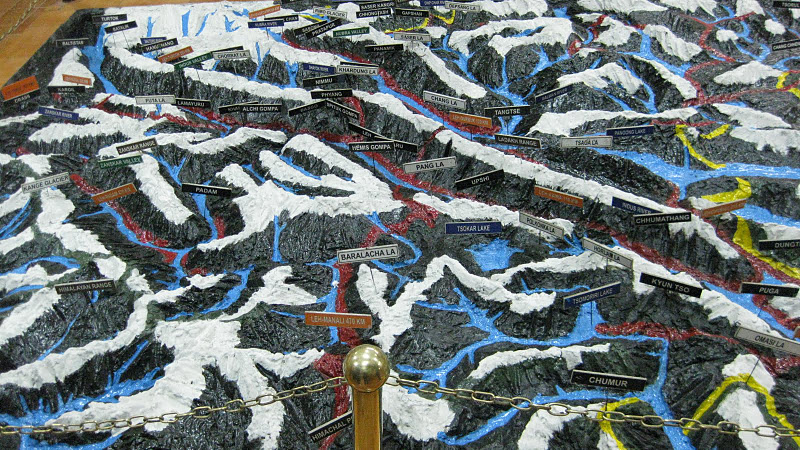
Figure 16 – A sand model depicting various passes, rivers, roads etc of the area

We returned home thereafter.

We Visited Leh – Part II – Khardung La

Trip to Khardung La – 3rd Oct


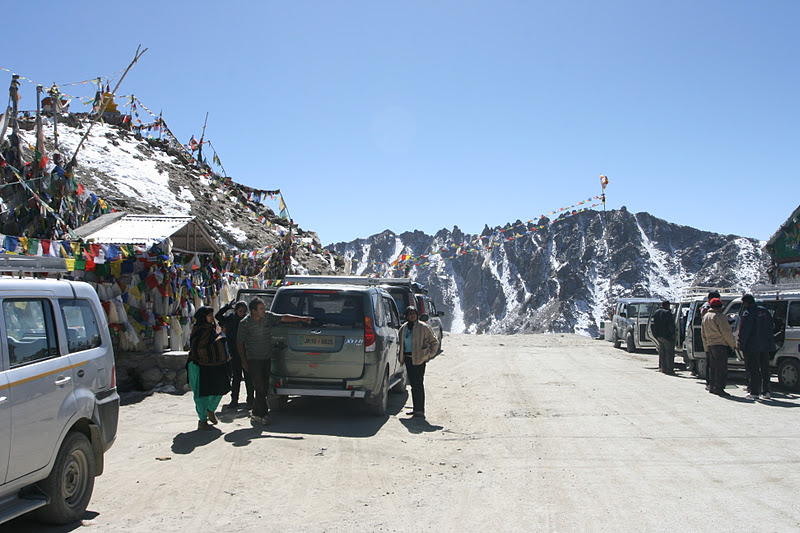
As we had to travel a short distance to see Khardung La, all of us took it easy and after a leisurely breakfast we set out to be a part of another historic moment. We also dressed up little more than usual to combat the cold and especially the biting wind.


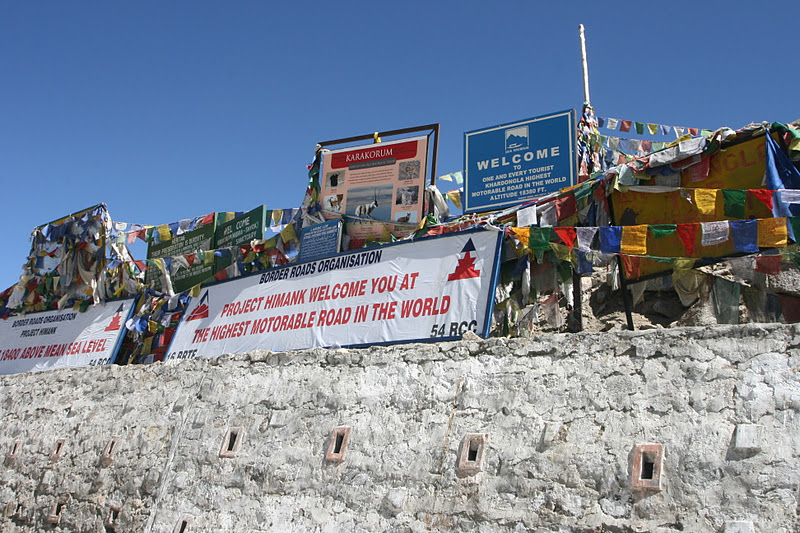
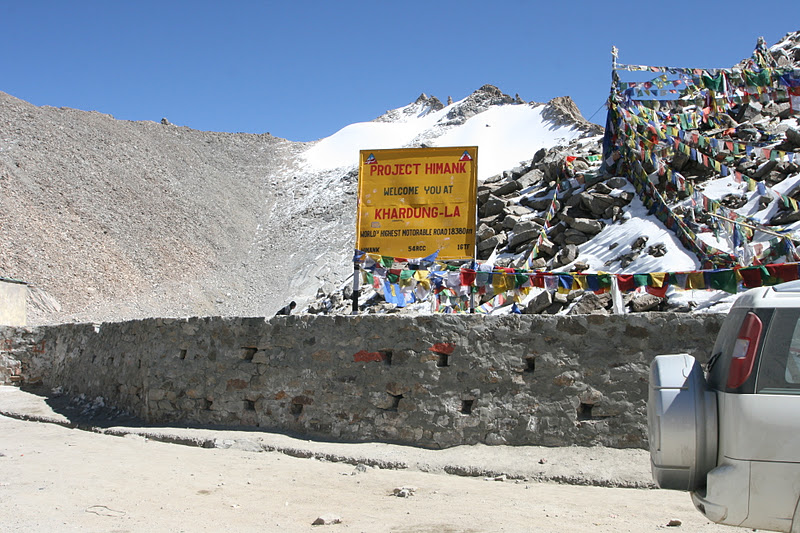
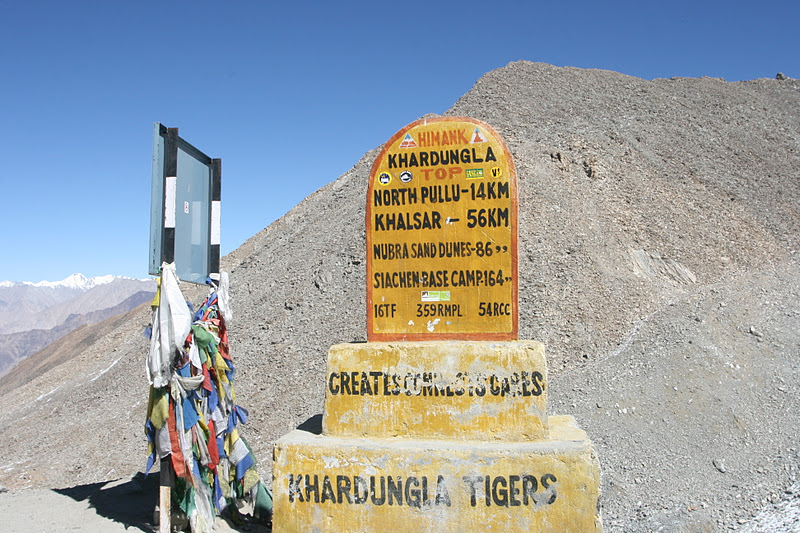
Khardung La (meaning the ‘Pass of Lower Castle’ ) is situated 39 km by road from Leh. The first 24 km, as far as the South Pullu check point, are paved. From there to the North Pullu check point about 15 km beyond the pass the roadway is primarily loose rock, dirt, and occasional rivulets of snow melt. However, this pass is in better repair than many of the surrounding passes (Tanglang La, for example).


Khardong La is historically important as it lies on the major caravan route from Leh to Kashgar in Chinese Central Asia. In the yester – years about 10,000 horses and camels used to take the route annually.


Post 1962 war with China and subsequent skirmishes with Pakistan, the entire area has become militarily very sensitive. The Indian Army is present in large numbers all along the route to the pass and beyond.


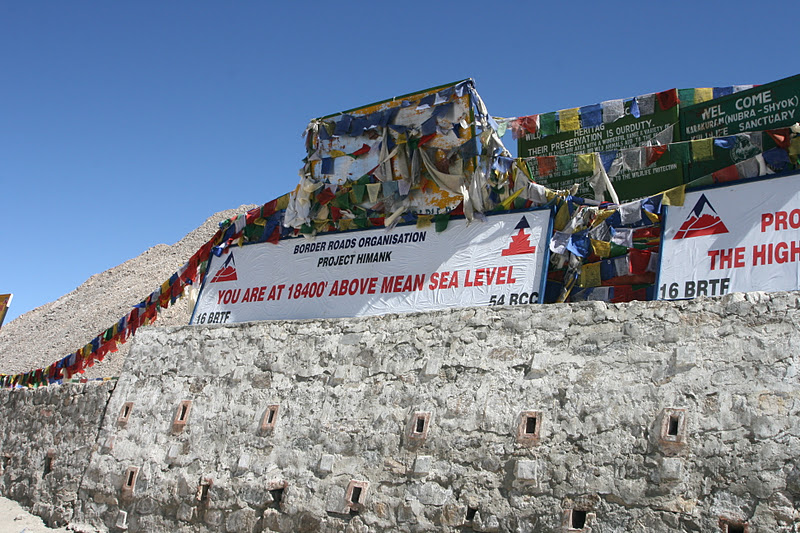
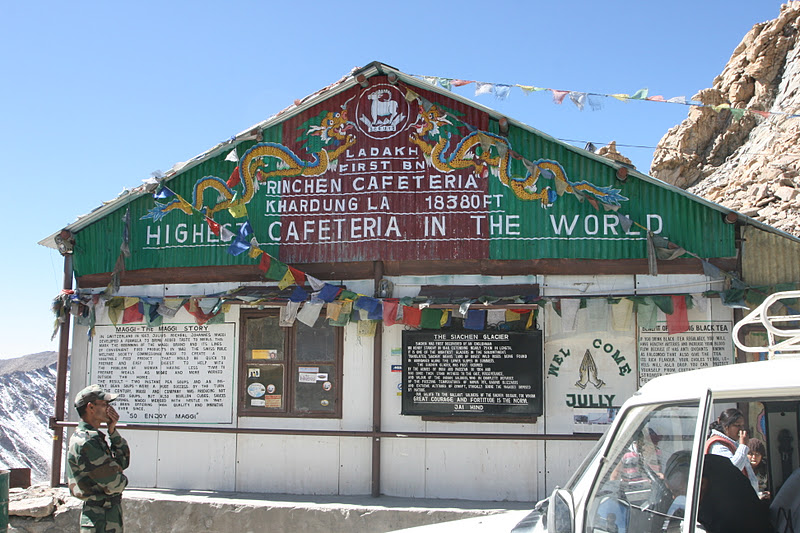
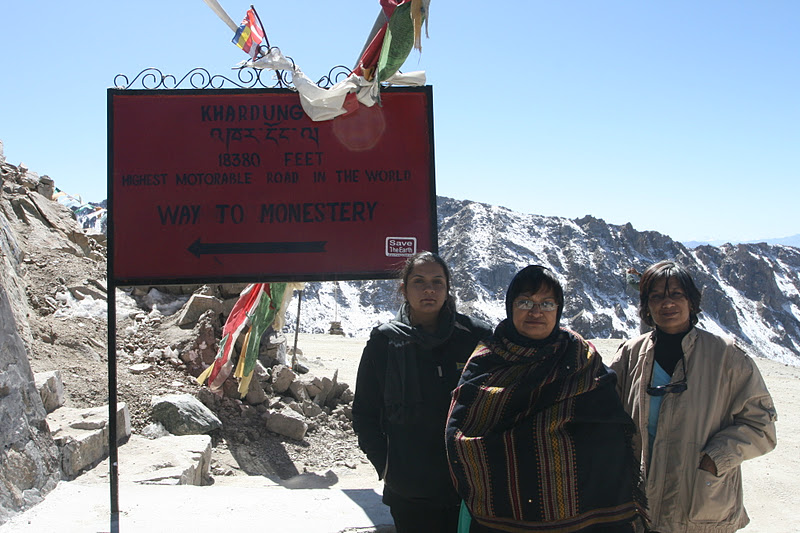
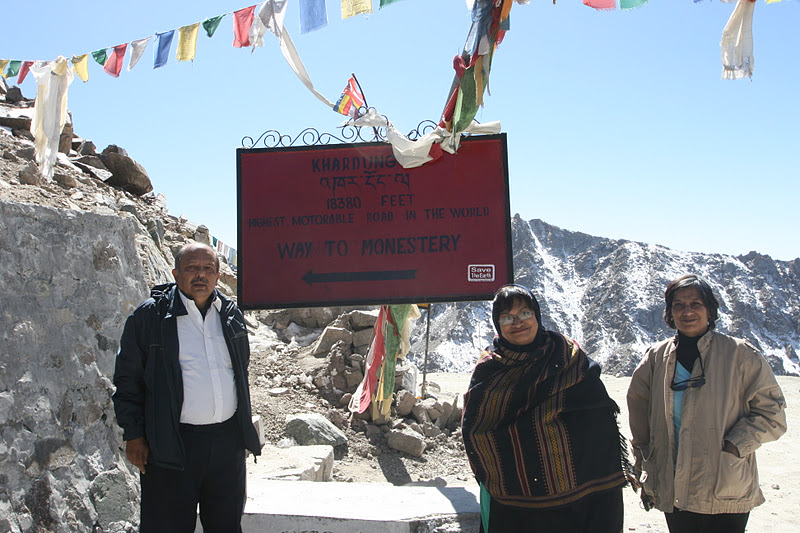
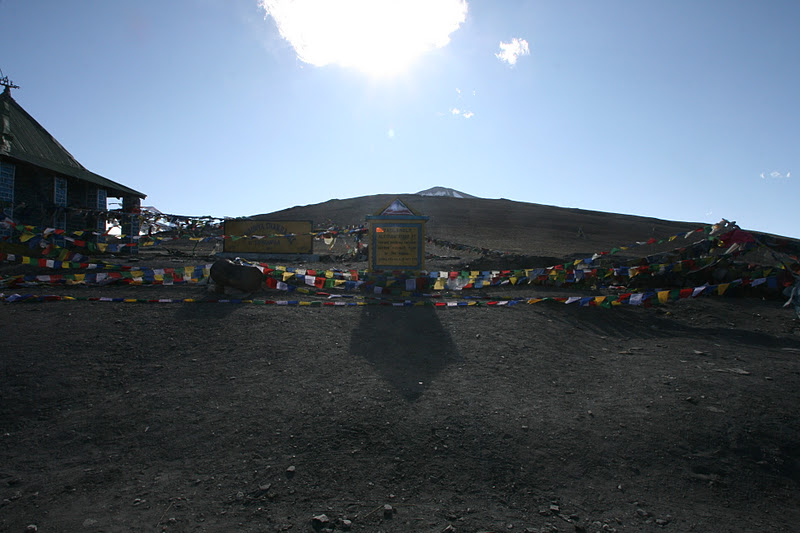
On reaching the pass, all that I could do was to take a few photographs and visit a local tea shop to have Cinnamon Tea. At 18,358 ft one has to exercise extreme care to conserve energy. Too much of talking and moving about can be tiring , simple tasks like getting out of the car, bending down can drain your energy. Act your age is the thumb rule.


Quickly we descended and returned to Leh and spent the better part of the day having Ladhaki lunch, strolling on the streets and shopping for souvenirs.


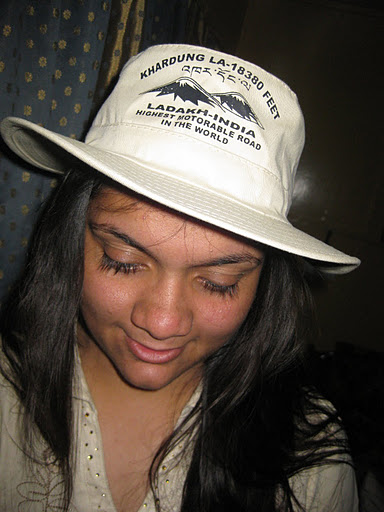
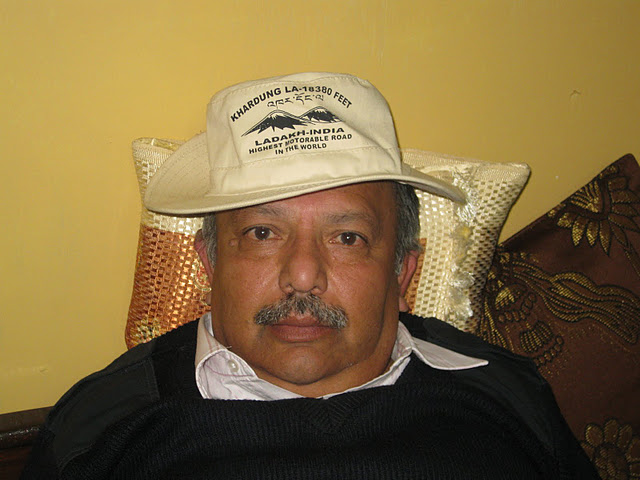
I bought a Golf hat, a commemorative ceramic palate and a hip flask all of them loudly proclaim having traversed the highest motorable road in the world.


Having reached 18,358 ft, we ended our high altitude adventure – this will probably remain the highest altitude I will ever reach in this life.

At Last

I understand that the mountains are growing 2CM every year

Nazeer is showing something

Tasted Cinnamon tea

Not at all energetic

Let us go back after this photo

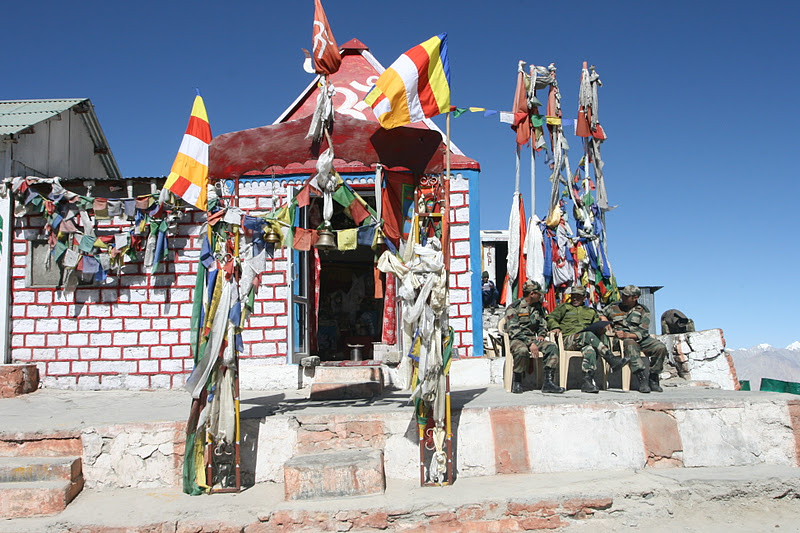
Offered our prayers to all those who work here

Another View

Some Details

Beginning to snow

Local Hero

Back to the car

We Visited Leh – Part II – Pangong Tso

Trip to Pangong Tso – 2nd Oct


Having completed one day in house arrest, we were all rearing to go out the next day. Xylo driven by Nazeer arrived exactly at 8AM and all of us embarked the vehicle for our trip to Pangong Tso, located about 150 Km from Leh.
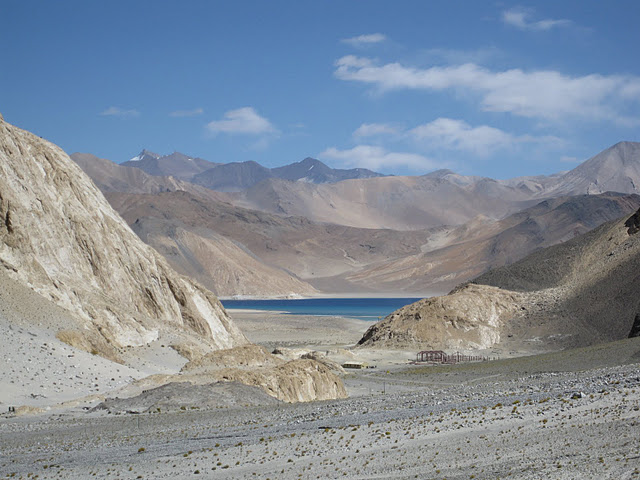
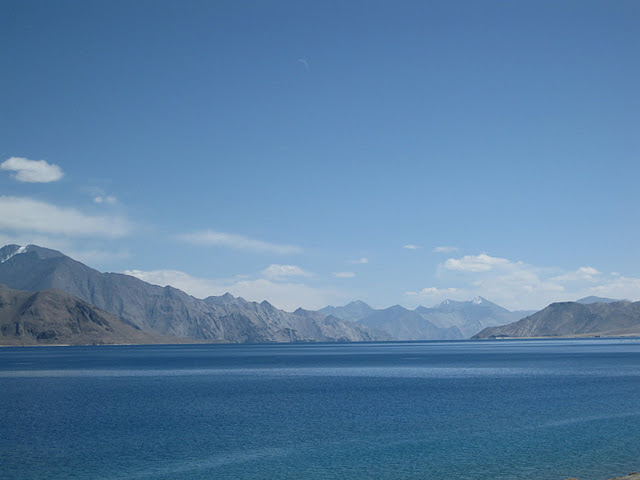
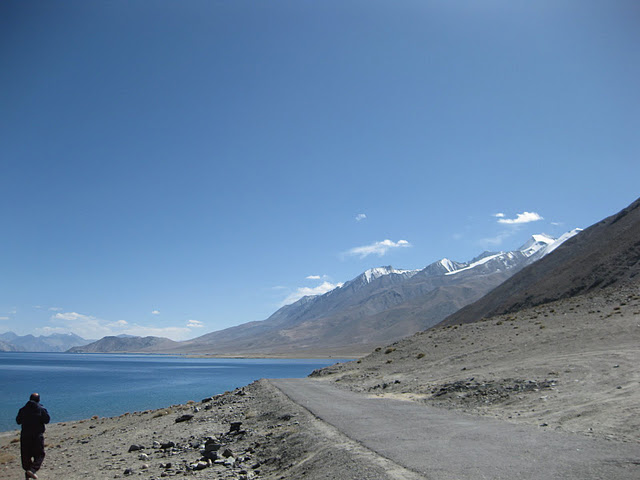
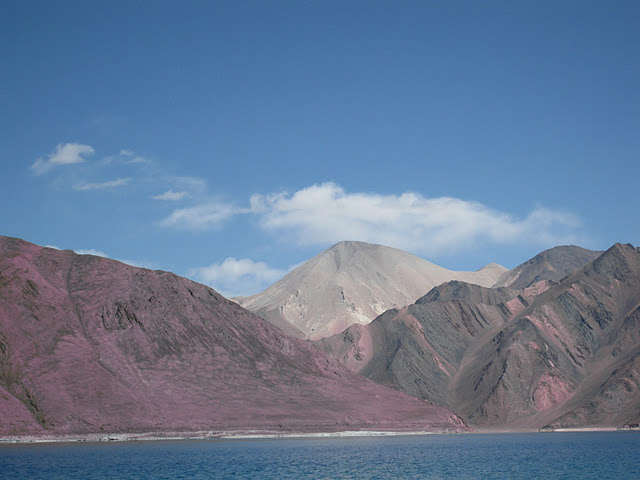
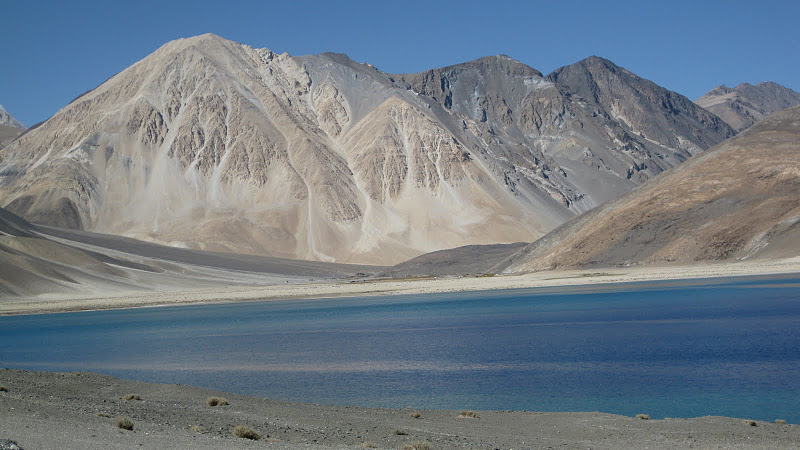
Wiki – Pangong Tso (or Pangong Lake; Tso: Ladakhi for lake) is an Endorheic Lake (a closed drainage basin that retains water and allows no outflow to other bodies of water such as rivers or oceans. ) in the Himalayas situated at a height of about 4,350 m (14,270 ft). It is 134 km (83 mi) long and extends from India to Tibet. 60% of the length of the lake lies in China. The lake is 5 km (3.1 mi) wide at its broadest point. During winter the lake freezes completely, despite being saline water.

The water is brackish and does not support any life. The sand on the bank of the lake is definitely the variety one finds on beaches. Understand that a number of fossils have been found in the vicinity of the lake.

Geologically, the origin of the Himalayas is the impact of the Indian tectonic plates traveling northward at 15 cm per year to impact the Eurasian continent, about 40-50 million years ago. The formation of the Himalayan arc resulted, since the lighter rock of the seabeds of that time were easily uplifted into mountains. An often-cited fact is that the summit of Mount Everest is made of marine limestone. Pangong Tso was also created due to the same geological phenomenon.

The roads are in good condition and we were able to reach Pangong Lake around noon. Once again we enjoyed the beauty of Himalayas – the ever changing landscape, sun playing tricks with the shadow and different hues of the rock face. Suddenly from nowhere the crystal clear deep blue of the lake hits you – you stand motion less in total amazement and awe. The sudden appearance of the lake is almost mystical. The colour, sheer vastness and the location of the lake amongst imposing mountains is sufficient to mesmerize any visitor. I had read a lot about the lake – but, what I saw was something awesome and inspirational – I was speechless and really did not know what to say. The beauty of the lake is so pure and serene – immediately a sense of calm and peace descends upon you.

We spent close to two hours basking in the glory of god and his creation.

We then proceed to the Army canteen and were treated to an excellent lunch of hot Rice, Rajma, sabzi and chapattis, courtesy 603 EME Battalion.

On the way back to Leh we stopped at 212 EME field workshop for tea and snacks. We got to view the Indian Army at close quarters.


An excellent and imposing view of Shey Palace -1
Greenery around Leh – 2


As we start the climb towards the lake – 3


The landscape is amazing – 4


The valley below – 5


The roads we traversed – mark the Z – 6


Some snow capped mountains  – 7


Chang la shrine – 8


Photo op with the gang – 9


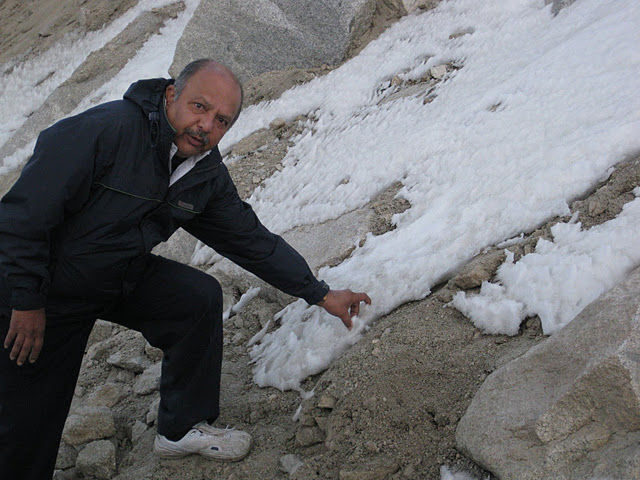
Photo with the snow backdrop – to be shown to the neighbours – 10


The depth of the valley is simply amazing – 11
Another view of the landscape – 12

The browns continue to dominate – 13


Browns with a little bit of Grey – 14


All of a sudden the mystical blue appears from nowhere – 15
As much as I could capture – 16

From a different angle -17

With a brown backdrop – 18

Different views – 19


A historic moment for me – an achievement indeed!! – 21

Displaying a sense of satisfaction – 22


Poonam too excited for words – 23


Chits too is extremely happy and contended – 24

Birds resembling Seagulls have started visiting the lake since last 4 years – 25
A grand view of the lake – 26

A long view of the lake – 27
From another angle – what a view – 28


The Red is unimaginable – 30


The lake playing tricks with colour – 31
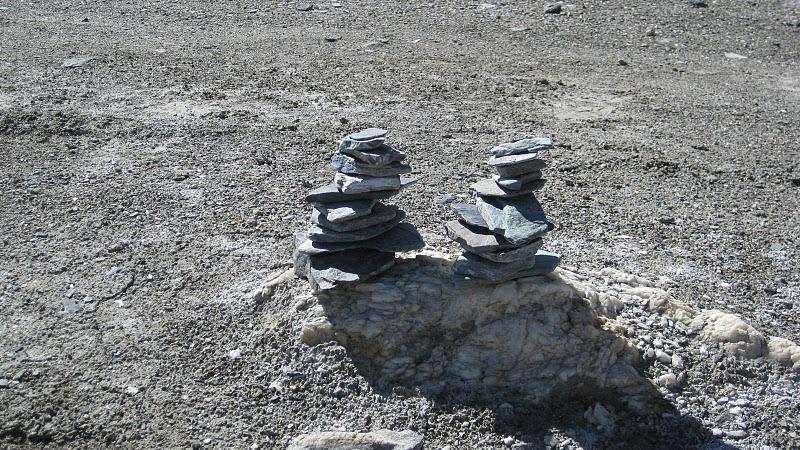
Creating stone formations for longevity of near and dear ones


A view from the army run canteen – 32
The Indian Army sums up the requirement for all – 33

On the way back – notice the sudden change in the landscape – 34
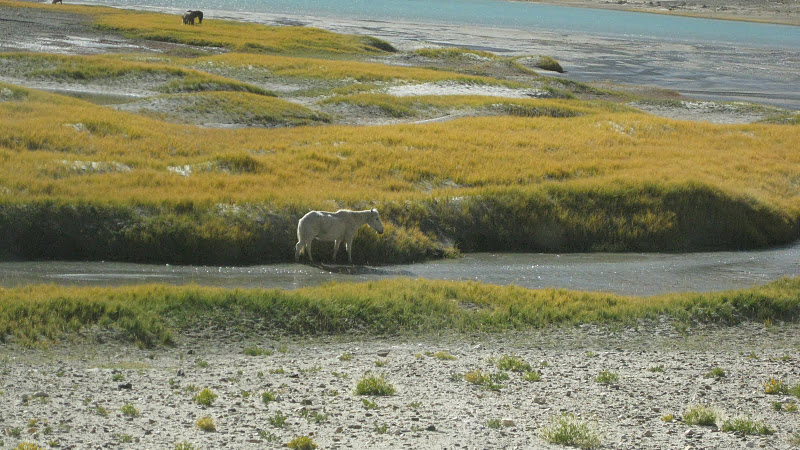
Local wild horse grazing  -36


The intersection with the old silk route.Roads leading to Pakistan and Zanskar – 37


Old habits die hard – 38

One of her requirements met – 40
Why miss the chance – In fact there was no snow as we went up – 41

Back again at Chang la – 17,586 ft – 42


With the Commanding Officer of 212 EME Field Workshop – 43


Leh by night -44

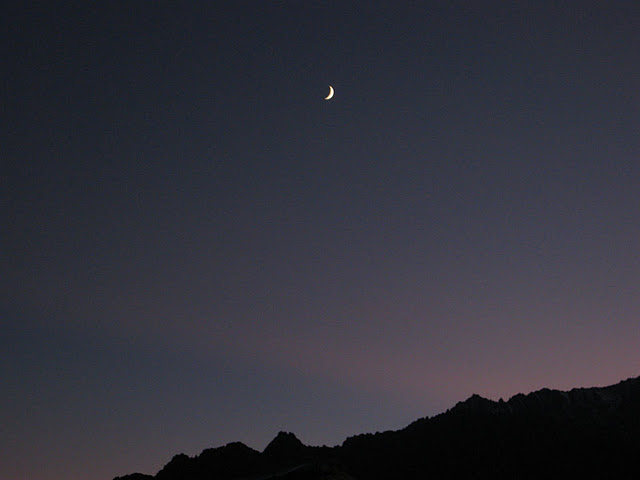
A lovely crescent shaped moon over the Army Mess -45

We returned to 603 EME battalion mess totally satisfied with what we saw.A miracle of nature – reminding us of a very distant past when continents were separated and life did not exist on earth.Standing face to face with Pangong lake was a mystical experience – another reminder how great nature is. 

We Visited Leh, Ladhak – Part I

Travel to Leh


Background

Ladakh is a part of Jammu & and Kashmir State in North of India consisting of two districts Leh and Kargil. Leh, with an area of 45110 Sq Km, is the largest district in the country in terms of area. It lies between 32 to 36 degree North latitude and 75 degree to 80 degree East longitude. The district is bounded by Pakistan occupied Kashmir in the West and China in the North and Eastern part and Lahul Spiti of Himachal Pradesh in the South East.

It is at a distance of 434 Kms from Srinagar and 474 Kms from Manali. Leh district comprises of Leh town and 112 inhabited villages and one un-inhabited village. The total population of Leh district is 1.17 lacs.


A simple map of Leh, Ladhak in relation to Pakistan, China and Tibet

It is governed by an Autonomous Hill Development Council under the state of Jammu and Kashmir. The capital of Ladakh is the beautiful city of Leh. Geographically, Ladakh is uniquely placed between the massive Himalayas and the Karakoram mountains. The Himalayas lie to its south while the Karakoram lie to its North. The historic Indus River runs through the terrain of Ladakh. During the winters, the valley remains cut off from the rest of the world. With an average bottom altitude of 4000m, it is one of the highest inhabited regions of the world

Ladhak (“land of high passes”) is an extremely strategic part of India with Pakistan and China as neighbours. This area has suffered many wars and probably the most highly defended border in the world. The over powering but essential presence of the Indian Army is very evident in the entire area.

I made up my mind long ago to visit Leh and enjoy the beauty of the Himalayas. In 1982, as a part of ‘Defence Services Staff College- Wellington – Forward Area Tour programme, to understand the working of the Indian Army in High altitude, we visited Bombdila, Tawang, Tenge, Gangtok, Nathula and reached an altitude of 14790 ft . It was a great experience and I was then all of 33 years young. Having tasted the beauty of the Himalayas, it was then that I decided to visit Leh at least once in my life time. Even though I was posted to Naval Headquarters New Delhi from 1982 to 1985 and again from 1990 to 1995, I was unable to visit Leh due to a variety of reasons.

Somewhere in the month of August 2011, I started planning the ‘Leh visit’. Our dear friends – Kataria and Navin were to join us, but unfortunately they had to back out at the last moment. My dear friend Nair with his very vast network of friends was able to arrange our stay in Leh with the 603 EME Battalion. Kataria and Pahwa had taken care of our stay at Manali. Finally our sambhandi – Poonam Chadda and niece Nivedita – Chitti for short (‘butterfly’ in Telegu) very readily agreed to join us.

After carrying out research on the net we decided to approach Leh by road via Manali. Our daughter and S in L had done the same route some two years back and were all praises for it. Also, it would give us enough opportunity to get acclimatized on the way. Our original plan was to spend a night in Manali thereafter in Jispa and finally at Sarchu before making a landfall at Leh. Our decision to visit Leh in Sep/Oct was influenced by two important factors – Jai’s school closing on 26th September for the Dussehra holidays and more
importantly the monsoon retreating. At this time of the year, the sky over this area would be clear and chances of landslides and road blocks would be the least. As predicted, we had uninterrupted right of way throughout our journey.

We reached Delhi by air on 26th Sep and spent a night and day at Kats and
Naveen’s place, catching up with the usual stuff. Post breakfast we went to Ashok and Push for a bit of charge and lunch. Push dropped us at the bus stand and we departed at 1830 hrs for Manali in a Volvo bus. On hind sight I feel it would have been better to hire a comfortable car and take the journey in day light. This would have given us a glimpse of the country side of Haryana and Punjab, more flexibility in terms of where and when to stop and a good night’s rest.

Figure 1 – The gang with Kataria, Naveen and Tripti

Figure 2 – Dinner stop short of Ambala

Figure 3 – Sardar on his way to Ambala to deliver milk – 2AM

Manali – 28th and 29th Sep 

We finally reached Manali at 0830 hrs (14 hours in the Volvo) on 28th Sep. We were welcomed by our Inova driver ‘Sunny’ and taken to the Army transit camp at ‘Palchan’ which had a commanding view of the mountains.


Figure 4 – Army transit camp – Palchan

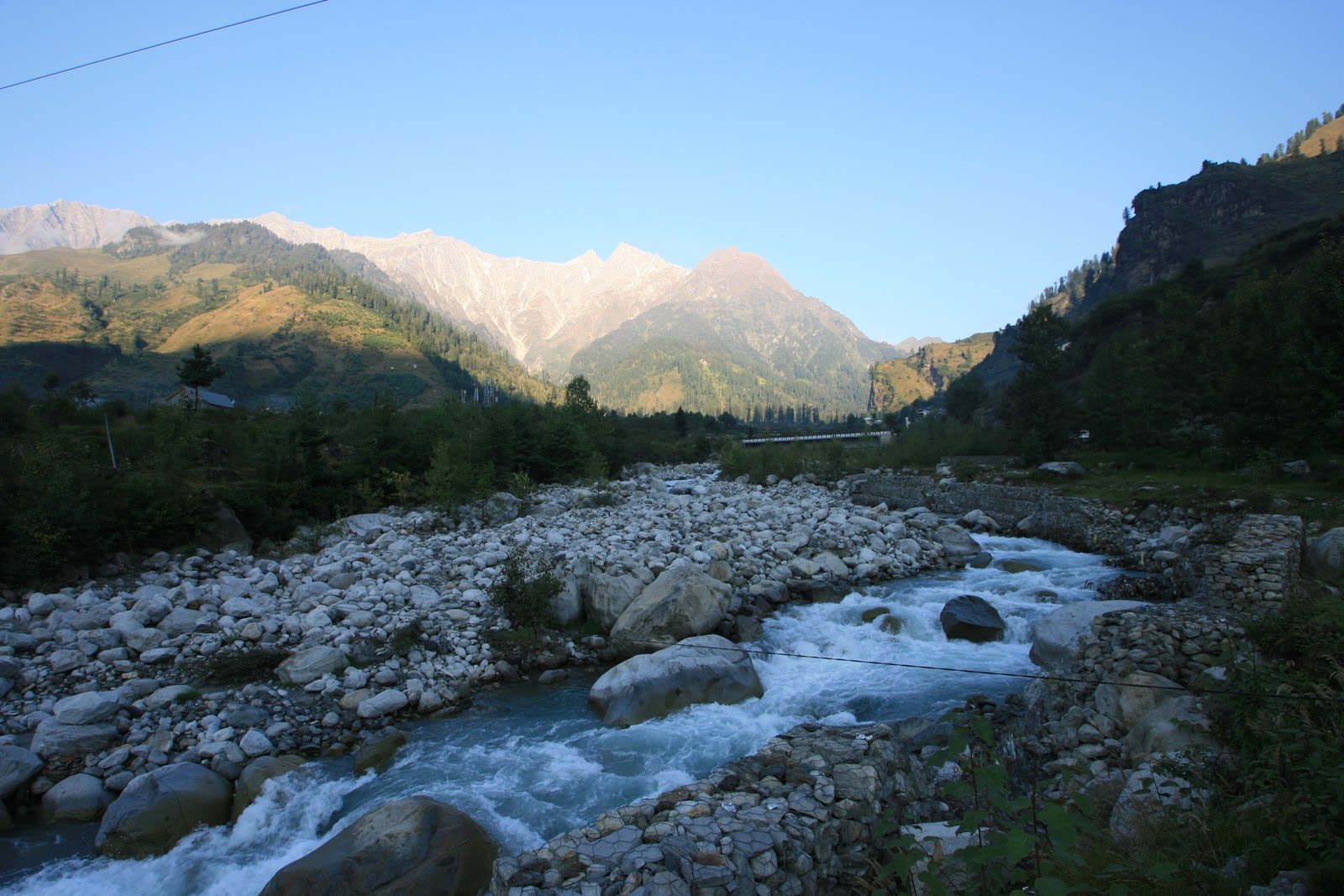
Manali, at the northern end of the Kulu Valley in Himachal Pradesh, is a hill station situated at a height of 2050 m (6398 ft) in the Himalayas. Situated on the Beas river (Vyaas in Hindi) and near its source, it is a popular tourist spot for Indians and International tourists in summer and a magical, snow-covered place in winter. A staging point for a number of treks (Beas Kund, Chandrakhani Pass) and with sports such as white-water rafting, Manali is also on the road to Ladakh via the valley of Lahaul and Spiti and Rohtang pass which is the main attraction near Manali.

The city is generally clean and well maintained. The valley is surrounded by imposing mountains and the view is simply grand. A sense of peace and tranquility descends on you and changes your character and makes you calm, quiet and patient. The motorist in the hill town – be it a car, lorry or tanker, so willingly give way to the uphill traffic – it’s really gratifying to watch this graceful behavior. There is a lot for city dwellers to learn from these simple hill folk. The only negative point I noticed, was the way in which cement structures have been allowed to come up in this hilly terrain – totally incongruous. Architectural styles, in conformity with the fabulous backdrop that nature has to offer, are totally absent and what one sees is haphazard growth. This phenomenon is not restricted to Manali alone – similar is the fate of Shimla, Musoorie, Darjeeling and Dehradun to name a few. Nature-friendly buildings in hill stations will evade India for a long time to come.


Figure 5 – Beas flowing next to the transit camp

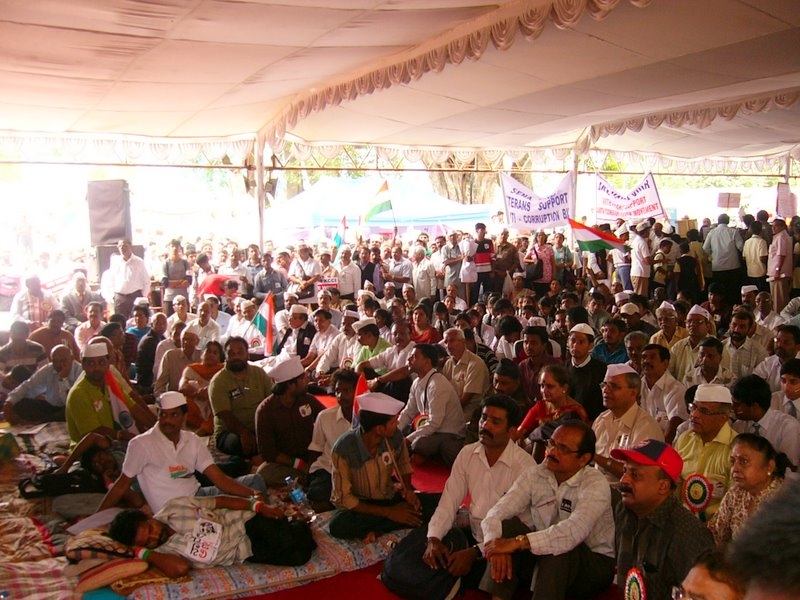
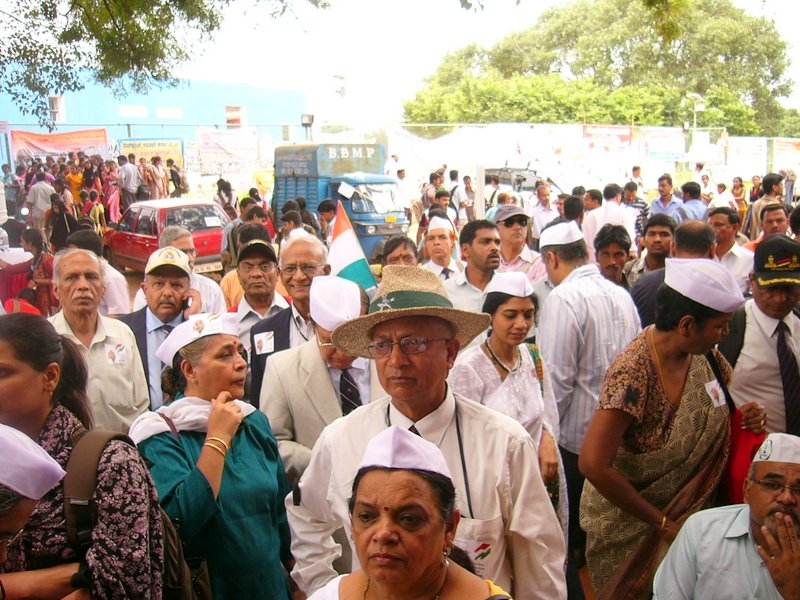
The first sight of the snow capped White Mountains reminded me of Anna Hazare with his white cap – a symbol of purity, unlimited strength and standing tall amongst dwarfs.


Figure 6 – Anna Hazare’s White cap
Unfortunately we were not able to pluck apples straight from the tree as the last pick of the season was done by early September.
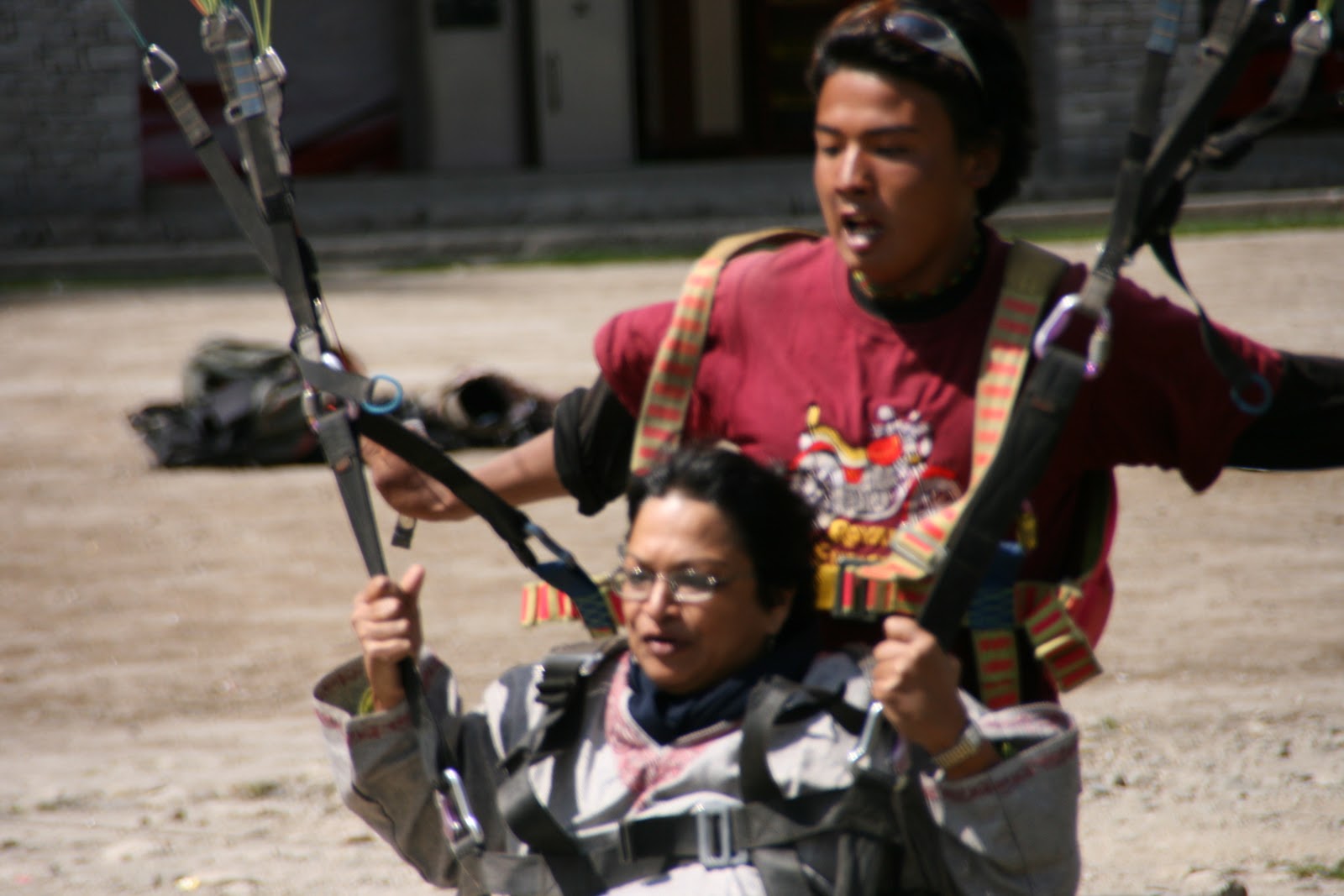
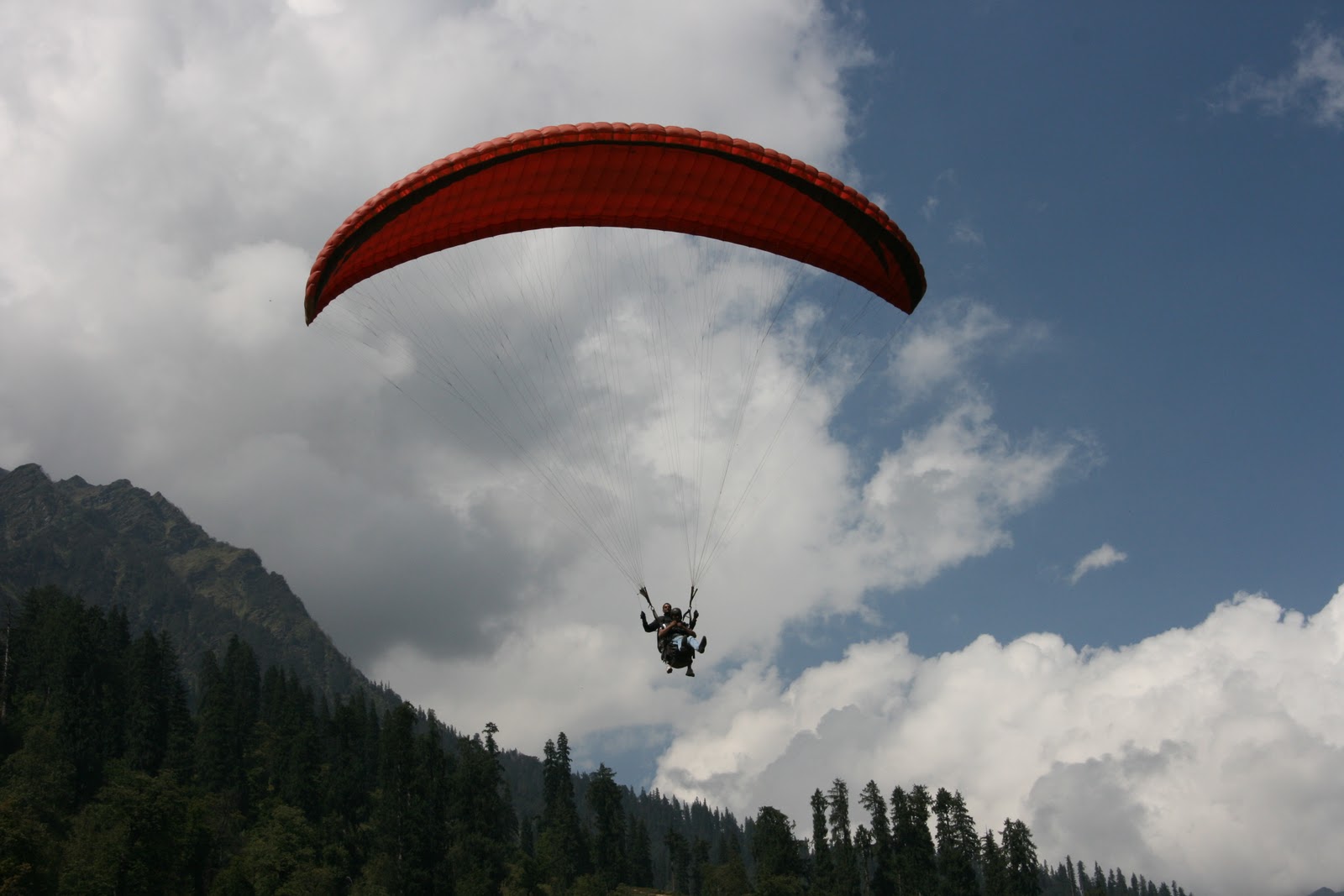
Seeing the sky full of bright parachutes, all the girls unanimously decided to ‘paraglide’. We went to the Himalayan Institute of Paragliding and did gliding with experienced pilots. The experience is exhilarating and leaves you with a sense of achievement. Once in the air, you feel like a bird – free to soar high, plunge down, drift or just float. Make up your mind and go ahead – an unforgettable experience. I must acknowledge the spirit of adventure of the girls, especially that of Jai and Poonam. At their age to go ‘Para Gliding’ is really a remarkable feat. Long live the brave. 


Figure 7 – Children practicing gliding at the base level


Figure 8 – Going up to the launch point by a rope way


Figure 9 – Jai about to land


Figure 10 – Words cannot explain the feeling


Figure 11 – Self – free floating – high on high


Figure 12 – Pilot executing a sharp maneuver

l

Figure 13 – A very bad and scary landing – walking back


Figure 14 – Poonam in the air


Figure 15 – Taking a ride in the motor buggy


Figure 16 – A glimpse of the town


Figure 17 – A Kulbi woman on a daily chore

The food in Manali is simple, yet tasty and good. We had a Punjabi meal in Gozy Resturaunt – I think it is Cozy with a local spelling. Came back to the camp for a bit of zzzzz. The girls went back to the town to pick up a few knick knacks to take back home. After a good rest and a hot bath, we all proceeded to the mess for dinner. We were fast asleep by 9.20 PM.


Figure 18 -Jai and Poonam watching Sunny prepare for the long drive

Manali – Jispa 29th Sep

A word of caution to all the readers of my blog, from now on it’s going to rain photographs. The beauty of the Himalayas is simply fascinating – compelling every traveler to shoot as many photographs as possible. The unique aspect of this terrain is the changing texture of the mountains. As we go winding up, the mountains change their face, colour, shape and size. Every time you look out of the window one sees a different rock face.

We decided to skip breakfast and left the transit camp by 0730 hrs. By end September, the foot fall decreases and the NH 21 is generally devoid of traffic.


Figure 19 – Off Manali. Last of the vegetation


Figure 20 – Shadows at play


Figure 21 – The climb starts


Figure 22 – In case your are stranded – bhel puri to your rescue


Figure 23 – Road block due to slush formed by landslides

Marhi onwards the roads are in a terrible shape. We got caught in a traffic jam – forcing our driver Sunny to remark that the ‘Border Roads Organization’ (BRO) is a corrupt and useless organization. He went on to claim that the BRO lets stream water flow onto the road on purpose and takes Rs 5000/=  from the drivers to push the vehicles. For the last 5 years the roads have not been maintained, forcing the tourist to use the ‘Srinagar – Kargil – Leh’ route instead. I understand that the locals went on a strike as their agri products were not reaching Manali on time due to bad roads. All this seems to have fallen on deaf ears and the road continues to be a nightmare. Considering the strategic importance of the road – this is certainly dereliction of duty on the part of BRO and the central government. I believe the Chinese on the other hand have an excellent 4 way road connecting their hinterland to the border and is open to the public.


Figure 24 – A daunting task – takes anywhere from 2 to 4 hours to clear the road.


Figure 25 – A BRO officer on task


Figure 26 – Trees and vegetation have given way to moss like growth on rock face


Figure 27 – An imposing rock


Figure 28 – Rohtang La camp

On the way to Jispa we passed through ‘Rohtang La’ situated at 13,500 ft.Thereafter we checked in at the Border Police outpost and surprisingly ours was the only car making it to Jispa for that day- A scary thought indeed.


Figure 29 – The gang at Rohtang La


Figure 30 – Yet another fascinating view from Rohtang La


Figure 31 – Shrine at the pass


Figure 32 – A shrine at Marhi

Within a short time we reached the settlement of Marhi and gorged ourselves on ‘Tandoor Alu Paratha’ ‘Desi Butter’ and ‘Curd’ at the ‘Manasrover Dhaba’. There was masala dosa, vada pau and bhel on the menu – that is national integration for you. The toilets, kitchen and the surroundings are clean – with abundance of running water from a nearby stream.


Figure 33 – Photo op with owner of Mansrover restaurant


Figure 34 – Yaks make their appearance


Figure 35 – Notice the gradual change in landscape


Figure 36 – Heavenly abode


Figure 37 – The road we traversed


Figure 38 – The winding loops


Figure 39 – Stop at Khoksar for tea


Figure 40 – Jai pleased with herself


Figure 41 – A local with her child


Figure 42 – Momos in the making


Figure 42 A – Poonam refreshed after momo and hot cup of tea


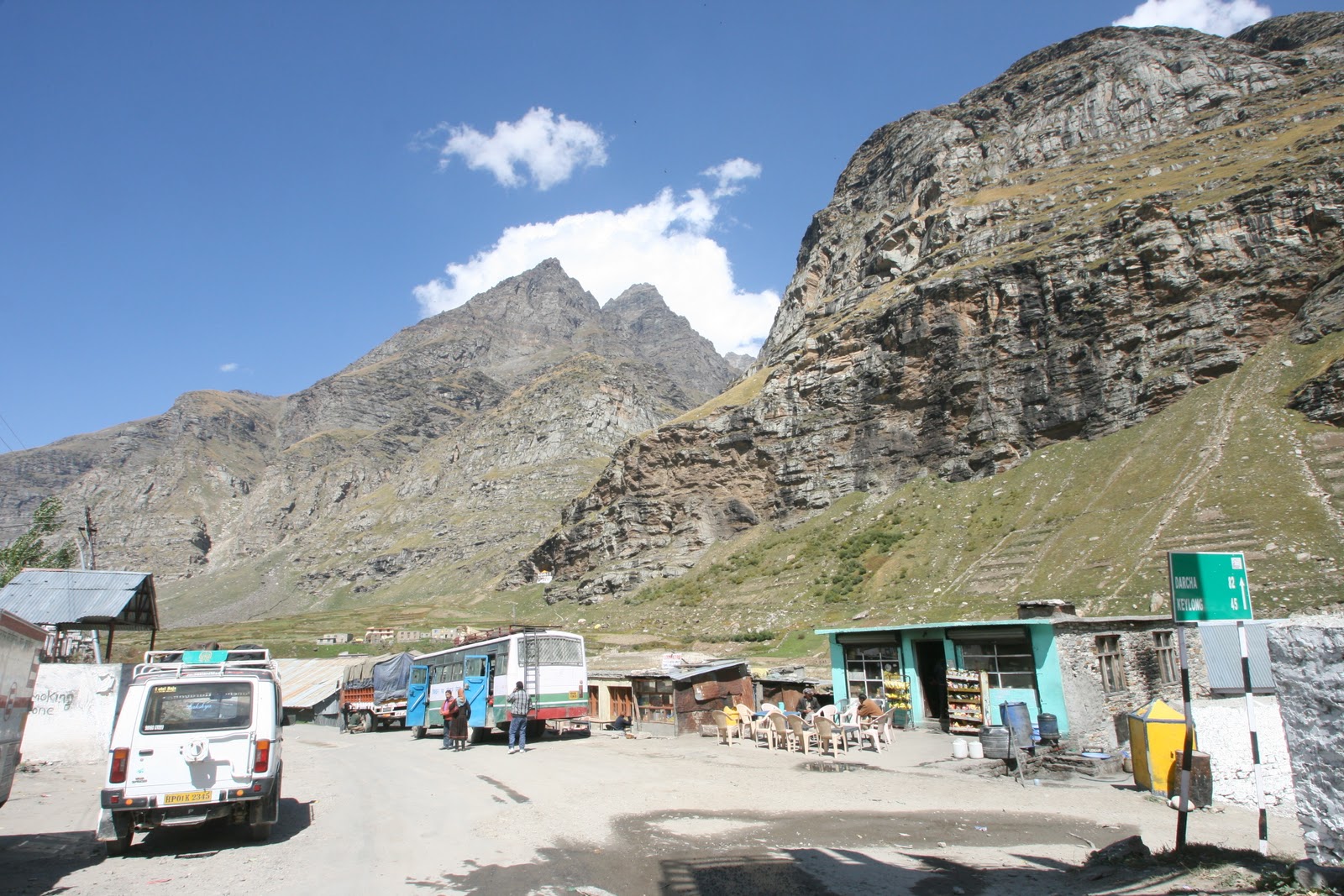
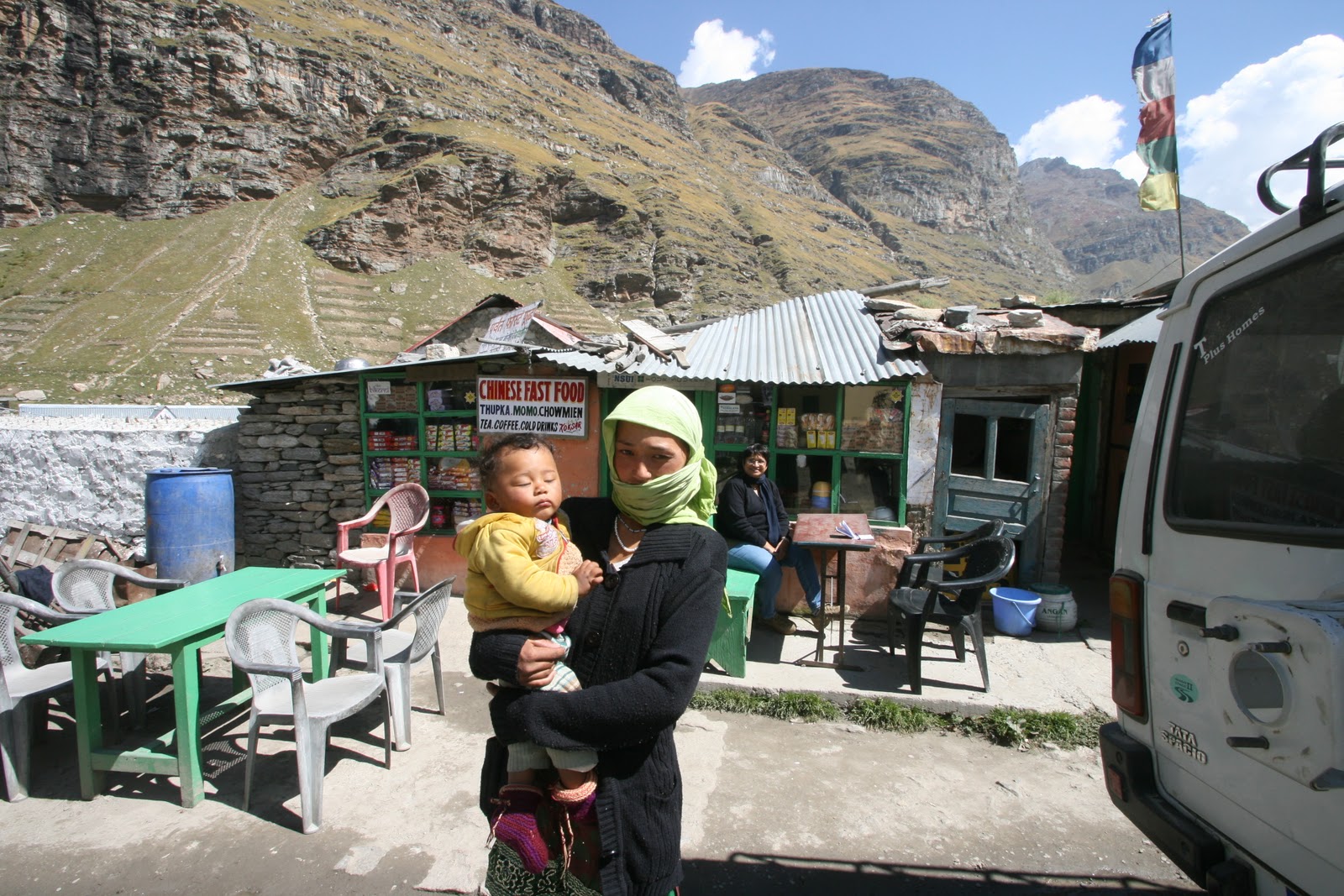
We stopped at Khoksar for tea. River Chandra, a tributary of the Indus, runs parallel to the road for a long distance. All through Khoksar, Kelong and up to Jispa, the locals grow potatoes and peas. The potatoes are a seed yielding variety and fetch Rs 1000/- for a bag of 25 Kgs. The Potatoes are sent mainly to Punjab. The indifferent attitude of the government towards maintenance of good roads, angers the otherwise calm and cool locals. After a brief halt at Kelong, we reached Jispa at 3.30 PM.


Figure 43 – A settlement at Khoksar


Figure 44 – Potato fields


Figure 45 – Incredibly fascinating


Figure 46 – Growing purple cabbage


Figure 47 – Apple orchards


Figure 48 – Mules- a common sight


Figure 49 – Brilliant shades of brown, red, green and white


Figure 50 – Desolately beautiful


Figure 51 – Settlement at Keylong


Figure 52 – Enjoying photography

Figure 53 – A hidden Shrine

Figure 54 – Greenery returns near Keylong


Figure 55 – River Bhaga running parallel to the road


Figure 56 – An imposing view of the mountain range


Figure 57 – Workers from Bihar – They are all over (not only in amchi Mumbai)


Figure 58 – Impossible to skip this view


Figure 59 – Chitty at peace with nature 

Jispa, located at 10.500 ft, is a small village along the Manali – Leh highway and the Bhaga River – another tributary of the Indus. The village has a medical centre (the doc was not there), helipad – the locals get to fly to Manali in any emergency for Rs 800/= a subsidized rate, a post office and a monastery. Travelers often stop here for the night to get acclimatized; the village has a hotel, a mountaineers’ hut, and a campground. In all there are around 350 people in the village. A small and quaint village with imposing mountains all around and Bhaga River to add more charm.


We checked into Ibex hotel (always ask for rooms facing the river)– had lunch and slept for a while. In the evening I went for a small walk with my niece Chitty to explore the village. Met bikers from Delhi named ‘GODS’ – Group of Delhi Super bikers – rallying from Delhi to Leh. They do it on motor bikes over 1000cc, sponsored by Honda. Amongst them they had a doctor – our saving grace. Had a bottle of beer and a good dinner and went to sleep.


Figure 60 – As the sun sets


Figure 61 – A view of Bhaga from Ibex


Figure 62 – Chits with a local family

Figure 63 – After a hard day’s work

Around 1 pm, I suddenly woke up sweating and feeling hot all over and breathless. I had to sit up for nearly an hour to regain composure, before sleeping again. It was a difficult night and Jai had to also keep awake – in all, we did not sleep for long, as we had to get up at 5 AM. May be the 1 km walk or the solitary beer or the closed windows – whatever the reason – it was a cause for concern. It is reported that interrupted breathing happens whilst sleeping. Next morning I heard from Poonam and Chits that they also felt warm and had a disturbed sleep. The nose becomes extremely dry and becomes over sensitive. Jai and I also had heart burn throughout our trip – especially when climbing to a high altitude and also descending to lower heights. 


Wikitravel notes – At 6000 feet above sea level, you exhale and perspire twice as much moisture as you do at sea level. Over the course of a day, that is a lot of water, and can make a difference of a quart or more a day. At higher altitudes, it gets even more pronounced. Higher altitude means lower air pressure. This results in more rapid evaporation of moisture from skin surface, and from your lungs. Most high altitude areas are also very low in humidity, which means evaporation is further accelerated. The combination of those two factors means that the higher up you are, the more water you need to keep your body functioning.
Because of the disruption to oxygen and carbon dioxide levels in your blood due to the body chemistry changes and hyperventilation that occurs at altitude, your body’s “when to breathe” chemical signals become confused. While you’re awake you will remember to breathe, but when you sleep it is common to have interrupted breathing: holding your breath for up to fifteen seconds and then breathing very rapidly when you start breathing again. This can be very alarming when you wake up knowing that you weren’t breathing or were short of breath; or when you notice someone else has stopped breathing. But it is a normal response to altitude, and happens to almost everyone. Acclimatization only improves it a little.

You need to drink a lot of water at high altitudes. We nominated Poonam to be the ‘Water Announcer’ every 30 min and all of us drank without fail. This procedure helped us a lot. You should have one person to keep reminding others to drink water as you don’t feel thirsty in cold weather.


The route we took from Manali to Leh via Jispa (Short of Dharcha)


Jispa to Leh – 30 Sep

We left Ibex at 0630 hrs as planned. We spoke to the GODS doctor prior to departure. He recommended that all of us take one tablet of ‘Diamox’ after lunch to help us cross the high passes without any problem. In any case they were also proceeding to Leh and would be in a position to provide assistance when required.

Another essential requirement when you undertake this leg of the journey is to carry one spare meal,biscut packets,chocolates,lots of water and a few packets of electrolyte solution.All this will come extremely handy in the event of a road block.  

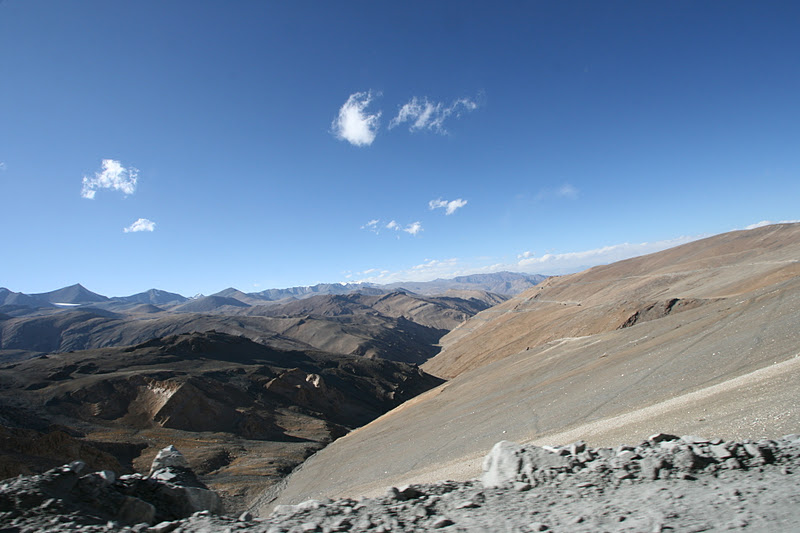
We passed through Baralacha La (15255 ft), Nakila Pass (15547ft), Lachulung La (16,462 ft) and Tanglung La (17,071 ft – the third highest motorable road in the world) on the way to Leh.

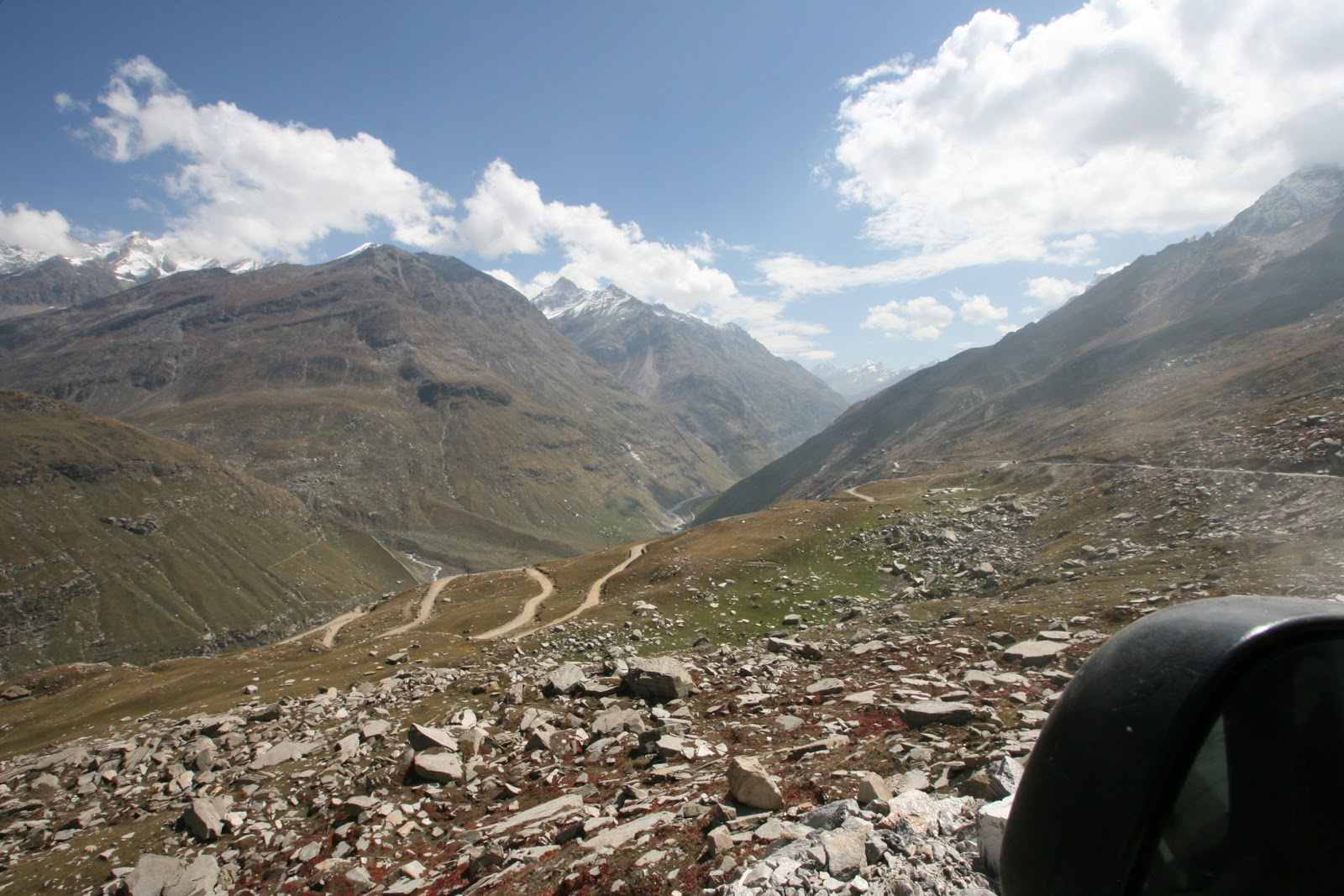
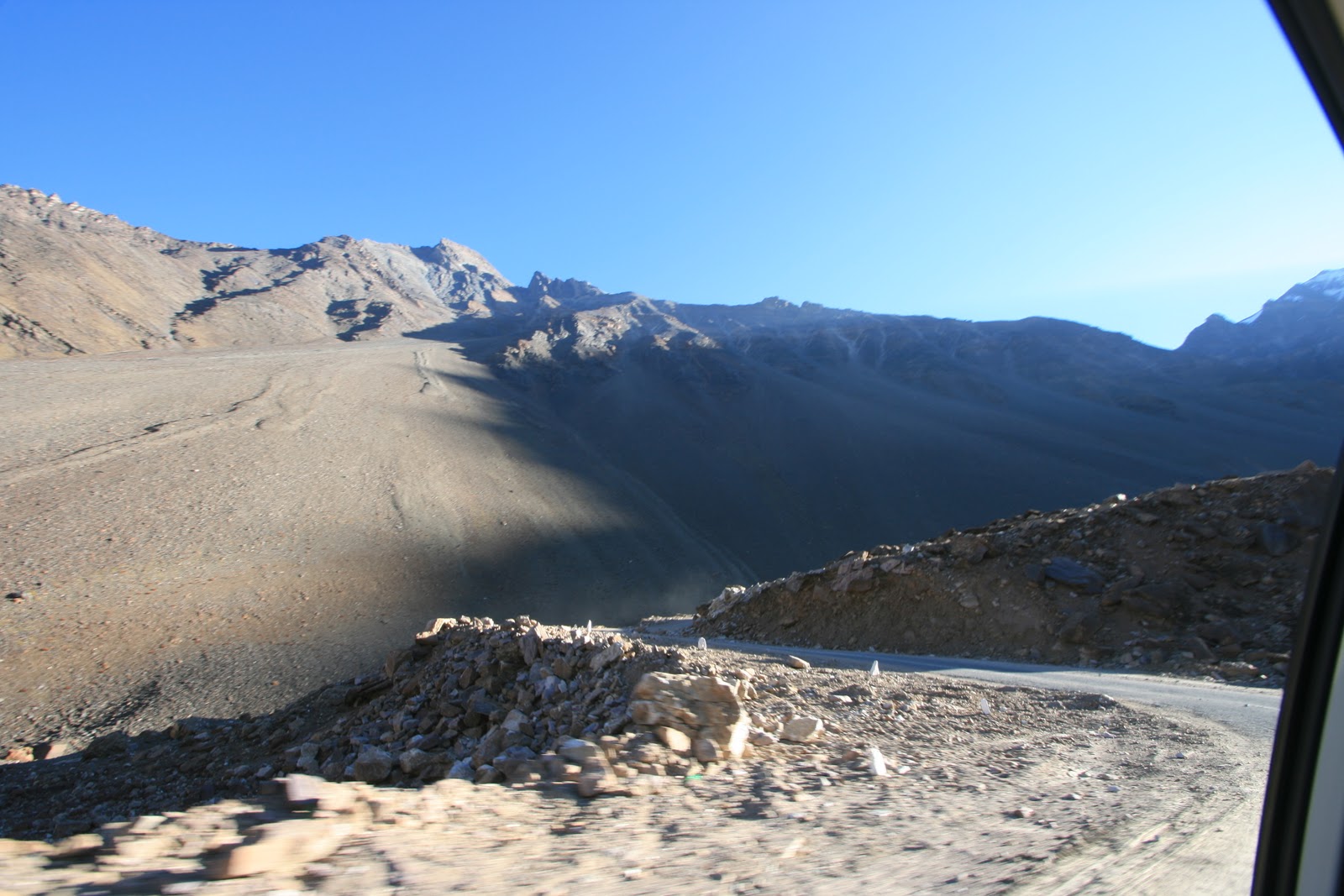
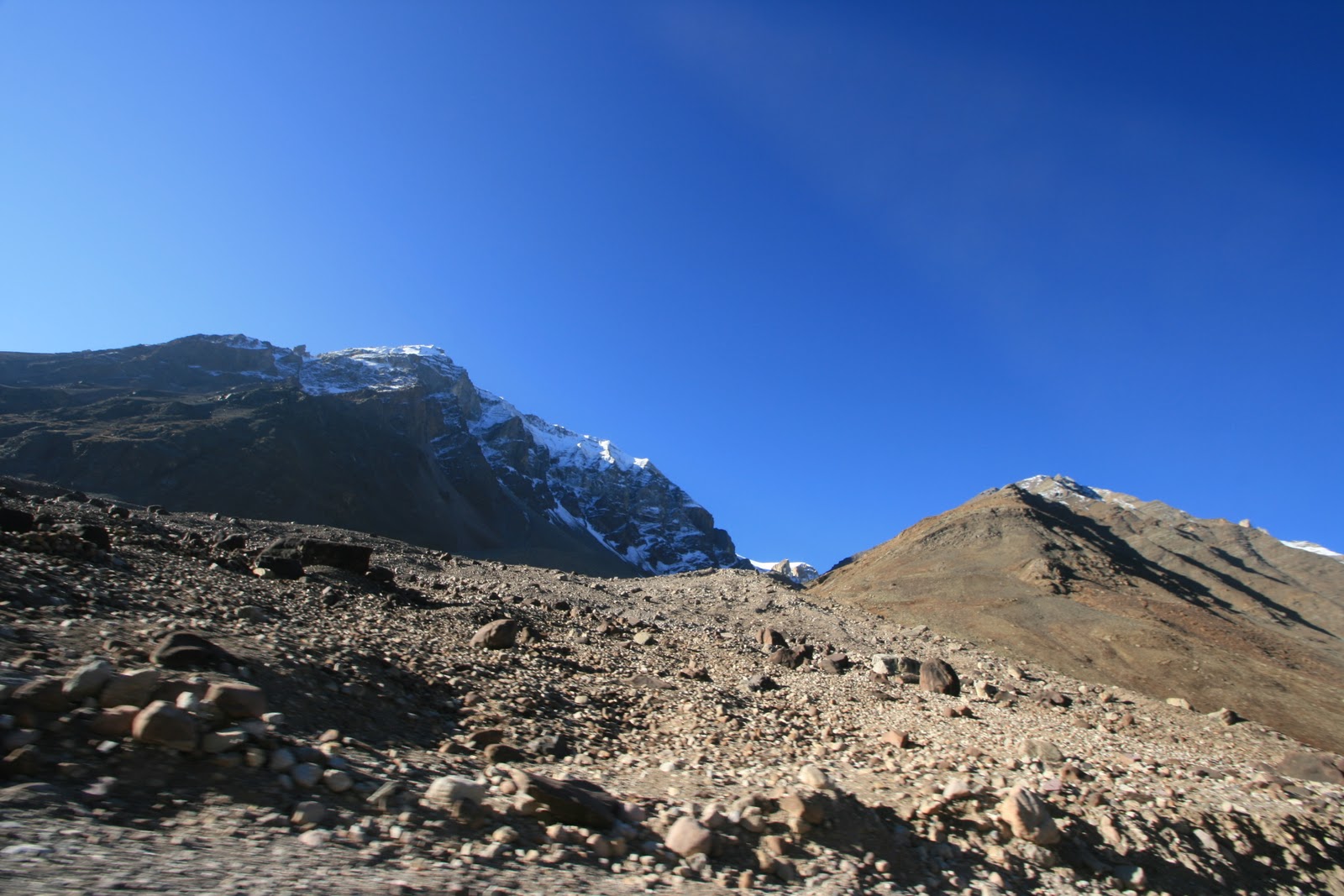
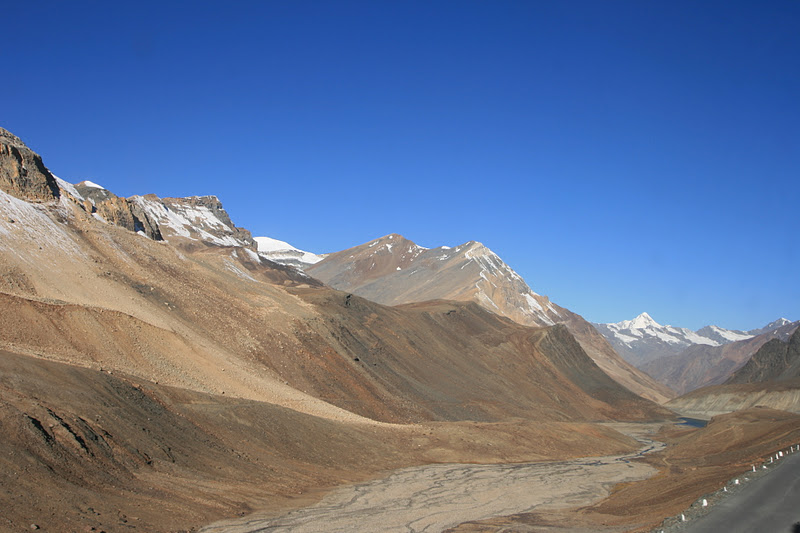
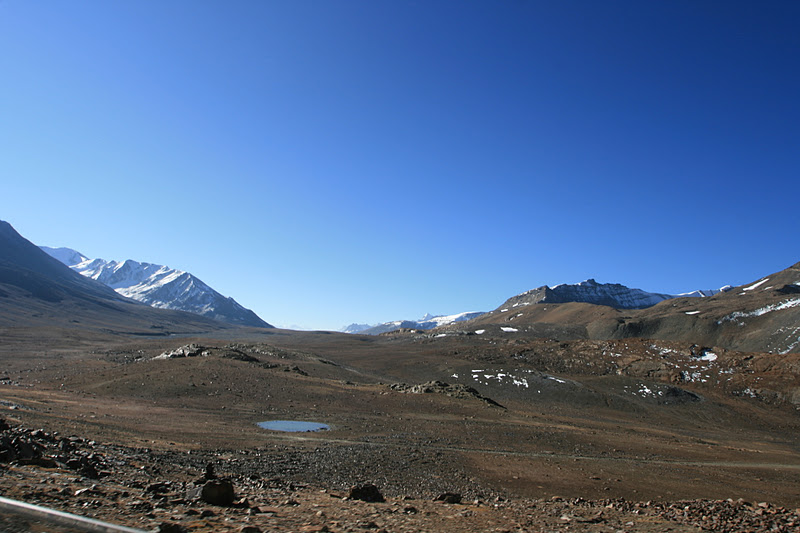
The whole journey is one endless time travel in God’s own art gallery. The mountains continuously change their colour, with different hues of brown and grey, with an occasional White Mountain top. The air is extremely dry and the sky is crystal clear and deep blue. Nilgiris and the Western Ghats look like toys in comparison. One has to see the mountains to absorb their beauty – no amount of photographs or verbal explanation does any justice to their grandeur. The sun plays hide and seek as you travel and the shadow cast their own special effect on the mountains. As you drive along you realize that you are alone, surrounded by huge mountains, never ending stretch of winding and narrow roads, steep turns and gorges. The car ride from Sarchu to Leh is a unique experience, which I believe everyone must go through at least once in their life time.


Figure 64 – early morning at Ibex – Jispa


Jispa to Bharatpur


Figure 65 – Deepak Tal (Lake)


Figure 66 – River Bhaga continues


Figure 67 – Army workshop


Figure 68 – Sun starts its shadow play

Figure 69 – The clear sky and the brown mountains


Figure 70 – God’s artwork


Figure 71 – The red shrubs give a new meaning to the mountains


Figure 72 – BRO at work


Figure 73 – Clear blue on mountain high


Figure 74 – Another angle


Figure 75 – Snow in the distance


Figure 76 – Sudden change in the mountain terrain


Figure 77 – The road winding its way through the brown


Figure 78 – A different composition


Figure 79 – Yet another view


Figure 80 – A series of ranges


Figure 81 – Suraj Tal


Figure 82 – Suddenly snow from nowhere


Figure 83 – The best of browns


Figure 84 – It never ends


Figure 85 – yet another one


Figure 86 – The landscape gradually changing
Figure 87 – Brown with shades of grey


Figure 88 – Baralacha La (15255 ft)


Figure 89 – Stone formations at the pass


Figure 90 – The gang

We stopped at Bharatpur for breakfast in ‘Tasitile Dhabha’ located in a tent, which also serves as accommodation. For Rs 100/= you get a clean bed, pillows and a warm razai; the downside being   the open loo next to the river Beas.  These tents are well equipped with gas, kerosene burners and provide hot breakfast, lunch and dinner. The ground temperature was 0 deg and one could see traces of frost. After passing Baralacha La (15255 ft) we crossed Sarchu (13,850 ft) at 10 AM. After Sarchu, the state of Jammu and Kashmir starts and soon the Gata Loops happen – a succession of 21 hair pin bends – a remarkable sight.


Figure 91 – Inside the cozy tent


Figure 92 – Jai and Poonam after a good Breakfast


Figure 93 – With the Nepali owners

Bharatpur to Nakeela


Figure 94 – Back to the Browns


Figure 95 – The landscape becomes drier


Figure 96 – Totally different view – The Blue is mesmerising


Figure 97 – Some parts do have good roads


Figure 98 – Natural formation in the rocks near Khalse en route to Hundar


Figure 99 – Natural formations-looks like an ancient excavation site


Figure 100 – Shrines dot the terrain throughout the trip


Figure 101 –  River Bhaga takes a different hue due to white sand


Figure 102 – The formations continue


Figure 103 – Another view of the river


Figure 104 – The dynamics of mountain and river


Figure 105 – A very lonely stretch


Figure 106 – Simply amazing – so many colours


Figure 107 – Finally the Ibex


Figure 108 – The 21 Gata loops


Figure 109 – One cannot ask for more from nature


Figure 110 – At the loops


Figure 111 – An idea called ‘Road”

We then passed through Nakeela Pass (15547ft). I suddenly developed slight head pain – the gums start aching a bit – slight throb in the temple region – the nose dries up very fast – and you begin to breathe heavily. Both Jai and I used to develop ‘heart burn’ while climbing and also when descending to lower heights. As we had taken ‘Diamox’ we had to alight from the car very often to urinate – this in itself was an arduous task. None of the girls seemed to like Diamox.


Figure 112 – At Nakeela – No one wanted to get down


Figure 113 – At 16,616 – Lachulung La


Figure 114 – Very desolate and barren


Figure 115 – Where is the road?


Figure 116 – Practically non-existent roads- a frightening and chilling part of the journey


Figure 117 – Glaciers starting to form


Figure 118 – Another scary patch


Figure 119 –just us and the mountains


Another important facet of travelling in high altitude is its effect on speech. At 11,000 ft I could hear the girls talk endlessly, gossip, debate, sing songs, narrate jokes and the rest. As one climbs higher the decibel level slowly drops and at 14,000 ft one hears only grunts and monosyllabic replies and at 18,000 ft there is total silence – you hear nothing but the constant whining of the car engine. One does not require an ‘altimeter’ to indicate the height.
We thereafter stopped at ‘Pang’ for lunch. Some had hot Maggie – a very popular dish in these parts. I had hot and tasty rice, dal, chapatti and sabzi. Fortunately appetite is not affected due to high altitude. All these tent settlements were preparing to wind up and shift to Manali for the winter – we were probably the last of the tourists to make use of their facility.


Figure 120 – With the locals outside the tent – Pang

The Indian Army is present in a big way in Pang. They also have a helipad and an MI Room. 
After Pang we crossed More Plains, a 40Km stretch of absolutely flat plateau. The plains are really awesome to drive through – a unique geographical phenomenon – wonderful but scary – the desolate look of the plains is enough to give you goose pimples.


Figure 121 –The incredible ‘More Plains’


Figure 122 – Tanglung La (17,071 ft) Nobody wanted to step out of the car


Figure 123 – A clearer view from Tanglung La (17,071 ft)


The overall journey was interesting and tiresome – by air to Delhi, 14 hrs in a Volvo to Manali, 8 hrs to Jispa and finally another 13 hrs to Leh in an Inova was indeed a very tight schedule. The journey from Jispa to Leh was a unique experience – something I will cherish for a very long time to come. The imposing mountains, the ever changing landscape, crystal clear rivers, and an omnipresent deep blue sky makes the travel even more fascinating.


Driving in these parts requires special skills and our driver ‘Sunny’ had it in good measure.One cannot afford to make the slightest of mistakes – any deviation means certain disaster.Sitting next to the driver I could not have a shut eye even for a second – I did some continuous small talk with Sunny throughout the journey.The more plains was god send and i told Jai to keep awake and did some serious ZZzzzz for an hour. Inova was very comfortable for the four of us – avoid having more than five passengers.

We reached our new home – 603 EME Battalion, located 35 KM from Leh – Lt Col Alok and Maj Nagendra received us at the officer’s mess and ensured, we quickly settled down in our cabins. Brig Sanjay Prasad from the HQ welcomed us to Leh and asked us to spend the next day acclimatizing ourselves to the high altitude. After a hot bath and a lovely dinner we retired for the night.


Figure 124 – Finally the 603 EME Battalion Officers’ Mess Karu Leh – Indian Army


Figure 125 – The sun sets on the camp
1st Oct – At Karu

We spent the entire day in the mess – sat outside and soaked in vitamin D and read PG Wodehouse ‘Clicking of Cuthbert’. All of us took it easy and did nothing more strenuous than operating the TV remote.


If you’re planning a trip, please read about Leh from the net– its weather,
climate, roads, do’s and don’ts and especially about high altitude sickness. You
are also advised to read-http://leh.nic.in/ – the “Official Website of Ladakh 
Autonomous Hill Development Council, Leh”. The site is extremely useful and informative.
Anna Hazare’s Anti Corruption Movement

Anna’s fast is over, the common man has returned home, Ramlila ground is empty, TV channels have started covering mundane events and the government is back in business. Our generation is fortunate to have witnessed a very spontaneous and peaceful ‘People’s Movement’ against corruption. As the Secretary of JVV Apartment Owners association, I sent out a circular requesting the Navy and Air force veterans to join the ‘Anti Corruption March’ on 25 August 2011 from RSI, MG Road to Freedom Park in Bangalore – in support of Anna Hazare. The response was satisfactory. Sena Vihar which houses the army veterans also joined us. There were a few from Jal Vayu Towers also. We marched a distance of 4.1KMs and joined the ocean of protesters in the Freedom Park.
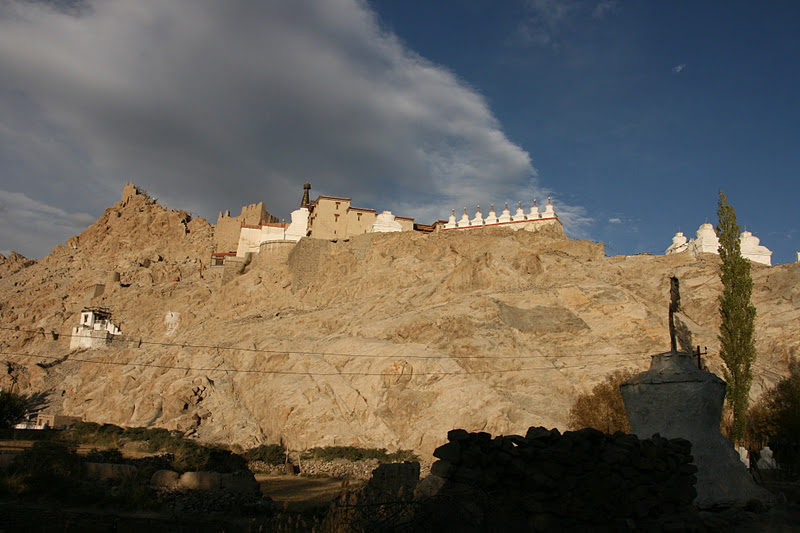
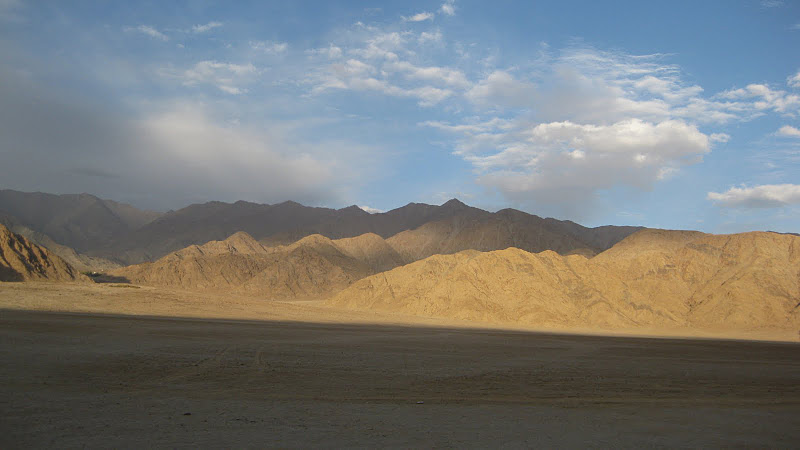
Figure 1 – At the RSI

Figure 2 – On the way – Cubbon Park

Figure 3 – Nearing Freedom Park

Figure 4 – Course mate – Govindrajan with a white Anna cap joins the march

The atmosphere in the park was absolutely electrifying; we were automatically sucked into the charged environment. The fervor with which the people had identified themselves with the movement was really inspiring. The people in the park represented a vast cross section of our society –children, students, factory workers, office goers, trade union members from various organizations and many more were there, standing shoulder to shoulder registering their protest against rampant and unchecked corruption in the country.

Figure 5 – At the park

Figure 6 All the veterans

Corruption has entered all aspects of our life. It has so strongly entrenched itself in our polity, that the citizens have started to accept it as a necessary evil. In some places it has been legitimized by referring to bribery as ‘administrative charges’ and ’miscellaneous expenses’. The common man has become helpless and extremely vulnerable.

Figure 7 – Inside the protest area

I remember a very powerful movie ‘Nishant’ by Shyam Benegal. The film explores the corrupt world of landowners and local bureaucracy in India on the cusp of independence; In a feudal village in the 1940s, the village’s new schoolmaster’s wife, Sushila (Shabana Azmi), is abducted for the enjoyment of the zamindar’s cruel, depraved younger brothers. The schoolmaster (Girish Karnad) tries to recover her through official channels, including the local police official (Kulbushan Kharbanda), but meets everything from indifference to abject fear of the powerful zamindar (Amrish Puri). What follows is something very similar to the Anna movement – when there is nobody to listen and correct the injustice around you – people rebel and take their resentment to the streets – fortunately for India the Anna protest was extraordinarily peaceful and did not end up with unprecedented violence against the zamindar’s tyranny, with indiscriminately tragic results like in Nishant.

Figure 8 – Total participation – Generals, ladies and all

Some of the issues related to the movement needs mention here.

Anna is not an intellectual.

Some commentators went to town lamenting, how this ordinary sepoy could understand the complex nature of corruption, economy, ordinance, law enforcement etc. To their utter surprise and shock, Anna was not one of them. How dare a common man set off such far reaching ripples with such a huge (and successful) protest against corruption, when none of their ilk had done it? The reason was simple – Anna did not belong to their club. ‘No membership – No entry’ was their war cry. How come Dr Manmohan Singh with all his super qualifications has done so little to curb corruption? You don’t need degrees and post graduations to realize that there is unbridled corruption in the country.

Anna has moral courage, personal integrity and the spirit of sacrifice.

To be able to go on a fast for a cause is not impossible, but to galvanize lakhs of Indians to follow suit is something bordering on a miracle. Nothing of this scale has ever happened in India since Mahatma Gandhi, Vinoba Bhave and Jayaprakash Narayan. Anna was able to achieve this because of his moral authority and personal example. He came prepared to sacrifice his life for this cause and the people truly believed in him. He had no other hidden agenda.

Anna movement is against parliamentary process.

When there is so much of corruption and all avenues to redress the issue have failed for the common man, when government promises have not been honoured, when people in power do not share the concern of the common man and when corruption continues to be the biggest problem facing the nation – where does the common man go? To the streets, of course. What is undemocratic about a movement launched by the people of India to fight against corruption? Just because the government has not witnessed such a huge movement before – it does not become unparliamentary.

Anna supporters do not represent the entire nation.
How foolish can one get? Mr Karan Thapar unpleasantly grilled Mr Kejriwal and Shanti Bhushan saying Anna’s movement did not represent India. He said “One Lakh protestors in Ramlila ground do not represent 1.3 billion Indians”. I wonder how many people, the TV channels interview in their exit poll to pronounce their finding and predictions. National Council of Public Poll says “Interviews with a scientific sample of 1,000 adults can accurately reflect the opinions of nearly 210 million American adults. That means interviews attempted with all 210 million adults – if such were possible – would give approximately the same results as a well-conducted survey based on 1,000 interviews”.

Please permit me a harmless aside. When we were at school, we used to call the ‘extra smart – know it all’ guy in the class, ‘Ameen Sayani’, a popular radio announcer and quiz master. Mr Karan Thapar is the new age ‘Ameen Sayani’. I humbly request Mr Karan Thapar to set aside his CNN IBN script and walk on the streets of Delhi and muster 10 people – he will find it extremely difficult to muster even 5 who will tolerate his superciliousness and disdainful arrogance.

Arrogance of the people in power.

It was really disheartening to see people in power treating this entire movement as a joke. The government was far from being helpless – on the contrary there was a premeditated contempt shown to the popular uprising. Down the line, one of their strategies was to delay, confuse and break the ranks to wear down the public support over a period of time. Mr Kapil Sibal, Manish Tiwari and Chidambaram symbolized the worst of the government. Some questioned the rights of the people to oppose the government – how dare ordinary citizens disagree with the elected body – what do they know about running a government – we know what is correct and good for the people. The divide between the electorate and the elected was so deep and visible; it led even the fence sitters to jump onto Anna’s bandwagon.

The Anna camp was holding the government to ransom, blackmail etc.

This is very far from the truth. The public has been waiting for nearly 41 years to see the Lokpal bill being passed by the parliament. Every time they have delayed, misled and misrepresented the sentiments of the nation. Anna’s camp was operating in an atmosphere of total distrust and had no other recourse than to demand total acceptance.

It was a sad spectacle of a rudderless government finding its way in a huge ocean. Thank God better sense prevailed and the government did not run aground.

Finally Mr Jug Suraiya wrote in TOI saying “Perhaps the single most important thing that the Anna movement has taught us is that politics is too important to be left only to professional politicians , echoing George Clemenceau’s ( French Prime Minister from 1906 – 09) famous statement, ” War is too serious a business to be left to the generals”. Jug Suraiya further adds, “India has been like a house owned by a householder who leaves the day-to-day running of the house — keeping the place clean, buying provisions for the kitchen, maintaining a daily hisaab — to the servants. Left unregulated — except for a check on their activities every five years — the servants inevitably come to feel that the house belongs to them and not to the householder. As time goes by, they become increasingly lazy and corrupt and treat the householder with contempt. The house becomes rundown with no money to pay for upkeep”.

Good bye until the next fast which seems likely to take place in the not so distant future. After all, we do have ‘miles to go before we sleep.’

One who breaks an unjust law that conscience tells him is unjust, and who willingly accepts the penalty of imprisonment in order to arouse the conscience of the community over its injustice, is in reality expressing the highest respect for law. – Martin Luther King