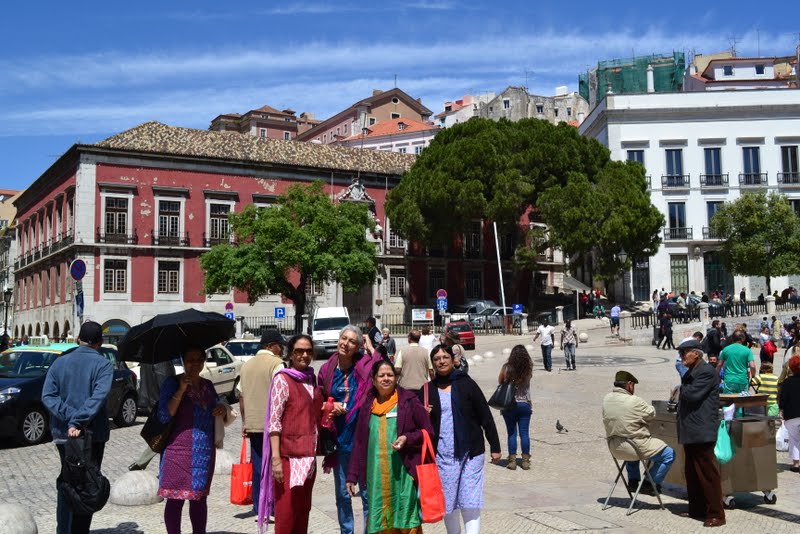
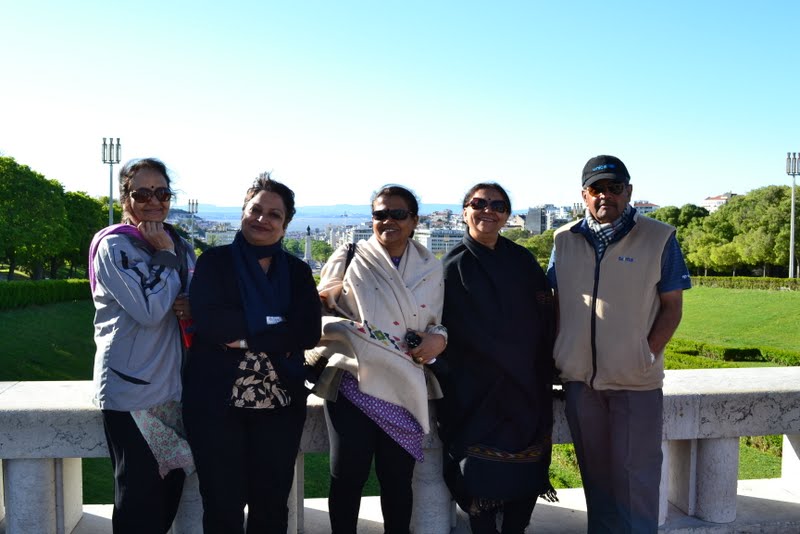
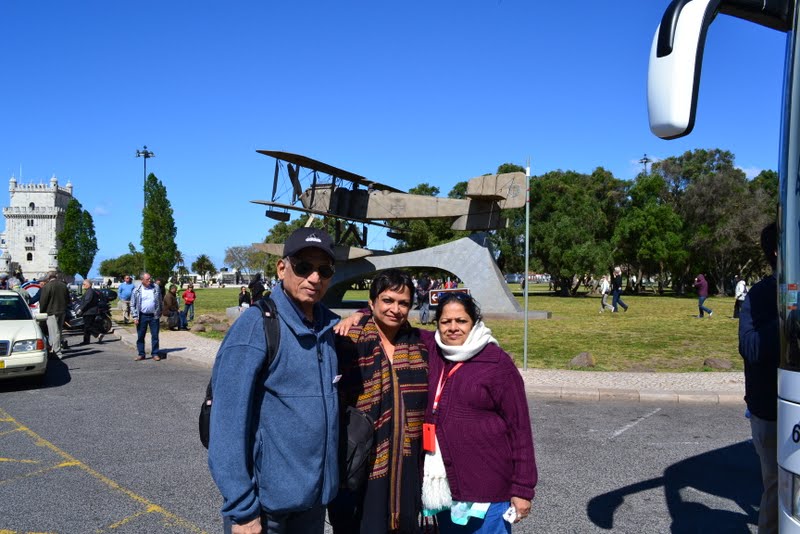
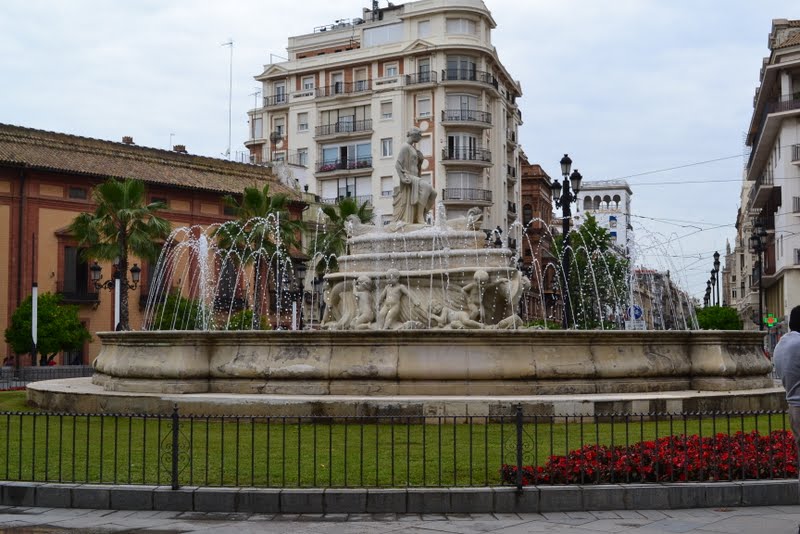
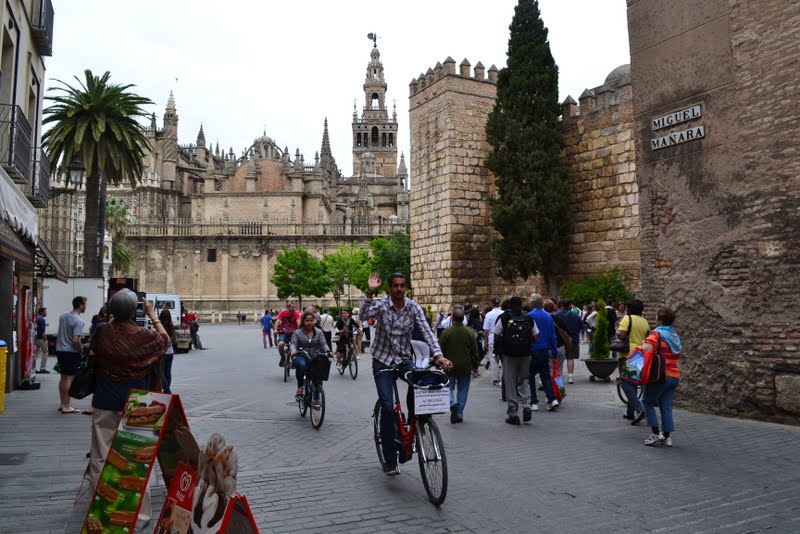
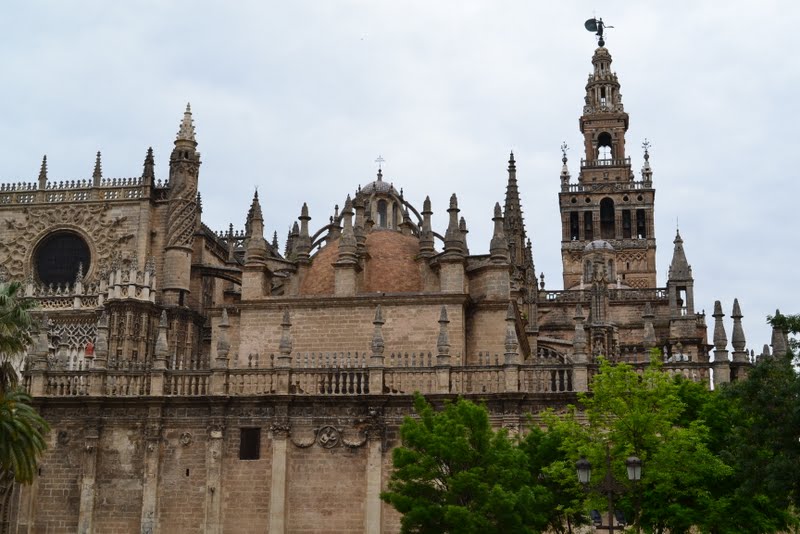
We Visited Salamanca – 29th April 2013

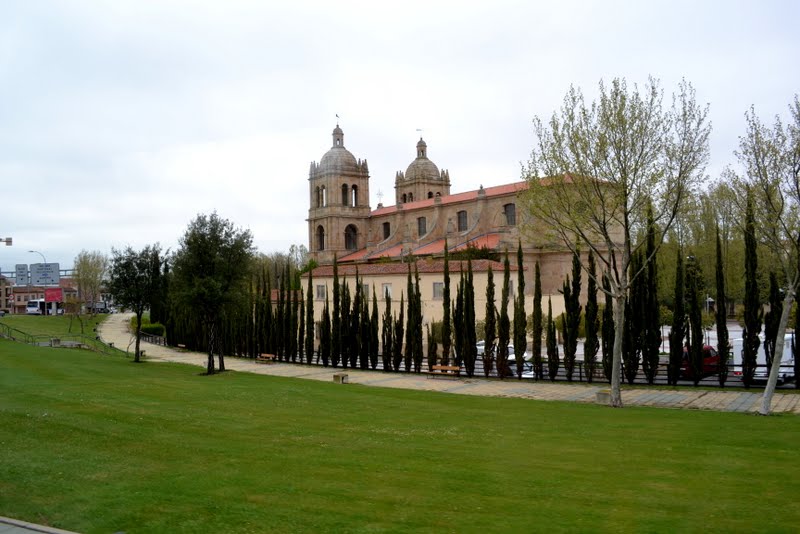
We bid good bye to Portugal and Lisbon and headed towards Salamanca. The city lies about 220 KM Northwest of Madrid on the river Tormes. It is small town and is the most important University City in Spain. The university was founded in 1218 and is the oldest university in Spain. The weather was extremely cold and we were under dressed.The city is full of life with many youngsters making it their home for studies.
We were kept occupied with a short documentary on ‘History of Cork’ and ‘Olive Oil’. The film showed us how the oil is made from the very beginning – a very interesting and educative film. Plucking the olives to processing is done in 24 hrs. Extra virgin oil is untouched; the acid content is low and hence good for cooking. More the acid, lower the quality. The oil is stored either in a colored glass bottle or in a tin container to keep the sunlight away. Good olive oil when rubbed in your hand emanates an earthy smell of the country. Grading the oil is through a series of sipping, tasting and rolling on the tongue – probably like wine and tea.  
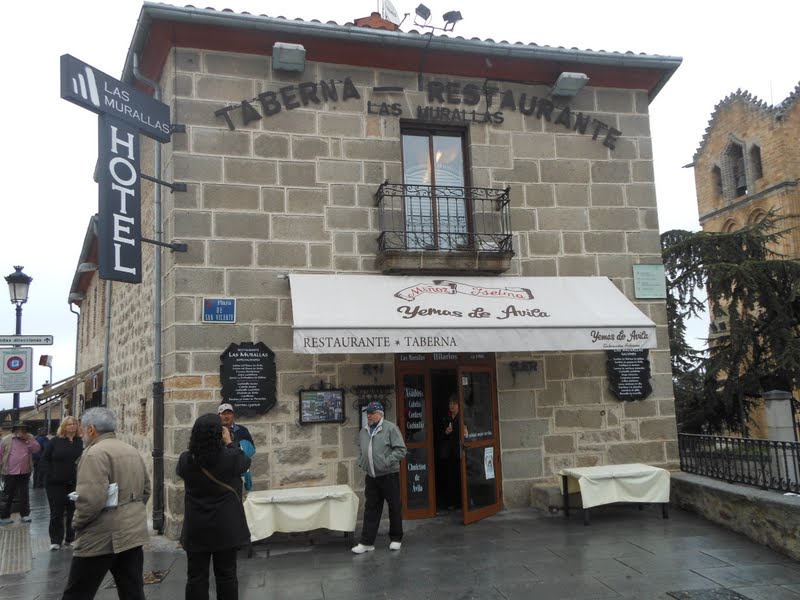
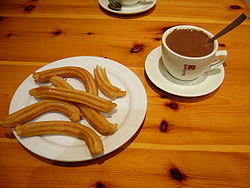
We later on stopped in a village by the name of ‘Avilla’ city of ‘Stones and Saints’ where we were treated to ‘Churros’ (Spanish doughnut) a traditional Spanish Dessert developed centuries ago by shepherds. Up high in the mountains, fresh baked goods were impossible to come by, so the ingenious, nomadic folk of the hills came up with a delicious cake-like, cylindrical, daily staple which they could easily cook in a pan over an open fire. This was the birth of Churros. They are normally eaten for breakfast dipped in hot chocolate. The weather was perfect for Churros and everyone thoroughly enjoyed the Spanish delicacy.
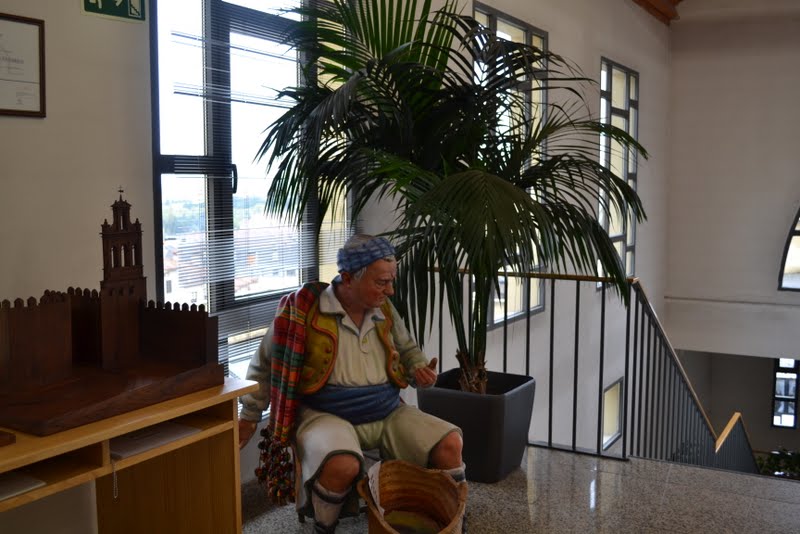
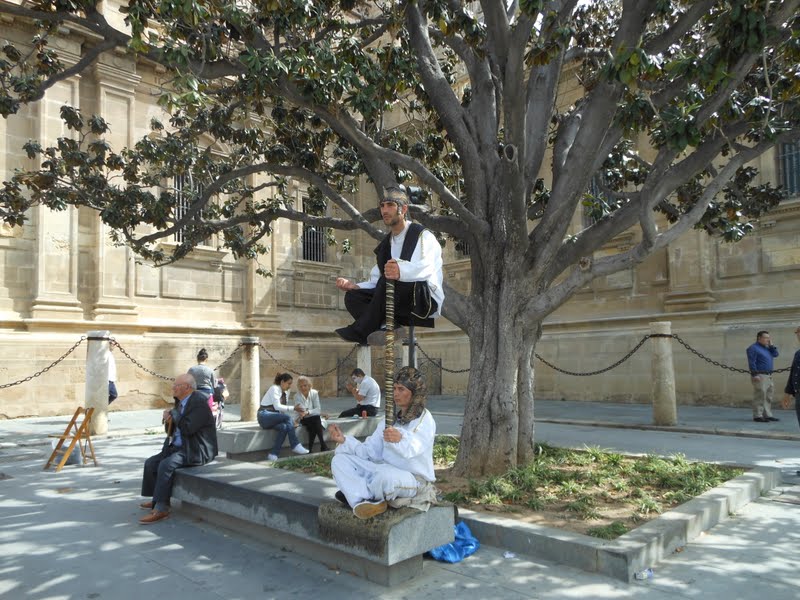
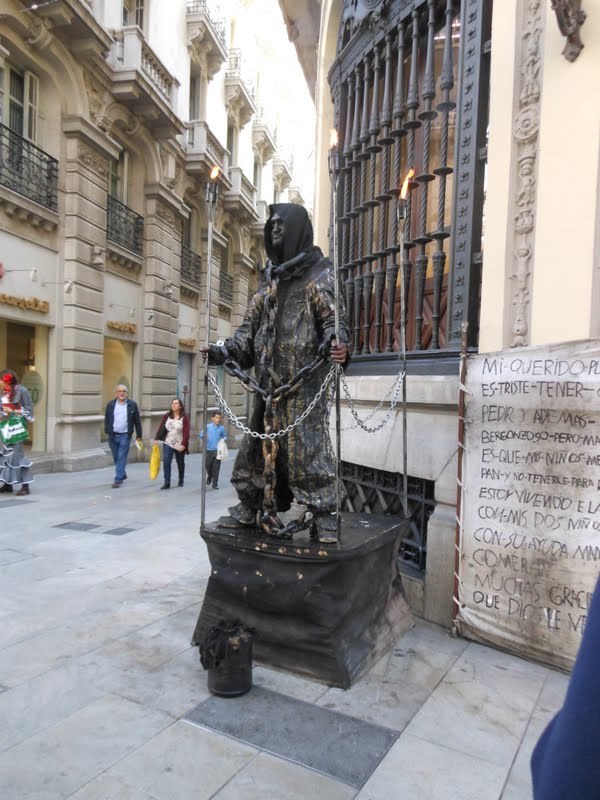
Figure <!–[if supportFields]> SEQ Figure \* ARABIC <![endif]–>1<!–[if supportFields]><![endif]–> – A very interesting statuette on the way to the restaurant
Figure <!–[if supportFields]> SEQ Figure \* ARABIC <![endif]–>2<!–[if supportFields]><![endif]–> – Taberna for Churros
Figure <!–[if supportFields]> SEQ Figure \* ARABIC <![endif]–>3<!–[if supportFields]><![endif]–> – Death by Churros served with hot chocolate sauce
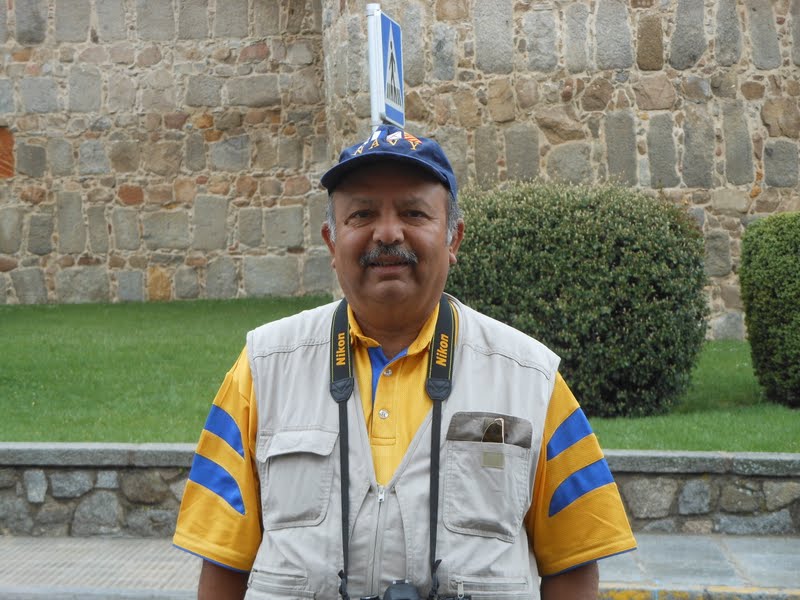
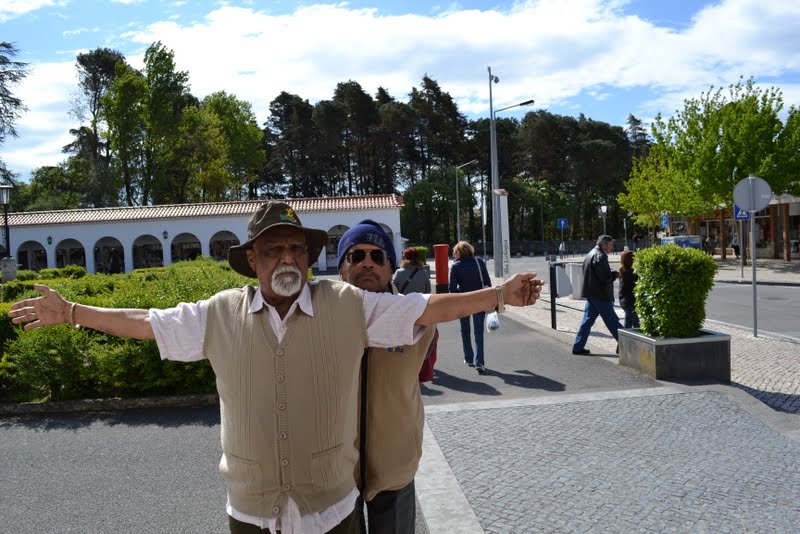
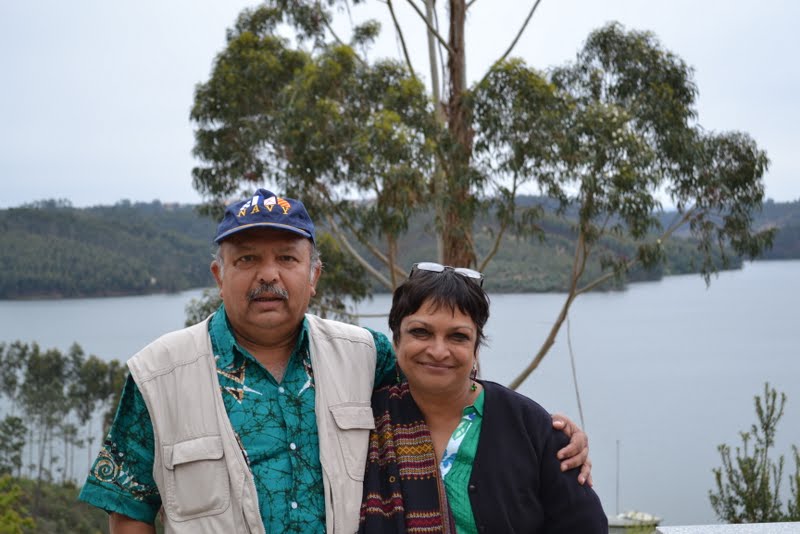
Figure <!–[if supportFields]> SEQ Figure \* ARABIC <![endif]–>4<!–[if supportFields]><![endif]–> – After Churros
A lady from our group fell down on the road while getting down from the bus. Ms Collen had to be hospitalized for emergency care in a nearby hospital. She joined us a day later and out of danger.
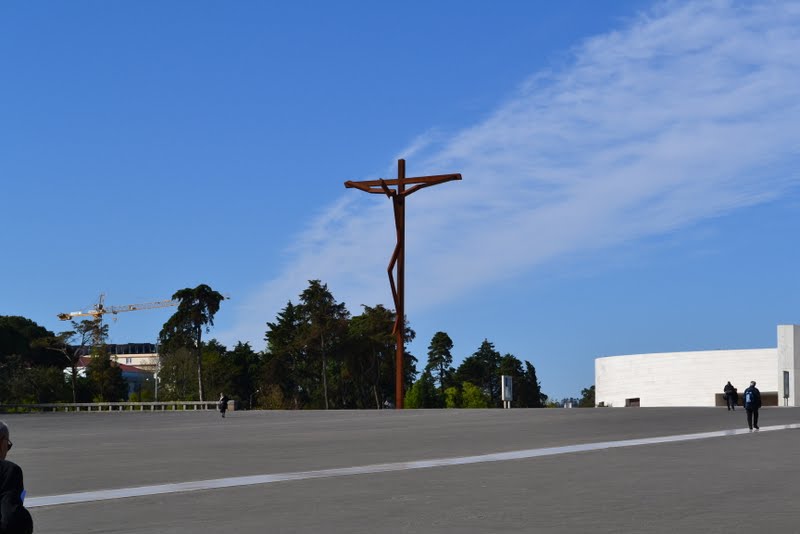
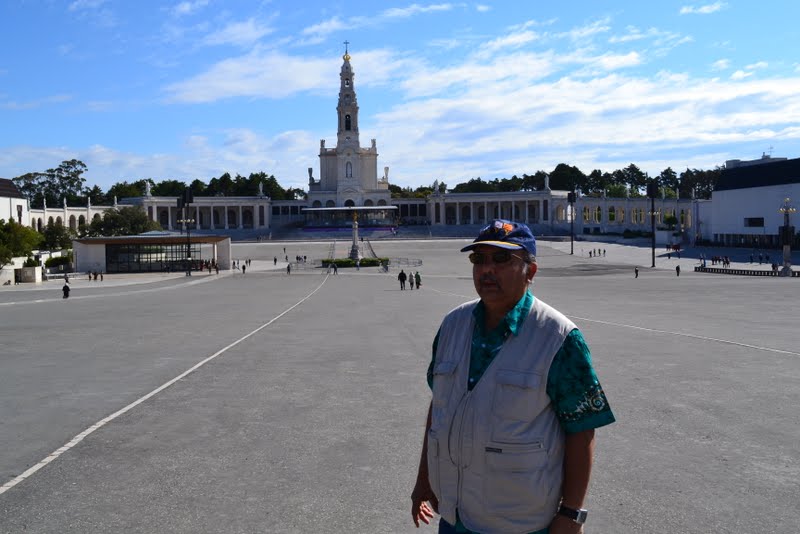
We then visited Fatima. It is said that, Six times, from the May 13 to Oct 13, 1917, the Virgin Mary appeared to three shepherd children in the diocese of Leiria. A new church is under construction, however just as beautiful, an older church was constructed here in 1928, and millions of pilgrims visit each year. Fatima is one of the most visited holy places for Catholics from around the world.
Figure <!–[if supportFields]> SEQ Figure \* ARABIC <![endif]–>5<!–[if supportFields]><![endif]–> – A superb piece of architecture at Fatima
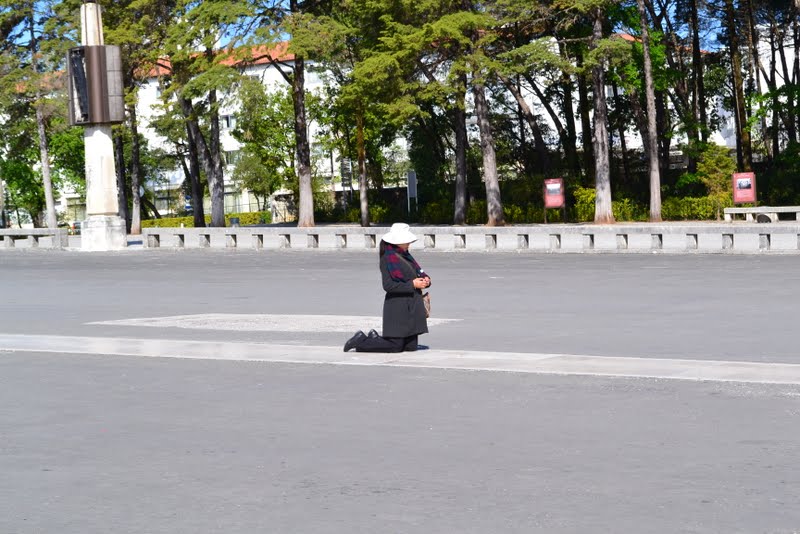
Figure <!–[if supportFields]> SEQ Figure \* ARABIC <![endif]–>6<!–[if supportFields]><![endif]–> – A staunch devotee walking on her knees in prayer – Fatima

Figure <!–[if supportFields]> SEQ Figure \* ARABIC <![endif]–>7<!–[if supportFields]><![endif]–> – View of the church
Figure <!–[if supportFields]> SEQ Figure \* ARABIC <![endif]–>8<!–[if supportFields]><![endif]–> – Photo op
Figure <!–[if supportFields]> SEQ Figure \* ARABIC <![endif]–>9<!–[if supportFields]><![endif]–> – Kats posing as the savior
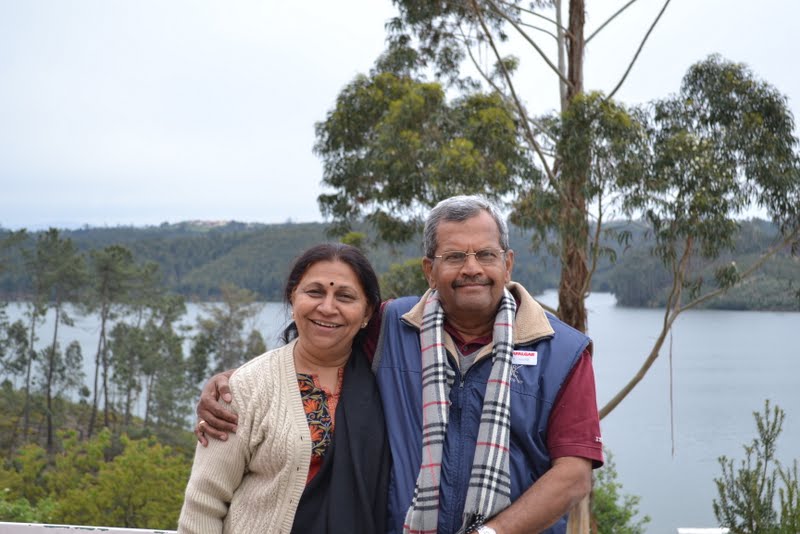
Figure 10 – During the technical halt – a very satisfied couple
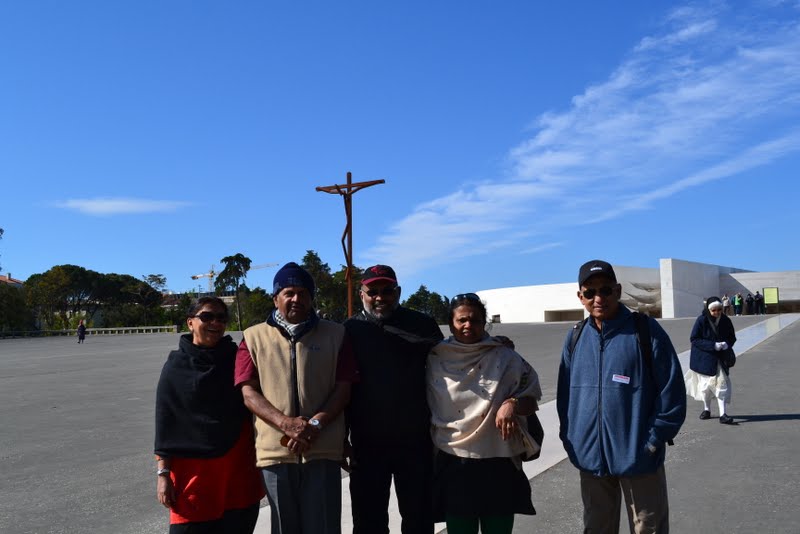
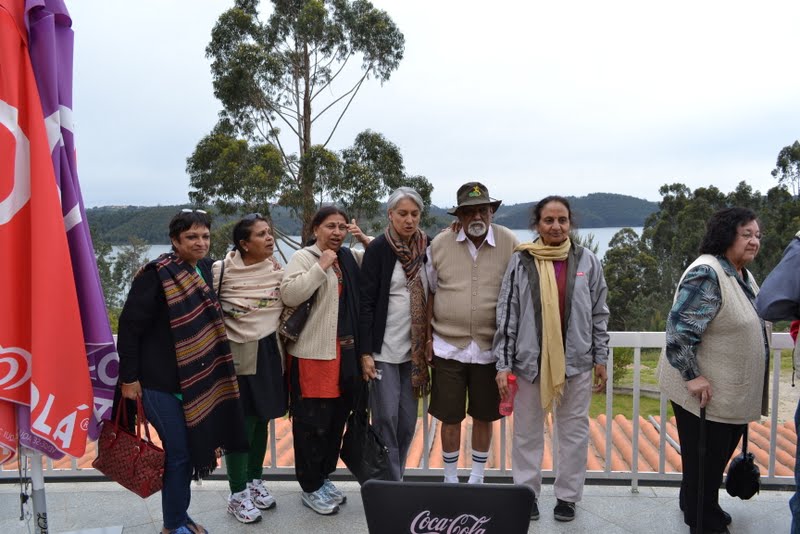
Figure <!–[if supportFields]> SEQ Figure \* ARABIC <![endif]–>11<!–[if supportFields]><![endif]–> – The group
Figure <!–[if supportFields]> SEQ Figure \* ARABIC <![endif]–>12<!–[if supportFields]><![endif]–> – Jai and Self
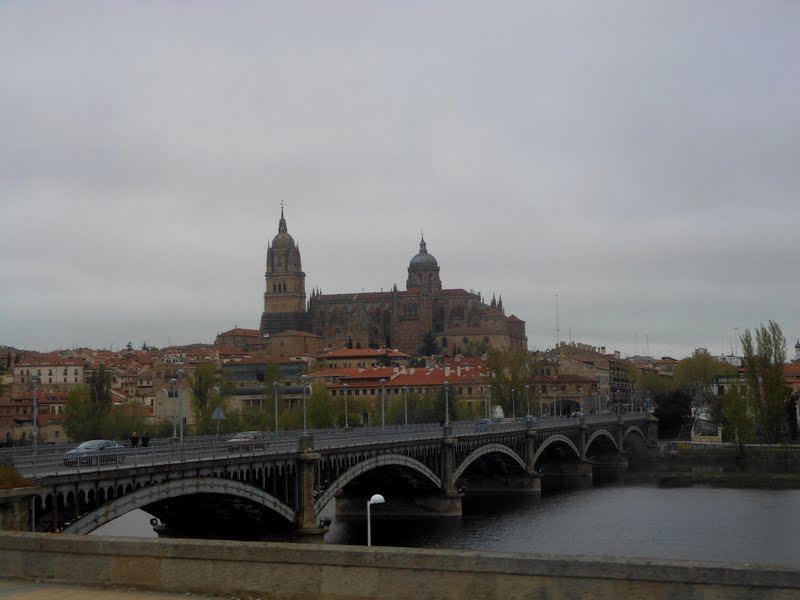
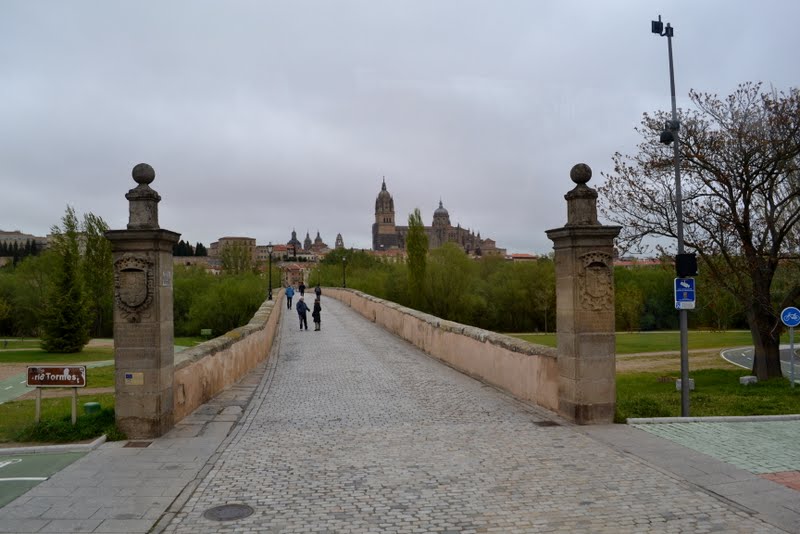
Figure <!–[if supportFields]> SEQ Figure \* ARABIC <![endif]–>13<!–[if supportFields]><![endif]–>Roman Bridge of Salamanca.
Of its arches, fifteen are Roman of the 1st century BC. It stands on 26 semicircular arches and robust pillars. It forms part of the ‘Plata’  Roman road that linked Merida with Astorga. Nearby is the Mudéjar Romanesque church of Santiago. 
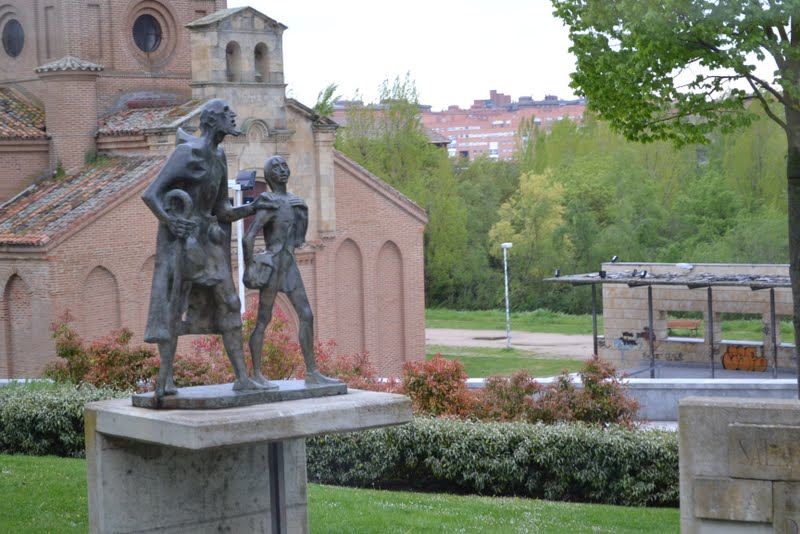
Figure <!–[if supportFields]> SEQ Figure \* ARABIC <![endif]–>14<!–[if supportFields]><![endif]–> – Architecture in the city – The statue is of a famous novel written about the adventures of a boy in Salamanca named Lazarus, who has the job of guiding a blind man.
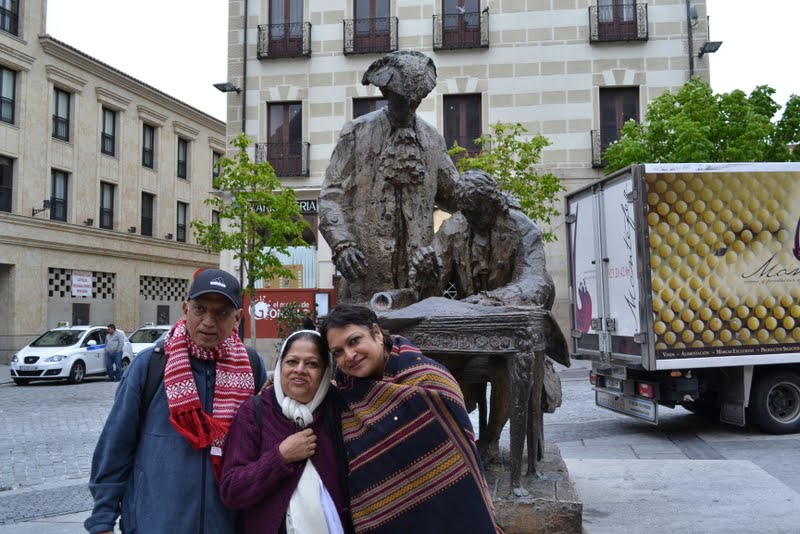
Figure 15 – Statue nr La Clerecía – With Dore, Lalitamma and Jai –

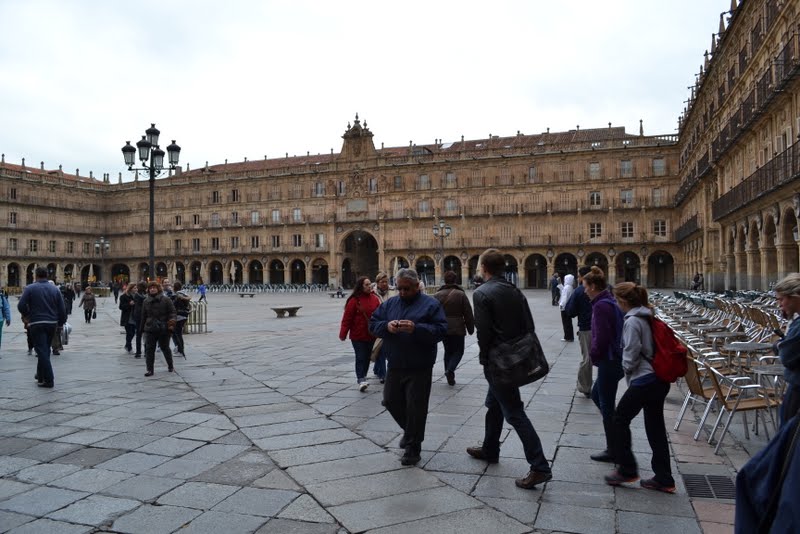
Figure <!–[if supportFields]> SEQ Figure \* ARABIC <![endif]–>16<!–[if supportFields]><![endif]–> – Plaza Mayor
Figure <!–[if supportFields]> SEQ Figure \* ARABIC <![endif]–>17<!–[if supportFields]><![endif]–> – A view of the cathedral
Figure <!–[if supportFields]> SEQ Figure \* ARABIC <![endif]–>18<!–[if supportFields]><![endif]–> – A road from the Roman times
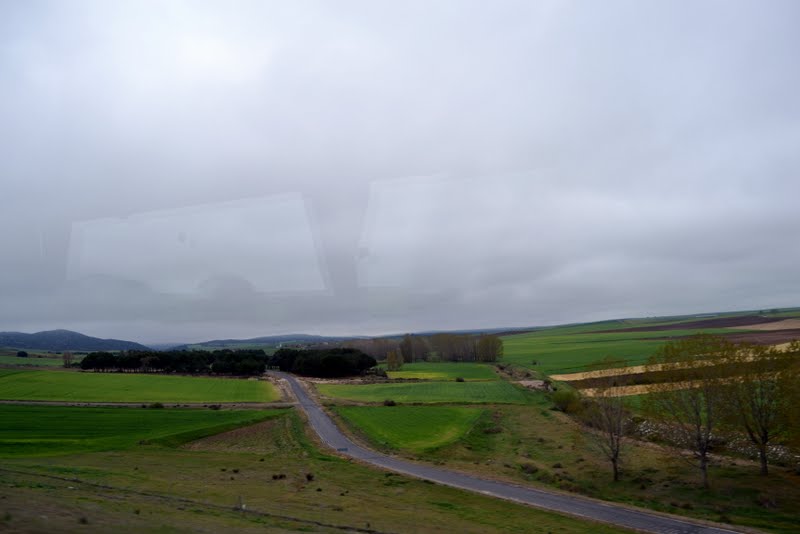
Figure 19 – Fascinating landscape outside of Salamanca
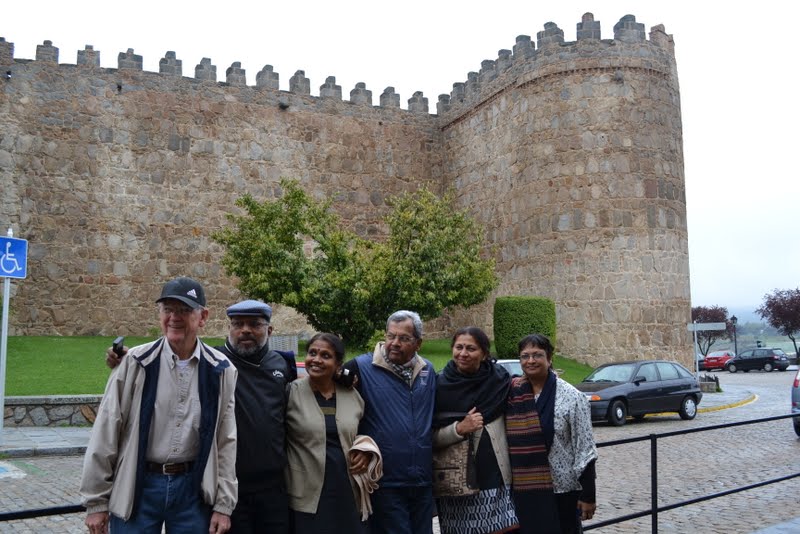
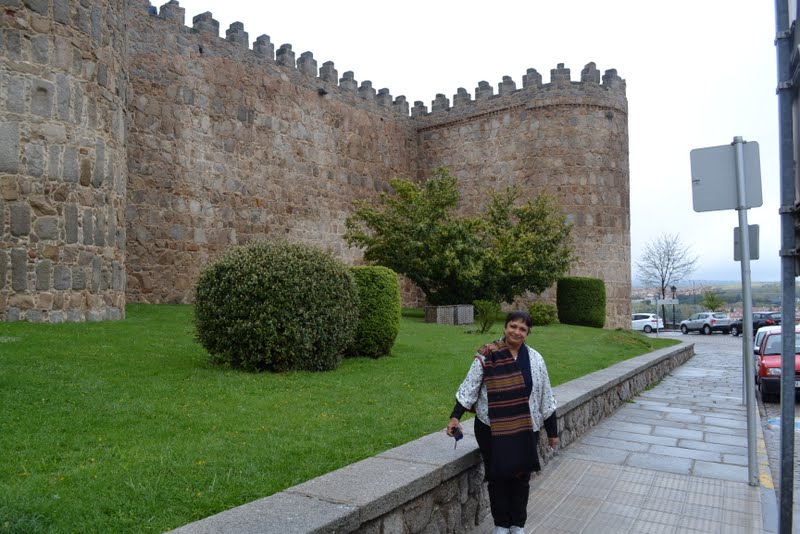
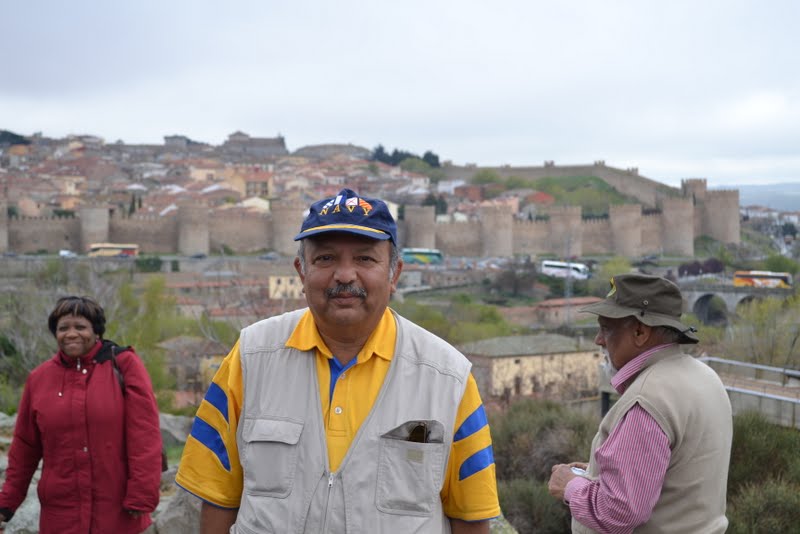
Figure <!–[if supportFields]> SEQ Figure \* ARABIC <![endif]–>20<!–[if supportFields]><![endif]–> – Walls of Avilla – With Bob who celebrated his 52nd wedding anniversary in Salamanca.
Figure <!–[if supportFields]> SEQ Figure \* ARABIC <![endif]–>21<!–[if supportFields]><![endif]–> Walls of Avilla – Jai absorbing the nature
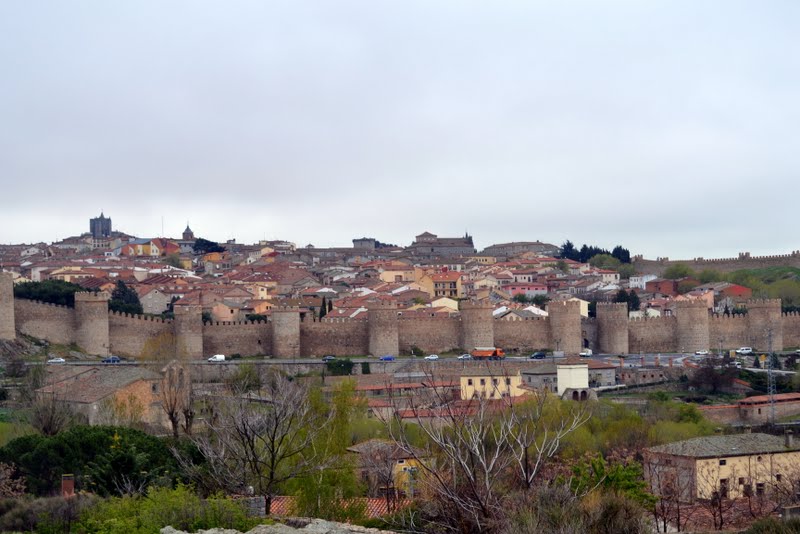
Figure <!–[if supportFields]> SEQ Figure \* ARABIC <![endif]–>22<!–[if supportFields]><![endif]–> – Avilla from a hill top

Figure <!–[if supportFields]> SEQ Figure \* ARABIC <![endif]–>23<!–[if supportFields]><![endif]–> – Rare photo op

We visited Portugal – Lisbon 27 April 2013

Bit of History

It is the Western most country of mainland Europe. To a large extent the history of Portugal in intertwined with Spain due to its proximity. The country also came under the influence of Moors.

Most importantly, Portugal spearheaded the exploration of the world and undertook the Age of Discovery. Prince Henry the Navigator, son of King Joao I, became the main sponsor and patron of this endeavor.

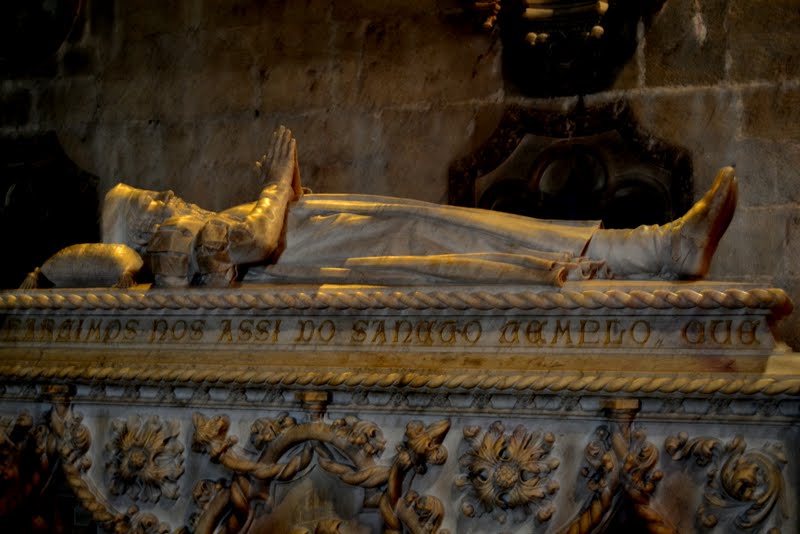
Of interest to us, Gama landed in Calicuton 20 May 1498.He landed once again in Calicut in October 1502. During both the voyages he could not get the Zamorin to sign any treaty. For the next two decades, Vasco da Gama lived out a quiet life, unwelcome in the royal court and sidelined from Indian affairs. Setting out in April 1524, with a fleet of fourteen ships on his last journey to India, Gama contracted malaria not long after arriving, and died in the city of Kochi on Christmas Eve in three months after his arrival. Vasco da Gama’s body was first buried at St Francis Church, which is located at Fort Kochi in the city of Kochi, but his remains were returned to Portugal in 1539.

The Portuguese Navy has a Class of Frigates named after him. There are three Vasco da Gama class frigates in total, of which the first one also bears his name.

Disaster fell upon Portugal in the morning of 1 November 1755, when Lisbon was struck by a violent earthquake with an estimated Ritcher Scale magnitude of 9. The city was razed to the ground by the earthquake and the subsequent tsunami and ensuing fires.

Portugal along with Spain was one of only five European countries to remain neutral in World War II.

In 1986, Portugal joined the European Economic Community (EEC) that later became the European Union (EU). Portugal’s last overseas territory, Macau, was peacefully handed over to the People’s Republic of China (PRC) in 1999. Mainland Portugal is split by its main river, the Tagus that flows from Spain and disgorges in Tagus Estuary, in Lisbon, before escaping into the Atlantic. 

Portugal has been a democratic republic since the ratification of the Constitution of 1976, with Lisbon, the nation’s largest city, as its capital. 

Portugal is among the 20 most visited countries in the world, receiving an average of 13 million foreign tourists each year. According to the 2011 Census, 81% of the Portuguese population is Roman Catholic. Football is the most popular sport in Portugal. Spain is five times larger than Portugal.

We Visited Lisbon – 27 April 2013

On our way to Lisbon, David kept us busy with lots of info about Spain and Portugal. He talked about the famous  ‘Running of the Bulls’ which is a practice that involves running in front of a small group of bulls that have been let loose, The run in Pamplona  is the most popular in Spain. Persons under the age of 18 cannot participate in the run. Also people who have imbibed the Elixir in a big way and those who are not in good shape are barred from the run. It all started when the farmers brought the bulls to towns to sell and butchers would run behind to select the best. This slowly developed into a yearly festival.

La Tomatina is a food fight festival held on the last Wednesday of August each year in the town of Bunol near to Valencia in Spain. Thousands upon thousands of people make their way from all corners of the world to fight in this ‘World’s Biggest Food Fight’ where more than one hundred metric tons of over-ripe tomatoes are thrown in the streets. Rules being – smash the tomato and then throw, secondly throw it up, so that it falls naturally.

Average salary in Spain is about 1200 Euros – that makes it 2400 for a couple. Rental takes away 700 E, food etc another 200E, Car 150 E. Insurance 150, School 250. Studies at the university costs between 800 to 1500 Euros per year. All the citizens get medical coverage. Senior citizens have to pay a nominal sum for medicines – to discourage wastage. They also pay 1 Euro to see the doctor.

A good thing about Portugal – it allows city dwellers to rent a patch of land outside the city limits to cultivate for 40 Euros a month. They visit their plots on weekends to work and grow what they want. The whole family goes out to relax. A brilliant idea.

David also told us to be careful in the restaurants in Lisbon. If any item on display on the table is consumed, one has to pay for it – do not touch.
Development is generally slow in these parts due to down turn in the economy. Construction of new roads and railways has stopped – the bullet train between these two countries has also stopped.

Lisboa has a population o 2million.A city built on hills. Compared to Spanish cities Lisbon appeared a shade dirtier with a few beggars thrown in.
Interestingly 600,000 thousand people live in Lisbon and a staggering 900,000 commute ever day for work.

A good thing about the city – it is mandatory to retain the old façade of buildings, houses and apartments. One is allowed to refurbish and renovate inside. This has ensured the city retains its rich historical past. Wind power contributes 40% of the energy to the national grid.

Once again the city is full of monuments and buildings entwined in history, reminding us of the rich heritage of the city. We checked into Altis Park Hotel.

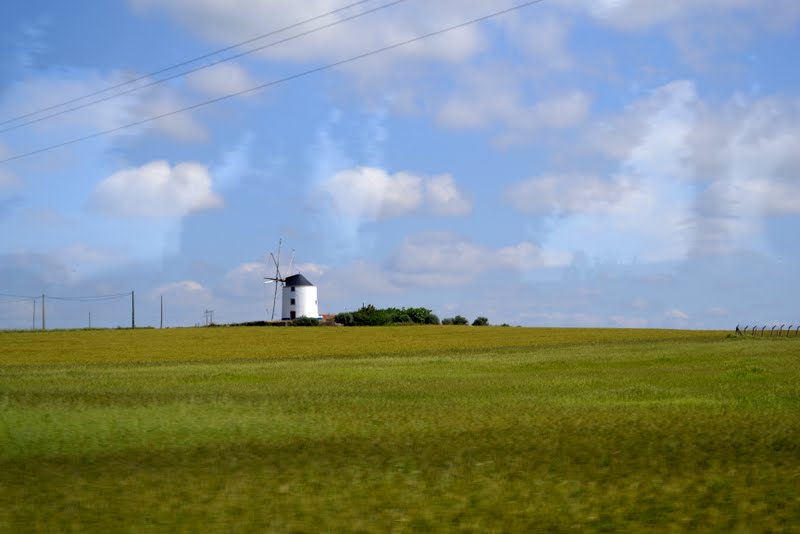
Figure <!–[if supportFields]> SEQ Figure \* ARABIC <![endif]–>1<!–[if supportFields]><![endif]–> – Wind Mill on the way


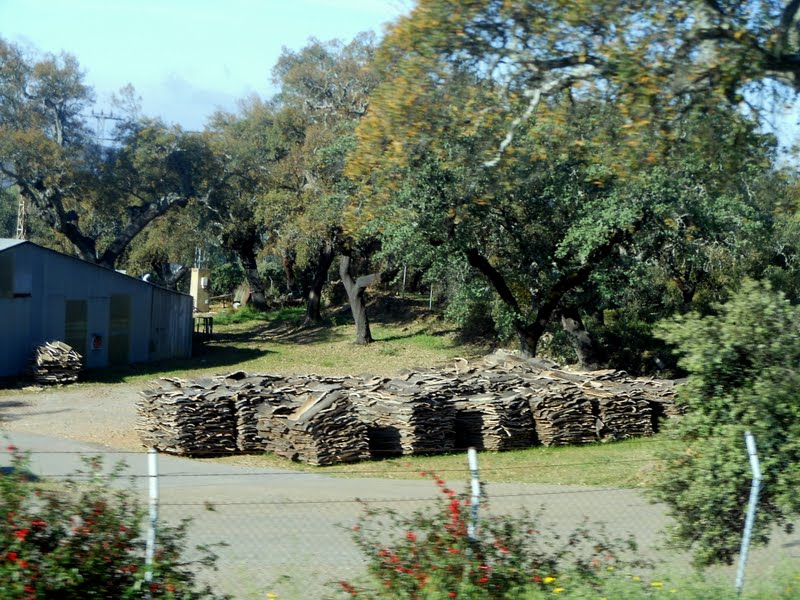
Figure <!–[if supportFields]> SEQ Figure \* ARABIC <![endif]–>2<!–[if supportFields]><![endif]–> – Cork packed in stacks for aging and curing


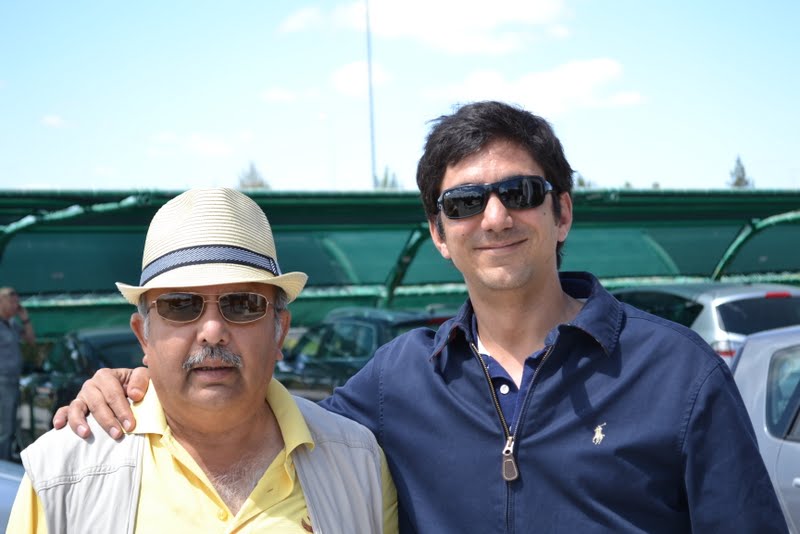
Figure <!–[if supportFields]> SEQ Figure \* ARABIC <![endif]–>3<!–[if supportFields]><![endif]–> – With David Nadal during a technical stop


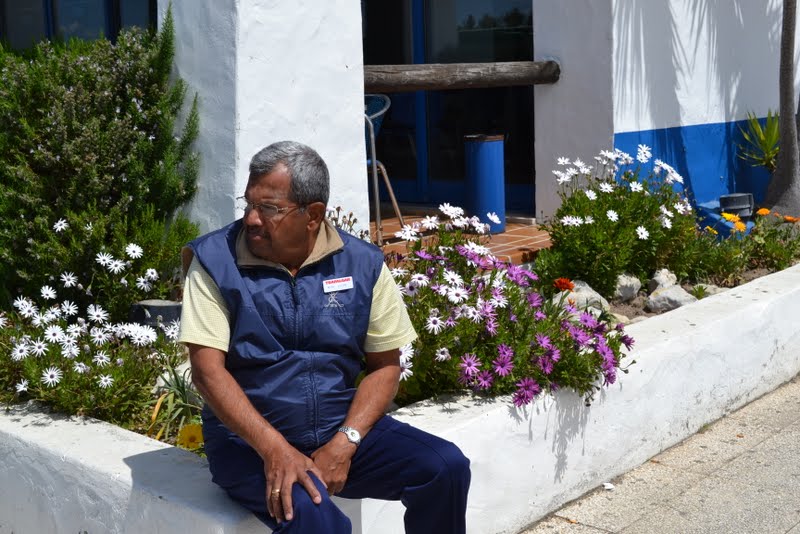
Figure <!–[if supportFields]> SEQ Figure \* ARABIC <![endif]–>4<!–[if supportFields]><![endif]–> – Nair in a very pensive mood


Figure <!–[if supportFields]> SEQ Figure \* ARABIC <![endif]–>5<!–[if supportFields]><![endif]–> – Relived after the technical halt


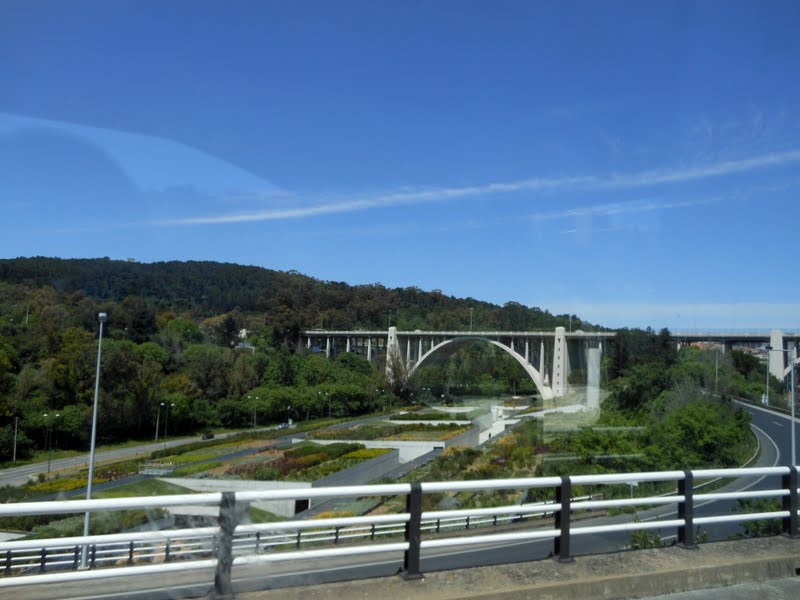
Figure <!–[if supportFields]> SEQ Figure \* ARABIC <![endif]–>6<!–[if supportFields]><![endif]–> – Aqua duct bringing water to Lisbon. “Aqueduct of the Free Waters” is a historic aqueduct in the city of Lisbon. It is one of the most remarkable examples of 18th-century Portuguese engineering. The main course of the aqueduct covers 18 km, but the whole network of canals extends through nearly 58 km.


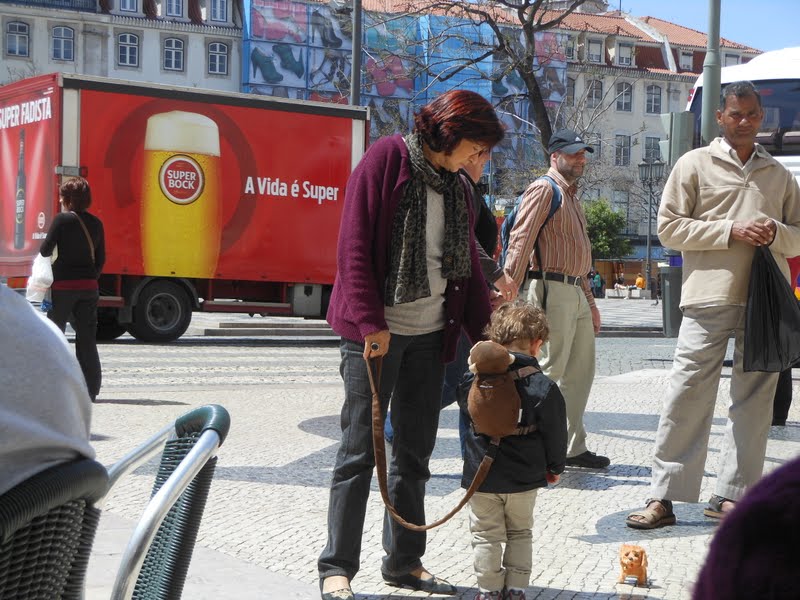
Figure <!–[if supportFields]> SEQ Figure \* ARABIC <![endif]–>7<!–[if supportFields]><![endif]–> – This is bound to catch the attention of parents who have to look after naughty children.


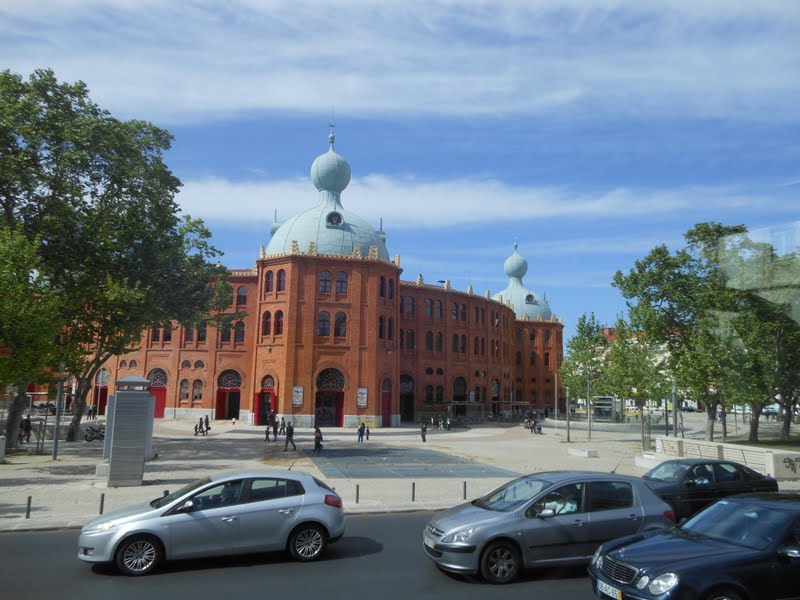
Figure <!–[if supportFields]> SEQ Figure \* ARABIC <![endif]–>8<!–[if supportFields]><![endif]–> – An ancient building with Islamic influence


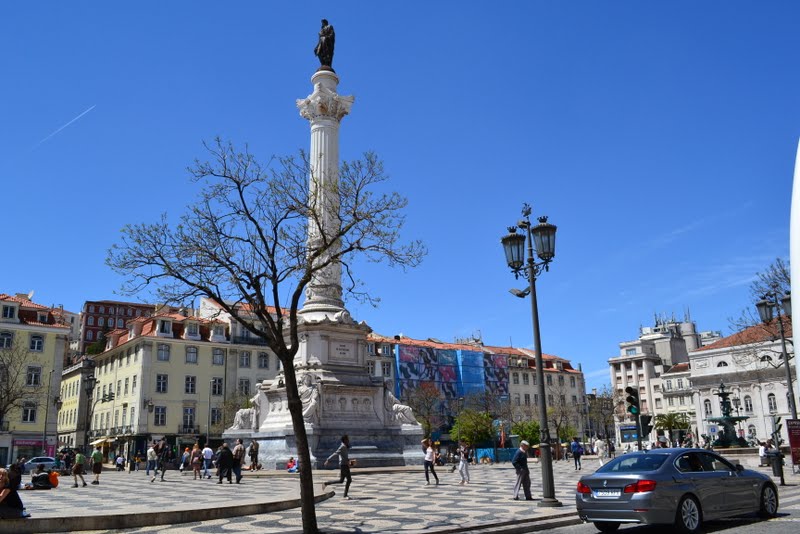
Figure <!–[if supportFields]> SEQ Figure \* ARABIC <![endif]–>9<!–[if supportFields]><![endif]–> – Rassio Square – City centre


Figure <!–[if supportFields]> SEQ Figure \* ARABIC <![endif]–>10<!–[if supportFields]><![endif]–> – Parts of City centre


Figure <!–[if supportFields]> SEQ Figure \* ARABIC <![endif]–>11<!–[if supportFields]><![endif]–> – Rassio Square


Figure <!–[if supportFields]> SEQ Figure \* ARABIC <![endif]–>12<!–[if supportFields]><![endif]–> – Photo op before lunch


Figure <!–[if supportFields]> SEQ Figure \* ARABIC <![endif]–>13<!–[if supportFields]><![endif]–> – Male models from India
We Visited Lisbon – 28 April 2013

Travelling in a Group

There are a number of advantages travelling in a group – company, security , familiarity and the very idea of being together – sharing the events with jokes and anecdotes, easy banter and the rest. The girls also get a chance to indulge in nonstop chit chat and catching up. There is always someone to relate to and share the experience with.It is a very rewarding experience.

On the flip side, one has to deal with a number of opinions on every subject – we were twelve and generally ended up with at least a dozen plus views. One may easily slip into endless discussions, weighing the pros and cons and so on. Lot of precious time is lost in the mean time. Where to go, what to see, what to eat are some of the common issues which occupy one’s mind. Ordering food is a Herculean task – fraught with hidden dangers. Vegetarians have their own difficulties in countries like Spain, Portugal or for that matter China. Some wish to experiment, many want to tread the beaten path, few are indecisive and the list is endless. How to spend the evening after a tiring day also becomes an issue – some prefer a quiet evening in the hotel, the more energetic people wish to explore the city by night, have a Porto wine in the room and retire as against a drink in a cafe or a noisy pub. Lot of people plan their meals around what is available in a food mall – cheese, cold cuts, fruit, bread, yogurt and so on. On the other hand few want to taste the local food – Calamari, Pulpo a la Gallega – Octopus, tapas, peri peri et al. Adding to all this confusion is the factor of extreme closeness – seeing each other day and night – treading on each other sensibilities.

There is no golden rule which ensures a happy group travel. All have to work at it and develop an inclusive attitude – I have a view but others too have their say. Lot of give and take is essential in any travel. The essence is in the participation.

After a city tour, we visited ‘Cascais’ – is a coastal town 30 kilometres west of Lisbon, with about 35,000 residents. It is a cosmopolitan suburb of the Portuguese capital and one of the richest municipalities. The former fishing village gained fame as a resort for Portugal’s royal families in the late 19th century.

City Tour


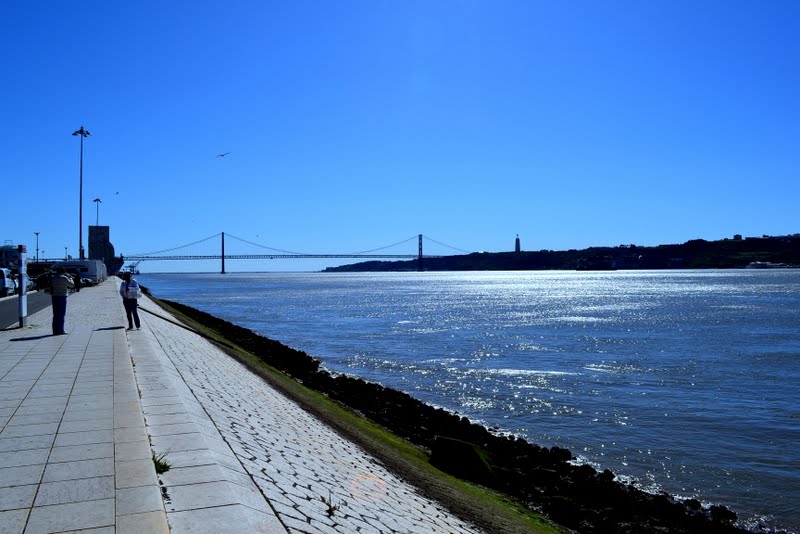
Figure <!–[if supportFields]> SEQ Figure \* ARABIC <![endif]–>14<!–[if supportFields]><![endif]–> – Early morning freshness and chill of Lisbon


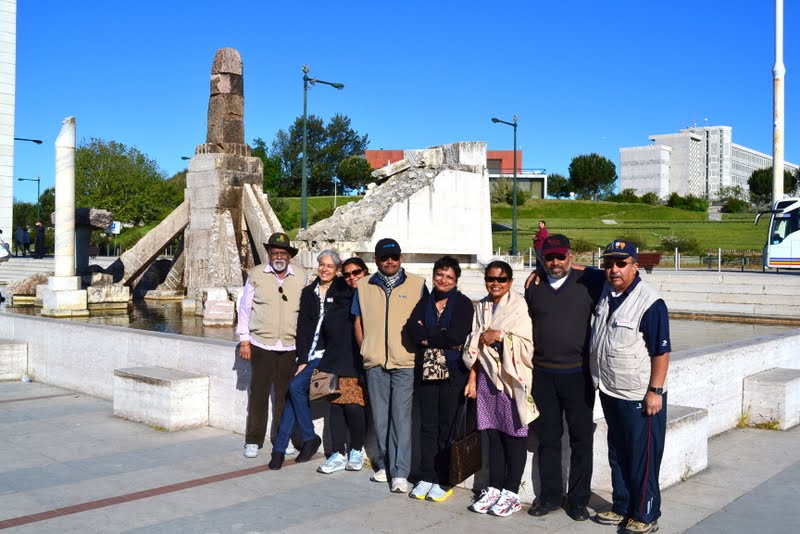
Figure <!–[if supportFields]> SEQ Figure \* ARABIC <![endif]–>15<!–[if supportFields]><![endif]–> – War memorial in the background


Figure <!–[if supportFields]> SEQ Figure \* ARABIC <![endif]–>16<!–[if supportFields]><![endif]–> – Suspension bridge on River Tejo – similar to Golden Gate Bridge in San Francisco. Built by the same company – American Bridge Company.


Figure <!–[if supportFields]> SEQ Figure \* ARABIC <![endif]–>17<!–[if supportFields]><![endif]–> – Very pleased with themselves.


Figure <!–[if supportFields]> SEQ Figure \* ARABIC <![endif]–>18<!–[if supportFields]><![endif]–> – Some have run away


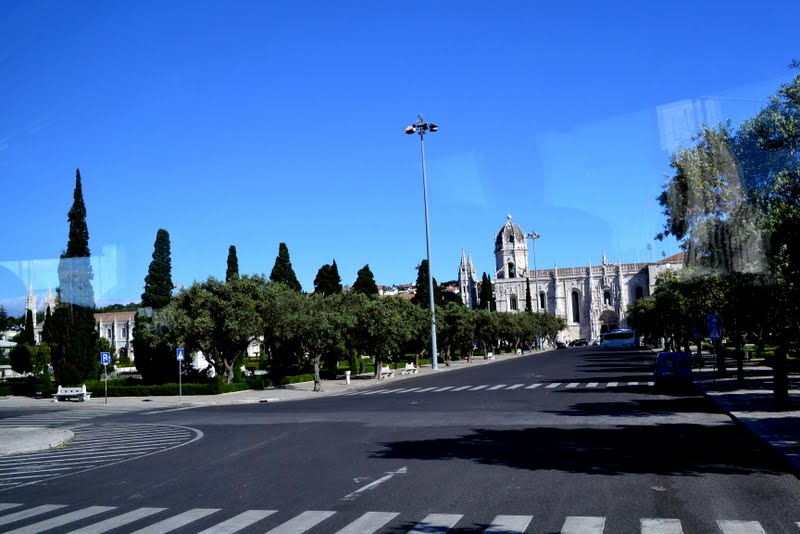
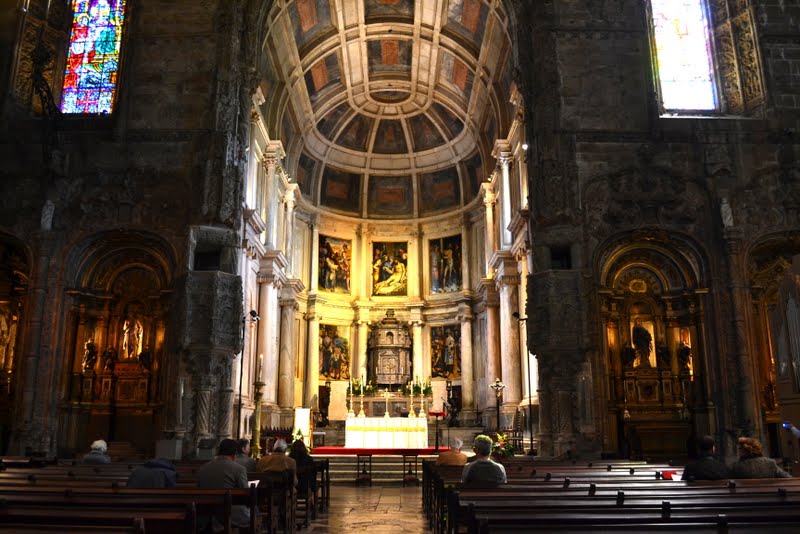
Figure <!–[if supportFields]> SEQ Figure \* ARABIC <![endif]–>19<!–[if supportFields]><![endif]–> – Hieronymites Monastery


Figure 20 – Tomb of Vasco da Gama in the Jeronimus Monastery in Belém, Lisbon


Figure <!–[if supportFields]> SEQ Figure \* ARABIC <![endif]–>21<!–[if supportFields]><![endif]–> – Sanctum Sanctorum Church of Santa Maria
‘Cascais’

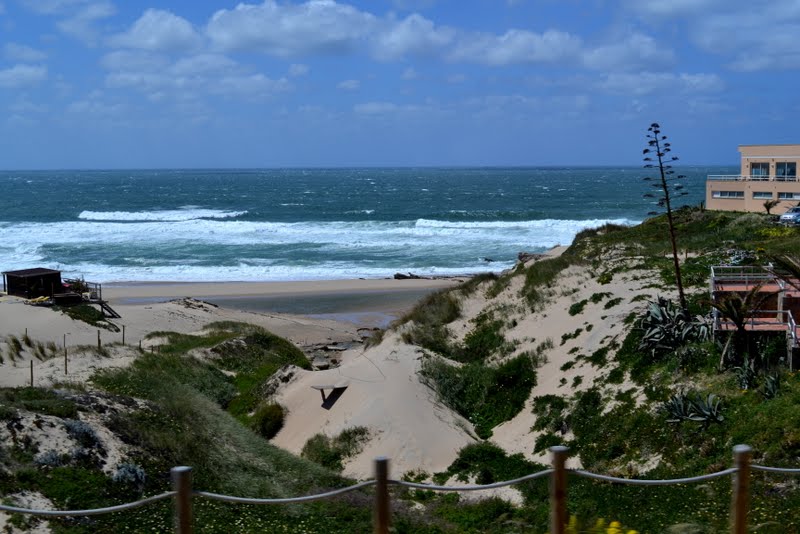
The drive to Casais is excellent, another example of the mesmerizing Estroil coastline of Portugal. The sea descends on the coast with a ferocious intent, followed by gusty winds, bathing the sandy beaches and surfers alike. Casais is a hunting ground for the rich and the famous, the jet set and the young merry makers. The cocktail is volatile and it explodes at night in the cacophony of music dance, drink and mayhem. Unfortunately we saw the town by day.

The vegetarians from our group had a field day in an Indian restaurant run by Mr Happy from Jalandar. Their joy knew no bounds, after nine days they got a chance to belt down Maki Dal, Mixed Veg, Butter Tandoor Roti, Papad, Pickle and Curd Rice. I understand they abandoned the ‘Fork and Spoon’ farce and went straight with their fingers. Like the owner they also came back ‘Happy’.
Self and Kats went in to have ‘Peri Peri’ chicken – the best I have tasted.  Pili pili is the Swahili word for ‘pepper pepper’. This dish evolved in Angola and Mozambique, once Portuguese colonies.

Rooster is the symbol of Portugal. The rooster of Barcelos comes with a story. A pilgrim stayed in a room rented by a lady. Pilgrims always carry simple things – they are supposed to be humble. In the morning she found some silver missing. She accused the pilgrim, who claimed to be innocent. On the other hand the police wanted him to show something to prove his innocence. On the way to the court they passed by a restaurant. People were eating chicken – seeing that the pilgrim is supposed to have told the police that “If I am innocent the chicken on the plate is going to stand up and crow and it did. A legend of faith.


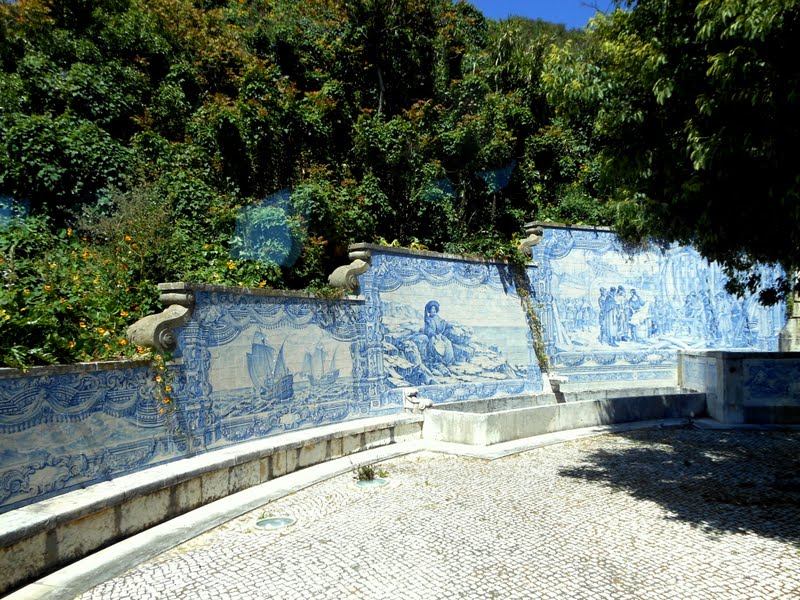
Figure <!–[if supportFields]> SEQ Figure \* ARABIC <![endif]–>22<!–[if supportFields]><![endif]–> – Ceramic work in the city depicting historic events.


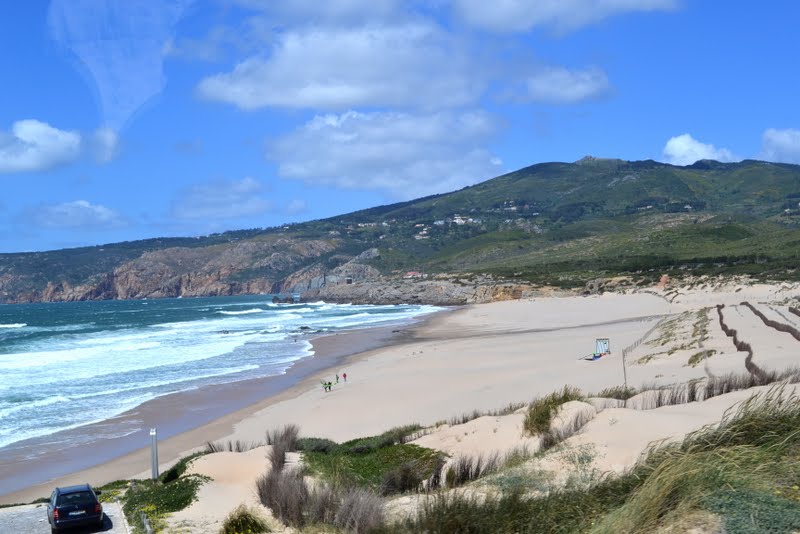
Figure <!–[if supportFields]> SEQ Figure \* ARABIC <![endif]–>23<!–[if supportFields]><![endif]–> – Beauty of the sea


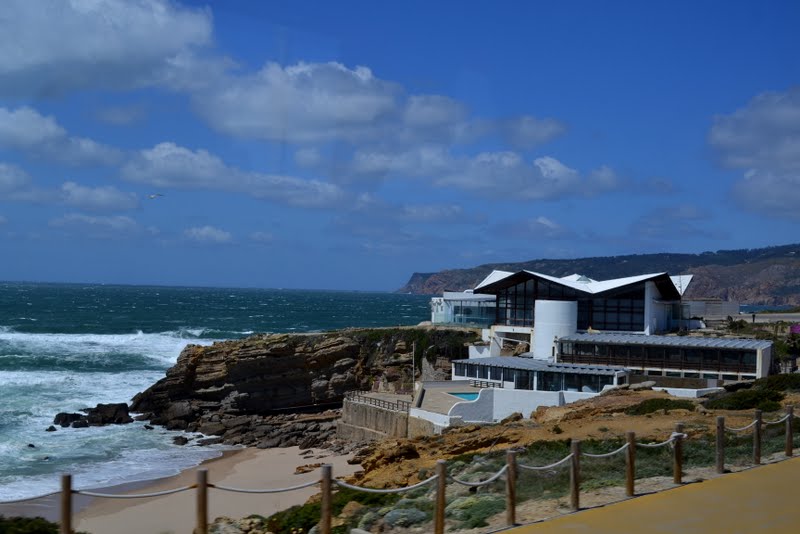
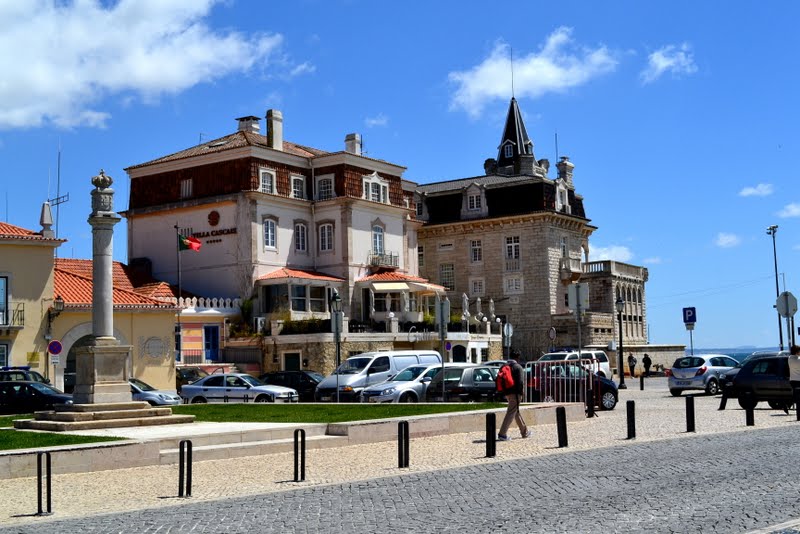
Figure <!–[if supportFields]> SEQ Figure \* ARABIC <![endif]–>24<!–[if supportFields]><![endif]–> – A hotel overlooking the Atlantic


Figure <!–[if supportFields]> SEQ Figure \* ARABIC <![endif]–>25<!–[if supportFields]><![endif]–> – The rugged coastline


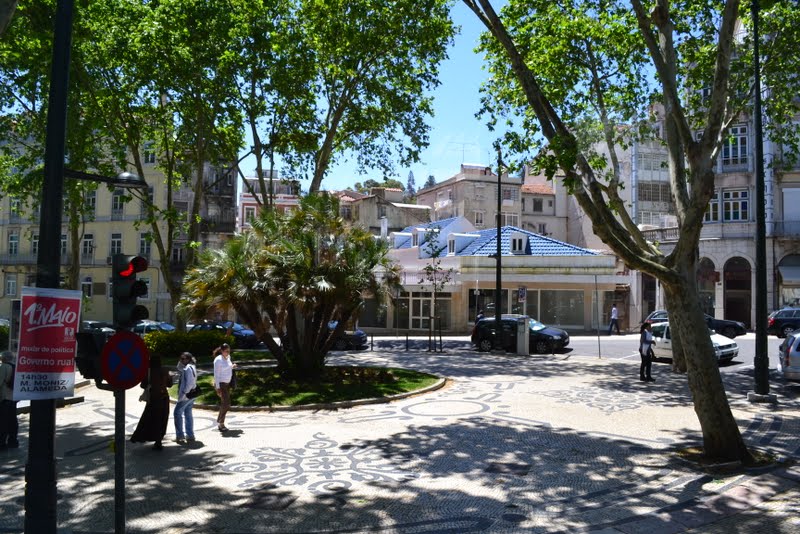
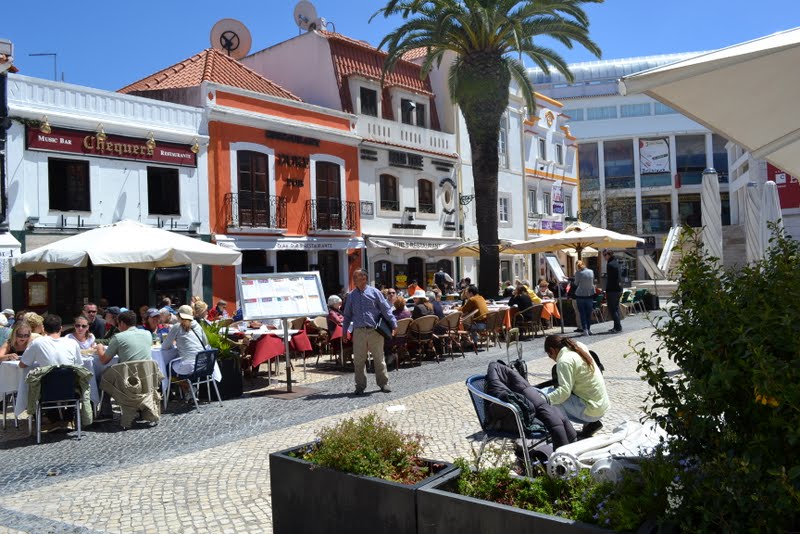
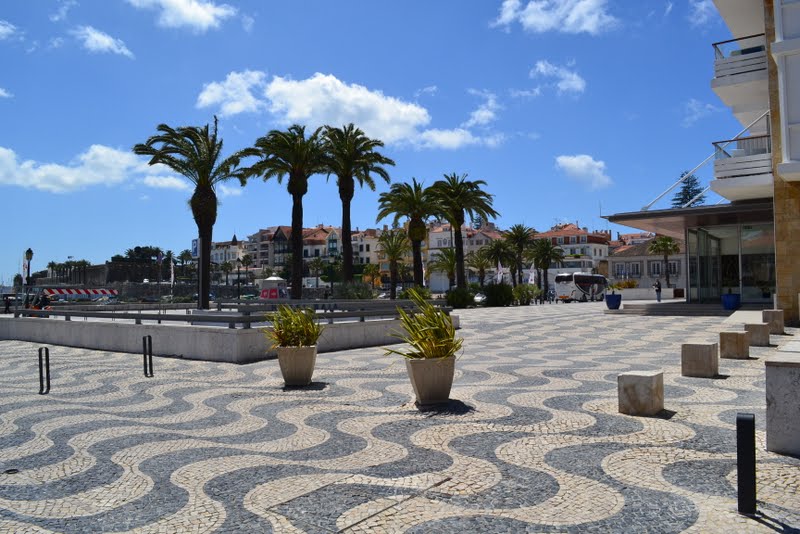
Figure <!–[if supportFields]> SEQ Figure \* ARABIC <![endif]–>26<!–[if supportFields]><![endif]–> – The main thoroughfare of Cascais


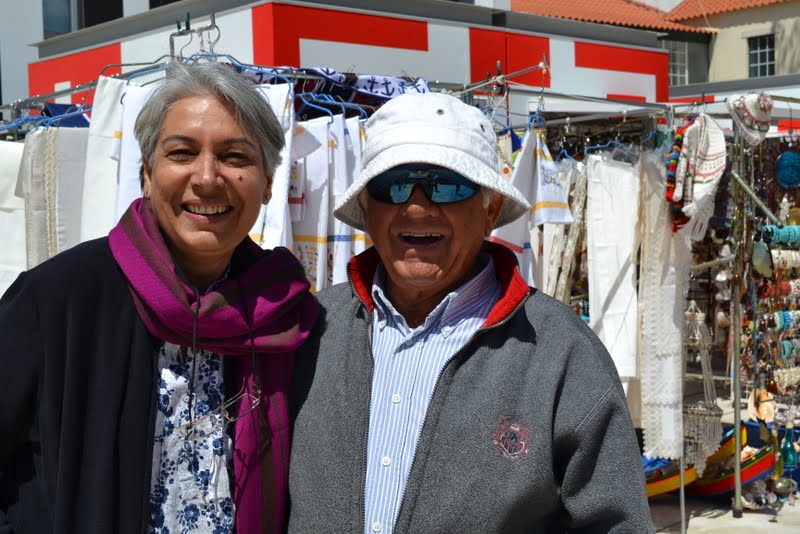
Figure <!–[if supportFields]> SEQ Figure \* ARABIC <![endif]–>27<!–[if supportFields]><![endif]–> – Navin with a shop keeper who thought she was a priest – 
language – ??


Figure <!–[if supportFields]> SEQ Figure \* ARABIC <![endif]–>28<!–[if supportFields]><![endif]–> – Busy afternoon scene outside a restaurant


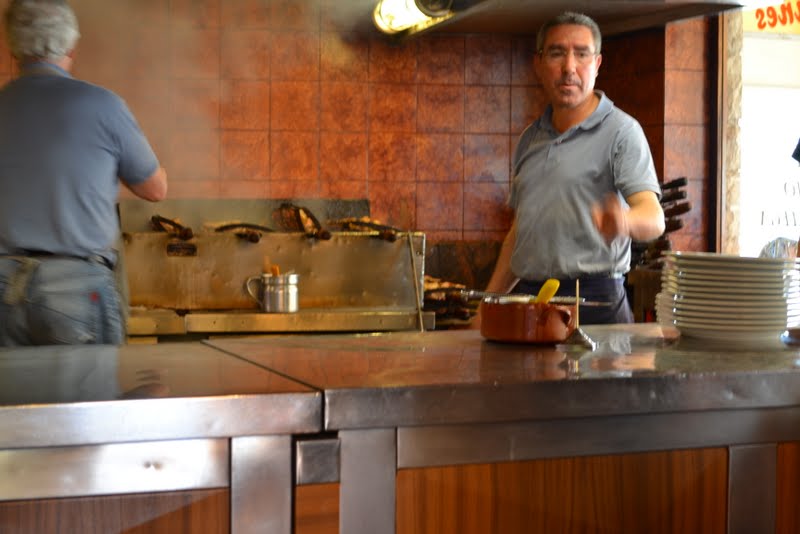
Figure <!–[if supportFields]> SEQ Figure \* ARABIC <![endif]–>29<!–[if supportFields]><![endif]–> – Peri Peri underway


Figure <!–[if supportFields]> SEQ Figure \* ARABIC <![endif]–>30<!–[if supportFields]><![endif]–> – A view of the town


Figure <!–[if supportFields]> SEQ Figure \* ARABIC <![endif]–>31<!–[if supportFields]><![endif]–> – The Cascais sky


Figure <!–[if supportFields]> SEQ Figure \* ARABIC <![endif]–>32<!–[if supportFields]><![endif]–> – An imposing building

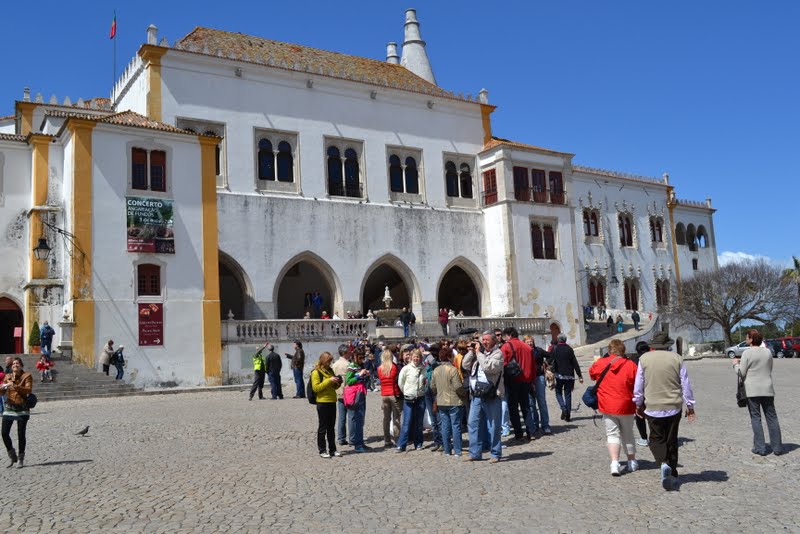
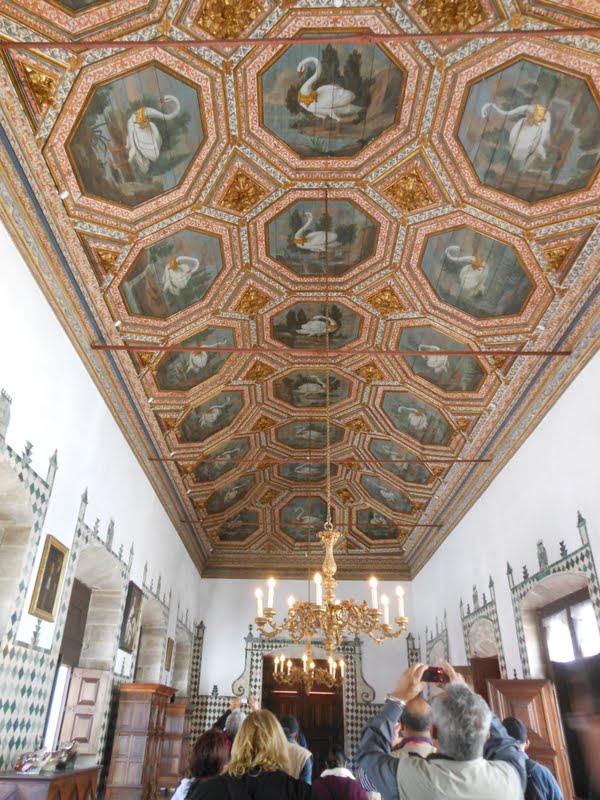
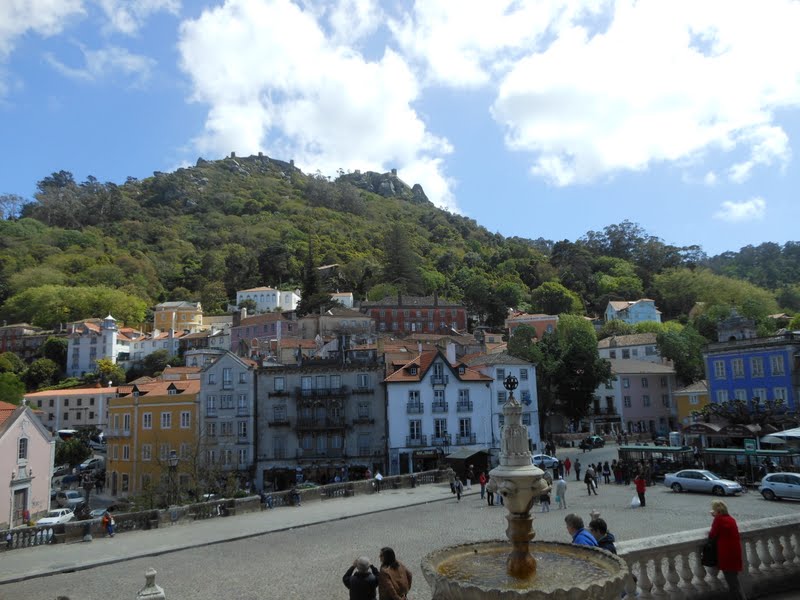
Thereafter we went to the ‘Sintra National Palace’ located in the town of Sintra. It is the best preserved medieval Royal Palace in Portugal, having been inhabited more or less continuously at least from the early 15th up to the late 19th century. It is an important tourist attraction and is part of the Cultural Landscape of Sintra, designated a World Heritage Site by UNESCO.


Figure <!–[if supportFields]> SEQ Figure \* ARABIC <![endif]–>33<!–[if supportFields]><![endif]–> – The palace of Sintra


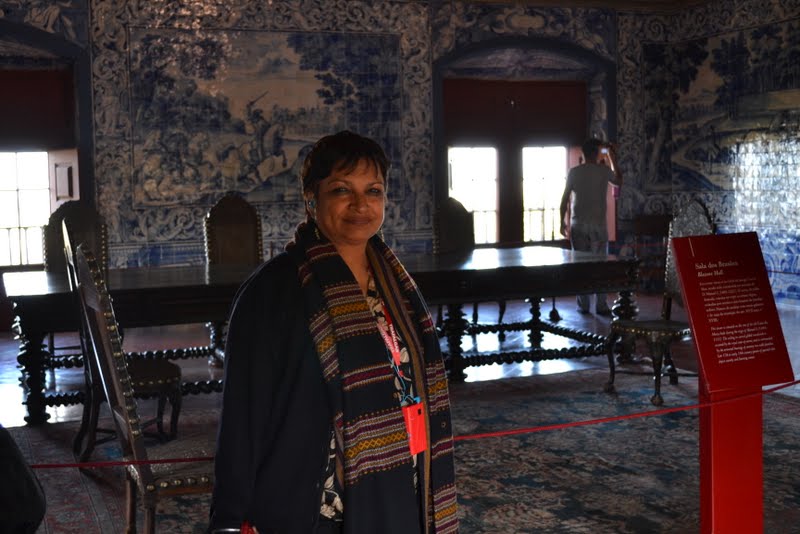
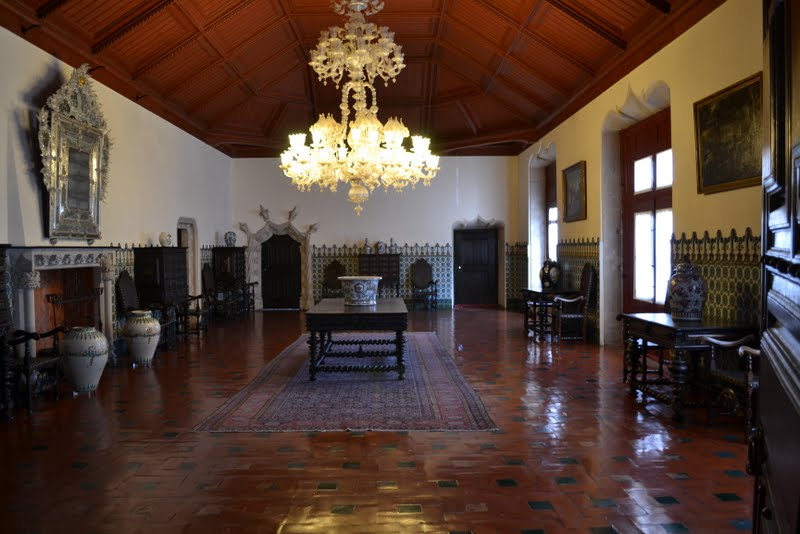
Figure <!–[if supportFields]> SEQ Figure \* ARABIC <![endif]–>34<!–[if supportFields]><![endif]–> – One of the state rooms


Figure <!–[if supportFields]> SEQ Figure \* ARABIC <![endif]–>35<!–[if supportFields]><![endif]–> – An imposing main dining hall


Figure <!–[if supportFields]> SEQ Figure \* ARABIC <![endif]–>36<!–[if supportFields]><![endif]–> – Saroja making a point


Figure <!–[if supportFields]> SEQ Figure \* ARABIC <![endif]–>37<!–[if supportFields]><![endif]–> – 21 Swans in the Swan Room.


Figure <!–[if supportFields]> SEQ Figure \* ARABIC <![endif]–>38<!–[if supportFields]><![endif]–> – View of the city

We Visited Rock of Gibraltar and Seville – 25 Apr 2013

The thin population of Spain is very evident throughout the country, but it becomes even more evident as one drives along the coast. The roads from Malaga to La Linea look deserted except for a few trucks and cars. It is really strange, especially to an Indian to see highways devoid of traffic, people and animals.  Spain has one of the lowest populations for a western European country of its geographical size. Iy also has one of the slowest population growth rates in Europe. Latest population growth figures for Spain shows that for every woman in Spain 1.24 children are being born. This is approximately half the population growth rate of other western European countries.

The vast majority of the population of Spain is indigenous Spanish people. Only recently has immigration risen in Spain helping to boost population figures in Spain Today nearly 3 million of the total population of Spain is recent immigrants to Spain coming mainly from Africa and the former Spanish colonies. There is one significant segment of the population of Spain who, while being ethnically distinct from the rest of the population, has long established roots in Spain. The Gypsies of Spain make up approximately 1% of the population of Spain and live mainly in Andalusia. This segment of the population of Spain is originally from India and migrated to Spain in the 15th century. The Gypsies of Spain are known to the outside world primarily for the Flamenco muisic which is so popular both in Spain and abroad.
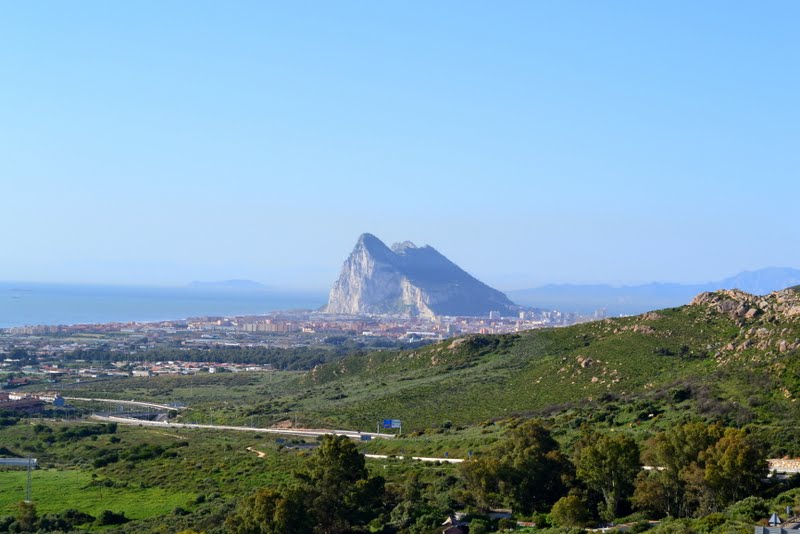
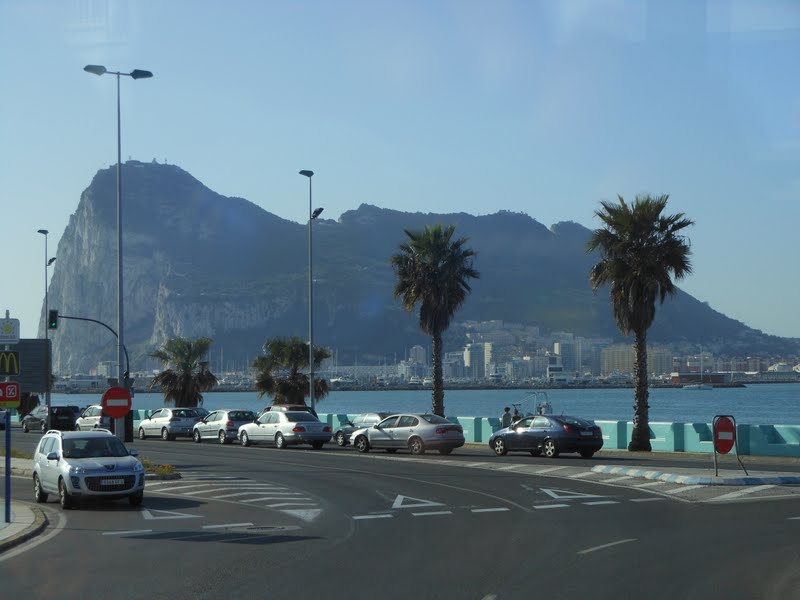
As we approach La Linea the Rock of Gibraltar gradually becomes visible and the geographical significance of the location starts to sink in. A great view of two continents, two countries, two oceans and one British colony captures your total attention. Spain, Morocco, Mediterranean, Atlantic, Gibraltar, Africa and Europe are the part of the jig saw.

I had seen the Rock of Gibraltar while entering the Mediterranean on a Missile Corvette INS Hosdurg in March 1978. I was quite excited to return to see the spectacle from a different angle this time around.

The name Gibraltar is the Spanish derivation of the Arabic name Jabal Tāriq, meaning “mountain of Tariq. In 1704 Spain lost Gibraltar to Britain. Gibraltar’s territory covers 6.843 square kilometers and shares a 1.2-kilometre land border with La Linea Spain.

Franco entered into an understanding with Germany to recover Gibraltar, if the latter won WWII.

La Linea – The town derives its name firstly from the Línea or boundary line separating Spain from Gibraltar and secondly from the Immaculate Conception of Mary, the Mother of Jesus. Its people are called in Spanish Linenses. La Línea is a major supplier of fruit and vegetables to Gibraltar; other industries include the manufacture of cork, liquor, and fish paste. It also had an important military garrison with substantial fortifications and a port.


Figure <!–[if supportFields]> SEQ Figure \* ARABIC <![endif]–>1<!–[if supportFields]><![endif]–> – The first impression

Figure <!–[if supportFields]> SEQ Figure \* ARABIC <![endif]–>2<!–[if supportFields]><![endif]–> – The extent of Rock of Gibraltar


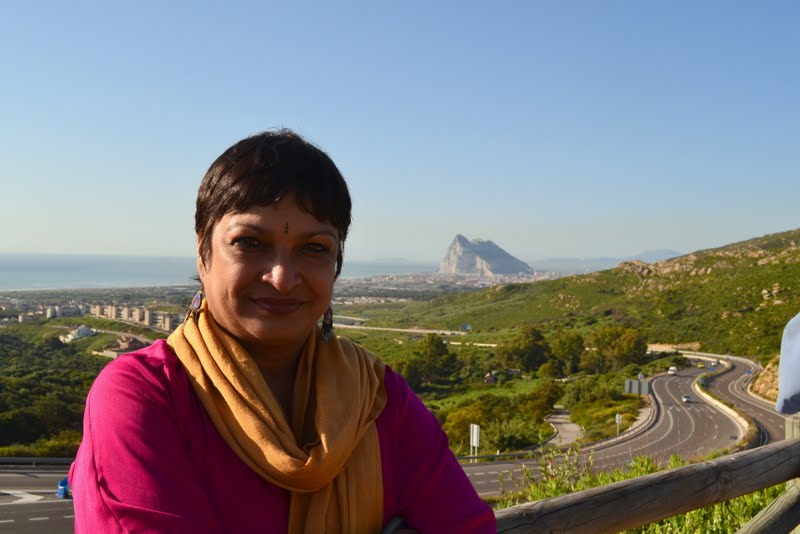
Figure <!–[if supportFields]> SEQ Figure \* ARABIC <![endif]–>3<!–[if supportFields]><![endif]–> – My Rock


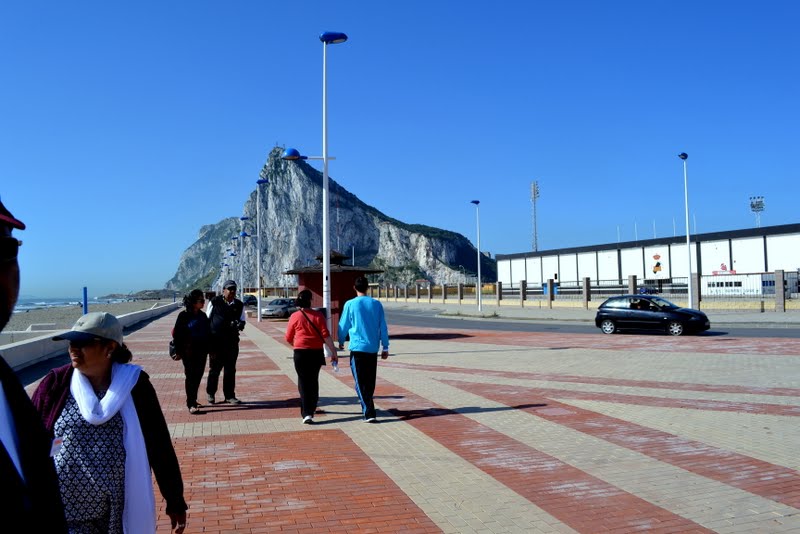
Figure <!–[if supportFields]> SEQ Figure \* ARABIC <![endif]–>4<!–[if supportFields]><![endif]–> – View from La Linea


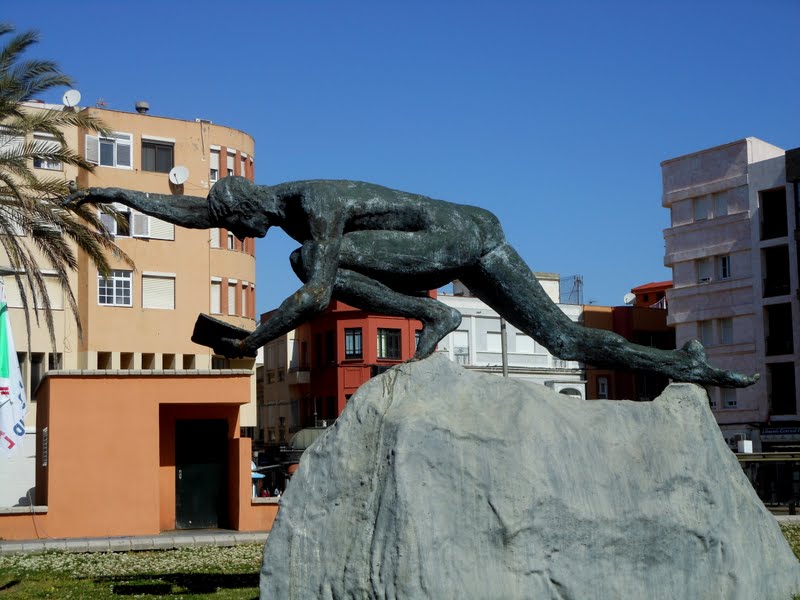
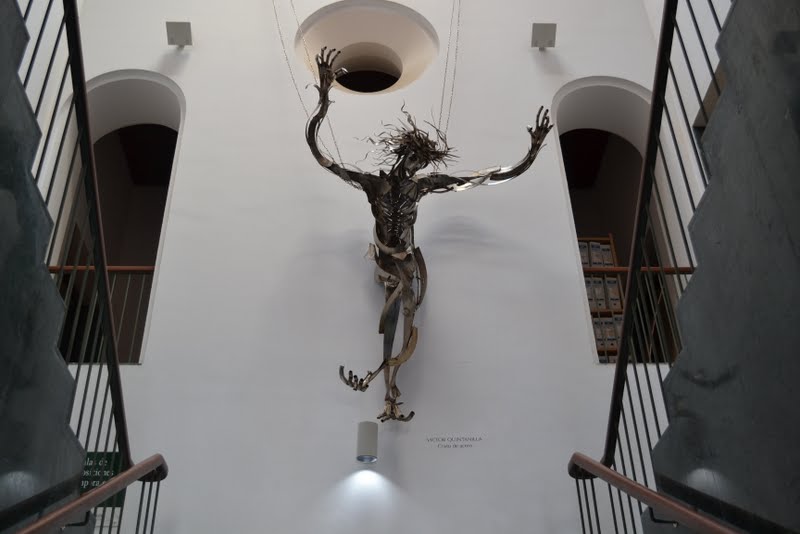
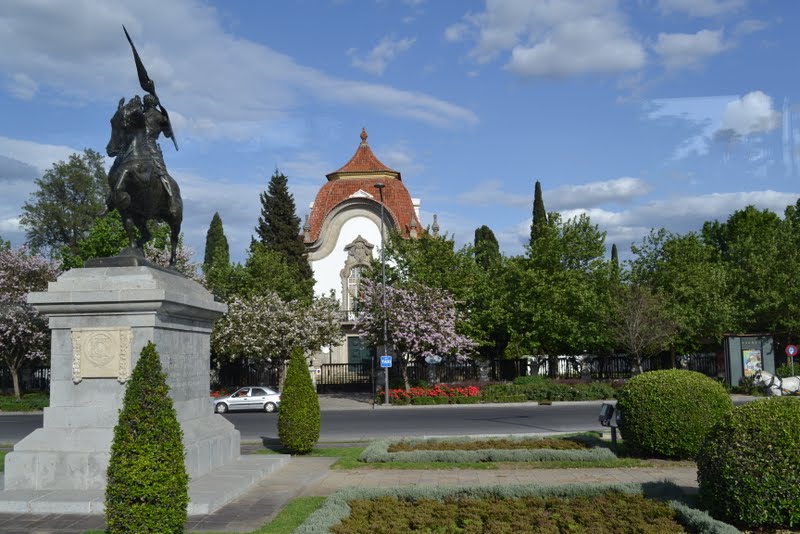
Figure <!–[if supportFields]> SEQ Figure \* ARABIC <![endif]–>5<!–[if supportFields]><![endif]–> – An interesting statue


Figure <!–[if supportFields]> SEQ Figure \* ARABIC <![endif]–>6<!–[if supportFields]><![endif]–> – Modern art at the city museum

Seville

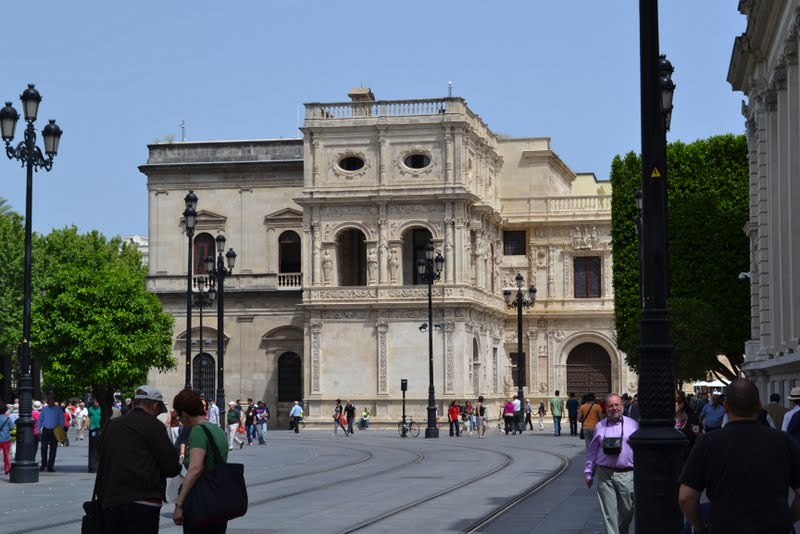
Thereafter we drove to Seville which is situated on the plains of the River Guadalquivir. Seville is approximately 2,200 years old. The passage of the various civilizations instrumental in its growth has left the city with a distinct personality, and a large and well-preserved historical centre. Although it has a strong medieval  renaissance and baroque heritage, the city was greatly influenced by Arabic culture. Following the 1492 Christopher Columbous expedition to The new world – a ‘golden age of development’ commenced in Seville, due to its being the only port awarded the royal monopoly for trade with the growing Spanish colonies in the Americas and the influx of riches from them.

Seville hosted the 1992 World Expo. The city celebrates a number of festivals – two important ones being – ‘The Holy Week’ and the “April Fair’ a Flamenco festival. The festivals attract a very large crowd who come to enjoy the dancing and drinking.

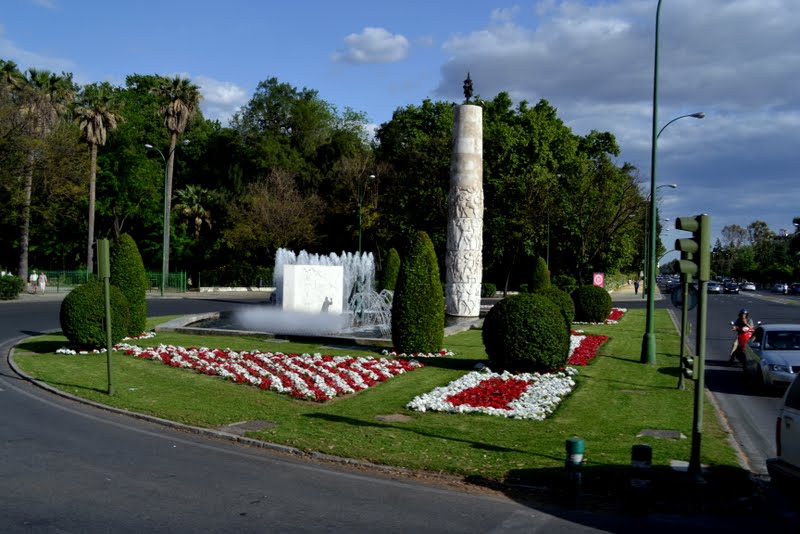
We checked into ‘Gran Hotel Lar Seville’ which is centrally located and close to the city centre. The city itself is extremely pretty, dotted with a number of parks, statues, roundabouts and very imposing monuments. The city brings out the best of the old and the new age architecture. Once again the effort to retain the past comes out loud and clear.
Tidbit
In the earlier days the traffic lights at the pedestrian crossing in Seville had a stationary man on it – indicating walk or not. When a woman took over as the mayor she changed them to walking little men and women.


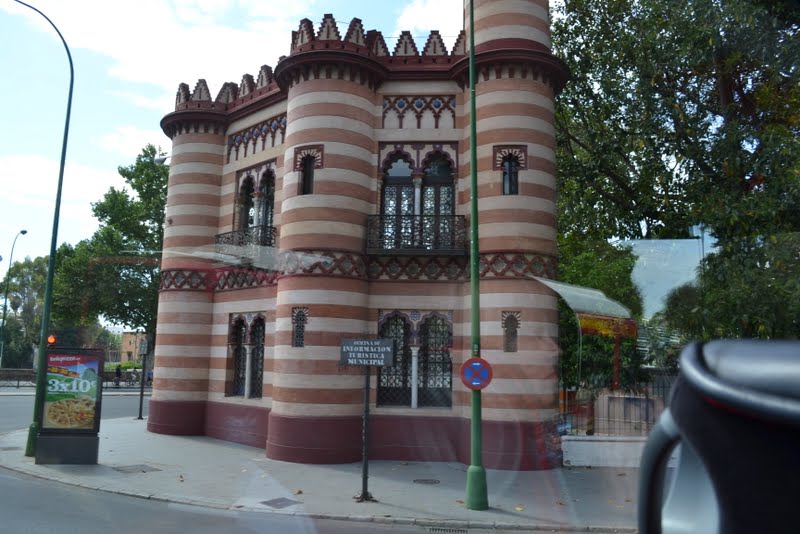
Figure <!–[if supportFields]> SEQ Figure \* ARABIC <![endif]–>7<!–[if supportFields]><![endif]–> – A very interesting monument


Figure <!–[if supportFields]> SEQ Figure \* ARABIC <![endif]–>8<!–[if supportFields]><![endif]–> – Many old buildings dot the city


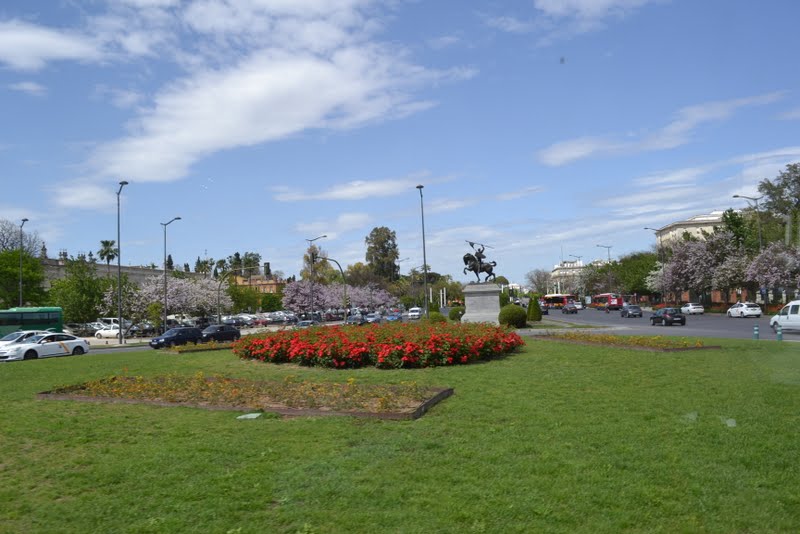
Figure <!–[if supportFields]> SEQ Figure \* ARABIC <![endif]–>9<!–[if supportFields]><![endif]–> – City full of parks and flowers


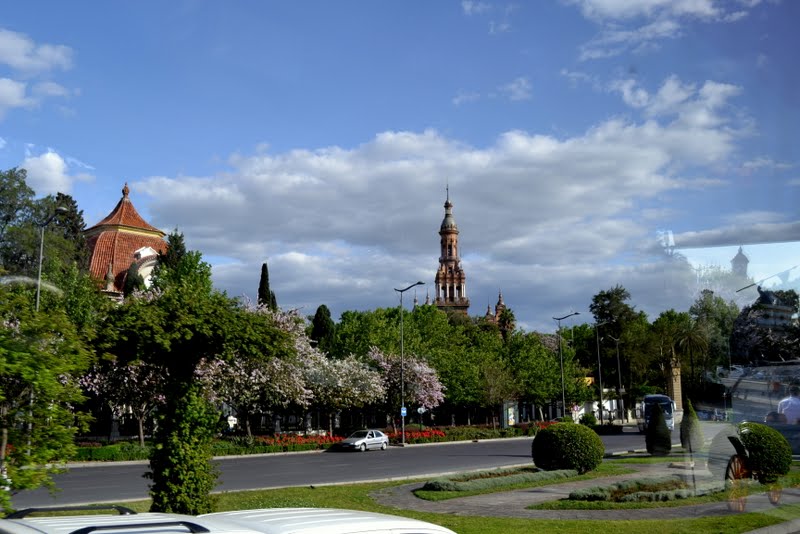
Figure <!–[if supportFields]> SEQ Figure \* ARABIC <![endif]–>10<!–[if supportFields]><![endif]–> – A very pretty sight


Figure <!–[if supportFields]> SEQ Figure \* ARABIC <![endif]–>11<!–[if supportFields]><![endif]–> – Some more monuments


Figure <!–[if supportFields]> SEQ Figure \* ARABIC <![endif]–>12<!–[if supportFields]><![endif]–> – A fascinating roundabout

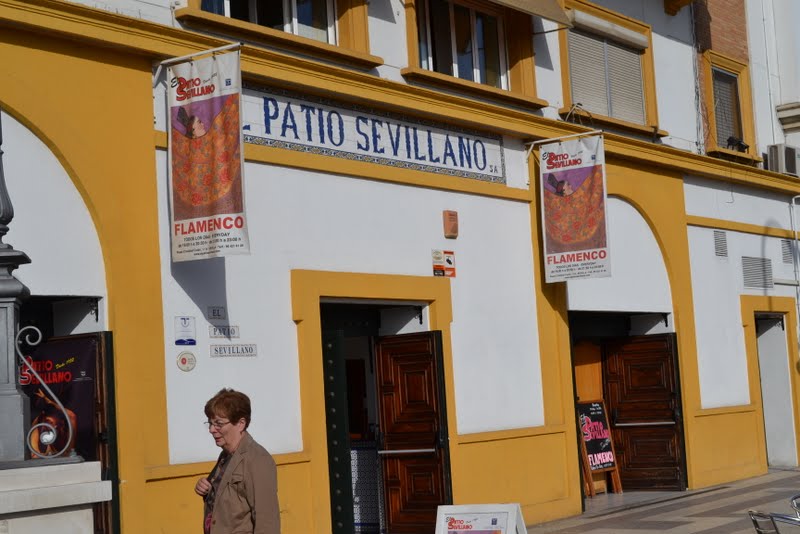
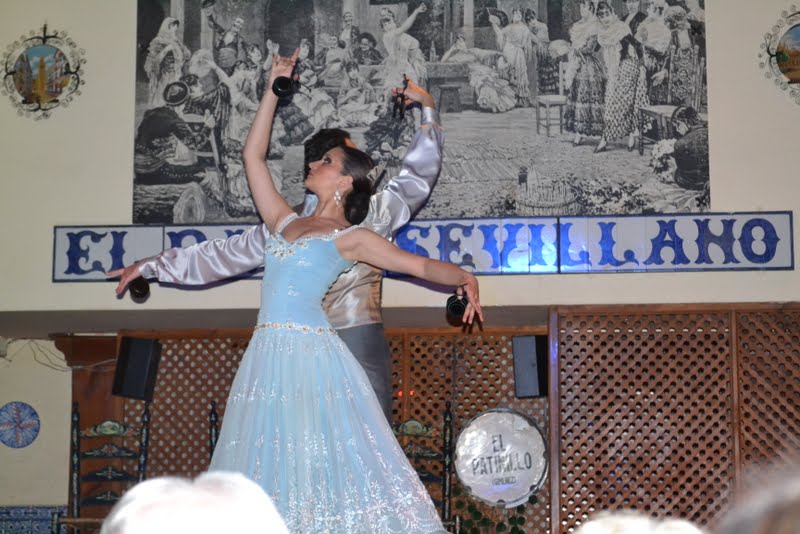
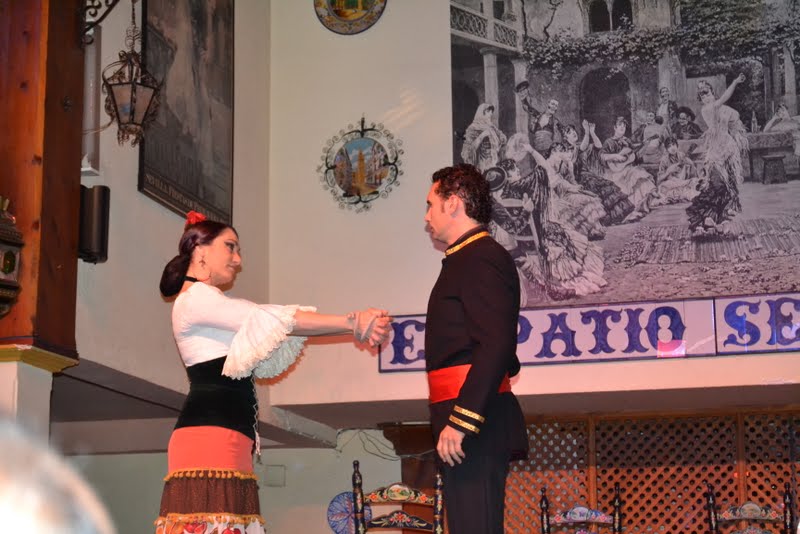
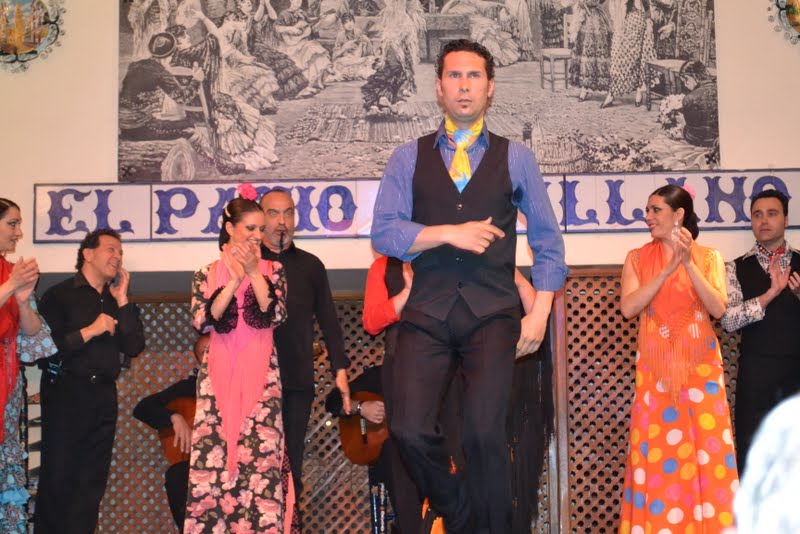
The evening was well spent attending a Flamenco dancing in a theatre ‘El Patio Sevillano’. Flamenco is a form of Spanish folk music and dance from the region of Andalusia in southern Spain. It includes cante, toque, baile and palmas. First mentioned in literature in 1774, the genre grew out of Andalusian and Romani music and dance styles.


Figure <!–[if supportFields]> SEQ Figure \* ARABIC <![endif]–>13<!–[if supportFields]><![endif]–> – The Flamenco theatre ‘El Patio Sevillano’
 ]

Figure <!–[if supportFields]> SEQ Figure \* ARABIC <![endif]–>14<!–[if supportFields]><![endif]–> – Artists performing


Figure <!–[if supportFields]> SEQ Figure \* ARABIC <![endif]–>15<!–[if supportFields]><![endif]–> – A scene from the performance


Figure <!–[if supportFields]> SEQ Figure \* ARABIC <![endif]–>16<!–[if supportFields]><![endif]–> – Each artist does a bit

Seville 26th April 2013

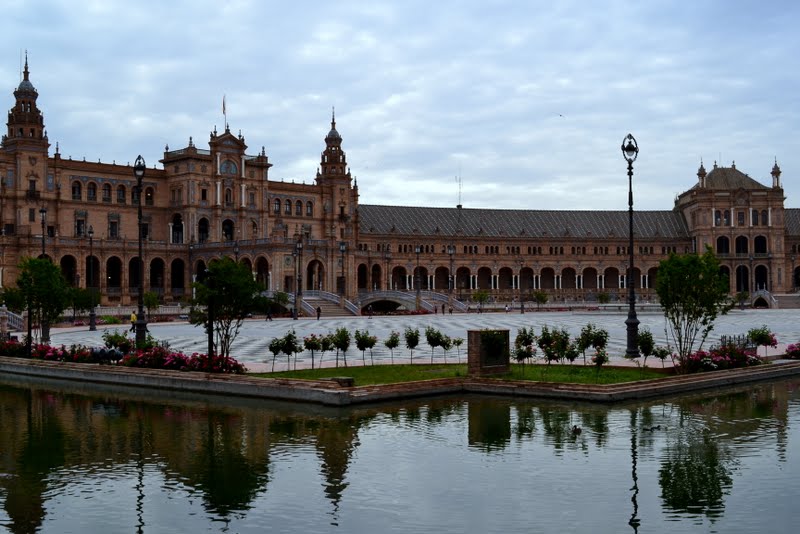
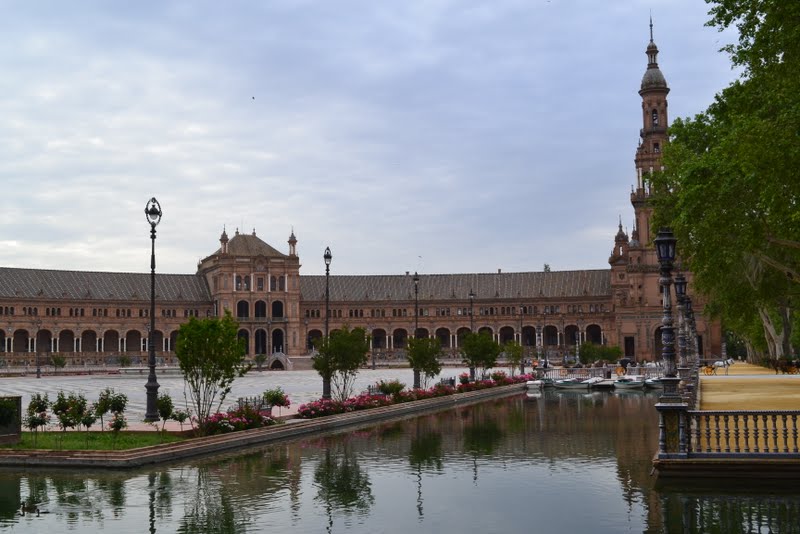
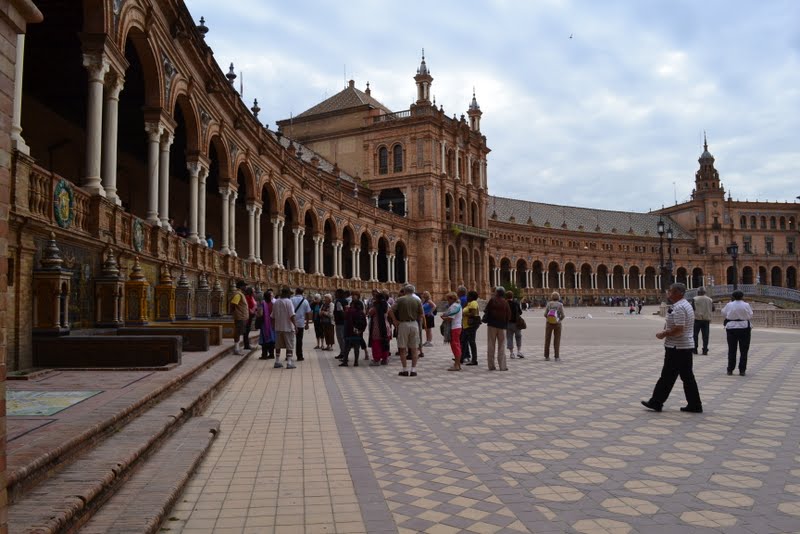
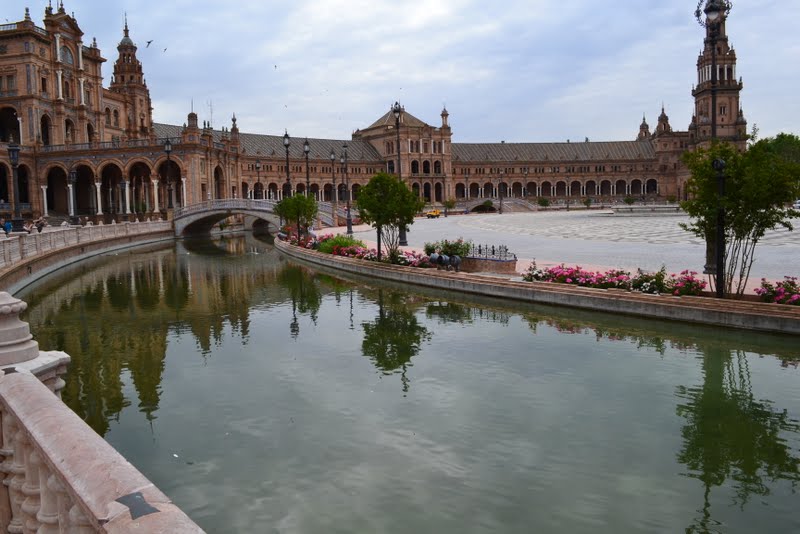
The next morning we visited ‘Plaza de España’. In 1929, Seville hosted the Ibero-American Exposition World’s Fair, located in the celebrated Maria Luisa park. The Plaza de España, designed by Anibal Gonzalez, was a principal building built on the Maria Luisa Park’s edge to showcase Spain’s industry and technology exhibits. Today the Plaza de España mainly consists of Government buildings.

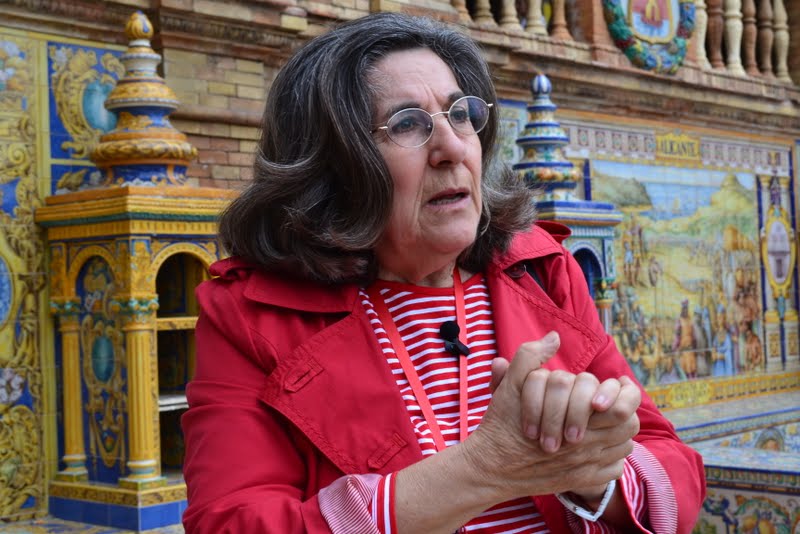
The tour was conducted by an extremely witty guide – Auroa, who kept us in splits of laughter.


Figure <!–[if supportFields]> SEQ Figure \* ARABIC <![endif]–>17<!–[if supportFields]><![endif]–> – The Plaza de España


Figure <!–[if supportFields]> SEQ Figure \* ARABIC <![endif]–>18<!–[if supportFields]><![endif]–> – The Plaza de España


Figure <!–[if supportFields]> SEQ Figure \* ARABIC <![endif]–>19<!–[if supportFields]><![endif]–> – The Plaza de España


Figure <!–[if supportFields]> SEQ Figure \* ARABIC <![endif]–>20<!–[if supportFields]><![endif]–> – Aurora enthralling the crowd


Figure <!–[if supportFields]> SEQ Figure \* ARABIC <![endif]–>21<!–[if supportFields]><![endif]–> – The Plaza de España


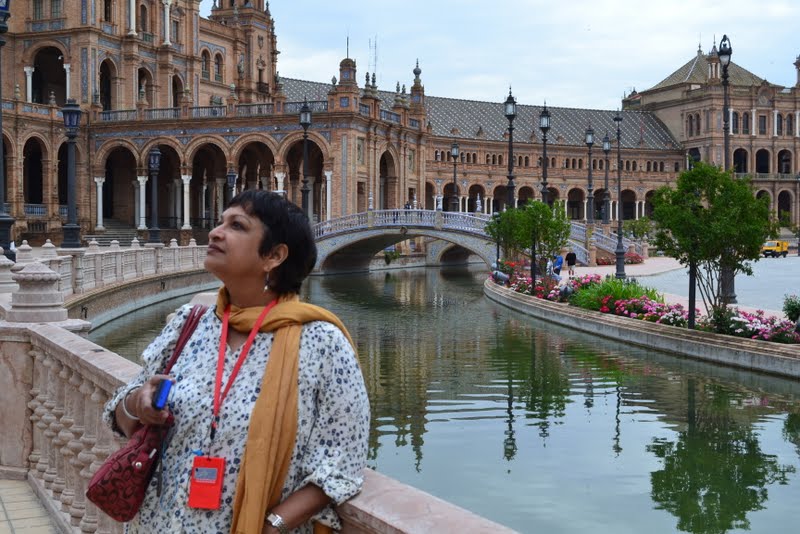
Figure <!–[if supportFields]> SEQ Figure \* ARABIC <![endif]–>22<!–[if supportFields]><![endif]–> – Jai admiring the beauty of the place


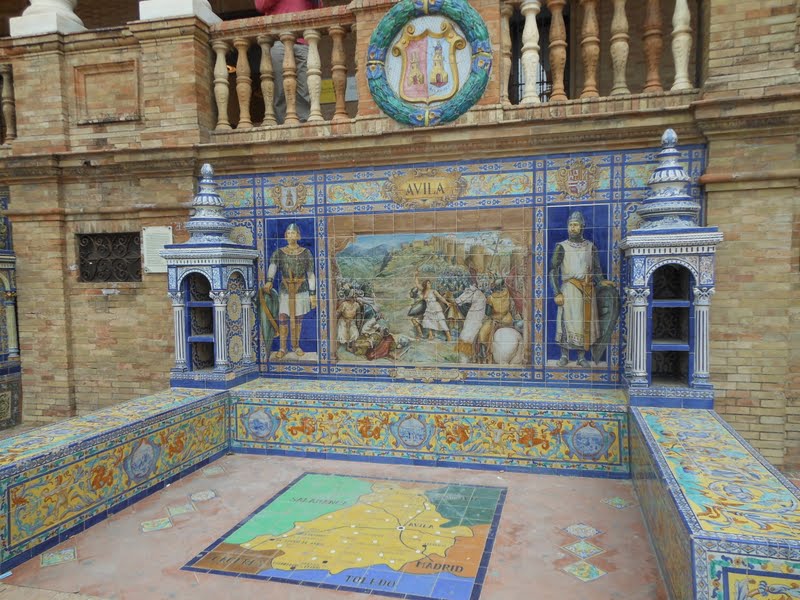
Figure <!–[if supportFields]> SEQ Figure \* ARABIC <![endif]–>23<!–[if supportFields]><![endif]–> – Inlay work. Depicting a lady who led the battle with her breast uncovered – the enemy soldiers were so busy getting distracted, she won the battle.


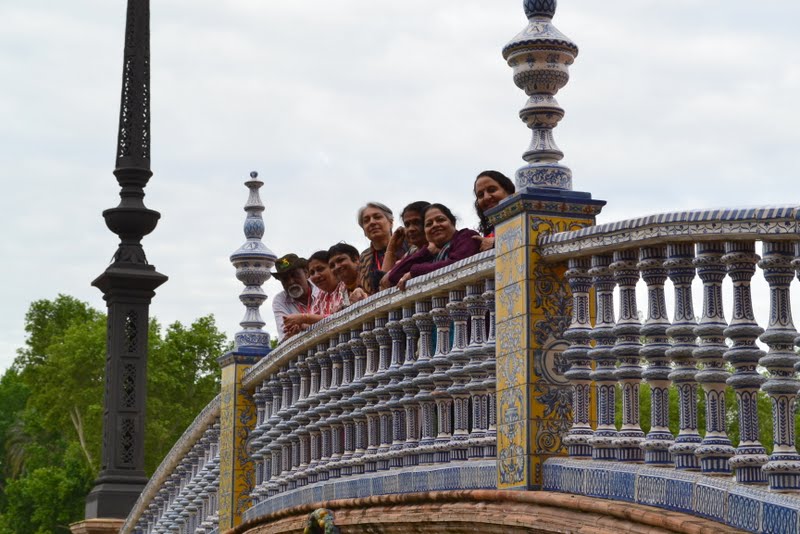
Figure <!–[if supportFields]> SEQ Figure \* ARABIC <![endif]–>24<!–[if supportFields]><![endif]–> – The gang on the bridge


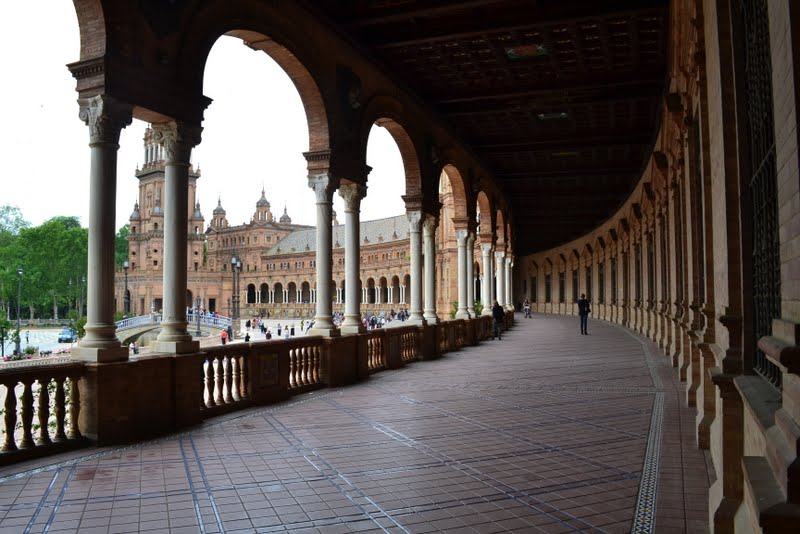
Figure <!–[if supportFields]> SEQ Figure \* ARABIC <![endif]–>25<!–[if supportFields]><![endif]–> – Corridors of power


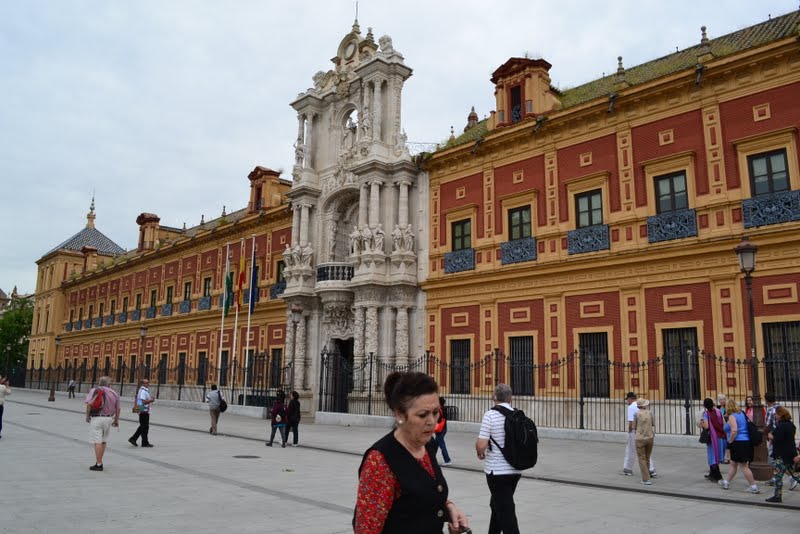
Figure <!–[if supportFields]> SEQ Figure \* ARABIC <![endif]–>26<!–[if supportFields]><![endif]–> – Palace of Saint Telmo – Historical heritage monument, Sevilla, Spain.


Figure <!–[if supportFields]> SEQ Figure \* ARABIC <![endif]–>27<!–[if supportFields]><![endif]–> – Full of parks and fountains


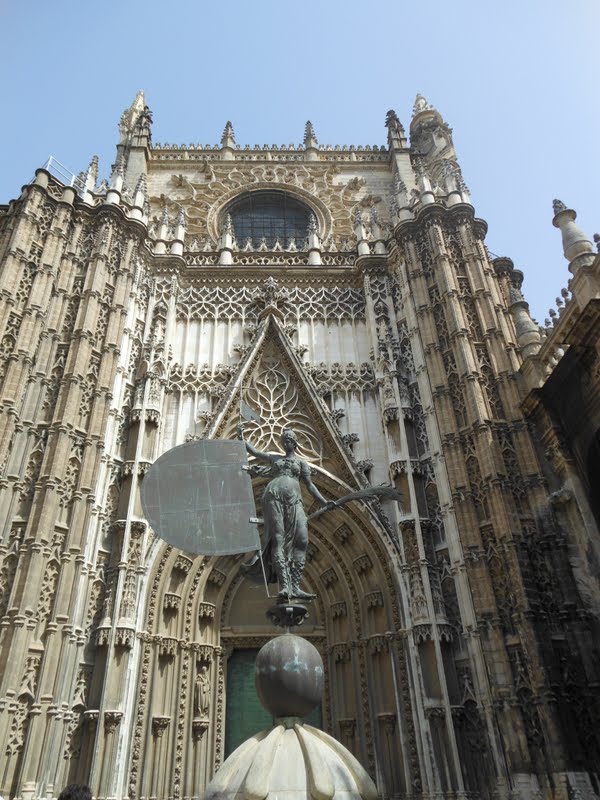
Figure <!–[if supportFields]> SEQ Figure \* ARABIC <![endif]–>28<!–[if supportFields]><![endif]–> – The cathedral and General Archive of Indies


Figure <!–[if supportFields]> SEQ Figure \* ARABIC <![endif]–>29<!–[if supportFields]><![endif]–> – The cathedral and General Archive of Indies


Figure <!–[if supportFields]> SEQ Figure \* ARABIC <![endif]–>30<!–[if supportFields]><![endif]–> – Kats and Navin enjoying the city tour

Figure <!–[if supportFields]> SEQ Figure \* ARABIC <![endif]–>31<!–[if supportFields]><![endif]–> – The gang in an exhilarated mood


Figure <!–[if supportFields]> SEQ Figure \* ARABIC <![endif]–>32<!–[if supportFields]><![endif]–> – City centre near Plaza de Triunfo


Figure <!–[if supportFields]> SEQ Figure \* ARABIC <![endif]–>33<!–[if supportFields]><![endif]–> – Rest and lunch


Figure <!–[if supportFields]> SEQ Figure \* ARABIC <![endif]–>34<!–[if supportFields]><![endif]–> – A fascinating balancing act


Figure <!–[if supportFields]> SEQ Figure \* ARABIC <![endif]–>35<!–[if supportFields]><![endif]–> – Seville cathedral


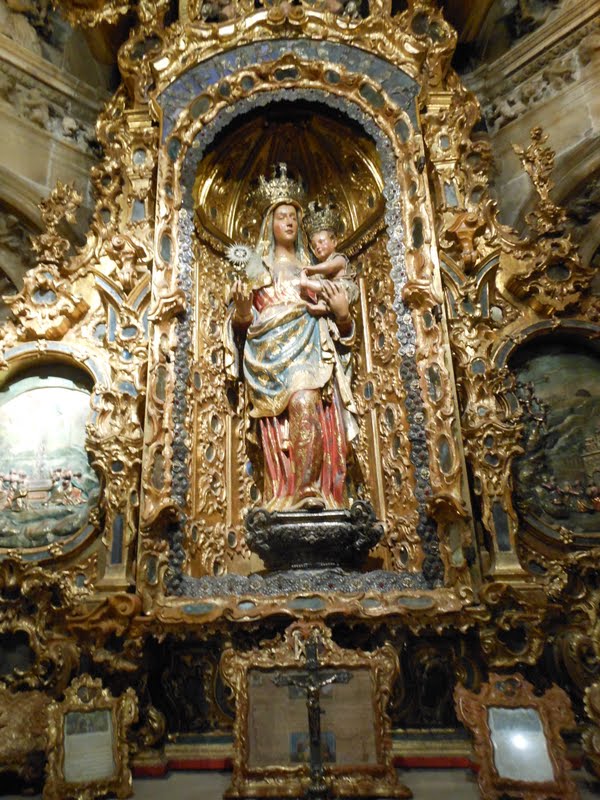
Figure <!–[if supportFields]> SEQ Figure \* ARABIC <![endif]–>36<!–[if supportFields]><![endif]–> – Infant Jesus


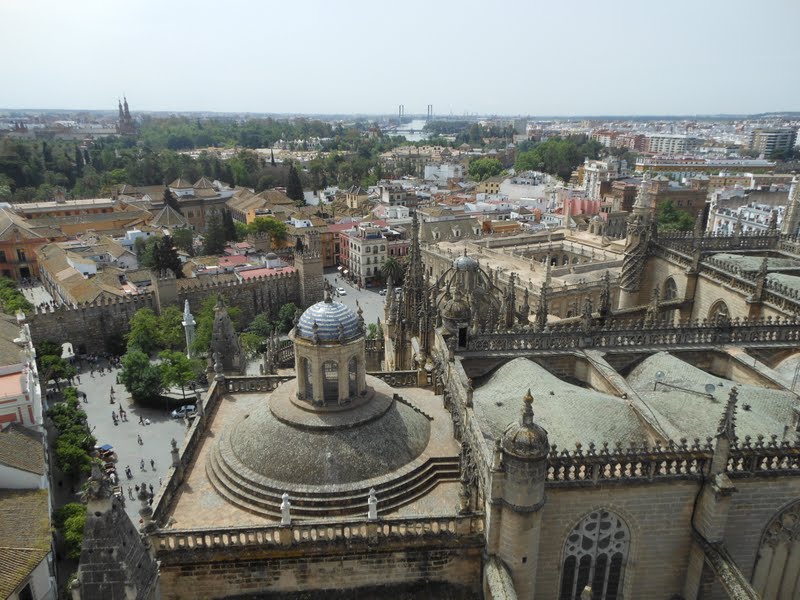
Figure <!–[if supportFields]> SEQ Figure \* ARABIC <![endif]–>37<!–[if supportFields]><![endif]–> – View from top


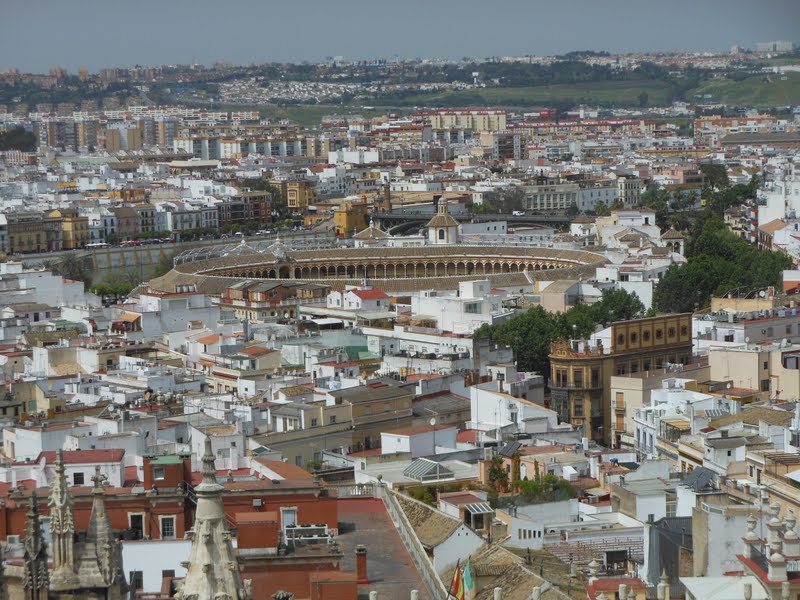
Figure <!–[if supportFields]> SEQ Figure \* ARABIC <![endif]–>38<!–[if supportFields]><![endif]–> – View of the city

We Visited Alhambra Palace and Costa Del Sol – 24 Apr 2013

Alhambra

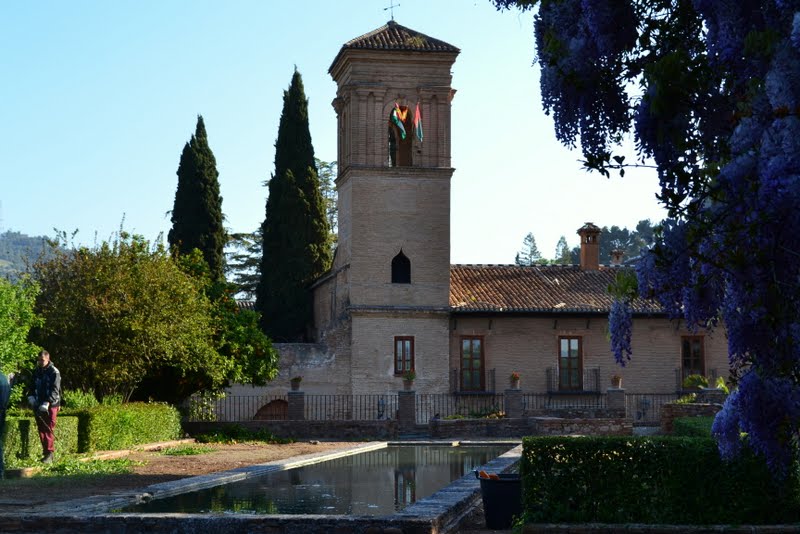
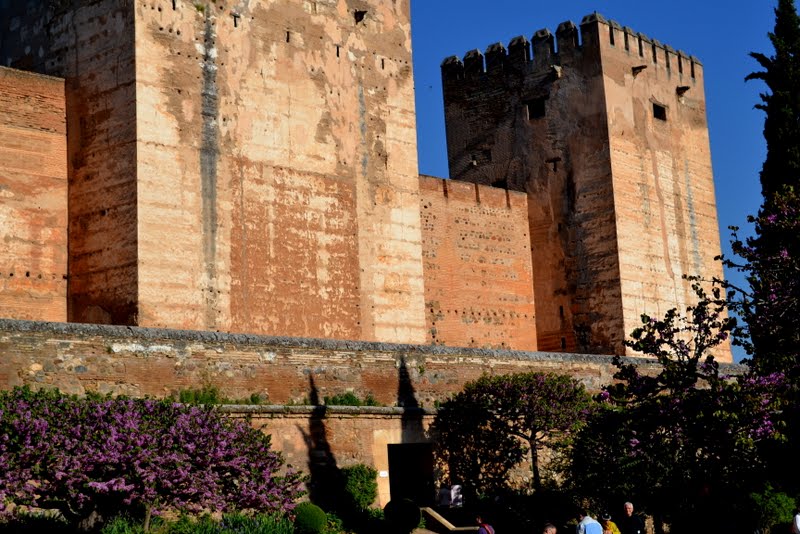
The Alhambrais a palace and fortress complex located in Granada. It was originally constructed as a fortress in 889 and later converted into a royal palace in 1333 by Yusuf I, sultan of Granada. The Alhambra is a UNESCO World  Heritage Site, and the inspiration for many songs and stories.Moorish poets described it as “a pearl set in emeralds,” in allusion to the colour of its buildings and the woods around them. The decorations within the palaces typified the remains of Moorish dominion within Spain.

Alhambra means “The Red” in Arabic , and its complete name was “al Qal’at al-hamra” (Red fort). The origins of its name are unknown. Some Historians say it was named that because of the colour of the stones, others say the name is due to the fact that it was built at night, and the red colour gave it the appearance of fire emanating from torches. It could also be due to the person who ordered its construction, the founder of the Nasrid dynasty, Mohammed ben Nasar, named Al-Hamar el rojo – because he had a red beard.
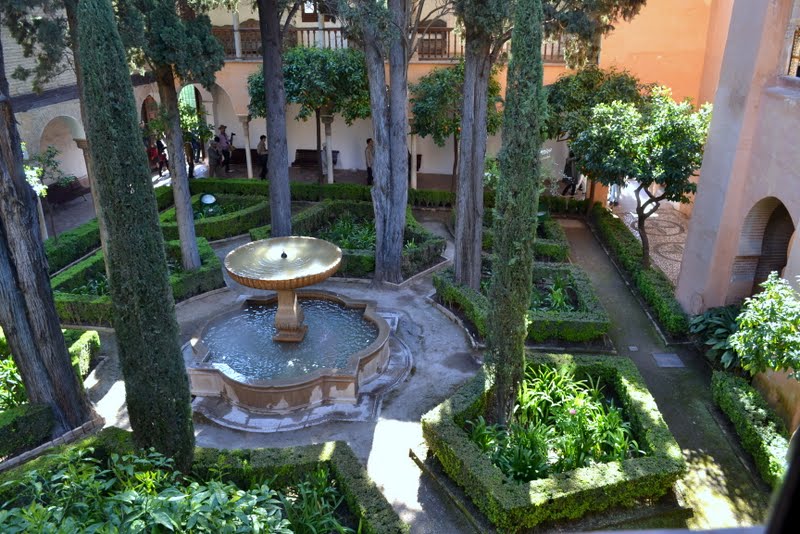
Nasar built a super exclusive complex to contain a palace inside a fortress with walls to resemble paradise .The palace has a number of gardens, trees and fountains – a right place for kings and queens.

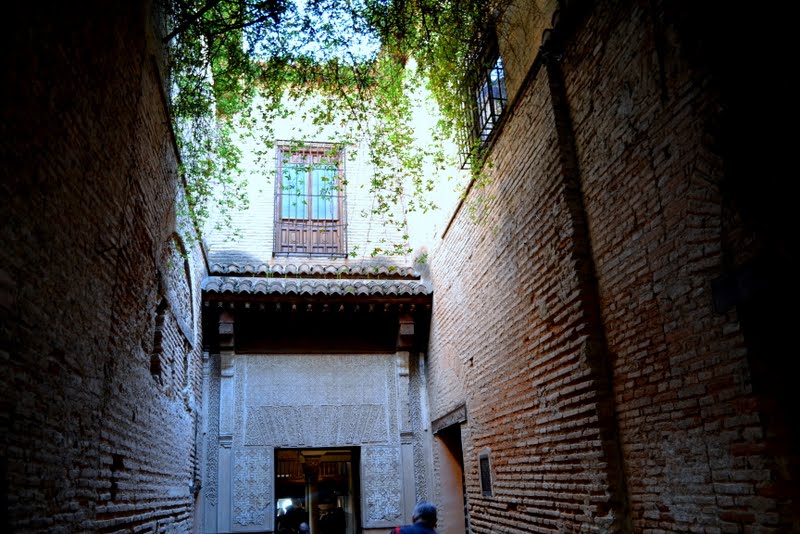
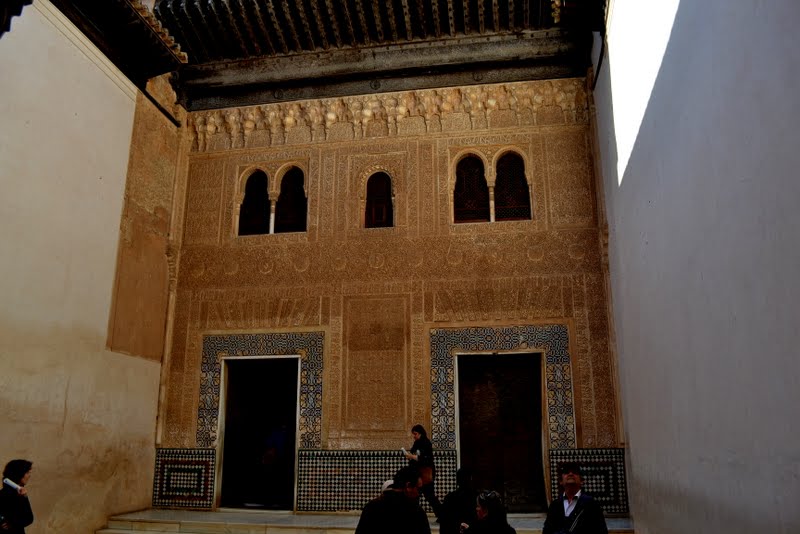
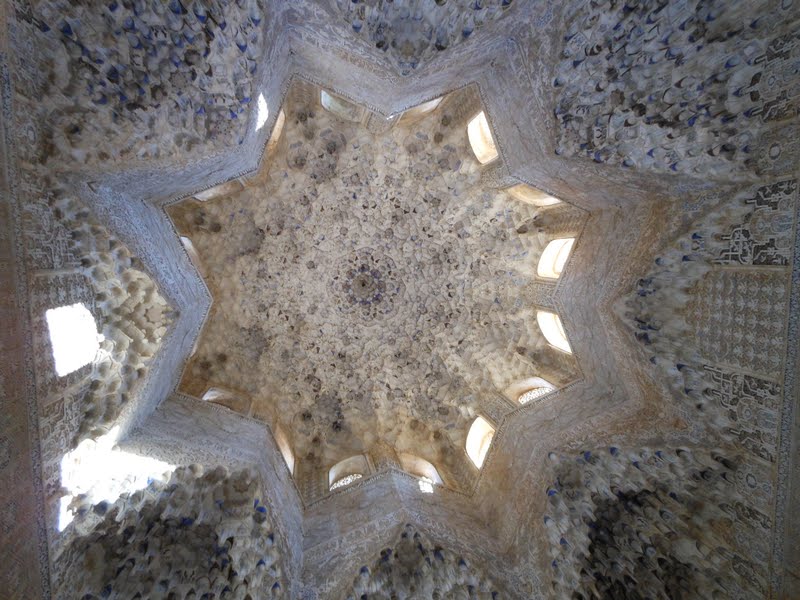
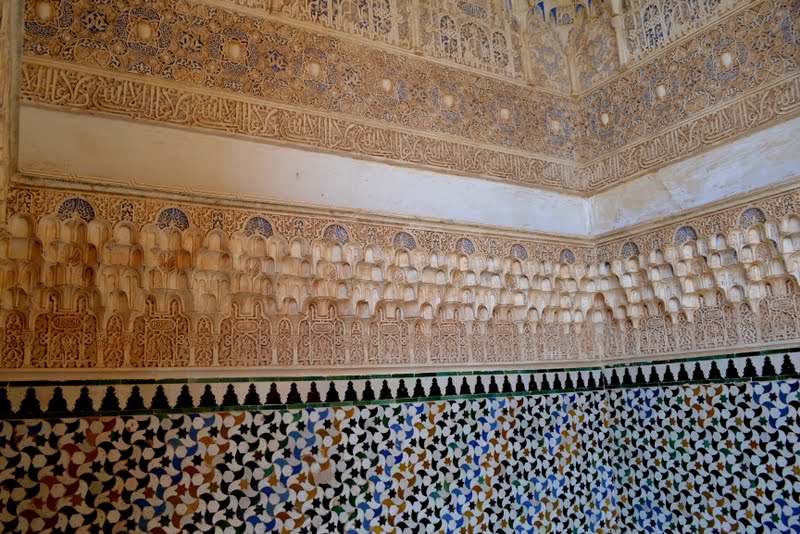
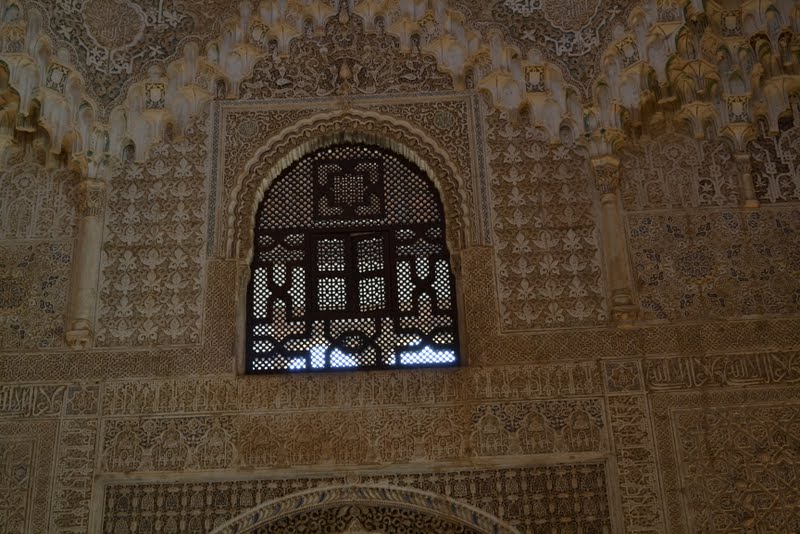
The palace has fascinating carvings, beautiful tile work, and plaster in lays etc. The stucco is made up of marble powder and plaster of Paris and white of eggs. The ceiling is either stucco or wood. Blue is used to represent the sky, green for trees, yellow the sun and red for the king. The only place where white is used is in the center of the dome to signify Allah as the white light. It represents the peak of Islamic art in Spain and one of the most symbolic monuments of this type of art in the whole world
It is reported that, once the king saw the queen speaking to a male member of the royal household. Out of jealousy and unable to recognize who it was, he ordered the beheading of 12 males of the family. Story goes to say that the blood stains are still visible in the king’s chambers.
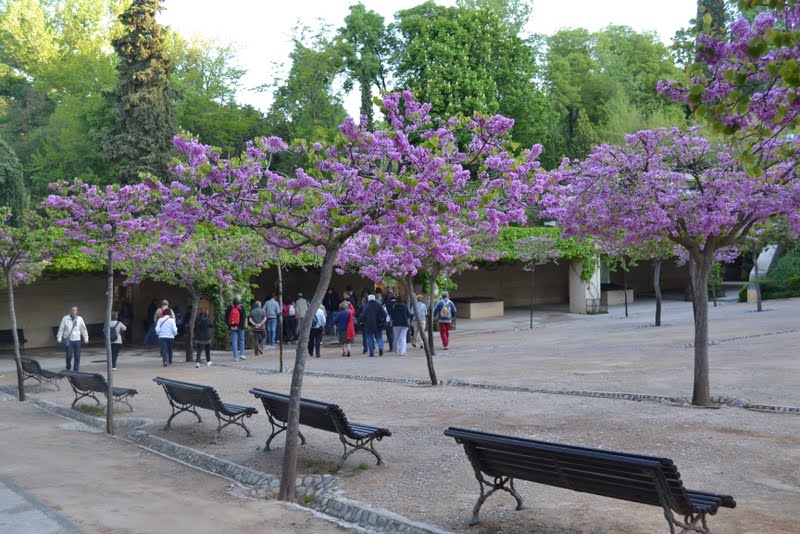
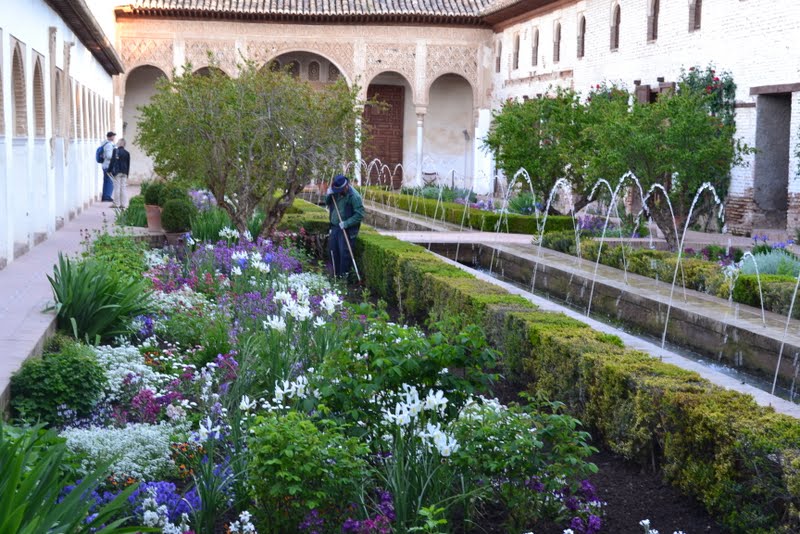
The gardens have been maintained for 600 years. The fountains are very pretty and the water comes from the nearby mountains through an aqua duct.The entire place is cool. The entire area is known as ‘Generlife’.


Figure <!–[if supportFields]> SEQ Figure \* ARABIC <![endif]–>1<!–[if supportFields]><![endif]–> – The entrance to the palace


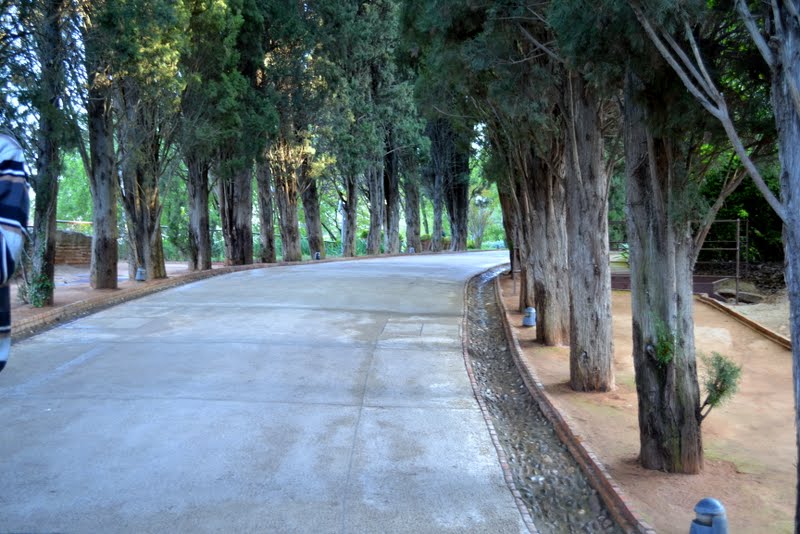
Figure <!–[if supportFields]> SEQ Figure \* ARABIC <![endif]–>2<!–[if supportFields]><![endif]–> – A lovely avenue


Figure <!–[if supportFields]> SEQ Figure \* ARABIC <![endif]–>3<!–[if supportFields]><![endif]–> – Planning the next move


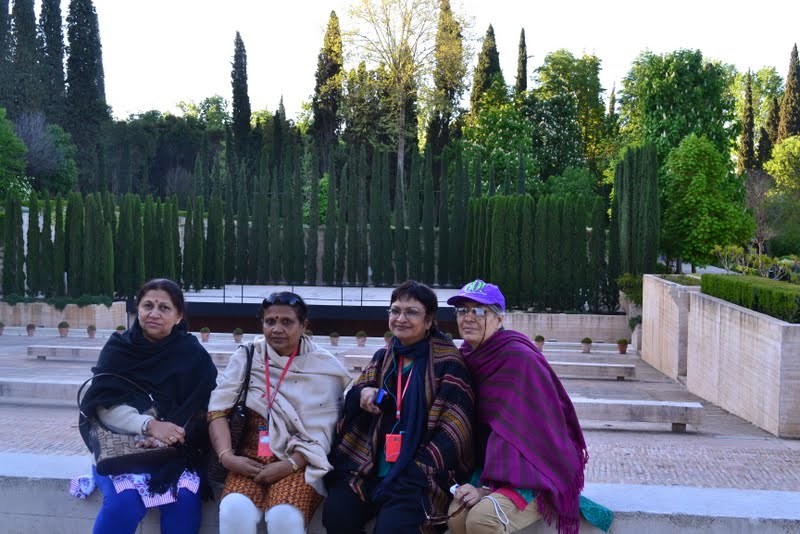
Figure <!–[if supportFields]> SEQ Figure \* ARABIC <![endif]–>4<!–[if supportFields]><![endif]–> – All ears and enjoying the light banter by the guide


Figure <!–[if supportFields]> SEQ Figure \* ARABIC <![endif]–>5<!–[if supportFields]><![endif]–> – Photo op


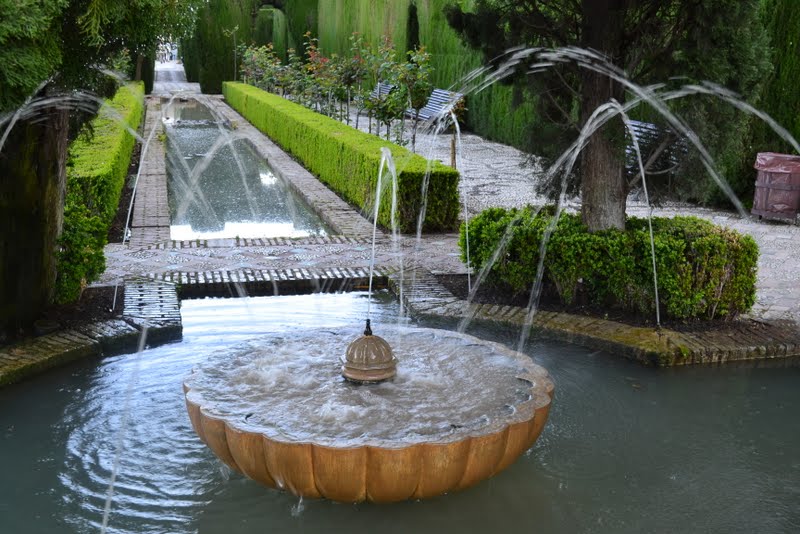
Figure <!–[if supportFields]> SEQ Figure \* ARABIC <![endif]–>6<!–[if supportFields]><![endif]–> – A lovely gravity fed fountain


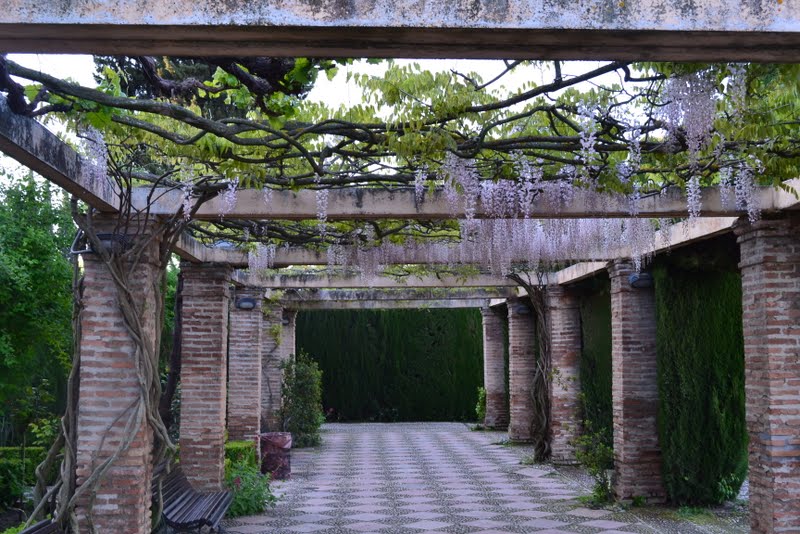
Figure <!–[if supportFields]> SEQ Figure \* ARABIC <![endif]–>7<!–[if supportFields]><![endif]–> – Walk way


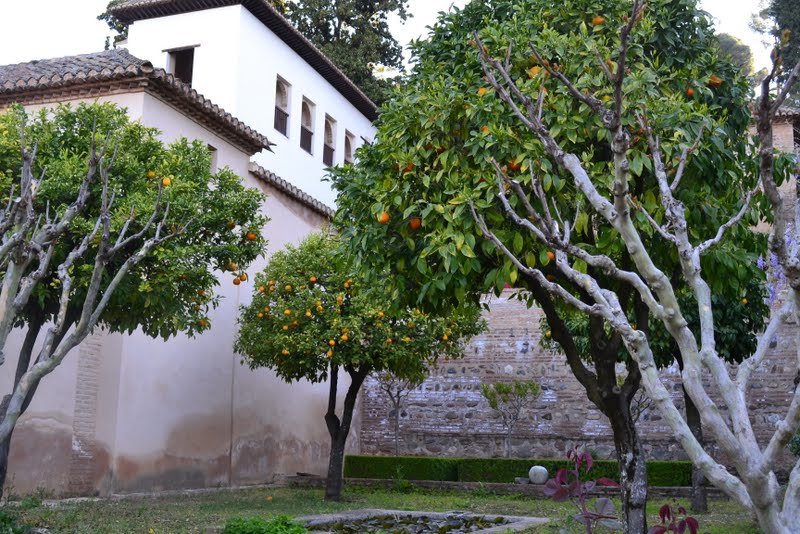
Figure <!–[if supportFields]> SEQ Figure \* ARABIC <![endif]–>8<!–[if supportFields]><![endif]–> – Oranges all through


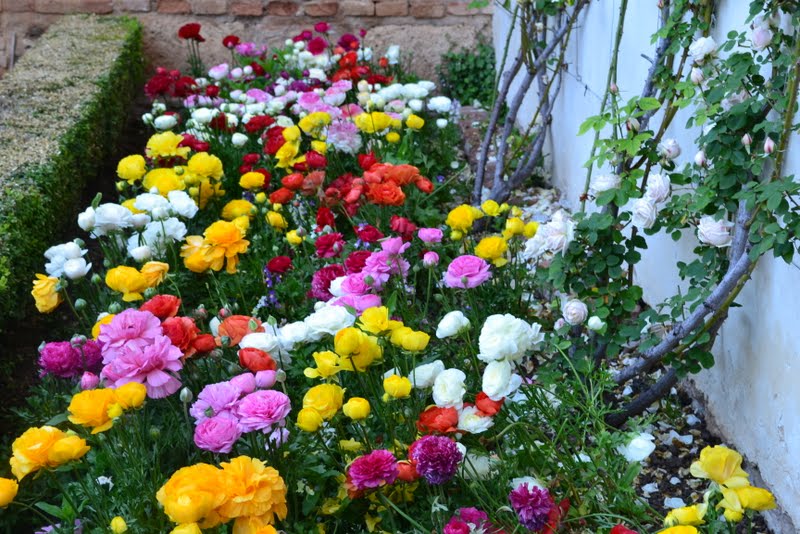
Figure <!–[if supportFields]> SEQ Figure \* ARABIC <![endif]–>9<!–[if supportFields]><![endif]–> – Lovely flowers


Figure <!–[if supportFields]> SEQ Figure \* ARABIC <![endif]–>10<!–[if supportFields]><![endif]–> – Garden being looked after


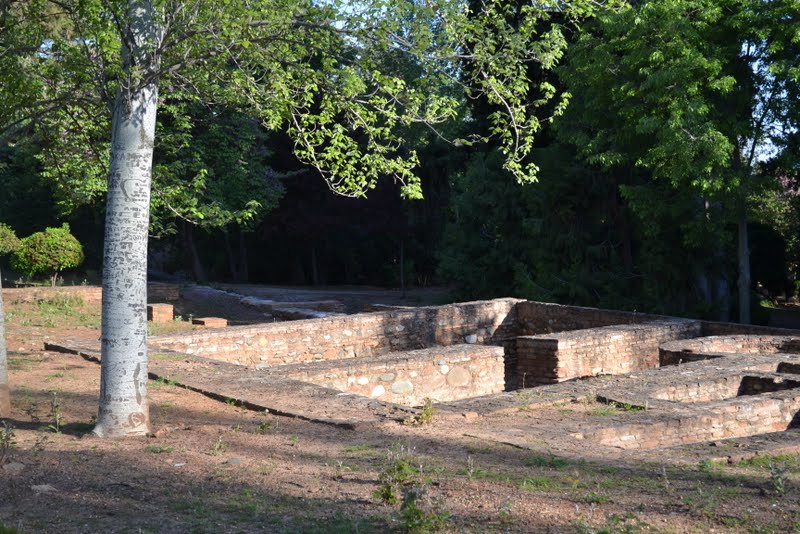
Figure <!–[if supportFields]> SEQ Figure \* ARABIC <![endif]–>11<!–[if supportFields]><![endif]–> – Old Roman period foundation

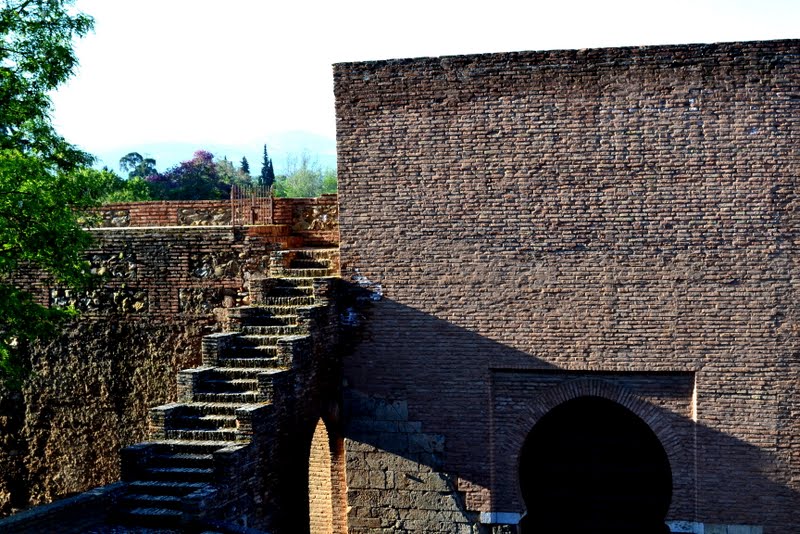
Figure <!–[if supportFields]> SEQ Figure \* ARABIC <![endif]–>12<!–[if supportFields]><![endif]–> – The palace wall


Figure <!–[if supportFields]> SEQ Figure \* ARABIC <![endif]–>13<!–[if supportFields]><![endif]–> – On of the buildings


Figure <!–[if supportFields]> SEQ Figure \* ARABIC <![endif]–>14<!–[if supportFields]><![endif]–> – One view of the palace


Figure <!–[if supportFields]> SEQ Figure \* ARABIC <![endif]–>15<!–[if supportFields]><![endif]–> – Inside view


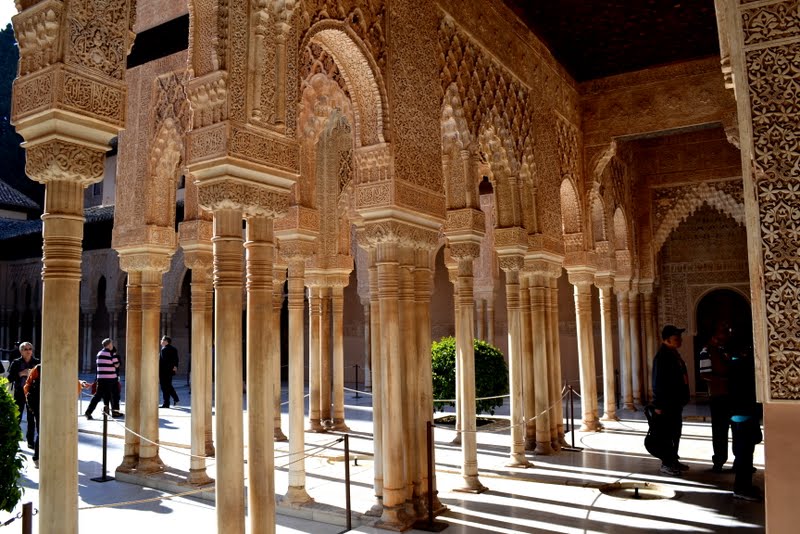
Figure <!–[if supportFields]> SEQ Figure \* ARABIC <![endif]–>16<!–[if supportFields]><![endif]–> – Inside of the palace living quarters – high ceiling and lo9ts of light. The intricate designs, arches and windows


Figure <!–[if supportFields]> SEQ Figure \* ARABIC <![endif]–>17<!–[if supportFields]><![endif]–> – A very intricate dome


Figure <!–[if supportFields]> SEQ Figure \* ARABIC <![endif]–>18<!–[if supportFields]><![endif]–> – Tile work


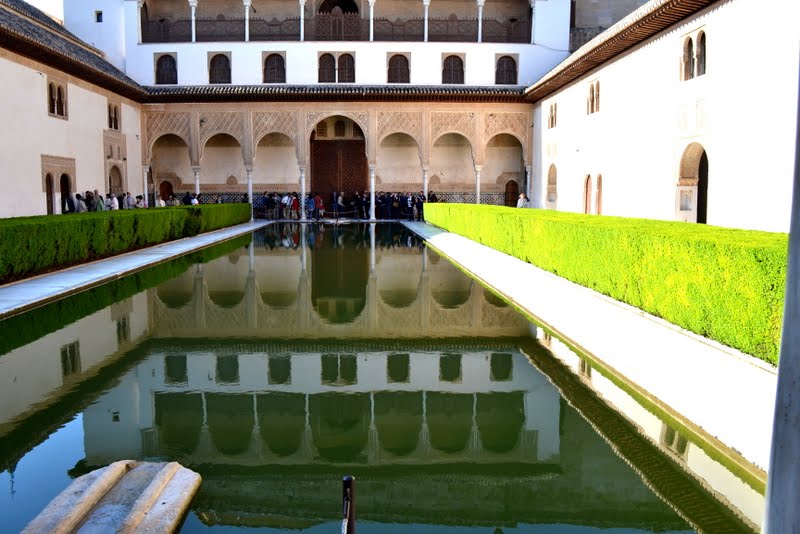
Figure <!–[if supportFields]> SEQ Figure \* ARABIC <![endif]–>19<!–[if supportFields]><![endif]–> – A beautiful pond overlooking the palace


Figure <!–[if supportFields]> SEQ Figure \* ARABIC <![endif]–>20<!–[if supportFields]><![endif]–> – The minars – built to withstand d earthquake


Figure <!–[if supportFields]> SEQ Figure \* ARABIC <![endif]–>21<!–[if supportFields]><![endif]–> – Jai is engrossed


Figure <!–[if supportFields]> SEQ Figure \* ARABIC <![endif]–>22<!–[if supportFields]><![endif]–> – A rare photo op

Figure <!–[if supportFields]> SEQ Figure \* ARABIC <![endif]–>23<!–[if supportFields]><![endif]–> – Once again intricate art work


Figure <!–[if supportFields]> SEQ Figure \* ARABIC <![endif]–>24<!–[if supportFields]><![endif]–> – A garden inside the courtyard


Figure <!–[if supportFields]> SEQ Figure \* ARABIC <![endif]–>25<!–[if supportFields]><![endif]–> – A lovely painting on glass


Figure <!–[if supportFields]> SEQ Figure \* ARABIC <![endif]–>26<!–[if supportFields]><![endif]–> – New addition of a church
Costa Del Sol – Malaga

After a pleasant drive we reached Costa Del Sol. We checked into a very nice hotel overlooking a Mediterranean beach ‘Tryp Guadalmar’. The Costa del Sol “Sunny Coast” or more literally, “Coast of the Sun” is a region in the south of Spain, in the autonomous community of Andalusia, comprising the coastal towns and communities along the coastline of the Province of malaga. The most important business sector in Málaga is tourism – exceptionally beautiful town.

Figure <!–[if supportFields]> SEQ Figure \* ARABIC <![endif]–>27<!–[if supportFields]><![endif]–> – View from the hotel room


Figure <!–[if supportFields]> SEQ Figure \* ARABIC <![endif]–>28<!–[if supportFields]><![endif]–> – Road opposite the hotel


Figure <!–[if supportFields]> SEQ Figure \* ARABIC <![endif]–>29<!–[if supportFields]><![endif]–> – View of the sea


Figure <!–[if supportFields]> SEQ Figure \* ARABIC <![endif]–>30<!–[if supportFields]><![endif]–> – One of the roads in the town


Figure <!–[if supportFields]> SEQ Figure \* ARABIC <![endif]–>31<!–[if supportFields]><![endif]–> – A hilly town with winding roads
Mijas

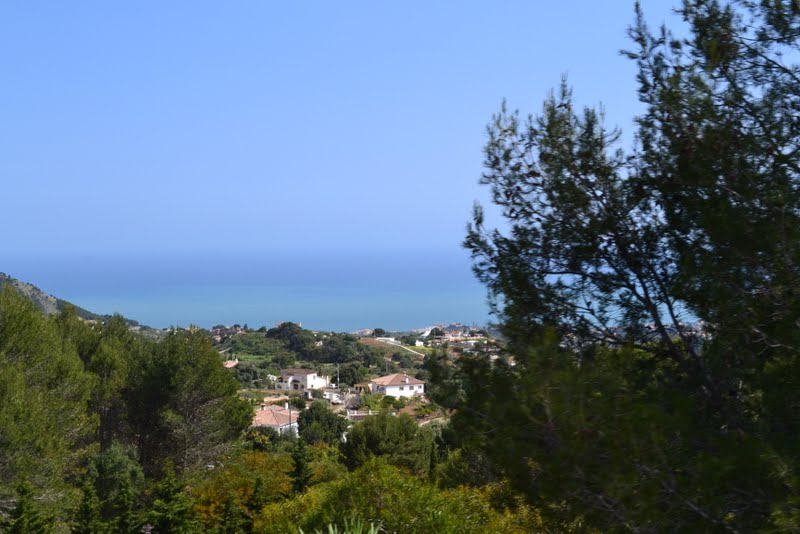
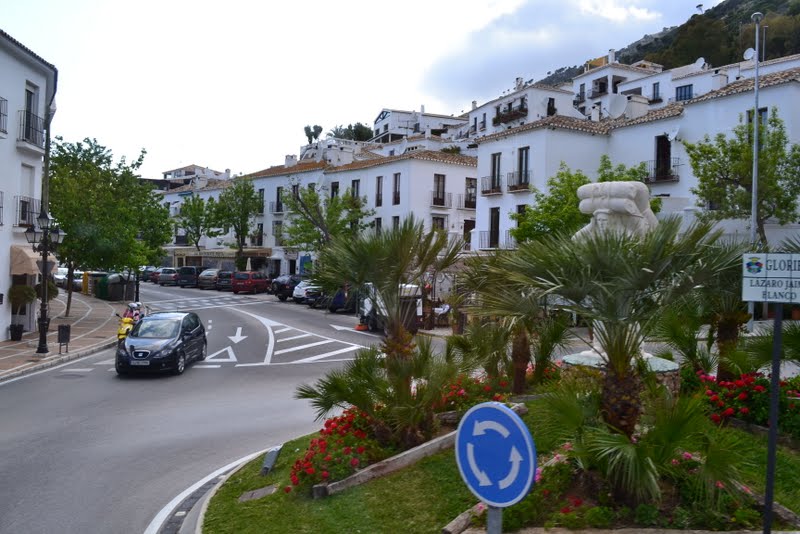
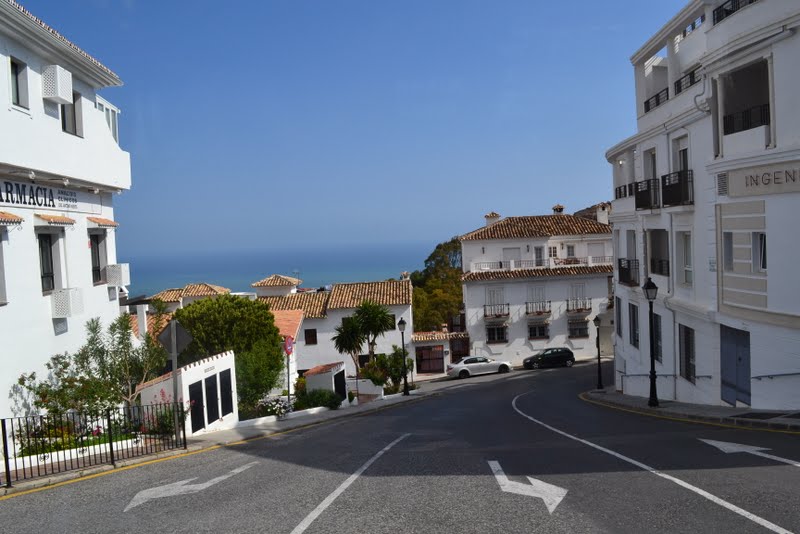
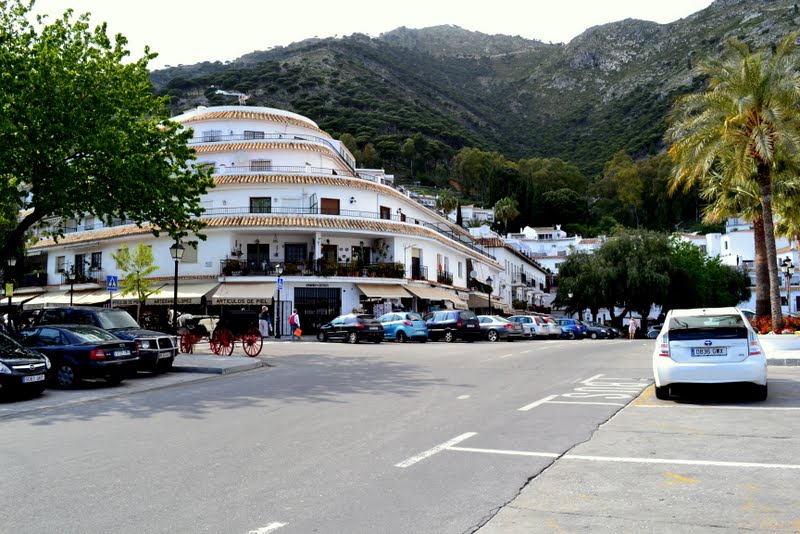
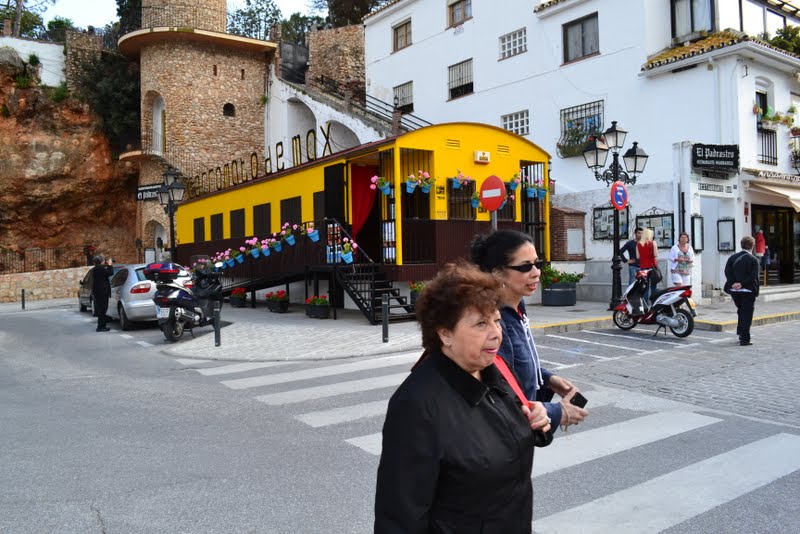
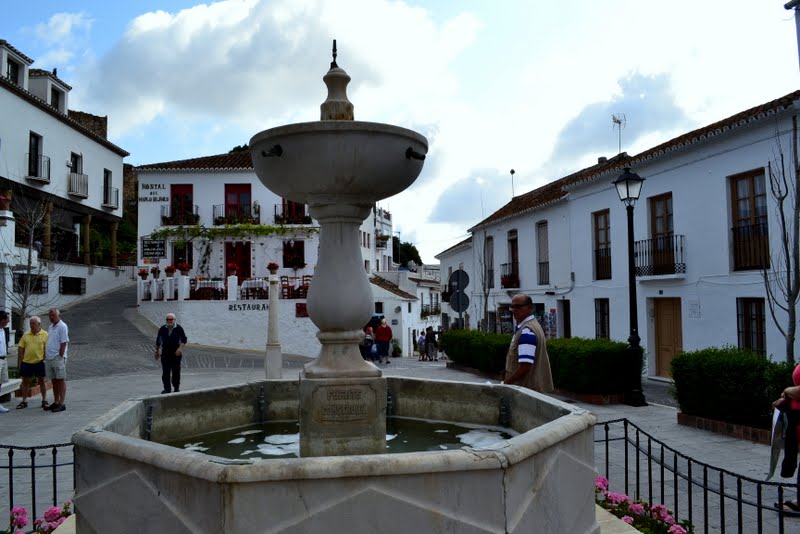
Later on in the evening we drove down to Mijas. Nestled in the luscious Costa del Sol, Mijas Pueblo is one of the most famous traditional white-washed villages in Spain. Sometimes called ‘The White City’, Mijas is one of the jewels of the south coast, renowned for its boisterous festivals, Easter processions and donkey taxis. The ‘Jet Set’ of Spain have exclusive villas in this place – ‘Marabella’. They are rumored to take flights from here to attend parties in Monaco, Tangiers etc. Sean Connery, Roger Moore, Sophia Loren, Alphonso Maximillian are some of the stars who visit this place often. It was once a very quiet fishing village.Ricardo Soliano bought lot of real estate and built houses in Marbella for the super rich.

It is compulsory to whitewash the hoses and have red tiled roofs. The total picture is very captivating. Normally the houses have black metallic fences.
It is common to rent villas to spend your vacation instead of staying in hotels.David told us that one can rent a two bed room villa for 3000 Euros for a month. Very attractive indeed.


Figure <!–[if supportFields]> SEQ Figure \* ARABIC <![endif]–>32<!–[if supportFields]><![endif]–> – A village from a fairy tale


Figure <!–[if supportFields]> SEQ Figure \* ARABIC <![endif]–>33<!–[if supportFields]><![endif]–> – A shopper’s paradise


Figure <!–[if supportFields]> SEQ Figure \* ARABIC <![endif]–>34<!–[if supportFields]><![endif]–> – Beautifully laid out roads


Figure <!–[if supportFields]> SEQ Figure \* ARABIC <![endif]–>35<!–[if supportFields]><![endif]–> – The gang


Figure <!–[if supportFields]> SEQ Figure \* ARABIC <![endif]–>36<!–[if supportFields]><![endif]–> – The sky line


Figure <!–[if supportFields]> SEQ Figure \* ARABIC <![endif]–>37<!–[if supportFields]><![endif]–> – Satisfied tourists


Figure <!–[if supportFields]> SEQ Figure \* ARABIC <![endif]–>38<!–[if supportFields]><![endif]–> – The village is lined with eateries


Figure <!–[if supportFields]> SEQ Figure \* ARABIC <![endif]–>39<!–[if supportFields]><![endif]–> – A wonderful sight


Figure <!–[if supportFields]> SEQ Figure \* ARABIC <![endif]–>40<!–[if supportFields]><![endif]–> – Entrance into a house


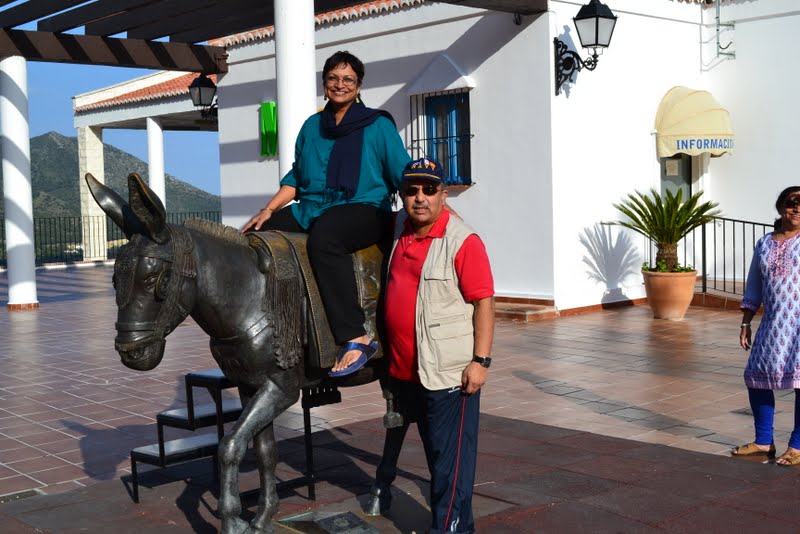
Figure <!–[if supportFields]> SEQ Figure \* ARABIC <![endif]–>41<!–[if supportFields]><![endif]–> – Jai wondering – which one is the donkey?


Figure <!–[if supportFields]> SEQ Figure \* ARABIC <![endif]–>42<!–[if supportFields]><![endif]–> – It cannot get any better

Figure <!–[if supportFields]> SEQ Figure \* ARABIC <![endif]–>43<!–[if supportFields]><![endif]–> – White and brown all around

We Visited Granada – 23 Apr 2013

A bit about the trip – Some felt that the ‘Value for Money’ quotient was less on this Trafalgar Trip. They were extremely unhappy about the way Barcelona was handled or for that matter Valencia. All our visits were to public places where entry is free – such as gardens, churches, city centre etc. One had to pay considerable amount to go in for ‘Optionals’. Having said that – it is always better to plan your own trip – booking of hotels, what to see, how long etc. Self, Jai, Nair and Sudhi went to Greece – Athens, Santorini etc and Vienna in 2007. The entire trip was planned and executed sitting in Bangalore – courtesy the internet. The trip was excellent. One can choose this route provided the number is less. The same was the case last year, when we went with Kats and Naveen to Sri Lanka. On the other hand when travelling with a large number of people – such as twelve in our case – it becomes extremely difficult to co-ordinate the programme – too many requirements to be met. Some prefer visits to churches and museums, others favour the night life and some may just want to sit and relax. Food is another issue; I am not at all in favour of eating Indian food on a foreign holiday; try telling this to a pure vegetarian. Quite a few would like to ‘bend an elbow’ with a ‘Sun Downer’ at the end of the day. The prohibitionists in the group generally get together to voice a different opinion. There’s a popular saying in Chile that an abstainer is generally distrusted; the assumption is that the only reason one might not drink is to take advantage of others when they have had too much to drink. With all these problems on hand it is better to ask somebody else to organize your trip and make the most of it. If things do go wrong or do not meet your expectations – you can always blame others.

David kept us busy with various tidbits of information about how coffee prices went up when the peseta gave way to the euro. Joining the EU had a great impact on the population. The salaried class was the worst off and felt cheated– as elsewhere. The people who suffered the most were the working class who were not into buying or selling and the office goers. Many do not want to be a part of the EU. In the mean time David says Spaniards will continue to smile and enjoy life.
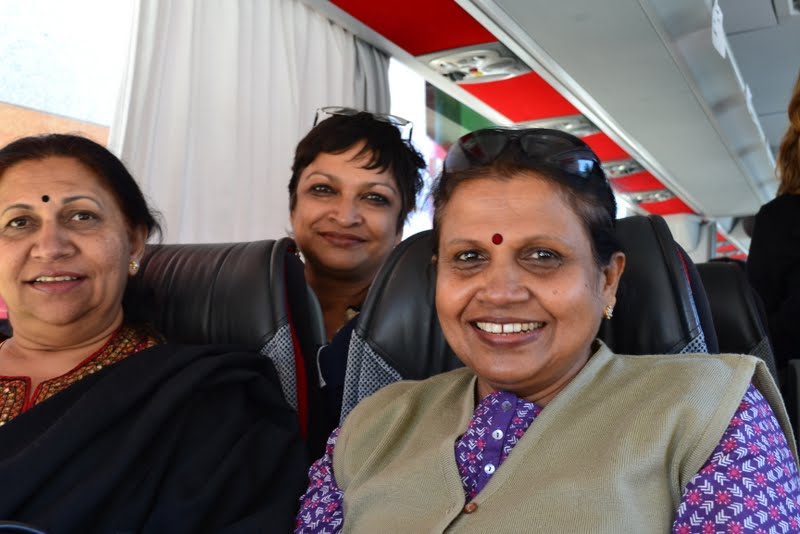
All the couples in the bus shifted seats so that we had different neighbors in the bus. We got a chance to know each other a bit. Every morning we wished each other loudly and shook hands – a good way to start the trip. David never forgot to ask us to thank our coach driver, Alberto, from Lisbon. In Spain, Castilian and Basque are considered pure Spanish Languages. The rest are all dialects or accented Spanish. All orange farms are owned by local farmers. Earlier on, the oranges were harvested by illegal immigrants. Due to the economic down turn a large number of Spaniards left the country. There are a large number of Peruvians, Romanians, Bulgarians and Moroccans immigrants in Spain today.

The Osborne Sherry company founded by Thomas Osborne Mann in 1772 erected large images of bulls starting in 1956 to advertise their Brandy de Jerez. The images were black with the brand “Veterano” in red on it. Advertising boards were located near major roads throughout Spain. The government did not like the Logo close to the road as it was a distraction. The company moved the hoardings back but made the bull bigger. Then the government told them to erase the bull or the words – the bull won.


Figure <!–[if supportFields]> SEQ Figure \* ARABIC <![endif]–>1<!–[if supportFields]><![endif]–> – The Brandy Bull

Brown bears, lynx, parrots, eagles, falcons, storks, fox, deer, vipers and wild pigs make up the wild life of Spain.

A number of Moroccans visit these parts for shopping. To prevent them washing their feet in the wash basin prior to Namaz, the restaurants provide a special fountain for them.

The older the olive tree, the costlier it gets. A 400 year old tree may cost €2000/-.

David talked about Spanish music; in fact he would play some lovely Spanish numbers when he wasn’t telling us stuff in the bus. He mentioned Sanz Alejandro – singer-songwriter and musician, Pablo Alborán, Racio Jurado – singer and actress, Racio Durcal another singer and actress and Mecano a Spanish pop band formed in the early 1980s, active until 1992, which had a brief comeback in 1998. Mecano, he said, is still the best-selling Spanish band to this date, reaching over 25 million albums worldwide. Descanso Dominical’s album reaffirmed their stardom as worldwide artists. Paco De Lucia is a Spanish Flamenco guitarist, composer and producer. He is a leading proponent of the New Flamenco style, and is one of the first flamenco guitarists who has also successfully crossed over into other genres of music such as classical and Jazz. Vincente Amigo is also a Spanish flamenco composer and virtuoso gutarist.

But the cake goes to – Julio Iglesias a Spanish singer and songwriter who has sold over 300 million records worldwide in 14 languages and released 80 albums, and had more than 2,600 gold and platinum records certified. After college, he was a European-football goalkeeper for Real Madrid Castilla. In 1962, he was involved in a car crash that smashed his lower spine and his legs were permanently weakened as a direct result. During his hospitalization, a nurse gave him a guitar so that he might have something to do with his hands. In learning to play, he discovered his musical talent.

The Drive from Valencia


Figure <!–[if supportFields]> SEQ Figure \* ARABIC <![endif]–>2<!–[if supportFields]><![endif]–> – Jai appreciating something at a distance


Figure <!–[if supportFields]> SEQ Figure \* ARABIC <![endif]–>3<!–[if supportFields]><![endif]–> – Kats and Navin at the halt


Figure <!–[if supportFields]> SEQ Figure \* ARABIC <![endif]–>4<!–[if supportFields]><![endif]–> – Girls relaxing at a technical stop


Figure <!–[if supportFields]> SEQ Figure \* ARABIC <![endif]–>5<!–[if supportFields]><![endif]–> – Kats and self at a technical stop


Figure 5A – Sunder and Dore resting for a while


Figure <!–[if supportFields]> SEQ Figure \* ARABIC <![endif]–>6<!–[if supportFields]><![endif]–> – Fascinating country side


Figure <!–[if supportFields]> SEQ Figure \* ARABIC <![endif]–>7<!–[if supportFields]><![endif]–> – Passing through Puerto Lumbreras


Figure <!–[if supportFields]> SEQ Figure \* ARABIC <![endif]–>8<!–[if supportFields]><![endif]–> – Out skirts of Purullena


Figure <!–[if supportFields]> SEQ Figure \* ARABIC <![endif]–>9<!–[if supportFields]><![endif]–> – Approch to Purullena

Halt at Purullena Guadix and Cave Houses

After a technical halt we stopped at Purullena a municipality located in the privince of Granada. We visited a cave home – Museo La Inmaculada. Cueva Tipica is a delightful showcase of cave homes that is located on the “Hill of the Immaculate One.” The cave dwelling features period tools, cookware, and furnishings and hoard of other interesting artifacts. The Purullena caves are from Arabic origin. 30 Years ago everyone in this town lived in caves. Today 1100 people still live in cave homes. That is why Purullena is known as the Troglodytic City. The houses in the caves are dug out of the mountains. They didn’t use any construction materials; they only painted them with white chalk. Chalk is a natural paint which is porous and the air can circulate preventing humidity in the cave.

In the inside of the cave it is not possible to put doors, because the air needs to circulate. That is why they have curtains to separate the rooms. There are also chimneys through which the air enter and can circulate. The ceilings are dome-shaped to avoid that the caves will collapse and also to distribute the weight towards the outer side of the walls. The material from which the caves have been made is Arcilla which is special clay.

The temperature inside the cave is controlled – it is cool in summer and warm in winter. Family of four stay in the cave. The entire experience was memorable.


Figure 10 – The Cave House


Figure <!–[if supportFields]> SEQ Figure \* ARABIC <![endif]–>11<!–[if supportFields]><![endif]–> – A very colorful souvenir shop


Figure 12 – Nair is awed


Figure <!–[if supportFields]> SEQ Figure \* ARABIC <![endif]–>13<!–[if supportFields]><![endif]–> – A young child in the cave house – owner’s daughter


Figure <!–[if supportFields]> SEQ Figure \* ARABIC <![endif]–>14<!–[if supportFields]><![endif]–> – The owner has collected a large number of artifacts both old and ancient


Figure <!–[if supportFields]> SEQ Figure \* ARABIC <![endif]–>15<!–[if supportFields]><![endif]–> – The family room


Figure <!–[if supportFields]> SEQ Figure \* ARABIC <![endif]–>16<!–[if supportFields]><![endif]–> – Some more artifacts


Figure <!–[if supportFields]> SEQ Figure \* ARABIC <![endif]–>17<!–[if supportFields]><![endif]–> – The range is mind boggling


Figure <!–[if supportFields]> SEQ Figure \* ARABIC <![endif]–>18<!–[if supportFields]><![endif]–> –Jai having a wonderful time


Figure <!–[if supportFields]> SEQ Figure \* ARABIC <![endif]–>19<!–[if supportFields]><![endif]–> – Other caves


Figure <!–[if supportFields]> SEQ Figure \* ARABIC <![endif]–>20<!–[if supportFields]><![endif]–> – Some more caves


Figure <!–[if supportFields]> SEQ Figure \* ARABIC <![endif]–>21<!–[if supportFields]><![endif]–> – Snow clad mountains at the back

Finally We reached Granada

The dive to Granada is simply beautiful. It is an extremely pretty city. Granada means ‘Pomegranate’. One can watch the best of the Mediterranean. The drive takes you through the rugged Moor Pass and through snow peaked hill ranges.

Reconquest ended with fall of Granada on 02 Jan 1492.Thereafter half a million Moors left for Africa.

Granada is home to 300,000 foreign students. Happy hour starts at 9PM and free food is served with beer – a Granada tradition.  
The city boasts of excellent houses, bungalows, parks, roundabouts, statues etc.

History records – Spain, now without any major internal territorial conflict, embarked on a great phase of exploration and colonization around the globe. In the same year the sailing expedition of Christoper Columbus resulted in what is usually claimed to be the first European sighting of the New World. The resources of the Americans enriched the crown and the country, allowing Isebella I and Ferdinand II to consolidate their rule as Catholic Monarchs of the United Kingdom. Subsequent conquests, and the Spanish colonization of Americas by the maritime expeditions they commissioned, created the vast Spanish Empire: for a time the largest in the world.

Queen Isabella was a very superstitious person. She is reported to have worn the same dress till Christopher Columbus returned to Granada. The city has honored both by erecting a statue in the city square. The greatest artistic wealth of Granada is its Spanish-Muslim art — in particular, the compound of the Alhambra and the Genaralife. The Generalife is a pleasure palace with attached romantic gardens, remarkable both for its location and layout, as well as for the diversity of its flowers,plants and fountains.
Muley Hussain was the last Moor king of Granada


Figure <!–[if supportFields]> SEQ Figure \* ARABIC <![endif]–>22<!–[if supportFields]><![endif]–> – Sky line of the Granada


Figure <!–[if supportFields]> SEQ Figure \* ARABIC <![endif]–>23<!–[if supportFields]><![endif]–> – The main thorough fare


Figure <!–[if supportFields]> SEQ Figure \* ARABIC <![endif]–>24<!–[if supportFields]><![endif]–> – Orange trees on the road side


Figure <!–[if supportFields]> SEQ Figure \* ARABIC <![endif]–>25<!–[if supportFields]><![endif]–> – Once again fascinating balconies


Figure <!–[if supportFields]> SEQ Figure \* ARABIC <![endif]–>26<!–[if supportFields]><![endif]–> – Plaza Del Triunfo garden. Very close to the hotel ‘Macia Condor Granada’ where we stayed


Figure <!–[if supportFields]> SEQ Figure \* ARABIC <![endif]–>27<!–[if supportFields]><![endif]–> – Prem and Nair on the prowl in Plaza Del Triunfo Garden


Figure <!–[if supportFields]> SEQ Figure \* ARABIC <![endif]–>28<!–[if supportFields]><![endif]–> – An interesting statue in Plaza Del Triunfo


Figure <!–[if supportFields]> SEQ Figure \* ARABIC <![endif]–>29<!–[if supportFields]><![endif]–> – Main road


Figure <!–[if supportFields]> SEQ Figure \* ARABIC <![endif]–>30<!–[if supportFields]><![endif]–> – I was really fascinated by the lamp shade – great municipality


Figure <!–[if supportFields]> SEQ Figure \* ARABIC <![endif]–>31<!–[if supportFields]><![endif]–>– Plaza Isabel La Catolica, Granada’s central square. Columbus presenting himself to Queen Isabelal.


Figure <!–[if supportFields]> SEQ Figure \* ARABIC <![endif]–>32<!–[if supportFields]><![endif]–> – Plaza Isabel La Catolica, Granada’s central square


Figure 33 – Lalitamma doing one better than Armstrong

A very fine statue

Art shop

Another part of the city
Jai Sudhi and Beena relishing Granada


We Visited Valencia – 22 April 2013

After a good breakfast we set out for Valencia. Breakfast is very elaborate and in plenty in all the hotels – varieties of bread, cheese, bacon, eggs, cold cuts, scrumptious fruit, different types of coffee, hot chocolate and tea are a part of the spread. One should eat well and be prepared for a long haul.

Trafalgar Details

The bus we traveled on was a Merc – very spacious and comfortable with an attached toilet for use in any emergency. The bus is provided with an efficient public address system and televisions to screen any program. The ‘Trafalgar Program’, I suppose has been made with years of experience – primarily to provide the best travel experience whilst ensuring the safety and comfort of all the passengers. The program covers the most important aspect of the city and leaves you with sufficient time to enjoy the trip on your own. There are a number of ‘Optionals’ which one can pay for separately. The pace of travel is comfortable, especially for senior citizens – barring a very few, all the members in the group were senior citizens. The bus stops regularly enroute for a much needed break and is called a ‘Technical Stop’ for a bit of leg stretching, a spot of coffee and visit to the washroom. The cities have very few public toilets – instead they encourage you to visit a cafe or souvenir shop. At our age this aspect is indeed a very important item.

David our ‘TD’ kept us very well informed with facts and figures, jokes, anecdotes and whole lot of trivia. He speaks good English and is extremely well informed on a variety of subjects. His depth of knowledge is really fascinating – I am sure he has spent a lot of time in research and prepared well for the travel. It was indeed a pleasure to listen to him.

Tidbits

Spain was under the dictatorship of General Francisco Franco from 1939 to 1975. Juan Carlos was designated king according to the law of succession promulgated by Franco. Spain had no monarch for 38 years and in 1969 Franco named Juan Carlos as the next head of state. There are 4, 55,000 registered politicians in the country. Currently, there are 17 autonomous communities and 2 autonomous cities, collectively known as autonomies, governing Spain. Two thirds of the country lies in the ‘Plains’ – remember the song ‘The rain in Spain stays mainly in the plain’. The country’s main rivers are Ebro and Tagus. Mulhacen in the Sierra Nevada at 3,478.6 meters is the highest point in Spain.

Royal Gossip – King Carlos shot an elephant on a hunting trip in Botswana at a cost of 30,000 Euros which led to lot of criticism back in Spain. People are now asking him to retire. The king is married to Queen Sofia of Greece and Denmark. Apparently she is not liked very much. Princess Elena the eldest daughter is divorced with two children. Princess Christina is the youngest daughter of the king; her husband was investigated from early 2012 on suspicion of fraudulently obtaining millions in public funds. Prince Felipe is the 3rd child of King Juan Carlos and Queen Sofia. Under Spanish law he is the next in line to become King of Spain. Letizia Ortiz, who used to be a former newscaster, suddenly stopped coming on the TV news channel; soon after, her wedding to Prince Felipe was announced. On May 22, 2004, Prince Felipe married her. She is reported to have gone under the knife and looks quite pretty nowJ. She is likely to be the future queen. Being a divorcee, they had to break all the rules to get married. They now have two little girls – Leonar and Sofia. Her life seems to have had the proverbial happy ending!

Hidden Treasure

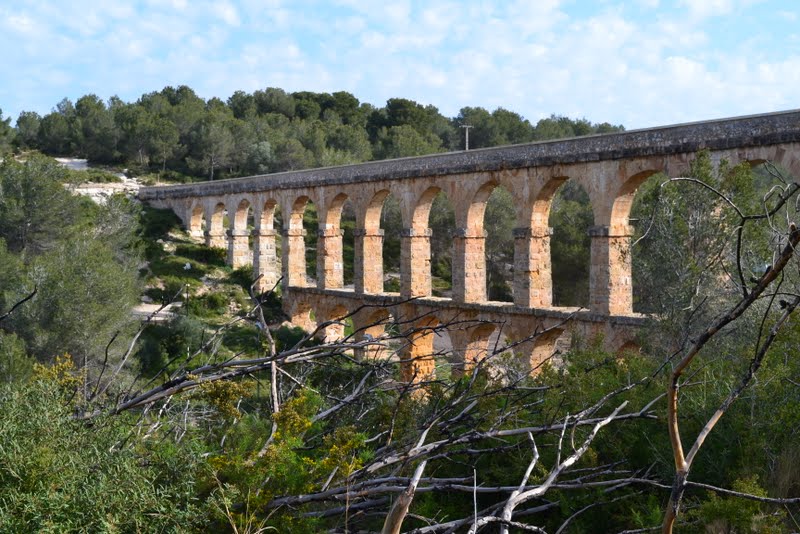
They also had an item on our itinerary termed a ‘hidden treasure’ – showing or giving you something which the regular tourist may not have noticed otherwise. Enroute we stopped to see the ‘Evil Bridge’. The ‘Pont del Diable’ – a Roman aqueduct built in Tarragona which brought water from the Francosi river to the ancient city of Tarros during the 1stcentury.

Legend has it that the master builder was building the bridge when a strong gust of wind blew it away. In despair, he said that only the devil could build a bridge that could last 1000 years. So, Satan appeared to him and ensured that he would build a bridge that very night. In exchange, the devil demanded the soul of the 1st person to drink the water that went across the bridge. The first to do so was an ass and it is the ass whose soulthe devil took.


Figure <!–[if supportFields]> SEQ Figure \* ARABIC <![endif]–>1<!–[if supportFields]><![endif]–> – Devil’s Bridge- The Pont del Diable


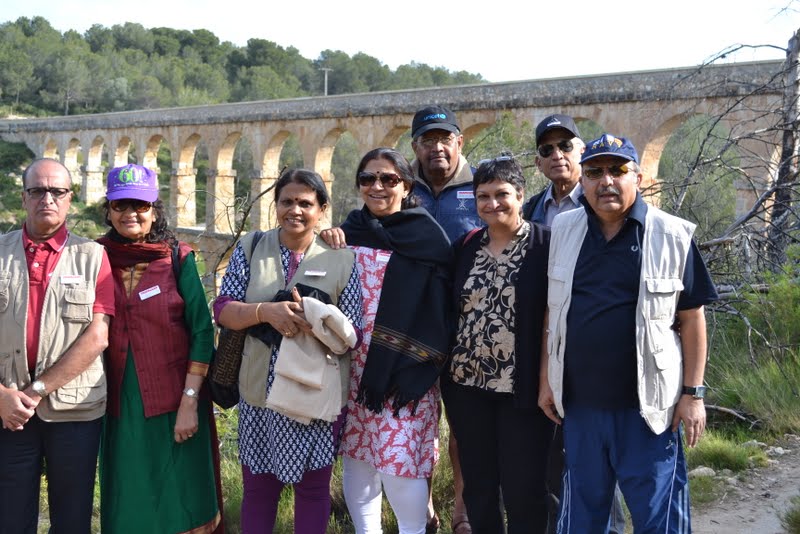
Figure <!–[if supportFields]> SEQ Figure \* ARABIC <![endif]–>2<!–[if supportFields]><![endif]–> – The gang at the bridge


Figure <!–[if supportFields]> SEQ Figure \* ARABIC <![endif]–>3<!–[if supportFields]><![endif]–> – Prem, Joe and self along with a motor bike enthusiast from UK during a technical halt.

Stop at Peniscola

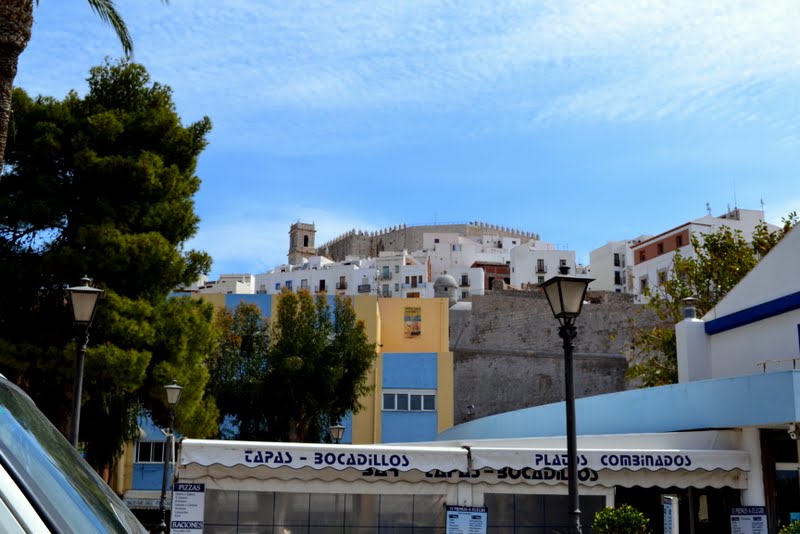
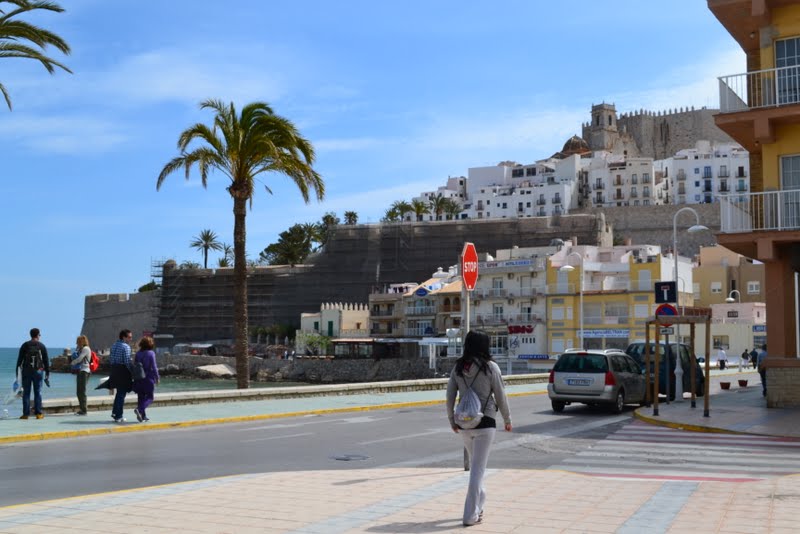
The drive from Barcelona to Valencia is very beautiful and the country side is full of vineyards. The entire drive is pleasing to the eye. Mid way we stopped at Peñíscola for lunch. Peñíscola is located in the north of the Valencia Region in Castellon Province, just over an hour north of Valencia and 2 hours south of Barcelona on the Mediterranean coast. Peñíscola has a privileged position on the Mediterranean.

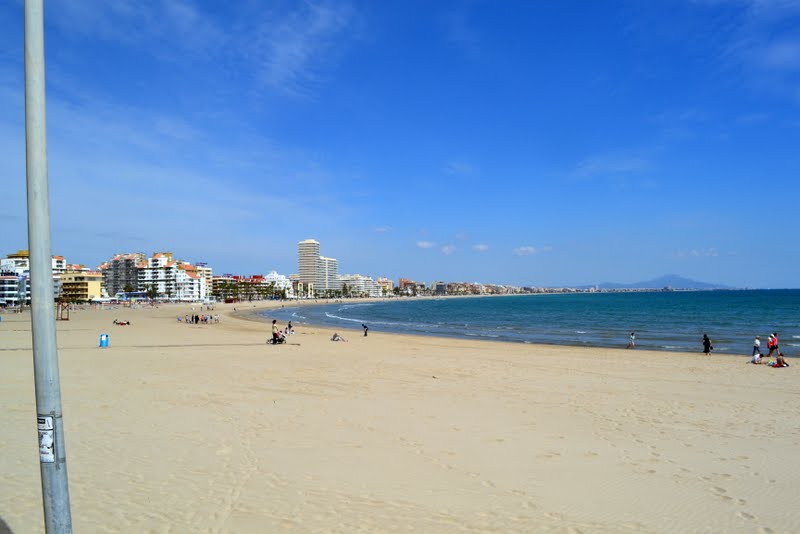
This historical town runs parallel to the coast. Peniscola has been awarded the ‘Blue Flag ’ Beach- Blue Flag is a prestigious, international award scheme which acts as a guarantee to tourists that a beach or marina they are visiting is one of the best in the world. The award of a Blue Flag beach is based on compliance with 29 criteria covering the aspects of: Environmental Education and Information, Water Quality, Environmental Management and Safety and Services. One look at the beach is enough to understand why it was awarded the ‘Blue Flag’. We were told that a number of Germans and Brits own property along the coast line.

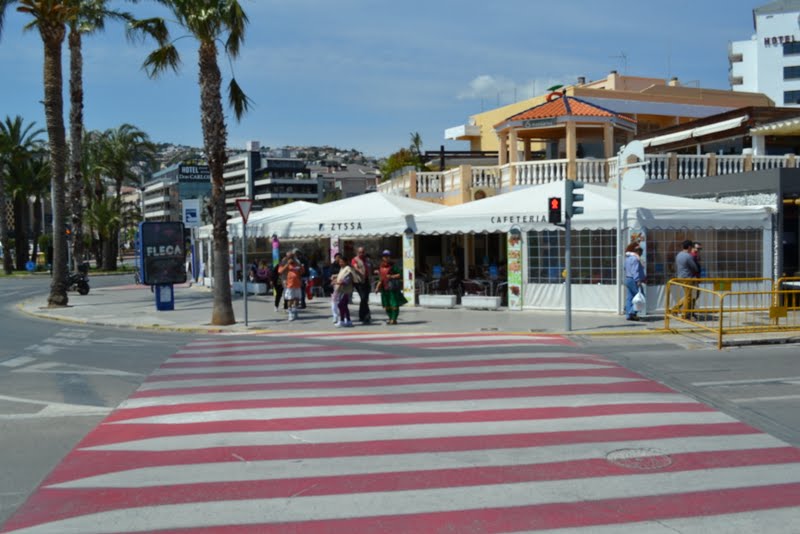
The Mediterranean blue is simply captivating. We spent time walking up and down the beach and finally ended up eating lunch at Zyssa. Jai had exotic ‘Sangria’, a delicious fruit-based wine “punch”, with its traditional heritage well rooted in Spain. Typically, sangrias are made with red wine, fresh seasonal fruit and a bit of bubbly water or citrus flavored soda.

Figure <!–[if supportFields]> SEQ Figure \* ARABIC <![endif]–>4<!–[if supportFields]><![endif]–> – Peñiscola Castle at the back was featured in the movie “El Cid” that came out in 1960 and was very successful at the box office. Starring Charlton Heston and Sophia Loren.


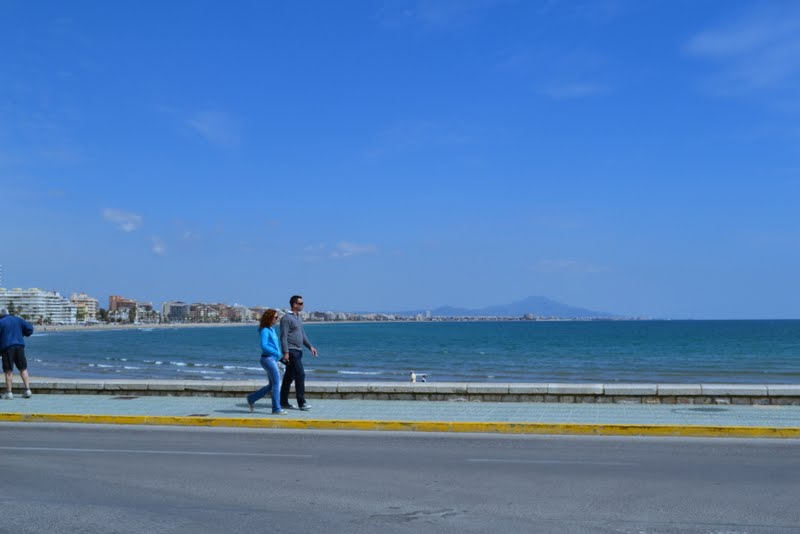
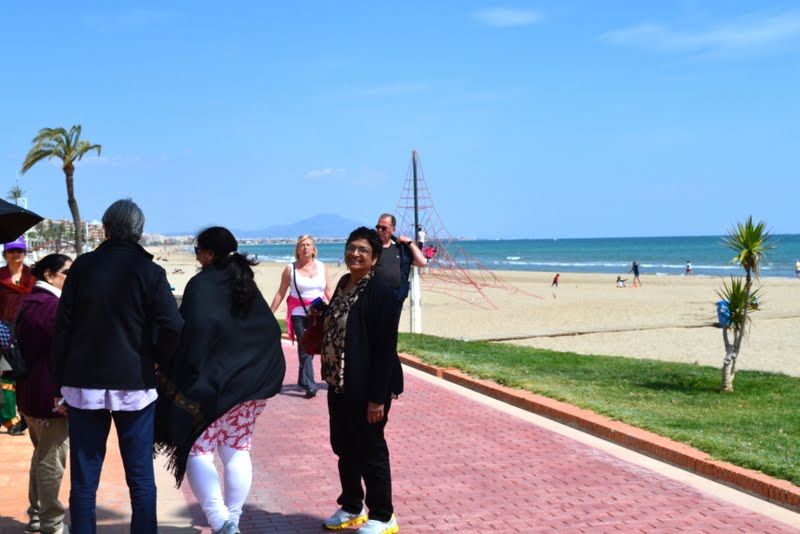
Figure <!–[if supportFields]> SEQ Figure \* ARABIC <![endif]–>5<!–[if supportFields]><![endif]–> – Walkway along the 5 KM beach


Figure <!–[if supportFields]> SEQ Figure \* ARABIC <![endif]–>6<!–[if supportFields]><![endif]–> – A fascinating beach


Figure <!–[if supportFields]> SEQ Figure \* ARABIC <![endif]–>7<!–[if supportFields]><![endif]–> – The entire beach line


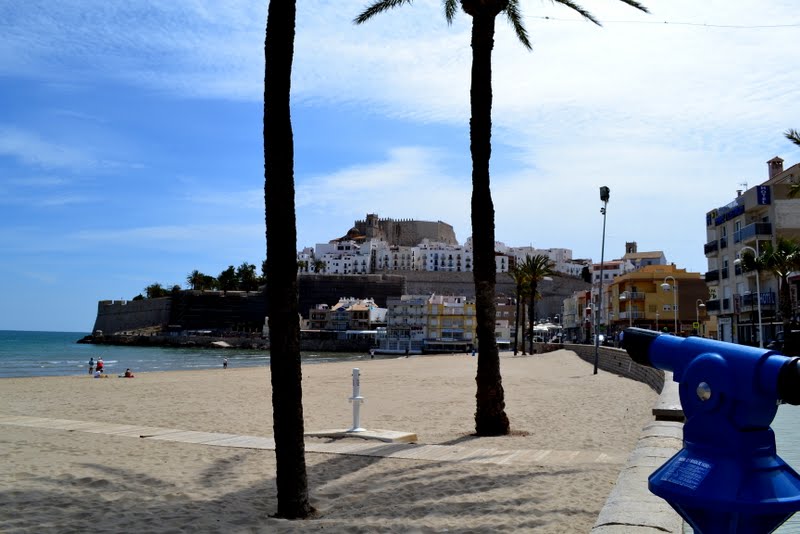
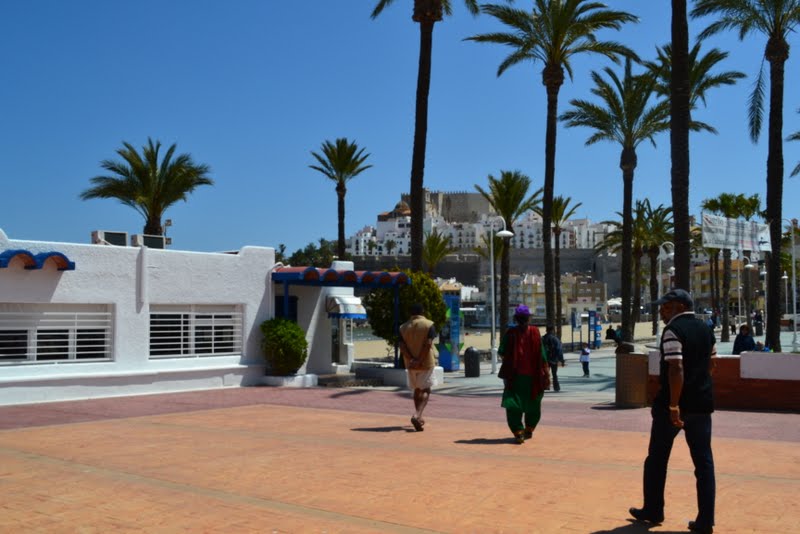
Figure <!–[if supportFields]> SEQ Figure \* ARABIC <![endif]–>8<!–[if supportFields]><![endif]–> – Palm trees adorn the beach


Figure <!–[if supportFields]> SEQ Figure \* ARABIC <![endif]–>9<!–[if supportFields]><![endif]–> – Jai is thrilled

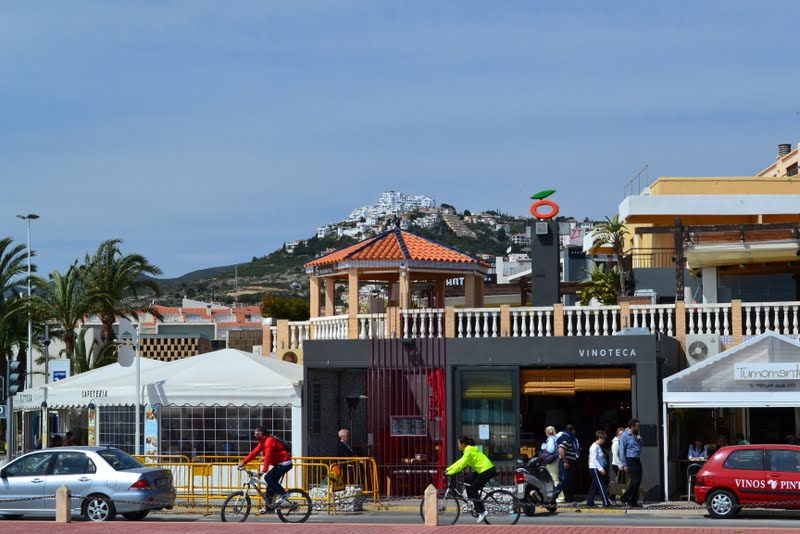
Figure <!–[if supportFields]> SEQ Figure \* ARABIC <![endif]–>10<!–[if supportFields]><![endif]–> – Neatly lined shops and cafes


Figure <!–[if supportFields]> SEQ Figure \* ARABIC <![endif]–>11<!–[if supportFields]><![endif]–> – Another view of the palm tree lined beach


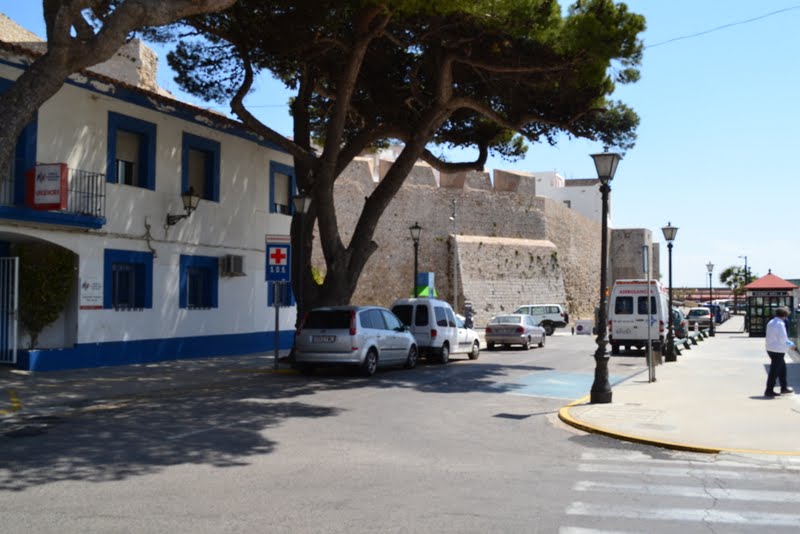
Figure <!–[if supportFields]> SEQ Figure \* ARABIC <![endif]–>12<!–[if supportFields]><![endif]–> – Entrance to the old city


Figure <!–[if supportFields]> SEQ Figure \* ARABIC <![endif]–>13<!–[if supportFields]><![endif]–> – Lunch at Zyssa Cafetaria

Visiting Valencia

After a two hour ride and a bit of Zzzzzz after beer and a good lunch we reached Valencia.Valencia is the third largest city in Spain after Madrid and Barcelona, with around 809,000 inhabitants in the administrative centre. Valencia was founded as a Roman colony in 138 BC. This charming city, situated on the banks of the Turia, on the east coast of the Iberian Peninsula, is the capital of the Old Kingdom of Valencia province of Spain.Valencia is famous for its Fallas Festival in March, for being the birthplace of paella, for hosting the 2007 & 2010 America’s Cup, and for the massive architectural project by Santiago Calatrava called The City of Arts and Sciences. The city has both the new and the old like all other Spanish cities – well maintained and organized. The city is full of parks and flower laden roundabouts. It is cleaner than Barcelona.

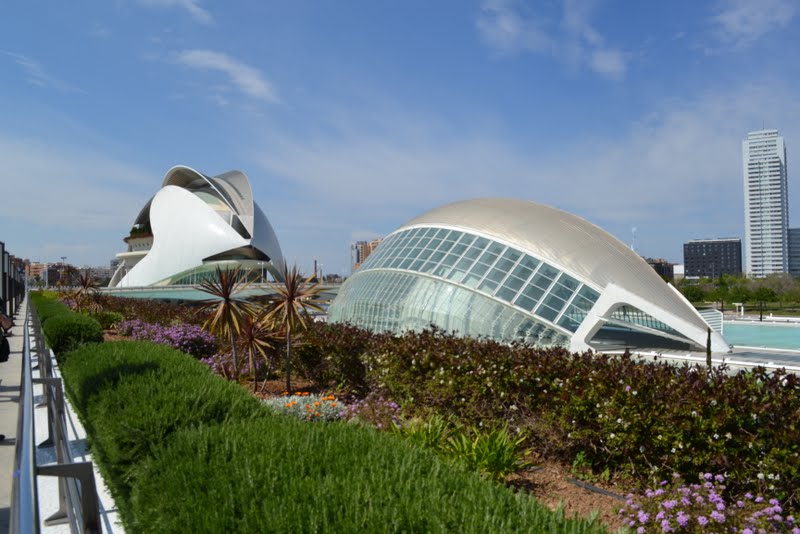
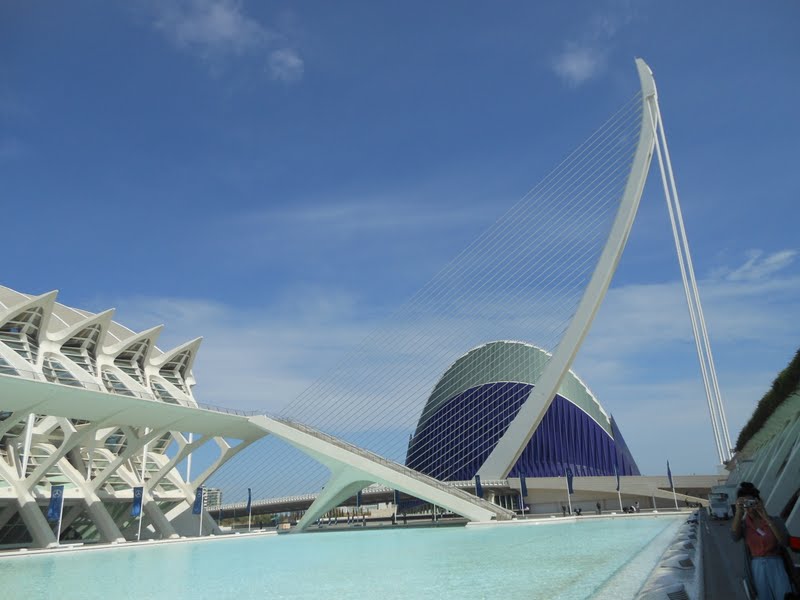
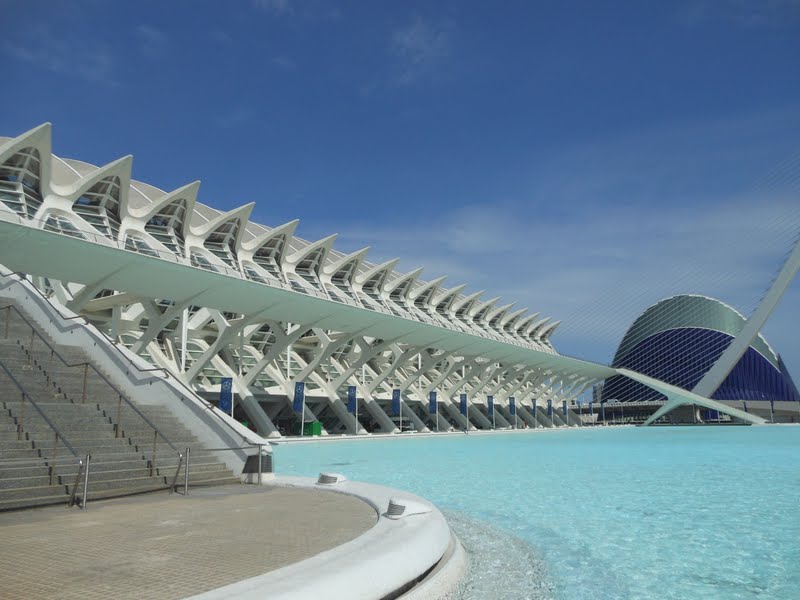
We went straight to the ‘City of Arts and Science’; an extremely interesting place, with fascinatingly modern architecture by Santiago Calatrava. It is located where the old river Turia used to flow. A Science Museum, a Planetarium, an IMAX cinema, an Aquarium and Arts Museum are located there. We were informed that the local people do not think much of the architect, as he took government money to construct these master pieces and then settled out of the country to avail tax benefits.  

During our walk around, we had a drink called ‘Horchata’ made from tiger nuts, water, and sugar – an Almond tasting nut. – a cold and refreshing drink. In June 2010 the city of Valencia achieved a milestone: it became the home of a Formula 1 spectacle. Incidentally, it became the second street circuit after Monte Carlo. Thus, for a week each year, the streets of this eastern city become a place where cars speed over 200 km / h, where the drivers, all their equipment and the hundreds of celebrities that follow this circus parade their little toys around the city. Valencia’s circuit has a total of 25 turns, 11 to the right and 14 to the left, and hosts a total of 100,000 spectators.

From 13 to 19th March, Valencia celebrates one of Spain’s best known festivals: Las Fallas. The Fallas are enormous models made out of papier mache, wood and wax. The models are burnt on the night of 19 March in a festival of fire, fireworks and organized mayhem.  Some claim that the festivals have been celebrated in Valencia since the Middle Ages when carpenters used to light a bonfire on 19th March, St Joseph’s Day. St. Joseph is the Patron Saint of Carpenters. As it coincides with the commencement of the bull fighting season, a number of fights are arranged.

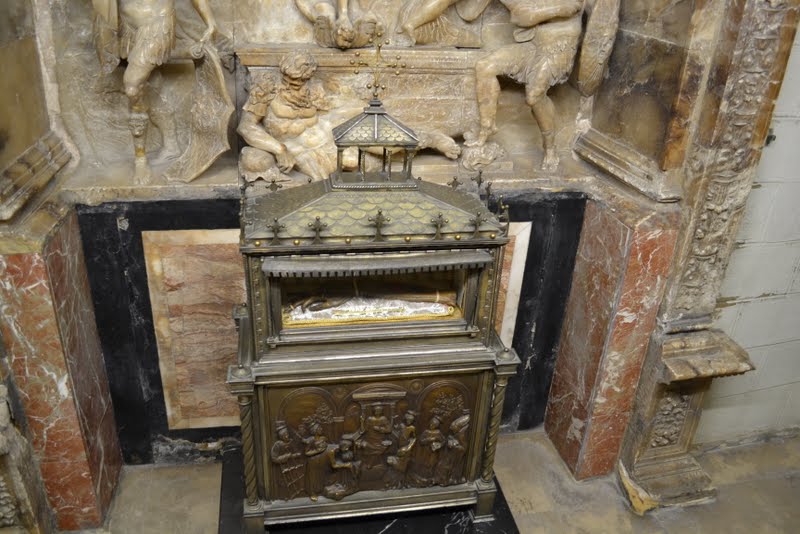
We visited the church of the ‘Holy Grail’. One of the supposed Holi Chalices in the world is revered in one of this cathedral’s chapels; this chalice has been defended as the true Holy grail; indeed, most Christian historians all over the world declare that all their evidence points to this Valencian chalice as the most likely candidate for being the authentic cup used at the Last Supper. There is also a mummified hand of San Vicente Martyr (patron saint of the Valencian Community) – the man who changed the course of history here.
Finally we reached our hotel – Mas Camarena’ – a very basic business type hotel quite far from the town.


Figure <!–[if supportFields]> SEQ Figure \* ARABIC <![endif]–>14<!–[if supportFields]><![endif]–> – Helmet like Opera House at the back and a IMAX 3D Movie hall – City of Arts and Science


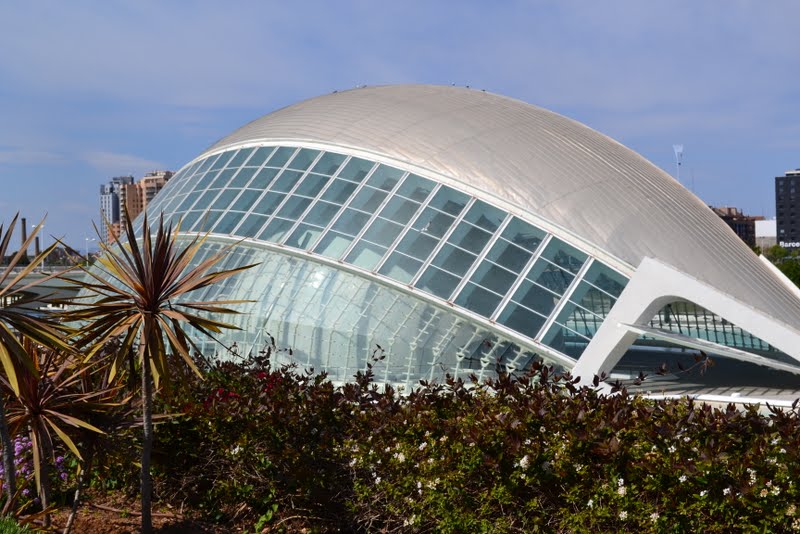
Figure <!–[if supportFields]> SEQ Figure \* ARABIC <![endif]–>15<!–[if supportFields]><![endif]–> – IMAX 3D Movie hall – City of Arts and Science


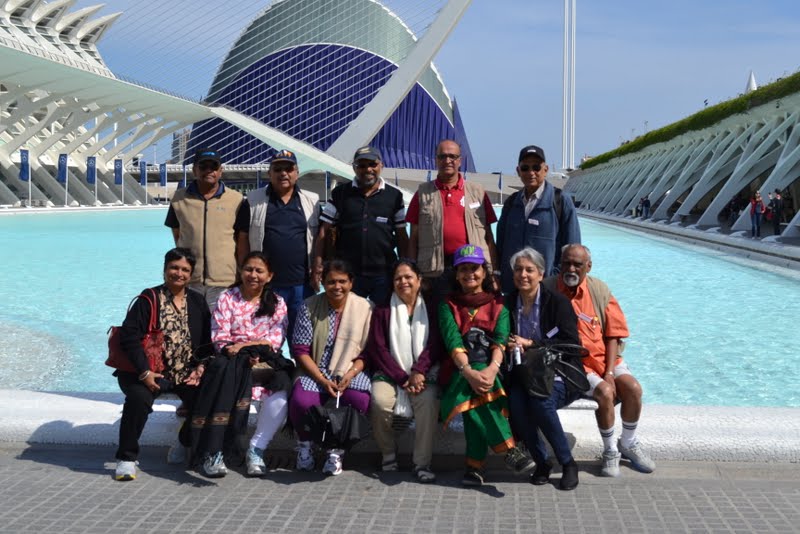
Figure <!–[if supportFields]> SEQ Figure \* ARABIC <![endif]–>16<!–[if supportFields]><![endif]–> – Gang at the City of Arts and Science


Figure <!–[if supportFields]> SEQ Figure \* ARABIC <![endif]–>17<!–[if supportFields]><![endif]–> – The harp. City of Arts and Science. L’Agora – place for assembly in Greek.Used to house sports events.


Figure <!–[if supportFields]> SEQ Figure \* ARABIC <![endif]–>18<!–[if supportFields]><![endif]–> – The dinosaur houses a Science Museum – City of Arts and Science


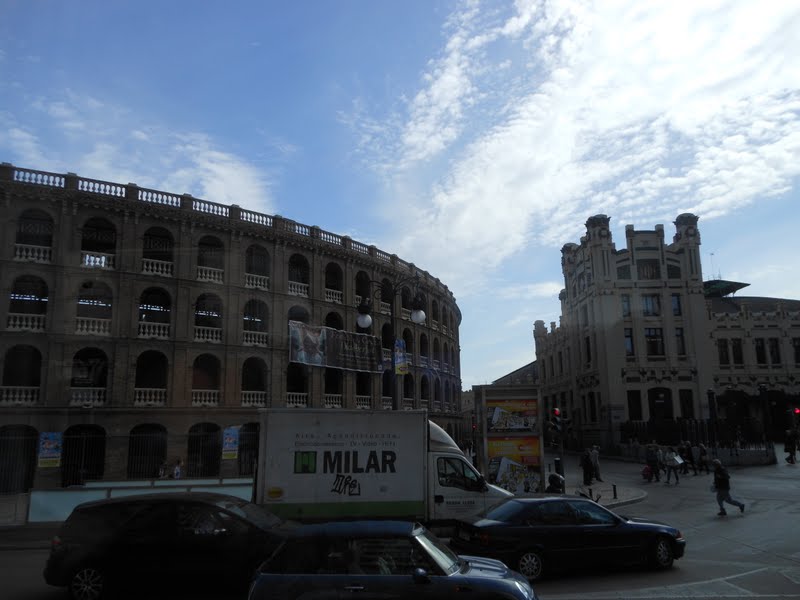
Figure <!–[if supportFields]> SEQ Figure \* ARABIC <![endif]–>19<!–[if supportFields]><![endif]–> – Valencia Bull Ring


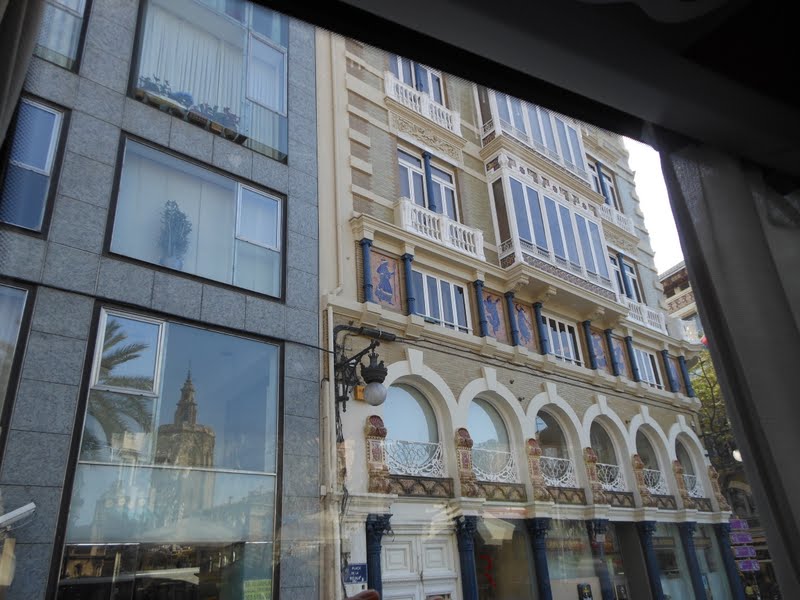
Figure <!–[if supportFields]> SEQ Figure \* ARABIC <![endif]–>20<!–[if supportFields]><![endif]–> – Fascinating balconies


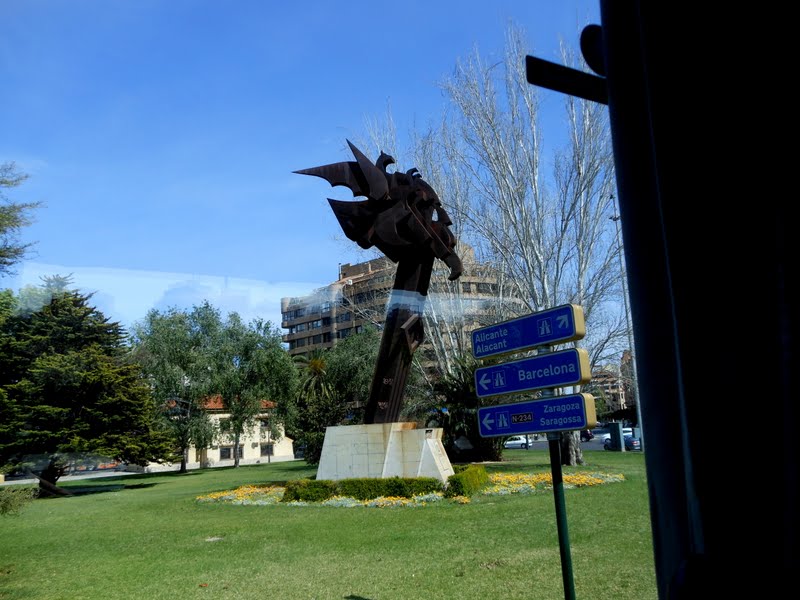
Figure <!–[if supportFields]> SEQ Figure \* ARABIC <![endif]–>21<!–[if supportFields]><![endif]–> – Interesting roundabouts

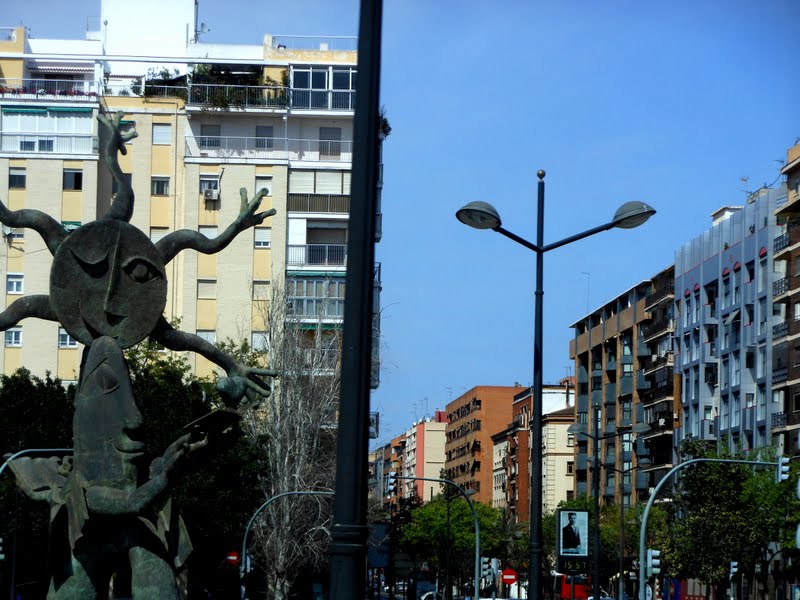
Figure <!–[if supportFields]> SEQ Figure \* ARABIC <![endif]–>22<!–[if supportFields]><![endif]–> – The city is full of art work


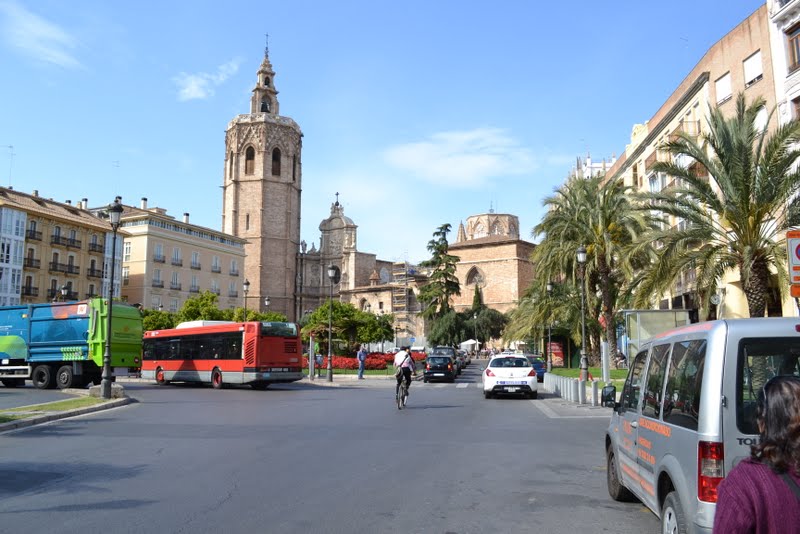
Figure <!–[if supportFields]> SEQ Figure \* ARABIC <![endif]–>23<!–[if supportFields]><![endif]–> – Plaza de la Reina


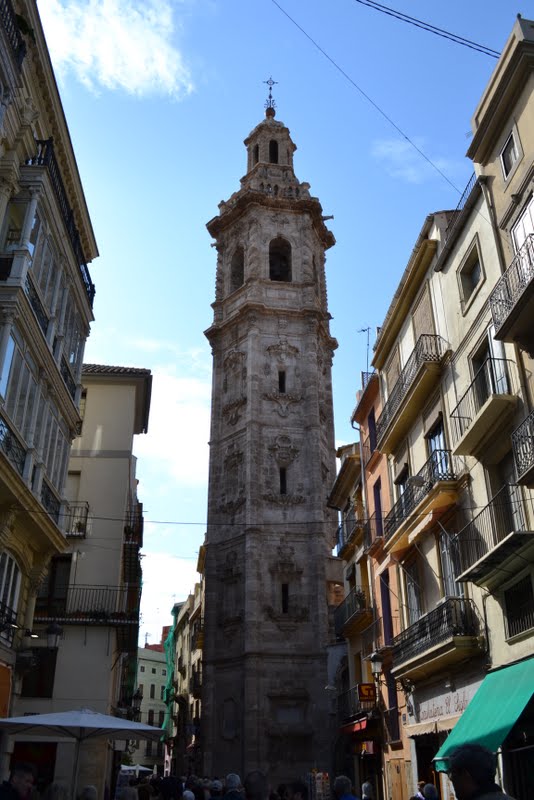
Figure <!–[if supportFields]> SEQ Figure \* ARABIC <![endif]–>24<!–[if supportFields]><![endif]–> – Santa Catalina tower in city centre


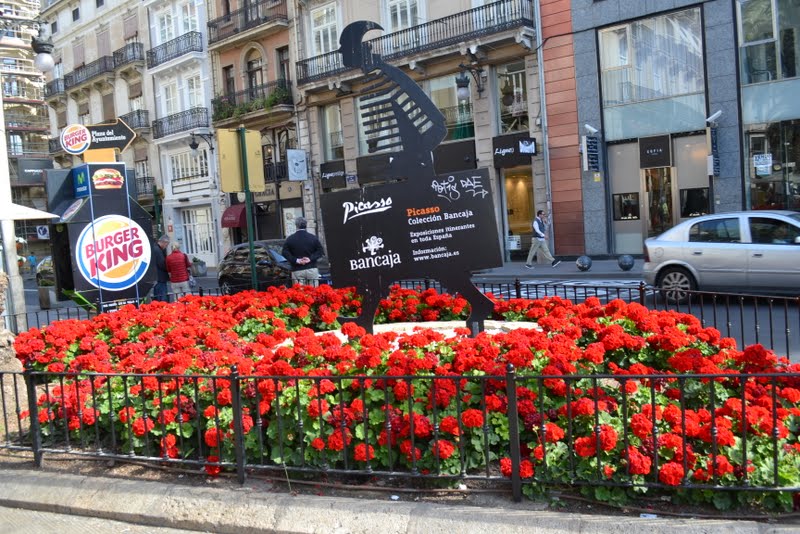
Figure <!–[if supportFields]> SEQ Figure \* ARABIC <![endif]–>25<!–[if supportFields]><![endif]–> – Plaza de la Reina


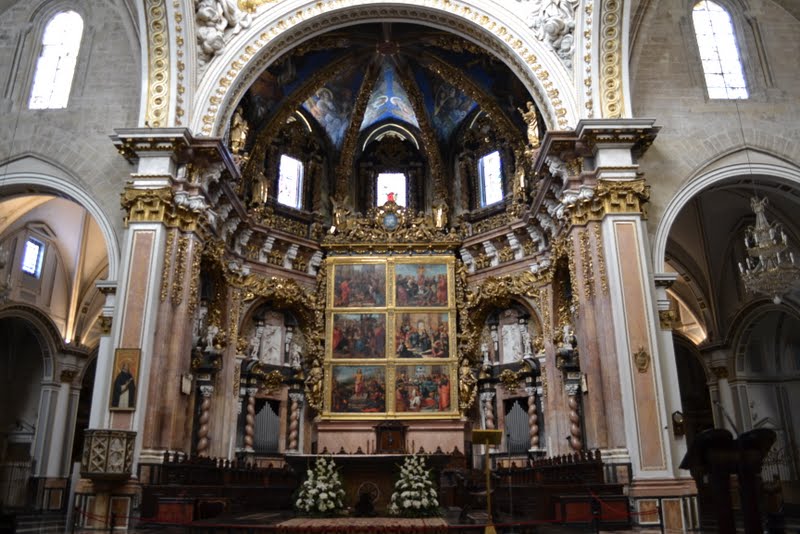
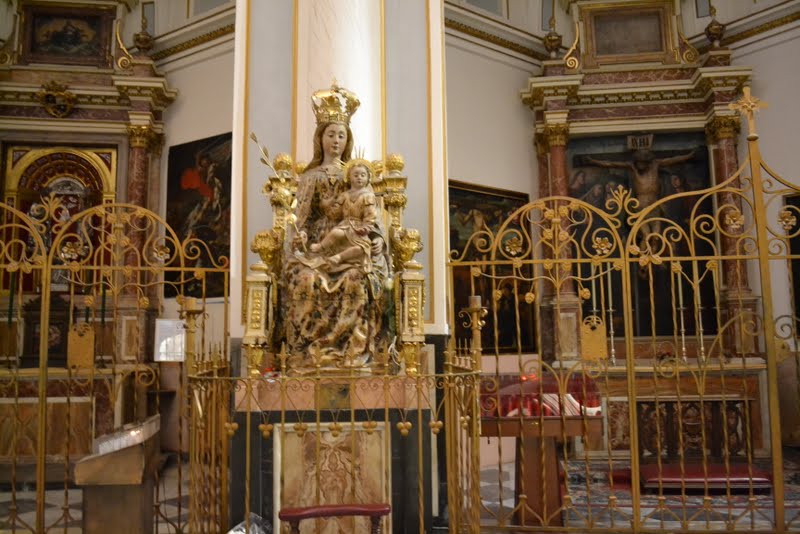
Figure <!–[if supportFields]> SEQ Figure \* ARABIC <![endif]–>26<!–[if supportFields]><![endif]–>– Saint Mary’s Cathedral or Valencia Cathedral


Figure <!–[if supportFields]> SEQ Figure \* ARABIC <![endif]–>27<!–[if supportFields]><![endif]–> – Saint Mary’s Cathedral


Figure <!–[if supportFields]> SEQ Figure \* ARABIC <![endif]–>28<!–[if supportFields]><![endif]–> – Mummified hand of San Vicente Martyr


Figure <!–[if supportFields]> SEQ Figure \* ARABIC <![endif]–>29<!–[if supportFields]><![endif]–> – Before going to bed

We Visited Spain and Portugal – Barcelona – 20 Apr to 3 May 2013

Historical Background

Europe has always been fascinating to any serious traveler. From the very early times to the end of WW II, Europe remained the epicenter of world affairs. It influenced all aspects of human development. Many civilizations flourished during this period –cities such as Rome, Athens, Paris, Berlin, Warsaw, became household names and found a prominent place in our history text books. Europe is tucked under layers of history, much like a book, full of culture, music, art and architecture sharing space with monarchy, anarchism, bloody wars, religion, adventure and more. In the midst of this captivating landmass, is juxtaposed the ancient countries of Spain and Portugal. As if running away from Europe, the Iberian Peninsula jets out into the Atlantic and pretending to enclose the Mediterranean into a private pool of the rich and the famous. S and P stand in the crossroad of many cultures and civilizations.

Even as a casual tourist, it is extremely important to know a little about the history of the places he wishes to visit. One will be able to appreciate the country better.

Tucked away in a corner and closer to the African landmass, Spain and Portugal have always been slightly different from the other European countries. Africa is less than 16 km to the South at the Strait of Gibraltar.  Strife among the aristocracy, famine and chaos throughout the peninsula, the Visigothic kingdom was falling apart. This paved the way for the Muslim (sometimes referred to as Moors) invasion of 711, which set Spain’s destiny quite apart from that of the rest of Europe. This influenced Portugal also to a very large measure. Within a few years the Muslims had conquered the whole Iberian Peninsula. Muslim political power and cultural developments centered on Cordoba (756–1031), then Seville (1040–1248) and lastly Granada (1248–1492). For 700 years the Christians waged a battle to overthrow the Moors. Finally The Christian ‘Reconquest’ of the Iberian Peninsula which began in about 722, ended with the fall of Granada in 1492. The Jews also played an important role in shaping Spain. It is said that every aspect of Spanish life has a touch of Islam. Spanish language has many Arabic words, its music has an Arabic tone and its culture has more Arabic influence than the European. Ironically, today there are very few Muslims in Spain

With an area of 505,992 square kilometers, Spain is the fifth largest country in Europe. In comparison, India is 6 times larger. Spain is about the same size as Rajasthan and UP put together. Official language is Spanish. It supports a population of 47 million people with a density of 93/KM sq. (is lower than that of most Western European countries)  Whereas, we have 1.27 billion with staggering density of 372/KM sq. India is 27 times more populous than Spain.

No write up on Spain and Portugal is complete without the mention of their sea faring traditions. Both these nations have a very rich maritime history. Wiki records” The Age of Discovery started with the Portuguese navigators. Prince Henry the Navigator would start a maritime school in Portugal. The resulting technical and scientific discoveries led to Portugal developing the most advanced ships and caravels, that for the first time in history would make truly global maritime navigation possible. It led to the Portuguese Kingdom discovering and mapping most of the Globe. The route to India via the Cape of Good Hope was discovered in two phases. The Second phase would take Vasco da Gama around the southern tip of Africa and on to India and the East. Vasco da Gama’s pioneering sea voyage to India is one of the defining moments in the history of exploration. It was the first time in history that humans had navigated from Europe around Africa to Asia. It also led to the discovery of Brazil and South America. It would also be a Portuguese nobleman, Ferdinand Magellan that would be the first man to sail around the world. Christopher Colombus set sail in the Santa Maria on what is probably history’s greatest voyage of discovery on August 3, 1492. He returned home in 1493 to a hero’s welcome

These discoveries placed Spain and Portugal alongside Britain and Netherlands in establishing their empires around the globe. Interestingly, between themselves they divided the world outside of Europe into two, at the Treaty of Tordesilhas in 1494. Portuguese Empire was the first ‘Global Empire’ in the world. They set up 3 colonies in India, 26 in Africa, 3 in North America, 4 in South America, 22 in Asia.


Figure <!–[if supportFields]> SEQ Figure \* ARABIC <![endif]–>1<!–[if supportFields]><![endif]–>– Portuguese Influence

Similarly the Spanish Empire extended all over the globe. It was twice the size of Portuguese Empire and many times larger than the Mauryan Empire covering whole of India. Beginning with Columbus’ explorations of the late fifteenth century, Spain took the lead in developing an empire in the New World. The Spanish Empire extended across most of the Americas and into Asia in the sixteenth century. Possessions were developed in Africa


Figure <!–[if supportFields]> SEQ Figure \* ARABIC <![endif]–>2<!–[if supportFields]><![endif]–> – Spanish Influence
In tandem, their languages also spread far and wide – Spanish more than Portuguese. It is widely spoken all through Latin America with over 380 million Spanish speakers estimated worldwide. About 250 million peoplespeak Portuguese.

With this very rich and varied legacy beckoning our curiosity, twelve of us decided to visit Spain and Portugal. Self and Jai, Kats and Navin, Nair and Sudhi, Dore and Lalitamma, Sunder and Saroja, Prem and Bina formed the group. We joined the ‘Iberian Explorer’ tour operated by UK based travel firm ‘Trafalgar’ .The tour commenced on 20 April and ended on 03 May 2013.

Spain and Portugal as we saw

The cities in Spain are very picturesque, clean and very well laid out. The cities have developed over centuries and phenomenal effort and planning has gone into maintaining a balance between the old and the new. They together represent a special kind of architectural brilliance – probably unique to European cities. There is ample evidence of Islamic influence. The Muslims introduced tiles, red bricks, mirrors, pillars and minars amongst other things. The cityscape is full of history – dotted with monuments, statues, parks, avenues, promenades and the rest. This feature is common all over the country. At least to an outsider, Spain radiates a certain feeling of aloofness and reserve – unlike maybe Athens, Rome or New York – who are more spontaneous – shop keepers and waiters in restaurants appear to be edgy and detached – probably no time to fool around.

The weather was excellent during our entire stay. As one goes south and towards the coast, the temperature drops. Lisbon was at 4 deg C with gusting winds and outskirts of Madrid experienced an unusual snowfall. The rain god has been very kind to Spain this year and we were told that all the lakes are full. March 2013 was the wettest year in Spain in 70 years.

What strikes an observer most– especially one from India – is their near empty roads – few cars and fewer people. In many places the roads are deserted. This aspect stares you in the face when you travel on the high way – absolutely devoid of people and animals – except for an occasional sighting of wild horses, bulls, pigs and storks roosting on electric poles. There are hardly any policemen on the road and the traffic is very disciplined – one stands to loose driving license for over speeding. At least in Spain we did not find any beggars – however they were a few in Lisbon. Most of the apartments are up to nine floors and sky scrapers are an exception.

English is not spoken widely, and at times it becomes extremely difficult to convey a message. We had seven vegetarians in our group, who found it very hard to get a meal devoid of ham or tuna or some other form of meat. It’s advisable to carry a list of frequently used sentences in Spanish or Portuguese such as – please do not put any meat, fish, chicken, pork etc in my food, how much does this cost, etc. Sign language will always be there to rescue.Spain
is one of the most advanced countries in the development of solar energy, and it is one of the European countries with the most hours of sunshine. Since 2010, Spain has been the world’s leader in concentrated solar power (CSP). 10% of Spain power requirement is met by solar energy.

An interesting bit of trivia; Spain’s national anthem has no words.

Tourism plays a major role in the economy of S and P. The cities are full of tourists – Japanese, Chinese, Russians, Americans and many more who throng the attractions. A repot states “Tourists to Spain spent 3.28 billion Euros in March, an increase of 13.7%”. Tourism in Portugal has developed significantly and generates approximately 5% of the wealth produced in Portugal. In comparison tourism in India generated $121 billion or 6.4% of the nation’s GDP in 2011.Spain produces 50% of world Olive oil. Cork and wine contribute in large measure to the countries’ economy.

One sees a number of couples in their mid thirties with babies in a pram – probably they wait to settle down in their jobs, buy a house, bank balance etc before adding an additional member to the family. Young couples receive a lot of support from their parents – who look after the kids when the parents are at work.

There was a lot of talk about how the economy of S and P is in a bad shape, rampant unemployment, bailout packages from the EU, spiraling prices and much more. But to a casual observer, things appear normal – the public services continues to work efficiently, the roads are clean, garbage is removed, buses and trains run on time, uninterrupted power and water supply, one did not see any signs of poverty – On the whole they love to crib and crack jokes about their economy and the government. Come on – things are not that bad – visit India and you will appreciate your country even more. Collapse of real estate, unbridled government spending, inefficient tax collection, privatization of public companies et all have contributed to the present economic crisis. Education, medical care and government civil projects have been badly hit due to the eco down trend.

Throughout our stay we did not see any cloth lines hanging in any of their balconies – instead decorated with colorful flowers. It’s a pleasure to watch the facade of these houses – each window is designed differently with varying colours.

As a tourist it’s good to buy your beer, water and other things of daily necessity from a departmental store – it works out much cheaper. Outside of Hotel, travel and breakfast one can manage on 20 Euros a day – a very conservative estimate – with an occasional beer, wine and a meal or two in a restaurant and some souvenirs. All their cities are very well geared to woo the tourist. City centers and market places are full of cafes selling tapas, coffee, wine and beer. There is little or no pollution in the air. It’s good to carry a small kettle with you to make the early morning coffee or tea – none of their hotels provide the complimentary water, tea or coffee. Also carry a pair of bathroom slippers.

Both the countries remained neutral during WW I and WW II and spared the ravages of war – the people go about their daily activity in slow time and there is no unnecessary hurry – which I think is a good feature.

Barcelona – 20 and 21 April

We landed in Barcelona in the late afternoon and were taken straight to the hotel – ‘Abba Garden’ located in the outskirts of the city. The city is well connected through a net work of taxis, buses, trams and metro. Unfortunately we missed the duty free shop in Barcelona airport – we landed on a 13 day trip without any fire water. Baptism by Fire was scheduled soon after checking in. We immediately ventured out in Barcelona in search of tipple. After a long walk we reached ‘El Corte Inglés’ – another interesting fact – scotch is slightly cheaper than the duty free. With our confidence restored we took city bus ‘Line No 21’ and returned to the den for a bit of much needed Elixir prior to dinner.


Figure <!–[if supportFields]> SEQ Figure \* ARABIC <![endif]–>3<!–[if supportFields]><![endif]–> – Beaming with confidence

In all we were 52 tourists from various places across the world- India, America, Canada, Australia, South Africa, Jamaica, Malaysia etc. As expected the first, the second and the third world people sat together like in ‘Rummy’- a card game – where in a player arranges  similar cards in a suit to make a sequence of sorts – few jokers sat in empty chairs -to enjoy the dinner and listen to briefing by our tour director Mr David Nadal. There were fourteen Indians which made up almost 25% of the crowd. Trafalgar briefing is extremely thorough. Departure, arrival, day’s activities, luggage pickup time, trivia and interesting tidbits are covered in detail by the tour director to make the day interesting.

Barcelona is the capital of Catalunya and the second largest city in Spain, after Madrid. About five million people live in the Barcelona metropolitan area. Barcelona is the Mecca for architects with Gaudi’s brilliance at display all over the city. Wiki says “Antoni Gaudí was a Spanish architect born in Catalunya and figurehead of Catalan Modernism. Gaudí’s works reflect his highly individual and distinctive style and are largely concentrated in the Catalan capital of Barcelona, notably his magnum opus, the Sargada familia”. Gaudi famously declared ‘there are no straight lines in nature’– therefore his work had nothing but curves. The story goes that when an influential society lady asked Gaudi to design a piano for her (think of the straight keys) he replied, “My dear lady, why don’t you learn another instrument?”

We saw the famous ‘Barcelona stadium’ – we were informed that the entire stadium with a capacity of 96,000 can be evacuated in 11 minutes flat – fantastic. We went for a stroll in the ‘Catalunya Square’ – one can see tourist and Spaniards coming out in large numbers to enjoy a bit of sunshine on their Sunday outings with their families. The square brings out the best of Barcelona. The avenue is lined with shops and eateries to help tourist spend their time. One can sit for hours with a glass of beer and watch people go by. Barcelona has been adjudged as the 5th most visited city in the world in 2012. We were cautioned to be careful of pick pockets.

We celebrated Lalitamma’s 70thbirthday with cones of delicious ice cream. We all wish her a long and healthy life.

Figure <!–[if supportFields]> SEQ Figure \* ARABIC <![endif]–>4<!–[if supportFields]><![endif]–> – Lalitamma on her 70th birthday. Interestingly we were in Xian – China on her 68th birthday with the same group.

Throughout our stay the weather was excellent – between 14 to 20 deg C.
In the evening we went for a traditional dinner with fresh salad, tapas, paella and the rest with Mario playing harmonica.


Figure 5 – David Nadal- our tour director and 14 day friend, philosopher, guide and standup comic.No relative of Rafeal. Nadal is a very common name in Catalunya.

Figure 6 – The Indian table with our friend from Australia

Figure <!–[if supportFields]> SEQ Figure \* ARABIC <![endif]–>7<!–[if supportFields]><![endif]–> – A view from the hotel – Abba Garden

Figure <!–[if supportFields]> SEQ Figure \* ARABIC <![endif]–>8<!–[if supportFields]><![endif]–> – Barcelona city sky line from Montjuic. The famous ‘Bullet’ at the back. Bullet-shaped skyscraper – Agbar Tower, representing modern architecture in Barcelona,

Figure <!–[if supportFields]> SEQ Figure \* ARABIC <![endif]–>9<!–[if supportFields]><![endif]–> – Sargada Familaa from a distance

Figure <!–[if supportFields]> SEQ Figure \* ARABIC <![endif]–>10<!–[if supportFields]><![endif]–>  -Sargada Familaa from near

Figure <!–[if supportFields]> SEQ Figure \* ARABIC <![endif]–>11<!–[if supportFields]><![endif]–> – A street entertainer making a giant soap bubble

Figure <!–[if supportFields]> SEQ Figure \* ARABIC <![endif]–>12<!–[if supportFields]><![endif]–> – Museu Nacional d’Art de Catalunya and Les Quatre Coloumnes

Figure <!–[if supportFields]> SEQ Figure \* ARABIC <![endif]–>13<!–[if supportFields]><![endif]–>– City council bikes – clean and orderly

Figure <!–[if supportFields]> SEQ Figure \* ARABIC <![endif]–>14<!–[if supportFields]><![endif]–>–  Expo site

Figure <!–[if supportFields]> SEQ Figure \* ARABIC <![endif]–>15<!–[if supportFields]><![endif]–> – Enjoying a joke with Bob from Texas. Bob was great company and resembled George Bush a lot.


Figure <!–[if supportFields]> SEQ Figure \* ARABIC <![endif]–>16<!–[if supportFields]><![endif]–> – Catalunya square –  avenue

Figure <!–[if supportFields]> SEQ Figure \* ARABIC <![endif]–>17<!–[if supportFields]><![endif]–> – Place de Cataluña – the gang

Figure <!–[if supportFields]> SEQ Figure \* ARABIC <![endif]–>18<!–[if supportFields]><![endif]–> – The extraordinary balconies

Figure <!–[if supportFields]> SEQ Figure \* ARABIC <![endif]–>19<!–[if supportFields]><![endif]–> – Gaudi’s creation Casa Batllo.An apartment building designed entirely by Gaudi and considered his masterwork.

 Figure 20 – Near empty roads

Figure <!–[if supportFields]> SEQ Figure \* ARABIC <![endif]–>21<!–[if supportFields]><![endif]–> – Communication Tower

Figure <!–[if supportFields]> SEQ Figure \* ARABIC <![endif]–>22<!–[if supportFields]><![endif]–> – Street Musicians – Catalunya Square

Figure <!–[if supportFields]> SEQ Figure \* ARABIC <![endif]–>23<!–[if supportFields]><![endif]–> – Hard Rock café on a Sunday afternoon

Visit to Park Güell

Park Güell was commissioned by Eusebi Güell who wanted to create a stylish park for Barcelona aristocracy. Park Güell is a garden complex witharchitectural elements situated on the hill of El Camel in the Gracia district of Barcelona, It was designed by the Catalan architect Antoni Gaudi and built in the years 1900 to 1914. Every corner of the park displays the architect’s passion for nature’s forms: Gaudí wanted human intervention in this forest to blend in with the landscape, to complement it, and he certainly achieved this. Snails, mushrooms, leaves, flowers, tree trunks and elephants appear constantly in the mosaics and in the architectural forms. Even the bell in the chimney of the concierge’s house is shaped like an inverted mushroom. 


Figure 24 – Gaudi’s house where he stayed for 20 years. Guell Park

Figure <!–[if supportFields]> SEQ Figure \* ARABIC <![endif]–>25<!–[if supportFields]><![endif]–> – Guell Park – A rare photo op for me

Figure <!–[if supportFields]> SEQ Figure \* ARABIC <![endif]–>26<!–[if supportFields]><![endif]–> – Jai enjoying the architecture – Guell Park

Figure <!–[if supportFields]> SEQ Figure \* ARABIC <![endif]–>27<!–[if supportFields]><![endif]–> – Guell Park – An uninterrupted view of the terrace walls.

Figure <!–[if supportFields]> SEQ Figure \* ARABIC <![endif]–>28<!–[if supportFields]><![endif]–> – Guell Park

Figure 29 – Mosiac work Guell Park


Figure 30 – Guell Park – Bird nests built by Gaudí in the terrace walls. The walls imitate the trees planted on them.

 Figure 31 – Mosaic lizard, Park Güell. Gaudí’s multicolored mosaic salamander, popularly known as “el drac” (the dragon), at the main entrance

Figure <!–[if supportFields]> SEQ Figure \* ARABIC <![endif]–>32<!–[if supportFields]><![endif]–> – Front view. Mosaic  lizard, Park Güell.

Figure <!–[if supportFields]> SEQ Figure \* ARABIC <![endif]–>33<!–[if supportFields]><![endif]–> – Guell Park 

Figure <!–[if supportFields]> SEQ Figure \* ARABIC <![endif]–>34<!–[if supportFields]><![endif]–> -Guell Park

Figure 35 – Sea front restaurant for dinner

Figure <!–[if supportFields]> SEQ Figure \* ARABIC <![endif]–>36<!–[if supportFields]><![endif]–> – Tiuglado Monchos

Figure <!–[if supportFields]> SEQ Figure \* ARABIC <![endif]–>37<!–[if supportFields]><![endif]–> – Mario on the harmonica

The night ended with lots wine and good food as any nice day should end. Food was lovely and I tried the sea food tapas – the best pick being octopus. The vegetarians had varieties of cheese, bread, tomato paste, fried brinjals, onion and green chilies along with paella. All this was followed by excellent lemon sorbet for dessert. Throughout the dinner Mario played some excellent music on the harmonica – including a few Raj Kapoor hits – much to the merriment of the Indian audience.

Two days in Spain was sufficient to convince all of us about its beauty – we returned to Abba Garden full of anticipation and excitement.
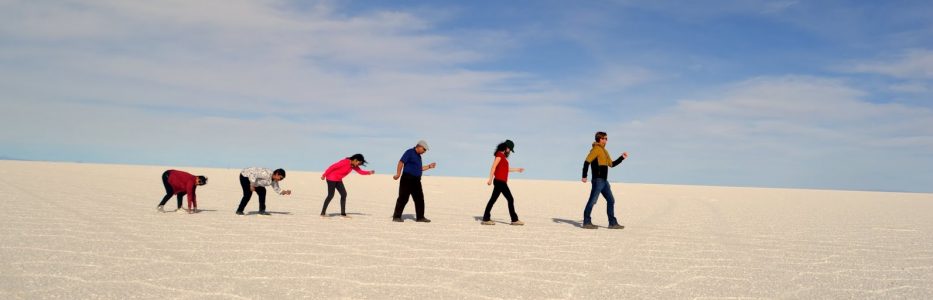
Generally Speaking

Namby was ill at ease and very uncomfortable with his new surroundings. He somehow could not pinpoint the source of his discomfort. It had something to do with his retirement from the army. Lt General Ramanathan Nambeesan SM, AVSM, PVSM and the LOH – Pushpawati had recently arrived in Bangalore and settled down quietly in a colony built for retired defense officers. Namby had shed his uniform and hung up his boots about a week ago. Now sitting in a small patio sipping his morning chai, his mind started to wander. Life in the army was good – fair mix of work, leisure and sports, combined with a caring wife, constant love from the children and grand children; all this had spoilt Namby. As Commander – in – Chief, he had led a charmed life. Each day had unfolded on predictable lines. There was always a posse of people around him to ensure things went right. Life was perfect.


The morning after moving into the colony, Namby got up as usual and went for a long walk. Push had woken him up early and told him to walk the dogs, a chore he had never done before. At first he was very surprised that nobody recognized him and the usual hordes of cheerful and bright ‘Good morning, sirs’ were absent. He muttered – ‘What an extremely uncivilized colony!’ and continued his walk. Even more distressing was the fact that he had to put his two Labradors – ‘Par’ and ‘Birdie’ on a leash. The labs had been spoilt in the Army – running around the ‘Flag House’, chasing squirrels, barking at anything that annoyed them ,being constantly petted by junior officers and their ladies. P and B made it amply clear to the General that these changed circumstances were totally unacceptable – they barked their annoyance, ‘dogs do not retire’. They refused to do their potty. The old man, a veteran of many battles was at a total loss. How does one solve such a vexing problem? He could not go home and announce that P and B had returned without doing their daily ‘Doggie Poo’. Push would certainly not like it. Once inside their fortress, the general for all his 6ft height, weight and handle bar mustache, ranked slightly lower than Push. He knew, ‘When push comes to shove’, LOH could be really pushy. Junior officers sometimes wondered- was Namby, Pamby?

He came home and sat down to enjoy a cup of hot tea. Force of habit of the last 40 years, he started to look for the remote calling ‘Bell’ to ask ‘Bahadur’ to bring some tea. Push reminded him there was no B or B and he had to get up and make himself tea as she was going to Commercial Street with Bunty for shopping. The last time he had attempted to make tea was in his 4th term ‘Rover Camp’ at the NDA  some 40 years ago. All of a sudden, life seemed gloomy and depressing.

Push on the other hand had got acclimatized quickly to retired life. Unknown to the general, she had prepared hard. She had spoken at length to Bunty to get her a good cook and a domestic help. During her last visit to Bangalore she had selected these two life savers. In addition, Bunty had taken the LOH around the colony and introduced her to all the VVIPs – Dhobi, owners of vegetable, meat and grocery shops, plumber, electrician and the Estate manager. LOH with all her tact, diplomacy and remarkable ability for small talk had made a lasting impression.  
Shanti the cook had come and departed in a jiffy putting ‘Shatabdi Express’ to shame. The general had great difficulty in operating the microwave to heat his breakfast. Muttering under his breath, he said to himself, ‘I am a warrior not a ruddy technician’. Normally the ADC would have come by now and briefed the general regarding all the activities of the day. The Staff car would be waiting in the porch and he would have left the house to run the army. Today was different; LOH gave him a list of jobs to do – visit the Estate Office, vegetable shop and the bank. She told him, ‘Darling, select the vegetables properly and at no cost take what he gives’. He muttered, ‘I was running an army – you think I don’t know how to buy some damned veggies?’ Unfortunately for the three starrer, LOH heard it and added sternly, ’Anybody can run an army but selecting the correct vegetables is an art that does not come easily’.

Deeply hurt with the statement, the general gave his mustache a rebellious twirl and departed from the house to face the first day of his retired life. As a general rule, the retired lot, especially the males, find it extremely difficult to find ways to spend time between post breakfast and lunch. They invariably become a nuisance at home and are normally sent out on important domestic errands by their wives. Such direction impaired and time challenged people have a remarkable ability to congregate in public spaces. As the general walked past the Estate Office he noticed a group of elderly people sitting by the library in animated discussion.  With a little trepidation, he introduced himself and joined the gang. The debate was about the nutritional value of jack fruit as compared to drum sticks. A retired doctor from the Air Force was holding fort and expounding on the virtues of JF and reminded his audience that it is rich in dietary fiber, which makes it a good bulk laxative. Not to be out done, the navy Captain said ‘soup made from drumstick flowers, boiled in milk, helps to cure sexual debility and is also useful in functional sterility of both males and females’. The bald colonel sitting at a distance was not at all amused and told the sailor he had no requirement for this soup. The general found all this frivolous talk extremely irritating. He found the entire proceedings bereft of any strategic depth or tactical content. More annoyingly, he was not being consulted at all. In the normal course of events, all discussion would have stopped on his arrival, people would stand up to salute and the field would be left open for him to take control of the discussions with everyone hanging onto his each and every word. He muttered once again, ‘No respect for seniority’.

His visit to the Estate Office was also very uncomfortable. He was very curtly ticked off by an old and grumpy lady, ‘Can’t you see I am talking to the manager? Please wait your turn!’ He muttered ‘Never again will I come here!’ The old lady continued her barrage and pounded the poor manager with her water woes, as the General tottered out unheard and unsung.

His whole life had been turned upside down. The first day out was not at all encouraging – something had to be done, he did not know what. That is when he saw Colonel Prakash waving at him from a distance. He found a great measure of solace in sighting an old ‘Battle Buddy’; it restored his faith in life and brought in a lot of cheer.

They returned home. The General poured some chilled beer with a perfect head and said cheers to old times. The Colonel was aghast to see the General all deflated – like a day old Christmas decoration balloon. Prakash realized that he needed to restore the general quickly to mint condition. He made several calls in quick succession and announced to the General, ‘A four ball has been organized and we tee off tomorrow at seven’.

The general for the first time in the day, lit up. With his confidence restored he returned to his combative self. He suddenly remembered the saying which he had stuck on his office table – “One of the most fascinating things about golf is how it reflects the cycle of life. No matter what you shoot – the next day you have to go back to the first tee and begin all over again and make yourself into something.” Peter Jacobsen      

Well, he found he was ready to begin again.
A fiction based on a collection of different incidents.

Dharu in the Train

Dharwadkar was in a very pensive mood. The lady of the house had long since decided that the liquor cabinet would at all times remain locked and the key kept in her personal custody. In the Royal Navy there was a tradition which dates back to well over 300 years; they issued a daily ‘tot’ of Pusser’s Rum to the crews of their ships – and always a double issue before battle and after victory. It was first introduced into the Navy in 1655. LOH was well versed with naval history and the local history had brought in this procedure with a slight modification. Dharwadkar – Dharu for short was allowed to indulge in ‘elbow bending’ once a week.

The sun was beginning to set and the trees cast long shadows. As the evening progressed he realized it was Saturday and it was his issue day.LOH was still in the kitchen participating in the making of dinner by giving elaborate instructions to the cook.

Dharu tried his best to attract the attention of his wife many times, but the lady refused to take the hint. He enquired about her work, informed her about completing all the chores she had entrusted him with before going for work. The fuse in the bedroom had been changed, her passbook had been updated, all the plants had been watered, cuckoo clock had been keyed and many such important errands had been successfully completed. Precious time was being wasted and Dharu started to feel restless and itchy. He did not want to force the issue any further than necessary as the entire process could derail. ’Slow and steady’ was the strategy most likely to succeed. In the normal course, the key to his happiness would have been in his hand by now. He would have poured himself a stiff restorative and proceeded to the balcony to sip the elixir and generally gaze at the open sky. But this Saturday was different. The events leading up to this Saturday prevented him from being more persistent and pursuing the issue.

A few days prior to the Saturday in question, Dharu minus LOH had to proceed to Belgaum to attend a very important family wedding. Initially he resented the idea but when he thought about the overnight journey by train, a number of possibilities appeared in front of him. A very close friend from his school days also decided to travel with him. It was a double whammy. Once in the train, the duo started early – talked about old times – and each tried to outdo the other in hospitality. As the night progressed they shifted gears from happiness to pure exhilaration and eventually retired to bed totally pickled.

The train reached its destination very early in the morning. The idea of waking up and proceeding to the hotel was a very unpleasant task. The twosome somehow made it to their rooms and once inside fell fast asleep. Dharu was rudely woken up from his deep slumber when the cell phone rang. He cursed loudly and in a fit of anger and frustration threw the phone in the direction of the bathroom. The phone skidded into the bathroom and Dharu went back to nurse his terrible hangover. While he slept peacefully, by an act of the ‘wind god’ the bathroom door closed – permanently masking the ring of the cell phone. Dharu slept like a child with a silly smile, making unintelligible gurgling noise at regular intervals.

At 7:30 AM the older sister of the LOH along with her teenage daughter reached the marriage hall. They were anxiously waiting outside in a car to take possession of a velvet box sent by the LOH to her sister through Dharu. It contained a lovely pearl necklace, matching bangles and ear rings hand crafted by a reputed jeweler in Bangalore. These were to adorn the beautiful neck of the teenager. There was no sight of the carrier pigeon and time was ticking away. The older relative could not fathom why the piegon was not present in spite of having reached Belgaum at 5 AM. When the wait became unbearable she rang up the LOH and told her of the missing link. LOH normally known for her calm and composure, literally flew of the handle and started making frantic calls to Dharu. The phone kept ringing. LOH’s once stoic personality was quickly giving way to fear and anger. What would the relatives say? How would the girl face their piercing eyes? And above all where was Dharu and why was he not answering the phone?

 As calamity struck Bangalore and Belgaum, Dharu was stirring in his bed unable to focus and recall the events of the night with any degree of clarity. At first it was difficult to comprehend what he was doing in a strange place. He got up from the bed and proceeded unhurriedly towards the bathroom. That is when the abandoned cell phone on the ground attracted his attention. Bending down and picking up a small item was a very difficult task requiring precession and balance. He picked it up with great difficulty and saw there were 17 missed calls. That is when the entire universe opened and the wall on the clock told the tale – it was 5 past 10.


The rest is a very embarrassing narrative, which no true fellow reveler would like to read or as in my case, want to reveal.

With this reputation, Dharu was in no position to ask the LOH for the keys on this Saturday.

Defence Forces at the Cross Roads – ?

During the Seventies, Eighties and Nineties, the focus of attention, of both the media and the government, on Defence related matters was mostly limited to combat news, promotions and transfers, awards and such like. Very rarely did one come across news related to corruption, internal strife, differences with bureaucracy and the government. In the last ten years or so, the Defence Forces have come under public scrutiny on many counts, often for the wrong reasons. Veterans, as a community, have been quick to notice this development. Some of the important and often debated issues in the media and especially in the veterans circle are the increasing levels of corruption in the Armed Forces – ‘when will we get Chiefs with guts’, ‘senior officers are corrupt’, ‘the Government has no value for us’,  ‘bureaucracy is against us’, ‘ the media is also against us’, ‘why is the judiciary interfering with defense matters’, ‘fellow countrymen do not appreciate our work’, ‘we have come down in the order of precedence’, ‘there’s no respect for the Veterans; look at America’ etc. People express different viewpoints without any hesitation and the arguments continue. There has been no single solution or answer to these vexing issues.
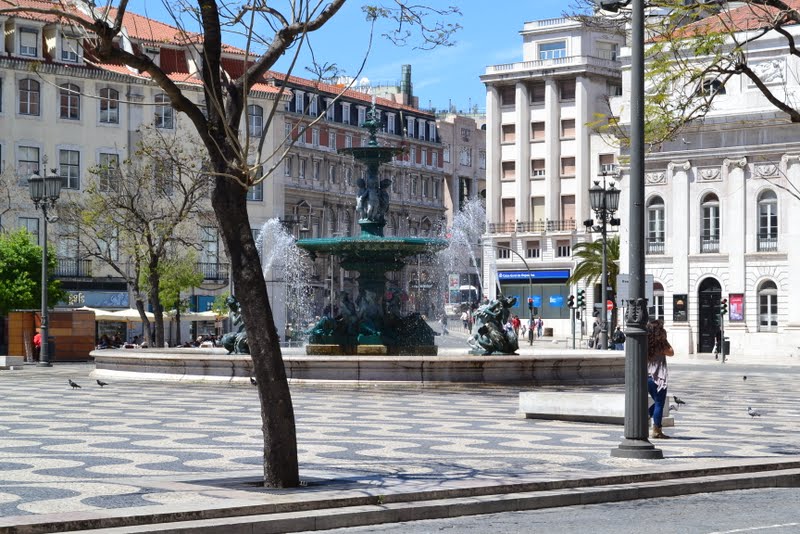
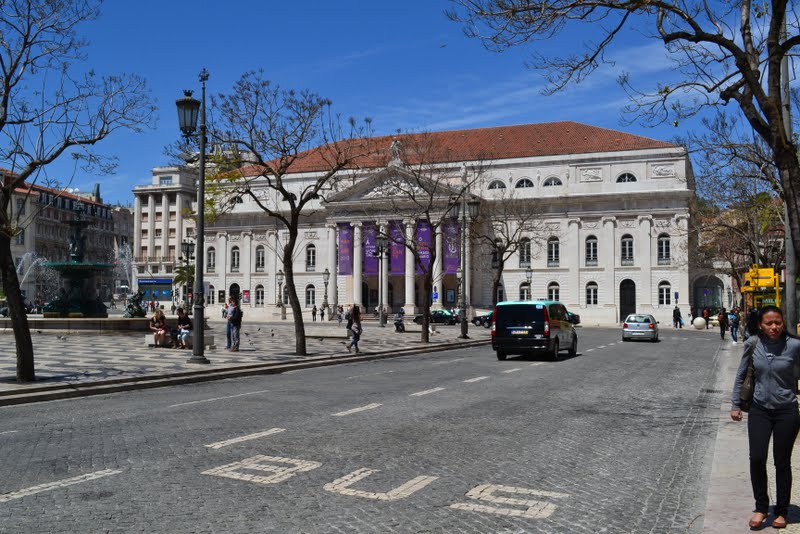
Today, we are being examined as a community, more closely than hitherto – both internally and by external agencies. There are a number of reasons, as to why we are being subjected to this kind of examination. As a result, this exercise of ‘soul searching’ is shaking the community, leading to self doubt, lack of confidence in one’s profession, one’s commitment  etc. This is an extremely serious matter.

Sometimes I wonder – in this day and age, has our role diminished, does the country require us, have we become a key which can no longer open locks, has the ‘firewall’ which once kept us insulated from the outside temptations broken down, are we losing our ‘holy cow’ status, is a new global security apparatus emerging etc.

We have to see each issue in the present day context. The edifice of Indian society has changed very rapidly in the last two decades –our lifestyle, values, morals and aspirations have dramatically influenced the public mind and the direction of their thought. In this process no one is spared. We have to probably reinvent ourselves and change with the times – you cannot continue to play football when others are playing cricket. The game plan has changed.

Nations go to war for many reasons; primarily to expand one’s territory, for territorial disputes, to acquire natural resources such as petroleum, for ideological reasons based on religion and faith, for humanitarian reasons to prevent large scale pogroms or for ethnic differences such as in Africa etc. Human kind has been waging wars since time immemorial – it is nothing new. Over a period of time, weapons have changed, but the rest has remained more or less unchanged. When compared to, let us say the period from 1000 AD to 2000 AD and now, the number of wars has decreased. Flash points do remain, but the actual full scale wars are on the decline. Since World War II and after the end of Cold War there have been fewer wars when compared with the earlier times. The number of intrastate wars peaked in the year 1991 to about 50 and has gradually reduced to around 32 in 2006(1). North America, Europe, Australia, England are conflict free zones. However, some sparks do fly now and then in the Middle East and Asia. Africa has been registering the maximum number of conflicts.

With the passage of time, territorial disputes have been resolved in many places and economies of nations have improved. Globally, the proportion of youth to adults has been decreasing since the late 1970s – resulting in lesser people in the younger age group to fight. Democracy and stable governments have been replacing dictatorship and despotic leaders. There has been an end to the proxy wars after the demise of Cold War. Interdependence between nations, and international pressures, have also contributed in a very large measure to reduce the reasons for conflict.

India has been no exception to this trend. If one takes 1947 as the first post independence conflict with Pakistan – the next came in 1962 with China after a break of 15 years. Within 3 years, came the next conflict with Pakistan in 1965. Six years later we met again for the third time in 1971. There was a long gap of 16 years till IPKF operations in 1987 and finally Kargil took place in 1999 after a lapse of 12 years. Our record stands at 6 conflicts in 65 years of Independence.

The Kargil war was the first time when war entered the drawing rooms of fellow countrymen, courtesy the electronic media, showcasing the armed forces in the order of Army, Air Force and lastly the Navy. The rest of the time, the nation government and media is hardly aware of our presence. We have the largest number of soldiers deployed in the battle field during peace time; more than any other army in the world but this does not matter – no body other than you and I know that. 

I wish to point out that the adage,“Out of sight – out of mind”, deserves a more serious consideration. Ordinary people, bureaucracy, politicians and the government are occupied with other events which they think affects the nation severely and on a regular basis. Votes matter. Be it solving onion prices, controlling sugar supply, petroleum prices, boycotting MF Husain, Taslima Nasrin, 2G, 3G, security for Bal Thackeray’s funeral and so on – the government gets pro active and finds a solution. The fact of the matter is that we do not pose any serious threat to anybody around us. The government will not fall in peace time on account of us. Only during war will they listen to you – period.

The role of the armed forces is diminishing as conflict situations and flash points globally decrease. Also, other measures such as nuclear deterrence, economic persuasions and international intervention are on the increase.  “The Utility of Force in a World of Scarcity, International Security, Vol. 22, no. 3 (Winter 1997) notes, ‘In the past five decades, however, the great powers have shown increasing reluctance to employ force overtly against one another or even against weaker states. Their apparent hesitation has led several sophisticated observers of international affairs to conclude that the once-central role of the armed forces is rapidly diminishing, perhaps soon to the point of irrelevance.’(2).

The role of the Armed forces is certainly diminishing and there is an urgent need to juxtapose ourselves in this new world order. Perhaps we need to find new peace time roles, expand our areas of activity and eventually appear to be more useful in the eyes of the ordinary countrymen who do not understand exalted and lofty expressions such as – major component of national power, Net Security Providers, state craft, projection of sea and air power, command and control of sea and air space etc. What Admiral Sushil Kumar said in TOI on 10 Dec 2012 is a case in point – “Joshi’s reassuring message on our Navy’s 400th anniversary was essentially meant for the people of India. That such a message was misconstrued as a diplomatic faux pas clearly shows that we have a scant understanding of what sea power is all about.”

The Army, Navy and Air Force, as we see it today, is the outcome of many changes that have taken place over a period of time. We have changed uniforms, allowed mustaches in the navy, brought changes in staff work, computers have entered every facet of work, weapons have changed, tactics and strategy has been rewritten, women have joined the forces, educational background, concept of security, brotherhood of nations and so on and the list is endless. Change is very essential for the healthy growth of any organization. When, every aspect of our organization changes, it is inevitable that the individual also changes. The very same society from where we recruit our officers and men is undergoing constant change. These factors have certainly impinged on the most important element of the armed forces – the ‘Soldier’. Ethos of service has undergone a change. How an individual behaved in a situation fifty years back, may not find many takers in today’s military. As a community, we need to embrace these evolutionary changes with open arms, instead of stone walling them.

Imagine ourselves as a body of highly trained professional soldiers – ready for action, trained to kill, seeking victory,waiting to draw first blood in the battle field, instead finding ourselves (for the most part)kept in a locked room and chained to the dictates of peace time. The body cries to be released to justify its existence and seek professional glory, satisfaction and above all recognition. Unfortunately none of these attributes can be found during peace time. In turn, the soldier adapts to the new environment unwillingly and develops traits which are in conflict with his natural war time behavior. Within the service it becomes difficult to correctly rate an officer during peace time; what is the unit of measurement? We may unwittingly end up with square pegs in round holes. Number of peace time syndromes attach themselves as barnacles – believe me it is difficult to scrape it off. Making up fake encounters to garner ACR points, seeking cushy appointments, avoiding high risk jobs, having the ’yes sir’ syndrome, toeing the line, not rocking the boat and so on, are some of the ‘peace time‘ manifestations.

I see corruption as a human flaw. I may be wrong; corruption always existed in the forces in some form or the other. What has made the difference is the instant exposure due to rapid progress made in communication, cell phones, e mails, hundreds of television channels vying for TRP. Over a period of time services have acquired considerable fiscal independence, they now operate with huge sums of money, which was not there earlier. Proximity to money is fraught with temptation, unless each individual exercises the highest levels of probity. The public, for whatever reason, see the services as the last bastion of fair play, integrity and discipline – if these break down, the public becomes disappointed. Every service individual needs to be aware of this particular responsibility that we owe to the society at large.

Take the instance of officers and men going to court. It is a new phenomenon wherein personnel are seeking justice outside our own campus. What does an ordinary citizen do? He seeks justice at every level and up to the Supreme Court. As the invisible cantonment barrier breaks over time, the insulated military also starts behaving like civilians. Unlike earlier days, today’s soldier is better educated and is socially more aware of the issues around him.TV has invaded the ships and messes – one simply cannot ignore its presence and effect. The service as a body is not spending quality time to examine why there is a trend amongst officers to seek redressal outside. Archaic laws, injustice in promotions and transfers, lack of transparency in day to day matters, are some of the areas which require closer examination. We need to take a relook at all the rules and regulations and correlate them to today’s context. I did not go to court and therefore you will not go and wash dirty linen in public does not carry much conviction any longer.  One should read what the Karnataka High Court had to say about a Major who wished to marry a Sri Lankan. The division bench headed by Chief Justice Vikramajit Sen dismissed the two writ appeals filed by the Army. The bench observed in its verdict, “…the world has become a global village; distrust and discrimination against a foreign citizen remains the order of the day. There are several instances where citizens betray their own country. There is no empirical data that a foreign spouse will invariably constitute a weak link in the matter of national security.”

We also need to realize that in India, strangely enough, the public do not have a high regard for any institution – be it politics, bureaucracy, police, sports, judiciary, artists, god men and others. There is hardly any institution which is continuously revered – I do not know whether this phenomenon is good or bad. We are indifferent to all that is happening around us as long as it does not directly impinge on us. We also have no yardstick for measuring public morality. The former Chief Justice of India, MN Venkatachaliah, recently observed, “The old order has out lived itself and the new order is yet to take shape — in the interim there are no values or standards for the public to follow”. He went on to attribute the cause of today’s low level of ethics, morality and public conduct in India to a lack of any new set of values. The Indian armed forces are operating in these difficult times.

So in the mean time what are we supposed to do? My take on the subject is to look inward – introspect. Be pragmatic and establish where the military stands in today’s society. Like any other profession we are also ruled by the market forces of demand and supply. Realign ourselves to ground realities. In the first instance we should stop wanting others to recognize and value us. As a community we need to step down from the pre world war pedestal and behave in a normal fashion.

There are a number of areas within the services which can be improved to enhance our own image, do our jobs with integrity and a sense of pride and increase the satisfaction quotient. Concentrate on the improvement of messes, accommodation, promotion rules, transfer procedures, better preparedness for retirement, medical benefits, education for children, employment avenues for the spouse, education of the spouse, dignity to veterans, and other such initiatives which do not require more than routine bureaucratic and government approvals. We also need to shrug off our ‘Atlas’ complex. We are not alone in carrying the entire burden of the ‘Defence of India’ on our shoulders – for heaven’s sake do not flap – the bureaucracy, politicians and the public are equally responsible. Cultivate the highest respect for your profession, but at the same time, be prepared to quit if you feel stifled for any reason. Staying in the job at all costs may be sending a wrong signal to the others outside – let no one take us for granted. We will serve the nation – “on our terms.”