Summer Holidays – Sri Lanka Part III – We visited Yala

03 May 2012 – Nuwara Elyia to Yala

There are a number of interesting features about Sri Lanka which I noticed during our short stay. The number of beggars is very miniscule – one could get away by saying there are no beggars. I saw one in Nuwara Eliya and that’s about all. The country has rolled back to peace time double quick – you do not find either policemen or the army on the streets patrolling – one finds the usual traffic and beat cops, as in any other part of the world. Only on May 1st  did we find some bandobust because of Labour Day. Our guide told us that the Army has been kept busy in nation building activities – literally into civil building construction. The literacy level is very high – 90%. The government runs free schools for all and the population is very happy with the arrangement.

The Maruti 800, Alto, Swift and Nano are colourfully painted as taxis and are very popular in the island along with the Indian auto. Autos in bright red, yellow, black, green and blue ply on the road.

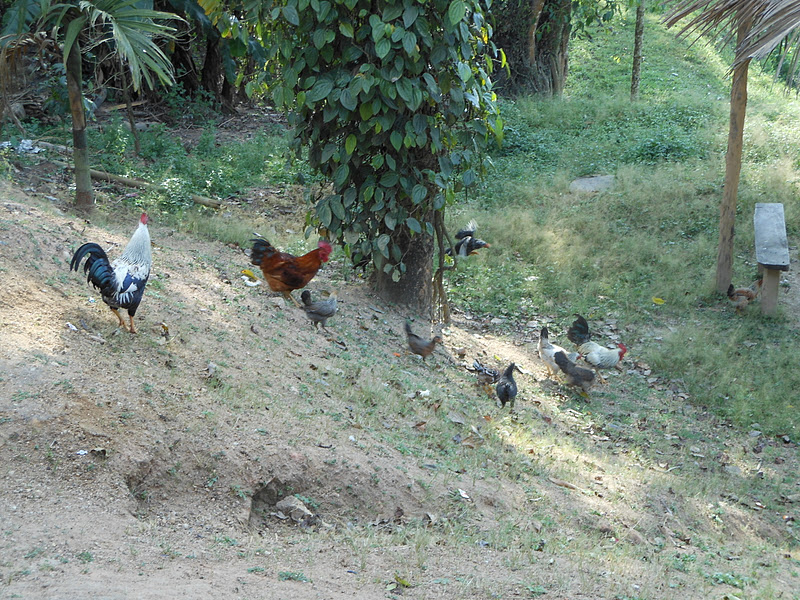
Their highways warn you of an ‘Earth Slip’ instead of a ‘Land Slide’.The Jungle Fowl is the national bird and the Blue Water Lily is the national flower. Na is their national tree and the elephant their national animal
A can of light beer is 40 SLR. Every city has a memorial in honour of their dead soldiers. The army is revered by the common man.The Sri Lankan New Year is on 13 and 14 April every year.

Sri Lankan food has a slight resemblance to our own coastal food, especially that of Kerala. We made it a point to eat some Sri Lankan food – similar to a thali – it is spicy and nice. What stands out is the quantity which is served. Over a period of time we learnt to order one plate and two of us would share. Curd is very popular – which came as pleasant news to both the parties – from Haryana and Mysore. Cow’s milk is used in tea and coffee and buffalo’s milk is used for making curd. All along the highway one finds curd being sold in earthenware pots. Mr Duminda made us eat ‘Mangosteen’– The fruit is sweet and tangy, juicy, and somewhat fibrous, with an inedible, deep reddish-purple colored rind when ripe  and ’Durian’ which is a fruit with a unique odour, and formidable thorn-covered husk. The smell evokes reactions from deep appreciation to intense disgust.


Figure 1 – Mangosteen’ and Durian

After a bit of fruit tasting we finally reached the Seetha Amman temple. The Seetha Amman Temple is located approximately 1 km from Hakgala Botanical Garden Garden,  16 Km from Nuwara Eliya. The temple is located in the village “Seetha Eliya”. This place is believed to be the place where Sita was held captive by the king Ravana of the epic, 
Ramayana.


Figure 2 – Sita Amman Temple


Figure 3 – Sanctum Sanctorum with deities of Rama, Sita and Hanuman


Figure 4 – Another view of the temple


Figure 5 – Images on the temple


Figure 6 – After the pooja


Figure 7 — Impression of Hanuman’s feet in the rock


Figure 8 – Our very own Rama and Sita


Figure 9 – Cliff resembling ‘Ravana’s head’
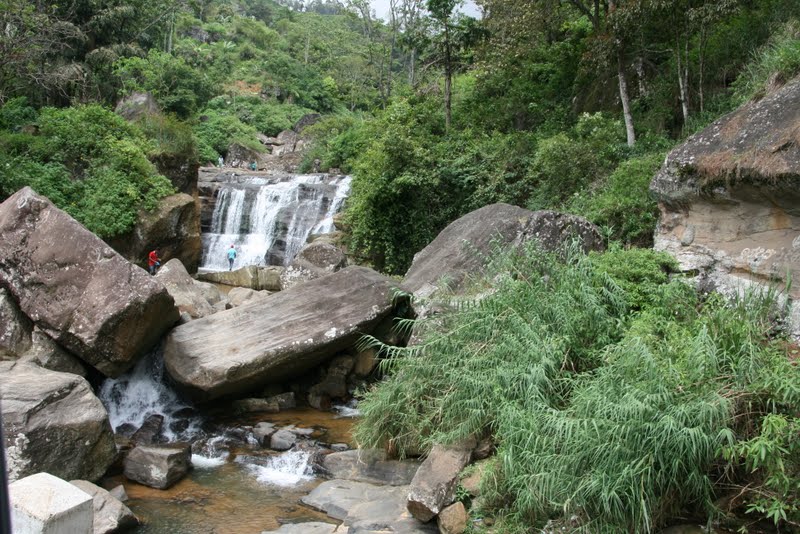
The road to Yala is excellent and we passed through two lovely hill stations Ella and Banderavella. The landscape, with lush green hills, makes the drive very pleasant. We stopped for a short while at the ‘Ravana Ella’ water falls and thereafter chased down a hot and tasty Sri Lankan meal with some chilled beer.


Figure 10 – According to legend, it is said that Ravana (who was the king of Sri Lanka at the time) had kidnapped princess Sita, and had hidden her in the caves behind this waterfall, now simply known as the Ravana Ella Cave


Figure 11 – At the falls with Naveen


Figure 12 – With the restaurant staff


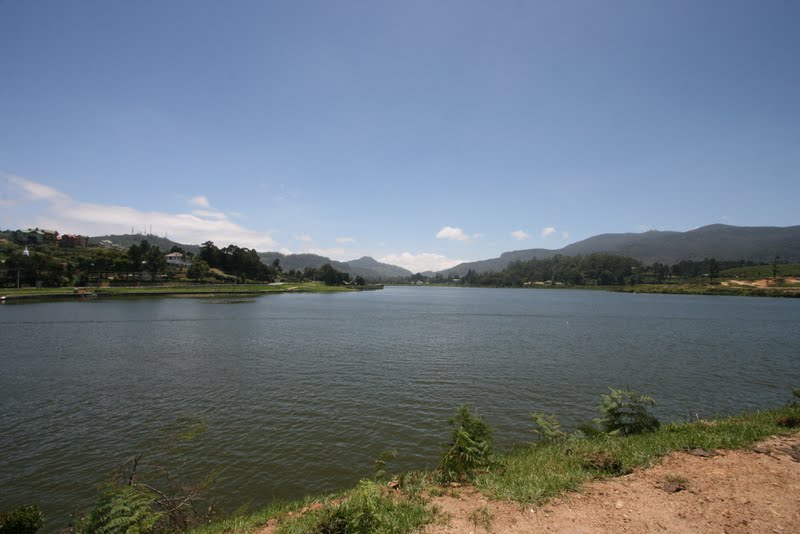
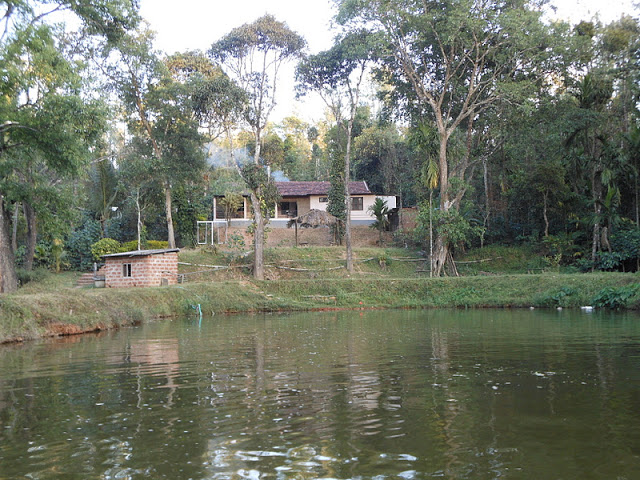
Figure 13 – Mihisara Lake at Yala


Figure 14 –  Lotuses  practically cover an entire section of the lake
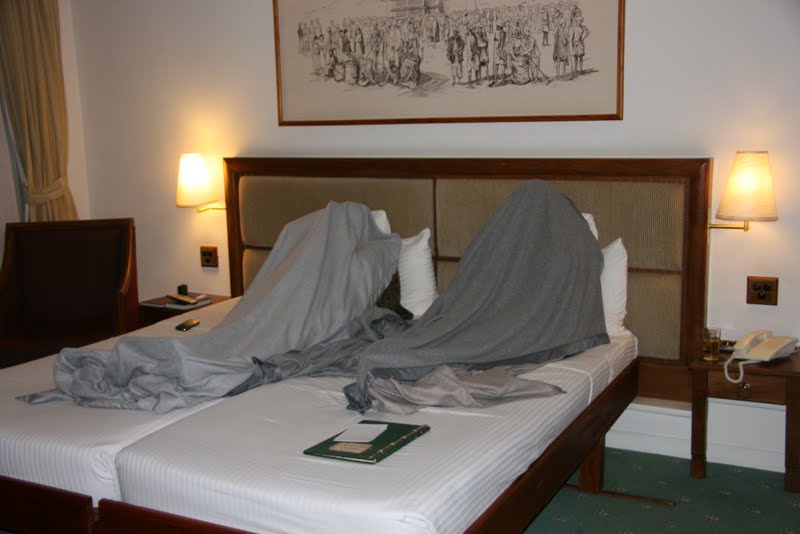
03 May 2012 – At the ‘Chaya Wild Hotel’

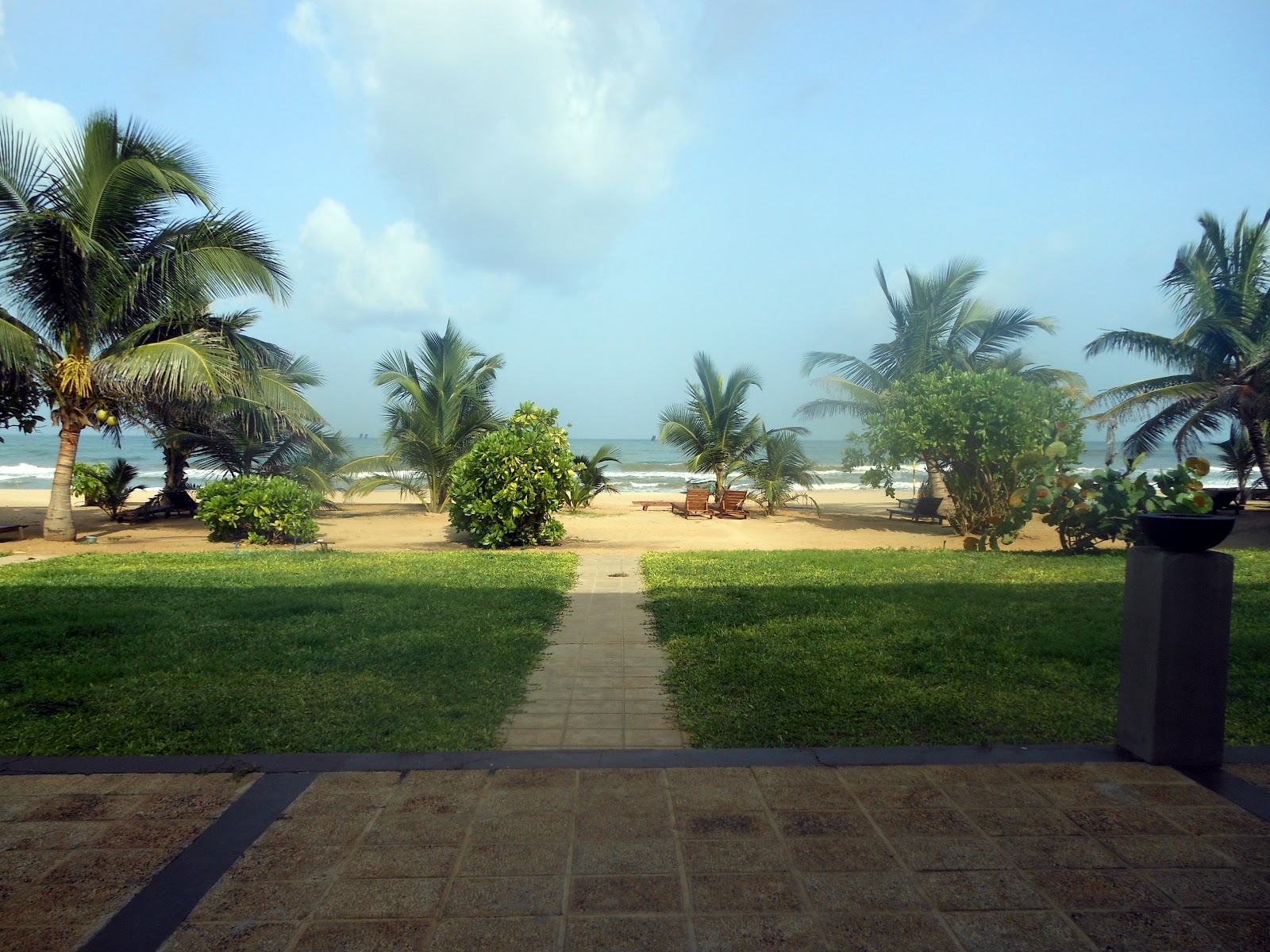
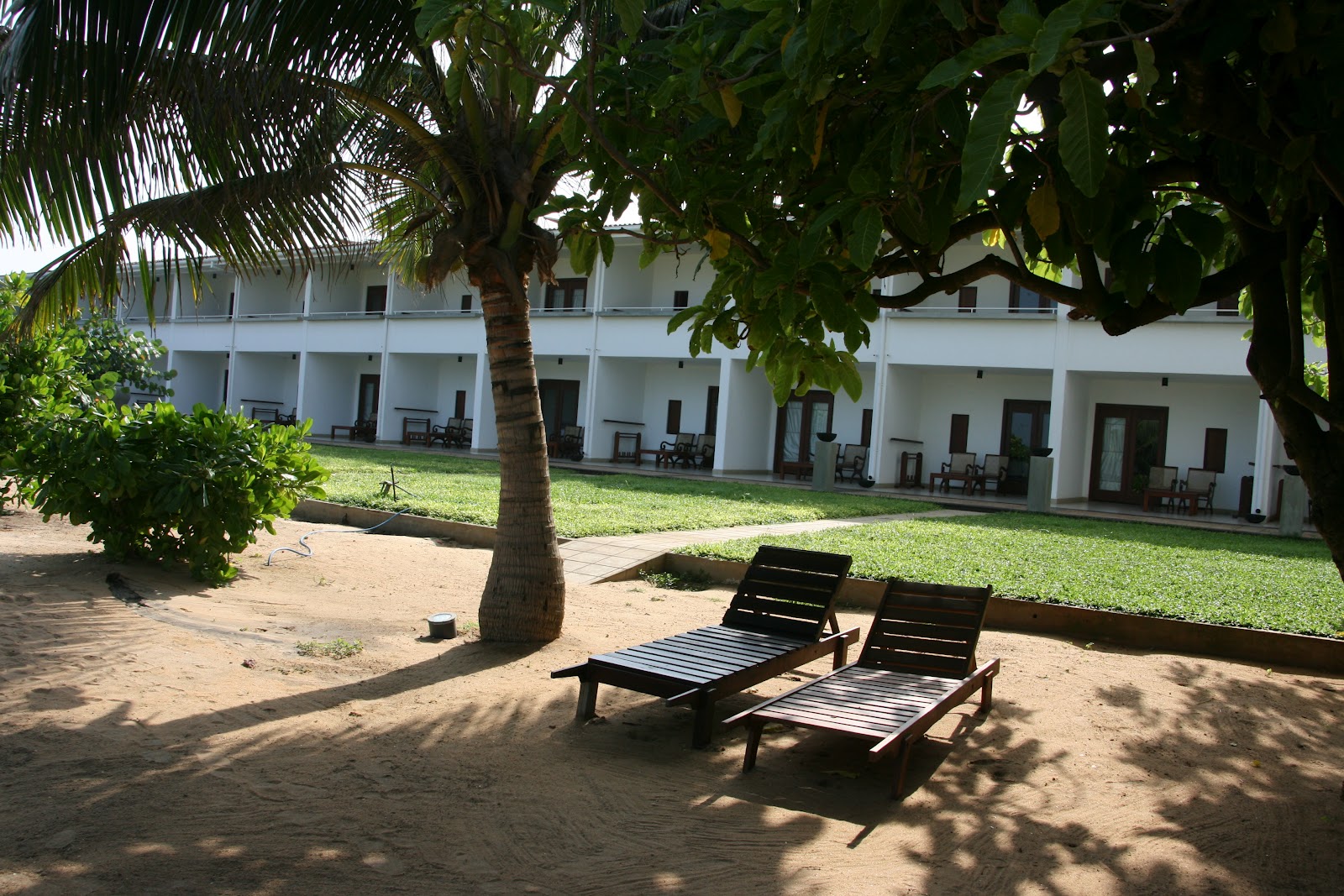
Chaya Wild, located within the Yala National Park, blends beautifully with the surroundings. Aptly named wild – the Jungle Chalets offer the tourists a feel of the wilderness through the safe confines of the room. The chalets are inconspicuous and merge beautifully with the forest. The hotel itself is extremely eco friendly and the inside of each chalet is constructed in such a manner as to showcase simplicity and at the same time maintaining elegance and comfort. The hotel has a very nice observation post, which offers a panoramic view of the forest area.

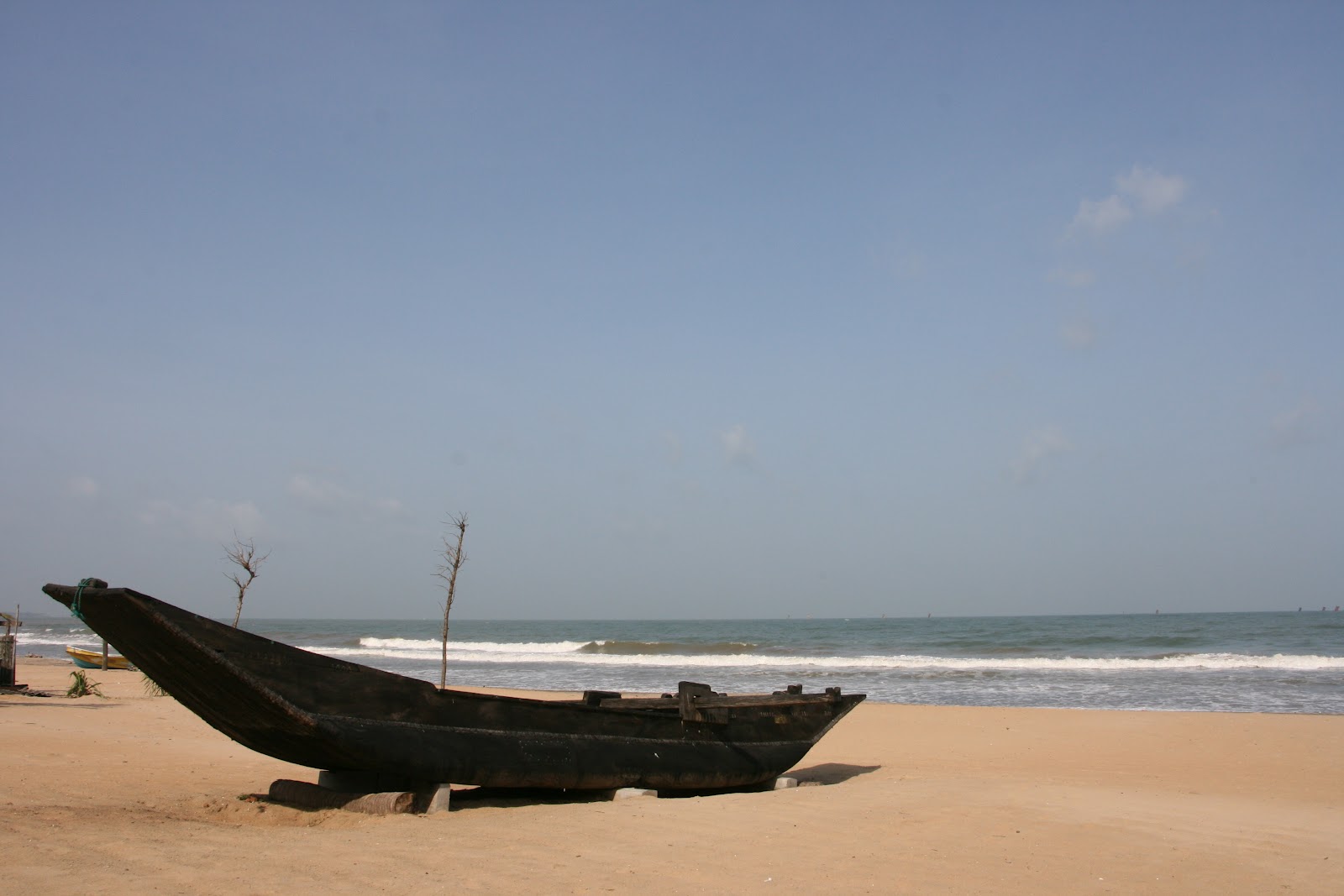
Chaya Wild shares its border with the mighty Indian Ocean. The sea, beach, a nearby lake and the forest join each other seamlessly, making the hotel stay very interesting. The residents have multiple options to explore Mother Nature. The beaches are pristine with not a single soul as far as the eye can see.

The area adjacent to the swimming pool is divine. The constant roar and hum of the sea, the rustle of dry leaves, the sound of the wind through the trees, makes the place a true paradise. One can hear various birds in constant melodious conversation with each other. The atmosphere is sheer bliss.

The weather in the shade is very comfortable – the proximity of the sea and the ensuing sea and land breezes keep the area cool.

The entire hotel area is full of wild life – langur monkeys, wild boars, bison and if one is lucky wild elephants pass in front of the chalets – as if to ask us what we humans are up to on their land. The animals appear to have a daily routine and a set route to follow each day. We saw hordes of monkeys and wild boar at the door step going about their business – the residents can move about without any hindrance from these animals. The playful monkeys are a sight to watch.

The stay in Chaya gave all of us a different kind of experience and we were able to savor it to the fullest as time slows down in such places- a far cry from the hustle and bustle of city life.

Figure 15 – By the pool


Figure 16 – Jai all pleased with the hotel


Figure 17 – So are Navin and Kats


Figure 18 – A different view


Figure 19 – Lots of trees surrounding the pool


Figure 20 – As the sun begins to set


Figure 21 – Simple yet beautiful and cozy


Figure 22 – A very well appointed bathroom


Figure 23 – Our Chalet


Figure 24 -Loitering wild boar


Figure 24 A – Evening Conference


Figure 25 – The night has just started


Figure 26 – God knows what they are doing


Figure 27 – From a distance


Figure 28 – My turn to pose


Figure 29 – Spot the bison


Figure 30 – Spot the Lizard


Figure 30 A – Hello Good morning


Figure 31 – View from the canopy


Figure 32 – Walk on the beach


Figure 33 – The family on the sands of time


Figure 34 – Sea thrashing the rocks


Figure 35 – Who has a bigger paunch


Figure 36 – Previous night’s elephant walk down the beach


Figure 37 – Jai ready for breakfast at the ‘Machan’


Figure 38 – The observation post


Figure 39 – The mighty sea and the forest


Figure 40 – The scene is complete with the lake


Figure 41 – With my very dear friend


Figure 42 – All happy
04 May 2012 – Safari to Yala National Park

Yala National Park is the most visited and second largest national park in Sri Lanka. Actually it consists of five blocks, two of which are now open to the public. It is situated in the southeast region of the country, and lies in Southern Province and Uva Province. The park covers 979 square kilometres (378 sq mi). The park is best known for its variety of wild animals.

Yala lay in the direct path of the 2004 Indian Ocean Tsunami, which impacted Sri Lanka 90 minutes after its generation. The tsunami caused severe but localised damage to the park, with around 250 people being killed.

Yala is one of the 70 Important Bird Areas (IBAs) in Sri Lanka. Of 215 bird species of the park, six are endemic to Sri Lanka. They are Sri Lankan grey Hornbill, Sri Lankan Jungle Fowl, Wood Pigeon, Crimson – fronted Barbet, Black Capped Bull Bull and Grown capped Babber. Including the Sri Lankan Elephant, 44 species of mammals are residents of Yala National Park, and it has one of the highest leopard densities in the world. 25 individual leopards are estimated to roam in Block I. The elephant herd of Yala contains 300–350 animals. The Sri Lankan Sloth Bear, Sri Lankan Leopard, Sri Lankan Elephant, Wild water Buffalo are threatened species that Yala is harbouring.
We went on a safari and were lucky to sight many wild animals except for the famed cheetah.


Figure 43 – Commencing Safari

Figure 44 – Giant Monitor crossing in front of us


Figure 45 – Yet another monitor


Figure 46 – A stork feeding


Figure 47 – Any dentist around


Figure 48 – Catching up on sleep


Figure 49 – Very strange to find both the prey and the predator


Figure 50 – Ready for a bite


Figure 51 – Wild elephants bathing


Figure 53 – A close up of a young bull elephant


Figure 54 – Another loner


Figure 55 – Jungle Fowl – The National bird


Figure 56 – Painted stork


Figure 57 – Pea hens

Figure 58 – The forest landscape


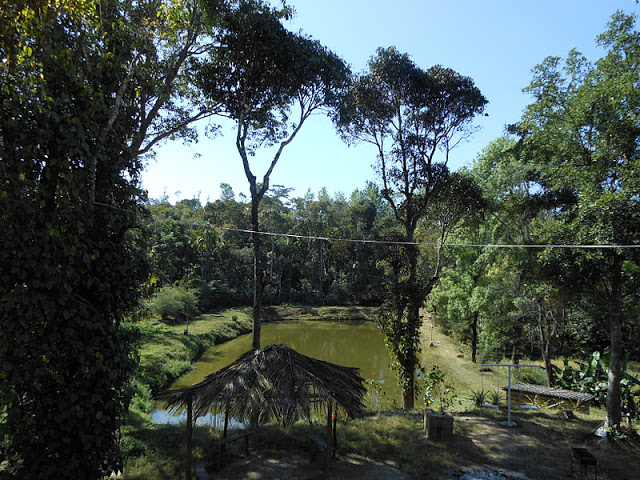
Figure 59 – Plenty of water bodies

Figure 60 – Lotus in abundance


Figure 61 – Darkness begins to envelope the forest
Summer Holidays 2012 – Sri Lanka Part II – We visited Nuwara Eliya

30 May 2012 – Kandy to Nuwara Eliya

Travel bazaar has a tie up with Luxe Asia from Sri Lanka, who looked after our visit within the country. Mr Duminda our tour driver and guide, works for Luxe Asia. It was our third day with Duminda. Initially we felt intimidated by his huge size, but in a very short span he struck a chord in all of us with his friendly and affable demeanor. The ingredients of a good trip are many – one of them being the attitude of the people with whom we come in contact. To be honest Duminda made the trip for us – extremely helpful and polite, he answered all our silly queries patiently and always with a smile. Besides he took the trouble to introduce us to Sri Lankan food and even got us to gingerly taste a variety of fruit that we hadn’t come across before in India. Most importantly, he drove the vehicle very carefully and never once did we feel concerned about our safety. People like him can create a very favorable impression of the country. Well done, Duminda!

The ordinary Sri Lankans with whom we interacted are extremely respectful and friendly. They view Indians in a very favorable light. Someone I met, went on to thank India for all the support and felt sorry for the death of Mr. Rajiv Gandhi. Throughout our stay we found our interaction with the Sri Lankans very pleasant- polite, friendly and warm – they go out of their way to welcome you and forever one hears ‘Ayubowan’ (may you live long and healthy) derived from the Sanskrit word ‘Ayushman bhava’ meaning the same.

No wonder the National Geographic Traveller Magazine in its press release had declared that “Sri Lanka is one of the six countries that a tourist should visit in the year 2012”

Having covered more than 800 Km on the island roads I can say with conviction that the roads are marked and maintained beautifully. I did not encounter a single ugly speed breaker with which we are so familiar. The absence of speed breakers makes travel all the smoother. In its place they have large yellow zig zag patterns and markings, warning the drivers to exercise caution. The traffic is very disciplined, however low in volume. All the riders wear helmets including children riding pillion. The presence of the Highway police is conspicuous. 

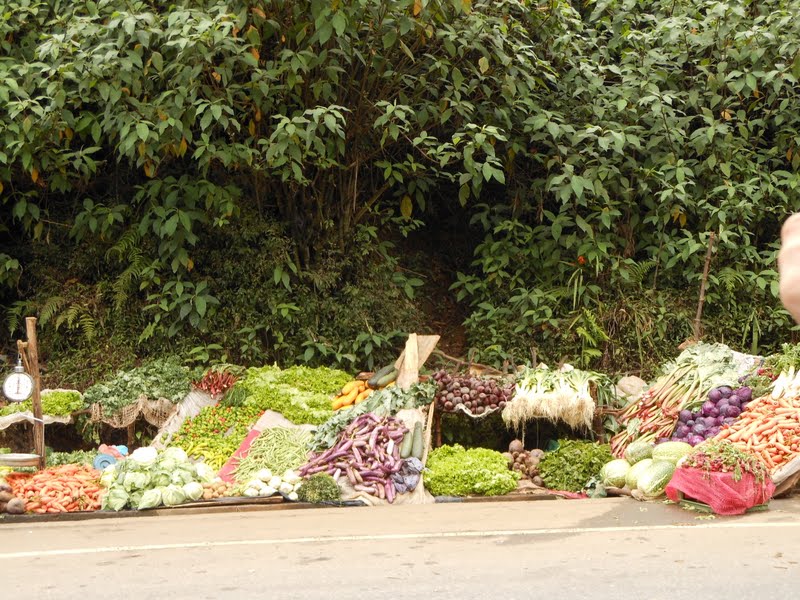
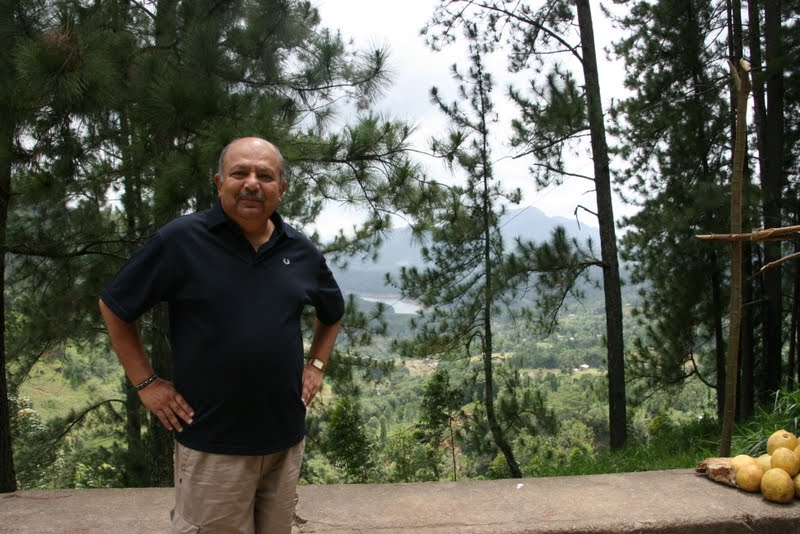
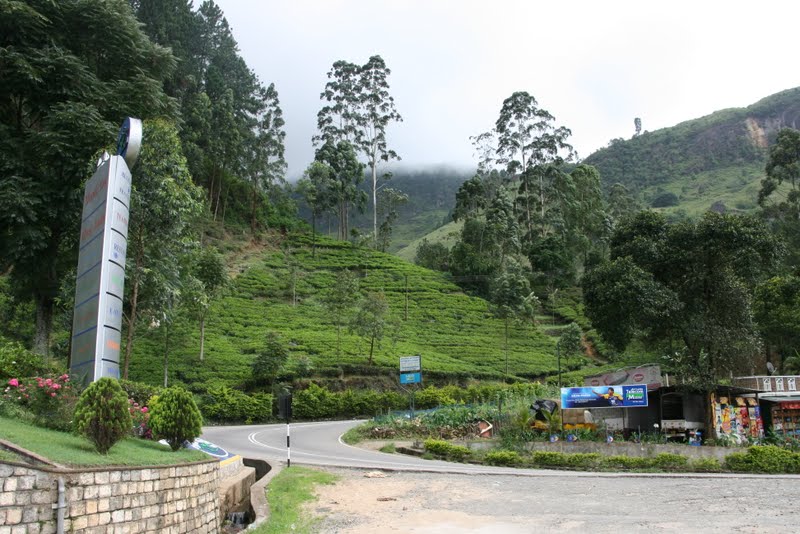
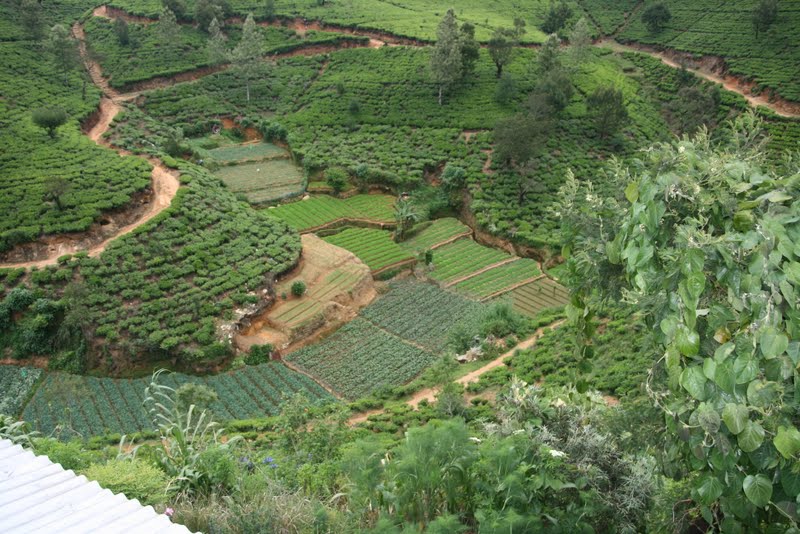
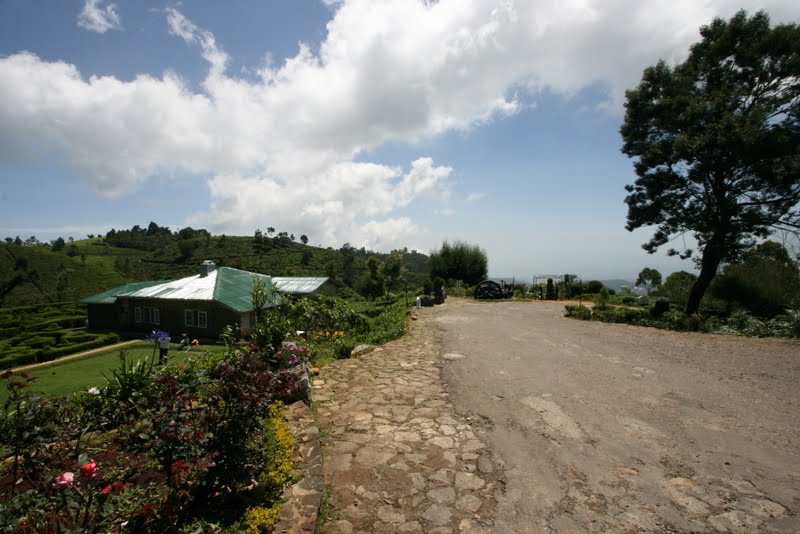
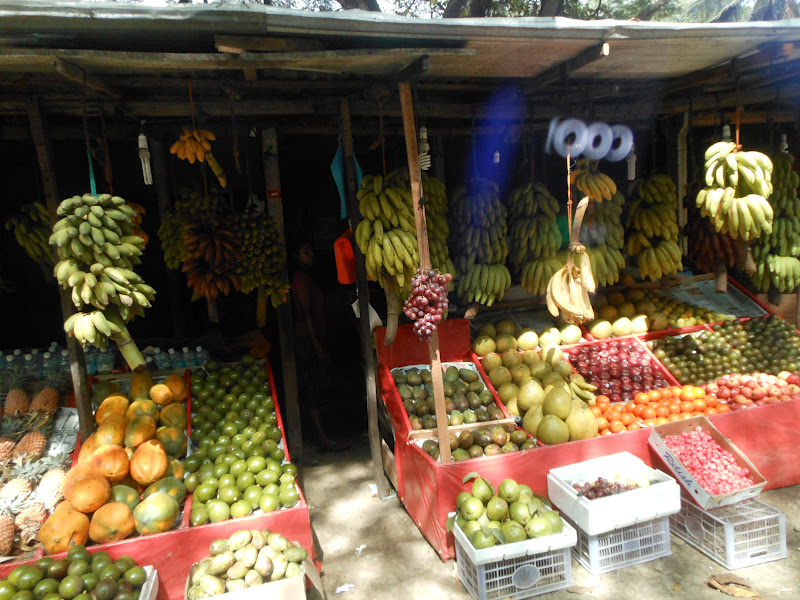
Our next place of visit was the hill station Nuwara Eliya. As we drove along from Kandy, the countryside changed very rapidly from a coastal landscape of cultivated fields of coconut plantations and paddy fields to hills and manicured tea estates. All along the way there were local vegetable and fruit shops displaying their wares.


Figure 1 – Vegetables and fruits on display

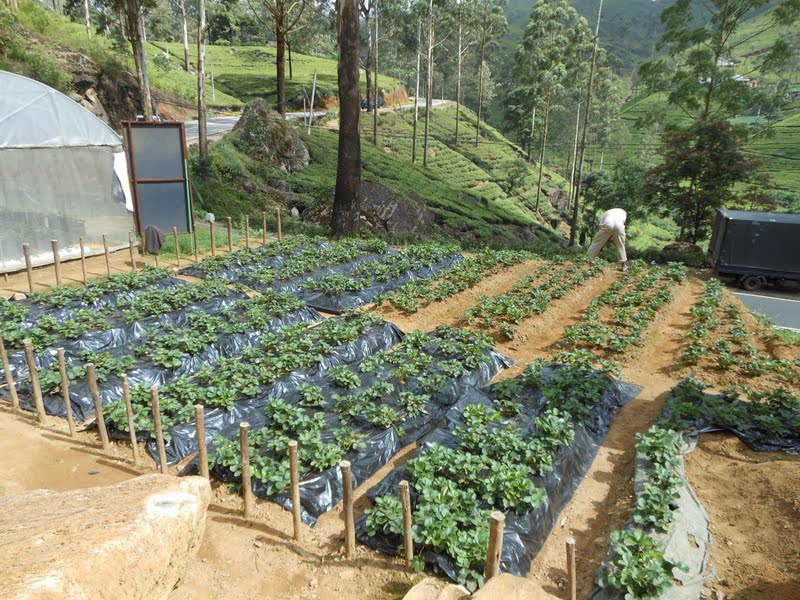
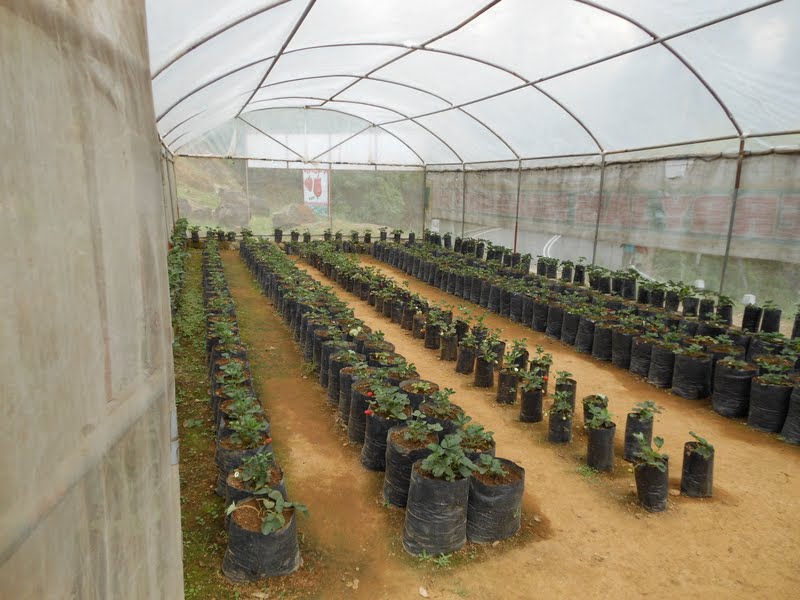
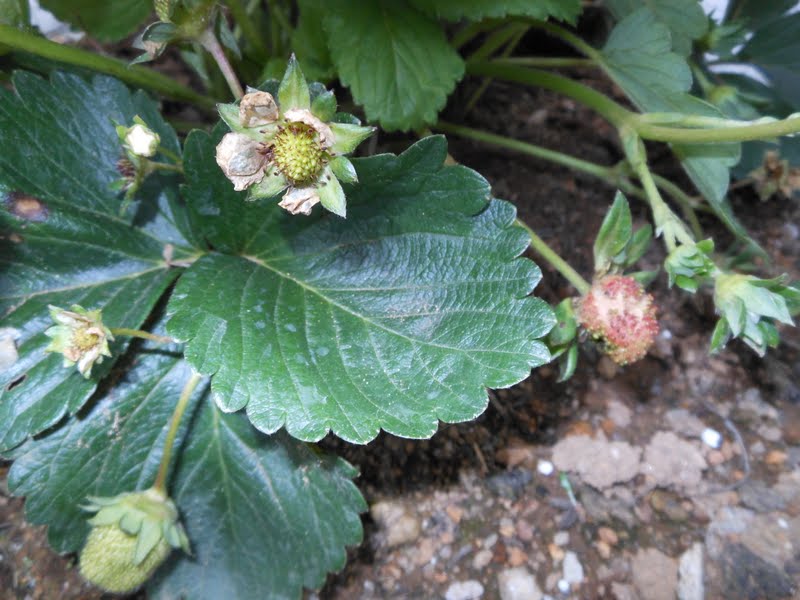
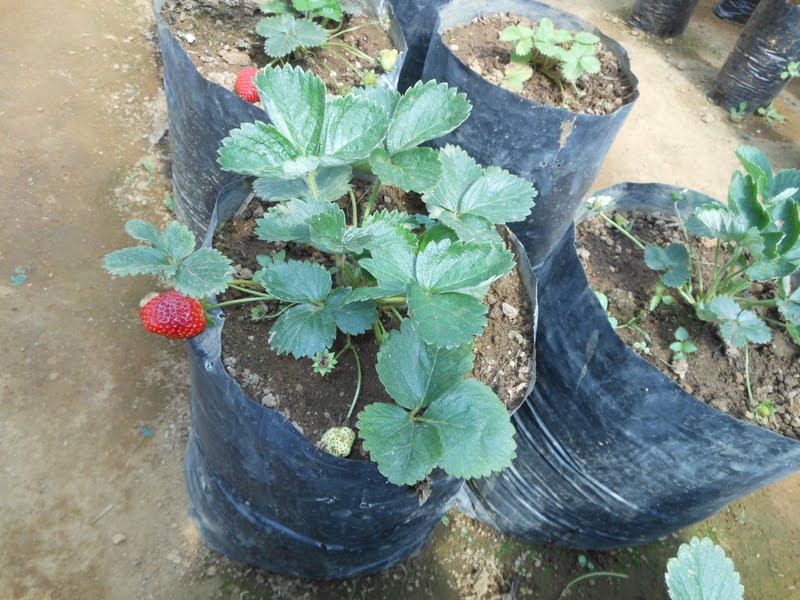
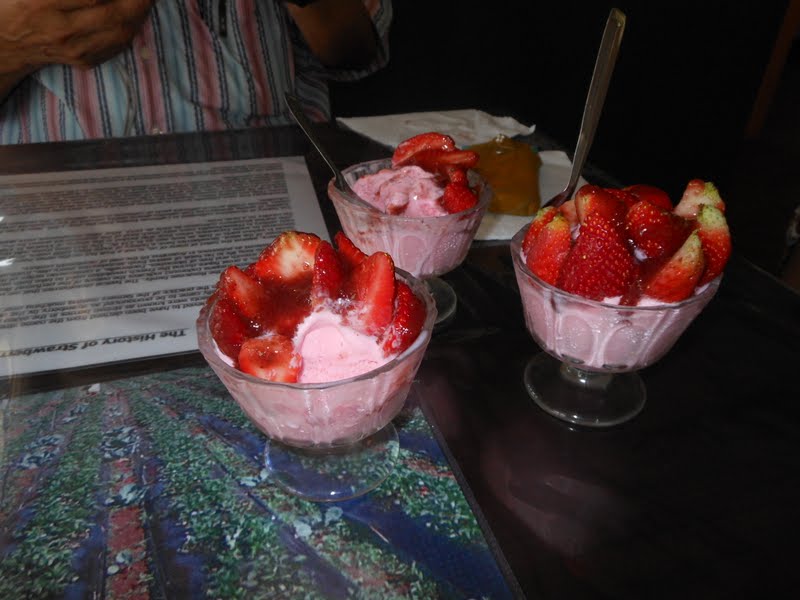
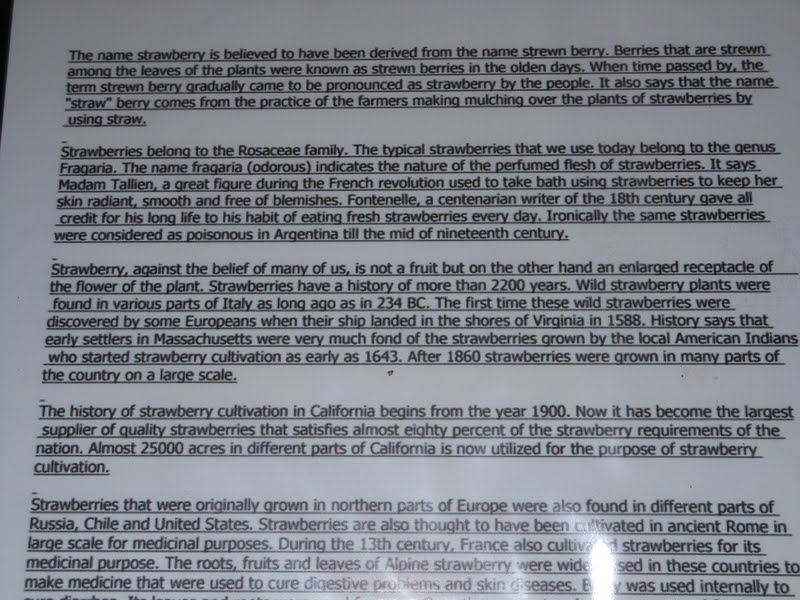
On the way we stopped at a strawberry farm for lunch. There we learnt that the strawberry is not a fruit but an enlarged receptacle of the flower of the plant. Whatever it may be, the huge helping of strawberries with ice-cream was absolutely delicious! J


Figure 2 – Strawberry farm


Figure 3 – Grown inside a hot house


Figure 4 – Strawberry flower


Figure 5 – Ripe Strawberry


Figure 6 – The treat


Figure 7 – Some Gyan on Strawberries


Figure 8 – All set to be sold – reminds me of Coonoor and Ooty


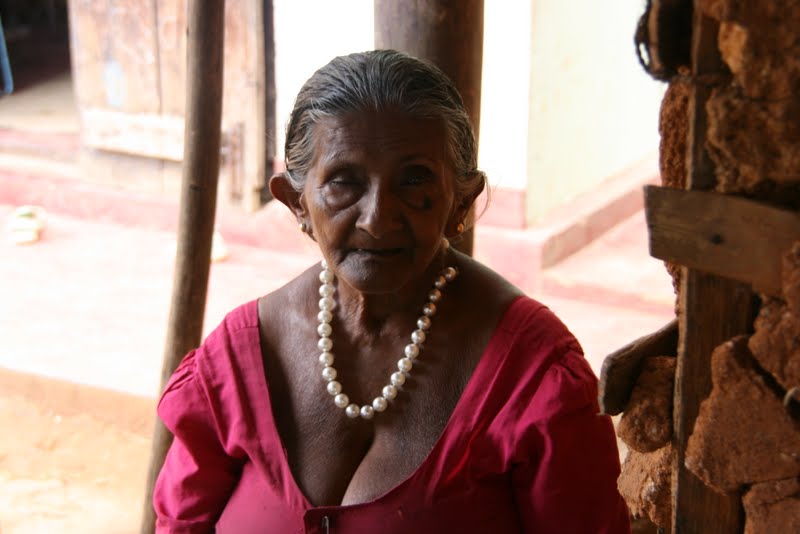
Figure 9 – A darling 82 year old Sri Lankan woman in the shop


Figure 10 – Ramboda waterfalls – on the way


Figure 11 – Pleased with life


Figure 12 – Equally happy – Jai and Naveen


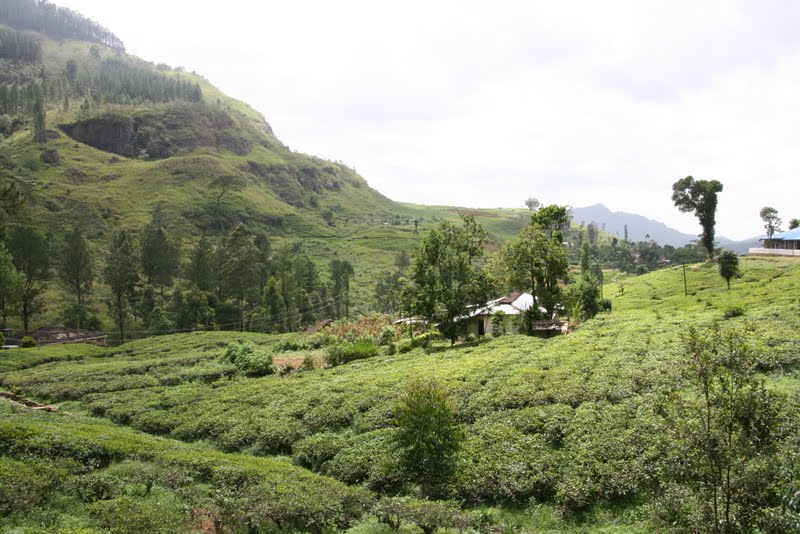
Figure 13 –  A typical Tea Estate


Figure 14 – The rolling hills


Figure 15 – Kats and Duminda taking a break after a sip of tea
At Nuwara Eliya 30 May to 02 May

According to mythology, Nuwara Eliya figures as  a setting in the famed Indian epic Ramayana, narrating the story of the Indian King Rama whose wife, Sita, was robbed by Ravana, King of Lanka. When Hanuman, King Rama’s monkey general came with his army to save Sita, King Ravana retaliated by setting fire to his long tail. It’s said that Hanuman then used his tail to burn down Ravana’s entire magnificent city that is believed to have stood where Nuwara Eliya is today. According to legend, the black soil that forms a top layer in Nuwara Eliya is made up of the ashes of what used to be the city of Ravana.

Historysays Nuwara Eliya was discovered by a hunting party led by Dr. John Davy in 1818. Sir Edward Barnes was the Governor from 1824-1831. He constructed roads and shelters in Nuwara-Eliya and made it a good place to live and so he is known as “the Father of Nuwara-Eliya”. Later on the city of Nuwara Eliya was developed by Samuel Baker, the discoverer of Lake Albert and the explorer of the Nile in 1846. Nuwara Eliya, called Little England then, was the prime sanctuary of  British civil servants and planters in Ceylon.

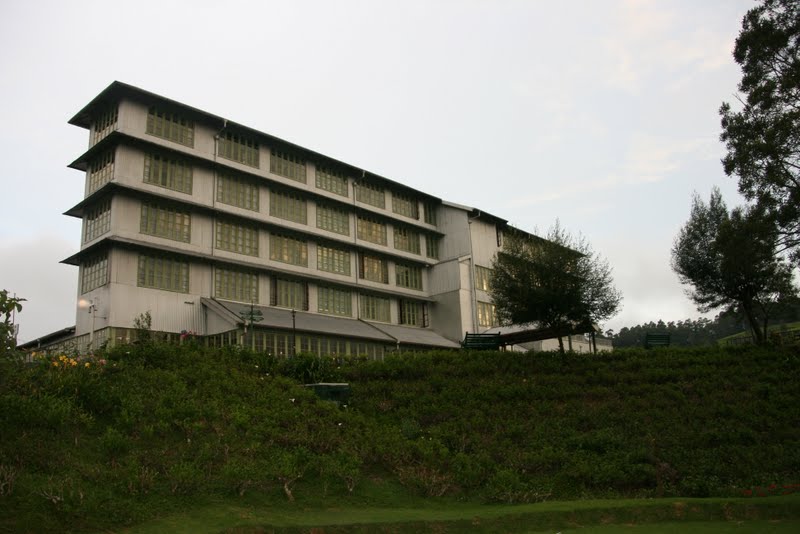
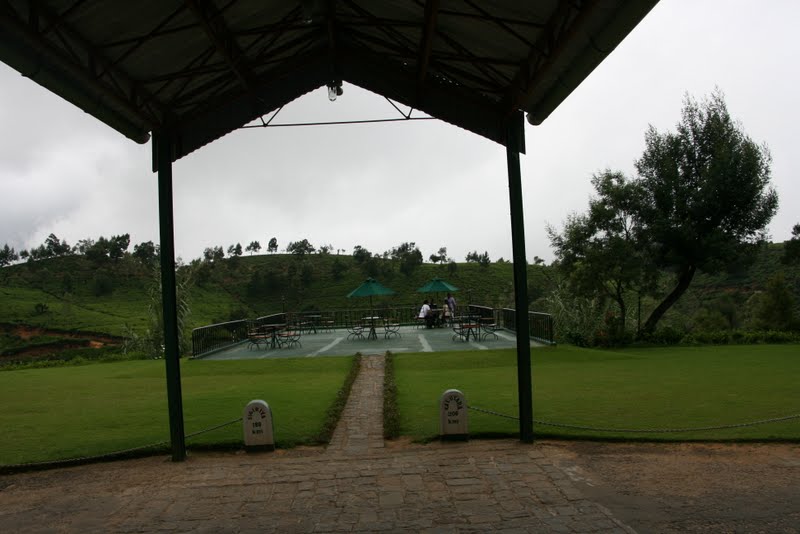
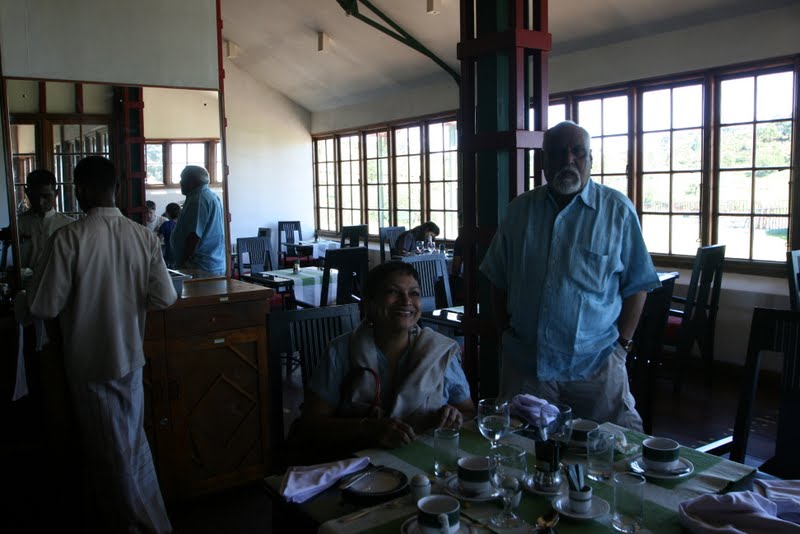
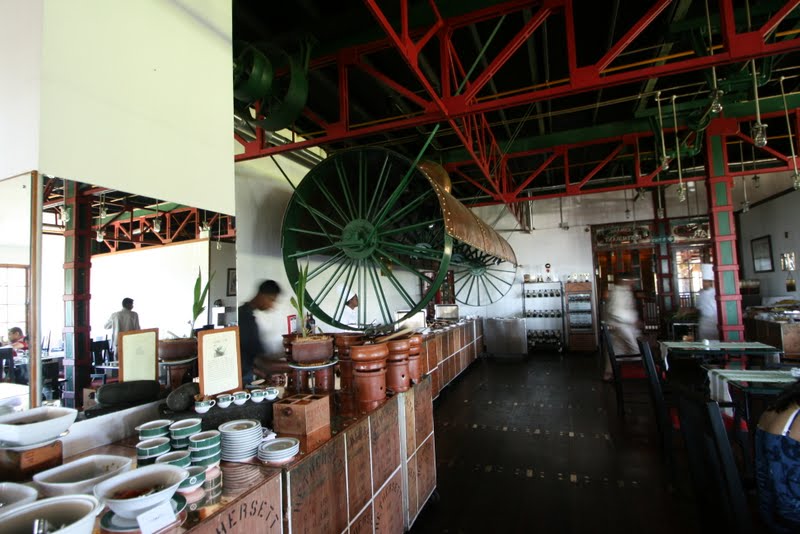
Our next halt was the theme hotel ‘Heritance Tea Factory’ 23 Km from NE (the word ‘heritance’ being a combination of heritage and inheritance). A bit of history about the place is very important to fully absorb the greatness of the hotel.

The origins of Hethersett

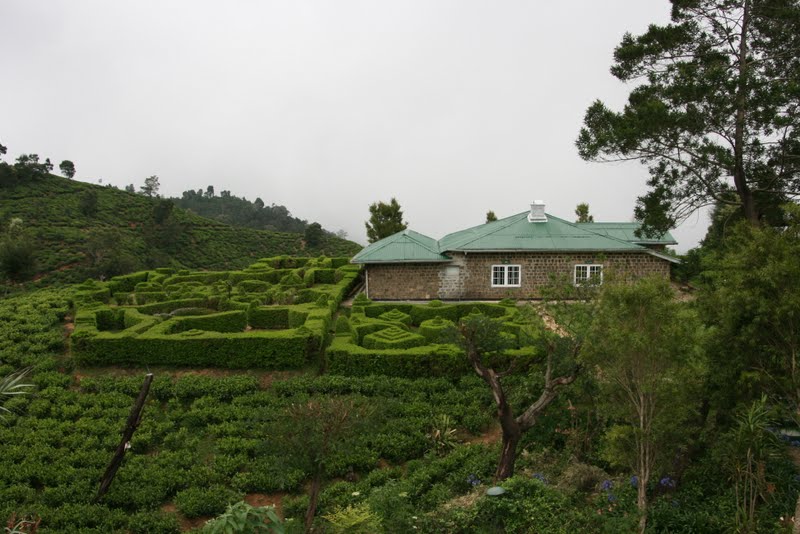
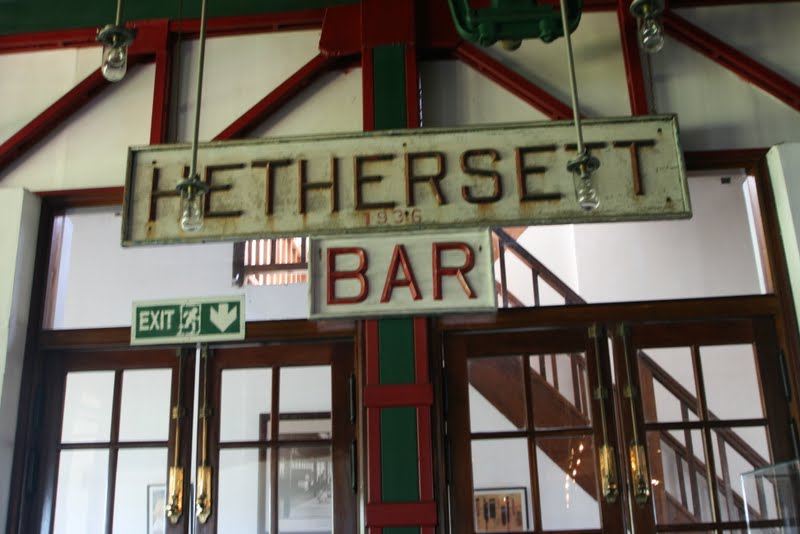
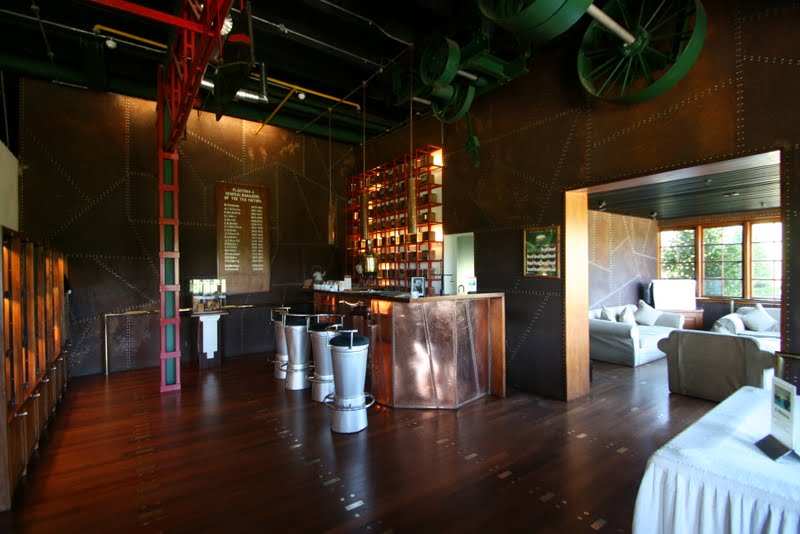
In 1867 a Scotsman, James Taylor, first introduced tea to Ceylon, as the island was then known. Within a decade, the plant had become a popular crop among colonial planters, covering over 5,000 acres. As the number of requests to open tea plantations grew, the government sold land to pioneer planters in the 1870s. Among the bidders was William Flowerdew, who named his plantation after his native village, Hethersett, in England, and built a tea factory to process his crop. In Tamil, the plantation is known as Pupanie, which means “flowers of frost” – a quaint way of describing the cold mist that occasionally descends on Hethersett. Mr Flowerdew had sold the plantation by 1881, and it then passed through the hands of different owners. In the Goatfell Bar you can see a list of all the planters, from William Flowerdew in 1879 to JME Waring until 1972, after which the factory closed down. But by 1968, the Hethersett factory had passed its heyday, and it was finally closed in 1973. It stood unused, standing tall among the surrounding tea bushes, a silent monument to the days of pure Ceylon tea.

In 1992, Mr G C Wickremasinghe, a Director of Aitken Spence and Company Limited, happened to observe the tea factory through the mist-covered hills. He had a vision of transforming the shell into a unique, luxury hotel.

The idea was brought to fruition through the talent of architect Nihal Bodhinayake. No alterations or additions have been made to the exterior – the windows and woodwork are entirely original as designed by British engineers.

Heritance Tea Factory opened as a hotel in 1996.

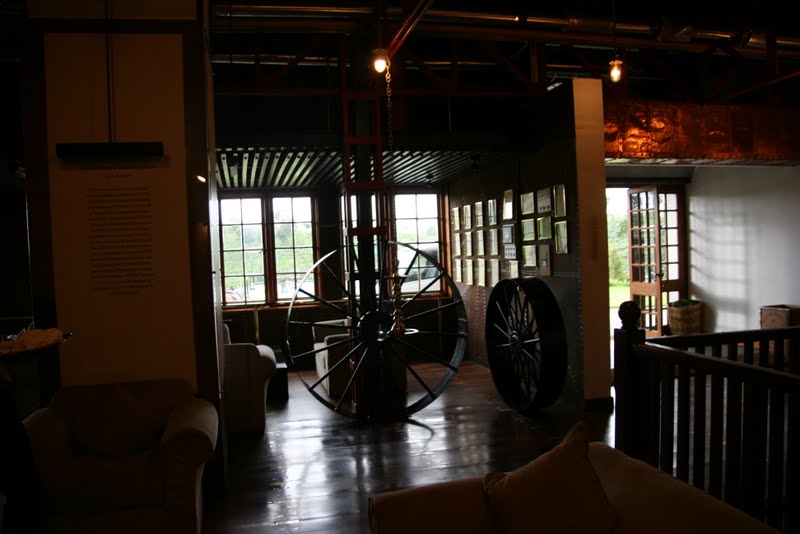
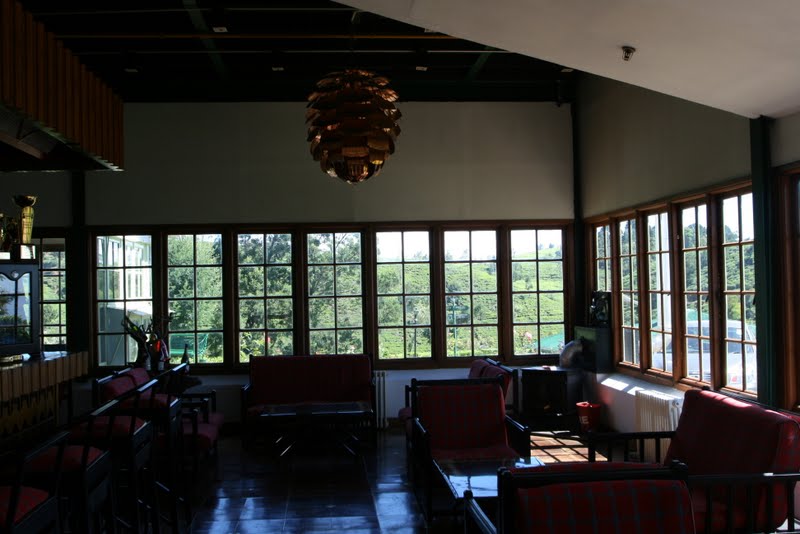
I firmly believe that Heritance Tea Factory is an experience by itself. The atmosphere takes you back in time when a day was made up of more than 24 hours, you woke up to the call of  chirping birds nearby, hot tea in bed, a hot tub bath, breakfast with eggs, bacon, sausages, hash browns, fresh plantation coffee and a news paper in hand to complete the picture. The period furniture, fire place and glowing embers add to the warmth of the place. The overall ambiance and the hospitality are almost magical and mesmerizing. 

The atmosphere is very welcoming; in a short time you feel at home and begin to blend with it. The staff is always there, appearing discretely from the shadows, to meet all your requirements – silent and willing. The atmosphere is somewhere between a 5 star hotel and a very well run club of British Heritage.

The silence in the area is overpowering, barking, chirping and other calls of wild animals can be heard very clearly at night. Time seems to tick slowly defying Albert Einstein’s theories. It takes you back to a time when life was less complicated and easy going, when there was time for poetry, painting and unbridled romance. 

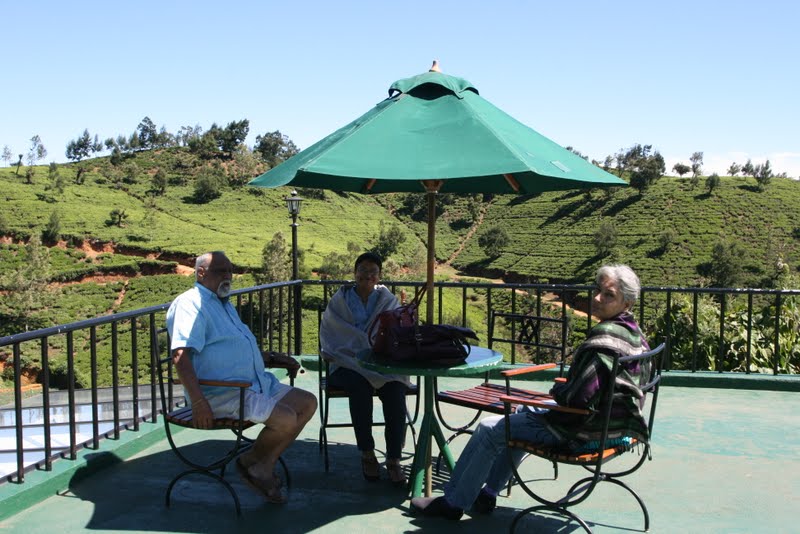
We did exactly what one would have done a hundred years back. Laid back and enjoyed the hospitality, took in lung fulls of fresh mountain air, went for long walks in the plantation, ate like pigs, drank like a (oooops) let us not bring it up again and slept like a bear in hibernation – we did read a lot. In short it was one big relaxation. To add to all this indulgence, the weather was great – between 16 * to 24* deg C. The hotel, located at a height of 6500 ft, has a commanding view of the surroundings.


Figure 16 – Heritance Tea Factory


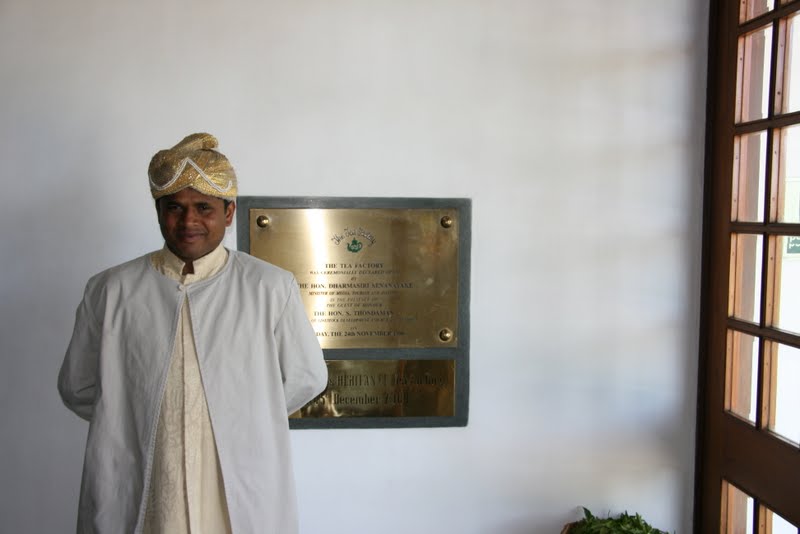
Figure 17 – The Ceremonial Reception


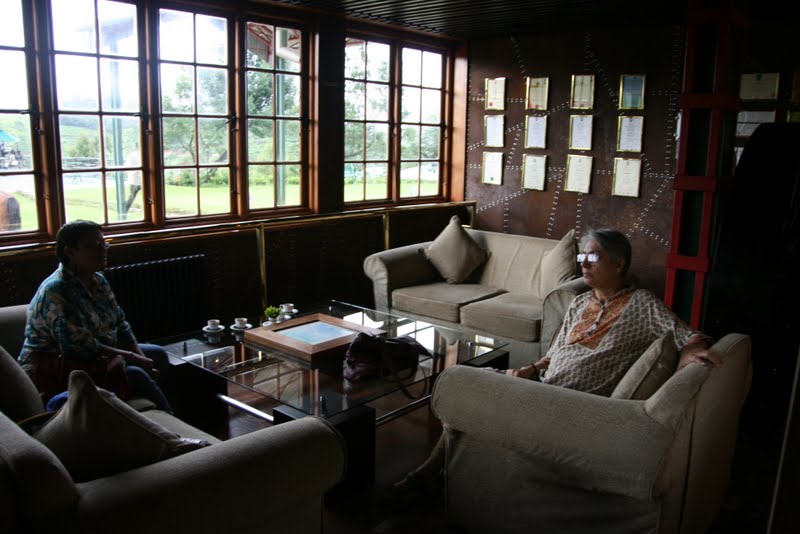
Figure 18 – The cozy tea room

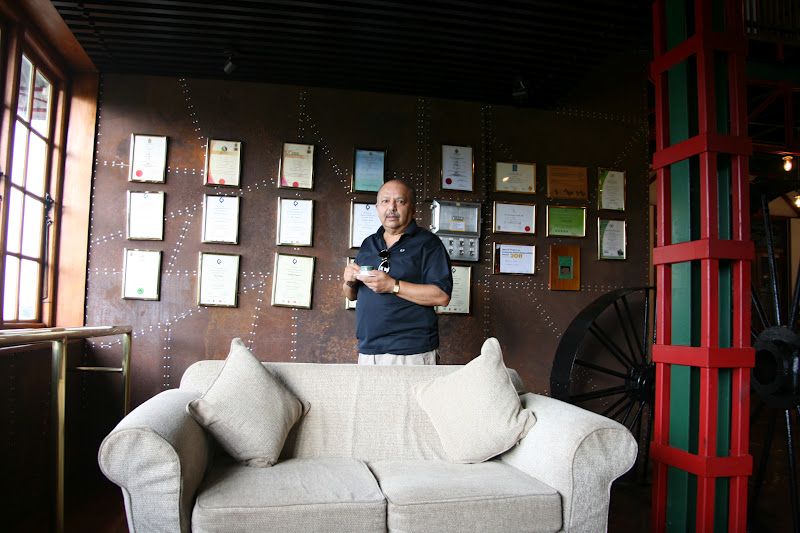
Figure 19 – Awards and Recognition


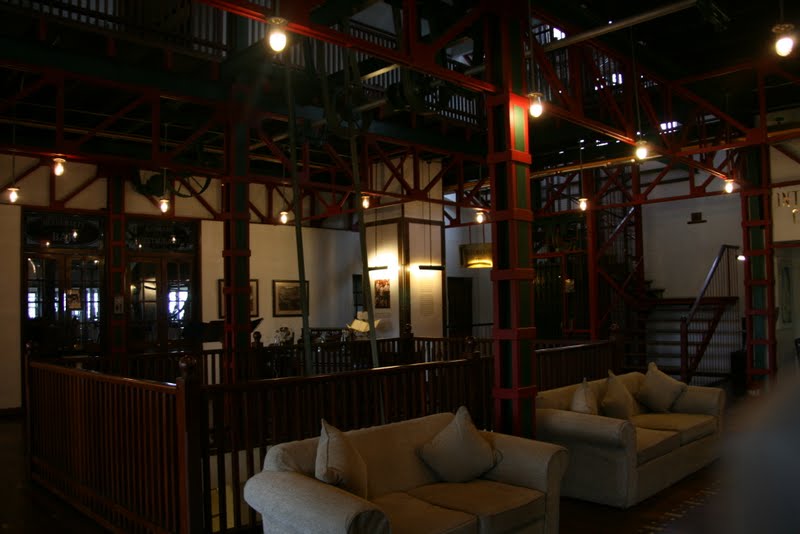
Figure 20 – The main lobby


Figure 21 – From another angle


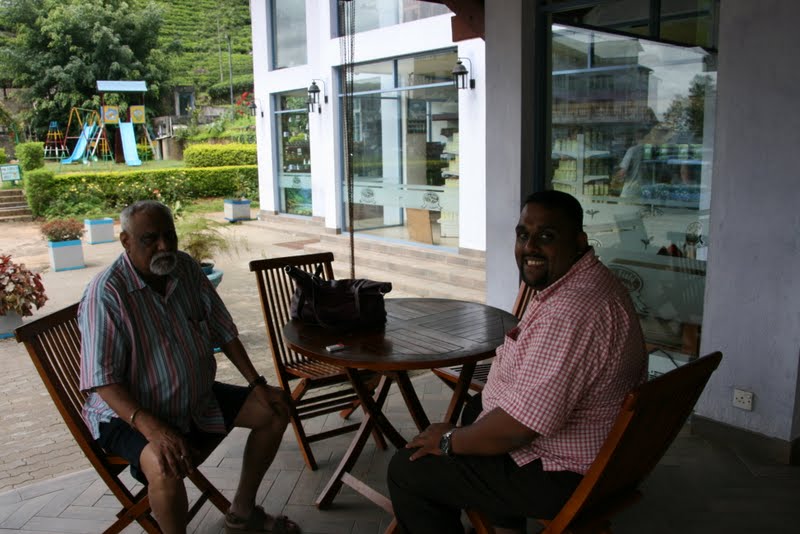
Figure 22 – Sit out from the main lobby


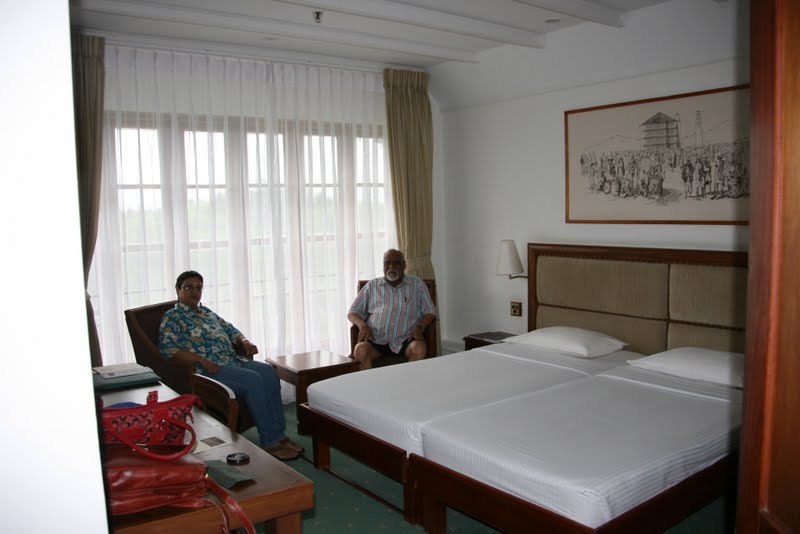
Figure 23 – A very comfortable room with a view

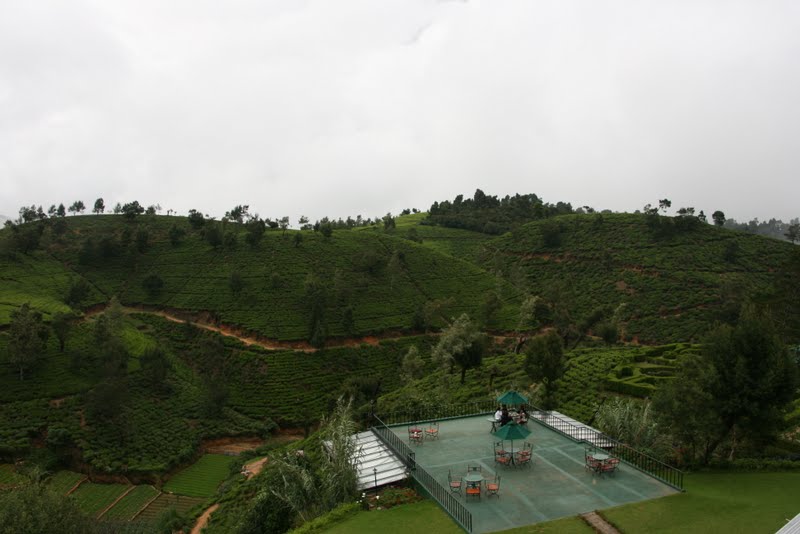
Figure 24 – View from the room


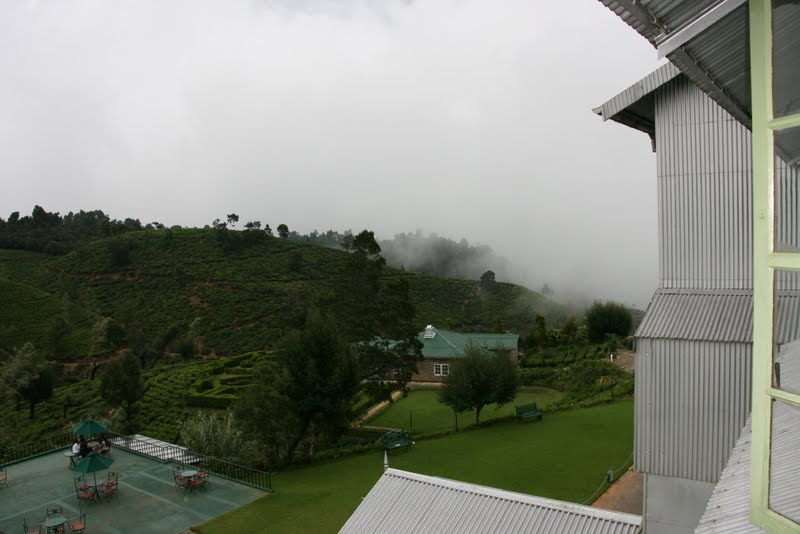
Figure 25 – Yet another view


Figure 26 – Nearby plantation


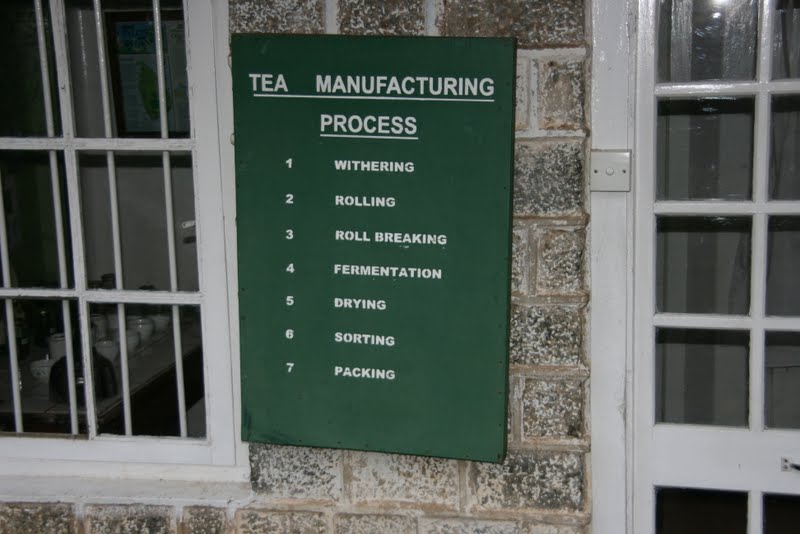
Figure 27 – Mini tea factory


Figure 28 – The Art of Making Tea


Figure 29 – Photo op with my silly hat


Figure 30 – Friends


Figure 31 – Naveen pleased with Kats


Figure 32 – A very happy traveler


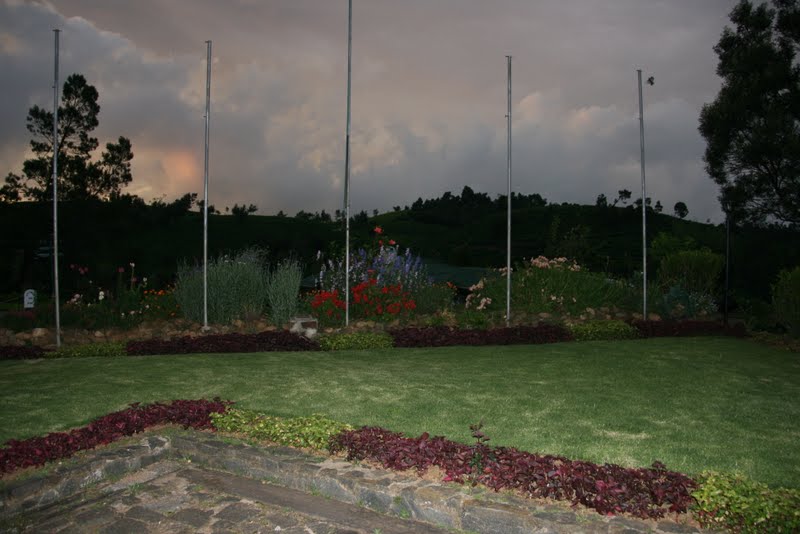
Figure 33 – Sun decides to go down


Figure 34 – Darkness envelopes the area


Figure 35 – Bird decides to rest for the night


Figure 36 – Finally the sun set – a grand finale


Figure 37 – The village below


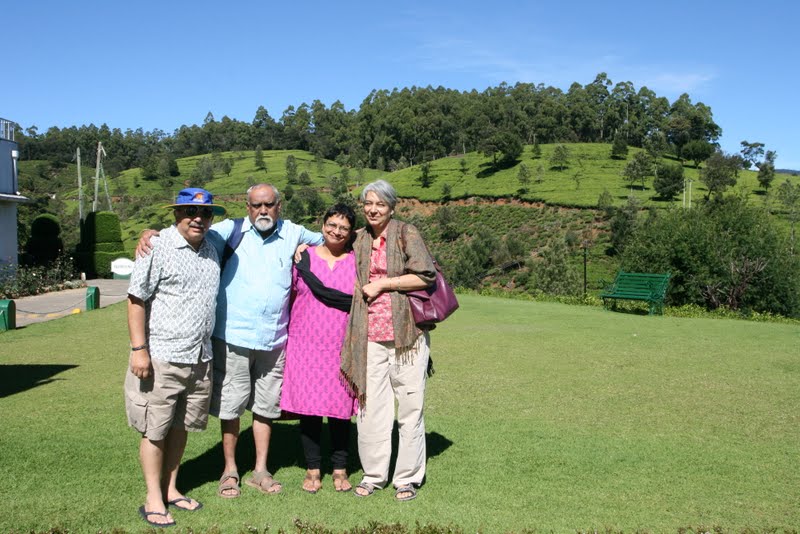
Figure 38 – Sheer warmth and ecstasy


Figure 39 – Kats all set for the sundowner and the dinner has arrived


Figure 40 – Jai and Naveen warding of a Bumble Bee attack  – had kept the window open – sorry


Figure 41 – Gregory’s lake – Nuwara Eliya


Figure 42 – Ride in the forest
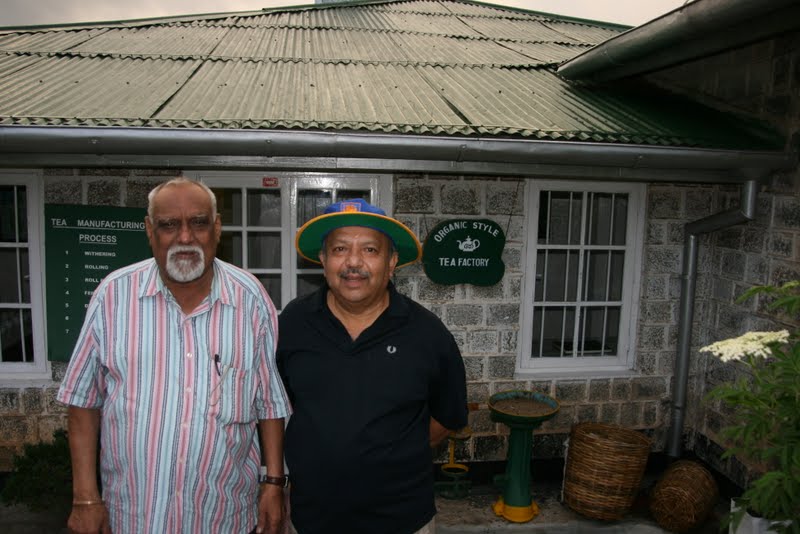

Figure 43 – Ready for breakfast


Figure 44 – Satisfied customers


Figure 45 – Dining room was once the packing room. Notice the tea chests which makes up the table.


Figure 46 – Sanctum Sanctorum


Figure 47 – A very well appointed bar

Figure 48 – Goatfell Bar, which offers more than 20 different types of tea, tea mocktails, Hethersett Fog – a blend of tea, lime juice, angostura bitters and lemonade, topped with a slice of lime and tea leaves


Figure 49 – Enjoying the sun


Figure 50 – A happy and contented lot – it shows!


Figure 51 – Ayubuwan till we meet again


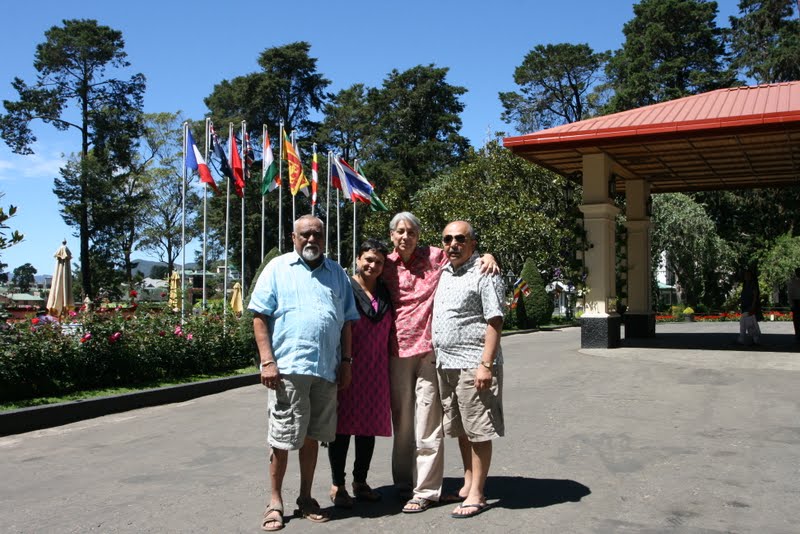
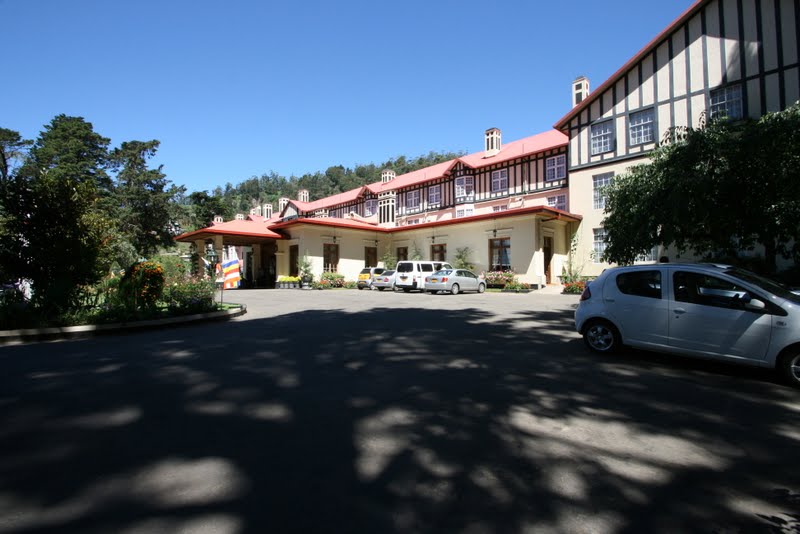
Figure 52 – Visit to the Grand Hotel – Nuwara Eliya


Figure 53 – The Grand Hotel -Has a heritage exceeding 120 years and was the residence of Sir Edward Barnes, Governor of Sri Lanka during the era from 1830 to 1850.

Summer Holidays 2012- Sri Lanka – Part I – We visited Pinnawala & Kandy

I did a lot of planning for the annual foreign jaunt – East Europe, Turkey, Far East etc. Somehow, none of these destinations worked out. The response from my friends was also not very encouraging. People dropped out due to clashes in program, shortage of funds and a variety of other reasons. I was determined to give Jai a break from her hectic school routine. I firmly believe in the adage ‘Work hard and play even harder’. It’s very important to break away from everything routine and embark on a trip of some sort, somewhere, just for a while, to nourish one’s body and soul. French President Mitterrand was famous for sneaking out of Paris without letting anybody know where he was spending his holidays. If he, with a nuclear button in hand, could get away from it all – I am sure we ordinary mortals can do the same.Once again Ms Gowri from ‘Travel Bazaar’ did all the ground work and made out a very interesting 13 day package for Sri Lanka. Kats and Navin joined us very eagerly. I had visited Sri Lanka many times during the IPKF operations, but in a non tourist mode. So, I was keen to see Sri Lanka after 30 long years of bloody internal strife.

Sri Lanka figures high in the list of ‘Breakout Nations’ by Ruchir Sharma. He notes ‘Sri Lanka may surprise us as a high-growth nation in the coming years’. Post 2010 there has been a steady growth in FDI. Tourism has emerged as one of the top six FE earners along with tea, rubber, garments and low end manufacturing. Sri Lanka is home to eight World Heritage Sites: Galle, Kandy, Sigiriya, Anuradhapura, Polonnaruva, the Dambulla cave Temple, the Central Highlands, and  the Sinharaja tropical rain forest. The industry has picked up dramatically post 2009 and continues to attract tourists from all over the world. In real terms, visitors from India topped the list in 2010, while UK came a close second. Germany, Middle East and France accounting for the other major shares.The 800,000th visitor to Sri Lanka arrived in Colombo on 16 Dec 2011. Tourism revenue rose  from 64.8 percent in 2010 to a record US$ 576 million. This year the country expects US$ 800 million tourism income and US$ 1 billion next year. Nearly 950,000 tourists are expected to visit Sri Lanka next year.Apart from heritage sites, hill stations, golden beaches, rivers and wild life – Sri Lanka also has the advantage of offering 4/5 star accommodation at very reasonable prices when compared with Europe and India. The package offered by Travel Bazaar was indeed reasonable and included some of the best properties in SL.


27thApril 2012 – Arrival Colombo

After a very short journey we landed at ‘Bandaranaike International Airport’, Colombo at 2200 hrs. Kats and Naveen joined us from Delhi a few minutes later. Without further ado, Kats and I proceeded to the duty free shop to fortify ourselves with some elixir for the duration of our stay. With our newly purchased confidence we were ready to face whatever Sri Lanka had to offer. We checked into the Jetwing Beach Hotel in Negombo. The hotel is located on the beach and the rooms have a clear view of the sea. After a good night’s rest and a scrumptious breakfast we commenced our SL tour. Negombo is similar to Pondicherry in many ways.


Figure 1 – View from the room


Figure 2 – View of our room


Figure 3 – Mighty Indian Ocean


Figure 4 – Jai and Naveen


Figure 5 – Kats and self

28thApril 2012 – Pinnawala – Kandy

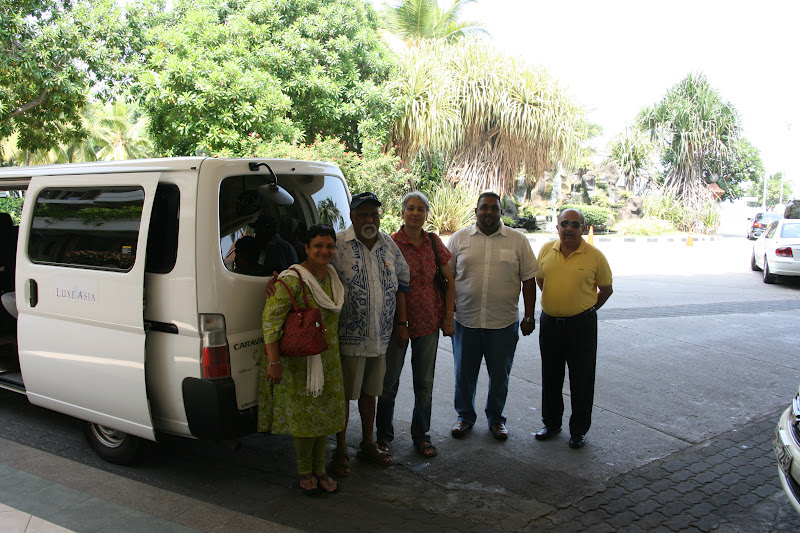
As we finished our breakfast and came to the hotel lobby, Mr Duminda, a giant of a man and our driver and guide, was waiting to receive us. He had brought along a ‘Nissan Caravan’ which was going to be our ‘vahana’ for the next 13 days; a very spacious, comfortable and sturdy vehicle. The best part of the travel deal was that, both the Nissan and Duminda would stay with us for the entire duration.


Figure 6 – Photo op with Duminda

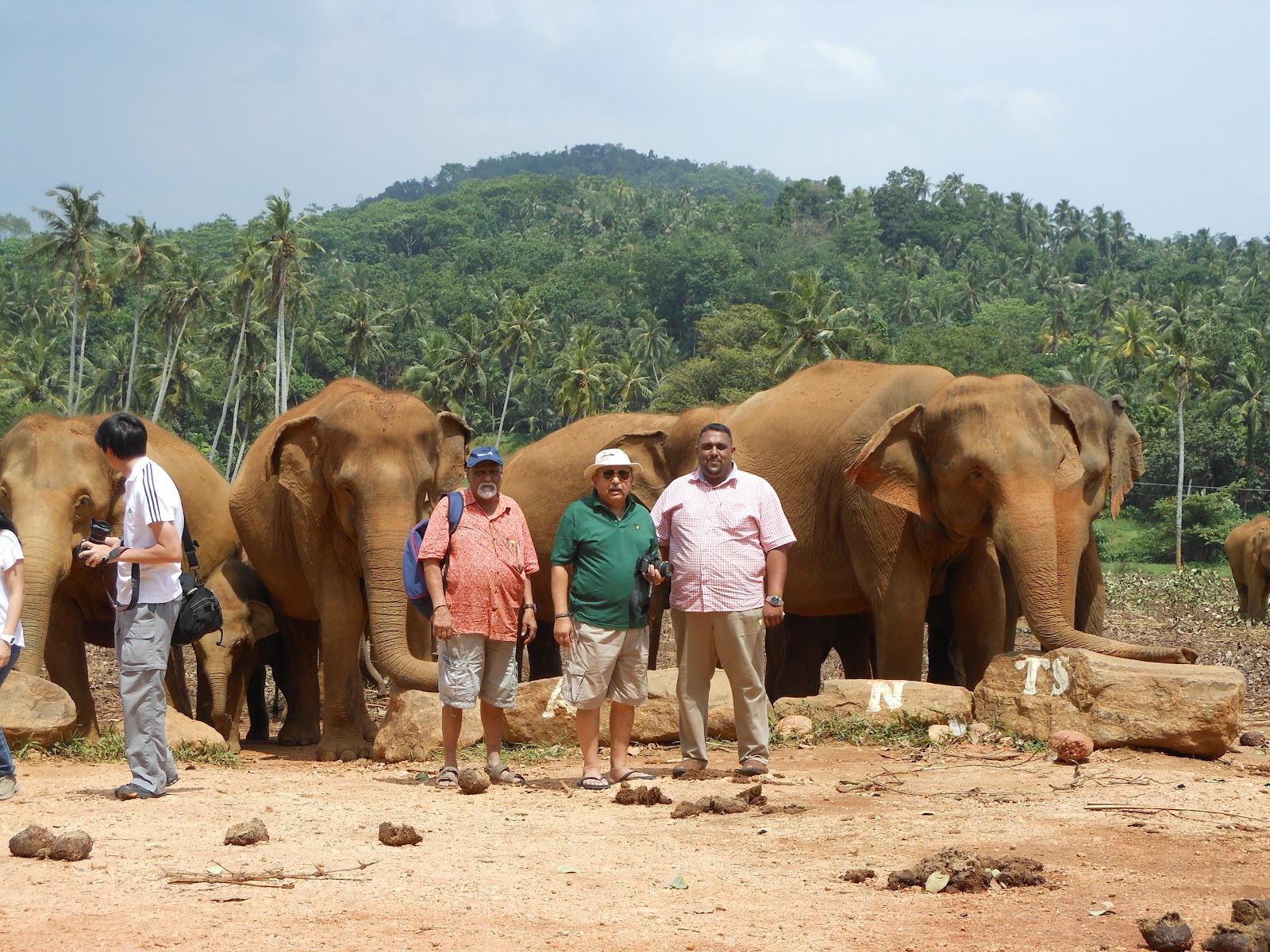
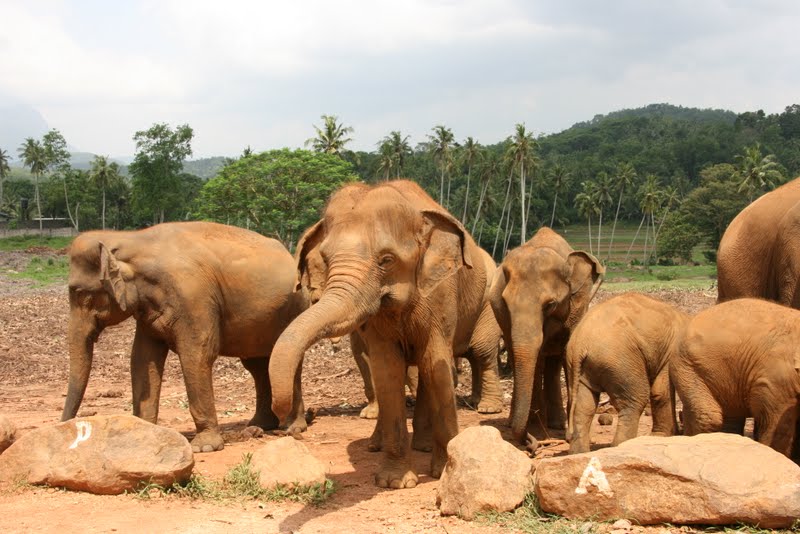
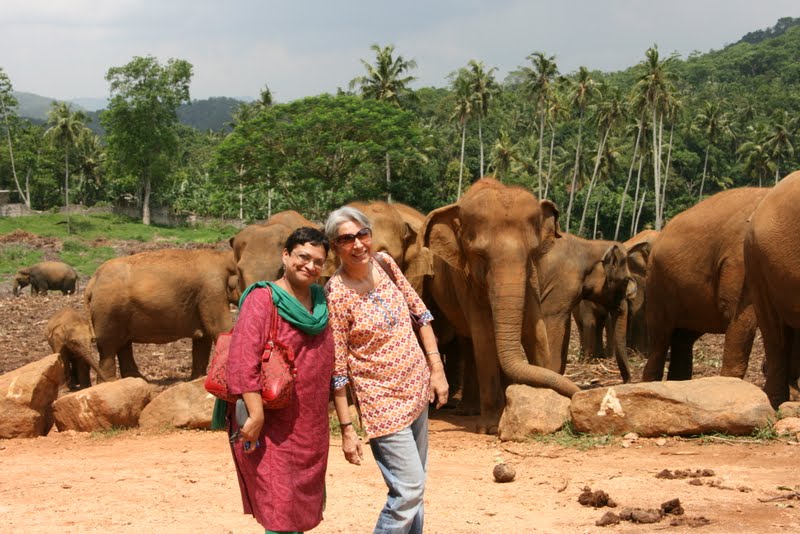
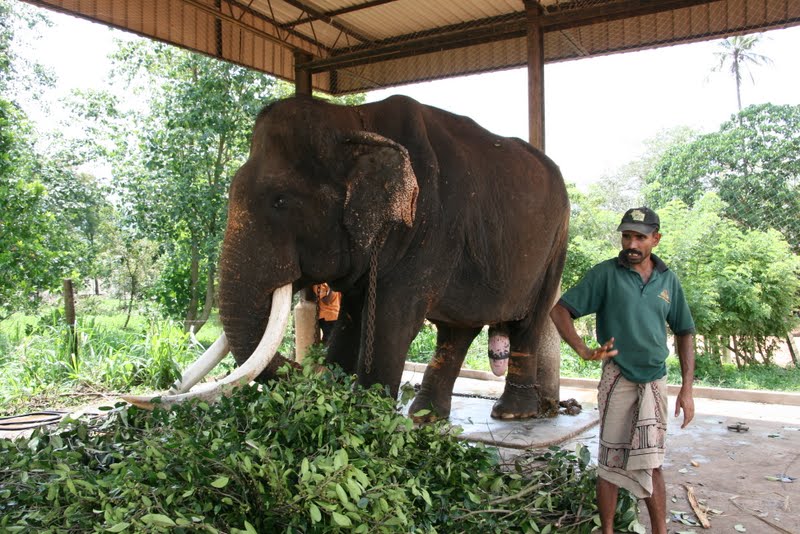
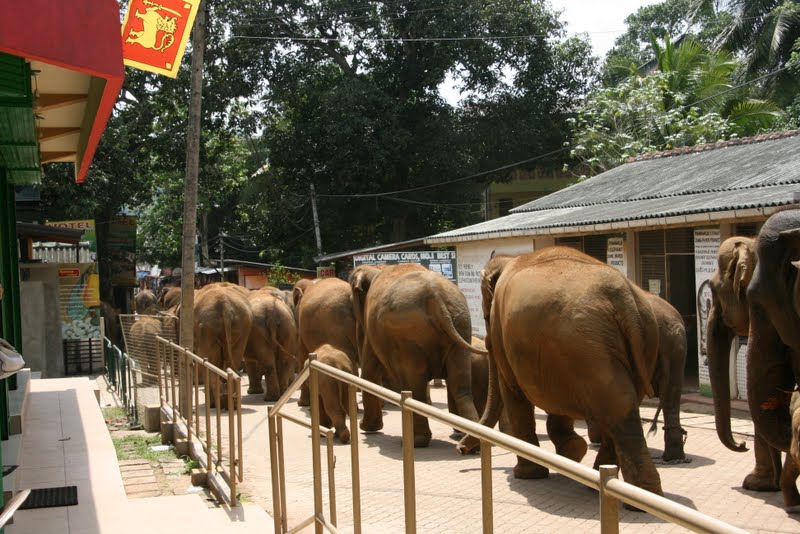
Our first stop was the Pinnawala Elephant Orphanage. It is an orphanage, nursery and captive breeding ground for wild Asian Elephants located at Pinnawala village. It is notable for having the largest herd of captive elephants in the world. In 2011, there were 88 elephants, including 37 males and 51 females from 3 generations, living in Pinnawala. The orphanage was established to feed, nurse and house young elephants found abandoned by their mothers. Young elephants sometimes fall into pits and ravines in their quest for water during periods of drought. Other orphans have been displaced from their wild habitat by development projects or have been found abandoned before weaning, diseased or wounded. This elephant orphanage also conducts captive breeding of some elephants in its care.


Figure 7 – Three more elephants – 88 + 3


Figure 8 – A close up of elephants having a mud bath


Figure 9 – Jai and Naveen feeling happy about their size


Figure 10 – An 82 year old blind elephant in the orphanage


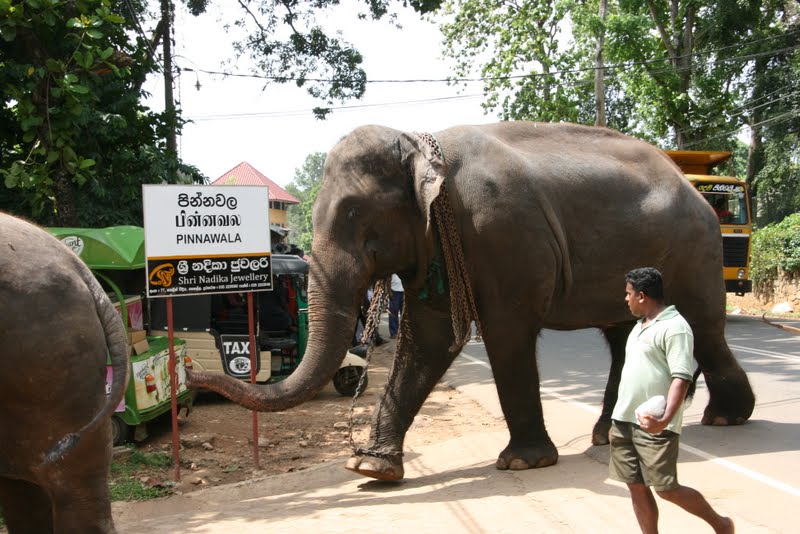
Figure 11 – On their way through the village for a bath


Figure 12 – The naughty ones are chained

Our next stop was the ‘Elephant Poo Paper’ factory – a very interesting and educative visit.


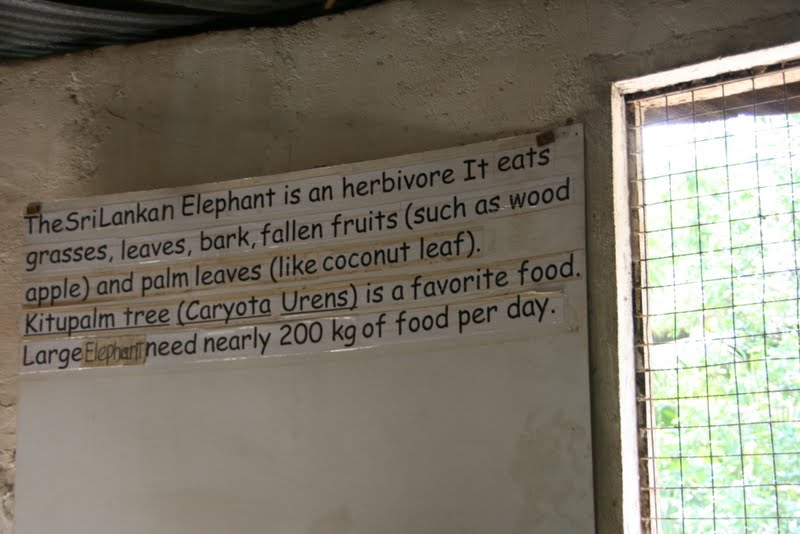
Figure 13 – Vegetarian Diet


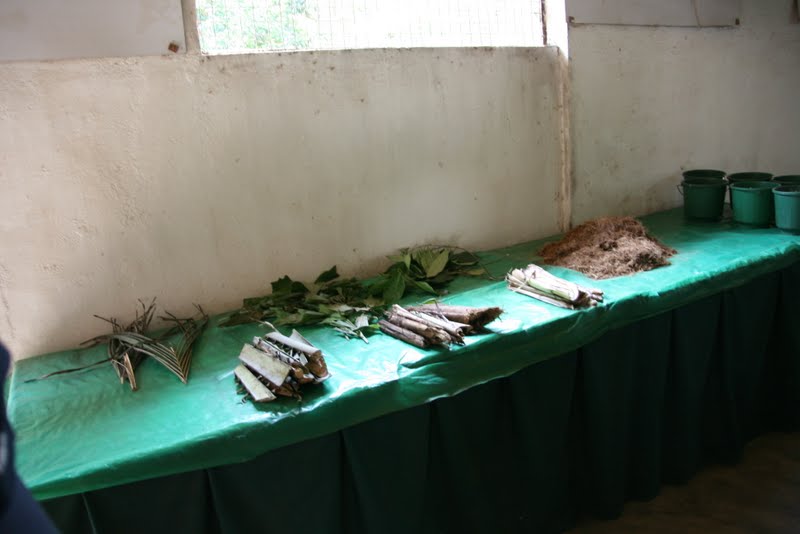
Figure 14 – Food on table


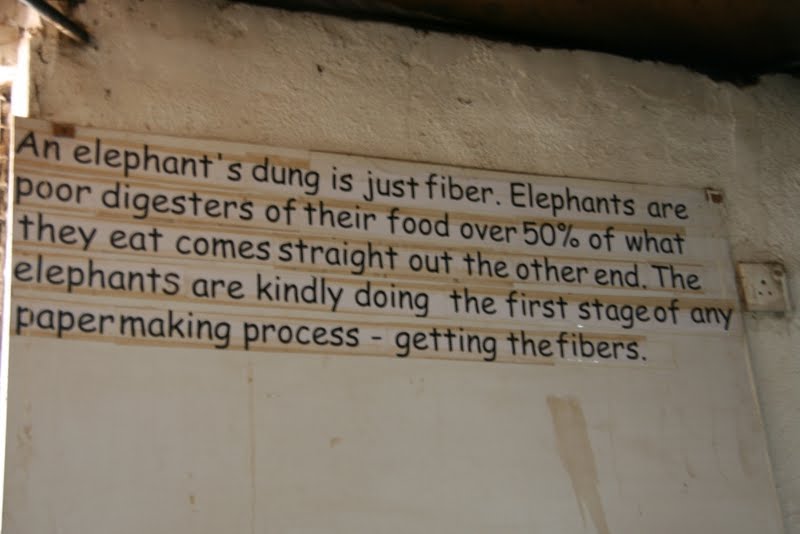
Figure 15 – The process

Fibers are then boiled in a container for at least a day to ensure they are clean and soft. Later, they are washed in fresh water. Surprisingly it does not smell at all. The next process is to spin dry the fiber and soak it in the required color for 3 hours. The fibre is then pulped and mixed in a small paper making vat and put in a shallow mould to make paper. Once the paper id dried it is either smoothened by stones or by passing it through a calendaring to make it smooth and usable. It was a very interesting revelation to all of us. In the end it pays to be a vegetarian.


Figure 17 – The final product


Figure 18 – Paper quality

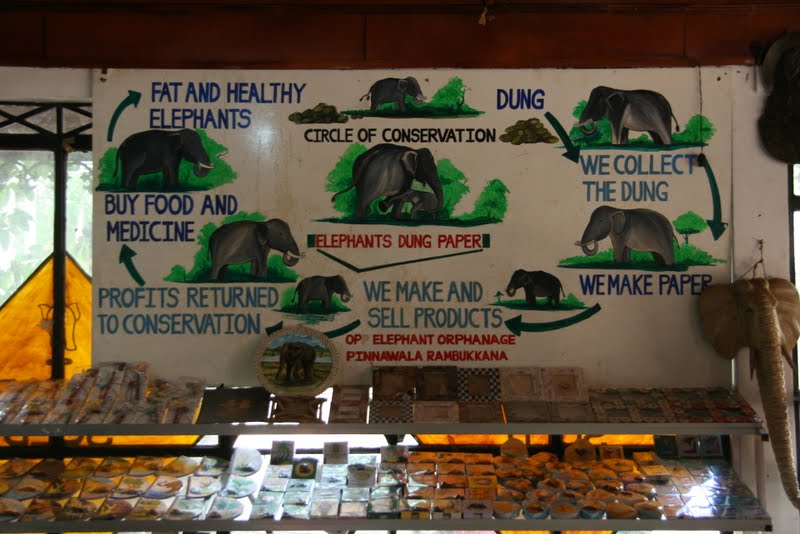
Figure 19 – Circle of Conservation

Drive to Kandy

The country side in many ways resembles Kerala, Goa and Mangalore – lush green country side with varieties of trees, plants and shrubs. The weather is also similar – hot and humid. However, under the shade it is comfortable.


Figure 20 – Country side


The comparison ends there. As one drives on their national highways, the differences start to slowly emerge and stand out. All the roads are in an extremely good condition and are clearly marked. The population of Sri Lanka is just 21 million – with Sinhalese 73.8%, Sri Lankan Moors 7.2%, Indian Tamil 4.6%, Sri Lankan Tamil 3.9%, other 0.5%, unspecified 10%.The religious break up being – Buddhist 69.1%, Muslim 7.6%, Hindu 7.1%, Christian 6.2%, unspecified 10%. Majority speak Sinhala, followed by a small percentage speaking Tamil. English is widely spoken, especially by those connected with tourism.

To understand the impact of population on various aspects of Sri Lankan life, I have made some simple comparisons.The State of Kerala  has a population of 31 million people in an area of 38863 square Km. On the other hand, the island of SL has an area of 65610 square kilometers – almost double of Kerala with only 21 million. The Population density (people per sq. km) in Sri Lanka was last reported at 332.64 in 2010.Where as Kerala has a density of 859. As a result, their village centers are not overcrowded; highways are relatively free from traffic congestion and the overpowering presence of humans is less if not totally absent.

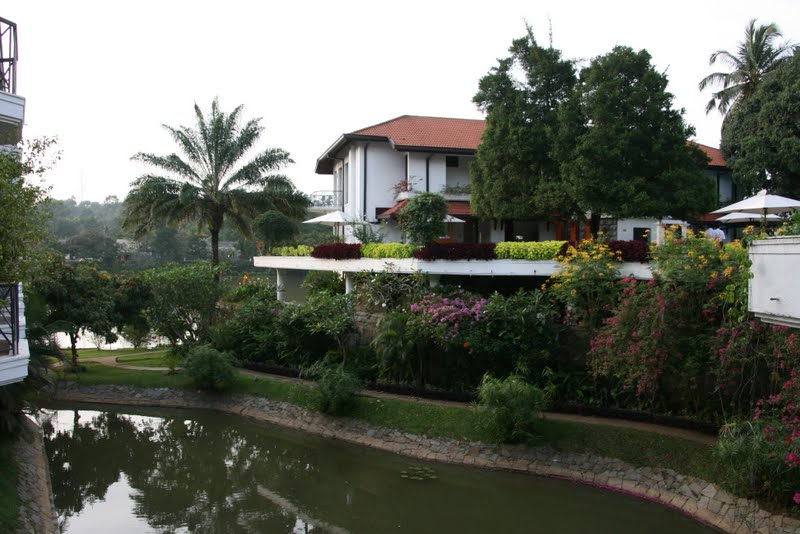
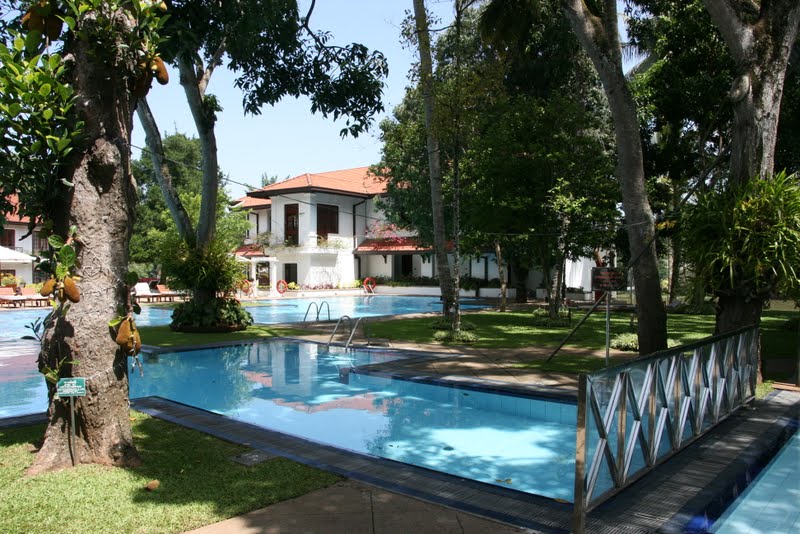
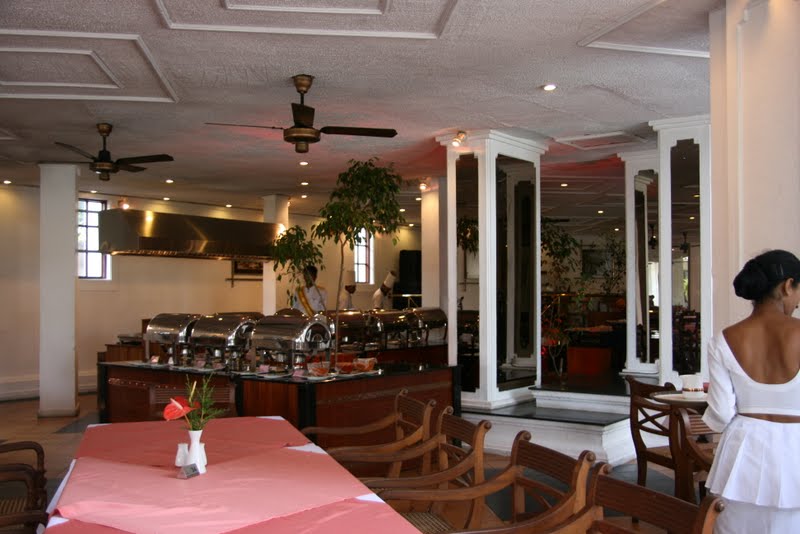
We reached Kandy by 3PM and checked into a hotel called the ‘Mahaweli Reach’, located on the banks of the river Mahaweli. The hotel has a nice blend of both old world charm and modernity – the staff is very pleasant and welcoming, their spontaneity  makes the guests instantly feel at home. The over bearing and officious atmosphere of a 5 star hotel is fortunately absent and one finds a feeling of familiarity.


Figure 21 – Mahaveli Hotel – by the river

Figure 22 – The Jack Fruit pool

Figure 23 – The dining area


Figure 24 – Photo op in the garden

29thApril 2012 – At Kandy

The very first item of the day was a visit to – Temple of the Tooth – Sri Dalada Maligawa 

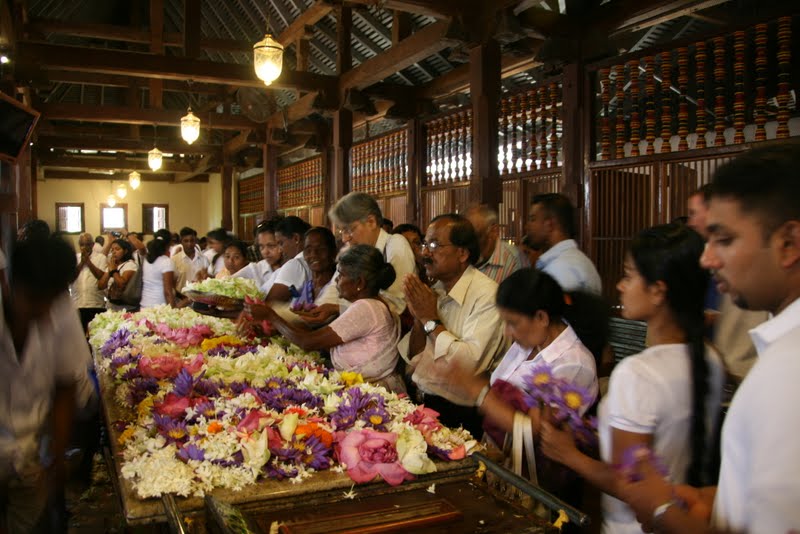
Located in Kandy, the stunning 17th-century temple is believed to house the left upper canine tooth of the Lord Buddha himself. This precious relic attracts white-clad pilgrims, bearing lotus blossoms and frangipani, every day.
According to legend, the tooth was taken from the Buddha as he lay on his funeral pyre. It was smuggled to Sri Lanka in 313 AD, hidden in the hair of Princess Hemamali who fled the Hindu armies besieging her father’s kingdom in India.

The tooth relic is removed from its shrine only once a year, during the Esala Perahera, a 10-day torchlight parade of dancers and drummers, dignitaries, and ornately decorated elephants. It is now one of the better-known festivals in Asia, and it may be the largest Buddhist celebration in the world.


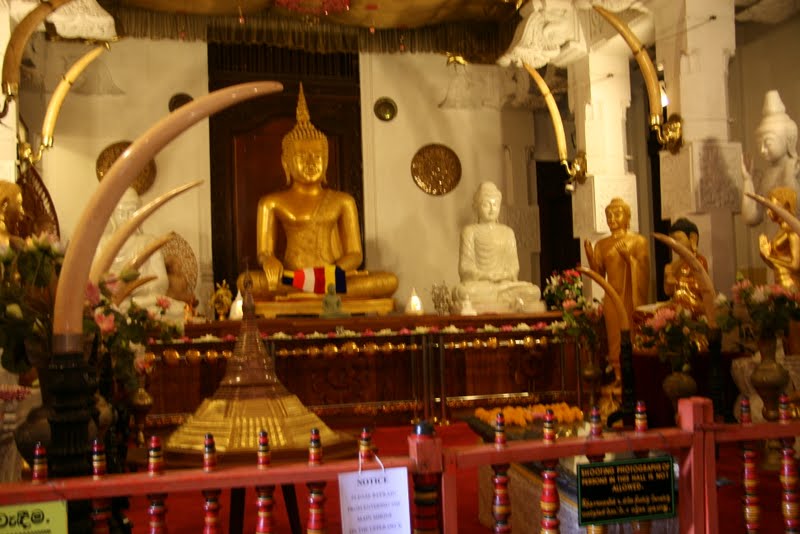
Figure 25 – The Sanctum Sanctorum

Figure 26 – Navin offering flowers and prayers at the temple


Figure 27 – The walls leading to the inner chambers decorated with intricate and colorful batik paintings depicting the life of Buddha


Figure 28 – Images of Buddha


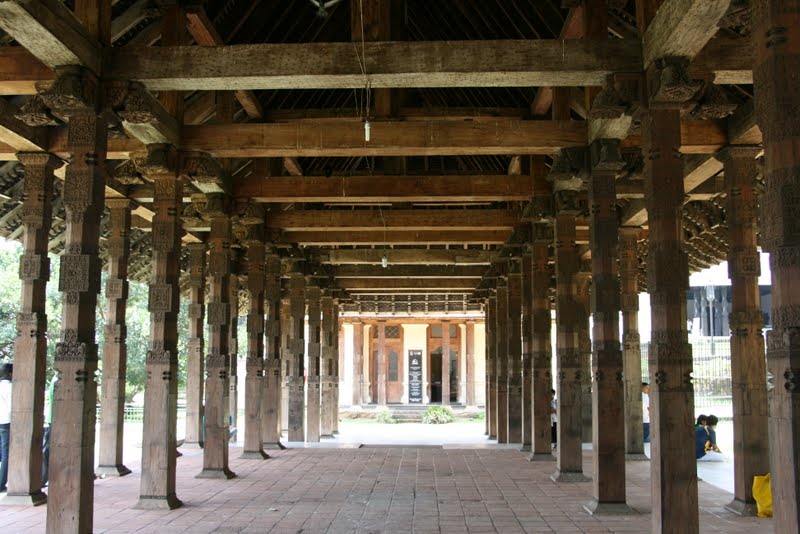
Figure 29 – Old walkway in excellent condition


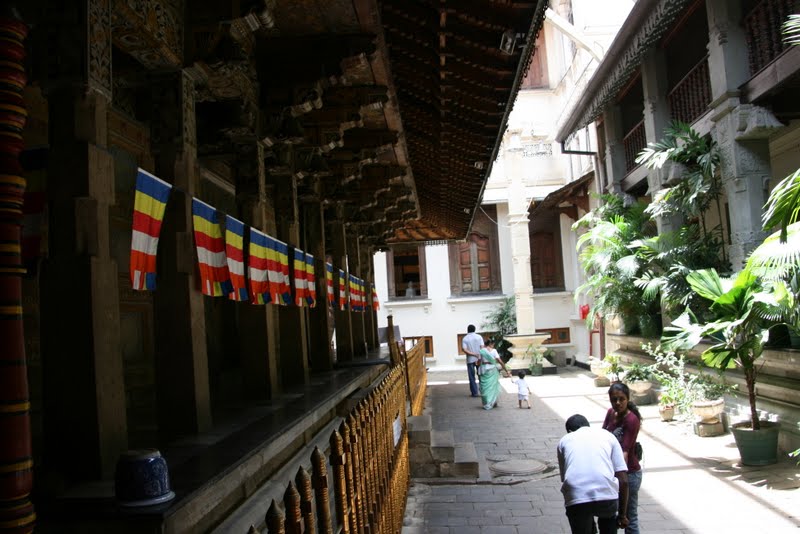
Figure 30 – A colorful wooden exterior


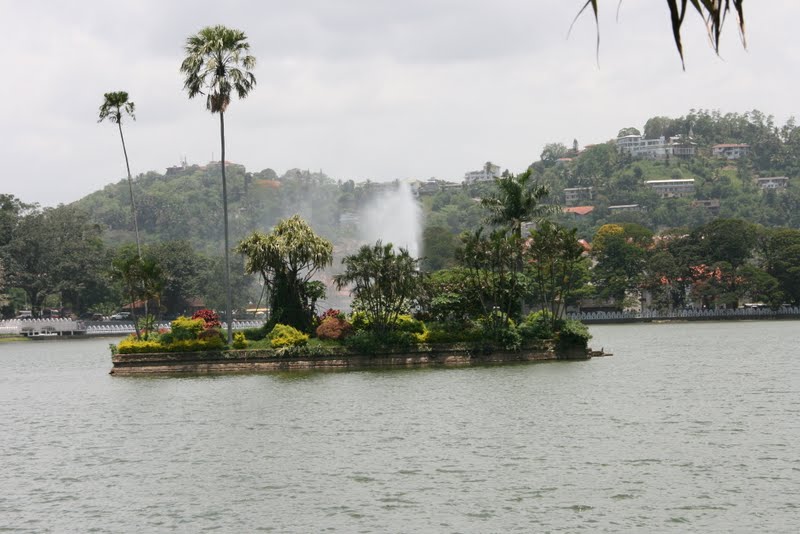
Figure 31 – Beautiful Kandy Lake


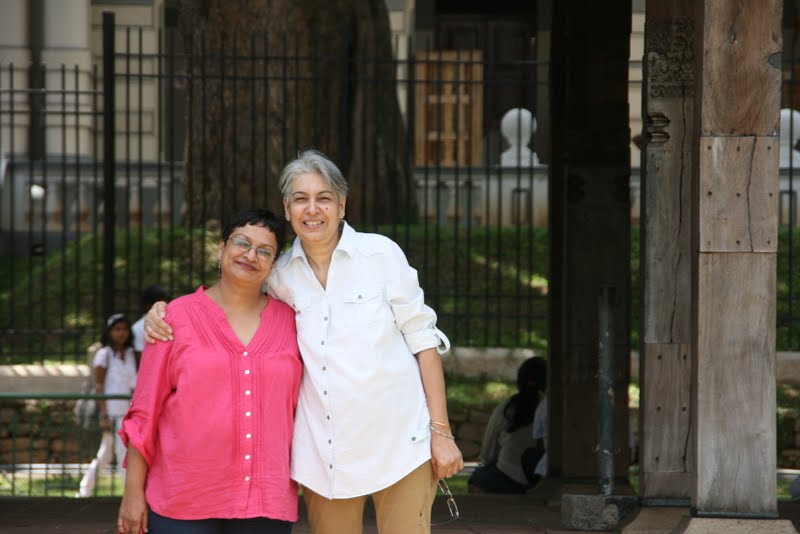
Figure 32 – Jai and Naveen at the temple

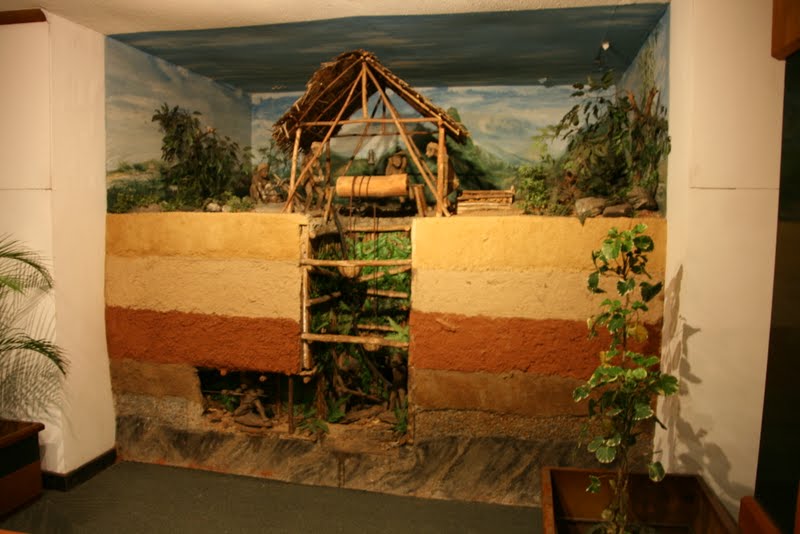
Thereafter we went and visited a gem factory. Sri Lanka’s mineral rich soils have been yielding a seemingly never ending supply of high quality precious and semi precious gem stones such as Sapphires, Star Sapphire, Rubies, Star Rubies, Alexandrite, Cat’s eyes, Garnets, Zircons, Tourmalines and Spinels. The gem industry in Sri Lanka is of great antiquity.

In the factory we were able to watch a very interesting and educative video on gem mining.


Figure 33 – Sand model depicting the insides of a mine

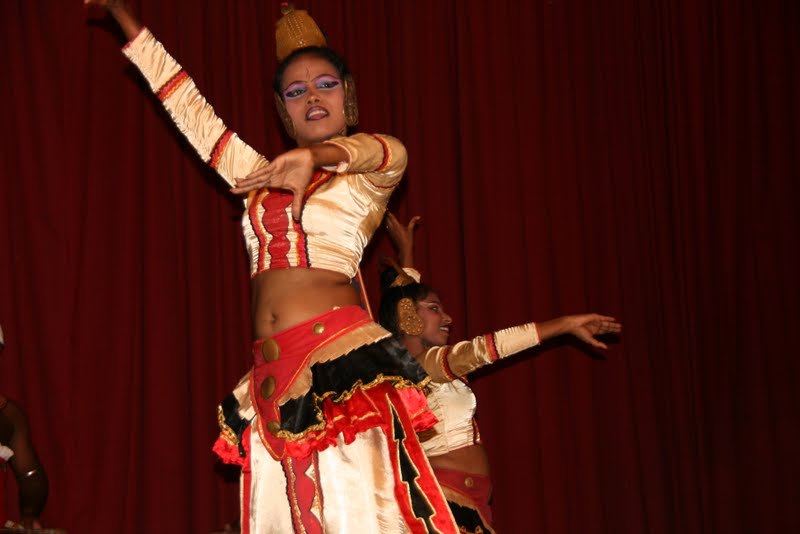
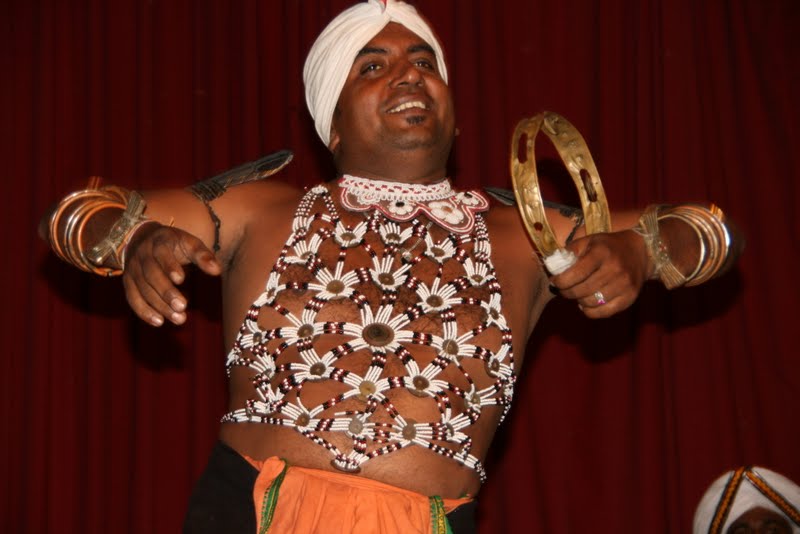
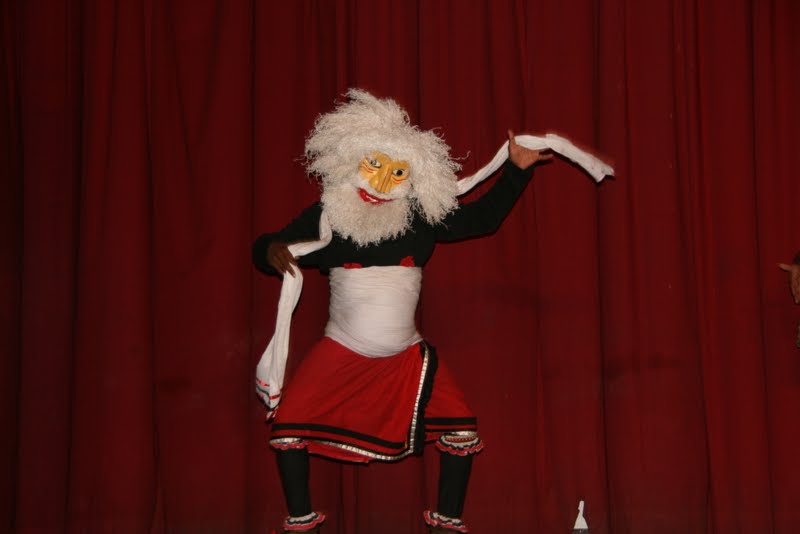
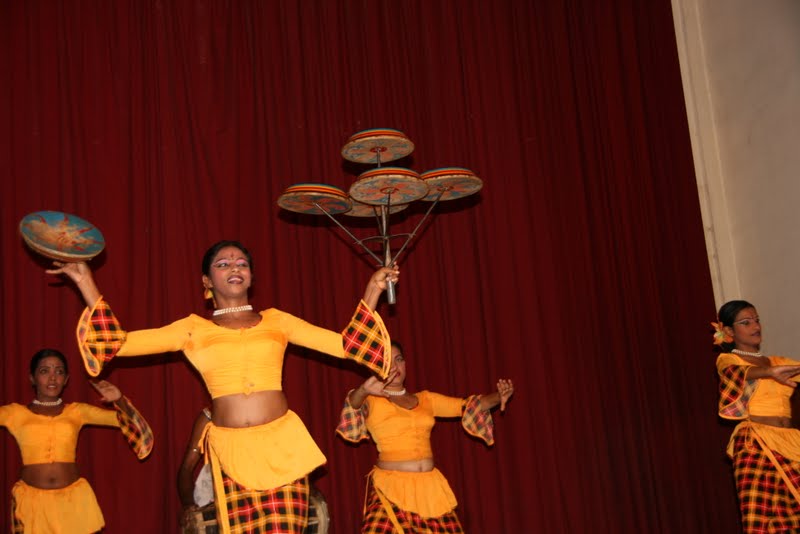
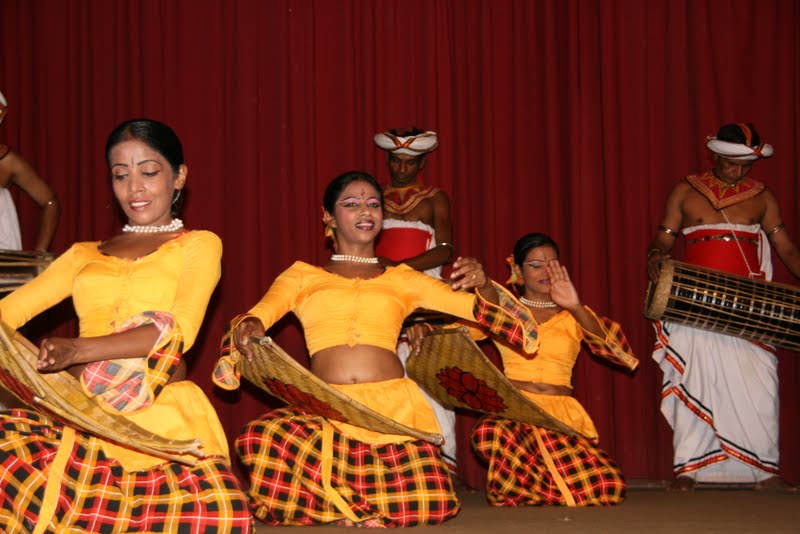
In the evening we attended a cultural show depicting various dance forms of Sri Lanka


Figure 34 – Traditional Pooja dance


Figure 35 – Thelme dance which is a vibrant expression of pure classical and rhythmical dance from the low country


Figure 36 – Salupliya dance depicting several demons. Popular in Southern Sri Lanka


Figure 37 – Raban dance, displaying balancing with skill


Figure 38 – Kulu traditional folk dance


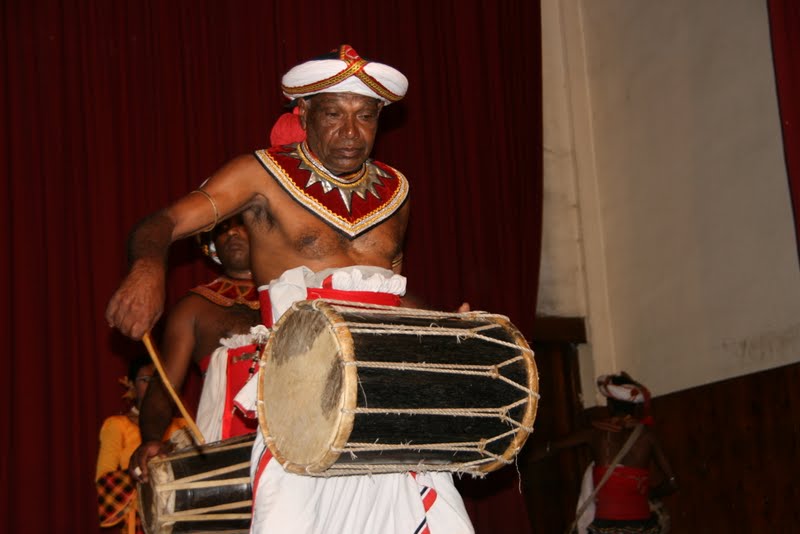
Figure 39 – A drummer in a Ves dance – King of Kandyan dance form


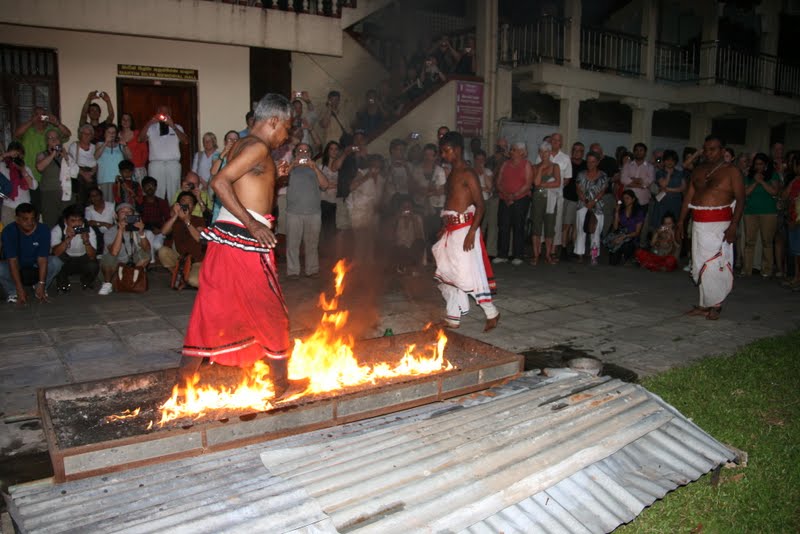
Figure 40 – Traditional Fire walking

Total Relaxation with Kats


This marked the end of our stay in Kandy.After paying respect to ‘Johnnie Walker’ followed by a light dinner we went to sleep in the luxurious confines of ‘Mahaveli Reach’ 

Summer Holidays 2012- Mumbai

Summer Holidays 2012- Mumbai

Jayanti’s school closed on 14th of April 2012 and it was time once again to travel. We spent some time with daughter dear in Mumbai, soaking in the heat of the city and the hurried, harried life it offers. It was great being with the grand children – once inside the house it was all fun and frolic. The twins have grown up and now attend a ‘mother -toddler’ program and enjoy getting ready and carrying their satchels to school. Ayaan is growing up fast and keeps himself busy attending football practice, music classes and karate – in addition to school.

It was ten days of great fun with daughter, S in L and the grand children. In spite of the heat, I took the children to the park and bonded. At home I busied myself in the kitchen cooking dosa, idly, upma and the rest to satisfy Akhila’s craving for South Indian food. As usual, there were a number of visits to various specialty restaurants along with my S in L, who is a foodie – Sea food, Italian, Chinese et al. We also went and watched The Sound of Music, a play produced by Rael Padamsee.

It was very heartening to see Akhila’s household retuning to normalcy – meaning the twins have finally settled down. They are almost two now and their routine is in place. After a hectic day they retire exactly at 7pm and sleep through the night – which is a great relief for their mother. They have regular meal timings and eat whatever is on the table with no fuss, play a lot and spend considerable time with each other. They have learnt to walk and run about, blabber endlessly repeating whatever the elders say – all things considered, they are great company and therapeutic for the grandparents.

Akhila has all the help she requires to raise her three boys – notwithstanding the assistance; it is certainly a very challenging and demanding task to look after three children – especially boys. She has tons of patience and secretly enjoys motherhood. I give her full marks. Well done, Akki!


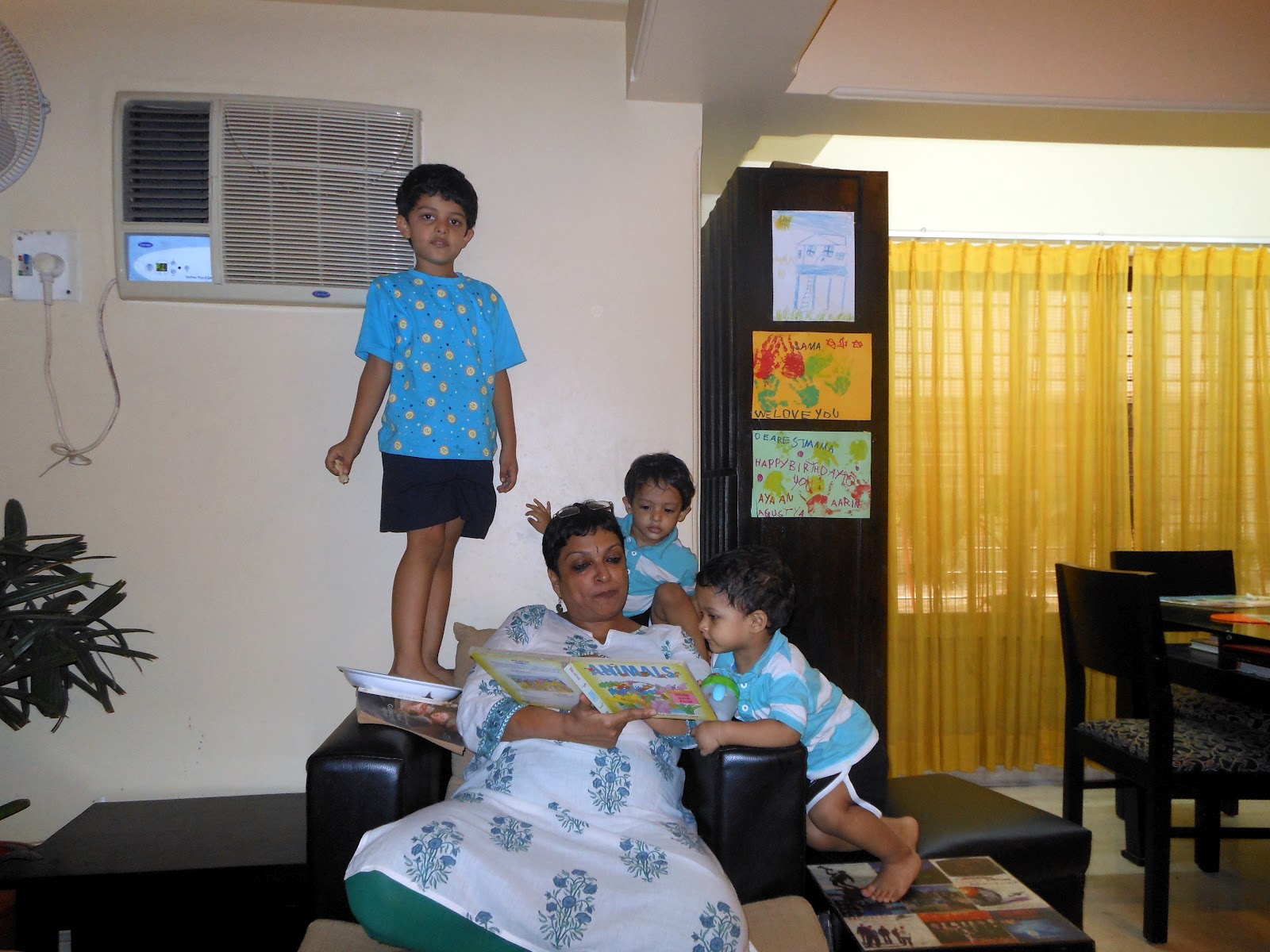
Figure 1 – Hai Ghoda with grandfather


Figure 2 – Story telling session with GM


Figure 3 – Ayaan with grandmother
Akhila celebrated Ayaan’s 5th birthday in a very novel manner. She hired a BEST open top ‘touristy’ bus decorated with balloons, to take Ayaan’s friends for a small chakkar around Bandra. The kids had a rollicking time, shouting, screaming, singing songs and making merry.


Figure 4 – BEST bus

A balloonwala made different shapes and figures with the balloon and was a hot favorite with the kids.

  
Figure 5 – Balloonwala at his job

On the bus there were a number of interesting games to keep the children occupied with Akhila as the game master.

Figure 6 –Akhila Taking Charge

After spending two hours on the bus, the restless children returned to a ‘Pizza Restaurant’ for a sumptuous pizza treat and the cake cutting ceremony.

Figure 7 – Proud parents with Ayaan

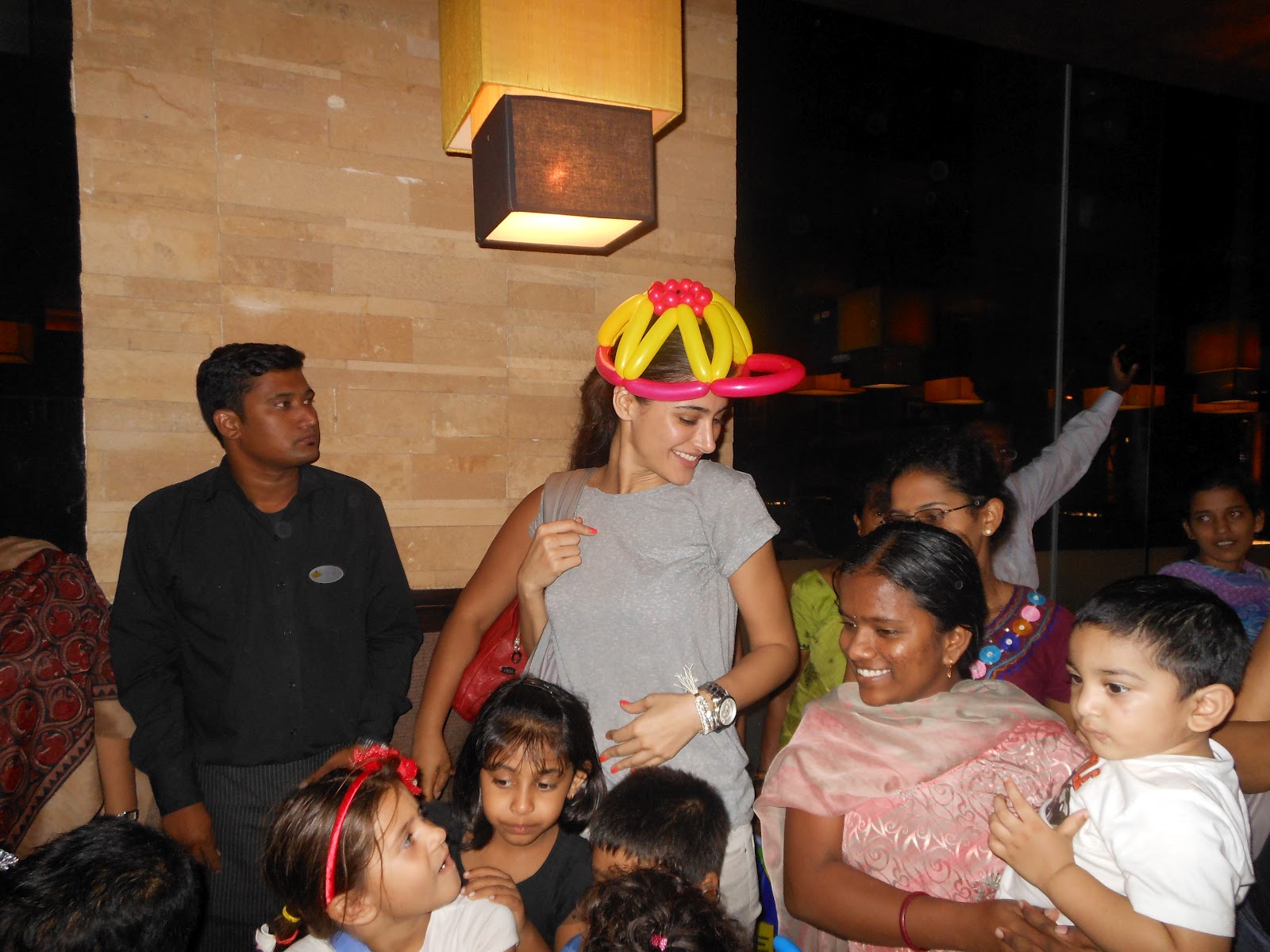
Vivacious Nargis Fakhri of ‘Rock Star’ fame who attended the birthday party and came along for the bus ride  was the centre of attention with the children. Her spontaneous rapport with the children and her friendly demeanor ,made her an instant hit with the children. 

Figure 8 – Nargis with a Balloon Helmet

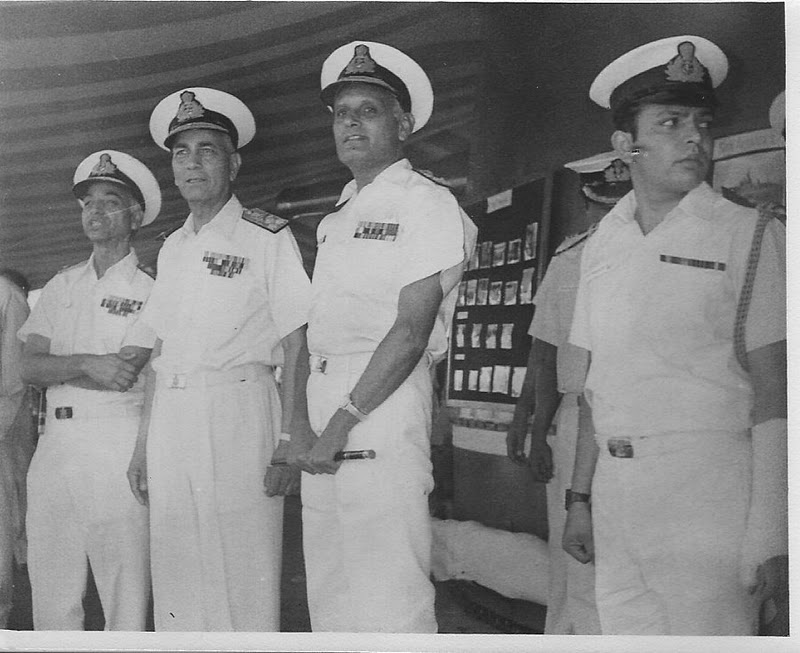
Remembering Our Dear Friend Commodore Kadur Sitaramiah Krishna Prasad

More than 50 years of close friendship came to a sudden end on 22 Mar 2012 as my dearest friend, guide, mentor and philosopher passed away in Bangalore. He was known by many names – Krishna, Prasad, Kris, Prasu, KSK, Gudda, Gulpavte

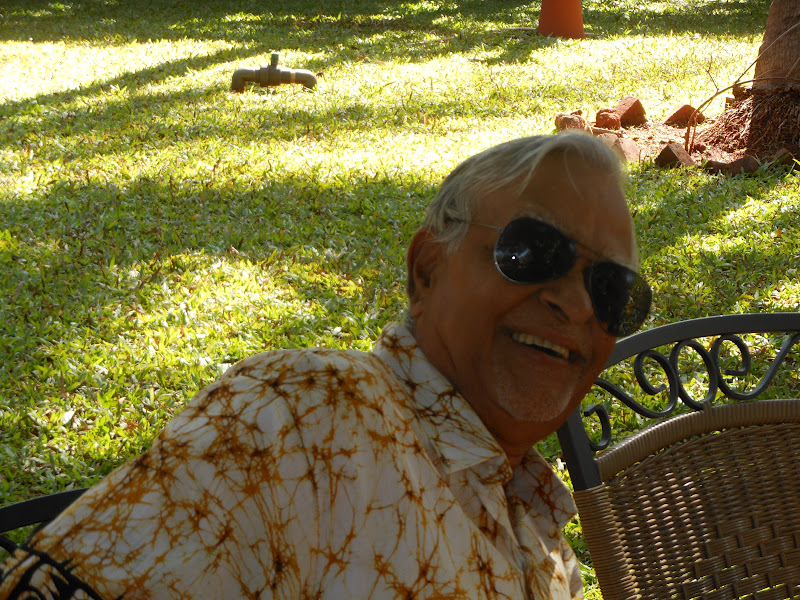
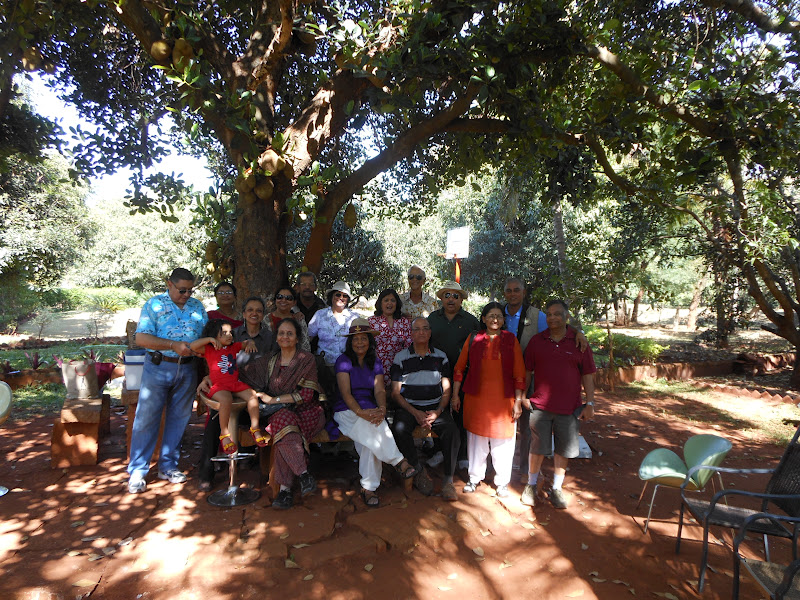
Figure 1 – At a farm house party – 08 Jan 2012

Friends from South Bangalore remember him as ‘Gudda’ (as in dada). In fact all his very old friends called him ‘Gudda’ and that is how I knew him for a very long time. In the college cricketing fraternity he was called ‘Gulpavpte’. At home he was ‘Krishna’ and later on in the navy it became Krishna Prasad, Prasad, Prasu, Kris and KSK. By whichever name one called him – he always remained a special character – intelligent, handsome, charming, full of sharp wit, bubbling with optimism, caring in his own way – a very lovable character. Very rarely did one find Prassu sad or gloomy – left to himself he often displayed a certain happy-go-lucky attitude. He was a compulsive mischief maker in a harmless way. From the very early days, he was a prankster, always waiting to play mischievous tricks on people.

Gudda was a very talented person. In his college days he excelled as a cricketer. Some of his contemporaries like the legendary ‘BS Chandrasekhar,’ recognizing his bowling prowess, often told him to take up the game seriously. He had a very melodious voice – rich and deep. His rendition of ‘Dost Dost Na Raha,’ a Mukesh song, got him the prestigious Inter Collegiate Best Singer Award in 1965. In the month of December 2011, we had a get-together of the ‘coffee decoction friends’ ( http://samundarbaba.blogspot.in/2010/09/coffee-decoction-friends.html ) in Prassu’s house, where he sang ‘Koi sagar dil ko behlata nahin’ – it was an excellent rendition. He was also a part of the theatre scene at college. He acted in a play ‘Veera Yoga’ as a convict in jail, waiting to be hanged and his sensitive rendering of his interaction with his sister drew immense appreciation. His acting won great accolades and he won the Inter Collegiate Best Actor Award. The principal of the college was so thrilled with his ability; he let him direct a play. Gudda hit upon a novel theme – the plot he selected had a very loose story line and the audience could walk in any time on to the stage and say their bit and go. It was outrageously hilarious but the principal stopped it mid way. He also broached the idea of an orchestra wherein each instrumentalist was free to play whatever he wanted- by which time the principal, Late Dr HN, was seeing red and was ready to tear his hair out…

School and college days were filled with interesting events. We went on a cycle trip to Hogenakkallu in 1964. ( http://samundarbaba.blogspot.in/2010/08/bengaluru-days-trip-to-hogenakkal-falls.html ) It was a great adventure and we had lots of fun with Gudda around. He and Sunder went to the Republic Day Parade at New Delhi representing the Karnataka Naval NCC unit. He also went to an Advance Mountaineering Camp at Manali and Rothang Pass and had many interesting stories to narrate. We attended a number of NCC camps together in KG Bangalore, Mangalore etc – we were always in the midst of some ‘Gudda- engineered mischief’.

In the navy he became an ‘Anti Submarine Warfare’ specialist, trained in the erstwhile Soviet Union. He held a number of important posts both ashore and afloat. He commanded INS Amini and INS Gomati with distinction. He was responsible for inducting ‘Computer Aided Action Information System’ IPN 10 from Italy into the Indian Navy. Recognizing this meritorious act, the ‘President of India’ conferred ‘Vishisht Seva Medal’ on him. He also held important operational appointments such as ‘Fleet ASW Officer’ and Director of Staff Requirement. He was a very professional officer.

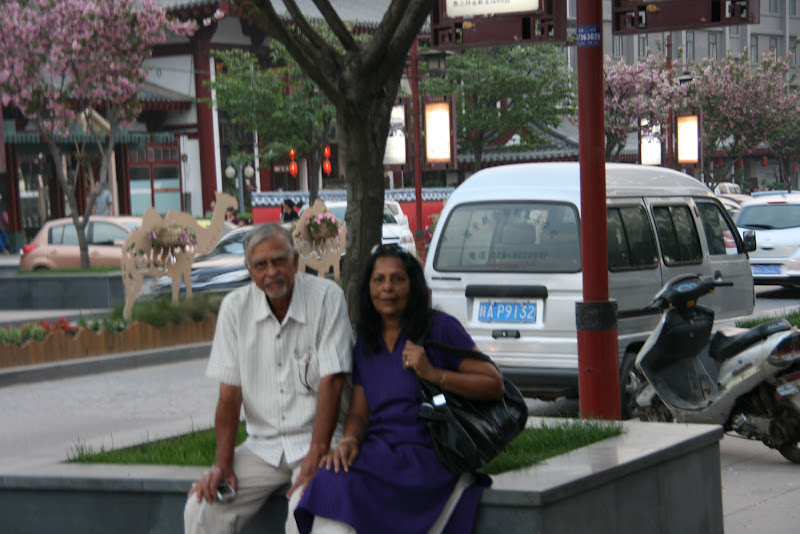
Prasu married very young. INS Delhi went on a cruise to Australia in 1970. Along the way he met a very young, beautiful and vivacious girl from Fiji – Preet. He fell for her – hook line and sinker! I happened to attend their wedding in Chennai in April 1971. A short time later a son was born – Siddharth, who is an architect of repute in Bangalore today. Many decades later, in 2011, we all went to China and had a wonderful experience. During the trip Kris and Preet celebrated their 40th wedding anniversary with all of us in Xian. It was a very nostalgic event for me. ( http://samundarbaba.blogspot.in/2011/05/we-visited-china-xian.html )

Figure 2 – Kris and Preet – 40th Wedding Anniversary in Xian, China

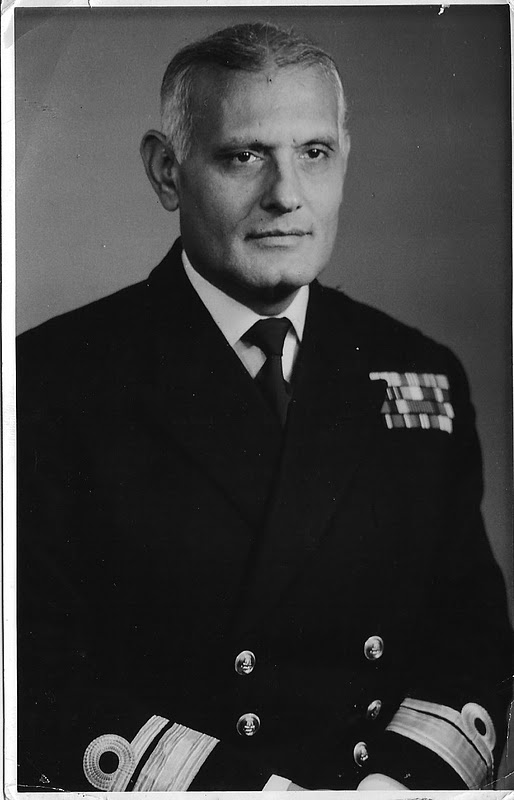
We served together in the navy on a number of occasions and I thoroughly enjoyed his company. Admiral Subimal Mookerjee, the Fleet Commander, used to call me ‘fatso’ to which Prassu would say, ‘You are wrong sir, he is under height.’ Once, the admiral decided to host a party for all the Commanding Officers and the Staff in Goa. The cocktails were in INS Talwar, commanded by Cdr. A Dabir, and later all of us went out for a spot of dinner at a restaurant in Dona Paula. Some of the supernumerary staff who had sailed on INS Rajput was not aware of the details. Lt Cdr Vasan wanted to know the details and Prassu told him that the party would start at 1945 hours and the dress code was a suit – I nodded in agreement. Poor Vasan went all over town to borrow a suit. The admiral arrived in a bright blue shirt with red polka dots; the captain was in kurta pyjama and so on. Much to the amusement of all present, ‘our man Flint’ arrived in an ill fitting and crumpled green suit with some silvery embellishment. It was truly ‘Humour out of Uniform’. Vasan did not speak to Kris and me for over a decade.

It was already 1235 hours on a make and mend Wednesday and Subimal was getting restless as he was being kept from his tryst with G and T by my course mate Lt Cdr S Neogi. The admiral tried to explain the nuances of Anti Missile Defence to Surojit who just did not ‘get it’. The admiral was getting exasperated – that’s when a very helpful Prasad suggested,’ Sir, try and explain it to him in Bengali – he may understand it faster.’

After inspection of INS Nilgiri under Kaka Sharma, we had gathered in the Captain’s cabin for a debrief session. During the course of the inspection I had very meticulously noted down all my gunnery observations in a note book and rehearsed what to say when the time came. For some reason I had to leave the cabin momentarily to get an extra chair. On my return, the admiral said “Well gentlemen, let us begin with individual departmental briefs -we will start with the youngest – Pubs”. I very confidently put my hand below the chair to retrieve the brief case which carried the note book. To my utter shock and dismay, I found the briefcase missing. It was my first public exposure as a ‘Fleet Gunnery Officer,’ that too in front of so many staff officers – I panicked and didn’t know what to do. Others started staring at me and wanting to know why was I waiting. Just when I thought all was lost, Kris pushed the hidden briefcase towards me.

Middle watch was split between KSK and me. He was required to relieve me on the bridge at 0200 hours. I would send the side boy at 0130 to give him a shake up. KSK would come out of his deep slumber and say, ‘OK. I‘ll be there’. Come 0200 h, no sign of Kris on the bridge. I would send the side boy again to call him. This time around the side boy would come back to say, ‘Sir, he is not in his bunk’. Thinking he was on his way up, I would keep quiet. It would be almost 0230 and no sign of Kris yet. The side boy would go again to look for Prasu and find him fast asleep in some other bunk.

He would often ring home and pretend to be the admiral and give strange instructions to Jai. His impersonation was so perfect, on a number of occasions I would go to the admiral and say ‘Did you send for me, sir?’ only to be greeted with a blank, bewildered look. This prank took quite a serious turn when the admiral wanted to know if something was seriously wrong with Pubs.

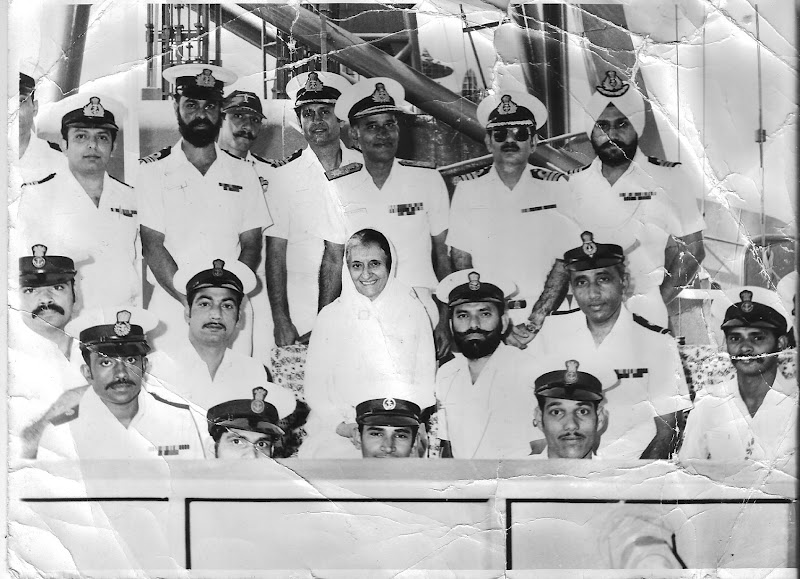
Figure 3 – With Mrs. Indira Gandhi on board INS Rajput. Prassu with a thick beard standing right of admiral. Yours truly next to him.

Three of us shared the same phone in the fleet office. Once again ‘our man Flint’ Vasan, would ring up INS Talwar and ask to be connected to the officer of the day (OOD). Across the glass cubicle, Kris would pick up the phone and tell Vasan, ‘I am busy. Ring up later.’ – an unheard of reply from the quarter master – especially to a Fleet Staff Officer. Through the glass I could see Vasan all red hot about the ears and terribly agitated, shouting and wildly gesticulating. Prassu would continue to pretend to be the QM until Vasan stormed out of the office.

After a major war game ‘East Wind’, we all had gathered in the auditorium in Vizag for the debrief. Admiral Nadkarni set the tone by bringing a basket full of oranges and commenced his part of the narrative for the Orange Force. A little later it was Prasu’s turn to present ASW details. After finishing his narrative he said, ‘I now hand over the stage to the Submarine Commander for all the fiction.’

My family and I, on our way home to India from Nigeria, went to Rome and spent an exciting week with Kris and family. Whenever I was stressed out in my corporate work, I used to take off and spend a few days with the Commodore in INS Agrani in Coimbatore, which he was commanding at that time. I used to drop in to his house often to unwind over a drink. Kris loved his drinks like most of us. Where he would beat us hollow was his exercise in gluttony. This man could tuck in like there was no tomorrow. He loved his chicken very dearly. It was a pleasure to watch him eat and enjoy his food.

His love for dogs, both pedigree and stray bordered on the crazy. From the days of his ‘Bola’ to ‘Rover’ he had an extremely soft corner for dogs. Even today a lame and undernourished stray, which has taken shelter in their house, stands testimony to his love and respect for life.

Nair organized an excellent barbeque party on 08 Jan 2012 at his friend’s farm house on the outskirts of the city. All of us had taken marinated chicken, fish and meat and the party went on merrily with Kris stealing the show. The day belonged to him – he not only relished the G and T and chicken, but entertained us with his own version of ‘Kolaveri Di’- Changing the lyrics to highlight a weakness of each one of us. A thoroughly enjoyable, unforgettable afternoon. That was one of the last few times we got together as a group with Prasu, my old friend.

Figure 4 – Barbeque Nation – Good times

He used to repeatedly advise me to take up golf and would exalt its virtues – walking in the open, lungs full of fresh air – loads of vitamin D – peace of mind and so on. Finally on 28 Jan 2011, I took up golf. “Only this time, my dear friend Prasu gave me his old set and egged me on to ‘tee off’ or whatever. That’s how I landed up in ASC once again and handed over my application for club membership.” (http://samundarbaba.blogspot.in/2011/02/clean-miss-i-have-started-golf.html ). So on 28 Jan 2012, I invited Prasu to join me for a game and thereafter for a spot of Pink G followed by lunch at the RSI to celebrate one year of golfing. Golf was out, as he had developed a hairline crack in the collar bone while playing golf earlier. Finally Kris, Sunder and self met on 01 Feb and played well at the 19th hole.

We met again in Fali’s house on 16th Feb for our monthly get together. In hindsight – he did look worried and a bit subdued – he was not himself. I looked him up again on 4th March, by which time his medical investigations had started. On 8th Mar, Jai and I went again to meet him. Throughout the evening he played the excellent host as usual, served us drinks and restrained himself to a soft drink.

I wished him a very happy birthday and speedy recovery on 16th Mar. It was my turn to host the monthly party on 17th Mar and I requested dear Prasu to join all his good friends. He said, ‘Yes Pubs’. I got a cake to be cut at the party and wish him belatedly. By then he was in deep pain and could not attend the party. At the end of the party we cut the cake and wished him all the very best in absentia.

He suffered severe pain and discomfort on 17th and 18th Mar but endured it with utmost dignity. On 21st Mar he gave all of us a ray of hope – he looked better, talked to his course mates and friends and ate a good lunch. If you looked closely, one could see a faint but distinctively cheeky smile – probably wanting to say, “This is just a prank. I will come out of it.”

However, the Almighty had other plans for him and he passed away very peacefully at 0820 h on 22 Mar 2012.

Thus ended the chapter of a good person, a good husband to Preet, proud father to Sid and unforgettable friend to all of us. He will remain in our memory for a very long time to come, as someone who lived life ‘King Size’ and enjoyed all the bounties that life had to offer.

Recollections – Strange Incidents

If we were to sit back and contemplate, I am sure all of us would recall some strange incidents which have taken place in our lives. These incidents are not ordinary run of the mill happenings, but something special and out of place. Over a period of time we tend to stop thinking about these unusual episodes and make way for new ones. In spite of the long passage of time, these unique events remain etched in our memory, only to surface whenever we look back in life and recollect.


Stranded in Bandipur Forest


It was the summer of 1992 and I was on annual leave in Bangalore. I borrowed my friend Niranjan’s car – a Zen and drove to Coonoor along with my wife Jai, children Vivek and Akhila. We spent a wonderful week in Wellington with my S in L Girija, hubby Shankar, and their children Shreya and Karin. On the way back my M in L decided to come with us in the car. The journey was smooth till we reached Bandipur forest and suddenly the car stalled and came to a complete stop. We were in the middle of nowhere – endless tracts of dried forest trees – no sight of any human habitation – an eerie silence. It was nearing 5pm and the traffic had already died down and for quite some time, not a single vehicle crossed us. The sun had started to set and there was no sign of any help. Sunset in the forest is sudden and complete – an extremely scary thought.

Then all of a sudden, a blue Maruti 800 with two boys and a girl stopped to find out what was wrong. The older of the two boys immediately took charge and sent the younger boy with the girl to Nanjangud town, which was 24 Km away, to get a mechanic. An hour later, the duo returned, saying that the mechanic wanted the car to be brought to Nanjangud for repairs. Many attempts to start the engine failed and finally we approached a village house and purchased a length of rope to tow the car.


In the mean time, the older boy told us that the girl was his fiancée and the boy was his younger brother. They were returning from Coonoor after their engagement ceremony and were on their way to Mysore. The boy was getting married in Bangalore and proceeding to Mombasa in Kenya.


We tied our car to their Maruti 800 and the towing operation commenced. We reached Nanjangud only to be told that it was beyond the local mechanic’s capability. The towing continued till we reached a garage in Mysore known to this family. Thereafter the boy took all of us to ‘Hotel Airlines’ and ensured we were safe and settled for the night. Before departing he apologized for having made us spend a night in the hotel saying, “I am sorry, our house is full of relatives who have come for the wedding, or else you could have stayed with us.”


The next morning, the garage owner delivered the car to the hotel. After having settled all the dues, we sat down for a cup of coffee – that’s when I told him, “Those gentlemen went out of the way to help us and they were really very nice and genuinely concerned – I find it odd and extremely rare.”The garage owner said, “Sir, Naresh and I have been friends for a long time and both of us belong to a club and our motto is, ‘Help someone in need and in turn they will help someone else in their own time – before you know it, there will be a whole lot of people doing something helpful and spreading this message’.


My Maruti Omni and Daku Fauji


In an extremely unguarded moment, I made a very foolish decision and bought a second hand – (and as I found out later) accident restored, red Maruthi 800 Omni from a car dealer in Gurgaon in 1983. The car was jinxed and it spelt disaster right from the start. It would suddenly stop; or just refuse to start and so on. In short, the car had an attitude.Inspite of all the shortcomings and uncertainty, I drove the car to Jaipur, Sariska and Shimla with the family – powered entirely on hope and a bit of luck.


After an excellent holiday spent in Haridwar, Dehradun and Mussoorie, we were driving back to Delhi. Somewhere along the way we had unknowingly taken a wrong road which was horrible – full of pot holes, kaccha stretches and at places there was no semblance of a road at all. Crawling at a speed of 30-45kmph over the rough patches, we eventually reached a village check post some 30 km from Muzaffarnagar and it was nearing sun set. The local police constable informed us that a dacoit by the name of ‘Fauji’ was operating in that area and all the vehicles had to proceed further under escort. The police decided to make my car the lead vehicle and a policeman with a rifle embarked the car. By the time the convoy was formed, the sun had set and the whole area was in pitch darkness. The policeman said, “Chalo sahib,” and I immediately started the car. To my utter horror the car refused to start, even after many attempts. The poor policeman in exasperation decided to dismount from our car and the convoy proceeded without us.


It was very frightening to face this problem in a strange place with two girls and a young boy. Suddenly my daughter burst out crying out of fear and desperation. On my part, my mind went blank, not knowing what lay ahead. The only policeman on duty asked us to go to a nearby village and procure a rope for towing the car. I was faced with a dilemma – should I go, leaving the family behind or send my son alone. While I stood motionless wondering what to do, the policeman flagged a lorry to stop. Fortunately the lorry had a length of rope and our car was tied to its back. We thanked the policeman profusely and the towing started. Unfortunately the length of tow was less which made the car extremely unstable. The car swayed from one side of the road to the other and at every turn it threatened to go off the road completely. The bad state of the road and the huge potholes made the towing even scarier and more dangerous. There was no way of telling the lorry driver to slow down as he couldn’t hear our horn and he continued to zip. The family started to sing a prayer, “Veera Hanuman” and all of us prepared for the worst. After about forty minutes of nerve-racking tension and agony we reached Muzaffarnagar and the lorry stopped in front of an automobile workshop. I walked up to thank the driver and give him some money for his effort. That’s when I found out he was reeking of booze.


Even to this day, I get goose pimples whenever I think of that night ride.


My son and the photo frame


It was December 1981 and we were getting ready to proceed to Wellington Ooty, as I was to join the Defense Services Staff College for a course. We were in the midst of packing our luggage and sending it to Wellington by lorry. Our house on Marine Drive, Mumbai was in a mess with boxes lying all over the house, empty cartons and loose items strewn all over – the house resembled a war zone. Having finished the day’s packing, the whole family proceeded on a scooter to Navy Nagar, Colaba, to collect some posters we had given for framing.


Navy Nagar is an extremely busy area in the Southern part of Mumbai. The entire housing of Western Naval Command personnel along with BARC, a bus terminus, a huge shopping complex and a taxi stand is located in this place. Thousands of people criss cross this area during the day. The frame shop was located next to the busy bus terminus. We alighted from the scooter in front of the shop and I put the vehicle on stand. Jai stayed behind with Akhila and Vivek came along with me to the shop. While I was conversing with the shop keeper, Vivek was busy standing on his toes and trying to see what was happening inside. A few minutes later the frame was handed over to me and I started to leave and turned to tell Vivek, “Let’s go,” but he wasn’t there.


I went to the scooter and asked Jai if he had come to her,to which she said, “I thought he was with you”. I looked around the shop, no sight of him. I searched the entire row of ships shouting ‘Vivek! Vivek! No luck. I went to the adjoining quarters looking for him – in vain. By now some thirty minutes had passed and our boy of four was missing in an extremely busy corner of Navy Nagar. I ran to the bus stand like a man possessed and started asking all the bus and taxi drivers if they had seen a boy of Vivek’s description.


I came back totally shaken and trembling with fear. By then Jai was made to sit on a chair and a huge crowd had gathered to see what was going on. Free advice poured from every direction, some started to recall horrible and scary incidents to add to our misery. By then all of us had started to imagine the worst and were at our wit’s end. We had never felt so helpless and the thought of losing our son numbed our thinking.


Just as I decided to approach the naval police, we saw Vivek strolling back to the shop, hand in hand with the shop’s delivery boy. What a happy sight – no language can express the cocktail of emotions which enveloped us – joy, happiness, relief, elation, faith in the ultimate, a sudden liberation – then it was a rush of happy tears, hugging, kisses and jubilation all around.


The delivery boy narrated the details of Vivek’s sudden disappearance and equally sudden appearance. While we were waiting in the shop to collect the frame, the youngster left the shop with a frame in his hand and proceeded across the main road. He kept walking and occasionally looking around to check the traffic. That’s when he noticed a small boy following him. The boy’s behavior intrigued him and he decided to cross the road and walk on the opposite footpath. Lo and behold, the boy also crossed the road and continued to follow. Totally perplexed, the youngster thought for a moment and decided to retrace his path back to the shop, hoping the boy would follow him.


What a brilliant application of deductive logic. I shudder to think what would have happened if the youngster hadn’t noticed anything. God is simply great. This is one of those incidents which reinforce s your belief in the Almighty. Everything is possible when He bestows His blessing on you.


In all our visits thereafter, to the crowded Coonoor market, Vivek carried a whistle hung around his neck – I carried one too. At regular intervals, I would blow my whistle and Vivek would respond by blowing his whistle, much to the amazement of all the bystanders. This was the official beginning of ‘Whistle Blowers’


Two years later we were coming out of Colaba vegetable market when suddenly we saw a youngster hanging out on the footboard of bus No 136 and waving and shouting at us – it was none other than Vivek’s savior – that bright delivery chap.


The Coolie at New Delhi Railway Station


It was one of those last few busy days before going to Bangalore on work, when I was running from pillar to post to finish all the pending work in my office at Naval Head Quarters. I went to catch my train straight from work. As I reached the station, I realized that there was absolutely no time to waste and I had to run along with the coolie to catch the train which had just started. The run was extremely exhausting and totally breathless, I sat down to recover. The ‘run and board’ experience had left me dazed for a while. As I settled down I saw a collie running alongside the train, wildly gesticulating in my direction. I sat there staring at him, wondering why the mad fellow was running behind a train. As the train picked up speed, the coolie seemed as if he desperately wanted to convey something to me. In a few seconds the coolie disappeared and I regained my composure. That is when it hit me like a thunder bolt – I had not paid the fellow!


We went to Munnar


After handing over Command of INS Dunagiri, I went Kochi to join my family who were holidaying with Shankar and Girija. A day later, the two families with four children in tow, departed for Munnar in Shankar’s rickety Fiat car. The progress was slow and steady and by lunch time we had crossed the halfway mark. We stopped the car under a shady tree on the side of the road and were making preparations for lunch when a Jeep approached from the opposite direction and stopped. Both Snitch and I were wearing Navy caps and the gentleman asked, ‘Navy, Ya?” and we said, ‘Yes’. The gentleman said, ‘My B in Law is also navy’. We said, ‘Very good,’politely. We were hoping the gentleman would leave without any further Q & A and we could feed four hungry children along with the two restless mothers. But the gentleman continued his interrogation and wanted to know where we were going and where we were planning to stay, etc. The mothers became very perturbed at this insistent Q & A and told us not to encourage him any further – there were whispered asides of -why does he want to know? – be careful! etc. He then told us, “I say, do not stay in the Indo Swiss Artificial Insemination Plant guest house – it’s very far away – city is very far – you won’t enjoy – you stay in my guest house. Having said that, he handed over a bunch of keys and explained the route to the guest house. Rumbling had already started inside the car – do not take the offer – it’s a trap – we will all be locked up ,robbed, tortured – don’t tell us that we did not warn you.


We the brave males however, accepted the gracious offer of the gentleman and took the keys. He told us that the guest house was well stocked and asked us to enjoy our stay and hand over the keys to his sister in an adjoining village on our way back.


After some three hours of driving we reached the ‘Revenue Department of Kerala’ guest house. It was a lonely and beautiful bungalow, situated on top of a hillock. To add to the mystery of the house, the hillock had a tall tree with a solitary owl perched on top. The girls refused to enter the house saying it may be haunted or there may be some dead bodies hidden in the cupboard – they couldn’t for the life of them understand why a stranger should hand over his house keys in this day and age.


After some heavy persuasion, we finally moved in and settled down.


We stayed in the bungalow for three days and had a fantastic holiday. The children were thrilled and had a whale of time organizing camp fires and barbeques every night. The girls ended up taking charge of the kitchen and preparing lovely breakfast and picnic lunches for our daytime treks. In the end the holiday turned out to be one of the best we’ve ever had.


We bought a cake and the children wrote a ‘Thank You’ note to the nameless gentleman. Later, as instructed, we handed over the keys along with the cake and note to his sister in the village.

People do the strangest things sometimes.


Story Telling and Grandparents

Air Vice Marshal VM Tiwari on retirement from the Air Force along with Commander Chopra from the navy, started an NGO ‘Bal Vikas Bharati’, which is devoted to overall development of children. One of the aims of the NGO is, ‘to tell stories to children for their all round development’. He delivered a lecture in JVV in early February 2012, highlighting their cause. During the course of his presentation Tiwari noted that they chose story telling as it is the most inexpensive method of inculcating the spirit of enquiry and imagination in children. They have set up libraries in 60 locations all around India and conduct story telling sessions for the under privileged children, igniting their imagination. He added that story telling is a very effective tool to make children imbibe culture, mythology, science and so on.

In my generation, children grew up listening to the stories that their grandparents and parents told. In the absence of any radio or TV, story telling developed as an art form and thrived. Stories from the Mahabharata, Ramayana, Panchatantra, the Vikram and Betal series were very common and frequently narrated to children. The purpose of storytelling was many. Probably it was a carry forward from the days, when there was no print and all prose was committed to memory. In any case stories filled the gap till children learnt how to read for themselves. In school we had our Hindi teacher DRS and Sanskrit teacher KST (Kamapala Story Teller) keeping us endlessly occupied with gripping stories from mythology and history.

Apart from all these high value benefits, storytelling created a bond between children and their elders. All my outstation cousins used to congregate without fail in our grandparents place for the summer holidays in Gavipuram. Dinners were invariably on the terrace, with all of us sitting in a circle on the floor and having ‘Kai Tuthu oota’ ( a Kannada phrase, meaning ‘hand fed food’) The dish is centrally mixed in a vessel and the nominated elder feeds the children one by one by hand, each receiving a helping of food. While ‘Kai Tuthu oota’ was in progress, we would listen to endless stories and later fall asleep contented and dream the night away.

We continued the same traditions with our children. Whenever we visited my B I L’s house in Bangalore in Jayanagar during the summer vacations, all the children used to be fed ‘Kai Tuthu oota’ accompanied by endless stories.

With our children growing up and their marriage, storytelling took a back seat. With the arrival of grand children, the art of storytelling once again came to the forefront. All children love stories – more the better. Children love simple stories with a happy ending and preferably a story which never ends. Both Ayaan and Samara enjoy hearing stories narrated by their grandparents. My wife prefers to take the traditional route and read out well known stories from books. I on the other hand invent stories and make up as I go along. In my earlier blog http://samundarbaba.blogspot.in/2010/05/trip-to-lonavala.html – I wrote “Our GS needs to hear at least 3 stories prior to sleeping. In the manual of “Roles and Responsibilities of Grand Parents Vol I – Apr 2007” issued by our daughter, storytelling is my part of ship. I enjoy story telling. It’s unlike answering questions. Here you have the liberty of letting your imagination run wild and a few inaccuracies are allowed. Normally I start with the ‘Bad Wood Cutter’ story which is very loosely structured; it can take on many other sub stories without losing sight of the main story. These sub stories change every day. The characters and the plot vary according to the mood and there is a very high chance of making our GS sleep. Sometimes you get caught and GS says, “Tata, last time you told me that the crow went to the sparrow’s house and now you are telling it all ulta pulta”. One has to be very alert and on guard to protect one’s reputation as a good story teller. Never attempt any story telling after a good beer session – continuity and plot are generally the victims. 

Samara on the other hand wants stories devoid of any violence. People or animals getting hurt is a big ‘no no’ or else she will say, “Tata I don’t want this story, it’s scary” and so on. Her favourite story is about Tata losing all his hair– how the crow wanted to build a good nest for her children and plucked all the hair of Tata’s head. The crow built a lovely nest wherein all her chicks lived happily ever after.

I find story telling extremely therapeutic. During my retirement farewell drink, when called upon to say a few words, I said “I will miss the navy very much … the thing I will miss the most is a captive audience” – meaning a posse of juniors who would gather around whenever you narrated an incident or a story or a joke. One thing good about the navy or for that matter the army and air force is the unfailing regularity with which your narrations become interesting and successful – especially if you are their reporting officer. The juniors are forever ready to listen attentively to your jokes, laugh loudly and appear to enjoy themselves. On retirement you disinherit this great privilege and have to make do with wife and children. It’s common to see your dear ones showing three or five fingers meaning, “Baba, we have heard this one five times and so on.”

Suddenly all this isolation comes to an end with the arrival of the grandchildren. You are their hero. They love the closeness and the attention you shower on them and they are proud and happy to be in your company. They earnestly ask you to tell them stories which they genuinely enjoy listening. They have, with one loving smile, restored your status to ‘being wanted’.

My advice to all grandparents – spend as much time with the grand children as possible, go on walks, picnics, treks, tell stories – they make you feel wanted and important. It is the best healing touch one can get at your age. Enjoy them, for before you know it, they are reading on their own or are out in the world living out their own stories.

A good soup for your aging soul.

The Big Fat Indian Wedding

The Big Fat Indian Wedding

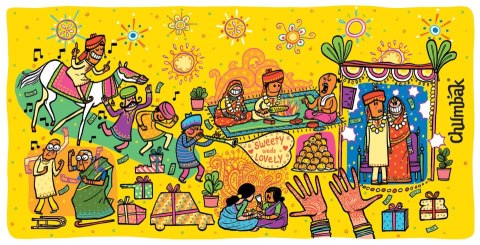
Like any other activity in India, weddings are very much a public affair. All the ingredients of a truly Indian function can be found in a wedding. Lots of unconnected people, uncontrolled noise, nonstop music, endless religious ceremonies, unbridled children, over dressed women of all ages, a posse of bored males, scrumptious food and a highly stressed bride and the groom come together in a marriage hall to celebrate ‘The Big Fat Indian Wedding’. The ensuing cacophony symbolizes what India is all about. In a lot of ways the marriage hall resembles a mini India.

In some families the concept of an ‘Arranged Marriage’ still rules the roost. The parents find a suitable match for their offspring through the ‘Friends and Relatives’ network or through religious organizations. If these channels fail, ads in the newspapers are resorted to or marriage bureaus are contacted to find a match. Perhaps the most interesting part of this phenomenon is the matrimonial ads. Check this one out-” Wanted a groom for slim, fair ,thirty year old, looks much younger, never married, 5ft, sweet, homely, caring, responsible, intelligent chartered accountant, well versed in home activities, extremely good working, exceptionally sincere, dedicated, emotional, sincere….” Reading this ad, one immediately visualizes a goddess or a Cinderella type of girl, waiting to be married. If one goes by these ads, all Indian girls are the epitome of beauty, brains and character. Equally interesting is an ad which reads, “Virgin bachelor boy, 39 but looks 30 really, 180 cms. tall, fair, very handsome, vegetarian, non-smoker, teetotaler, MA Psychology, registered for PhD, permanent confirmed lecturer at Delhi University, author of books, been to USA to present original theoretical research findings, most likely to achieve fame, owns own big bungalow in South Delhi.” How boring can one get ? The deal can get further complicated with religion, caste and horoscope coming into play.

Fortunately for us, our children found their own life partners. One day my son came home and started decorating his room with a variety of candles and balloons. Mother dear asked him “Hello! What’s happening? We have electricity at home.” To which he gave a very nonchalant reply ,“I am proposing to Shubhra today”. Anirban proposed to daughter dear in a very exclusive restaurant in the outskirts of Bangalore called ‘Grasshopper ‘. He had booked the entire place and had it lit with candles and soft music to set the mood. In fact, I proposed to Jai on the New Year’s Eve night of 31 Dec 1974 after being sufficiently fortified with XXX. Jai said, ‘I’ll think about it’ in a very mature tone and then immediately ran and informed her mother, who very wisely and with wry humour said,” If he repeats his proposal again in the morning, we’ll see.”

After finding a suitable match, there are a number of activities to be completed – Foremost among them is setting an auspicious date; the marriage hall has to be booked and the engagement has to organized, the priest to be selected, catering etc. Then comes the difficult part of purchasing saris and jewellery, how many, the colours, type, where, when (and for us, it was more a question of HOW. ). The father keeps visiting the bank on a regular basis till the manager whispers, ‘All empty.’

The actual ‘kick off’ starts with the distribution of the invitation card. These cards are printed in hundreds and distributed very freely to all and sundry. Normally there are no set rules when it comes to inviting people for the wedding – the more the merrier. My uncle Mr. Sreenivasa Rao used to narrate a joke – Major Smith on receiving a marriage invitation which said, among other things, “request the pleasure of your company,” –took his entire company of 120 soldiers to the wedding! Often we receive invitations marked ‘Prabhakar and family ‘and if the writer of the invite is busy, it simply reads, ‘Prabhakar and fly’. Knowing the bride or the groom or their parents is not a must. We just want to inform everyone around that ‘a wedding is on’ in the family. Probably in yester years when the immediate social group was a village – every Rama, Krishna and Lakshmana was invited. The tradition continues. However in our case we prepared a criterion for inviting people to the wedding. Priority went to the friends and acquaintances of the bride and the groom. Next in line were our friends and relatives who knew our children. Many protracted meetings later we were able to prune the list down to “Absolutely Must Invite! ”

In the cultural crucible called India many customs and traditions have got intermixed. Idlis and dosas crossed the Vindhyas soon after the British left; in return, the south received salwar kameezes and aloo parathas. In this great amalgamation, the ‘Mehndi’ and ‘Sangeet’ have fully entrenched themselves in the South and bring in a large amount of colour, fun and gaiety to an otherwise serious, ritual bound weddings. The girls in the family practice endlessly till they reach professional standards. During my niece Shreya’s wedding, I was roped into the dance as ‘Superhero Kandasamy’. The song and dance ‘Excuse me, Mr. Kandasamy’ with eight pretty girls, was an instant hit in the Sangeet. The irony of the event was the presence of Suchitra the original singer at the Sangeet.

Another USP of the Indian wedding is the ETA (Expected Time of Arrival) – one can arrive at any time as long as you are not the bride, the groom or their parents. It’s an open house and everyone feels free to come and go whenever they want. The hall is open, breakfast onwards till lunch and in some cases all the way to dinner. The policy is, ‘walk in, walk out’. Some arrive early in the morning and partake in all the celebrations and all the meals and go home contented. The busy ‘working lot’ arrive just before lunch time and leave immediately thereafter. Some come in much later to wish the couple and have snacks and so on. I distinctly remember an acquaintance coming to the wedding of my friend’s daughter, bang on at 8am, having a hefty breakfast and thereafter proceeding straight to the retiring room to nurse a terrible hangover from the previous night’s ‘Sangeet’ ceremony. The poor soul surfaced in time for lunch, having missed the entire marriage. Through the Indian lens, there was nothing amiss.

The religious ceremonies that accompany any marriage are well past their shelf life. Nobody understands the hymns, shlokas and the sacred chanting – I doubt whether the priest himself understands their meaning. At our daughter’s wedding the two priests who were brothers got into an argument over the sequence, one claiming that the other was repeating the hymns over and over again. Our ‘S in L’ from Shillong, had to bear the brunt of all the protracted ceremonies in silence. Not being used to squatting for more than a few minutes, he looked at me in such a way which when deciphered meant, ‘Baba I prefer kashiyatra to this!’ (In this ceremony, the groom pretends to leave for Kashi, a pilgrimage center to devote himself to God and a life of prayer. He carries a walking stick and other meager essentials with him, to imply that he is not interested in becoming a householder. The girl’s father intervenes and requests him to accept his daughter as his life partner. He exhorts him to fulfill his responsibilities as a householder and thus follow what is written in the scriptures. The groom relents and returns to the marriage hall where he is received by the bride). At some weddings, written explanations are handed over to all the invitees. In some others, a selected person translates the whole proceedings from Sanskrit to English. All this continues unabated, in the midst of blaring music from the nadaswaram (an instrument not unlike the clarinet) played by the wedding musicians.

The invitees themselves are not really interested in the proceedings as such. Some mothers have come to find suitable brides for their sons and similarly grooms for their daughters. Some are busy catching up with their relatives and friends. An exception to the run of the mill invitees, is a small group of enterprising males, who after depositing their wives in the hall, become extremely restless and start surveying the hall for likeminded mates. On locating such mates, their eyes meet, secret signals are exchanged and then they quietly disappear to the nearest watering hole, to once again surface in the hall, just in time for lunch. After a few beers or a G and T, this contented lot spread bonhomie all around. I belong to this unholy nexus.
The lunch itself is a big jamboree with the invitees running around to find a suitable chair to sit on. The scene has all the trappings of an army battalion charging to conquer an important post. Once seated you are treated to an elaborate Indian lunch. Another interesting aspect of the lunch is – one can sit anywhere. In this melee, I have often been separated from my wife and ended up having lunch alone and having to wait a long time for her to finish. In this carnival like atmosphere, anyone can enter the hall and partake of an excellent meal. In our college days, we used to joke about a friend of ours who made a habit of attending marriage lunches uninvited. If by chance the girl’s side enquired about his identity, he would quickly say, “I am from the boy’s side,” and vice versa. When accosted by both the parties together he would retort, “I’m from the music party”. If there is a large crowd present for the meal, there may be several ‘Panktis’ (Batches) of people being served food. In the earlier days, there were no chairs and tables and one had to sit on the floor and eat. The posse of waiters would come to serve food dressed in a dhoti or a wet towel tied up to knee length. Whenever they bent down to serve, the opposite side was treated to the ultimate ‘Vishwaroopa Darshana’ experience. (Vishwaroop refers to the ultimate God appearing in a form that incorporates the complete creation or universe in it).

Then there is the reception in the evening, wherein the bride and the groom come all decked up and sit on a dais. There is no dress code for the invitees. The men come dressed in various forms – suits, band gala coats, dhotis, plain trousers and so on. The women generally wear a rich silk sari supported by extravagant make up and an equally exaggerated hairdo. The invitees queue up to meet the couple, hand over the gift, wish them and stand for a photo op. This can be a very taxing experience. I remember attending a reception of a very popular local doctor who had invited half the city. The queue was so long, we had to bribe our way to the dais. Once, I had to sit through a reception, waiting for my chance to wish the couple, next to a huge speaker which was blaring out “ABBA’s ‘I am a Tiger’, wherein ‘I’m a tiger’ is repeated 64 times. Recently we went to attend a very high profile wedding –the ‘who’s who’ of Bangalore and New Delhi were there – the ex PM, Secretaries to the GOI, military and police brass, business tycoons and many others. Here again, we were not spared the queue. The saving grace was a well stocked bar and gourmet food in the adjoining hall. I did a quick calculation and figured that the queue would disappear in about two hours. I thereafter went on to spend a most eventful ‘two hours’ outside. Long live ’Johnnie Walker’! Liquor is served in very few receptions. With your favourite tipple in hand, it is easier to tackle an Indian wedding. The people, the atmosphere, the ambiance, conversation and food are rendered instantly fascinating. One’s mood gets elevated and one invariably begins to enjoy the wedding.

Our whole family once went to attend a quiet church wedding with our grand children. In contrast to the noisy Hindu weddings, the atmosphere was very solemn and a sense of seriousness prevailed. The priest was conducting the ceremony with an air of authority and his majestic voice echoed from the high ceiling of the church. In the background, unknown to all of us, my grandson had noticed my granddaughter holding a marriage card which he did not have. Like a hungry cheetah, he stealthily pounced on her and took possession of the card. In retaliation, my GD went into vocal overdrive and let out an ear splitting shriek. Thereafter the mothers and grandparents carried out an extremely speedy evacuation, putting the ’Miracle of Dunkirk’ to shame.
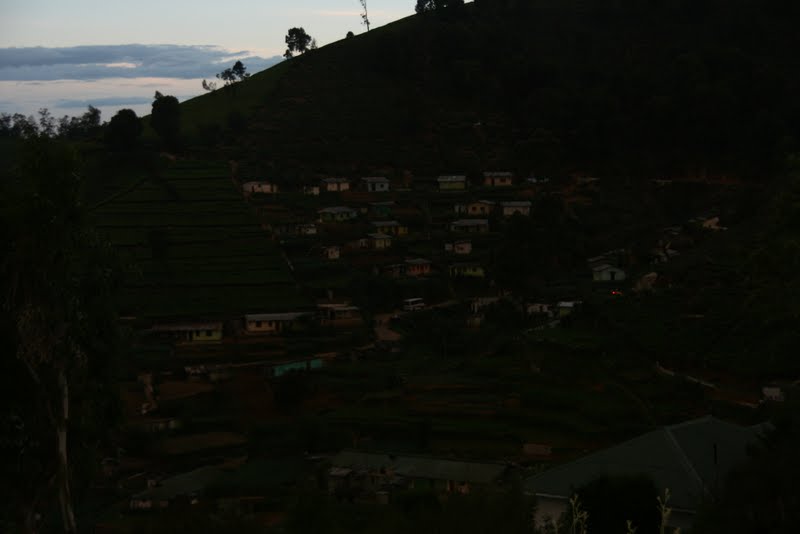
In recent years, a marriage from being a simple religious ceremony for solemnizing the union of a male and female in wedlock has become a platform for displaying power, wealth and social status. Receptions have become complex entertainment programs complete with Event Managers, RJs & Masters of Ceremonies’. Film stars, popular musicians, politicians, sport men are paid to attend the reception. Elaborate theme stages are erected, famous chefs are flow in, Ikebana artists make flower arrangements, making the evening nothing but a vulgar exhibition of the material world. The essence of the wedding, the bride and groom are lost in this spectacle of opulence. Agarwal, an Indian born metals commodities trader and investor, hosted the wedding of his daughter Vinita in Venice from 12 – 14 May 2011. It is reported that singer Shakira was paid a whooping 15 million USD to sing during the celebrations.
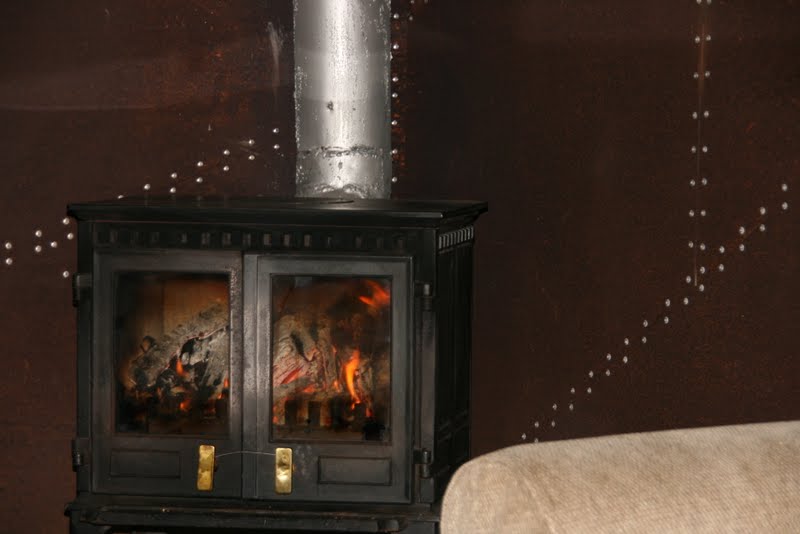
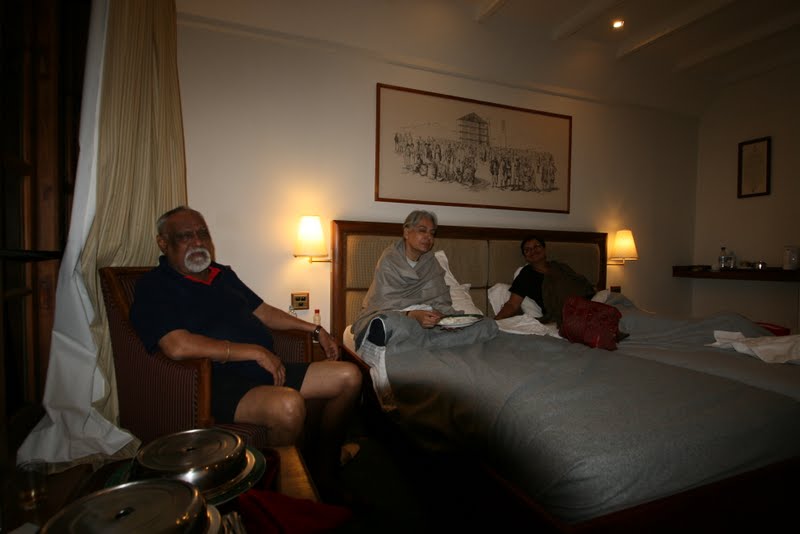
All said and done, Indian weddings can be great fun and good ‘time pass’; something like eating peanuts on a train, waiting for your stop to arrive.

Remembering My Flag Lieutenant Days with Admiral Narpati Datta

An aide-de-camp is a personal assistant, secretary, foremost personal aide or adjutant to a person of high rank, usually a senior military officer or a head of state. In the navy, this appointment is referred to as ‘Flag Lieutenant’. Young Lieutenants are appointed as ‘Flag Lieutenant’ to the Chief of Naval Staff, the Commander – in – Chief and the Fleet Commanders. Closeness to authority, glamour and the excellent exposure the job offers, makes it a very attractive and sought after appointment. Many young lieutenants aspire to become ‘Flags’ to an Admiral hoping they themselves would become one at a later date.


It was summer of 1973 and I was serving on board the Cadet Training Ship INS Tir as the Cadets Divisional Officer (CDO) to the first batch of Bangladeshi cadets. One fine morning I was told to proceed to the Fleet Office to be interviewed by Rear Admiral Narpati Datta – The Flag Officer Commanding Western Fleet (FOCWF) – for appointment as Flag Lieutenant. A month later I received my appointment to INS Mysore the Flag Ship as Flags to FOCWF .I joined the ship in Chennai in the month of June 1973.


A Flag Lieutenant has a number of responsibilities to discharge and all of them revolve essentially around the admiral. ‘Flags’ makes all appointments for the admiral, accompanies him to all meetings, seminars, other official functions, ships’ sorties, and out station visits, manages his retinue of cooks, stewards, boat crew, coxswain as well as his household staff of dhobi, gardeners and chauffeur and coordinates receptions, cocktails and dinners etc. Essentially Flags is an admiral’s ‘Man Friday’ in uniform. From the time the Admiral gets up, the Flags is on call till he retires at night. In this niche job role, the Flags and the Admiral get very close and in a matter of time a special bond develops between the two, which is unique.


So over a period of 16 months as Flags, I developed a relationship which bordered on reverence, hero worship and total loyalty to the ‘old man’. During this period I went through a cocktail of emotions – excitement, enjoyment, exasperation, tiredness, stress and in the end I felt a deep sense of satisfaction. The job had its highs and lows, comic interludes, mad moments in addition to an urge to run away from it all. Eventually, I ended up the gainer, absorbing all the experiences and the learning that came along with them. I was too young and inexperienced to have observed anything at the tactical or strategic level – my recollections were mainly related to – my day to day life as a Flags.


I decided to capture these experiences and moments which were unique not only to that time and age but also to the Navy as it was then. Naturally all my recollection is related to my association with the Admiral – on one hand a 24 year old rookie naval officer and on the other, a very successful old sea dog.

As Fleet Commander
The admiral came to the fleet with rich and varied experience; having served in important and critical appointments in Naval Head Quarters, diplomatic missions abroad and having been in command of ships at sea. He looked very handsome with the broad forehead of a thinker, which he was. He was a man of few words, very polite, slightly shy and reserved. He was very polished, sophisticated and carried himself with a lot dignity. He enjoyed playing golf, sailing and playing tennis regularly till his shoulder would get dislocated – which happened quite often. He loved sports. A well travelled man; he had a well developed taste for good food and good living. He dressed nattily and surrounded himself with many ‘objects d’ art’.


When I joined him, the Fleet Operations Officer told me, “Flags, you will have a wonderful time with him, he can’t even hurt a fly”. A Fleet Commander’s job is probably the most demanding, challenging and accountable job in the navy – the pressures and expectations of the job is so high, it takes a toll on all who hold the office. All incumbents deviate temporarily from their set pattern of behavior and exhibit traits which occur only when faced with high risk and high profile jobs. Narpati Datta was no exception to this strange phenomenon.

  After a good lunch I was relaxing on the Quarter Deck of Mysore when the Fleet Gunnery Officer, Lt Cdr Keki Pestonji came and informed me that I would be accompanying the admiral for a ‘Cadet Class’ Dinghy race as his crew. My very first outing with the admiral was to the famous and elite ‘Royal Madras Yacht Club’ Chennai- It was the first sailing Club in the South of India. It was founded in 1911 by the then Chairman of the Madras Port Trust – Mr. Francis Spring, in what was called the Timber Pond area of the Madras harbor. Sailing is a very complicated sport and requires adequate practice before one attempts to enter a race. I had no clue of sailing and had never sailed. No amount of pleading had any effect on Keki and the dye was cast. Keki was a big bully and continued further with his third degree torture. He issued a stern warning, “At no cost should the admiral get to know that you are a rookie”. I felt ‘keel hauling’ would have been a safer option than crewing for the admiral.


The race started and we were blessed with good and fair winds behind us. In a short time we sailed through the first two legs with comparative ease. While making a turn, the admiral gave me a series of instructions which I could not follow and as a result we almost capsized. In the ensuing fright and confusion, I lost the card on which the details of the course were marked. Consequently the admiral had difficulty in identifying the marker buoys – one thing lead to another and we ended up last in the race. The journey back to the ship in the car was filled with an ominous silence. What a way to start my innings as a flags!


I ate all my meals with the admiral on his table. I was a permanent figure, while the rest of the staff came in turns and joined the table. I would sit for breakfast and watch the admiral with admiration, as he made an incision on the mango at its equator and inserted a spoon and slowly eased the seed out dividing the mango into two neat hemispheres, ready to be eaten. The whole operation used to be carried out very deftly with the precision of a surgeon. I had been watching this with the utmost interest and amazement for a long time until one day I decided to undertake this very precise operation. All was well on the operation plate until the seed jumped out and very nimbly landed on the admiral’s crisp snow white uniform. I had left an indelible mark. The admiral just said, ‘Oopsy Daisy!!!’ and continued with his breakfast chitchat.
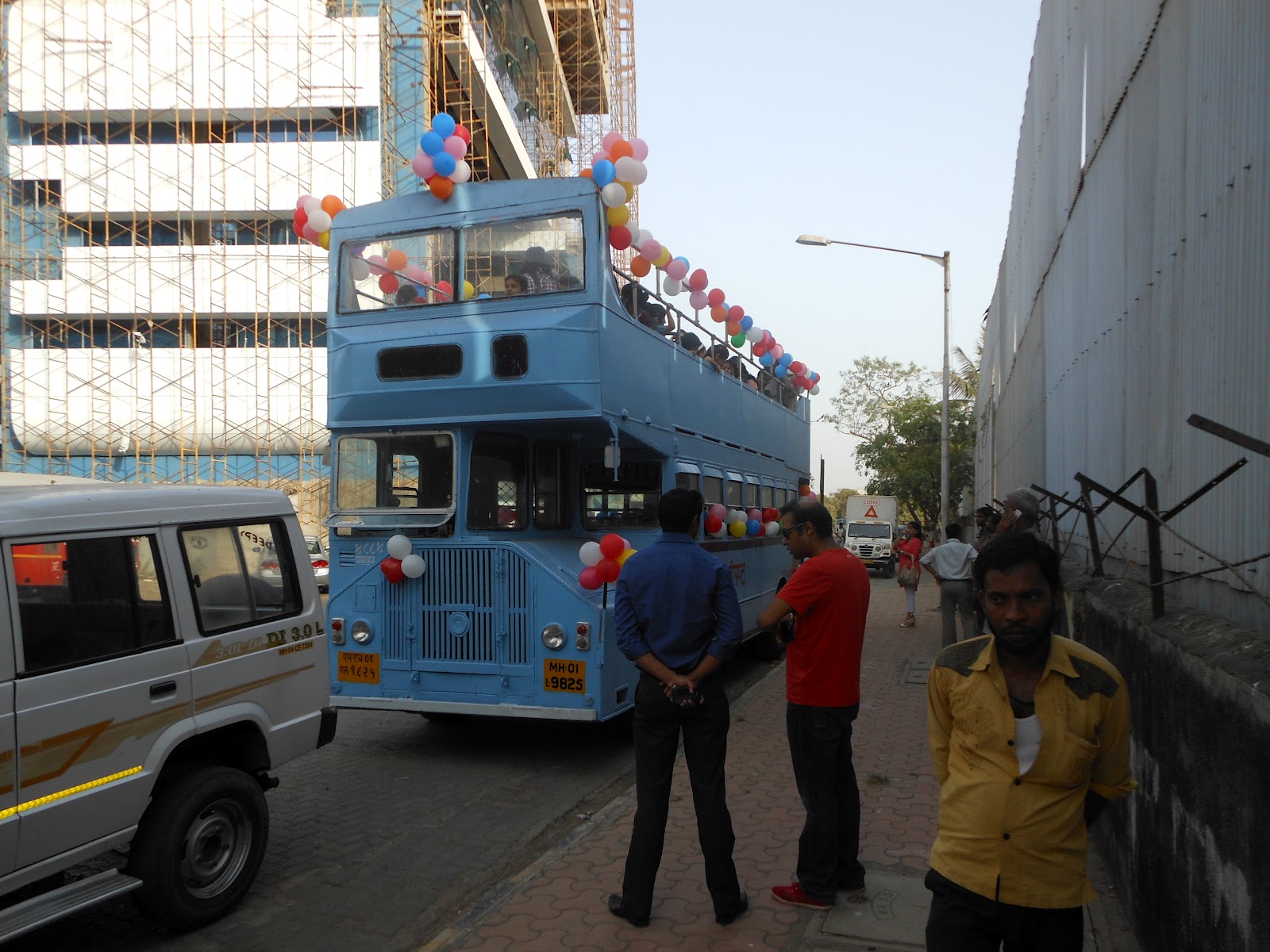
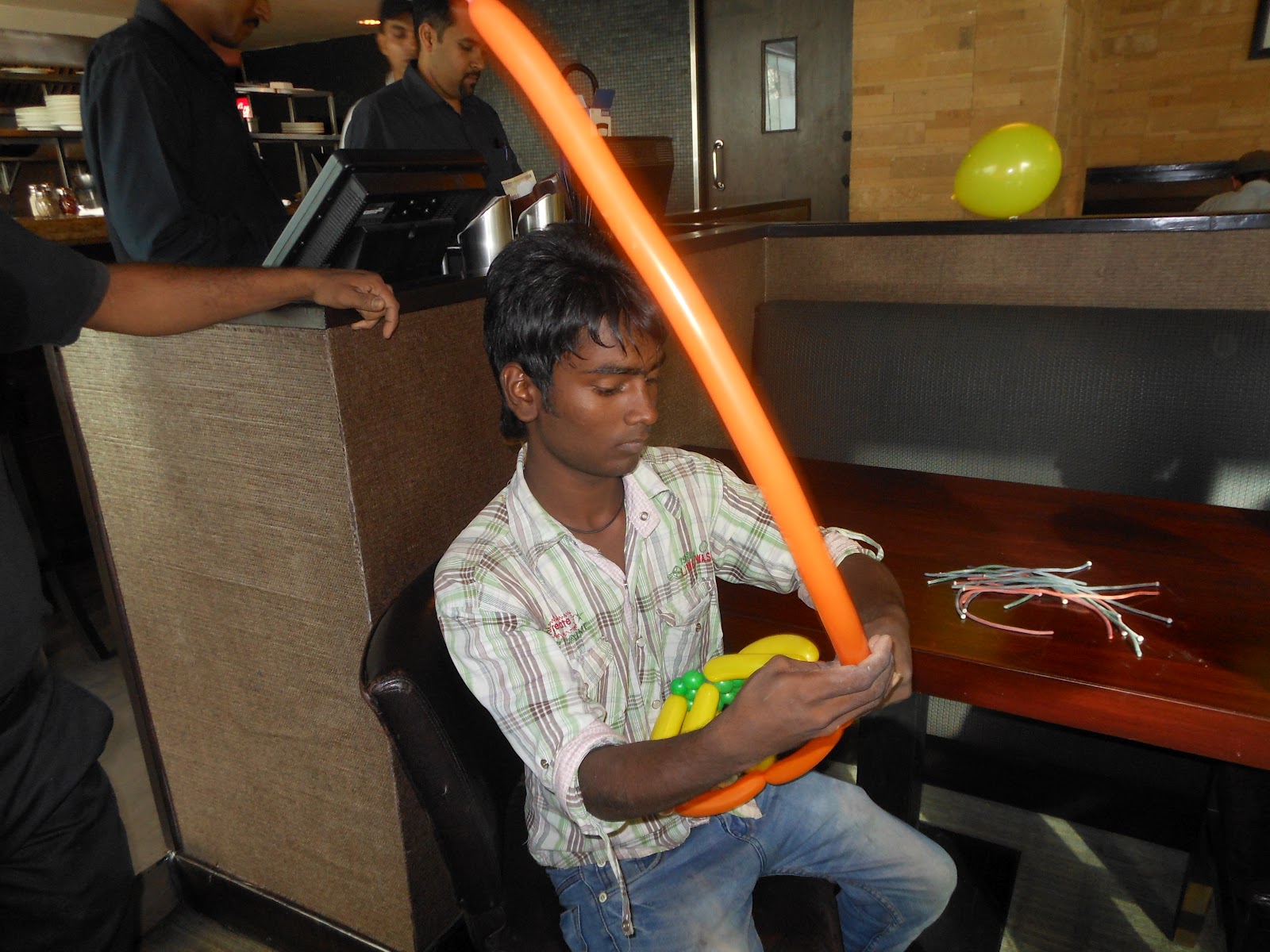
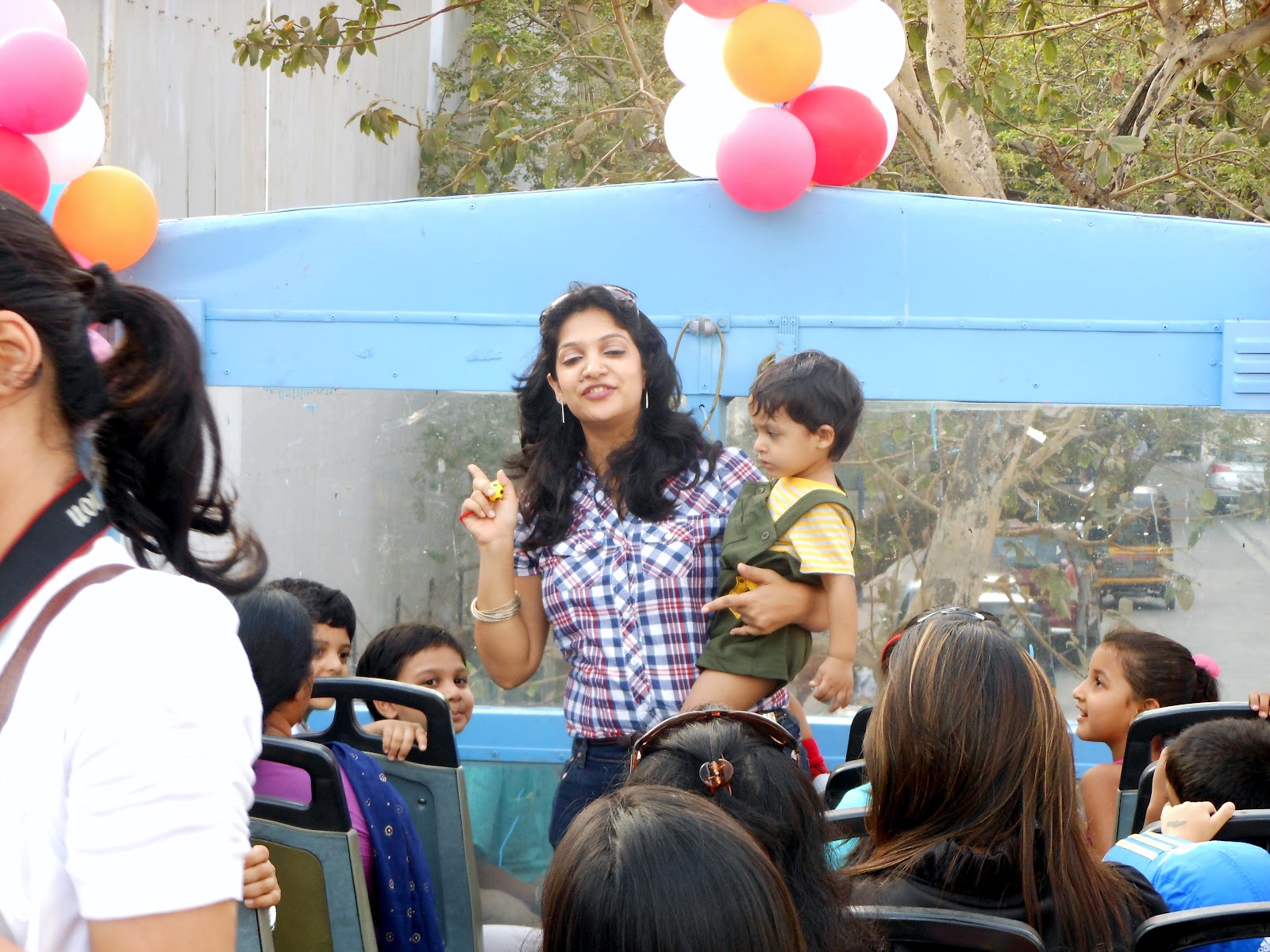
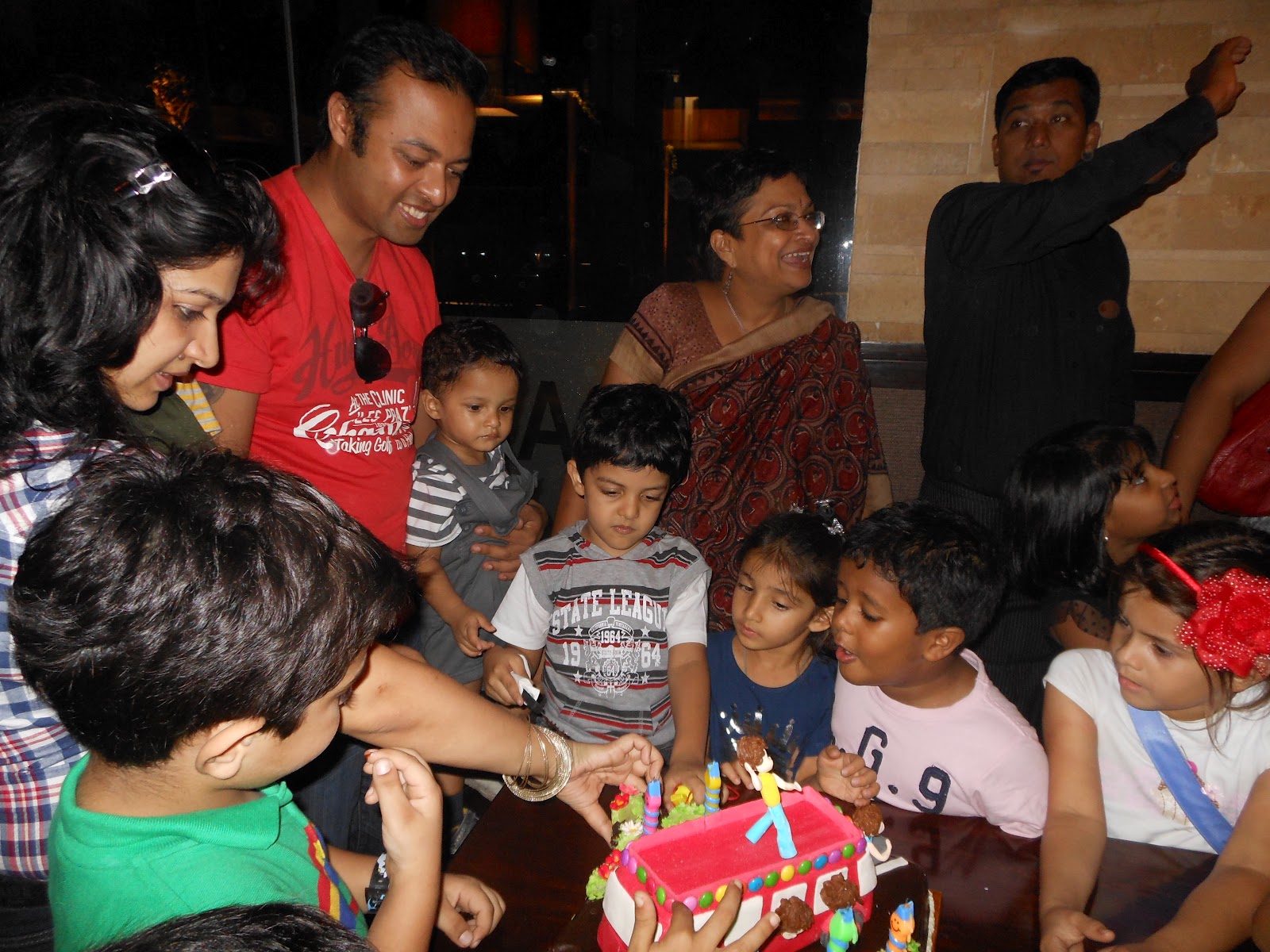


At the time when the admiral took over as the Fleet Commander, due to a variety of reasons the Fleet House had been reduced to a dump. The Fleet House, located in Navy Nagar, Colaba, is a very fine example of the colonial style of architecture with a driveway, garden, fountain, several car garages and staff quarters. The main building stands majestically tall, with large drawing rooms, several bed rooms with tall ceilings and sky lights. One look at the house and the admiral refused to shift until it was restored to its original glory. The renovation work became my direct responsibility. Renowned personalities such as architect Charles Correa and artist Anjolie Ela Menon were his friends and they offered help – at the other end of the spectrum was an unimaginative and rule book oriented ‘Military Engineering Service’ (MES) – a dichotomy of sorts. With back breaking effort, we were able to restore the house in six month’s time and the admiral finally moved in. He invited the MES staff one evening for a drink and during the party a new MES chair came apart. That was last time I saw the ‘Garrison Engineer’.


Mrs. Uma Datta decided to join the admiral in Mumbai. On the way back from the railway station Mrs. Datta spoke nonstop in Punjabi to me – seeing me flustered and confused, the steward came to my rescue and informed her that I was not a Punjabi ‘Prabhakar’ but a South Indian ‘Prabhakar’. Within a very short time of her arrival the house appeared classy, neat and clean. The garden acquired a new look with Chinese grass, Chrysanthemums, Gerberas and Petunias. I learnt a lot about gardening under her tutelage.

During the holidays the entire Datta clan arrived – which included their pretty daughters – Malini and Radhika, a young son – Vivek, a cousin – Pinky, some girl friends and the admiral’s mother in law. Soon the house became a beehive of activity. I soon announced that I was getting engaged to Jayanti – with so many girls in the house, Mrs. Datta was visibly relieved on hearing the news. They immediately invited Jayanti for a formal sitting-in lunch at the Fleet House. The Admiral suddenly noticed that Jai was not making any progress. Jai was a vegetarian and I had not informed the steward, who by then had served her a dash of chicken curry. As I was chickening out, the admiral looked at me and said ‘Oopsy Daisey!’ his favorite expression, when things went harmlessly wrong. Jai’s plate was quickly switched for a new one and the lunch continued smoothly thereafter.


Initially the Fleet Office was located near the Destroyer wharf, above the Command Diving Team office. This ramshackle set up had no toilets and one had to use the overcrowded and filthy dockyard toilet for all nature’s calls. One fine afternoon I found the Admiral pacing in his cabin and feeling extremely uncomfortable. INS Trishul, which was berthed very close by, was immediately selected by me to relieve the admiral of his discomfort. A very stern looking admiral arrived unannounced at the ship’s gangway and without uttering a word headed straight to the Captain’s cabin. While the admiral was away, the ship staff gathered around me to find out why the admiral had come on board – to add to their woes – the Captain of the ship had decided to call it a day and had quietly pushed off home – the Engineering Officer said “I hope it’s not the oil contamination incident, how did he come to know, the Executive officer had a different theory –”we are overdue in submitting the ‘Board of Enquiry Report’ and so on. He left the ship immediately after exchanging a few pleasantries. The visit to the ship remained a mystery to many for a long time.


One evening I was relaxing in the Western Naval command Mess having a drink, in a bar aptly named ‘Elbow Bender’ when the Admiral’s driver Zakaria suddenly made his appearance and said, ‘Admiral sa’ab bula rahe hain. Sa’ab gusse mein hai’. On reaching the Fleet House, I found the admiral pointing to a whisky glass which had water at the bottom and whisky like liquid floating on top. When I started investigating this very rare and strange phenomenon with Leading Steward Om Prakash, I realized that the steward had served the admiral a large peg of ‘gun oil’ which was inadvertently stored in a Johnny Walker bottle. On pouring water, the oil naturally floated to the top and created confusion in the household. Whenever Mrs. Datta went out of Mumbai, she used to leave behind a bottle of whisky to be used by the admiral – this time around it was ‘gun oil’!


It was an extremely important week. The Western fleet was preparing for the ‘Prime Minister’s day at sea. Mrs. Indira Gandhi was to inspect the fleet. Preparations were in full swing. Two days prior to the PM’s day at sea a rehearsal was conducted taking all the foreign Naval Advisors and Attaches to sea. Many things went awry. The Anti Submarine Rocket firing did not go well; some ships were badly out of station, V/UHF communication was terrible and overall the admiral was displeased with the performance. We returned to harbor and the admiral by now was in an extremely foul mood, resembling a tempestuous, stormy and unpredictable sea. He then decided to have a haircut. Poor Master Chief steward Jayal got it in the neck for not carrying a spare set of uniforms – next in line was the khalifa (barber) whose hands started shivering with nervousness, making it impossible for him to cut the admiral’s hair. All this upset the admiral even more – rendering the khalifa totally non operational and hors de combat.

While all this was in progress, I was wondering when my turn would come. I dropped the admiral at the Fleet House and went to the mess to change into ‘Red Sea Rig’ to attend the evening’s reception for the visiting Naval Advisors and Attaches on board INS Mysore. I changed as quickly as one could with one’s left arm in plaster. As I reached the Fleet House, to my astonishment I found the entire staff at the gate. Unable to fathom the reason, I thought of the worst. They informed me that the admiral had left on foot to Lion Gate – a good 6 kms away. I started trembling in fear and finally managed to catch up with the admiral in front of the Army Mess which was nearby. The driver got such a terrible dressing down; I did not dare to accompany the admiral to the ship. Instead I walked back to the mess and sat with my close friend Rags and wept on his shoulder and decided to call it a day as Flags. An hour or so later the driver came to the mess and said, ‘Admiral sa’ab bula rahe hain.’ – by now a familiar phrase. I knocked at the drawing room door and he said, “Good evening Flags, come have a drink.” The whole atmosphere had changed and I stood there stunned. Gasping for words, I said, “No thank you sir, my friend is with me.” He said, “Ask your friend to join us too”. With tears of joy, I went back to the mess after a very refreshing drink.


DCNS,CNS Admiral SN Kholi,Fleet Commander and self 


The Admiral as a young lieutenant was Flags to Admiral Sir Charles Thomas Mark Pizey *GBE, CB, DSO & Bar the Chief of Naval Staff from 1951 to 55 , who was himself a Flag Lieutenant toVice-Admiral Sir W.A. Howard Kelly in the Mediterranean. As the story goes, Admiral Pizey would often take off from office for a round of golf, leaving young Datta to remain in the office with lights on, till such time the Prime Minister, Jawaharlal Nehru, left South Block. During a reception the PM is believed to have said, “There are only two hard working people in my government – myself and Admiral Pizey.”


The admiral once told me how efficient he was as a Flag Lieutenant. To illustrate his point he narrated two incidents. On a visit to the old INS Rana, as his admiral was signing the visitor’s book the generator failed, enveloping the entire ship in darkness. In no time, young Datta pulled out a torch from his pocket and let the process continue – avoiding embarrassment all around. On another occasion in a reception at the Rashtrapati Bhavan, he saw Mrs. Phyllis Pizey sulking in a corner. Lt. Datta approached her and politely enquired if there was anything wrong; she is supposed to have replied, “The dance is on and I am not wearing dancing shoes.” To which the Flags said,” Not to worry ma’am, I have carried an extra pair in the car”. All smiles and face aglow, Mrs. Phyllis Pizey made her way to the dance floor. Such was his foresight.


On one occasion the admiral had invited a number of prominent people for a sitting in dinner in the ‘Admiral’s Cabin’ on board the flag ship INS Mysore. As all the guests settled down to a good dinner, they discovered Mr. Tarneja missing. Dinner was getting delayed and from the other end of the table the admiral gave me a sharp look – which when decoded meant, ‘What are you doing? Go fetch him at once!’. I found the missing guest in the toilet and informed him about the urgency and beseeched him to return to his chair. In return he pleaded delay, saying his dentures were refusing to cooperate. I had a tough time explaining ‘The case of toothless banker’ to the agitated admiral. His choice of guests for parties was extremely interesting – on one occasion we had Nutan the actress, Atom Bomb Raja Ramanna and the West Indies off spinner Lance Gibbs at the table – an explosive and spinning combination.


I learnt a lot under him. He used to say, “Whenever I call you to my cabin, you must come with a note book and a pen”. The day I took over command of a ship, the first thing I did was to present a pen and note book to all my officers and repeat what the admiral had said. Even to this day I follow his practice. He showed me the beauty of Burl tables, introduced me to the exotic flavor of ‘Glenfiddich single malt’ and developed in me a taste for crystal. I sailed to Bandar Abass and flew to Tehran with him and stayed with the Ambassador Mr. RD Sathe. He called on Mohammad Reza Pahlavi, Shahanshah of Iran. He wrote a very perceptive report of his visit to Iran, which resulted in the creation of a new post – ‘Naval Attaché’ in Tehran. We also visited Persepolis. Back home we visited Madurai, Meenakshi, Kanchipuram and drove down to Munnar from Kochi.I enjoyed travelling with him as one could get to hear about a number of interesting incidents. His dinner table talk with the High Commissioner to UK during the 1971 Indo Pak war – left a very big impression on the analytical ability of Commodore NP Datta.


As I look back, his handling of Prime Minister Indira Gandhi’s visit to the Maldives in 1974 was a huge success. She carried back with her a very good impression of the Western Fleet and appeared to be extremely impressed with the admiral. She was very generous and eloquent in her praise at the end of a state dinner.  http://samundarbaba.blogspot.com/2011/03/indira-gandhi-stayed-with-us-on-board.html


I continued to meet him later on during my service in the navy. I made a number of visits to ‘Mazagon House’ when he was the CMD of Mazdocks. One afternoon I went along with him for lunch, where I happened to meet the Big B. He came home when we were in Marine Drive and I met him a few times in New Delhi as well.


The Financial Express article ‘An Officer and Gentleman’ reported In the early hours of October 10th 2003, the country lost one of its finest post-independence naval officers, defence planners and strategic thinkers. Vice Admiral Nar Pati Datta was killed by a speeding private Blueline bus in Delhi. He may have died tragically and in circumstances that raise larger questions about road safety, but he lived and worked a life of uncompromising dignity. Everyone who knew him was struck by that unique combination which is now so rare: impressive achievements moored to gracious charm and complete modesty.

May his soul rest in peace.

WISHING ALL READERS OF MY BLOG – A VERY HAPPY NEW YEAR – 2012

From


Afghanistan Anguilla Austria Australia Albania Bahrain Bangladesh Belgium Bolivia Brazil Bulgaria Cameroon Canada China Columbia Croatia Cyprus Czech Republic Denmark Dominican Republic Egypt Finland France Germany Ghana Greece Hong Kong Hungary India Italy Indonesia Iran Ireland Isle of Man Israel Japan Jordan Kenya Kuwait Latvia Lebanon Lithuania Luxembourg Moldova Malaysia Maldives Malta Martinique Mauritius Mexico Morocco Namibia Nepal Netherlands New Zealand    Oman Nigeria Pakistan Panama Peru Philippines Qatar Romania Russia Saint Vincent and the Grenadines Serbia Singapore  Slovenia   Saudi Arabia South Africa South Korea  Spain Sri Lanka Taiwan Tanzania Thailand  Tunisia Turkey Ukraine United Arab Emirates  United States  United Kingdom Vietnam

It was indeed a very eventful 2011 for me and I do hope it was the same to all my readers. In 2010, I had viewership from 38 countries and this year it has swelled to 83.This feat has brought immense satisfaction and happiness to me. I have always maintained that ‘All good things in life are free’ – pursuit of happiness cost very little. All the ingredients are already there in front of us to be picked up and embraced. Early morning walks, wishing your friends and acquaintances, gardening, offer to help in a small way, a small donation to the needy, foray into the kitchen to indulge in cooking, reading a good book, and writing for your own sake are some of the easiest ways to feel happy. Here, we elders have a lot to learn from the children. Their happiness drivers are extremely simple – sighting a loved one, something familiar – a toy, friend, song, book or a TV program

Like in the movie – ‘Fiddler on the Roof’- Tevye sings “ Because of our traditions we have kept our balance for many many years, here in Anateveka we have traditions for everything, how to eat, how to sleep ,how to work ,how to wear clothes” and so on.

We also believe in traditions and why not. Come 17th of Dec – daughter, S IN L, Ayaan, Agastya and Aarin landed up at home for the holidays. Accompanying me to the airport to receive them was my GD ‘Samara’ all excited to meet up with her cousins. Battle plans were put into action. There were lots of changes in the ‘Battle Order’ published in 2010. My daughter had warned me’ Baba, the twins now walk and run around a lot and you have to be extremely careful – the moment they find the door open, they run out – no stopping them’ – ‘they are very inquisitive, they open the fridge, washing machine, oven and anything which can be opened” “they climb on chairs, tables, cots and the rest’ the briefing went on. Our strategy was nullified as, in addition to our fearsome foursome, ‘Saanika and Sambhav’ twins from our neighbor’s house joined the ‘Task Force’. Command and control posed a big problem. The entire Task Force was left to me and Man Friday – Rohan Dada. We had to constantly rely on our neighbor’s domestic help ‘Shoba’ to engage the younger twins – showing them cats ,dogs, squirrels, birds, butterflies, leaves, tree twigs, in the colony. Perimeter defense was established and strictly enforced. Inspire of our best efforts – Agastya one afternoon broke the high security cordon and was found loitering behind our cluster. Ayaan too gave us anxious moments. High voltage fun continued unabated till 2nd Jan when the whole family departed. Like in the earlier holidays, I had to take a break from golf – the ultimate sacrifice from a father to a daughter. In all, Akhila deserves to be praised and congratulated for her tremendous effort and patience in looking after three sons.

The entire ‘Task Force’

 On 18th Dec, I was invited by a local TV station ‘Janashree’ to participate in an 1hr panel discussion on ‘Vijay Divas’ – titled  ‘War and After’. I understand the program was well received and the station had 3 reruns thereafter.


Satyanarayana Pooja was conducted on 24th Dec evening with great fervor. Ayaan at 5 years was the most inquisitive, wanting to know everything the priest did. Why is he ringing the bell, why are they throwing flowers, washing hand, what is that burning, why curd, ghee and sugar and the list was endless. He wanted to participate in every activity. Poor Samara would constantly endeavor to cool Ayaan down without any success. She would say Ayaaaaaaan don’t do it, in an extremely high pitched voice – enough to break all glasses in the vicinity – resembling a soprano robusto. In the end the priest was feeling a bit exasperated and appeared to be running out of patience. From time to time the priest would sternly tell Ayaan to keep quiet and listen to him. After the priest left, the family decided to conduct all future festivals at our own terms with a pre recorded cassette and no priest. Fortunately for the priest, the twins slept through the entire proceedings. I shudder to imagine, what would have been the outcome with their involvement also.


Pooja in progress


On 24th Dec all of us closed up for the ‘Christmas Barbeque’ party. It was great fun bonding with the children, grand children, extended family and a few close friends. This year it was a little subdued and with lesser people. The only difference was keeping the twins away from the fire. Somehow we always end up making much more and eating leftovers. For once the amount of food cooked was sufficient and nothing was carried forward to the next day. A very satisfying feeling. As a thumb rule you require 4 KG chicken for 10 people, provided there is nothing else.

Akhila’s birthday bash and the X Mass Barbeque

We hired a tempo for our trip to Chikmagaluru, so that all of us could be together. We had booked ‘Hidden Valley’ which is owned and managed by Aranha Homes, a hospitality company based in Bangalore, Karnataka. Road up to Hassan (NH 48) is excellent and the ride was smooth. We started very early and the children slept through most of the time. After a brief stop for breakfast we reached the resort at 1400 hours to be greeted by the manager, Mr Suraj for a hot and tasty lunch. It takes about 6 hrs from home in North Bangalore to the resort.

After Breakfast

Located in the foothills of Mullayanagiri range Chikmagaluru is famous for coffee, it is known as the coffee land of karnataka. Chikmagaluru which literally means younger daughter’s town – Chikka + Magala + Ooru (in Kannada). Chikmagaluru is located at an elevation of 1037 meters (3,400 feet) .The temperature of the city however varies from 11-20 °C during winter to 25-32 °C during summer. My mother was born in a coffee estate by the name of ‘Javali’ 34 Km from Chikmagaluru. My Grand Mother – Lakshmi Bai hails from this area and her father Sri Ganesh Rao Gurjer was a very well known planter. Presently her brother Prabhakar Gurjer resides in Koppa.

The hidden valley is located in a 30 acre patch of coffee estate. The resort offers a lot for children to do in terms of outdoor activity. We went for trek inside the plantation and the children had lots of fun collecting coffee fruits, pepper pods, wild oranges, lemon and some eggs of unknown bird. Rohan dada did fishing in the manmade pond and the children were really excited in seeing him catch ‘Rohu’. Samara insisted that the fish should be returned to the lake, which Rohan very obediently followed, himself being an animal lover. We went in a paddle boat quite frequently. Whenever the twins got bored we took them to see Turkeys and Rabbits.

Examining rabbits

There are roosters, hens and chicks to keep you occupied with their “cock-a-doodle-doo”. We played carom during the day and generally relaxed gazing at the greenery and dozing off in the quietness and solitude of the estate.


Hidden Valley Resort From A Distance
Man Made Pond
Blue Sky Silver Oak Trees Winding Pepper Creepers

The entire clan


Mr Brown rooster and his clan
A Robust fire
Suraj and his team prepared some good and tasty food for us on all the days. The portions were really large and wholesome. Pakodas in the evening were  excellent. Bon fire on one day and barbecue the next day added lots of zing into the night. The Hundred Pipers played their music every night without fail after sunset – which is in fact early and descends extremely fast. The nights are are cold and one does require a sweater or a shawl to keep warm.
During the year, in May 2011, I took over as the Honorary Secretary of Jalvayu Vihar, to keep myself occupied and more importantly to fulfill the urge of giving back something to the society. It is a tough job – keeping 540 households happy and satisfied. There is a lot to write on that score, which I will be doing separately. We organized a ’New Year Ball’ on 31st December Night. The event was sponsored by Reliance Digital, Tanishq and Trident Hyundai amongst others. The music and ambiance were great and 320 residents and their guests were treated to a lovely and memorable party.


Valley by night

On best behaviour

Trekking in the estate

Father and son bonding

Thy Das clan without the twins

Every reason to look tired

Photo op for me

The drive to the valley


Samara posing


With all the children


Badminton in progress

Rohan with his prized catch

A game of pauper
Jai had excellent results in their first 10th board exam and the school has leap froged and etched a place for itself in Bangalore as a good school –www.freedom-international.in.Vivek and Shubra have been extremely busy the whole of 2011 and Chumbak – http://www.chumbak.in – now has 80,000 followers and have brought out a number of interesting and innovative products. Anirban and Kwan www.kwan.in continue to grow from strength to strength and cherish being India’s largest and most powerful Entertainment, Fashion, Celebrity & Sports Management Company
So ended 2011 on a very happy note.