Tryst With Royal Enfield

Channagiri Raghunath Rao was a very close family friend of my father. He was a man of gigantic proportions. He was very tall and well built. He spoke very loudly. His normal conversation sounded like a series military orders delivered by  an experienced Sergeant Major to his troops. His hand shake was more deadly than his vocal chord.

He resided in Yelahanka,a township located in the northern part of Bengaluru. He was the manager of “Bangalore Brick and Tile Factory”. He used to visit our house very frequently travelling 30 kms one way on his priced possession – ‘Royal Enfield’ motorbike. Riding a motorbike in the mid sixties over long distances must have been very challenging and tiring. He used to park his bike in front of our house and thereafter proceed with whatever errands he had to do in the city. My father and he would go for a leisurely stroll around Shankarpuram. Their walking – shopping routine was regular and predictable. Thereafter he would spend some time with all of us chit chatting. He had lots of stories and anecdotes to narrate and generally keep us entertained. I used to call him ‘Raghu Anna’ (Raghu Brother). As a fifteen year old boy I found him to be a very interesting person.

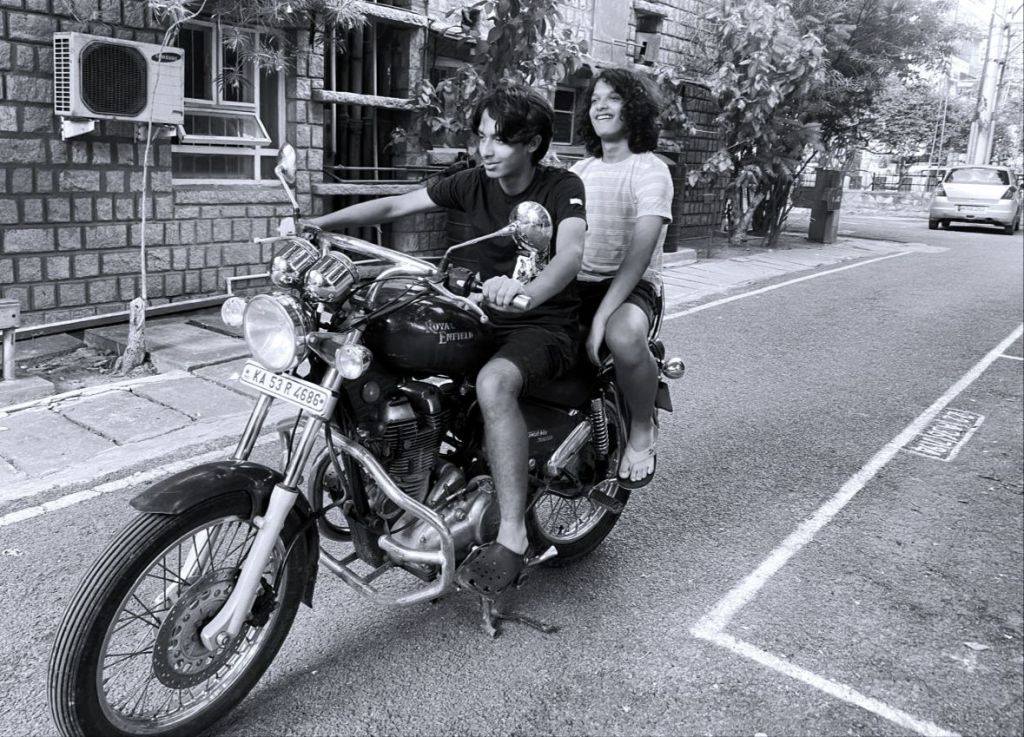
More imposing than Raghu Anna was his bike the – Royal Enfield. I used to stand and watch this piece of engineering beauty, all powerful, shining and majestic. I often dreamt of riding this powerful machine. But, had to remain contended by riding on his bike as a pillion rider.  Some times Raghu Anna used to take me on his bike to Yelahanka to spend a weekend in their house. His son Phanendra was my class mate. I looked forward to these long rides, the air blowing on your face, constant vibration of the engine and above all the resounding and rhythmic sound of the bike. Overall it was an extremely invigorating experience. Even after sixty years, I still feel the strong connection with this sound. Our car driver Suresh is a proud owner of a Royal Enfield.

As a hot blooded teenager anything is possible. When you are young  imagination runs wild and desires bordering on foolishness abound. This is  when you throw caution to the wind and  embrace danger.

Our landlords grandson Jai Kumar was two years senior to me and a very close friend. We lived in the same compound and had grown up together as partners in many mischievous adventures. One day I gathered all my adolescent courage and and poured forth my innermost desire. I said Hey Kumar “ lets take the motor bike and go for a ride”. He remained silent for some time and later managed to give a simple grin, which told it all. It was unbridled happiness, my dearest fried had agreed to my scheme.

As I had mentioned earlier Raghu Anna’s routine was predictable and measurable in terms of time. His outing with my father was around an hour. So we planned the entire operation for a total duration of thirty minutes. Commence the manoeuvre ten minutes after their departure and return well in time. The plan gave us a cushion of twenty minutes. The project was entirely doable.

There was however one small impediment. Both of us had never ridden a bike before, leave alone a heavy monster like the Enfield. We discussed this aspect thread bare and concluded that it was similar to riding a bicycle, but heavier. We decided to go ahead with the dangerous and risky undertaking.

On the fateful evening we commenced our operation as planned. Took the bike of the stand and Kumar kick started the bike with at most ease. In a short while we had mastered the art of balancing and riding. We took turns in riding the bike. The ecstatic feeling it generated was beyond comparison. We had achieved something big for our age. In all our excitement, we rode the bike beyond our locality and for longer than anticipated.

We returned home well within the stipulated time. The entire operation had unfolded as per the plan. We stopped the vehicle in front of the house and embarked on the last phase of the mission. Put the heavy bike on its stand.

All our attempts to put the bike on its center stand failed miserably. It was two heavy for the two of us to lift the bike. Time passed faster than normal and sweat beads had started to form. Failure loomed large and panic was writ all over our face. Just when we were giving up all hopes, Nagarj, our dear friend from the corner house came to our rescue. He seized the situation and took complete charge of the operation. He summoned a passer by to render help. Now with our troop strength having increased to four, we were able to put the bike on stand in a jiffy. Najaraj the ‘Serpant King’ was truly a messenger from God.

We had accomplished a daring and dangerous mission without any blemish. I went back home and placed the key back in its original place and returned to the scene of crime.

My father and Raghu Anna returned as usual and everything seemed to be normal. There was some animated discussion between the two and farewell gestures were beginning to be traded. All of a sudden the imposing owner of the bike became aggressive and extremely vocal. Anger was writ all over and his face had turned beetroot red. In a thundering voice he said “ Venkanna look at the bike. I Had parked the bike facing the cricket field and now its facing in the opposite direction’. ‘ Some rascal has taken the bike for a ride, let me catch him and I will wring his neck’ and he went on and on. My father in the mean time tried to console the aggrieved party ‘ Raghu, cool down and think back, may be you are mistaken and you are imagining things. It took a lot of persuasion and cajoling by my father to  bring back the ‘Royal Enfielder’  to near normal state.

Many years later, may be fifteen years, gathering lot of courage, I owned up to the bike episode. His only reaction was ‘Ah ah, I always knew I was right and Venkanna was wrong
Hidden Jewel Of Asia – Uzbekistan

The day before we embarked on our journey to Uzbekistan ,I went to collect a document from my hospital. I was desperately trying to get it over with, as I had lots of last minute errands to run. The doctor in the office asked me why I was in such a tearing hurry. I told her ‘I am leaving for Uzbekistan tomorrow. Surprised, the doctor asked, ‘Where is Uzbekistan? I have never heard of such a place!’ This is the extent to which the country of Uzbekistan is hidden. Normally, travel means going to America, Europe, Wild Africa and the Exotic Far East. A country,  somewhere in Central Asia, is unlikely to attract the attention of a normal tourist.

Google will provide you with all the usual information such as its size, weight, length, breadth,  age, history and much more. I leave it to you to browse the net and  fill in the details.

In our stay of 10 days, we visited Khiva, Bukhara, Samarkand and Tashkent. Four of us  – self, wife, daughter and son – in – law – travelled extensively by car from one place to another. I love travelling by car for many reasons. Firstly, it is very private and comfortable. You can stop where and when you want. It’s door to door, no check in ,waiting in airports, railway stations, lugging suitcases etc. We are not unnecessarily time bound. You can talk endlessly with the local driver, watch the country side unfolding as you travel and so on.

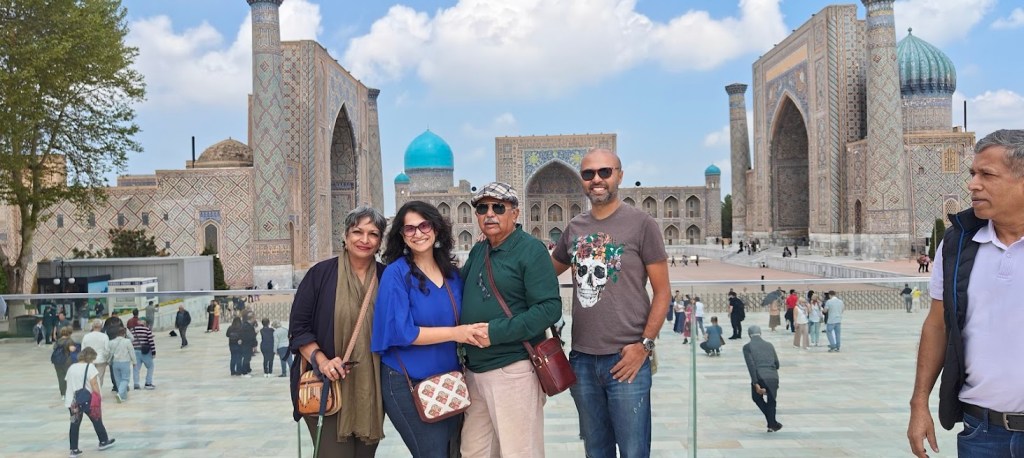
The Family

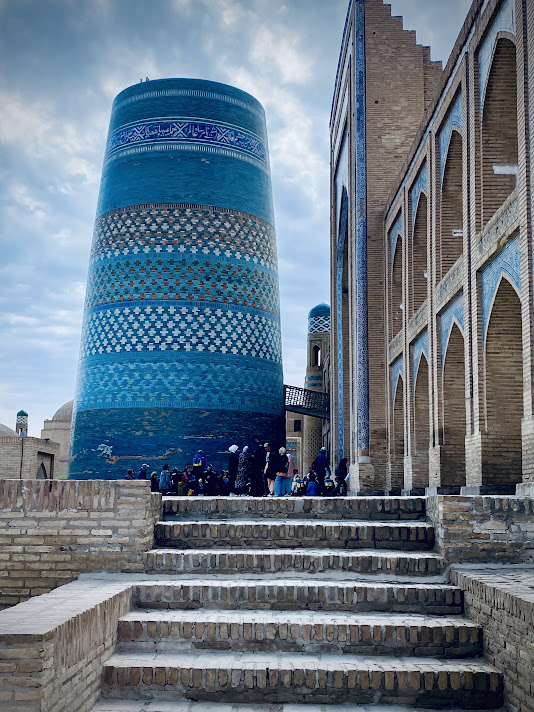
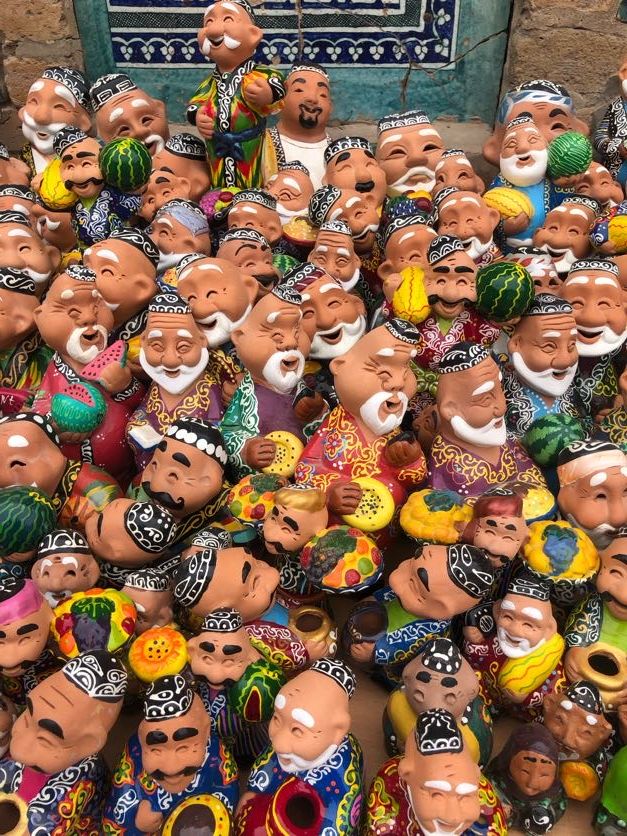
Khiva was first a sea, many aeons ago and then a desert with many lakes. As a result many of the lakes are salty. The soil is not suitable for plants but we saw a large number of flowering plants everywhere. We were told that the soils has to be washed and cleaned before anything can be gown. So, they plant fully grown flowering plants and change them when they wither away. Most of the madrasas which are beautifully tiled in hues of blue and green, have been turned into hotels. We were fortunate to have stayed inside the citadel area. Walking around this charming citadel, you get to see amazing sights; a huge kiln where a variety of bread is being baked, (we ate one hot off the oven and it was mouth wateringly delicious), shops selling long Ikat kaftans, traditional puppets and wonderful glazed blue pottery.  

Ichan Kala Khiva

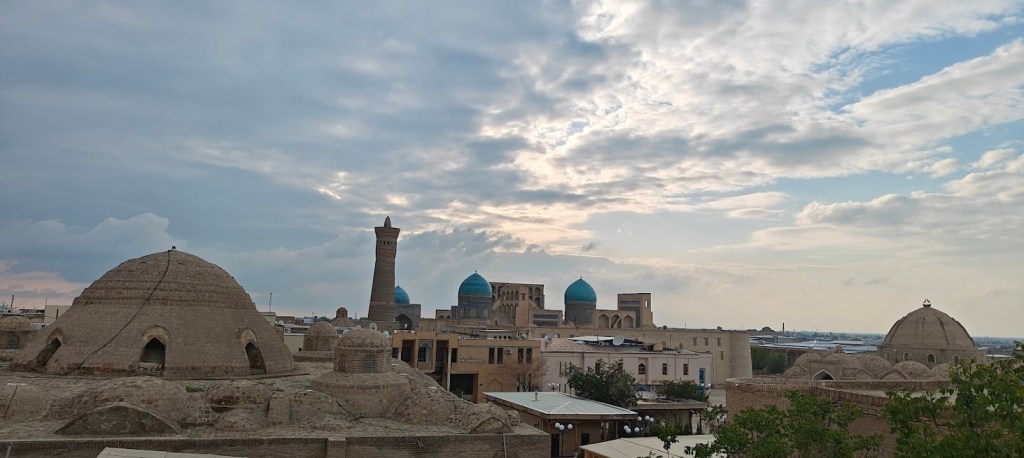
In Bukhara, we saw Job’s mausoleum, a unique structure. Here, interesting bit of trivia, Job is called Ayub. A miniature artist  painted flawless miniatures as he sat selling his work, and the intricately carved knives reminded one of the mystique of these ancient places along the old silk route.


Bukhara Old City View

In Samarkhand,our favourite place was the Shikhar Zinda, which also has the fabulously carved gates of Jannat; a peaceful place filled with a holy, almost spiritual aura.

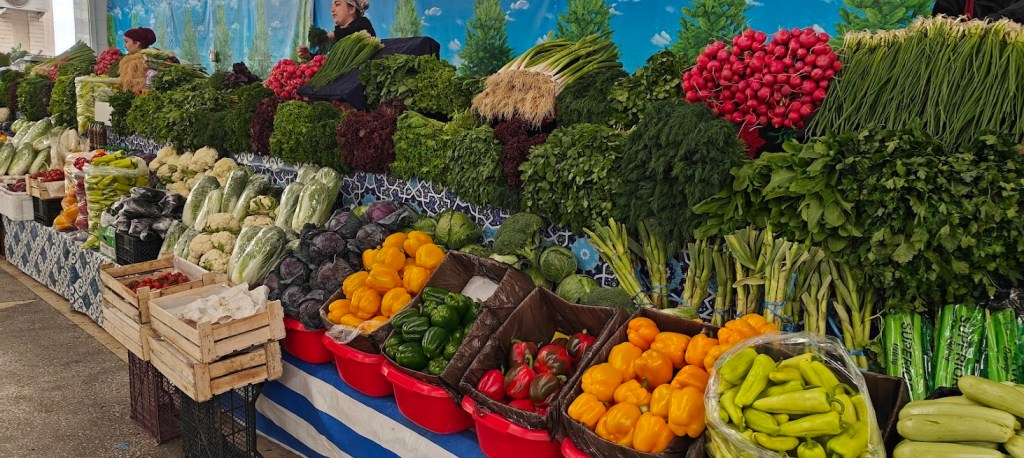
Variety of fresh vegetables
Puppets – Popular Handicraft

Babur, founder of the “Moghul Empire” was born on 14 February 1483 in the city of Andijan, Fergana Valley, contemporary Uzbekistan. Located 350 Km East of Tashkent.

The people speak Uzbek, Russian and Tajik. English is very rare and one has to use Google translator frequently. Be prepared. My Russian which I picked up 45 years back was quite rusty. When I tried speaking, it often caused laughter and great amusement  but it came in handy and helped to break  the ice.

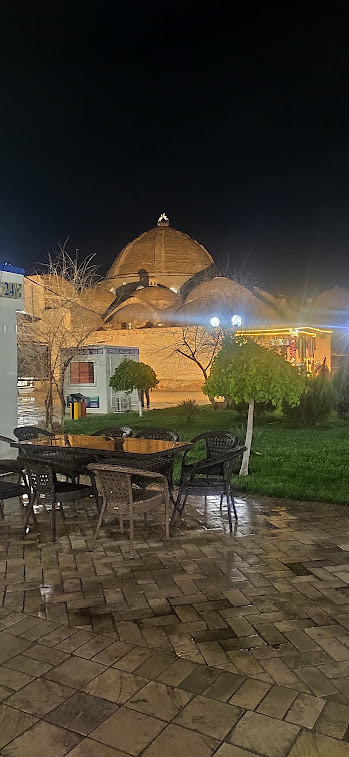
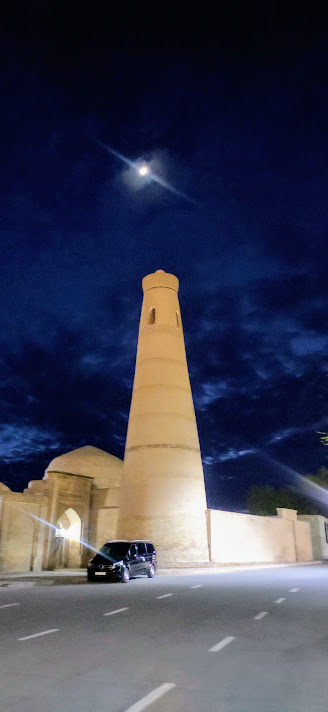
Bukhara by Night

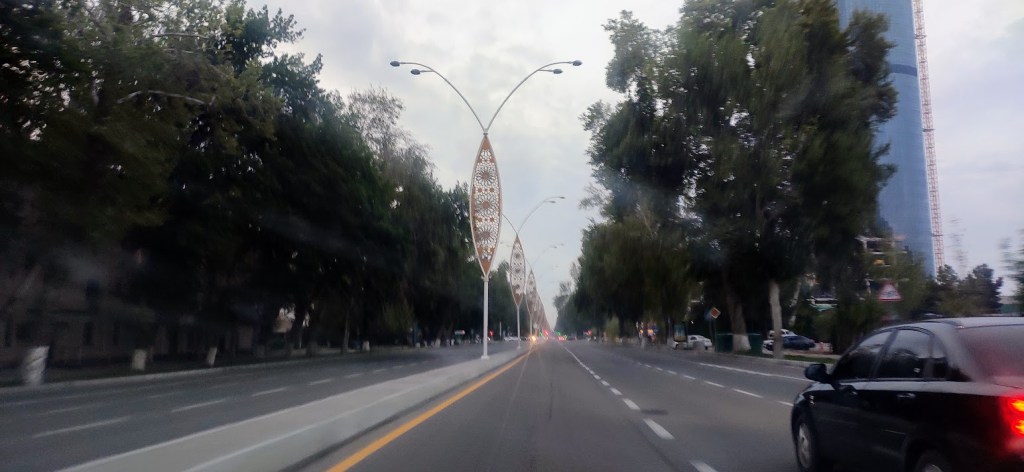
The most striking feature of  Uzbekistan is their cleanliness. Starting with Khiva which is a one horse town to Samarkand and Tashkent, their towns and cities are extremely clean and well maintained. I did not find a single cigarette butt or any kind of litter on their roads, market places, restaurants and parks The towns are beautifully well laid out with broad roads, walkways, with long avenues of tall trees, innumerable parks and gardens. The city landscape is dotted with stately buildings from the Soviet era to modern post independence structures. The overall image is one of meticulous town planning, with care taken to maintain absolute cleanliness. It was a pleasure seeing an Asian country (both its urban and rural areas) surpass any Western one. It is very rare to find policemen on their streets.

Tashkent Main Road

Dustbins have been placed everywhere in the city,prompting the public to drop the litter in them.This idea ,I am told was introduced a decade ago and it has benefited everyone.The result is visible. All their drains are well maintained and clean. It was a pleasure to see a well laid out and absolutely clean drainage system.

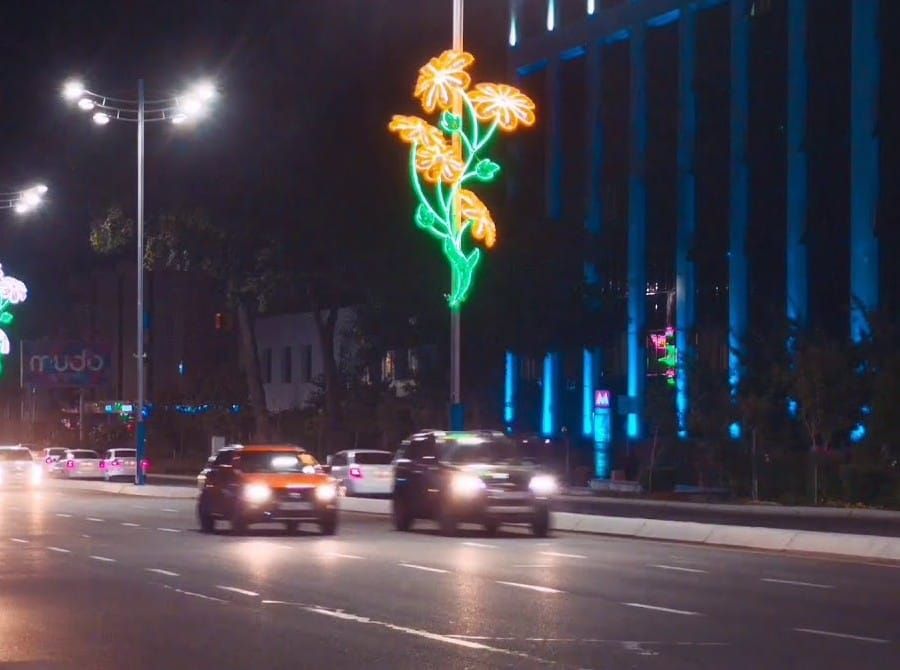
Important city landmarks are lit up every night and this makes for an amazing sky line . There are also decorative lights all along the main roads that add to the beauty of the city at night, especially in Tashkent.

City Lit Up

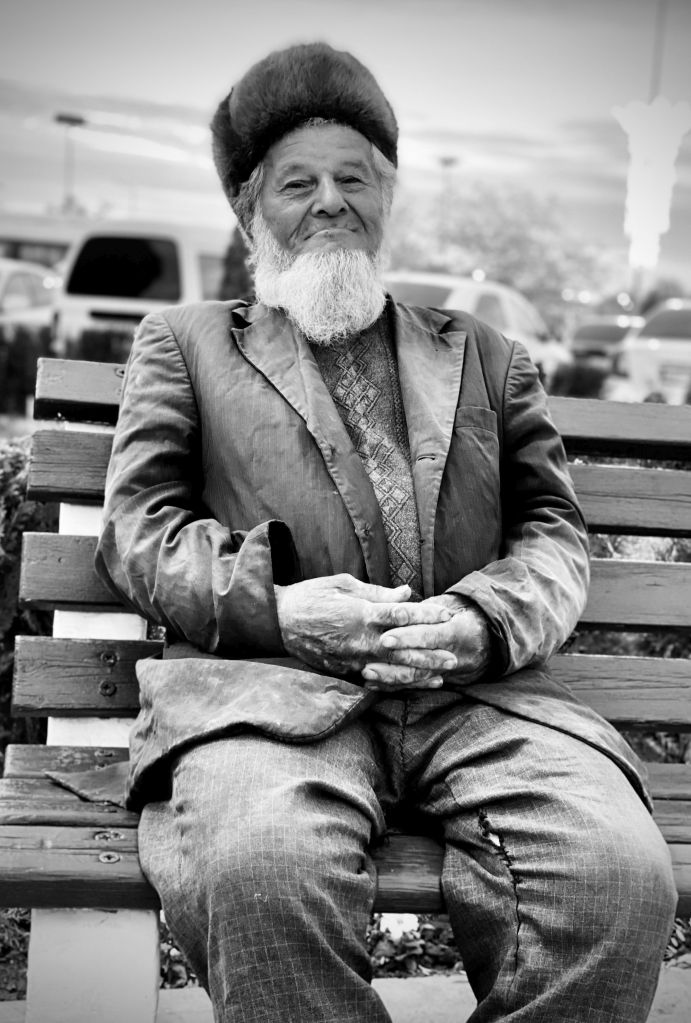
I did not see any beggars during our stay. The existence of a joint family system ensures that all the members of the family are looked after. Social responsibility extends to housing, feeding and clothing the less fortunate,the infirm and the aged. There are no stray animals to be seen anywhere.

A happy old man

The Uzbeks are an extremely proud and honest people. They refuse any tips if they feel they have not earned it. I found them very polite and helpful in their interactions.

Their remarkable cuisine, of course, deserves a mention. Kebabs, Plov (Pulav), Achichuk (Tomato Onion Salad), Samsa (Samosa) , Manty (Dumplings), Lagman (Meat Curry) ,Shivit Oshi (Green Noodles) are just some dishes of their cuisine that are worth trying. They also have a variety of the most delicious breads that I have ever tasted!Their restaurants offer fine dining in every sense of the word. The cost is extremely reasonable. Alcohol is easily available and is inexpensive when compared to Bangalore. You must try their Cognac.

Uzbekistan is reputed to be the most peaceful country among all the Stans.

GM’s Chevrolet cars dominate the streets. 94% of their cars sold in 2022 were Chevrolets. It’s very rare that one sees two or three wheelers on their streets. Taxi apps such as Yandex provide very good service. It’s faster and cheaper than our Uber.

Bollywood and their heroes and heroines are hot currency. Raj Kapoor, Amitabh Bachchan, Rishi Kapoor and the Khans are very popular and so is Mithun Chakraborty! Uzbeks have a special corner for Indians as they love Bollywood movies.

Our routine was very simple; we would go on  a guided tour till 2pm and  thereafter unwind in one of their good joints over chilled beer,salads and delectable Uzbek fare. After a refreshing siesta we were ready once again to explore the culinary scene. There are a number of good restaurants to choose from. It helps to do a bit of research and select. The weather in mid April was just right – not too cold or too hot, with just anip in the air in the mornings and late evenings.

It is very simple to obtain an  e Visa on line. The procedure is smooth. It is issued on line and sent by email after a week or so. Uzbek airways provides good connectivity from Delhi and internally.

At the end of 10 days we had seen all that had to be seen,thoroughly enjoyed Uzbek hospitality and returned home with very happy experiences.

We were very fortunate to engage ‘Advantour.Com’ – tour operators specializing in Central Asia Silk Road travel for all our logistics and travel arrangements. Special thanks to Shavkat Khodjaev, Alyona Kovalyova, Farrukh Khalmurzaev, Marat Askarov for coordinating our travel.

They did a wonderful job and met all our requirements. Talkative Kamal drove us from Khiva to Bukhara and to Samarkand. He spoke non stop in Uzbek. It was totally one sided. Daler took us from Samarkand to Tashkent. He spoke in broken English and was able to communicate well with us.

We were provided three pleasant and knowledgeable English speaking guides. Mrs Saida in Khiva, Mrs Mahsuma in Bukhara and  Mrs Valentina in Samarkand. All of them were a storehouse of information, stories and anecdotes. All in all, they made our city tours extremely interesting and kept us engaged throughout the time we were with them.

‘Kamana Habba’ in Bengaluru – A Lost tradition

In the month of March, the festival of Holi is celebrated all over India. It is a traditional spring festival. It is mainly held on the full moon day in March and celebrates the arrival of spring. Holi is also known as the festival of colours. The revelers throw coloured powder or splash coloured water on each other in gay abandon, wishing each other an exuberant “Happy Holi!”. The day before Holi , Holika Dahan or Choti Holi is celebrated wherein a bonfire is held to burn all the evil deeds of the past and make a new beginning from the next day forth.

There are many ancient legends associated with the origin of Holi. Legends vary with geography and community. The underlying reasons remain the same – celebrating the harvest, the triumph of good over evil and an opportunity for the community to get together and enjoy a day full of merriment.

In the fifties, our family resided in Gavipuram in South Bengaluru. Basavanagudi, Gavipuram and Shankarpuram were the bastions of old Mysore. Come spring and summer, these localities observed many cultural and religious functions. Popular among them were Kamana Habba, Ramanavami, musical concerts and Hari Katha.

In South Bengaluru Kamana Habba meaning ‘festival of Kama’(God of lust ) was celebrated on the day of Holi. A day before the habba (festival), all the youngsters of the locality used to form a team and visit houses singing the Kamana Song in Kannada ‘Kamana kattige bheemana berani, adike gotu, yekkada detu, kaamana makkalu kalla soole makkalu yenyenu kaddaru soude berani kaddaru  yatakke kaddaru kaamannana sudakke . Isati kamana hingaytu, asati kamana hangaytu! Varshek omme baruvaru navu, sada baruvaralla. Kodo mamuli kotta bittare, matte baravaru alla!’

In essence, this means, “The children of Kamana stole fire wood, dried cow dung cakes, areca nut husk and burnt Kamana. We come only once a year so if you give us the usual stuff, we will go away!”

I was around 10 years old and the Kamana Habba meant a lot to me. More than the religious fervour, it was the idea of collecting fire wood from houses and in some places stealing them which added a sense of adventure and mischief to the whole exercise. We visited all the houses in the locality singing the Kamana song and exhorting the house owners to donate willingly or face the wrath of the thieving children of Kamana. Most of the houses gave the firewood willingly. In them days, every house had coconut trees and there were enough dried fronds stored to be given away on such occasions.

Three incidents are permanently imprinted in my memory. In our locality there was an excellent coconut tree climber, who would climb the tree in a jiffy and break loose a frond or two, while still hanging on the tree. On one such climb, he unfortunately slipped and fell from the tree.

In another incident, a very angry and unwilling owner, when asked to donate firewood, brought out a double- barreled gun and fired into the air.

My cousin Anuradha, a year younger to me had come to our place during the Kamana Habba festivities. Being a very spirited and fun loving young girl, it seemed natural for her to join me for collecting firewood. However, her presence did ruffle a few feathers. Girls very rarely joined the foray in those days.   

The entire loot was shifted to the Kohinoor Grounds in Gavipuram. In the evening a huge bonfire was prepared. Many sugar cane stalks were also placed on the bonfire. My grandfather used to draw an effigy of Kamana, which was placed right on top of the heap. A prominent personality from the locality was invited to light the bonfire.

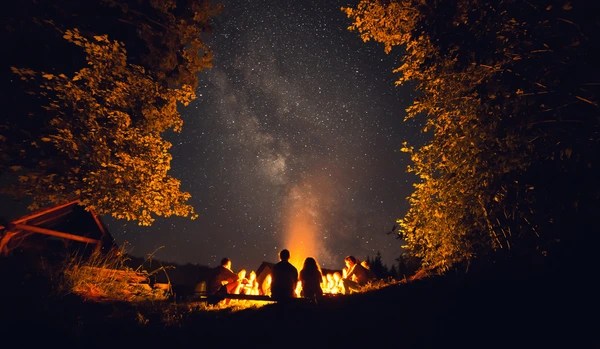
All of us would run around the bonfire singing the Kamana song for the last time. The crackling of the fire wood, its high flames and innumerable sparks flying in all directions, added to the glory of the night. The entire proceedings was watched by a benevolent full moon. The excitement peaked when the sugarcane stalks burst and flew out. Getting hold of a hot piece of stalk and eating the sugarcane was a well-earned reward.

The finale was the distribution of ‘prasada’ in the form of Bisi bele huli anna and curd rice given to all in a donne. (a cup made out of dried palm leaves)

Later, as the city grew and became more cosmopolitan in nature, this fascinating tradition of old Bengaluru was relegated to obscurity. Kamana Habba was a joyful activity which brought the whole community together for a day. It made us forget all our differences and served as a community binder.

Water Woes of Bengaluru

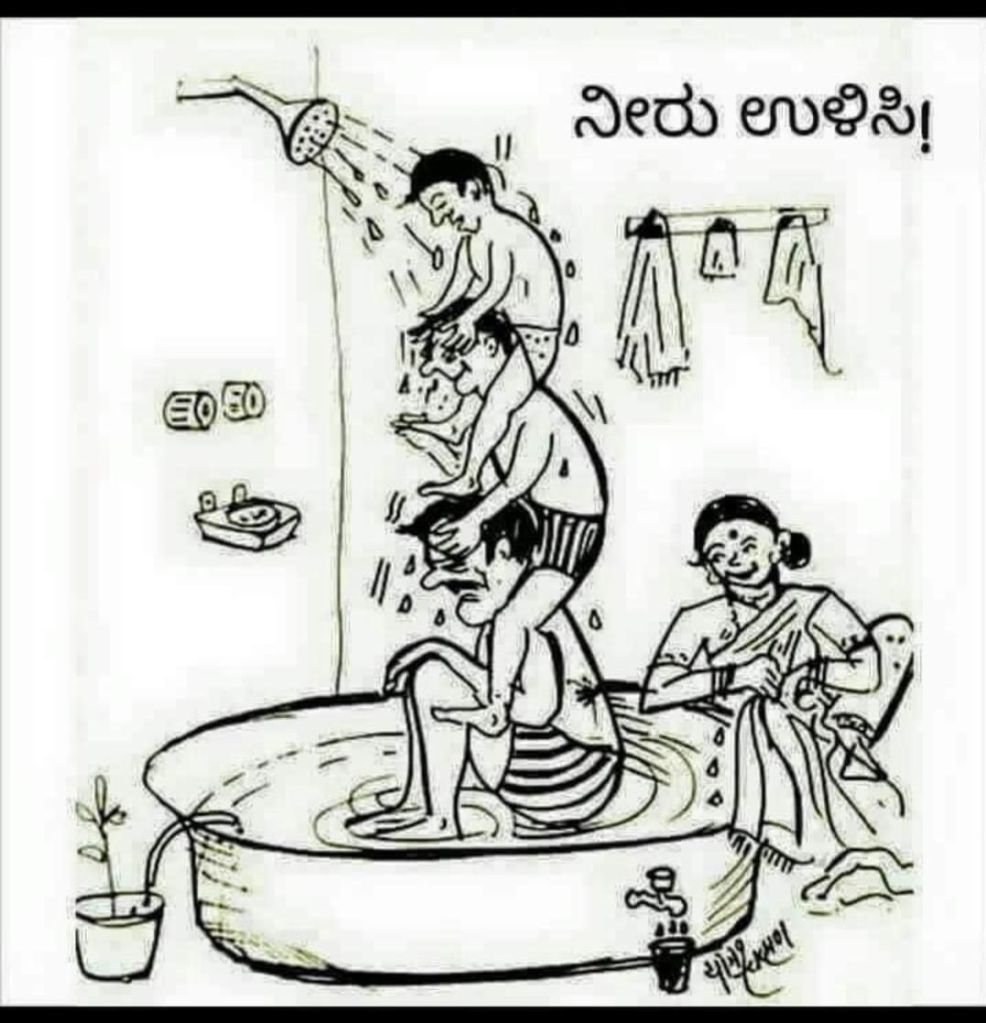
A routine announcement in the newspapers proclaimed “Bengaluru will experience a 24-hour water cut from February 27th, 6 am to February 28th, 6 am, for maintenance and meter installation”. The water scarcity in the city is much more acute than the initial reports indicated. The summer of 2024 will see a parched city. The scarcity has hit the entire city but the areas which are not connected to the Bangalore Water Supply and Sewage Board pipe lines have been hit the hardest. The unchecked growth of the city, over exploitation of ground water, an inadequate monsoon and non-implementation of water schemes have been responsible for the current situation.

A possible solution

Ask any naval person who has sailed on a warship and he will tell you how well-trained he is in conserving water. On board a ship, water is an extremely precious cargo. A sailor is appointed as the ‘Fresh Water Tankey” who in turn controls the supply of fresh water – quantity, timing, duration et al.

I was serving on a “Petya Class Frigate” of the Indian Navy and still remember our extended deployment off Chittagong Harbour in March 1971, prior to the war.  We ran short of many essential supplies such as diesel oil, fresh rations and most importantly, fresh water. It was an excruciating time for all on board. Drinking water was rationed to a few bottles per head. Bathing was totally out of the question. One day, nature took pity on us and the heavens opened. The ship’s broadcast announced “Hands to Bathing Stations”. It was the most exhilarating experience – getting drenched in rain water and watching sailors collecting water in drums. There is something divine about water. There were smiles all around, men jumping with joy, singing and making merry. The ship’s morale had reached a new high.    

The Lady of the House was seized with the problem. She immediately summoned an extraordinary meeting of all the stake holders – self cook, part time gardener and the car cleaner. The ‘domestic help’ was very sternly ordered to reduce the flow of water – dish washer and washing machine only once a week, sweeping every day but mopping once a week and so on.  Use the ‘Robot Vacuum Cleaner” more often (It consumes one glass of water to mop the whole house). Shivanna the gardener was told in no uncertain terms – ‘You will water the plants with a bucket and mug’ – running water from the pipe will not be used. Much to the delight of Sreenivas, he was ordered to wipe the car only once a week.

Decades after retirement from the navy, I still have a little bit of salt running through my veins.  With many years of experience in water management, I thought I would be spared the lecture. LOH turned to me and said, ‘Just take a shower in the golf course after the game, collect all the water from the solar heater till it turns hot, use the flush sparingly, drink soda instead of a whisky/water and don’t leave the tap on during shaving.’ As a result, the family was fully primed to fight the water war!

Peace and tranquillity (P & T) reigned albeit for a very short duration. The next morning. we woke up to a rude shock. There was no water in the tap. All hell broke loose. Fortunately for us, our daughter dear lives next door, so we were able to shelve the problem a little longer. On my return from golf, I immediately ordered a water tanker. He supplied me 1000 litres of water, which was more than sufficient to tide over the situation. I proudly declared to the LOH that I had risen to the occasion. P & T was restored once again.

Come the next morning, peace was shattered once again. Taps were dry again and I was totally flummoxed. That’s when I decided to take the bull by the horns. I went to the backyard to inspect the water tank and the rest of the arrangements.

To my surprise and astonishment, I found that the inlet pipe to the dish washer had been completely gnawed through by a rat. Water had leaked out slowly through the night.

I was pretty ‘Rat tled’

We are back to normal. The inlet pipe has been made Rat Proof. We have started praying to “Karni Mata” the patroness of rats. In the small town of Deshnoke, close to Bikaner, Rajasthan in India, is located Karni Mata temple. Some 20,000 rats call this temple home.

Gandikota is Crying Out for Attention – Our Visit 26 Jan 2024

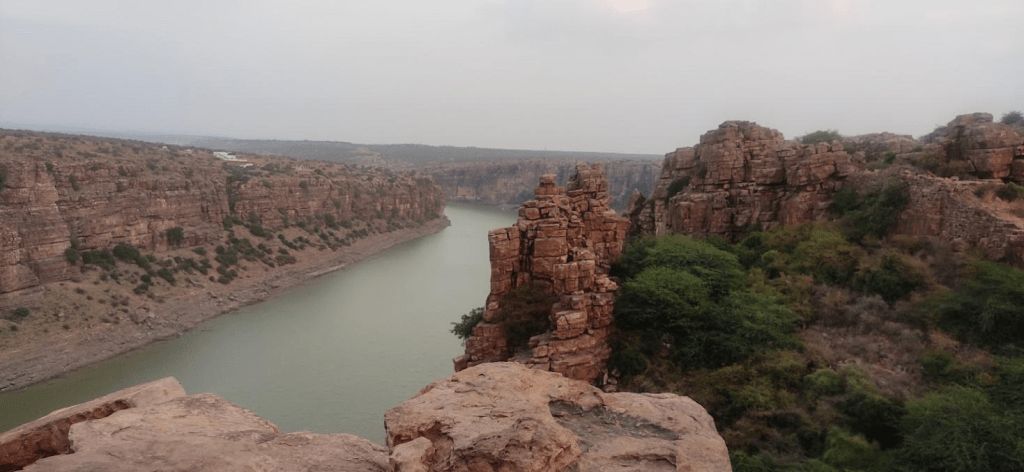
Gandikota is a small village with a historical fort on the right bank of the Pennar river, 15 kms. from Jammalamadugu  in the Kadapa district of Andhra Pradesh, India. The history of this place dates back to 1100 CE. Over time the area has become famous for the deep gorge formed by the river Pennar. The beauty of the gorge has often been compared to the Grand Canyon in Colorado, USA. In addition to a historical fort built during the latter half of the 13th Century AD, there are ancient temples, a masjid, a jail, a step well and a granary.

Gandikota as a tourist destination, provides the enthusiastic traveller with spectacular views of the gorge, natural beauty, ancient history, and temple architecture.

A lot has been written in the social media glorifying the attractions of Gandikota with eye catching photographs and mesmerizing videos  drawing the attention of potential tourists to the place.

All this does not reflect the depressing picture on ground. Once you get there, you find Gandikota crying out hoarsely for attention. This wonderful place has been reduced to a dumping yard for garbage. Neither the concerned State nor Central Government agencies seem to be taking any interest in its cleanliness, upkeep and maintenance. There appears to be a deep sense of apathy and neglect towards this heritage which is of national importance. Terrible approach roads, no meaningful signage or informative boards about the history of the area to help the tourist, third rate eating places and a complete absence of clean public toilets and waste bins, are some of the serious issues which stand out.

In this blame game, we tourists are also responsible for this mess. We litter the place without any hesitation. The ‘Litter Gang’ should be fined and punished if need be.

We proudly talk of Bharat reaching USD 3 Trillion economy, India on its way to becoming a ‘Vishwa Guru’, and so on. In tandem we must develop a method to invest in our heritage assets and bring them up to international tourist standards.

It’s a wakeup call for the Government of India, Andhra Pradesh and their various archaeological and tourism organizations to restore Gandikota to a position of pre-eminence.

I do hope someone is listening.

Travails of Sreenivasa Rao

If I recall correctly, it was early seventies when Sreeni and Sukanya moved into their own house in Jayanagar, post their retirement from a government job. Prior to that Sreeni had pitched his tent in many cities across India. They now looked forward to spending their golden years in their own house and that too in ‘Namma Bengaluru”.

Allow me to deviate a bit. The organized development of Bengaluru started after the “Bubonic Plague” of 1898 devastated the old city. Several colonies with a proper sanitation system were built in Frazer Town, Chamrajpet, Basavanagudi and Malleshwaram. Subsequently, the City Improvement Trust Board or CITB (BDA now) was established in 1945. During the next twenty years it developed over 65 extensions, distributed over 60,000 sites and undertook 160 improvement schemes. Among many well laid out extensions of that period, Jayanagar was the largest extension. Unlike today, the CITB not only allotted sites, but also handed over fully built houses. The entire colony was built in a typically urban grid formation.  All the houses were similar to each other in looks and dimension. Sreeni was the proud owner of just such a dwelling.

Both their children had taken the ‘Quit India’ movement very seriously and had migrated to the USA in the late sixties, albeit twenty five years after Mahatma Gandhi gave the clarion call.

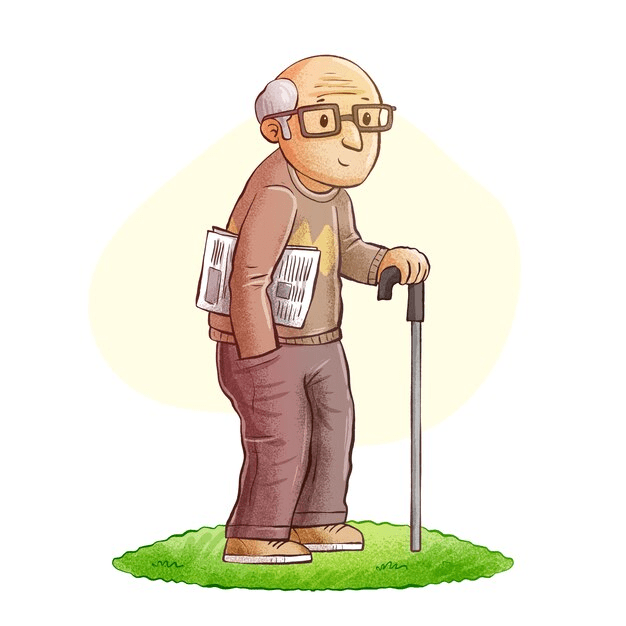
Sreeni knew my father well and had kept in touch all along. After his return to Bengaluru, they renewed their acquaintance and started meeting frequently. My father noticed that Sreeni had become a bit absent minded, prone to forgetting little things, restless and at times insecure. My father narrated quite a few harmless anecdotes involving Sreeni to us.

 Image by pikisuperstar on Freepik

On a daily basis, after a very satisfying breakfast, Sreeni used to wander off towards the Jayanagar 4th Block market square. He would sit on a stone bench and while away his time watching the vehicular traffic and the general public. He was joined by a few friends of similar disposition. If his mood demanded it, he would buy a packet of peanuts and slowly relish it. Normally this outing was very peaceful and invigorating. However, on this fateful day, their august gathering argued very heatedly over a political issue. This acrimonious debate left Sreeni totally exhausted, irritated and disoriented. In this state of mind, Sreeni returned home.

On entering his house, he saw that his neighbour Sampath and his wife Savitri were already seated. He also sat down and exchanged the usual pleasantries with them – how are you, what a pleasant surprise, welcome home, can I get you some water, coffee etc. His neighbours were at a loss to understand the narrative which was unfolding in front of them. They were totally perplexed. Once the troubled and agitated Sreeni calmed down and things became clear, he realized his grave mistake; after the bitter argument in the market square, Sreeni had glided back in the general direction of his house and entered his neighbour’s house, thinking it was his. Blame the BDA for constructing identical looking row houses!

Due to a very serious old age-related issue, his dear wife Sukanya was advised bed rest for an extended duration. She was the ‘early to bed’ kind. On the other hand, Sreeni was a night owl. Over the years he had developed the habit of disappearing into the night for a little stroll to puff away at his favourite Charminar cigarette. This habit irritated his wife no end, especially when she was ordered bed rest. She wanted him constantly next to her. She devised an ingenious method to keep him close to her. She would tie his ‘dhoti’ (a traditional Indian man’s night dress) to the end of her sari ‘pallu’ (loose end) and make a knot. She would fall asleep holding the knot, safe in the assurance that Sreeni was still there at the other side of the knot. This creative imprisonment was totally unacceptable to Sreeni. Not to be left behind, he came up with a brilliant stratagem to outwit his immediate opponent. Whenever he felt the urge to smoke, Sreeni would quietly undo his dhoti and slip out of bed, leaving his wife holding the knot.      

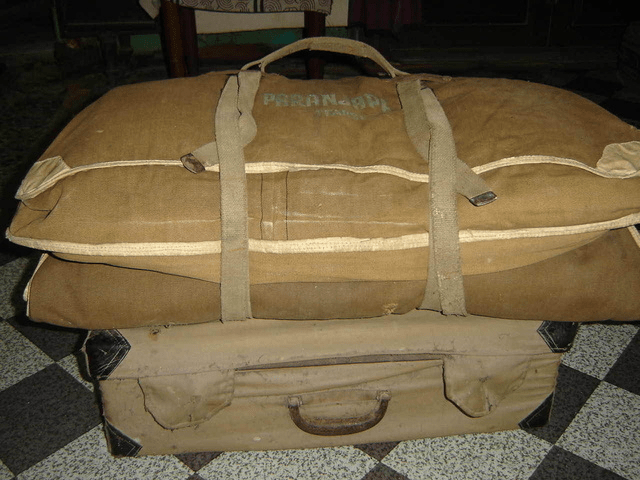
Sreeni and Sukanya decided to travel by train to Davanagere to attend his niece’s wedding. This involved an overnight train journey. Davanagere was known as the Manchester of Karnataka. During the 1960s, it was famous for its textile production. On the appointed day, Sreeni got ready for travel and all their belongings were neatly stored in large bag called a ‘holdall’, a must-have possession in the bygone days. It is of course, extinct today. A fore runner of Samsonite, American Tourister and Aristocrat, the holdall could literally hold all, meaning a light mattress, blanket, pillow, clothes, towel etc.

Hold All  (top view)

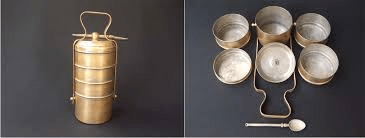
Another popular travel ‘must have’ was the ubiquitous ‘tiffin carrier’

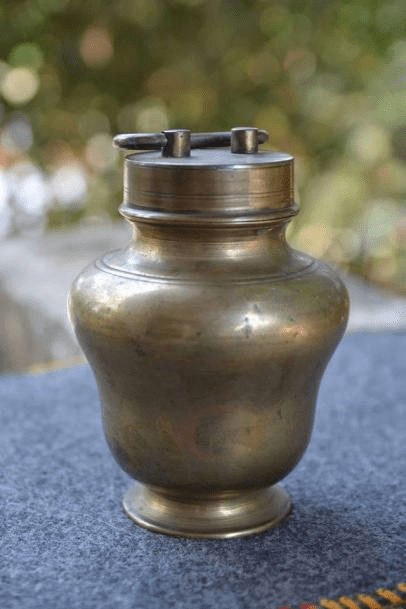
Yet another travel essential was a brass water jug called a ‘Rail chombu’ for carrying water on train journeys.

Sreeni insisted on reaching the railway station early, buying the tickets and settling down in a vacant berth long before his other fellow travellers. On entering the station, Sreeni saw an empty train on the platform. He then went about the task of settling down with military-like efficiency. They occupied two berths and spread their ‘holdall’ and slept deeply. Early the next morning, Sreeni got up from his deep slumber to find that the train had not moved an inch!

I still wonder, did good old Sreeni reach Davanagere on time.

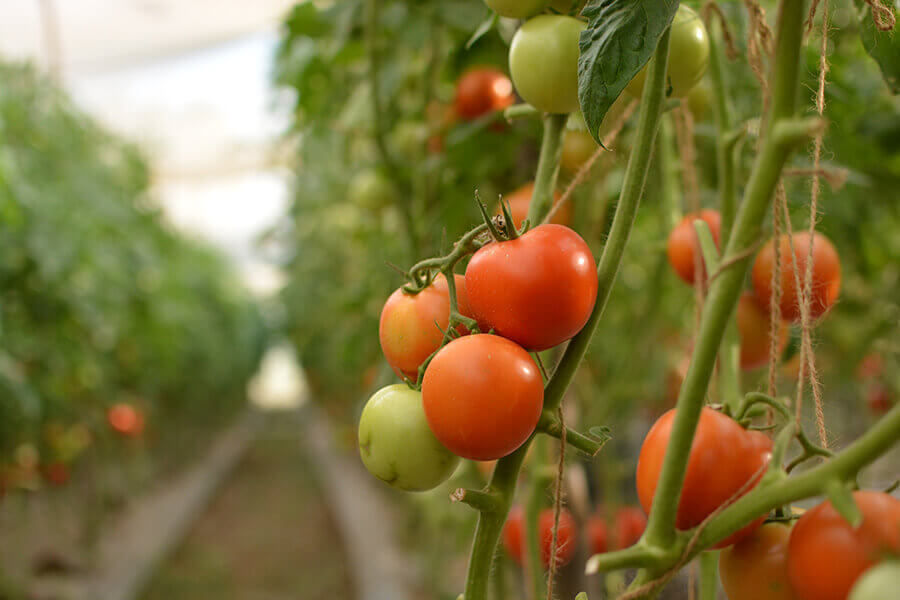
Rise and Fall of “King Tomato” Jun to Sep 2023

One fine morning in end June, India was woken up from a deep slumber. The news papers carried the sinister headlines,” Tomato are more expensive than petrol. Rs 200 for one Kg of Tomato. Another daily said” Tomato crisis hits India as rain ravages crops and prices rise 400%.A popular TV screamed “The nation wants to know why Tomato prices have gone up? All other news took a back seat.

The front page hitherto reserved for statements from ministers, politicians and other such important government spokespersons were unceremoniously relegated to the inner pages. Even the all mighty “MacDonald” was badly hit. In all the branches of McDonald’s across the north, east, west and south of India, signs were put up to state that tomatoes would no longer be put in burgers and other dishes, due to a lack of availability.

A calamity of the greatest order had hit all Indians.

The government spokesperson said “There are a number of factors responsible for this sudden rise – including the monsoons, inadequate production, extreme heat and problems with transportation. In no time it led to some tongue in cheek humour of the best kind – ‘India is the master of Rocketry’- thanks to both the success of the Chandrayaan 3 moon landing and the sky rocketing of tomato prices. Western observers were quick with their salty comments, “Despite the country’s vastness and the diversity of its challenges, how does India manage to send a two-tonne payload to the moon across 3.85 lakh km while simultaneously struggling to reliably supply tomatoes from Dewas to Darbhanga, that are merely 1300 km apart?”

“Tomato Talk” soon became the most popular form of social interaction. Soon ‘Tomato Jokes’ started appearing.

‘Not only onion but tomato can also bring tears to your eyes …’

‘I have been getting several marriage proposals ever since word got out that I am a wholesale tomato seller.’

‘Instructions from the Central Government to all restaurants: People ordering Tomato Soup need to produce their PAN card …’

To save the Indian Public from this grave predicament, my over patriotic neighbour wanted to request the Spanish government to cancel the ‘La Tomatina’ festival scheduled for 30 August 2023 and divert 150,000 kg of tomatoes to India. He proclaimed this would be a truly humanitarian gesture. ‘Send Tomatoes, Save India’ was his battle cry.’  

In the midst of all this gloom, I got a call from my dear cousin once removed. Older to me, Padmini said, ‘Pabbi, what will happen to us?’ Not getting the thread of her talk, I hesitated to reply. Normally no one starts a conversation with a question and her Q was very philosophical. Without waiting for a reply she continued, ‘Things will never be the same again…it’s hard to imagine how life has changed so suddenly! I am unable to cope with all these challenges… its unfair on the elderly. By which time I was getting deeply worried about my ancient relative. As of last week, dear Pads had been as fit as a fiddle and in total command of all her faculties in spite of her advanced age. I was at a total loss to understand her present demeanor. Alarmed and confused, I finally managed to interject and said, ‘Old bird, for heaven’s sake be more lucid and spell forth the reasons for your anxiety!’ Finally she declared, ‘As it is life is difficult, but to manage daily cooking without tomatoes is asking for too much.’    

I strongly rebuked her for exaggerating the situation and went on to remind her that Tomato was not native to India. Vasco Da Gama and his shipmates introduced the tomato to India in the 16th Century. Indian cuisine was highly advanced well before the arrival of the ubiquitous tomato.

I said, “Pads, ‘dig out your grandmother’s recipe book and see if there is any mention of tomatoes.” A quick examination of South Indian Vegetarian cooking, which I am very familiar with, will reveal a variety of dishes which does not contain tomatoes. One starts the day with the Southern Triumvirate – idli dosa and vada, accompanied by coconut chutney and sambhar. The later gets its tangy sourness from tamarind juice. During lunch and dinner, Palya or Sabzi cooked from a long list of vegetables is served along with rice and roti. A variety of dals follow suit. The culinary accent being on the vegetables. Delectable curries made out of curd (‘kadi’, ‘more kolambu’, ‘majjige huli’) are devoid of tomatoes. The same goes for the popular ‘ rasam’ or ‘saru’. Tanginess is provided by tamarind or lime. Many Indian dishes use amchoor (dry mango powder) as a souring agent. Kokum and curd is also extensively used to bring a bit a sourness to the dish.

I, for one, was unable to understand the hue and cry associated with the lack of tomatoes. If Marie Antoinette were to be alive today she would certainly have said, ‘Let them have tamarind! ’

During the next family get together, I found Pads in a corner quietly tucking away into her favourite dishes. On closer examination I found her deportment extremely vibrant. She had been restored to her original charming self. To borrow a phrase from Earnest Hemingway, ‘She was very pretty with a face as fresh as a newly minted coin ….’

The reason for her turn-around was easy to find. A glance at the newspaper revealed all.

‘The prices of tomatoes that had touched nearly ₹200 per kg in July have crashed to below ₹10 per kg in the Bangalore wholesale markets as of 6 September’.

Thus ended the reign of ‘King Tomato’. In a matter of 90 days, the tomato had affected scores of Indians, both rich and poor alike. On the positive side, many farmers became rich overnight, thanks to this ‘Love Apple’.  

Cheers and Good bye until the next price rise.

Here Today Gone Tomato

Here’s my new book!

‘THE BIG FAT INDIAN WEDDING and other stories’ : A collection of yarns, people, places and unsolicited gyan…

Dear Friends,

I’m back after a long hiatus!

I have always wanted to compile a book from the various blogs I have written in the last twelve years. I took some time to select appropriate blogs, edit and format them into a book form.

Finally, it’s ready. I could not have achieved this big task without your support all these years. Please continue to support me in this endeavour.

My book is available on Amazon and Notion Press in India. It will be available internationally soon.

Please do share with your friends and family!

You can buy it here https://notionpress.com/…/the-big-fat-indian-wedding…

or on Amazon

https://www.amazon.in/s?k=mysore+prabhakar&crid=3E61IQHFCDORK&sprefix=mysore+prabhakar%2Caps%2C427&ref=nb_sb_noss