India and the Developed Nations – Planning Vs Randomness – Who will survive longer?

In a matter of a few months, a number of unauthorized shops and facilities have come up around the Jalvayu Vihar compound. A cobbler has set up shop on the foot path along with others selling vegetables, cigarettes, panipuri, momos, kababs, fruits, flowers and many other things. It is really fascinating to study how these facilities come up without any prompting by the customers. Who does the feasibility study, who determines the requirement, is there any thought given to the inherent risks, what is the business model – and above all, who allowed them to start an unlawful business in the first place?

The locality where we stay – Kammanahalli – was once a quiet, residential area in the outskirts of Bangalore. In a span of two decades, it has grown into a very popular and busy commercial hub – offering the best of restaurants, a great shopping experience and much more. The growth is unplanned and haphazard. Houses have been converted into shops; some were demolished to make way for high rise shopping complexes and malls and so on. In the original plan, there was no place earmarked for commercial activities. The same is true with the rest of Bangalore and I suppose the same holds good for the whole of India. I am beginning to believe that there are some higher forces of nature which are at play in India.

There is no order or method to the madness. In our cities, roads are carved out of nowhere, houses vary in design, size and colour and no two houses match. Electric poles are erected at random, water pipes are tampered with to provide illegal outlets and garbage is thrown in any available open space. Parking spaces appear wherever it is convenient to park – similarly any nook and corner becomes a public toilet. There appears to be no planning, coordination or aesthetics in our town planning.

Lack of planning, loosely structured rules, corruption and over population are some of the factors which govern this type of haphazard growth.

On the other hand, modern cities in Europe and America are examples of efficient town planning and administration; coupled with responsible citizens and effective law enforcement agencies.

On a philosophical plane, one can compare the growth of Europe and America to that of a well laid out garden. Lovely walk ways, with evenly trimmed hedges on either side, manicured lawns and neatly arranged flowering plants fill your eyes as you walk or drive past. Chairs and benches strategically placed under a shade, promise the best of views for a casual stroller or tourist. Gardeners appear to be ready to water the greenery and administer manure .The entire outfit is a result of excellent planning, and coordination by human beings.  

On the other hand the uninhibited growth of Indian cities is akin to that of the rain forests of South America. No planning by humans. The toughest gets to see the sun. Growth follows a pattern set by the harsh rules of nature. The fittest survive. Creepers going piggy back on tall trees to get their share of the sun is common. Competition at ground level for light and food has lead to evolution of plants which live on the branches of other plants, or even strangle large trees to fight for survival. Huge evergreen trees keep company with smaller plants and animal life. Nature provides plenty of rain and sunshine free of cost. The forest floor receives only two percent of the sunshine, yet some plants have adopted to survive in this lowlight conditions. The aerial plants often gather nourishment from the air itself using so-called ‘air roots’. This is a different world altogether.

The only plus point for the Indian ‘Rain Forest Growth Pattern’ comes from the ‘Second Law of Thermo Dynamics’. For a moment compare India or the Rain Forest to a mound of firm, wet sand on the beach; and Europe and America or the beautifully planned garden to a pretty sand castle of similar volume. Over a period of time the sand castle with low entropy will disintegrate due to the constant wind and waves.

Who will survive is purely rhetorical.

Goodbye 2013 – Wishing all readers of my blog a happy 2014. Grand children,barbeque,K Gudi Jungle Lodge and other stories

2013 was well spent, travelling overseas to Spain and Portugal. Within the country, we went to Chikmagaluru, Coonoor, Nainital and Ranikhet in pursuit of Golf. We went to Gurgaon and Mumbai for weddings. Regular outings provide the much needed solace to the soul. My take on the subject of travelling is –‘Travel Often’. Travel helps your mind to remain healthy and fresh – it is akin to sending your trousers to the dry cleaners. At the end of the sojourn, one feels relaxed and raring to go. Travelling gives you an opportunity to unwind, bond with friends, explore new cultures and the list is endless. Choose a place depending upon your purse, health and convenience and push off. If you knees are not on talking terms with the rest of your body, choose a place which involves the least amount of walking. Go to a hill resort and enjoy the view or sit by the beach and watch the never ending motion of the waves and so on – one must travel.

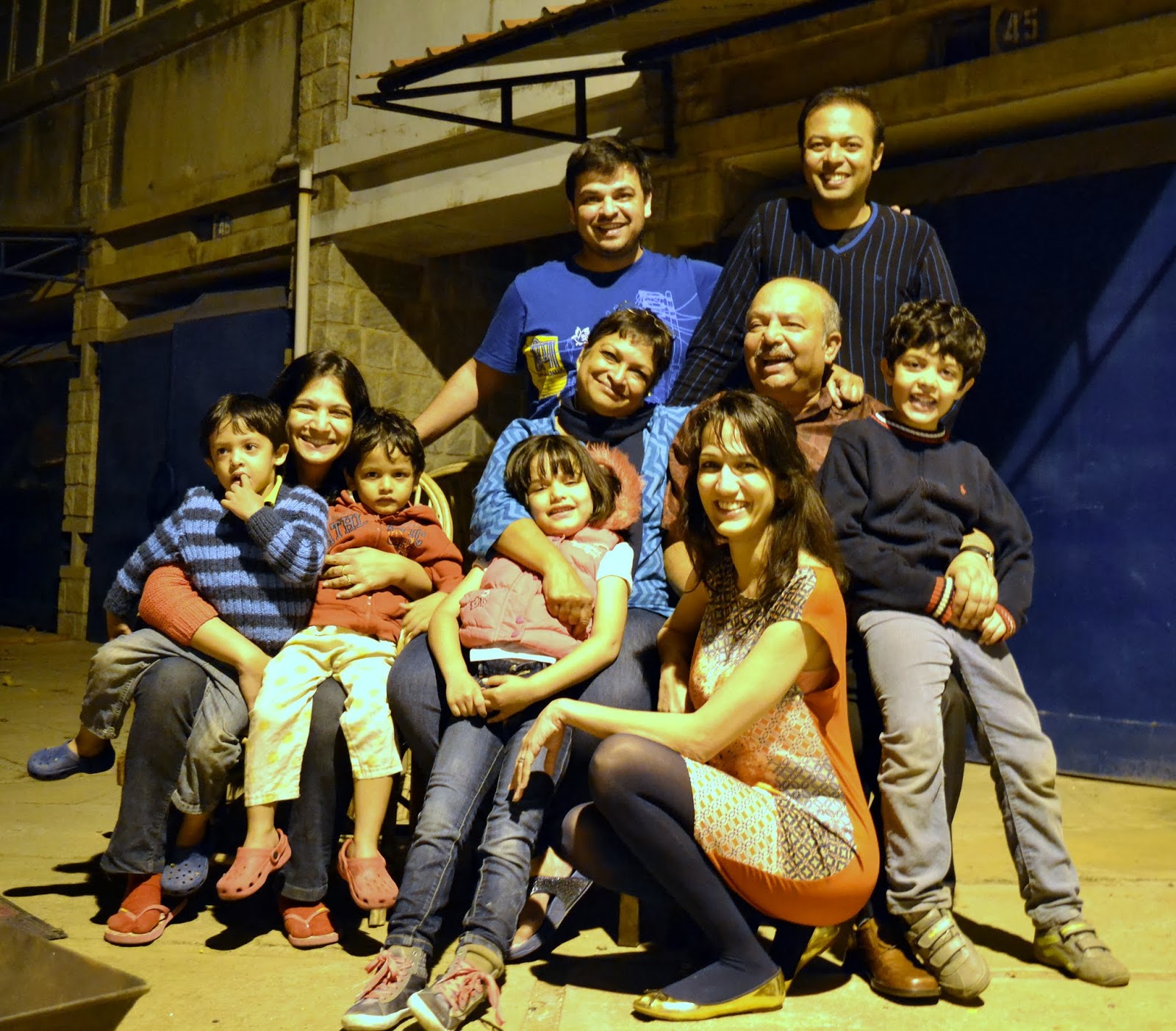
Come December, it’s time for a family reunion and bonding with our grandchildren.


Figure <!–[if supportFields]> SEQ Figure \* ARABIC <![endif]–>1<!–[if supportFields]><![endif]–> – Family reunion – 31 Dec/01 Jan

Book readers are an endangered species. In the context of the internet, TV and instant entertainment, there are hardly any takers for reading books. The pace of life around us is also extremely fast. Adults and children alike find it difficult to spend long periods of time in reading books. As against the passive entertainment of watching TV, reading provides a platform for the imagination and creative thinking. A child’s education is not complete without reading a few classics.

Ayaan and Samara have started reading books – in the present day context; this development is certainly a gift from God. Reading is the cheapest form of edutainment. No other hobby can provide this high level of personal satisfaction. They devour Geronimo Stiltons faster than we can buy them. Books by Enid Blyton and Roald Dahl are extremely popular. Reading books has always been a cherished pastime with all of us in the family. We enjoy reading. The children have imbibed this truly wonderful habit. It gives me immense pleasure in seeing Ayaan reading a book at 6.30 am all by himself.
Apart from many PG Wodehouse creations, I enjoyed reading Ramachandra Guha’s ‘India after Gandhi’ and ‘Patriots & Partisans’. I also enjoyed reading ‘Maximum City’ by Suketu Mehta. Unlike the earlier days when I could get through a Frederick Forsyth or a Tom Clancy in a day or two, my appetite for reading has slowed down. Between golf, walks, blogging, forays into the kitchen, a bit of afternoon Zzzzzzz and social commitments – I have to really push myself to read. I have decided to reorganize my personal time more carefully and set aside some time for reading. Hopefully 2014 will be a better year for me – book wise.

The twins, Agastya and Aarin are growing up real fast. Even at three years each fellow’s personality is different and unique. They are busy exploring the world of I Pad and playing games. Agastya has moved on from being Spider Man to T Rex and Aarin from Super Man to baby Eagle with his nest in Singapore with a ladder to climb down and as he is small he has no wings and cannot fly. He also says that baby eagles love sausages J(his favourite food!)

When all the four GC meet, the scene is explosive and the place looks like a tornado has hit it. But nobody cares! Time passes very quickly for both the parties – us and them. Before you know it, it’s time to hit the bed. One thing is for sure, their energy is on the ascendancy and ours is waning. They are a bundle of joy and their stay always gives us immense pleasure.

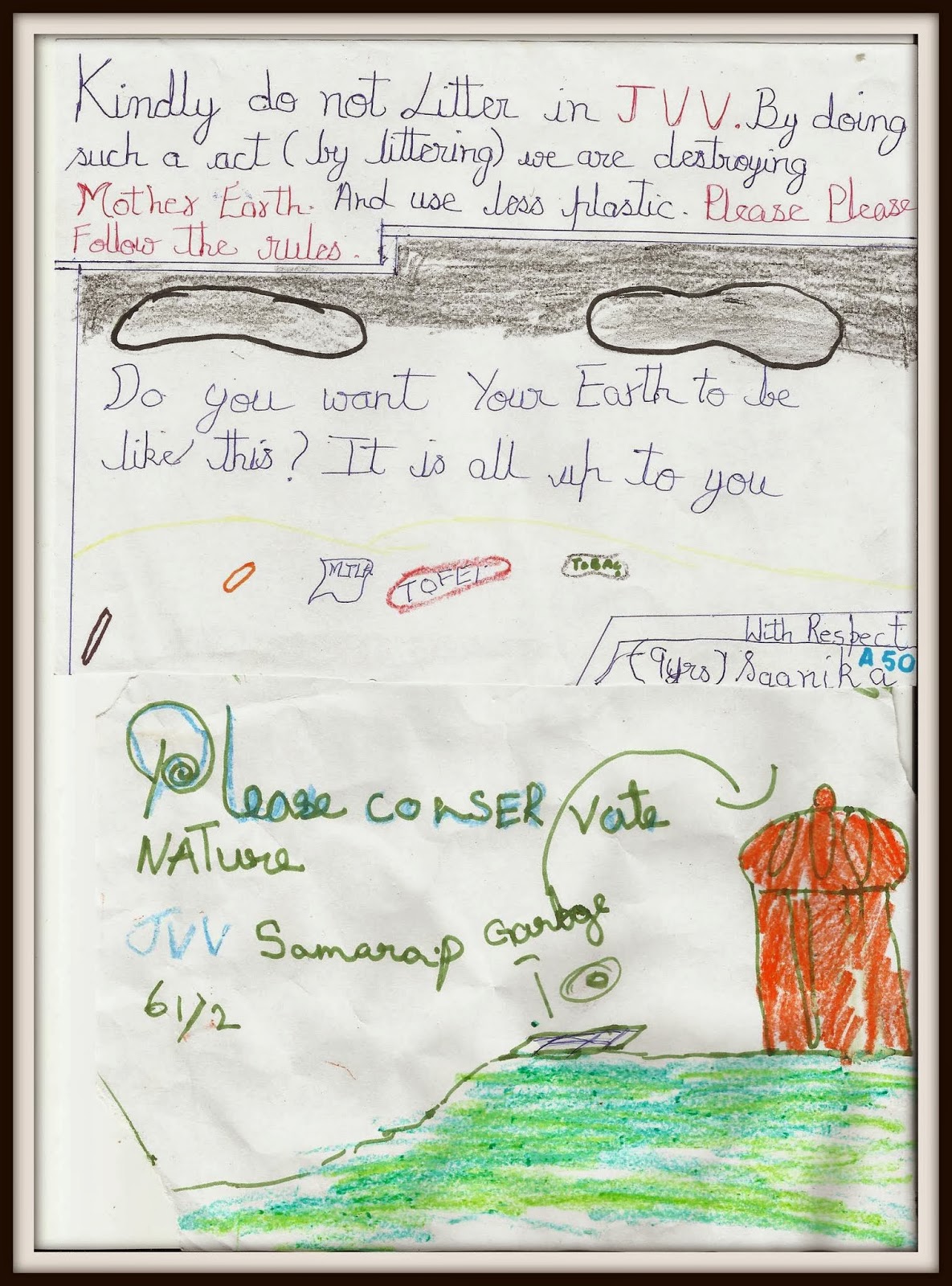
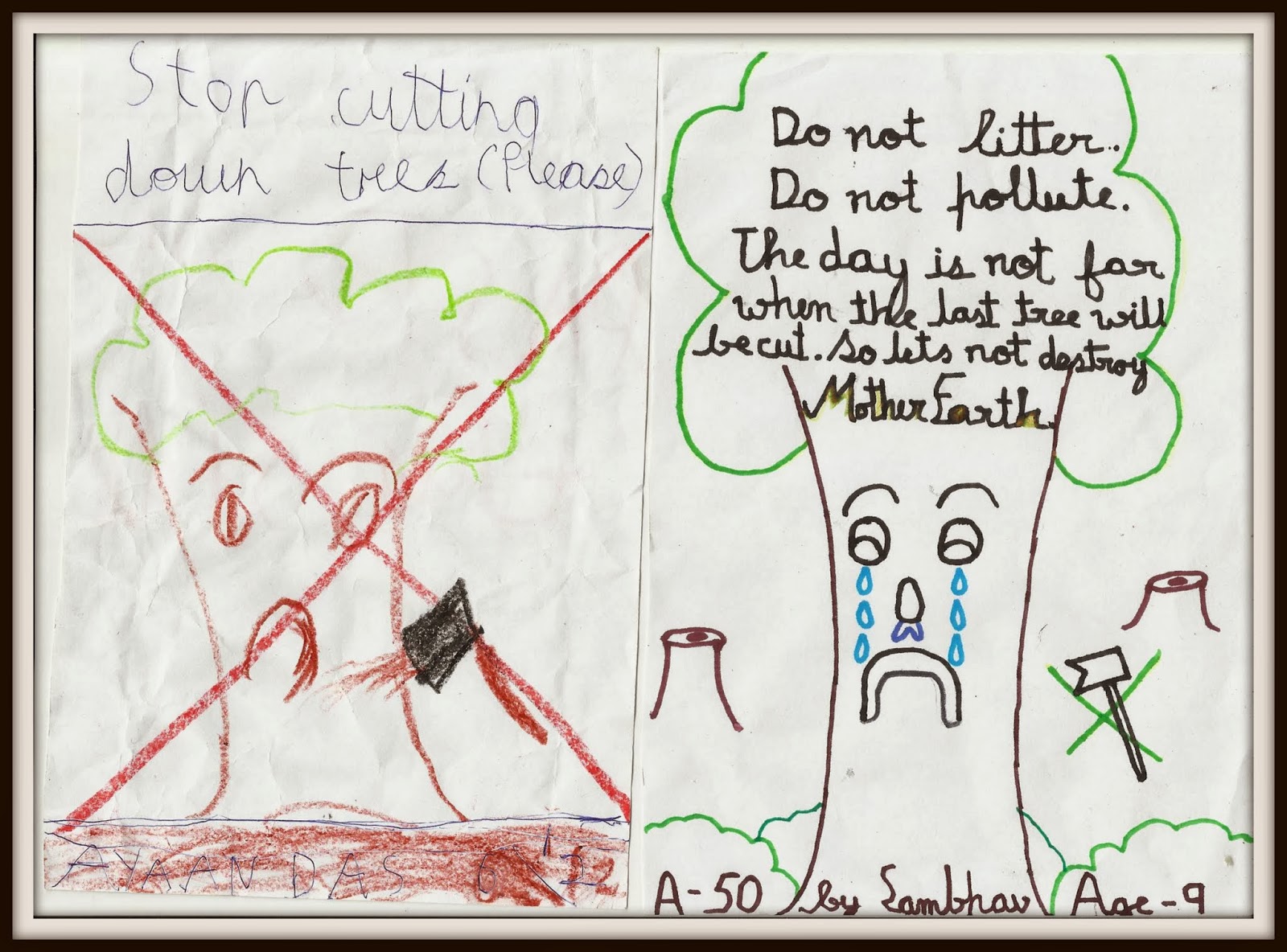
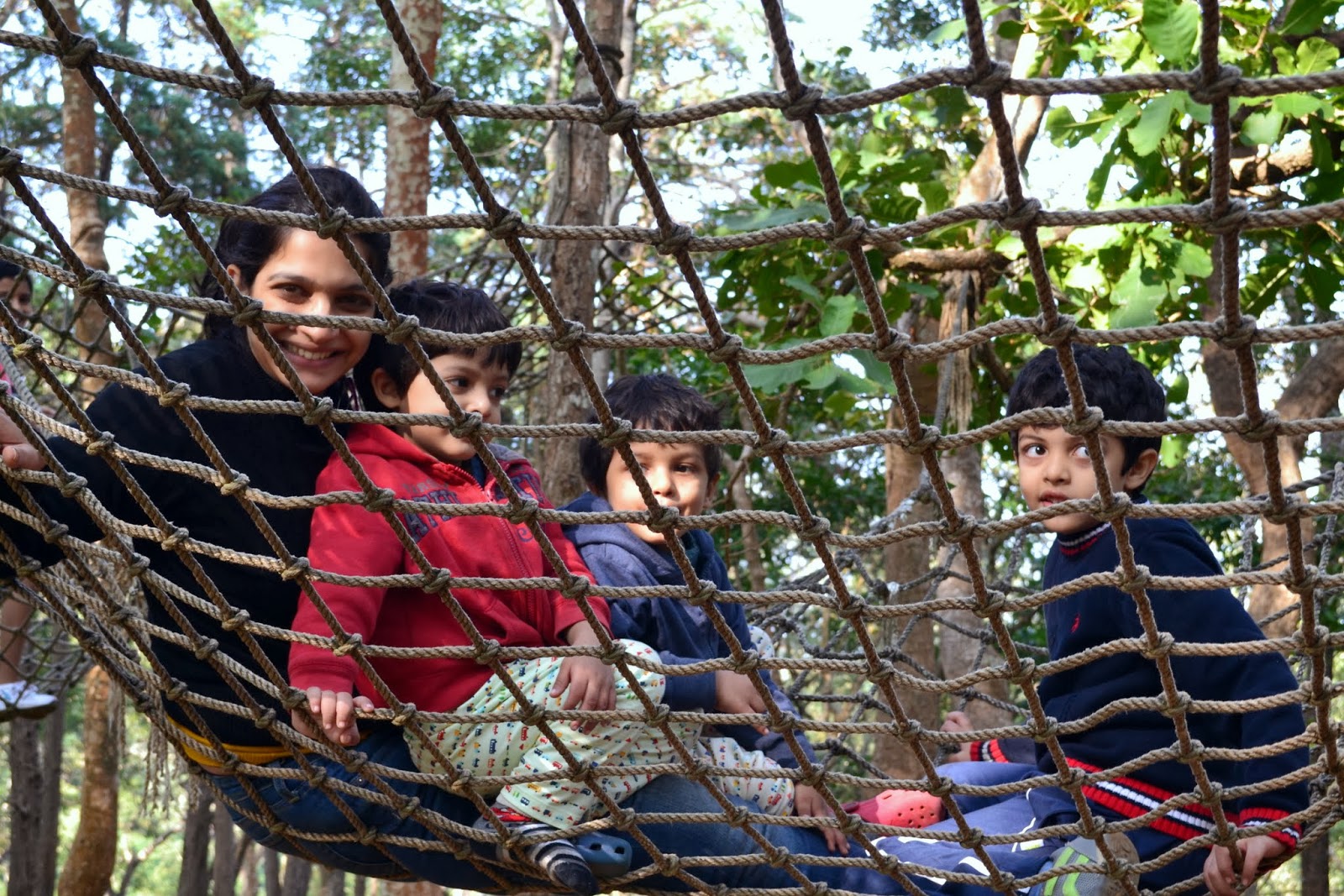
This year the accent was on nature, conservation, pollution, the environment etc. Samara took the lead in organizing a ’Save Nature’ campaign. They made posters, watered plants and generally kept themselves busy throughout the day. Saanika and Sambhav, our neighbour’s children also joined the campaign.


Figure <!–[if supportFields]> SEQ Figure \* ARABIC <![endif]–>2<!–[if supportFields]><![endif]–> By Saanika and Samara


Figure <!–[if supportFields]> SEQ Figure \* ARABIC <![endif]–>3<!–[if supportFields]><![endif]–> – By Ayaan and Sambhav

This year too we had the traditional X’mas barbeque. Lots of our close friends and relatives came along. Vivek and Akhila’s friends joined us in large numbers. There’s a special flavour attached to any barbeque party –good friends, open air, fire, smell of chicken and burning wood generates a spirit of merriment. This year, I marinated some of the chicken in red wine, red chili powder, honey, lime and salt. I later on used Tabasco and Worchestishire sauce along with Olive oil for basting.


Figure <!–[if supportFields]> SEQ Figure \* ARABIC <![endif]–>4<!–[if supportFields]><![endif]–> – Father and son combo

On 26th Dec we conducted our annual Satyanarayana Pooja. My daughter Akhila has given me the task of decoding rituals such as Ganesh Pooja to render it understandable, meaningful and interesting. It is a very huge task indeed. Presently, we find ourselves just going through the motions without understanding very much. Both the adults and the young find it difficult to sit through the entire proceedings. There is an urgent need to juxtapose our rituals in the present context. My earlier blog also dwells on the same aspect.http://samundarbaba.blogspot.in/2010/09/festivals-ganapati-pooja.html.

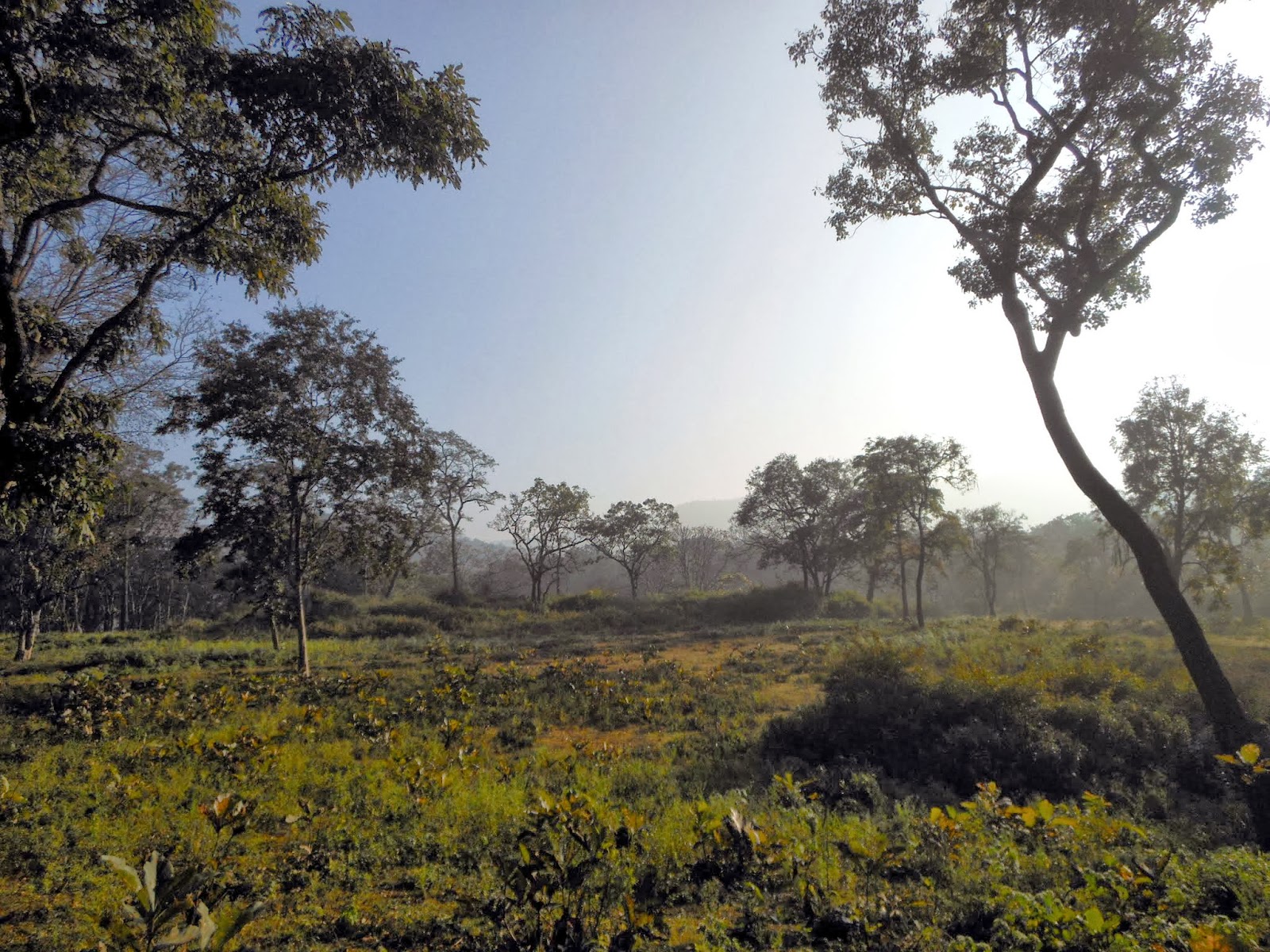
On 28th Dec we left for K.Gudi (Kyathadevarayana Gudi) Wilderness Camp run by Jungle Lodges which is located in the Biligiri Rangana Hill (BR Hill), Karnataka. We covered a distance of 240 Km from JVV via Mysore, Nanjangud and Chamarajanagar to the camp. One can also reach the camp via Kanakpura and Malavalli. It took us approximately 7hrs to reach the place after halts for breakfast and nature calls. The roads are in a very good state throughout. The game reserve covers an area of 547 Sq kms. It is a unique blend of wildlife sanctuary and hill station, set 3500 to 6000 ft above sea level. The weather is very cold especially during the early hours of the morning and at night. A warm jacket is a must. The reserve boasts of 33 tigers, 75 leopards, 600 to 700 elephants and 300 different species of birds.


Figure <!–[if supportFields]> SEQ Figure \* ARABIC <![endif]–>5<!–[if supportFields]><![endif]–> – Along the drive

This region has been the home of the semi-nomadic Soliga tribe. Close to the camp there is a”Kanyara colony,” housing a few tribals.

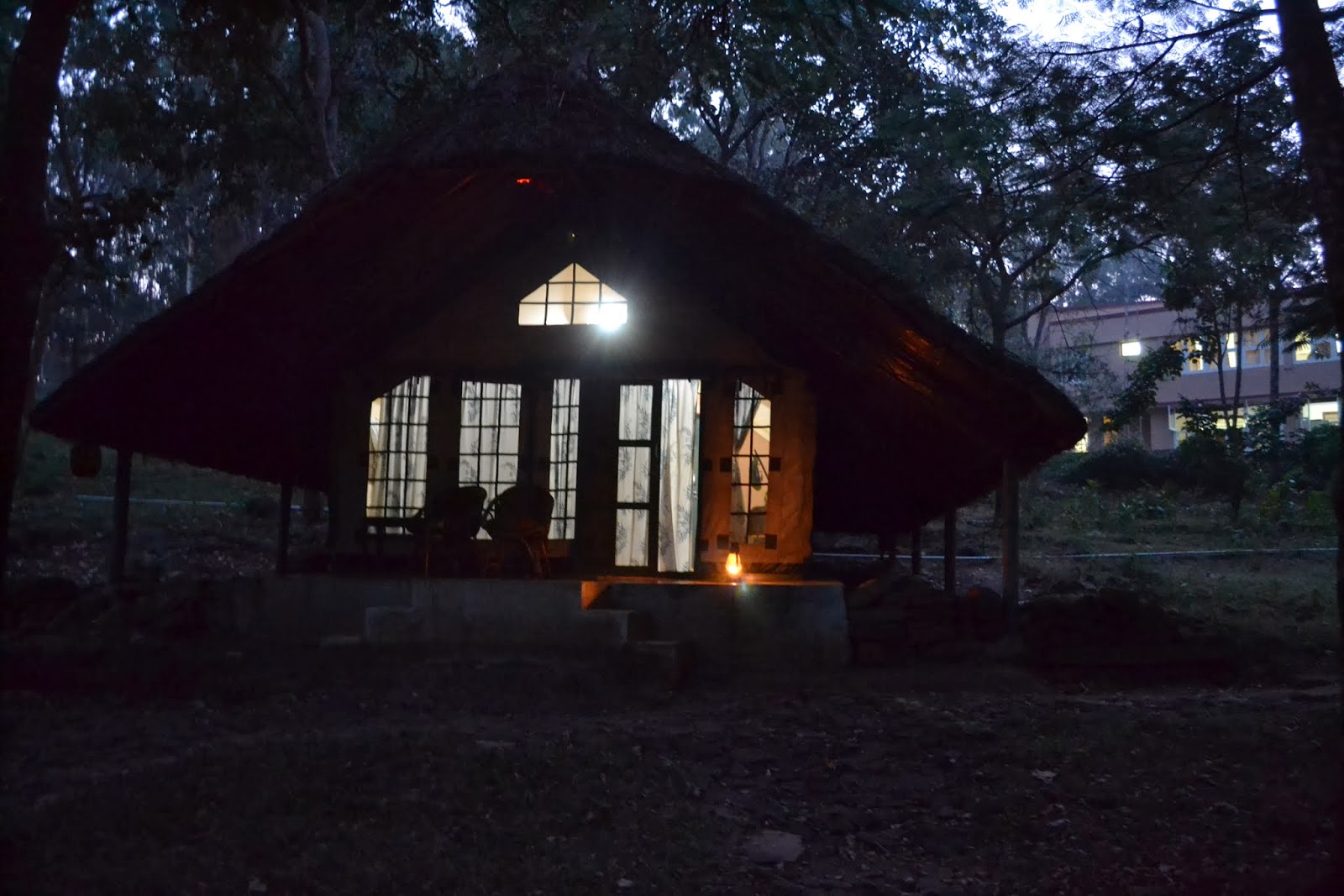
The camp is rustic, with bare essentials and merges well with the local flora and fauna. Fortunately there is no TV, radio, music and other such gadgets to remind us of urban living. Electricity is available only for a short duration in the morning and in the evening. Hot water is provided on request in buckets. A kerosene lamp illuminates the path ways and the tent. We stayed in a tented accommodation overlooking the forest. All combined, the camp provides an excellent setting for a holiday in the wilderness.


Figure <!–[if supportFields]> SEQ Figure \* ARABIC <![endif]–>6<!–[if supportFields]><![endif]–> – The tented accommodation.Surprisingly, there are no mosquitoes.

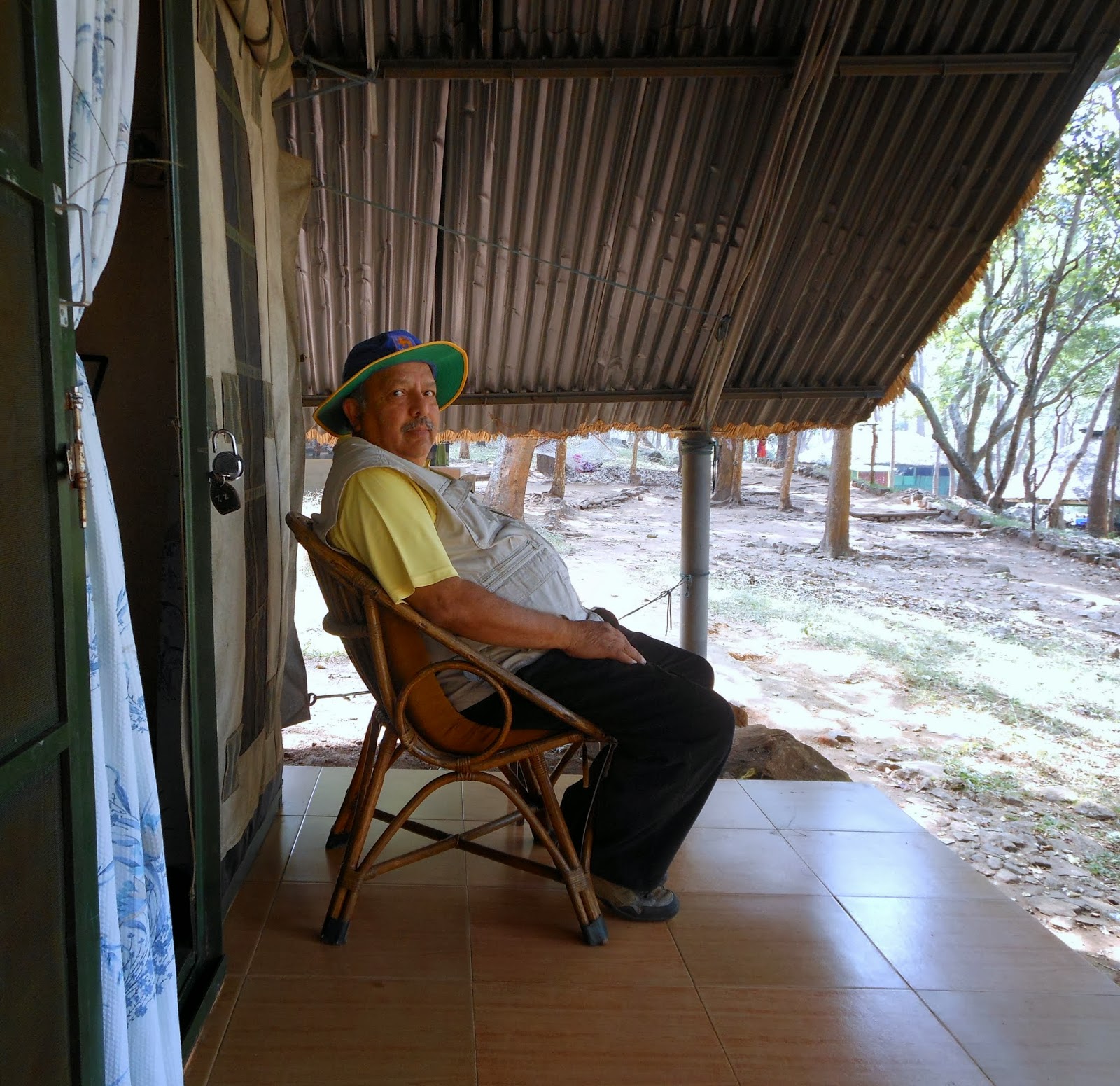
Figure <!–[if supportFields]> SEQ Figure \* ARABIC <![endif]–>7<!–[if supportFields]><![endif]–> – Relaxing

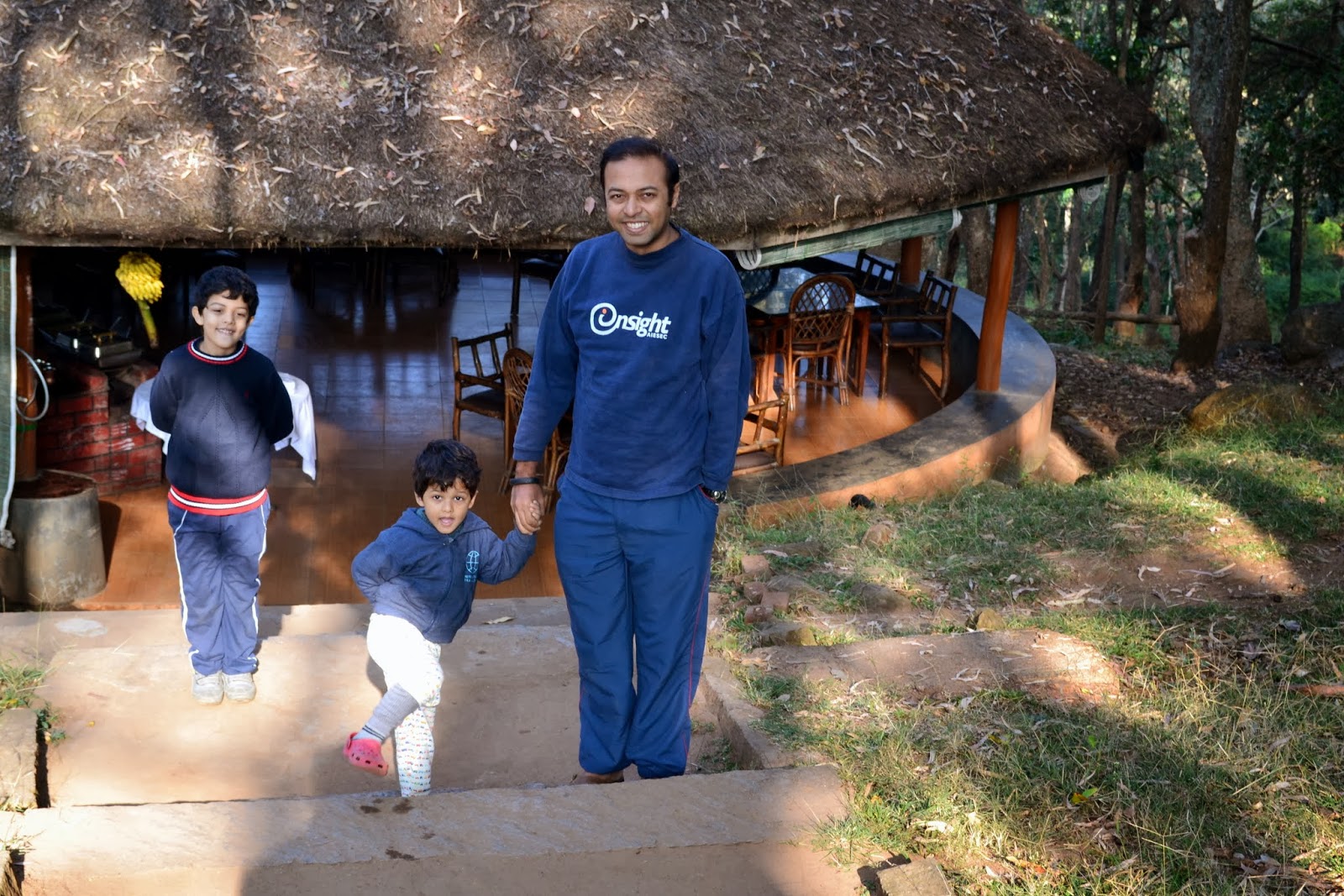
Figure <!–[if supportFields]> SEQ Figure \* ARABIC <![endif]–>8<!–[if supportFields]><![endif]–> – Anirban with Ayaan and Aarin outside the dining hut


Figure <!–[if supportFields]> SEQ Figure \* ARABIC <![endif]–>9<!–[if supportFields]><![endif]–> – A good catch

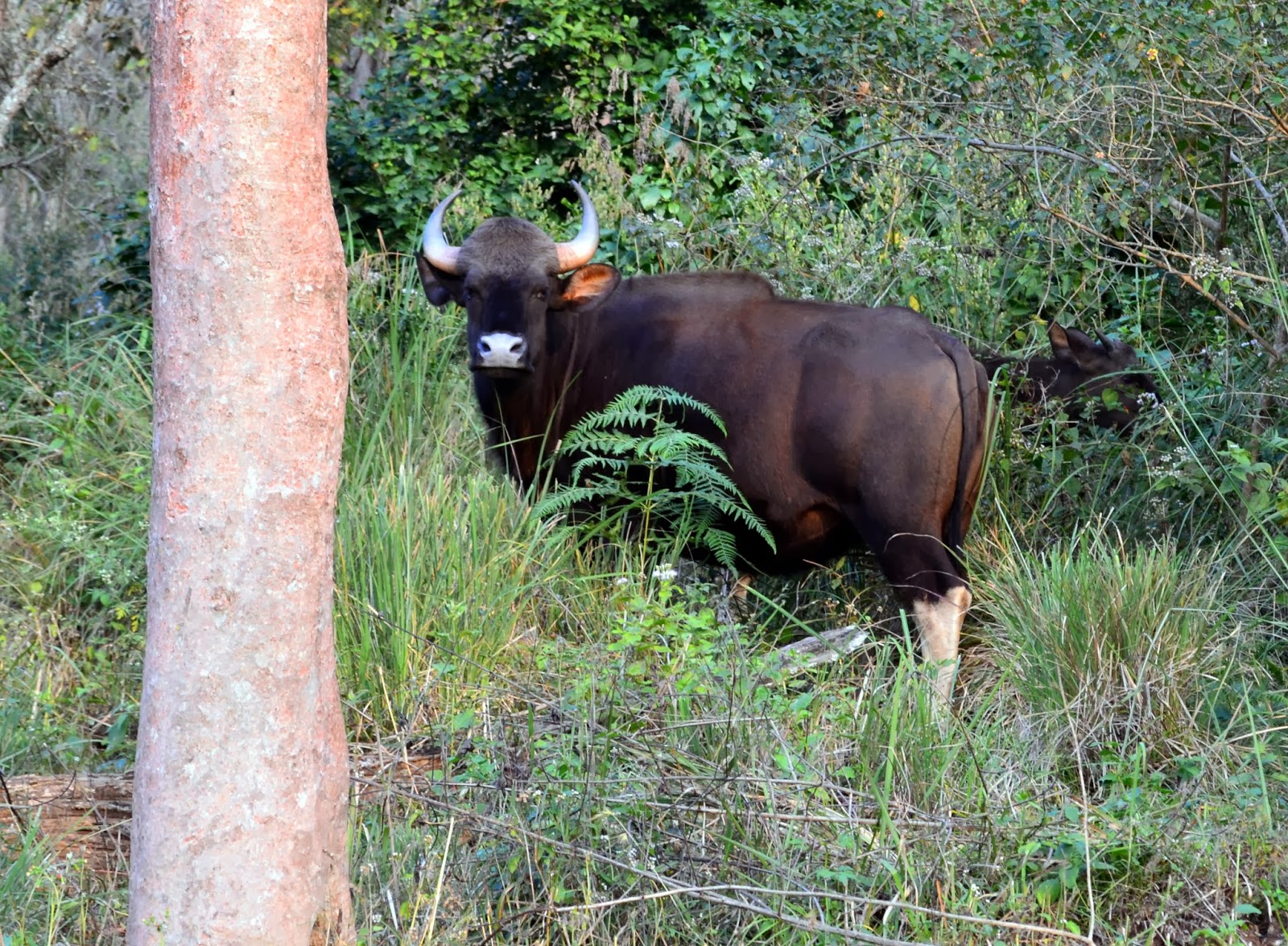
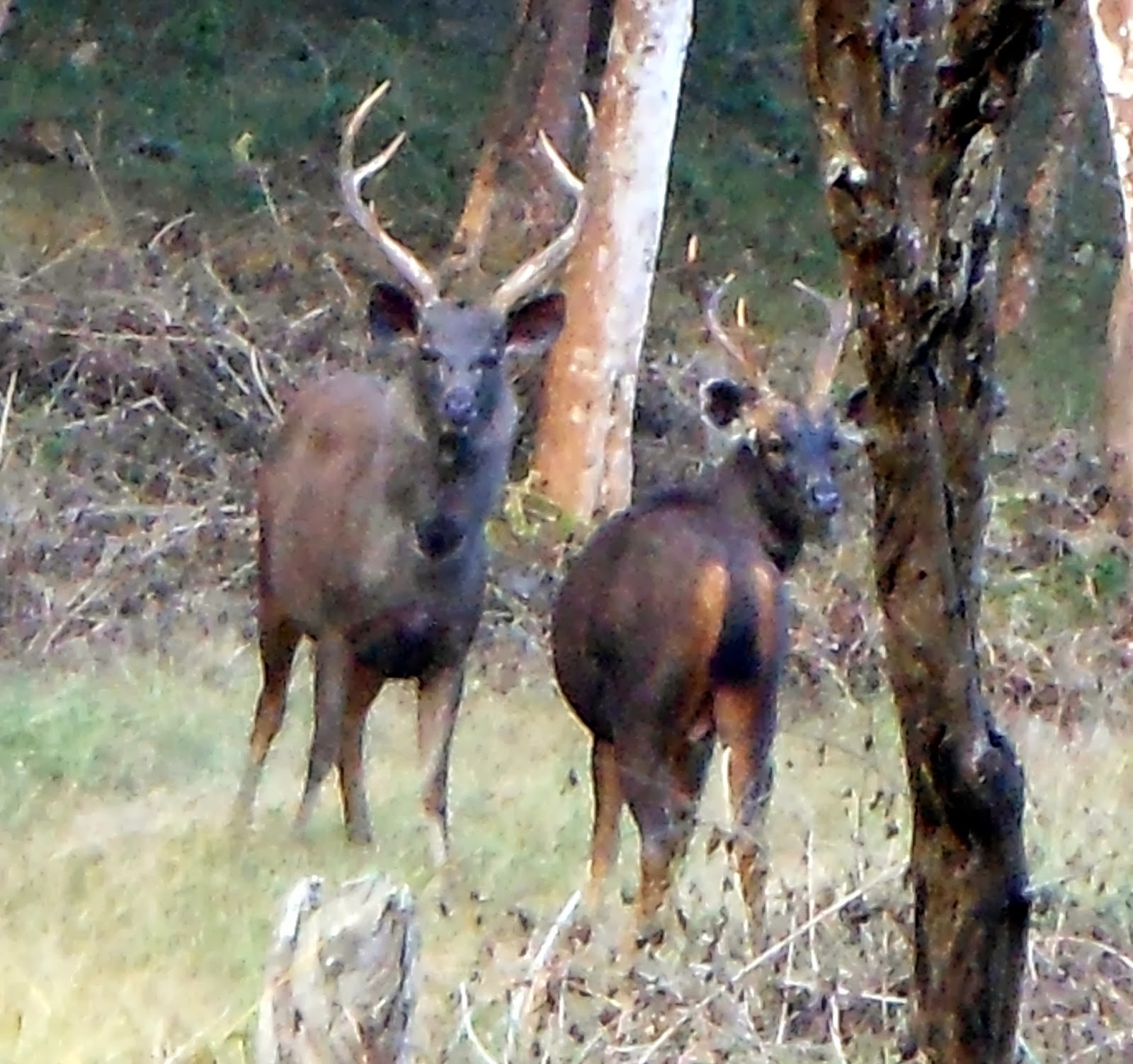
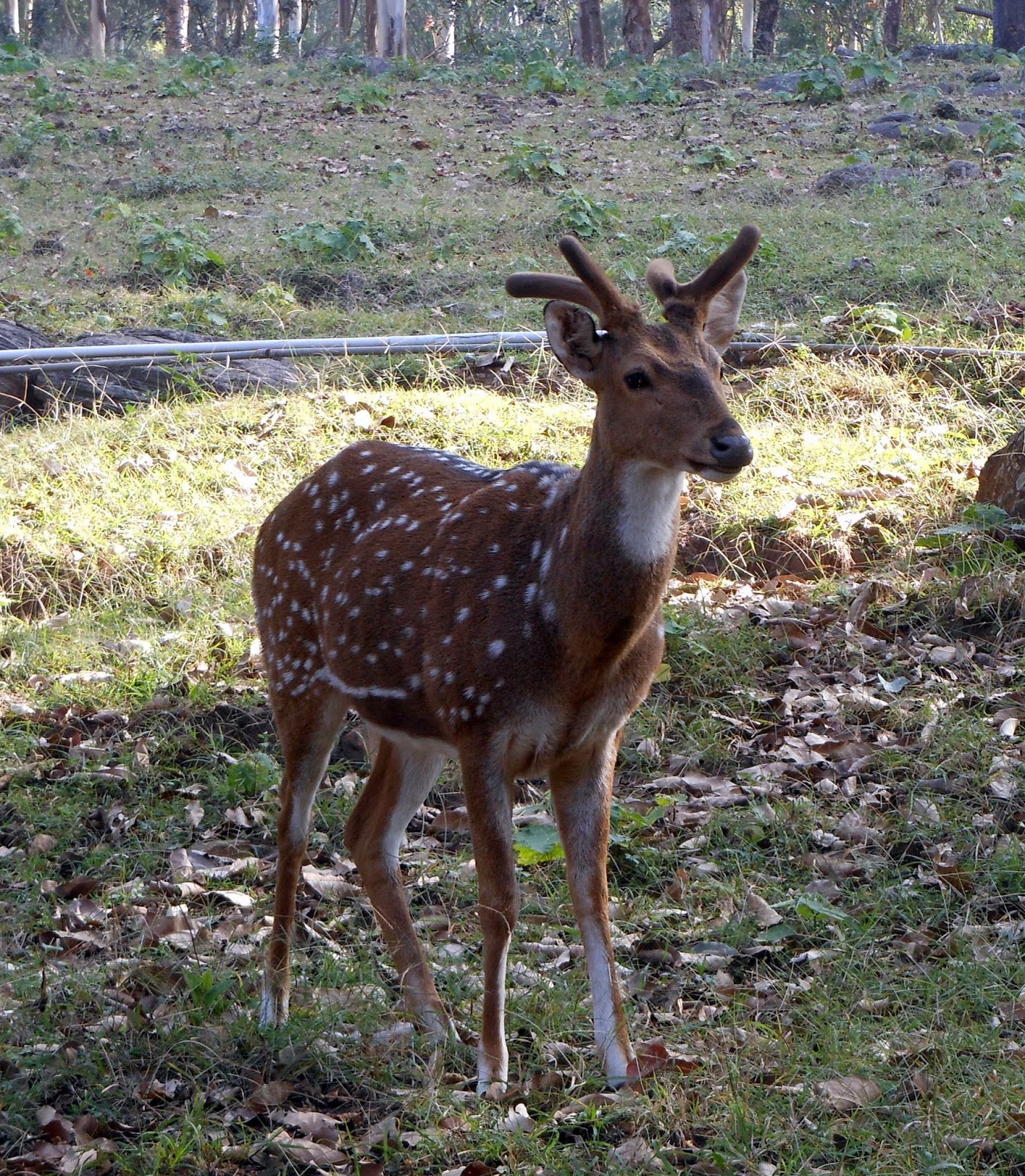
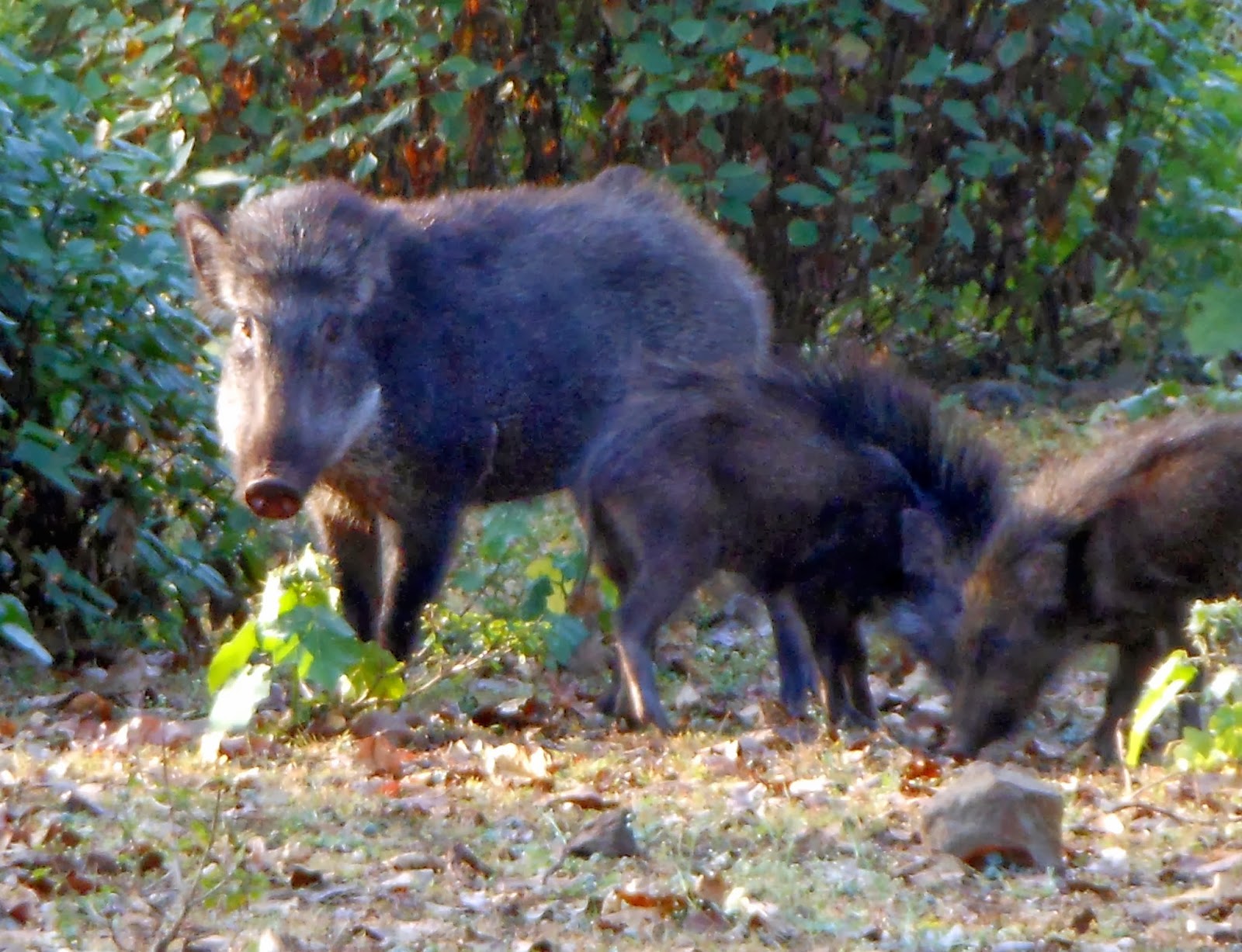
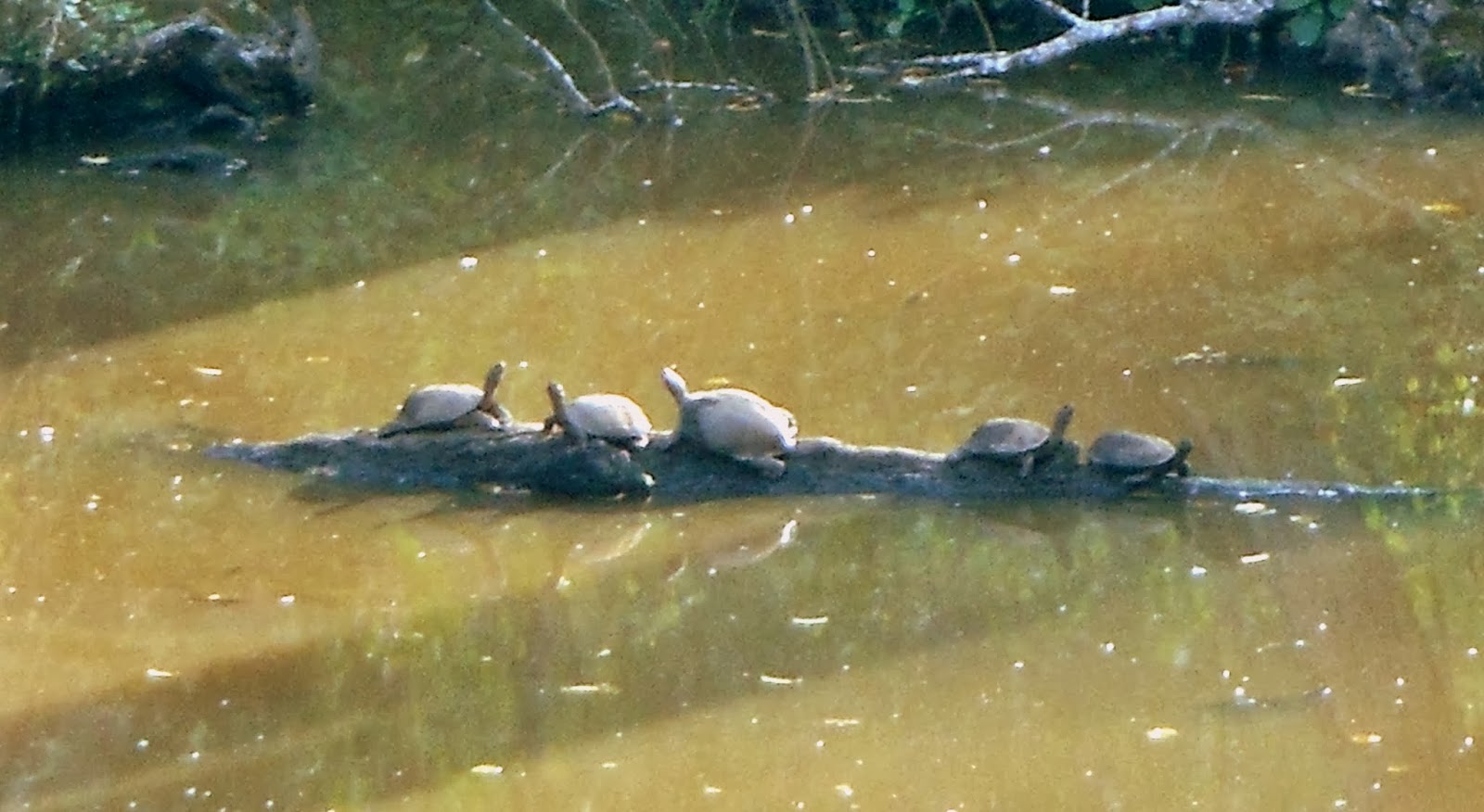
There are two safaris each day, one in the morning at 0620am and one in the evening starting at 1520pm. The safari lasts for two and a half hours in an open jeep with the driver acting as a forest guide. The safari criss crosses the kuccha roads within the forest and stops by a popular watering hole where one can expect to sight the big cats. All along the children behaved excellently and they indulged in jungle talk – soft whispers – throughout the safari. We sighted the usual elephants, wild boar, gaur, spotted deer, sambhar and barking deer. We also sighted pond terrapin turtles, straight neck mongoose and the malabar giant squirrel. The big cats remained elusive ; however one safari sighted two tigers in the watering hole, while another spotted a leopard crossing the road. We had to be content with hearing the tiger’s roar on the first day.


Figure <!–[if supportFields]> SEQ Figure \* ARABIC <![endif]–>10<!–[if supportFields]><![endif]–> – All our sightings – Gaur


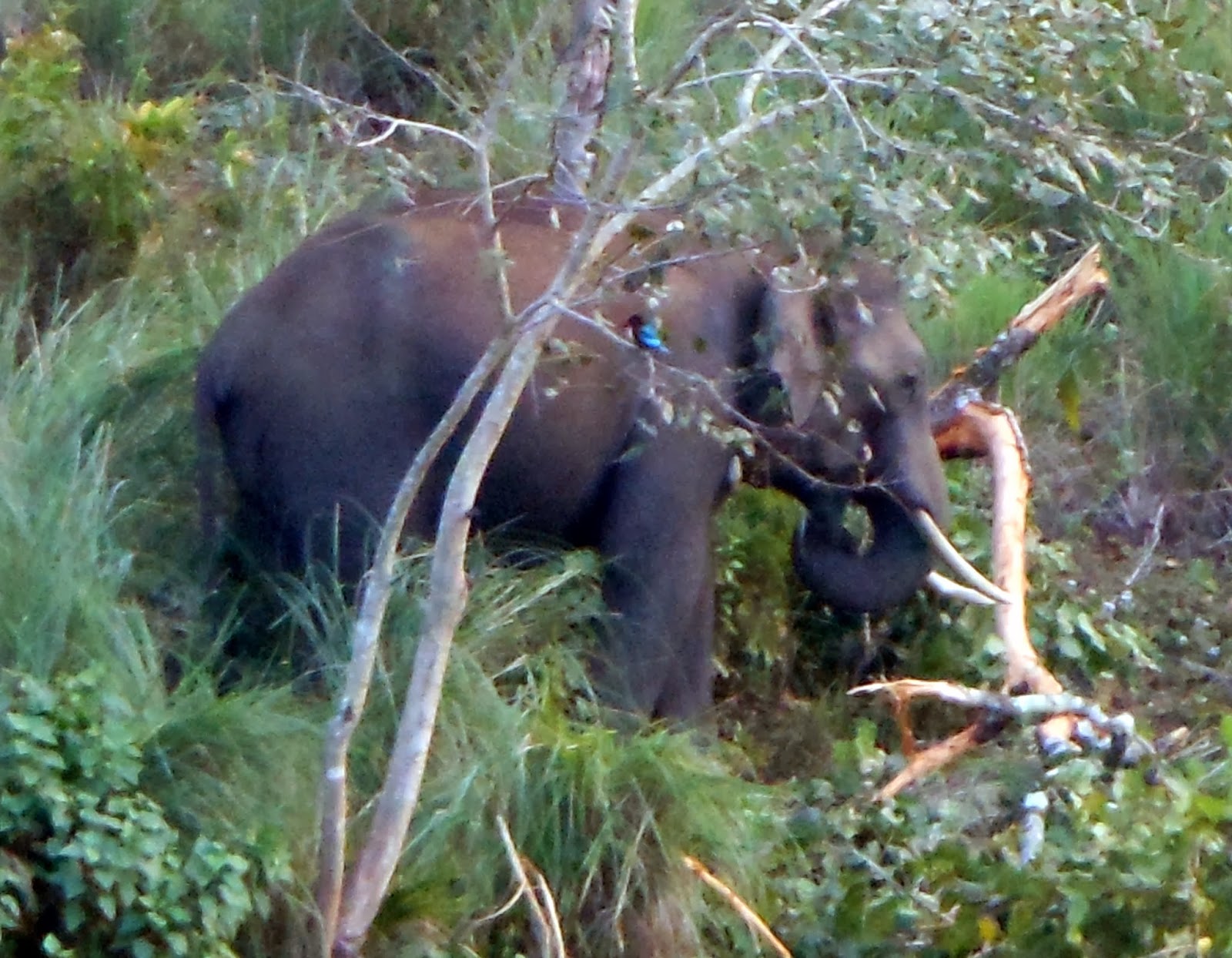
Figure <!–[if supportFields]> SEQ Figure \* ARABIC <![endif]–>11<!–[if supportFields]><![endif]–> – Lone tusker

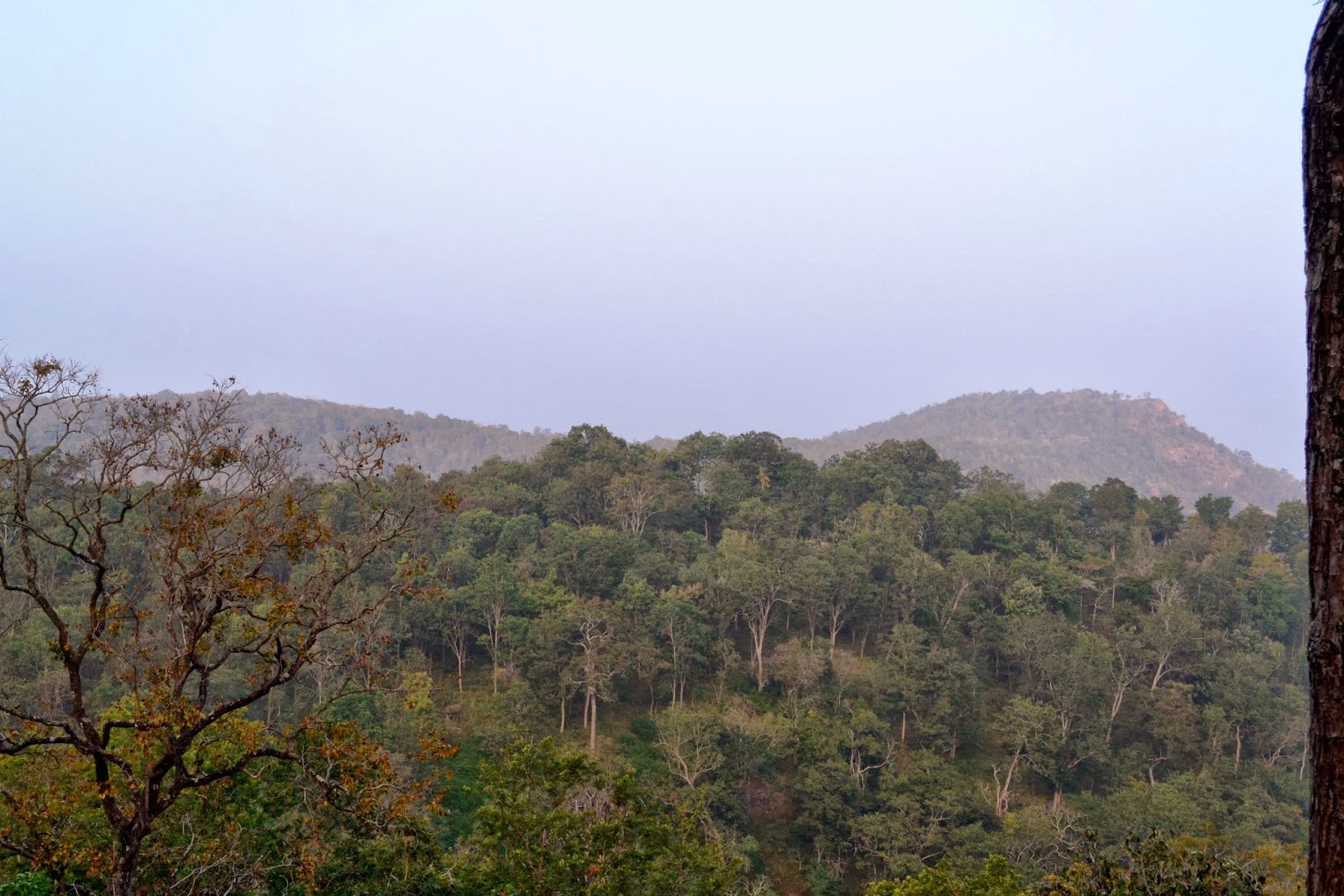
Unlike other forests, the thick undergrowth makes it difficult to spot any game. Akhila was really good at spotting a lone tusker in the distance. The forest is full of greenery at this time of the year. The ‘stand density’ in this forest appears to be very high.

Figure <!–[if supportFields]> SEQ Figure \* ARABIC <![endif]–>12<!–[if supportFields]><![endif]–> – Sambhar


Figure <!–[if supportFields]> SEQ Figure \* ARABIC <![endif]–>13<!–[if supportFields]><![endif]–> – Spotted deer


Figure <!–[if supportFields]> SEQ Figure \* ARABIC <![endif]–>14<!–[if supportFields]><![endif]–> – Ready to charge at us


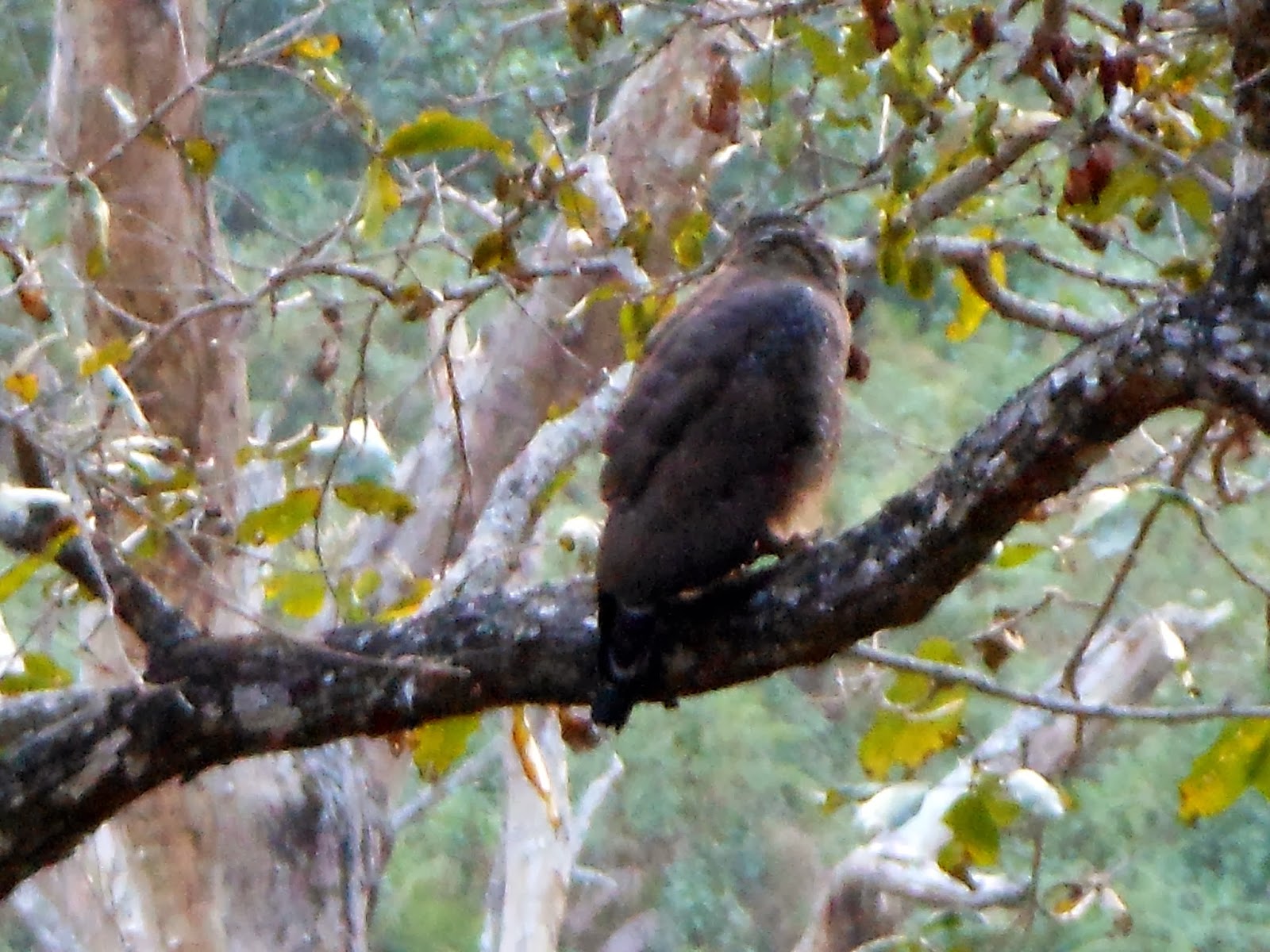
Figure <!–[if supportFields]> SEQ Figure \* ARABIC <![endif]–>15<!–[if supportFields]><![endif]–> – Crested arch eagle


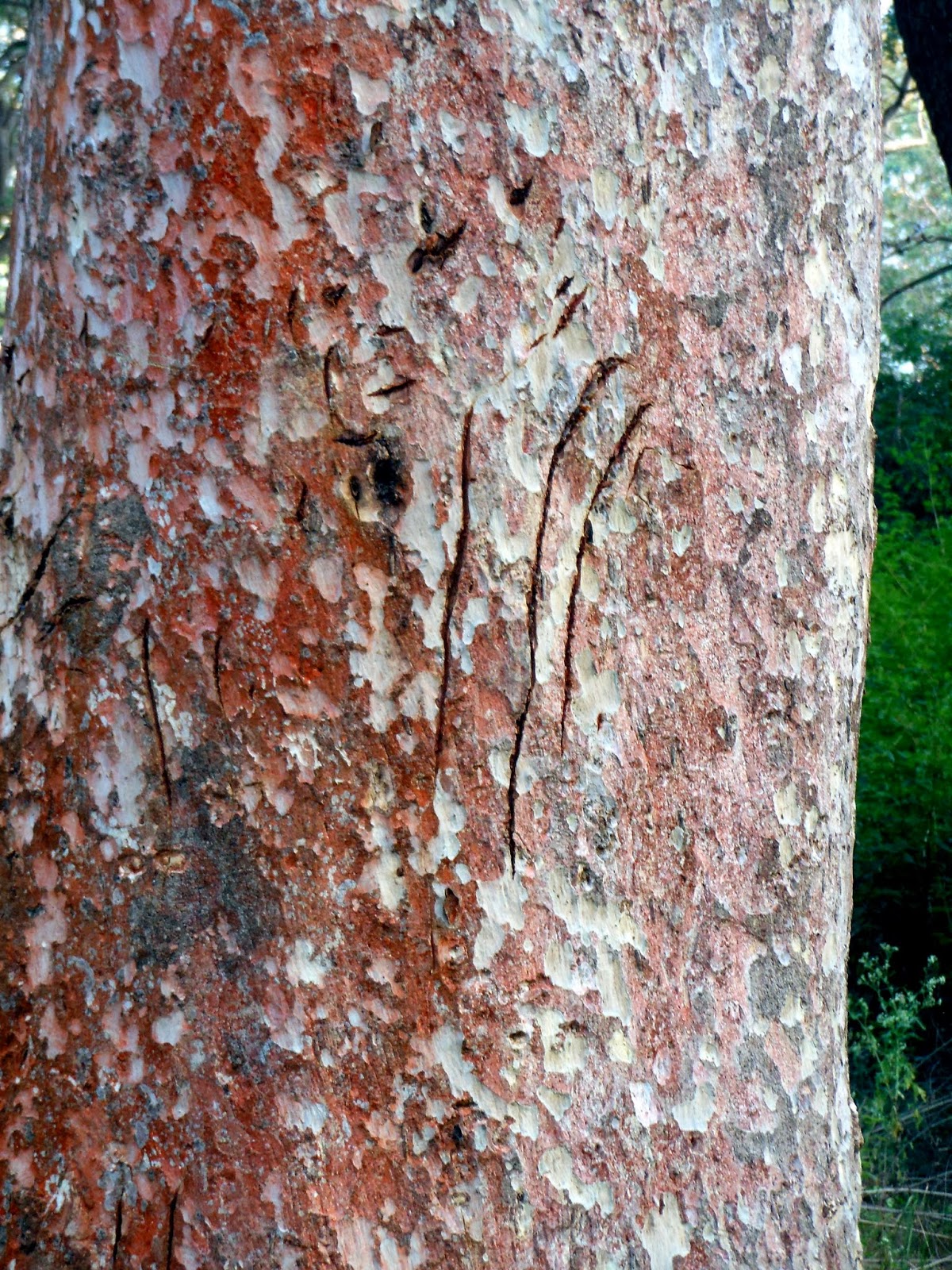
Figure <!–[if supportFields]> SEQ Figure \* ARABIC <![endif]–>16<!–[if supportFields]><![endif]–> – Tiger paw marks. Marking its territory.

Figure <!–[if supportFields]> SEQ Figure \* ARABIC <![endif]–>17<!–[if supportFields]><![endif]–> – Turtles


Figure <!–[if supportFields]> SEQ Figure \* ARABIC <![endif]–>18<!–[if supportFields]><![endif]–> – High ‘Stand Density’


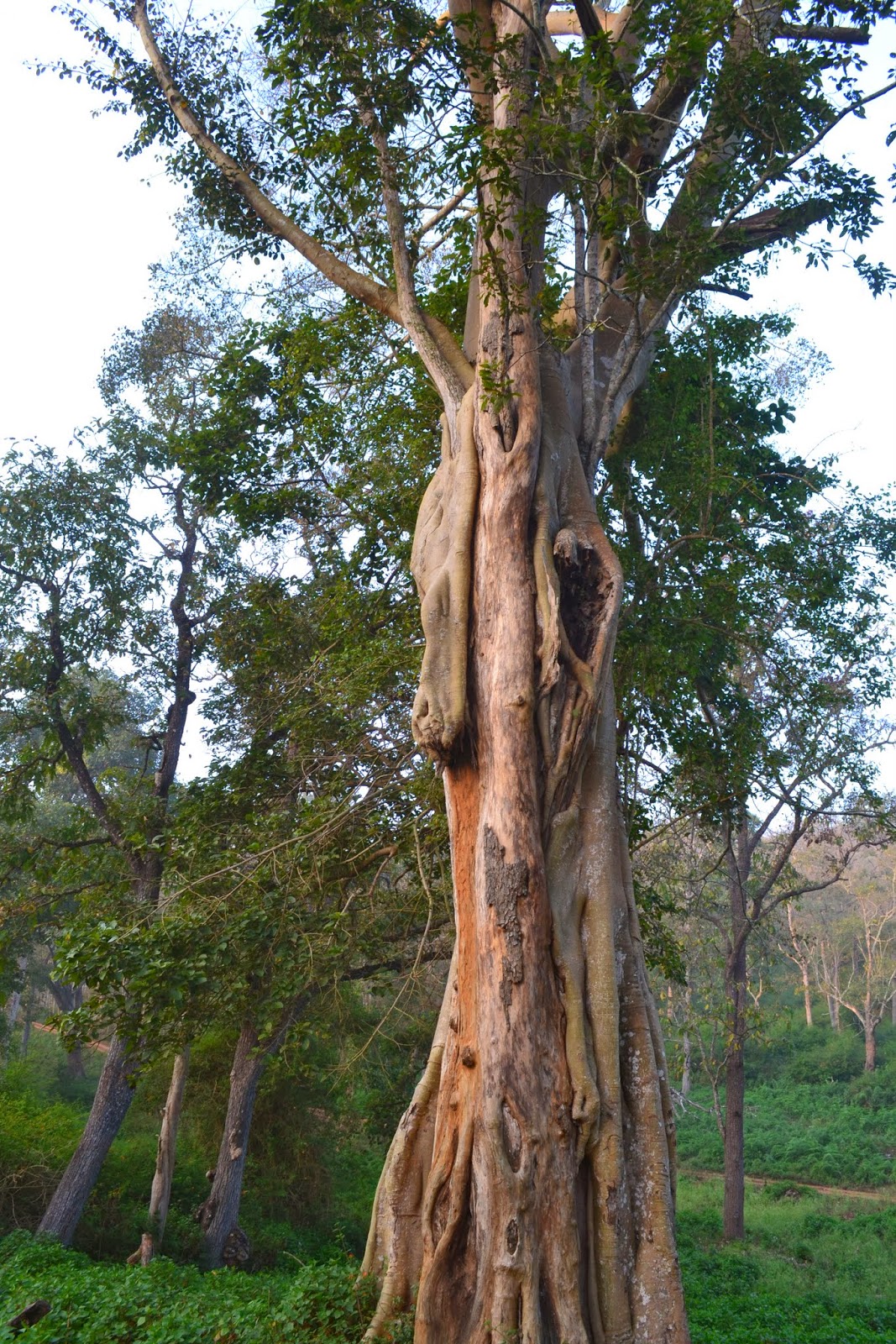
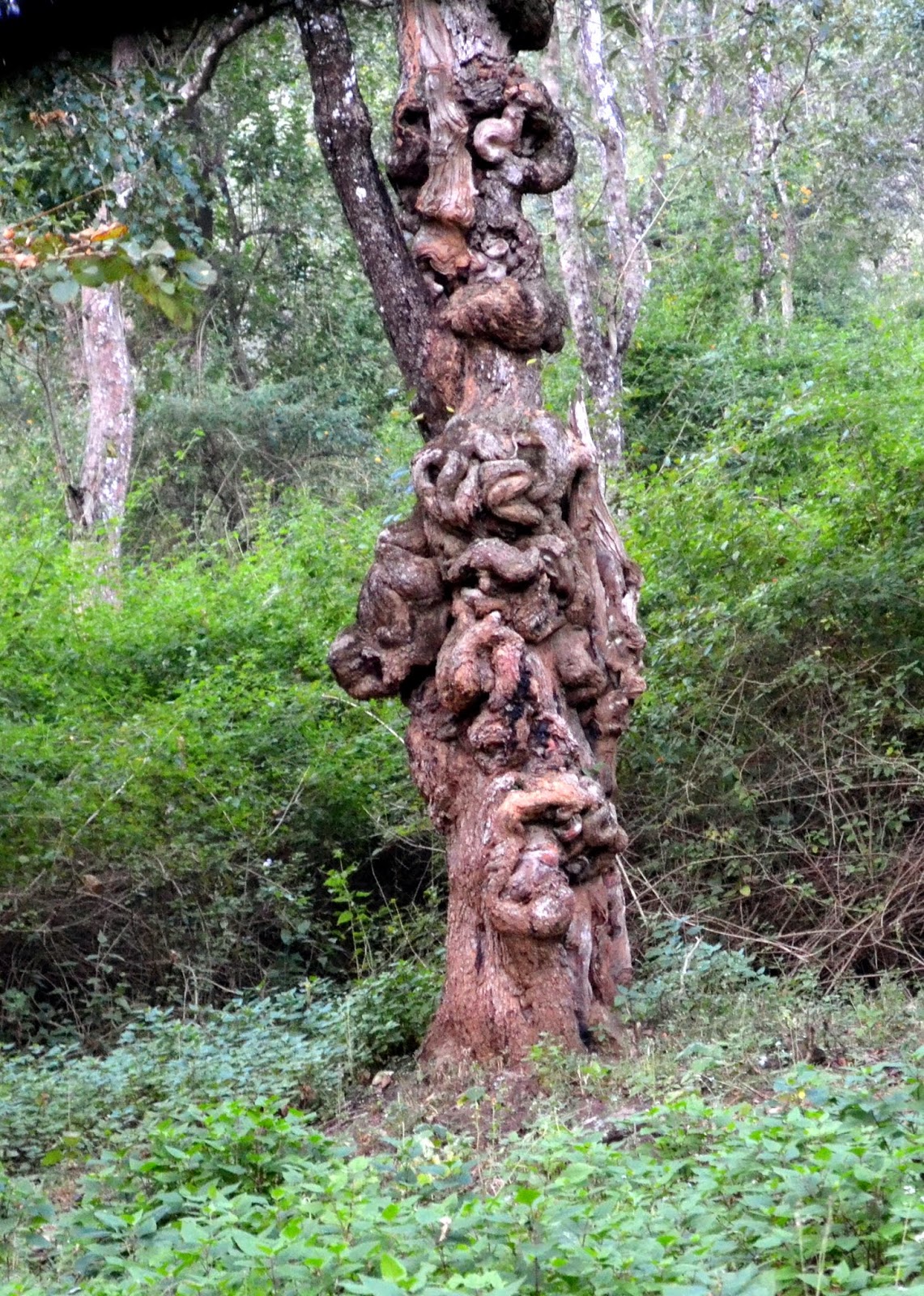
Figure <!–[if supportFields]> SEQ Figure \* ARABIC <![endif]–>19<!–[if supportFields]><![endif]–> – Cancerous growth


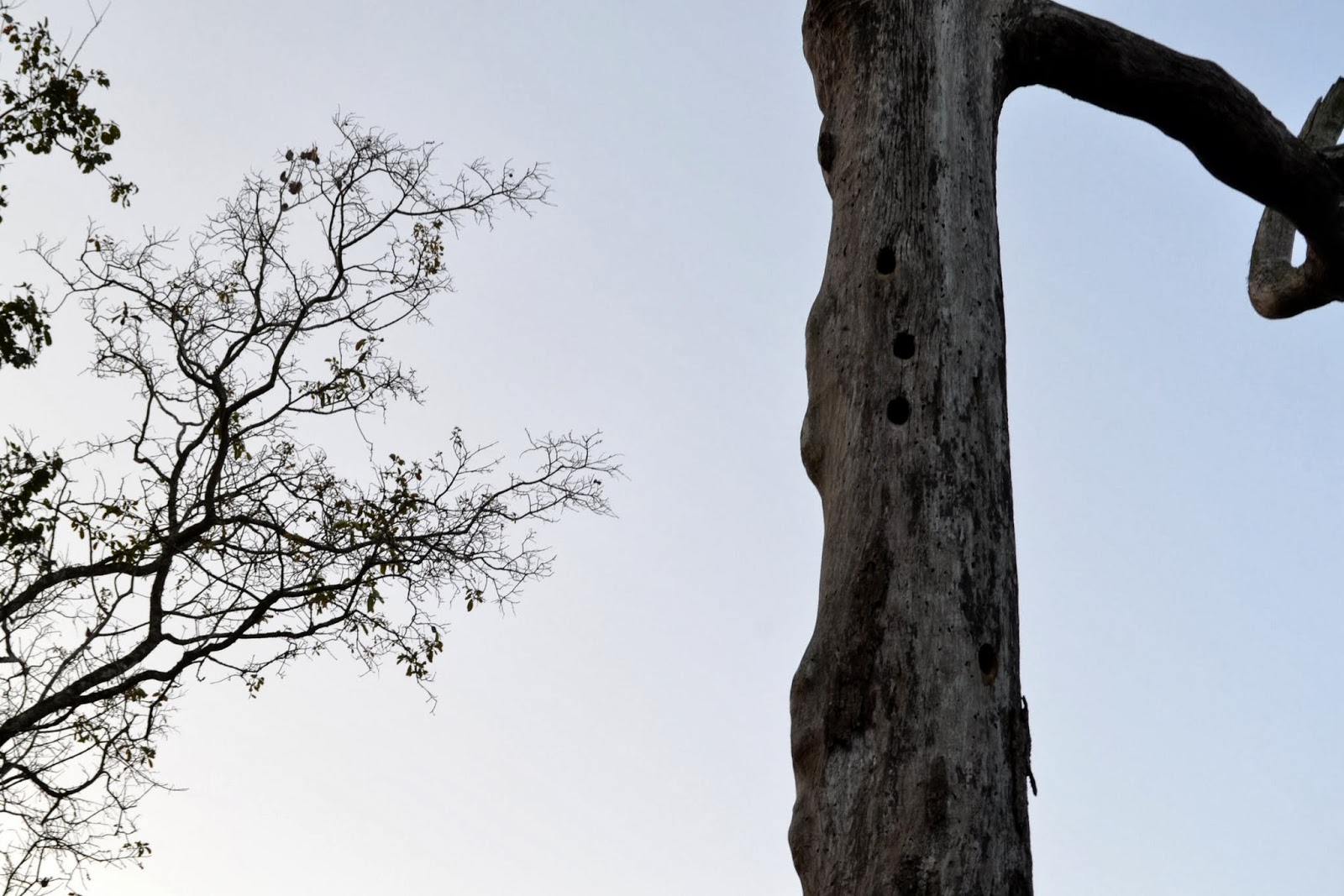
Figure <!–[if supportFields]> SEQ Figure \* ARABIC <![endif]–>20<!–[if supportFields]><![endif]–> – Woodpecker’s home


Figure <!–[if supportFields]> SEQ Figure \* ARABIC <![endif]–>21<!–[if supportFields]><![endif]–> – Another example of cancerous growth


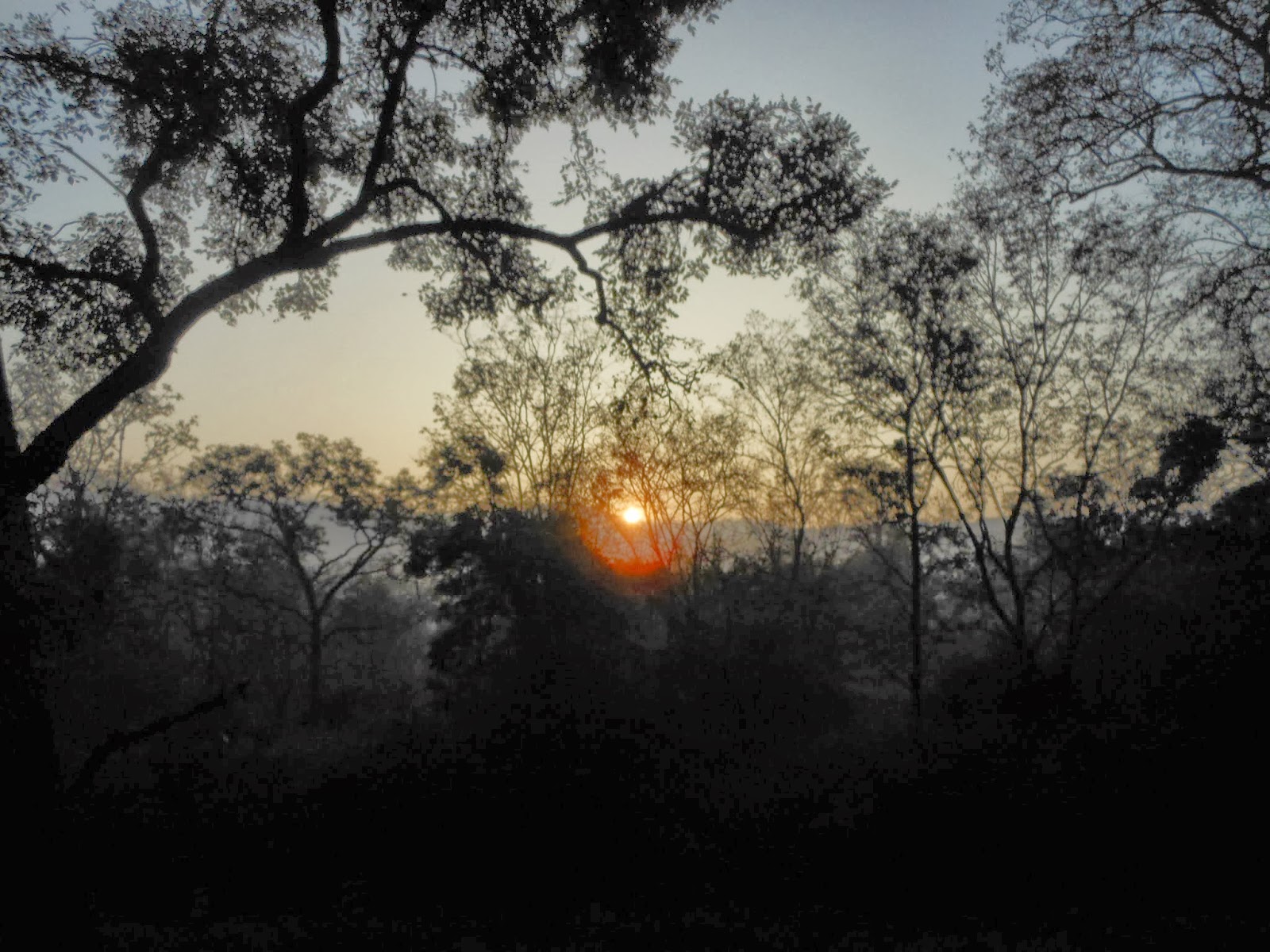
Figure <!–[if supportFields]> SEQ Figure \* ARABIC <![endif]–>22<!–[if supportFields]><![endif]–> – Sunrise

The forest is a birder’s paradise. We sighted an indian pond heron, malabar parquet, jungle babbler, king fisher, rufous babbler, bulbul red vented, red-whiskered bulbul, malabar whistling thrush, gray wag tail, woodpecker plain back, streak throated woodpecker, crested serpent eagle, crested arch eagle, common rosefinch, wagtail, grey jungle fowl, tree pipit, hill myna etc.
The food is basic but tasty. The service is good with a host of polite and helpful lodge staff in attendance.

Jai was busy throughout the year with ‘Freedom International School’ http://www.freedom-international.in/.Thisyear they conducted an excellent FIS Fest. It was very well received.

Vivek and Shubhra continue to enjoy their work. Google was looking for companies that had a “compelling business, web and human story in order to create a video. Chumbak was selected to be a part of this activity on how companies worldwide used ‘Google Services’. Chumbak was one of the 3 companies worldwide to be selected. http://www.youtube.com/watch?v=1EhsNFOA9ew.This is a very tall achievement indeed. http://www.chumbak.com/ . They have increased their range of products and have added their own stores in Bangalore and Delhi.

Akhila with all her responsibilities at home has found time to involve herself in the field of education. She has gained expertise in the field of curriculum frame working and also assists Angel Xpress Foundation – A unique non-profit organization which works for the progress of underprivileged children. It makes education accessible to street children by setting up schools on the streets.
Anirban continues to be busy with http://www.caakwan.com. He figured in the Hindustan Times, “People who are in positions to change the way we live, think, work and play in India”. Power to youth.Hindustan Times  New Delhi, November 03, 2012.
 
I have got involved with 3G in a big way – Golf, Grand Children and God. Apart from Golf – gardening, blogging and cooking continue to occupy my time. I have had some big culinary achievements in the past year. I have posted some more interesting recipes in my blog http://recipebaba.wordpress.com/.
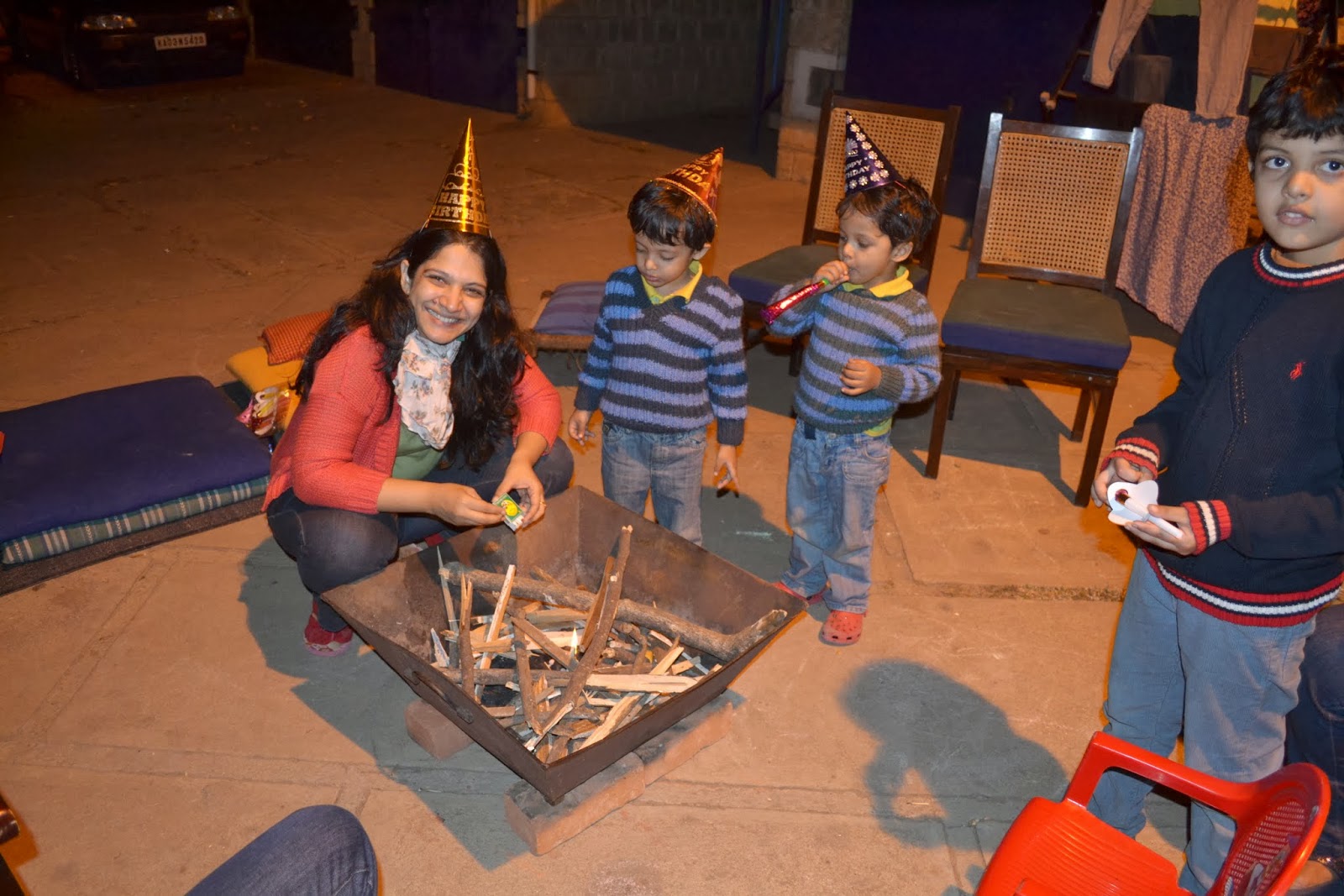
We celebrated the New Year at home with the immediate family. We lit a bonfire and sat around it ushering in the New Year – good music, drinks and food inclusive. During the day children were kept busy collecting dry twigs for the bon fire. They had a wonderful time running around and playing.

Figure <!–[if supportFields]> SEQ Figure \* ARABIC <![endif]–>23<!–[if supportFields]><![endif]–> – Jai ushering in 2014


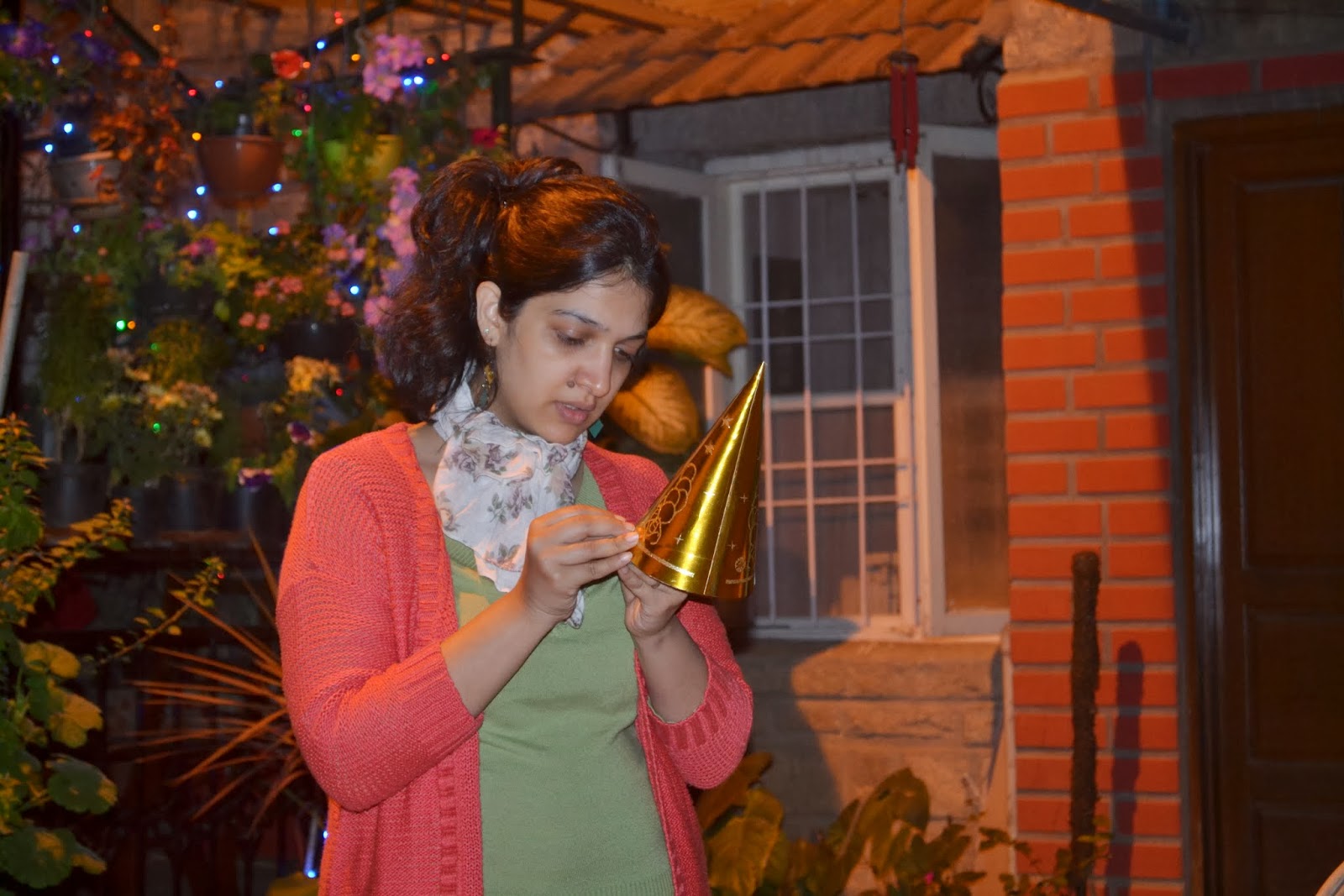
Figure <!–[if supportFields]> SEQ Figure \* ARABIC <![endif]–>24<!–[if supportFields]><![endif]–> – Akhila preparing fools caps

Figure <!–[if supportFields]> SEQ Figure \* ARABIC <![endif]–>25<!–[if supportFields]><![endif]–> – Bonfire about to be lit


Figure <!–[if supportFields]> SEQ Figure \* ARABIC <![endif]–>26<!–[if supportFields]><![endif]–> – Shubs very happy with 2013


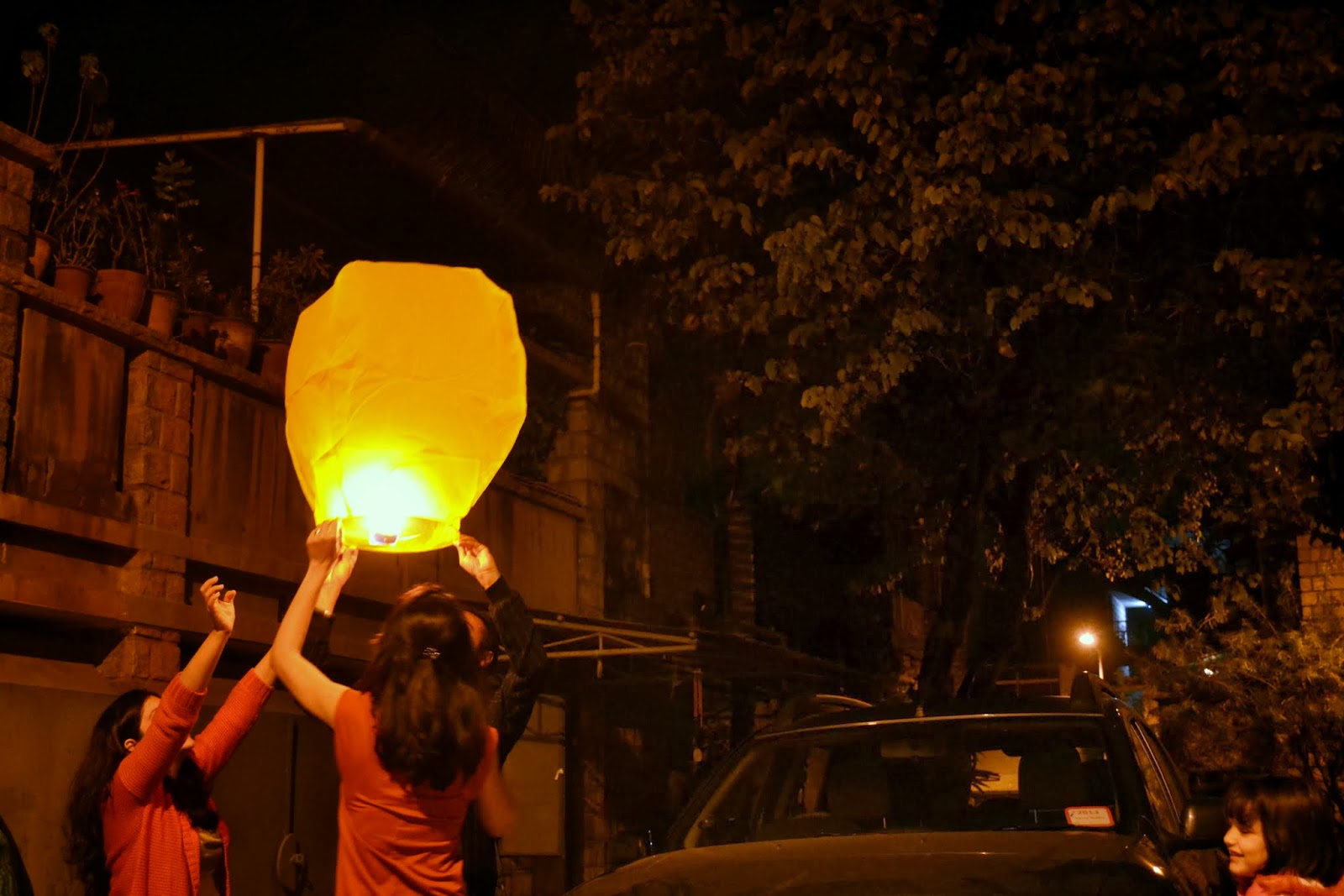
At 12pm sharp, we lit a paper lamp and let it soar into the sky. The lamp took away 2013 and shed light on us, ushering 2014 in. 

Another year has come to a close.We look forward to a new year with lots of hope and anticipation.My family and I wish all the readers of ‘Samundarbaba’ a vey happy 2014 – may god bless you and your family with good health and cheer.

Travel more,read a lot and conserve nature.

Marriages are made in heaven – Disha becomes a Blah

I do not know where to begin. Maybe I should go back to 2002, when I first came to know that my daughter Akhila was dating Anirban Das Blah. I thought, ‘Here comes trouble; Later on in 2003, I met Anirban’s younger brother Indranil and I am reported to have muttered under my breath, ‘Here comes doubletrouble’. So, I have known ‘Indranil’ for a very long time – a man of few words, at times reticent, always affectionate and forever respectful; in short, a very likable person. All along, he was a bachelor to boot, with a cool job and an even cooler bachelor pad. I often referred to him as “Bertie Wooster”. All those foot loose and fancy free days had to come to an end, sometime or the other and it did, when Indranil, happening to look in the right direction, fell for a very pretty, bright and charming girl called ’ Disha’ . On second thoughts, the title of this blog should have been ‘Indranil clean bowled’.


Marriages are made in heaven
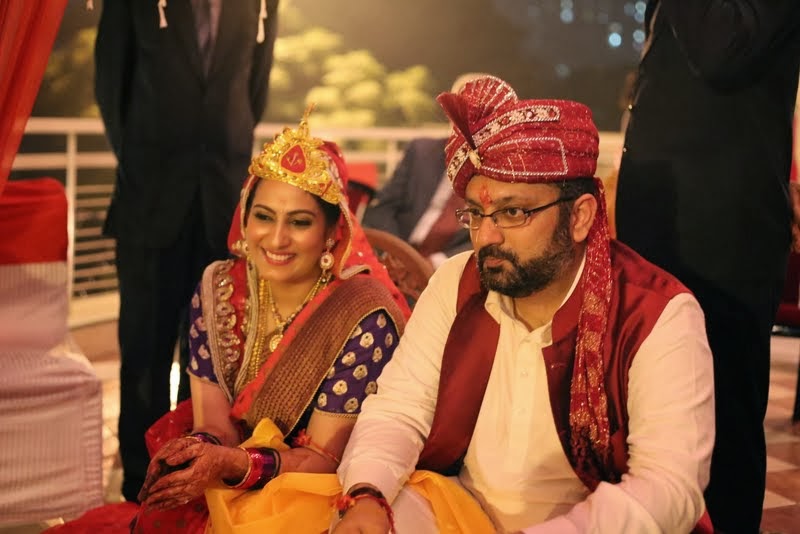
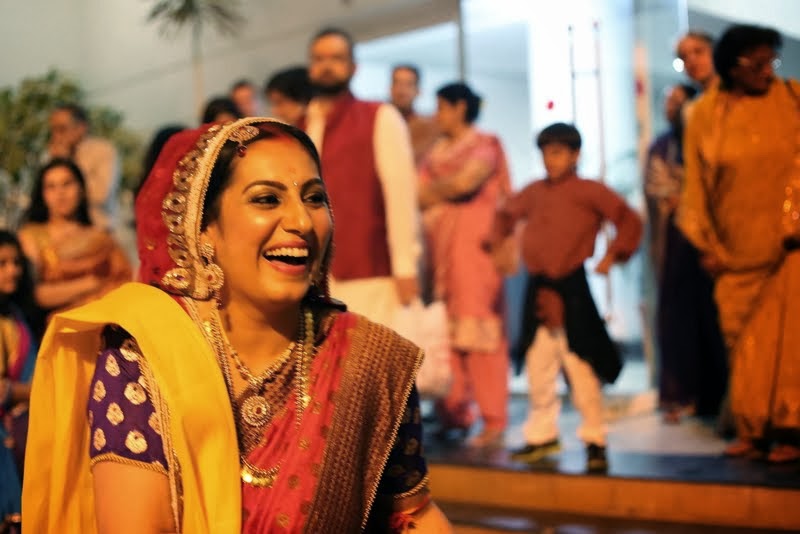
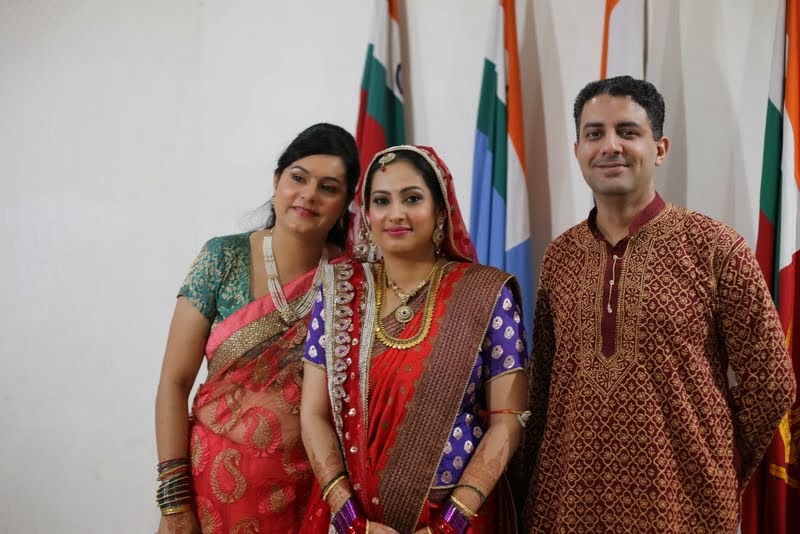
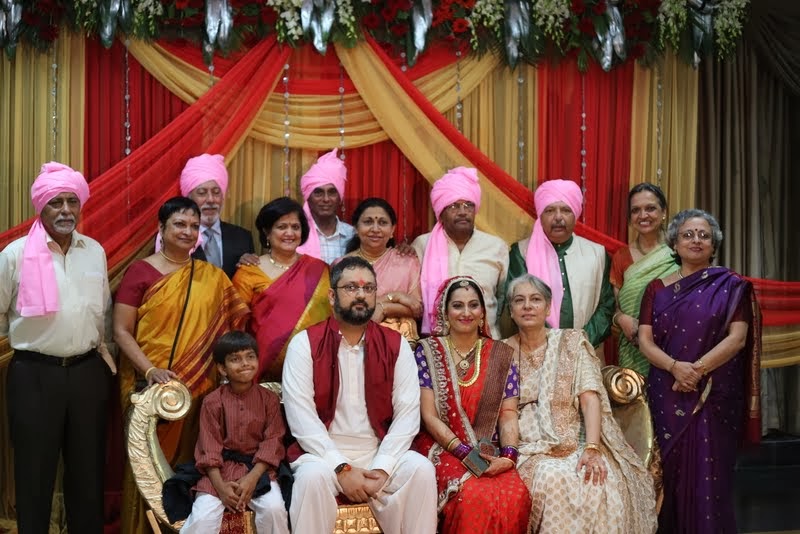
Indranil and Disha celebrated their wedding on 6th Dec 2013.It was not quite so simple though. The preparations started many moons ago in the Blah and Bhavsar household. Everyone from the 2B family circle joined hands to make the occasion a memorable event. The bride’s father Ashok Bhavsar and Akhila were pivotal in organizing the wedding. Akhila with her childhood military grooming and a flair for organizing, treated the entire event as an Army Commander would treat a military manoeuvre. Under the title of ‘Disha becomes a Blah’a number of check off  lists were made to ensure nothing was left to chance – Transport requirement, airport transfer, guest list, menu for each function, wardrobe for events, individual responsibilities etc – every aspect of the wedding had a when, who and how tag attached.

Within the 2B family unit there was a confluence of many religious and social traditions; a variety of customs and traditions originating from Gujarat, Meghalaya, Assam and Bengal were amply evident in all the wedding ceremonies. Throughout the three day affair they managed to strike a balance between religious ceremonies and youthful antics. In the final analysis it was a sacred union, under an umbrella of gaiety, fun and frolic. Every individual fostered this mood.

A large posse of kith and kin from the 2B circle made it a point to attend the wedding and bless the couple. The entire staff of CAA KWAN was there to lend support and join in all the revelry. One aspect which stood out very loud and clear is the excellent network of friends painstakingly developed over a long period of time by both, Anirban and Indranil. They were all there from different corners of the country and the globe to attend the festivities. A heartwarming development indeed. Their presence added a special flavour to all the proceedings. The mood throughout was one of bonhomie. To further charge the already electrified air – a number of Bollywood celebrities graced the functions.

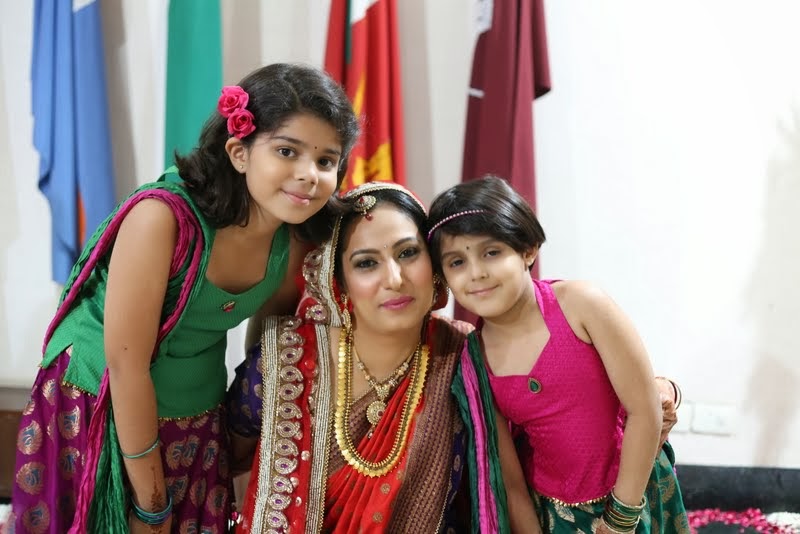
Without a doubt, the most handsome people in the wedding were Indranil and Disha with their nephews Ayaan, Agastya and Aarin in their colour coordinated outfits coming a very close second. 

The run up to the wedding was one great ball. The Blah home had all the ingredients of a ‘Marriage Transit Camp’ – hordes of people, endless cups of coffee and tea, breakfast till 12 noon, a constant flow of visitors, the endless ring of cell phones, permanently occupied toilets, blaring music, dance rehearsals, dormitory arrangements for sleeping and so on. The endless cacophony was amply mitigated by unlimited flow of ‘Laphroaig’ – kind courtesy of my son in law. To quote “The pungent, earthy aroma of the blue peat smoke, the sweet nuttiness of the barley and the delicate, heathery perfume of Islay’s streams,” more than ensured that I slept well through the night. I had been given the task of taking the children to the park in the evenings and making them sleep after lunch – a very enjoyable task indeed. 3rd and 4thDecember were spent in last minute preparations, visits to beauty parlors, canteen, departmental stores and dance rehearsals late into the night etc.

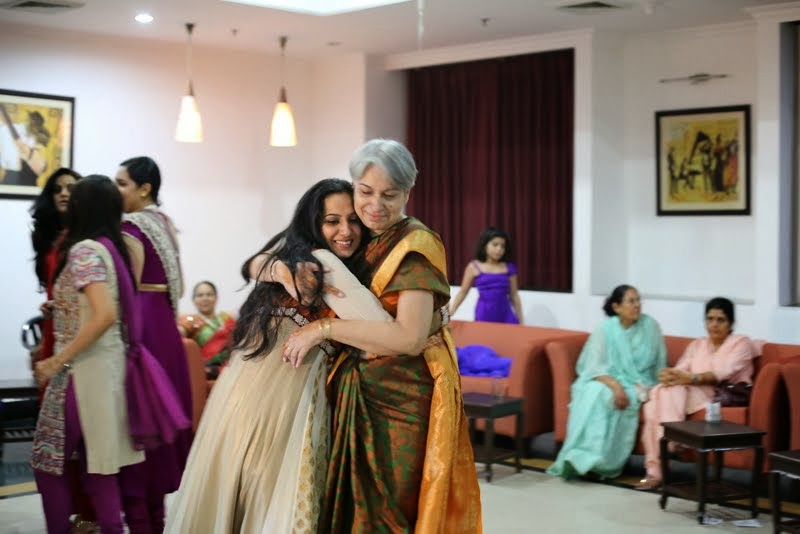
The whole house was rearranged to accommodate a 90-strong guest list for the traditional Assamese ritual ‘Juroon’. And ‘Mehndi’, on 5th December. Due to logistical imperatives the Blah home momentarily become the bride’s house and Juroon was held in the house. Juroon is a very interesting, fun filled pre-marriage ceremony carried out before the wedding. This ritual is performed by women. Here the groom’s mother visits the bride’s house accompanied by close relatives and friends. The groom’s mother gifts the bride her bridal trousseau, including an odd number of pairs of Mekhela Chadar (traditional Assamese female attire) a complete make up kit (whoa!), gold ornaments etc. Once they reach the bride’s house the groom’s mother is welcomed by the bride’s mother at the entrance with a XORAI or BOTA in her hands which contains tamul-paan covered by a Gamosa.

In many Hindu weddings, it’s traditional to have a Mehndi party before the wedding. Artists use a paste made from dried henna leaves to paint intricate patterns on hands (and sometimes also feet) of the bridal party. The bride gets the most intricate patterns, to set her apart. It is believed that henna gives blessings, luck, and joy, although it is also seen as a beauty enhancer. Some brides get their future spouse’s initials hidden into their Mehndi design. In our case Indranil got a ‘D’ in a heart mehndied on his palm.

As the Mehndi dried and the stars glittered, the guests were treated to really tasty Kashmiri fare. Amongst the many delicacies, what caught my taste and imagination were – Rogan Josh, Tabak Maaz – Lamb ribs with turmeric, cinnamon and saffron, Chicken Yakhni , Phirni for desert and finally Kashmiri Tea- Qahwah ;very tasty and authentic Kashmiri food indeed.

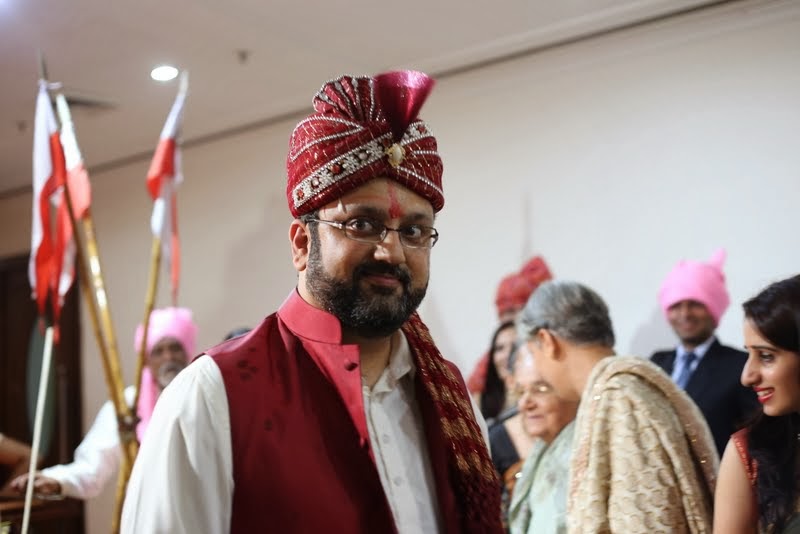
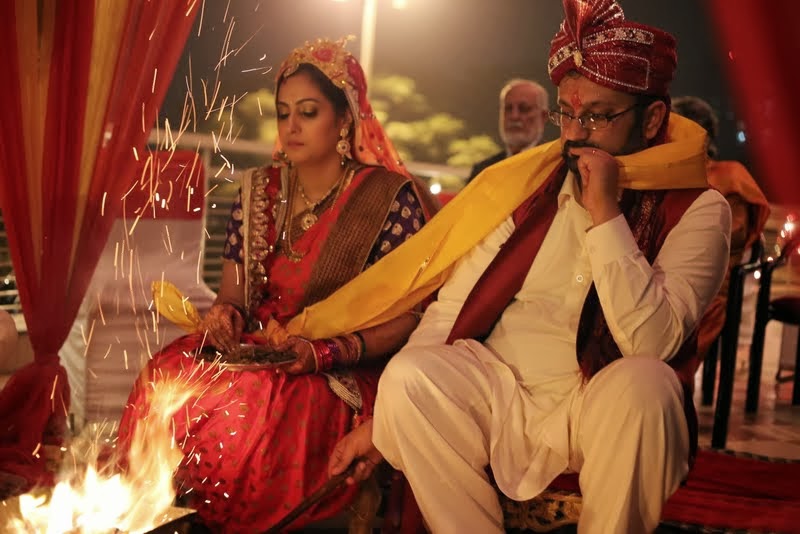
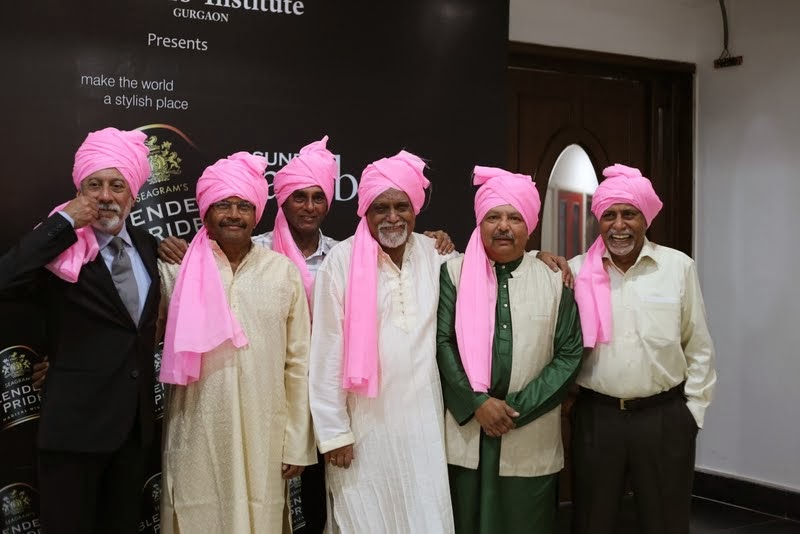
The wedding was solemnized on the lawns of the ‘Army Officers’ Institute’, Juhu Mumbai on 6th December followed by a reception. The spacious outdoor setting with tall trees and well mowed lawns was ideal for the wedding. The weather was very supportive and all were at ease. The ‘Baraat’ arrived at sharp 4 pm and all of us were made to wear a dark pink Pagdi as against a light floral Pagdi for the bride’s side. The Gujarati wedding ceremony is a derivative of the traditional ‘Vedic’ marriage. It starts with Var Ponke wherein the bride’s mother welcomes the groom and his ‘Baraat’ at the entrance of the wedding venue. Before the groom can enter the premises, he is made to step on a ‘Bajat’ (low stool) where the bride’s mother performs the traditional ‘Aarti’ for the groom, applies the ‘Kunkhu’ (vermilion) and rice ‘Tikka’ on his forehead. The bride’s mother places a clay pot filled with rice on the ground and the groom breaks it before entering the wedding ‘Mandap’. The groom is thereafter led to Mandap and made to sit on a low stool for the ceremonies. This is followed by worship of the ‘Kalasha’ – a copper pot filled with water. Mango leaves are placed in the mouth of the pot and a coconut is placed over it. The Kalasha is believed to contain amrita, the elixir of life, and thus is viewed as a symbol of abundance, wisdom, and immortality.

As the guests waited eagerly, the bride’s ‘mama’ (maternal uncle) escorted Disha to the ‘Mandap’ for the ‘Varmala’. This was followed by Kanya Agamana. In this ritual, the bride and groom exchange garlands at the marriage altar in front of the sacred fire. Her maternal uncle accompanies the bride to the altar and a small screen is placed between her and the groom. Amidst chanting of mantras, the screen is lowered and the couples exchange their garlands. Indranil and Disha garlanded each other in accordance with ancient Vedic customs, to demonstrate their free choice and acceptance of each other.

‘Juta Churai’ was next to follow. During this ritual, the bride’s family members try to steal the groom’s shoes, only to be returned much later for a fee which is negotiated amidst much laughter and bargaining. Very regrettably the bride’s party with utmost cunning and stealth stole the groom’s shoes from Indranil’s car. I understand a princely sum of INR 5000 was handed over for the shoes. The groom’s defense strategy was very ‘shaky’ to say the least.

This was followed by an elaborate reception with drinks and dinner. The food once again was excellent with Chicken Zafrani, Mutton Tawa stealing the show, amongst other items on the menu.

Majority of the invitees knew each other and the remaining struck a happy chord with the barman. In all, everyone looked happy and contented.

We had to check out of the army premises exactly at 12 midnight – none of us wanted to be turned into a pumpkin. The Vidaai marks the exit of the bride from her parental home and her arrival into the groom’s family. It also marks the beginning of a new life, with new people and relations. According to the custom, the bride’s brother accompanies her till the exit of the home along with relatives and gives her hand to her husband.

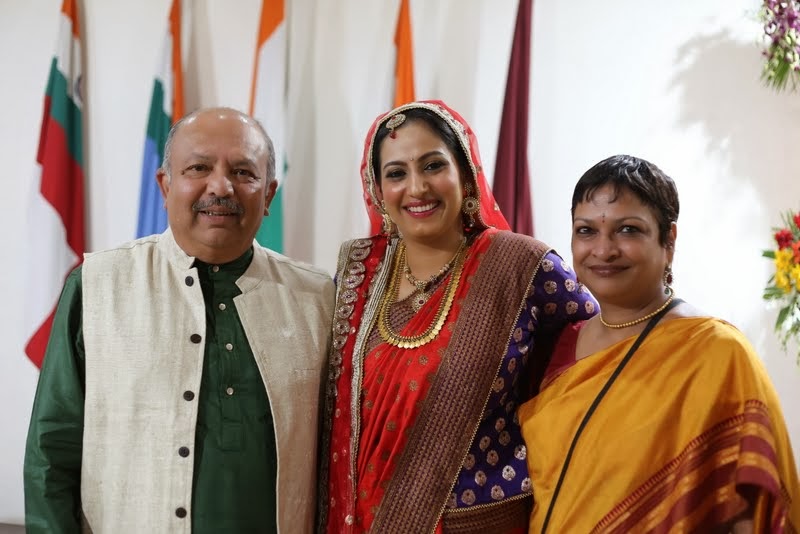
Next morning Disha came home for the first time as a ‘Bahu’ – daughter in law. Her arrival marked yet another ritual ‘Ghar Ni Laxmi’. The groom’s family welcomes the bride to her new home. The bride is considered as Goddess Lakshmi, who brings wealth and good luck to the family. As a ritual the bride is asked to knock off a vessel with rice grains as she enters her new home. The happiest smile was on PK and Rita’s face – the groom’s parents.

This was followed by Aeki Beki which is an excellent tradition, wherein the couple joins the entire groom’s family to play a few innocent games. This breaks the barrier and sets in an easy ambiance. A ring is hidden in a vessel filled with rice. The bride and the groom are asked to play the game and whoever finds the ring in a maximum number of occasions is considered as the winner and declared ruler of the house. If my memory serves me right, Indranil found the ring.

In the next game both Indranil and Disha were blind folded. The women in the house were made to stand in a row and Indranil was asked to feel the palm of the ladies and recognize Disha’s palm. Lo and behold, Indranil got it wrong and selected Kshama’s hand instead. In the next turn all the men stood in a line and bang on, Disha homed on to Indranil with utmost confidence and certainty. Well done D.

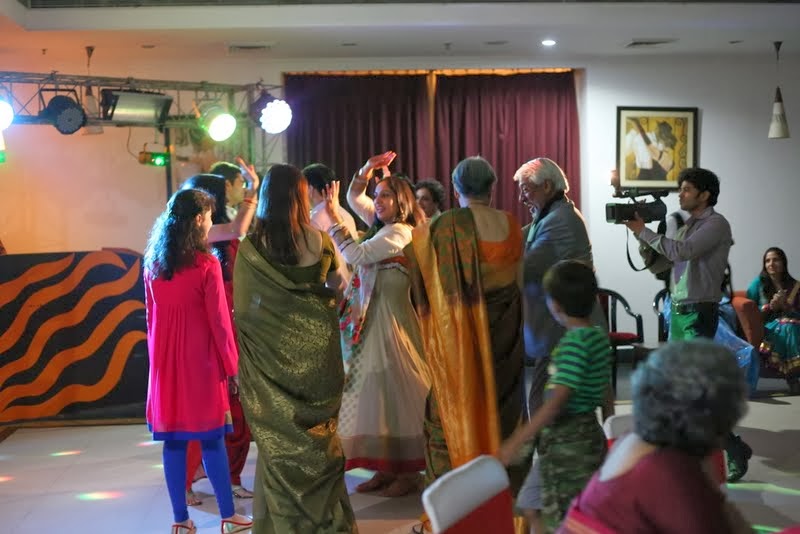
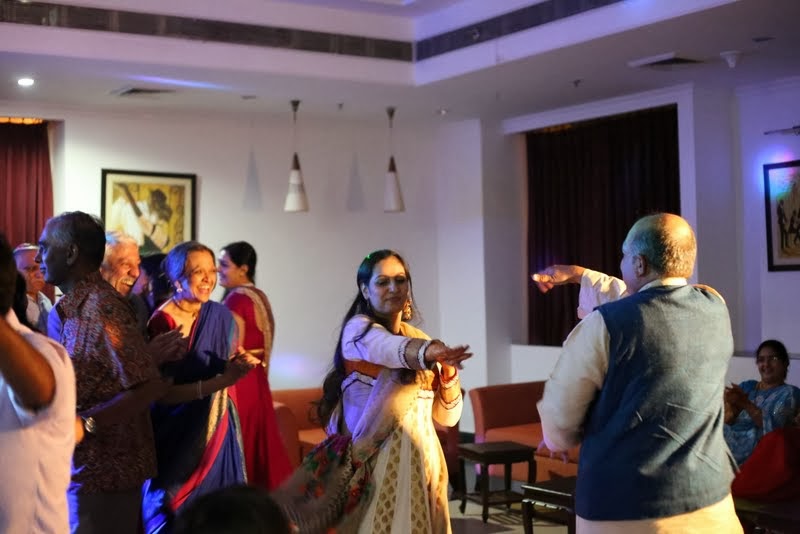
In the evening 0f 7th December we all closed up at the Juhu Club Millennium for Sangeet. Normally this is a fun filled evening which takes place prior to the wedding, but in this case it followed the wedding. All the ingredients which go to make a successful Sangeet were there. Blah and Disha’s friends had prepared for this function from a long time. Vijay and Dhruv took the lead and unfolded Sangeet in a truly professional manner. There was a PPT on the childhood days of the couple with tongue in cheek remarks, speeches by the bride’s father, grooms mother and brother. However the best oratory went to 6 year old Ayaan when he said ‘I must declare that the couple is one of the best couples in the whole world’. The Bollywood dance sequences put up by the FOBAD (friends of Blahs and Disha) were truly amazing. The irony of it all was not lost on the people present – specially the Bollywood celebrities who at times approved the dances and at times put thumbs down.

In all ‘Disha Becomes a Blah’ was a memorable event. I am sure; all the invitees went back with sweet memories. This was one of those weddings which focused on creating a platform to correctly showcase how a wedding ought to be – a right mix of rituals, traditions, customs and expression of happiness in the union of two souls.

We all wish Indranil and Disha a very happy and long married life.

If you have managed to read the blog up to here – please spare some time and enjoy viewing the photographs

Rehearsals for Sangeet – 3rd Dec

House ready for Juroon – 5th Dec

Traditional fish preparation – but as a sweet dish

Groom’s mother being welcomed by the brides mother

Rita with Disha – full of anticipation

Disha applying kumkum on Akhila
Intricate designs of Mehndi
Indranil’s  palm with a D

Another example – Many palms
Some guests with Akhila and Jai

Rita celebrating 


Entire Blah clan arriving – Baraat – 6th Dec
Brides mother doing an Aarti with Kalasha – Var Ponke
Groom about to step on a small earthen pot
Brides parents on the Mandap


Madhuparka ceremony in progress
Kanya Agamana the priest holds the antarpaat
Arrival of the bride
‘Varmala’ – Brides brother,father and uncle accompanying the bride to the mandap 
Disha garlands Indranil
Indranil garlanding Disha
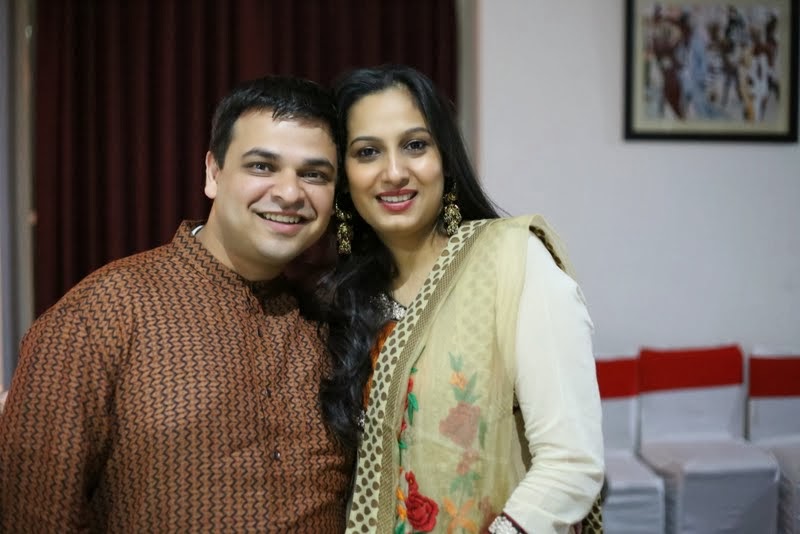
Now as husband and wife
The couple with grooms parents

Disha has become a Blah

Smile of a lifetime

The couple with brides mother

With us

The mandap from a distance

Bahu entering the house Ghar Ni lakshmi.

Searching for the ring

Disha gets it right

Colour coordinated – Ayaan,Agastya and Aarin

Couple join the Sangeet – 7th Dec

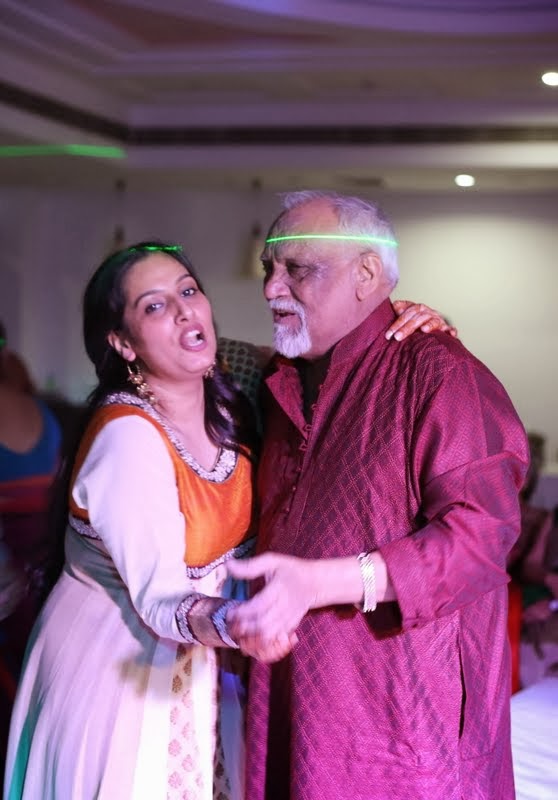
Bride dances with her father

A very happy Bhavsar couple
Rita and PK dancing to the tune of ‘O mere sonare sona’

Anirban,Akhila and Ayaan on the floor


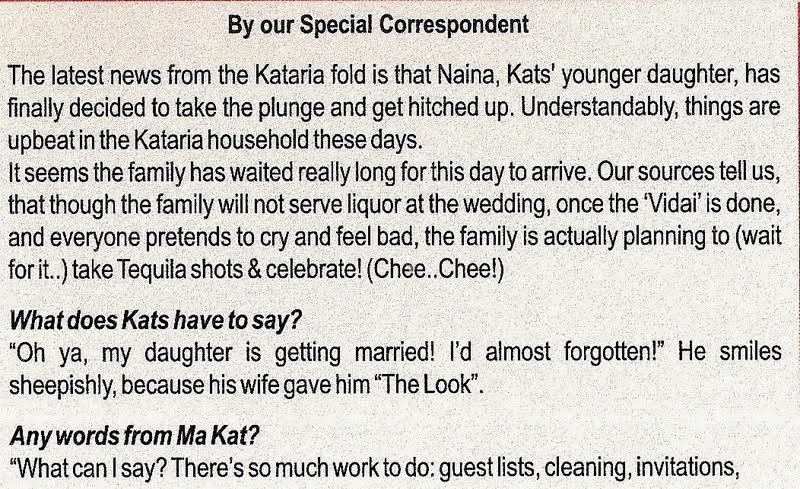
Naina’s Wedding

Kats and Naveen invited all of us for their daughter Naina’s wedding with Anuj in an offbeat manner.


So, all of us went for the big event. The wedding was conducted in DSOI Gurgaon. The Sangeet was on the 19thand the wedding on the 20th of October 2013. They had invited a limited number of very close friends and relatives. Their yard stick for the invite was – “Those who know Naina well and matter”. This stringent criterion added a different dimension to the wedding – making it very special and personal. It had some of the trappings of any normal wedding – music, dance, food, people dressed in their finery and so on. What made it special was the bonhomie that prevailed on both the days. Everyone knew everyone else, which made things simpler – no pretences – no small talk – it was one big party.


In sharp contrast, we recently attended an extremely boring wedding in Bangalore. Very large number of invitees gathered together for the reception. Nobody knew anybody. There was an overall sense of disconnect and the motley crowd wandered aimlessly in the lawn. Our entire evening was spent standing in a queue to wish the couple and hand over the gift followed by standing in the second queue to partake of dinner. To add fuel to the fire, it started to rain heavily, rendering the only fitting suit from my wardrobe wet and soggy. We finally stood in the third queue for the car to arrive and returned home uncomfortably wet and bedraggled. It was thereafter left to the healing powers of a snifter of ‘Remy Martin’ to restore my battered soul back into mint condition. As I sat in the patio sipping my RM, I seriously wondered how anyone could conduct a happy event without generating fun and frolic.

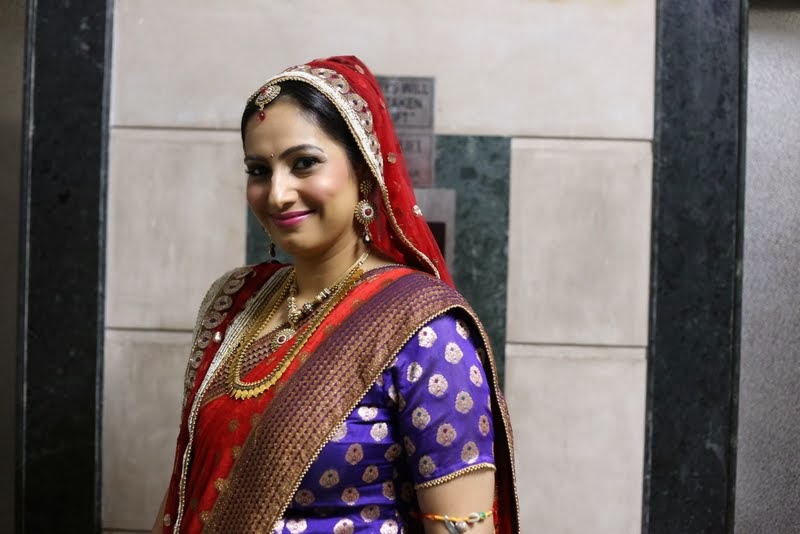
Naina On her wedding day
Naina looked divine in her wedding get up. She was radiant, relaxed, and ready to embrace marriage with confidence. She was literally the soul of the ‘Sangeet’- dancing in gay abandon, coaxing people to come on the floor and setting the tone for the evening. Without exception, everyone – old and young alike, joined her to make merry and enjoy. We took serious cognizance of the ‘Kataria Chronicles’ reporting that once the wedding was done everyone would “take Tequila shots and celebrate”.

On the day of Sangeet all the male members were summoned to the first floor for getting the ‘Haryanvi Pagdi’ tied. The local expert who was specially hired by Kats went about systematically tying the Pagdi on all of us. With the majestic headgear in place we proceeded to attend all the functions.

Having fully participated in all the religious ceremonies we were at liberty to proceed to the pond to quench our thirst. The tipple was stored in the Pagdi room. On reaching the site, we were in for a very rude shock. The room was locked and the key safe with Pagdi master. Very precious time was wasted in locating the master. Once inside, we were in for yet another rude shock. The bag purportedly containing the nectar had various unmentionables stored in it. With disappointment written all over our face, we had to approach the ‘father of the bride’ to solve the mystery of the missing urn. FOB was deeply engrossed in the marriage ceremony along with the Pandit. My friend  Nair hesitatingly approached the FOB and very succinctly broke the terrible news and impeached him to save all of us with utmost haste. Kats gave one stern look in the direction of his nephew – which was enough for the young boy to leap ahead to the Pagdi room and produce the correct bag. With our favourite tipple in hand we joined the celebrations in right earnest and danced away into the wee hours of the night.

Both the Sangeet and the wedding were great success. We wished Naina and Anuj a very happy married life and retired for the night.
Bravo Zulu to Naveen and Kats.

You may want to know what is a “normal Indian wedding” – for that you need to visit my earlier blog – http://samundarbaba.blogspot.in/2012/02/the-big-fat-indian-wedding.html

Visit http://samundarbaba.blogspot.in/2012/12/events-and-stray-thoughts-chitras.htmlto get a glimpse of another wedding full of fun.


Sangeet – Naina leading the way.Snitch making waves


Self striking a pose with Naina


I will miss you mama


Papa dear is thrilled. The green halo ?????


With my son Vivek – old friends


Anuj striking a pose


Totally pleased with the proceedings


Agni sakshi

Smile of a life time


Sister Tripti and BiL Sameer


Snitch, Nair, Rags, Kats, Self, Ashok – The Pagdi Brigade

Jai, Meera, Sudhi, Girija, Pushpa with the couple and Navin


  Tripti’s children – Tanisha and Sharanya 


Finally with us

All Photographs – Courtesy Vivek Prabhakar


Crack down on Nigerians in Goa – Drugs – Threat of retaliation et all

The death of a Nigerian national and the clash that followed in Goa has thrown open a diplomatic row between India and Nigeria. “Indians living in Nigeria will be thrown out on streets if Nigerians in Goa are targeted”, conveyed a Nigerian diplomat – Jacob Nwadibia, an administrative attaché at the mission on Nov 5th 2013. A Nigerian national was found dead at Mapusa near Panaji last week.
What is happening in Goa is nothing new or surprising. Drug running on the coastal tourist belt has always been there; the menace itself and the enormity of the problem may not have been publicly acknowledged hitherto. Collusion with the locals, lax policing and big moolaha, have all joined hands in bringing about the present impasse. Few Russian and Israeli tourists are also hand in glove in this racket.
What is of utmost concern is the threat conveyed by ‘Jacob Nwadibia’. Whether he is a loose cannon, acting on his own or the entire threat package was stage managed by the mission remains to be seen. Unwittingly Nwadibia has released a totally new and potent weapon into the diplomatic arena. It has all the elements of ‘Jungle Justice’ – Tit for tat. This new development is a cause for concern to all Indians living abroad. By 2050 every 5th person will be an Indian.
Even though separated by two oceans and 5000 miles, India and Nigeria have been friends from a very long time. We were both under the British rule and part of the Common Wealth. It is very interesting to note that India developed a relationship with Nigeria in spite of the distance.
The Indian High Commission web site reports “. India is currently Nigeria’s second largest trading partner. With a population of 168 million and considerable revenue from oil exports, Nigeria is the largest trading partner of India in Africa. Nigeria is also the largest market in Africa for Indian exports.  A large number of Indian companies have footprints in Nigeria, which have made substantial investments in Nigeria. Bilateral annual trade turnover was over US$ 17.3 billion in 2011-12 registering the growth of over 34%. During 2012-13, our exports further grew by 1.33% even though the bilateral trade slightly declined to $ 16.8 billion.
The above economic angle has attracted as many as 40,000 Indians to live and work in Nigeria. The Indian traders play a large role in the relationship between the two countries. The Indian Defence forces have also played a very significant role in strengthening the bilateral relationship. A number of Nigerian Army, Air Force and Naval officers were trained in India at the National Defence Academy Khadakvasla Pune.  Presidents – Buhari, Babangida and Obasanjo were trained in India. The list is endless. Their National Defence Academy at Kaduna, Naval Academy at Onura Port Harcourt, B and D school at Lagos were set up with Indian help.
An incident which happened way back in 1987 is of interest to all of us. Los Angeles Times reported – October 23, 1987 – India announced it will pay $32 million to Nigeria in a negotiated settlement of a drug-smuggling case involving charges against three crew members of the Indian national airline. The announcement, by India’s diplomatic mission in Lagos, was followed by departure from Lagos of an Air-India A-310 Airbus that had been impounded for two months under threat of confiscation. Charges of cocaine smuggling against the crew members were dropped, and the three accused were aboard the Airbus when it left. An Indian Army officer, who knew President Babangida personally, is reported to have flown to Lagos to help resolve the issue.

There is an urgent need for people who matter in Goa, New Delhi and Abuja to sit and talk to break the deadlock.

In the mean time mandarins in the Ministry of External Affairs need to take cognizance of ‘Nwadibia Bomb’ and devise methods to defuse. In years to come Indian Expats will be targeted for follies of their brethren at home.


Indians Going Abroad.

Very shortly every 4th person in the world will be an Indian. In the earlier days Indians went to England, USA, Canada and to a few places in Africa such as Kenya, Nigeria. Today we see Indians everywhere and no country is spared. One thing good about Indians is our sense of fair play – why should any single country suffer Indians – let the whole world suffer us. We specialize in sticking to ourselves and make no effort to mingle with the local population or to understand the nuances of their culture, way of life, customs and traditions. The moment we set foot on foreign shores, we form an Indian Association and as the numbers swell, the association fragments and  gives birth to – as in USA – Malayalee, Gujarati, Telugu ,Goan, Tamil, Kannada, Punjabi, Marathi and Bengali Associations among others. One may be surprised to find that there are more than 25 different Malayalee associations including the ‘Palm Beach Malayalees’ in the US. Kannada associations are not far behind with 20 or so. When we were posted in Port Harcourt, Nigeria we used to be invited to attend a ‘once a month Beer and Biryani’ party at the Indian Cultural Association. Six mallus got together and opened a separate association of their own.

If we do not socialize with the host, how and when will we get an insight into their culture, values and way of life? TOI report dated 04 Dec 2012- OSLO, The Indian couple facing criminal charges of child abuse were convicted today by a district court here with the father getting an 18-month jail term and mother being sentenced to 15 months. If we decide to go and work in Norway kindly see to it that you are well versed with their way of life. BBC News India May 2011-Norway’s Child Welfare Agency (CWA) said it took three-year-old Abhigyan and one-year-old Aishwariya Bhattacharya into custody last May alleging their parents did not adequately look after them. India Today 05 Dec 2012- Another Indian mother Annie ‘Kumar’ Johansson is crying out to get her 11-year-old boy back. The child is allegedly being held by the Swedish authorities.

Every country has its own way of life and it is our duty to understand them and follow it. Mail on line, 18 April 2007 – Kisses from Richard Gere plunge Shilpa Shetty into India row.  Crowds burned posters of the Celebrity Big Brother winner and the American actor in protest at their behavior. On 26 April 2007, an Indian court in Rajasthan issued a warrant for Shetty and Gere’s arrest. A two-judge bench of the Supreme Court headed by the Chief Justice of India subsequently dismissed the suit and suspended the arrest warrants.
Whichever way we look, these incidents are best avoided. Coming back to Indians, we need to introspect and adopt ourselves to wherever we choose to go. Diary of a White Indian Housewife by Blogger Sharell on January 15, 2010 – A Tale of an Indian’s Culture Shock Abroad notes “His morning puja (worship) soon had my housemate and me running to our rooms.  He appeared daily in the kitchen, fresh from showering and naked except for a small towel, to collect the oranges. Following his puja, he hunted us down to apply red powder not only on our foreheads but on our throats”. The list is endless. The Hindu 07 May 2012 – “The average Indian traveler is perceived to be loud, aggressive and lacking in civic sense and invites hostility.
We need to change.

ISCON Temple – Nourishment for the soul

Wg Cdr Sankar Narayanan met with a tragic accident and passed away on 10 Apr 1996. All his children, grandchildren, relatives and friends gathered in the ISCON temple to remember him on his 100th birthday on 12.12.12. Krishna Shankar very nostalgically recalled a few events from his father’s long and distinguished life. The children also released a very interesting compilation of their childhood memory of growing up with their father, travel, transfers and such other tidbits. This was followed by a prayer and lecture – amongst many things the priest talked about, one was on ‘Nourishment for the soul’. The priest touched a chord when he said “Modern life has all the ingredients required to nurture the body’ but when it comes to ‘nourishing the soul’ we have very little time or effort. He went on to say”we are very adept at polishing and cleaning the cage – we are so preoccupied with this task we have neither any interest nor the inclination to feed the bird inside. The neglect will certainly decay the bird and eventually there will be no bird left – what is the use of the cage then?”

Come to think of it our daily life revolves around our body. The number of hair oils, shampoos’, gels to make the hair attractive is mind boggling. Not to be left behind there are numerous hats, scarves and other gear to cover the poor head. Lady Gaga takes the lead with outlandish head gears.
Modern technology has given man and woman an unlimited range of cosmetics for the face, perfumes, body lotions,oils, soaps, creams, deodorant etc to enhance beauty – the list is endless. Body worship has reached ridiculous levels. Entire TV adverts revolve around these body enhancers. Plastic surgery to look young and beautiful has opened new vistas for the human kind for body sculpting. Clothes, jewellery, accessories, foot wear complete the list.

Having said that let me now take a look at how to ‘Nourish the Soul’. It’s not easy to find it on the net – no sites telling you ‘nourish the soul in 10 easy steps’ money back guarantee. There are no CD’s VCD, books, classes to educate you. I found an interesting site, which said – Seek out inner beauty, Find a new book that feeds your soul, Turn off your computer and television for an entire day, Do something out of the ordinary, Say NO to something that is draining your energy and distracting you from what is really important, Beautify your home, Write in a journal, Take a hot bath with essential oils.

If you take a closer look at these tips, one will realize that, they are all very inexpensive and very easy to perform. They are asking you to take time off, to reflect and give a chance to your mind to tell you what it wants. An opportunity to do your own things, rather blindly copy others or do something to please others and so on. Mostly, all the advice relate to spending more time with one’s own self and in understanding the self. Nature plays a large role in bringing calm and serenity. Keeping a pet, sleeping in the open and star gazing – letting the mind wander, going for long walks on the beach or forest, watching sunset are some of the tricks to treat your soul. Some find peace in prayers and meditation. An honest day’s work can give you a lot of satisfaction. Doing a good turn each day can be very refreshing to the soul. Take up a hobby and practice it with passion, a healthy sport, cooking, gardening, singing and the list is endless. Holidays with friends and family can be very invigorating.

As far as I am concerned i practice the ‘3G Mantra’ – Grand Children, Golf and God.


*****!!!!!*****


Golf in the Mountains Nainital and Ranikhet – 14 to 17 Oct 2013

My dear friend Kataria’s younger daughter Naina decided to tie the knot on 20th Oct 2013 at Delhi. This also coincided with Dussera holidays and we decided to take a break from Bangalore and the routine work. Along with our very dear friends – Freddie and Pushpa, we planned to visit Jaisalmer, Corbette National Park, common friend’s summer get away in Ranikhet and so on. Finally we decided to enjoy the hospitality of the Indian Army at their Nainital ‘Holiday Home’. Indian Army maintains a number of HH in important tourist destinations all over India, to provide boarding and lodging to visiting defense personnel.
Delhi is very uniquely placed for an extended weekend getaway. There are a number of tourist places to visit within 8 to 10 hours drive.

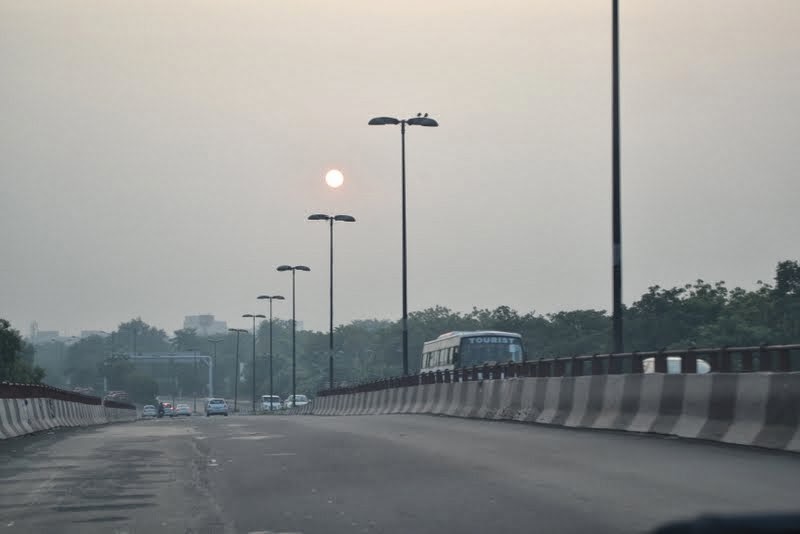
Figure –> – Early morning Delhi

We set sail from Delhi at 0630 in the comfort of Honda Civic and were able to beat the dreaded morning office traffic. We stopped at Bikanerwala for breakfast. I was very impressed with the restaurant and they are true to what they profess in their web site –“Bikanervala’s concept always has been to innovate and yet maintain the original flavour of traditional Indian food with primary focus on quality, hygiene and affordability”. The place is very clean and well managed. The food is very tasty and reasonably priced. To see their staff serving food with FSPG (Food Service Polyethene Gloves) was a very welcome sight. The toilets are clean.
The roads are in good order except for 7Km stretch between Suar and Bajpur, where it is nonexistent – 20 minutes of jolting and dust. The recommended route is Delhi – Rampur – Suar – Bajpur – Kaladungi – Nainital. The climb to the hills starts 35 Kms short of Nainital. After a brief stop for lunch at one of the many road side restaurants, we reached HH Nainital around 3PM. The restaurant displayed a very interesting menu card – Hot and Shower Soup, Chess Baryani, Veg Barger, Veg Chopasi amongst other items.
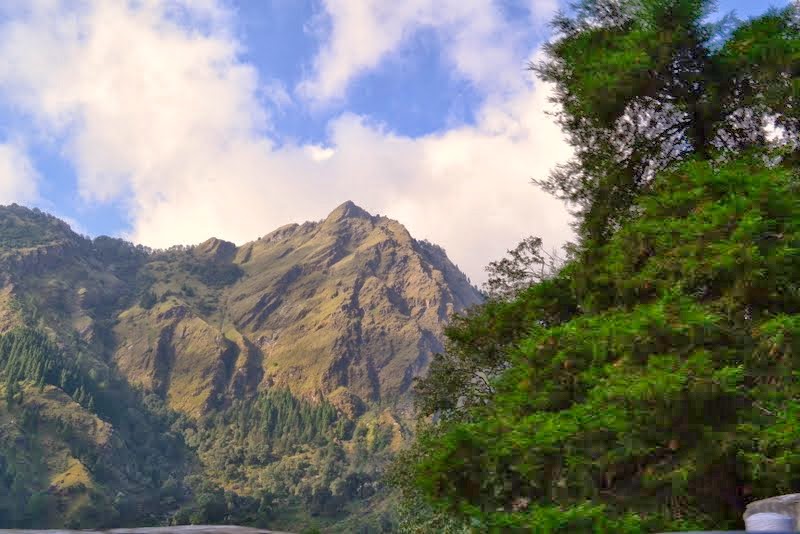
Figure –> – Short of Nainital
Uttarkhand is a state located in the Northern part of India which is well known for its natural beauty, it was carved out of Himalayan and adjoining districts of Uttar-Pradesh (UP) on 09 November 2000, becoming the 27th state of the Republic of India. It’s sometimes called “Land of the Gods” (Dev Bhoomi) because of the presence of a multitude of Hindu pilgrimage spots. Uttarkhand is the combined region of Kedarkhand (present day Garhwal) and Manaskhand (present day Kumaon). Nainital and Ranikhet are integral part of Kumaon. Ranikhet is home to Kumaon Regimental Centre – KRC. The Kumaon Regiment is one of the most decorated regiment of the Indian Army. It has produced many heroes – prominent among them being  Major Somnath Sharma (Posthumous), 4 Kumaon, Badgam, Kashmir, Indo-Pakistan War of 1947 and Major Shaitan Singh, (Posthumous), 13 Kumaon, Chushul, Ladakh, Sino-Indian War of 1962 both recipient of the Param Vir Chakra (Posthumous). Gen. KS Thimayya , General S M Shrinagesh and Gen. TN Raina of Kumaon Regiment occupy pride of place in the Indian Army.Their photographs welcome one and all to the Kumaon hills.
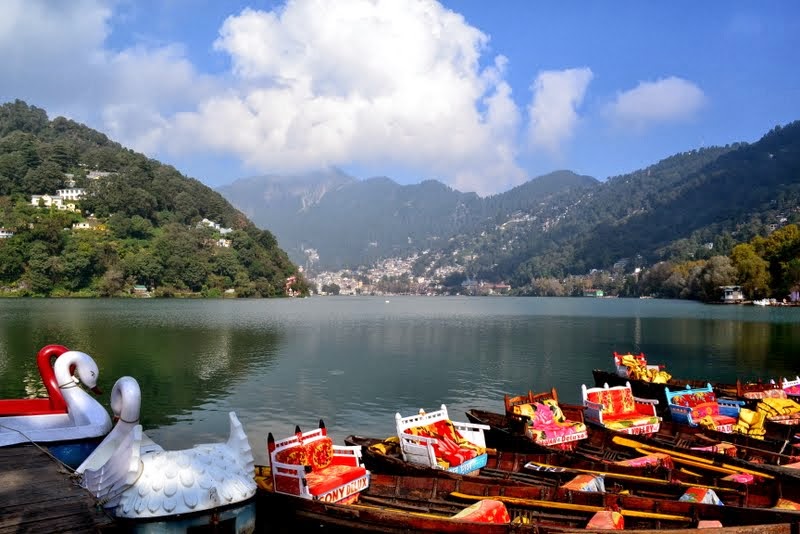
Nainital is a pleasant hill station located at an altitude of 6450ft.The town gets its name from a beautiful lake situated in the valley “Nani Lake”. The temperature hovered around 18 deg C during the day and 10 at night – an ideal setting for picnics, stroll and the like. The city is clean in spite of large number of tourist visiting during the Puja holidays. The conservancy staff is out early in the morning to sweep and tidy the place. During the peak hours the traffic does become messy due to narrow roads. The lake has been maintained well and the water is clear. The local administration should seriously consider banning ‘Horn’ in the mall area. Nainital is also home to few reputed schools – prominent among them being ‘Sherwood’ where my course mates John Siga and Kulbir Singh Aulakh learnt their nursery rhymes. I did not see any beggars –good.
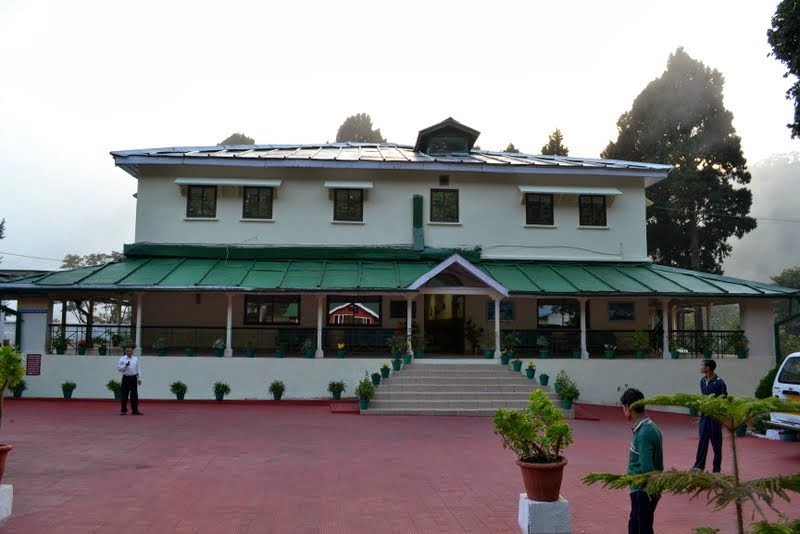
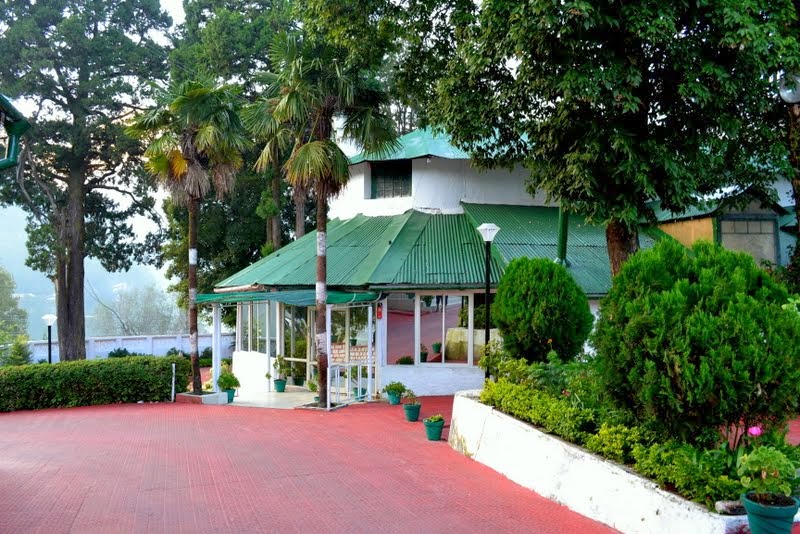
Figure <–> – Holiday Home Nainital

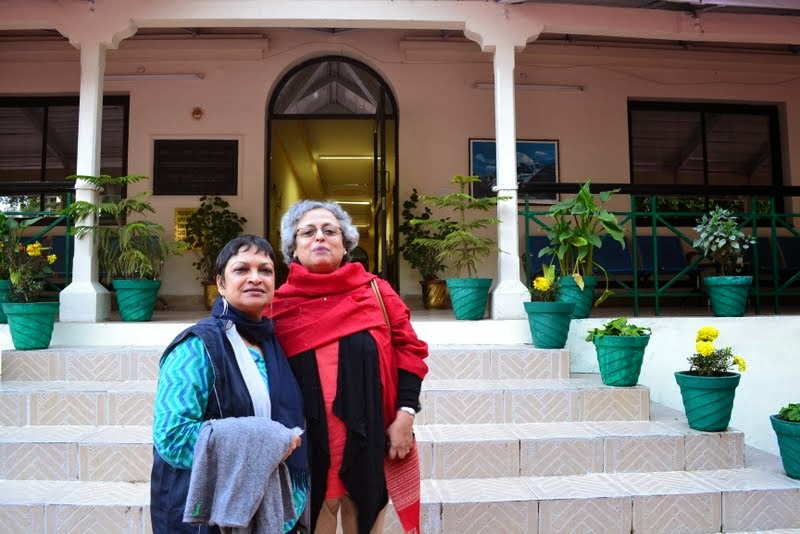
Figure –> – Push and Jai very thrilled

The HH is located on the mall overlooking the lake and the surrounding hills. The overall stay in HH was excellent – accommodation and food was top class.
Figure <!–> – Naini Lake

Figure –> – Another view of HH


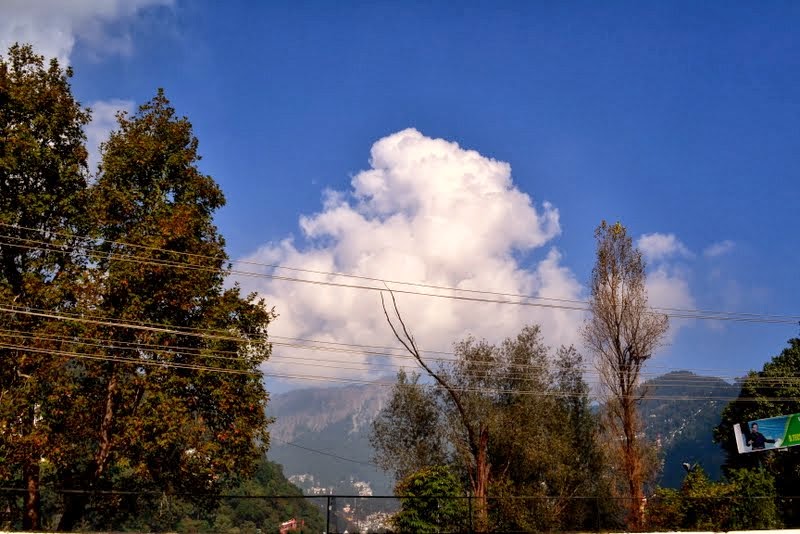
Figure <-> – Typical Naini sky

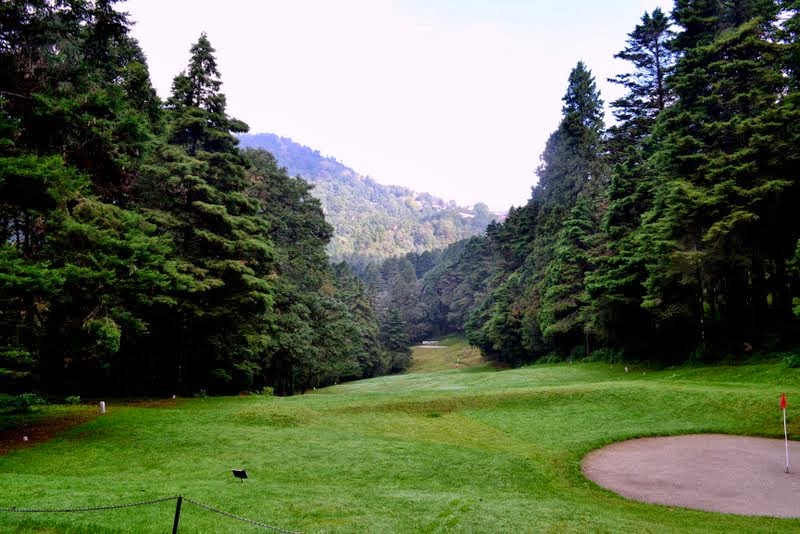
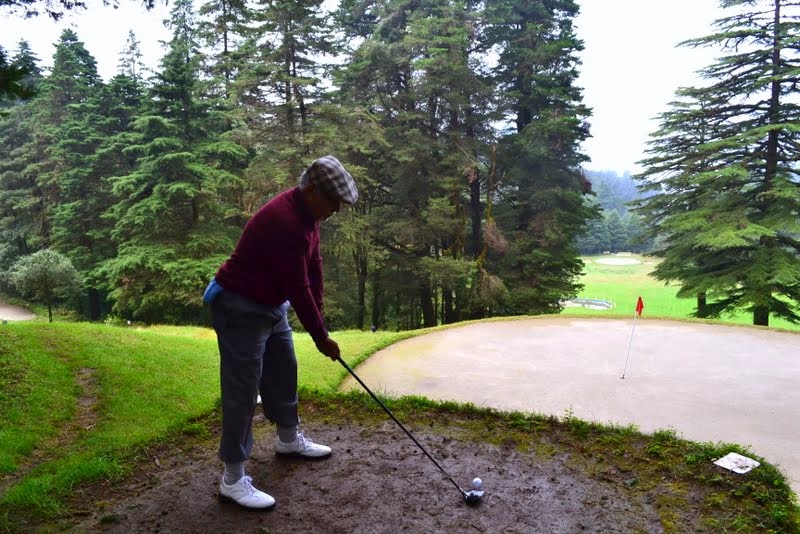
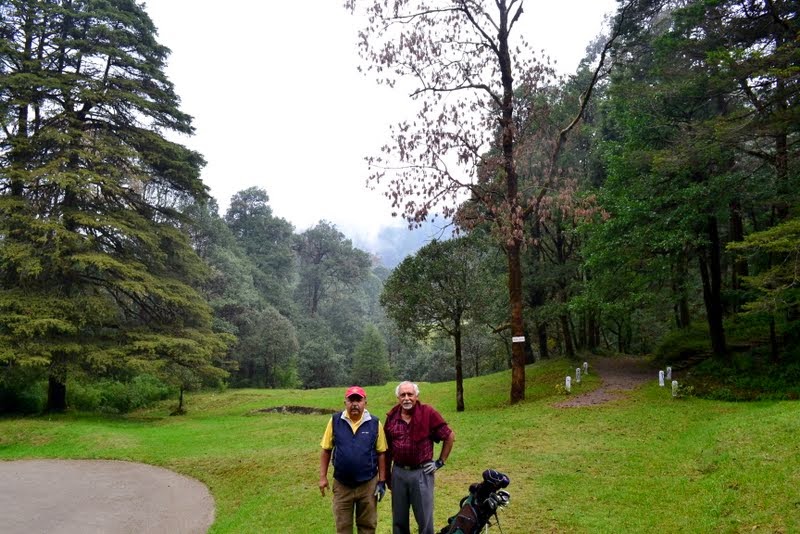
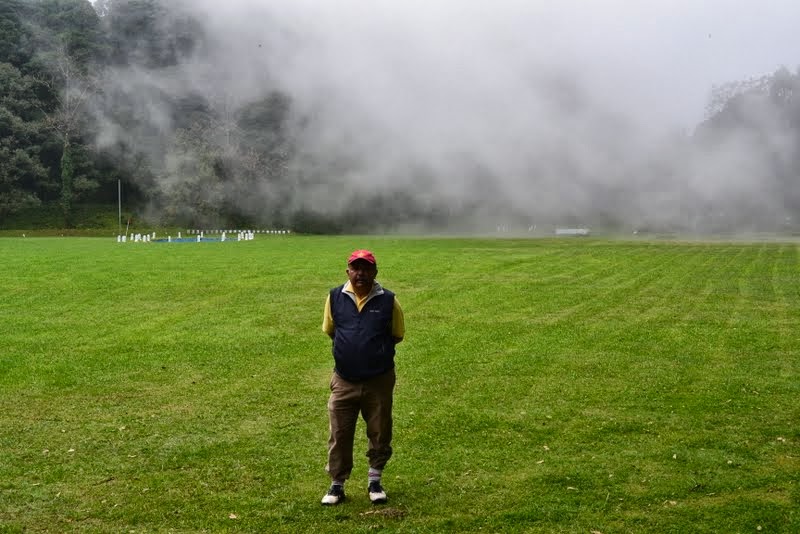
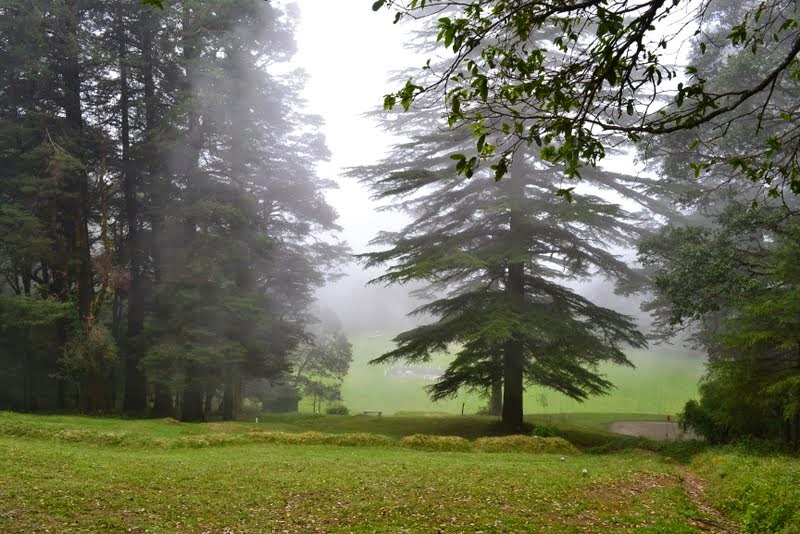
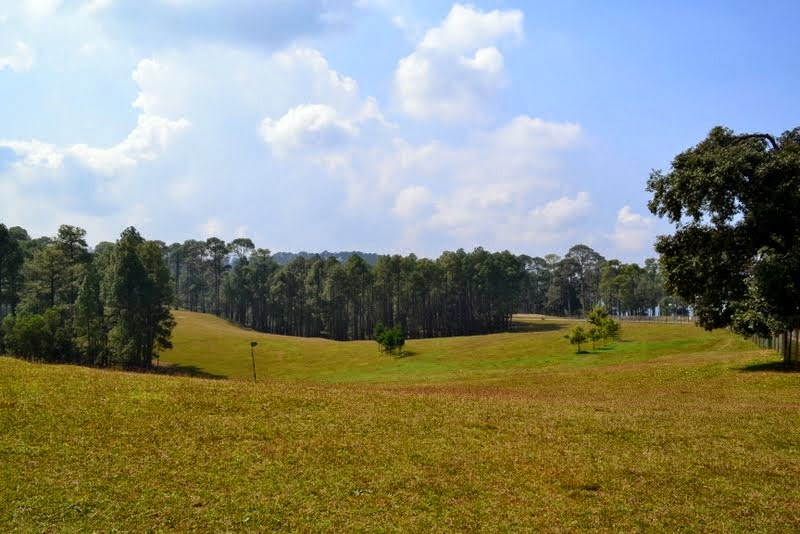
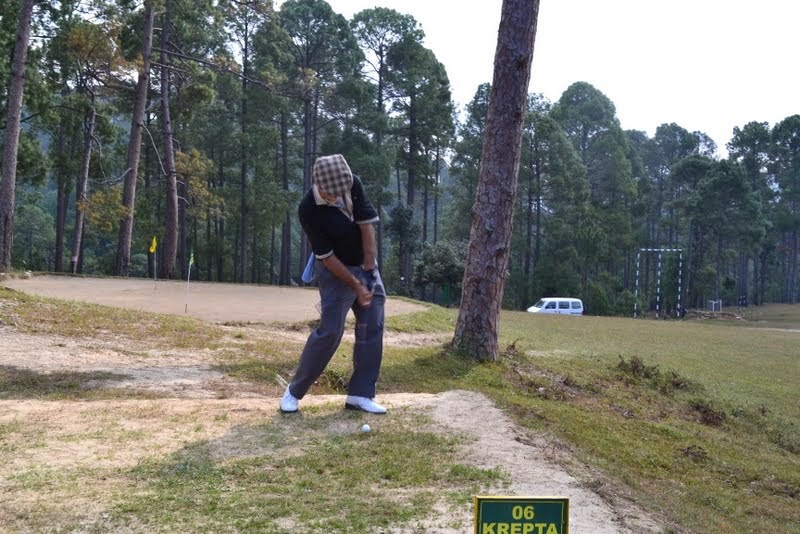
The girls spent their time going for long walks on the mall and window shopping. Self and Ashok had some very serious business to attend – Golf. Early next morning we teed off from the ‘Raj Bhavan Golf Course’. The course winds its way like a Python amidst thick forest full of Kaphal, Sal, Oak, Pine, and Weeping Willow trees. It is a short par 61 course with the regulation 18 holes covering a distance of about 3.2 kms. It has combination of Greens and Browns. The course is extremely challenging – the fairways are narrow with trees on either side and located on the slope of the hill face. Tee off has to be very accurate and precise. It was a real boon to be playing with a pro like Ashok Dewan, who with decades of experience was able to guide a novice like me. In most cases you cannot see the pin, which is further complicated by layers of cloud masking the entire area. Holes 1 to 5 are down slope and 6 to 10 is located on the limited level area of the valley flat. The caddy politely and discretely cautioned us that 11 to 18 require more of stamina than golfing technique. The last 7 holes are uphill and one ends up panting and gasping for breath. Later on we were told that it’s not uncommon to find leopards on the course after dark. A unique and wonderful experience.

Figure <-> – Hole No 1  downhill – no sight of the pin. – 18thpin on the right


Figure <-> – Freddie teeing off – Hole No 4 – between the gaps of pine – 12th pin in sight


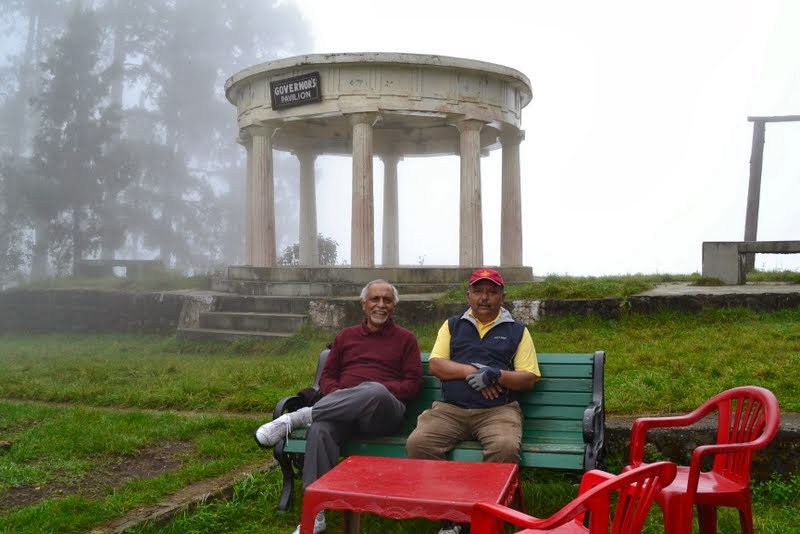
Figure > – Tea after the 9that Governors Pavilion – at the back


Figure <!– Catching up on breath 13thHole


Figure <!–– Talking about direction – waiting for the clouds to clear


Figure <!–[ A fascinating sight

In the evening we dined at the exclusive ‘Boat House Club’ established 1890.The club is situated on the lake and provides a panoramic view of the lake and the adjoining hills. The drinks and food are reasonably priced and we spent an enjoyable evening gazing at the lake lights. Later, we took a cycle rickshaw home.
Ranikhet  16 Oct 2013
 
After a scrumptious ‘Puri and Bhagi’ breakfast we set out for Ranikhet. Hot P and B with pickle is the ideal choice for the mountains and cold weather. It has a remarkable ability to revitalize both the body and soul on a wintery morning. In the navy, every Monday morning was P and B. It takes around 2 hours to reach Ranikhet, which is 60 Kms from Nani. The drive is very picturesque and interesting. Basically, a military cantonment Ranikhet is situated at a height of 6200ft   and the seat of “Kumaon Regimental Centre”. R is sparsely populated and more appealing to the eye than Nani.
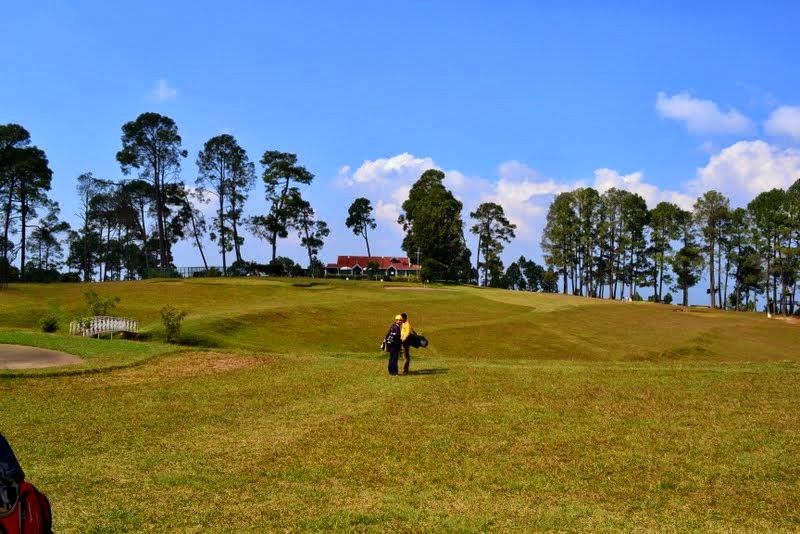
The agenda was very simple – We play golf and the girls relax and study the nature around ‘R’ in greater detail. Once again the ‘Army Uppat Golf Course’ (9/18 holes) is set amidst green meadows and gentle slopes; together they give the course the required degree of challenge and complexity – rendering the game interesting and unpredictable.

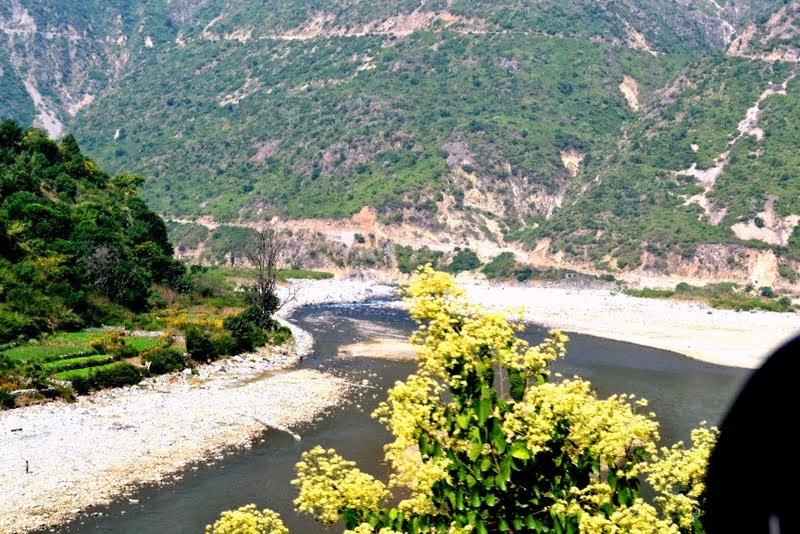
Figure <!-– A tributary of Ganga – rather dry


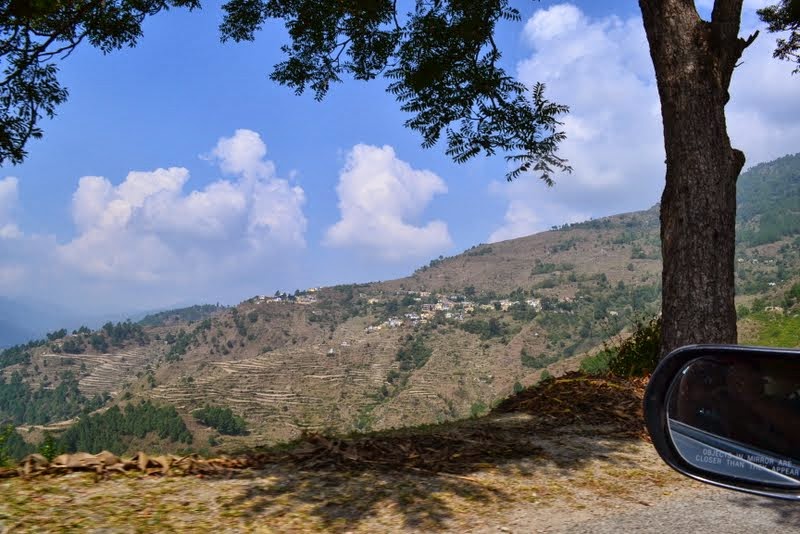
Figure < On the way to Ranikhet


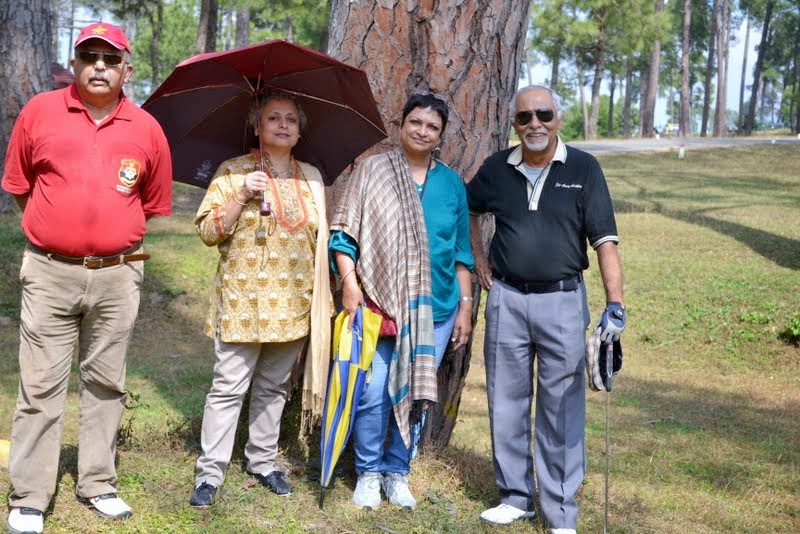
Figure <!– Photo op on the course


Figure <– Ever gentle slope with 4thand 5th Holes

Figure <! – Freddie teeing off from the 6th hole – notice the ram rod straight left hand


Figure < A distant view of the Golf Club

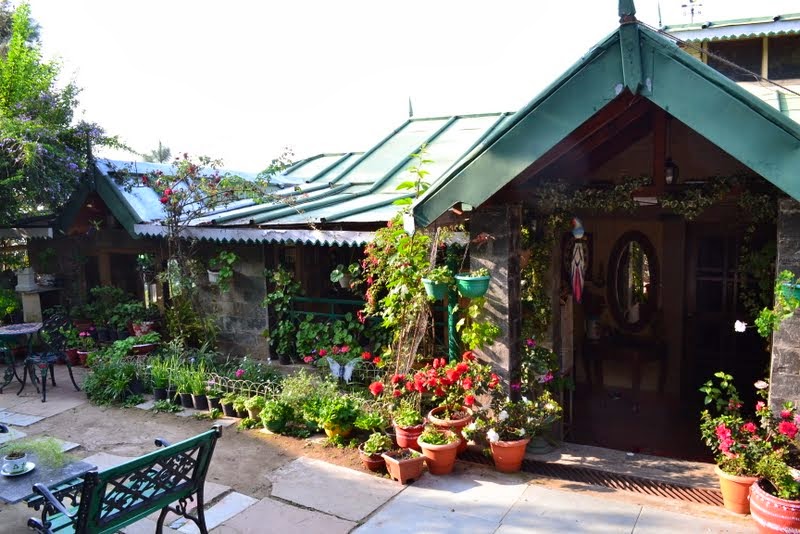
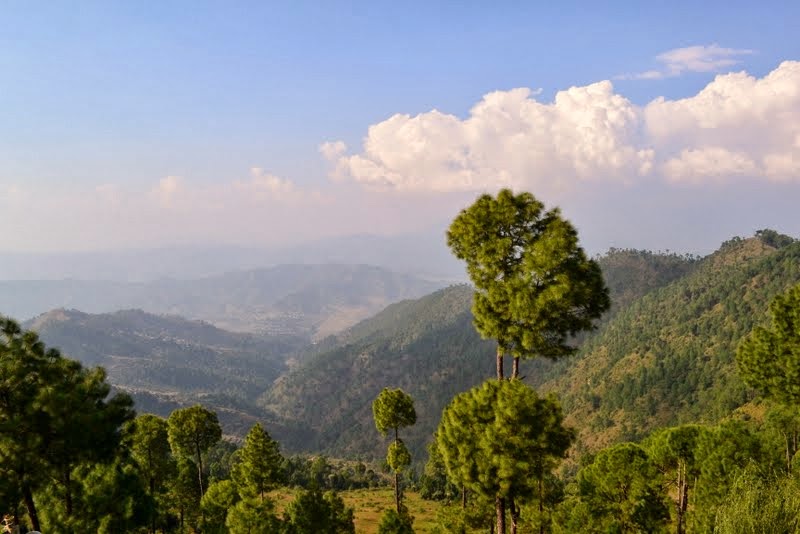
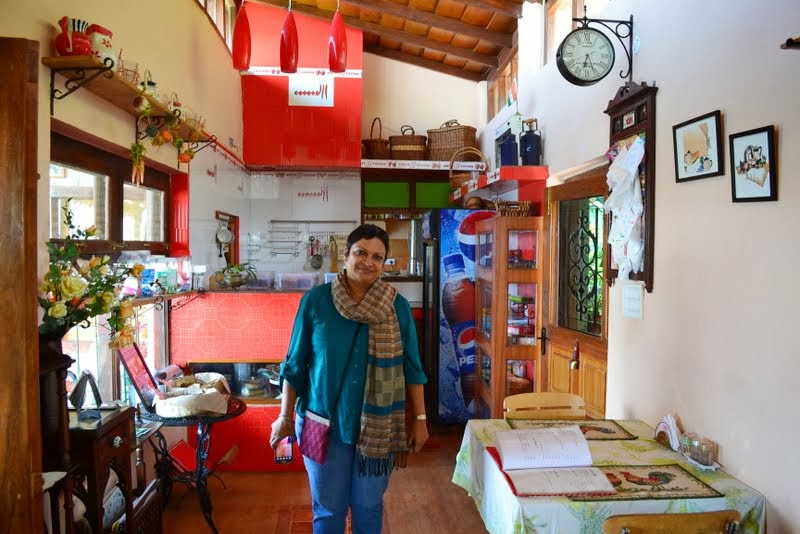
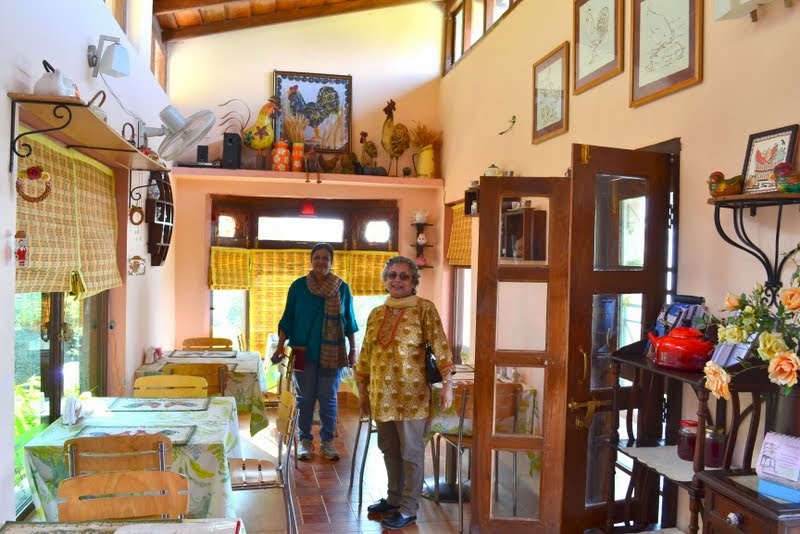
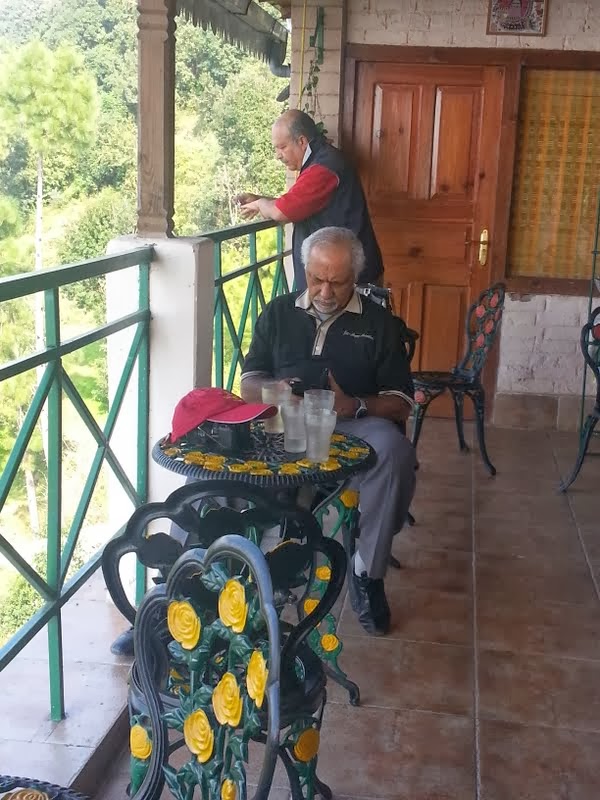
We then visited ‘Valley View’ Home stay for lunch. It is located on National Highway (NH) 87-E, between Ranikhet and Almora, near Majkhali and is about 6 km from Ranikhet Golf Course and 12 km from Ranikhet Market. Ashok and Push had visited this place on an earlier trip to R and very duly impressed with the overall ambiance it offered. The rooms and the ‘Café” overlook the amazing ‘Gagas River Valley’ and the Himalayas at a distance. The picture is really breath taking. The place is run by a retired army officer and his wife. A chilled glass of beer, hot pasta with tomato cheese sauce and grilled fish after a round of golf with good friends was the highlight of the day. The place is very elegantly decorated with a number of knick knacks and artifacts. A well maintained garden adds to the classy show the owners have painstakingly developed. The rooms are basic but clean and well appointed. All overlook the fascinating view of the valley and the mountains. Worth a stay and one is assured of ‘value for Money’

Figure <!– Valley View Resort


Figure <!- – Gagas Valley View

Figure <! The Café

Figure < – Another view of the café


Figure <!–– Totally at home- cutting nails

Next morning we started very early and did a bit of BF in a ‘Dhaba’ enroute. After a couple of hot and mouth watering Aloo Parathas we reached outskirts of Delhi to be confronted by its swollen traffic.

Figure > – Savoring Parathas

 Both Ashok and Pushpa share the task of driving. After a long haul, to chill out was a good idea – especially for A and P. We had a nice lunch at ‘Big Chill Café’ in Khan Market to celebrate Jayanti’s birthday. The walls are adorned with framed posters of yesteryear’s classics like Casablanca, Russia with love and Hitchcock’s Psycho. The look is retro and different.

Figure- Different posters in the background on the wall

On 18th, Ashok and Push hosted a dinner to all the naval course mates visiting Delhi for the wedding. The evening was full of merriment, fun and frolic. Generous amount of Black Dog, Pushpa’s excellent fare and pleasant weather – all added up to make the evening very memorable.

Figure < – Lovely Balcony – Nair, Rags, Sameer, Bill and Keith. 


Figure <!- Good old friends- Rags, Keith and Snitch 


Figure <!- Gir with Jai and Nair

 
Figure <– Jai cutting the cake so lovingly ordered by Push and Freddie

Bull Fight at Madrid – 01 June 2013

The overriding principle of ‘experiencing everything at least once’ made most of us watch a bull fight. How, one can visit Spain and not witness a bull fight was the thought, foremost in my mind. None of us really knew how a bull fight would unfold. Our scanty knowledge was from novels, movies and hearsay. My respect for the bovines had increased manifold since the time I saw a National Geographic clip of an African buffalo taking on the mighty lion.

I come from a land, where bulls and cows are revered and worshiped  My childhood days were spent in the playing fields of ‘Bugle Rock’ in Basavanagudi (meaning Temple of the Bull) Bangalore. Adjoining the play field is located the famous Bull Temple of Bangalore. In fact the road is named the ‘Bull Temple Road’. Many evenings were spent visiting the temple and praying.   


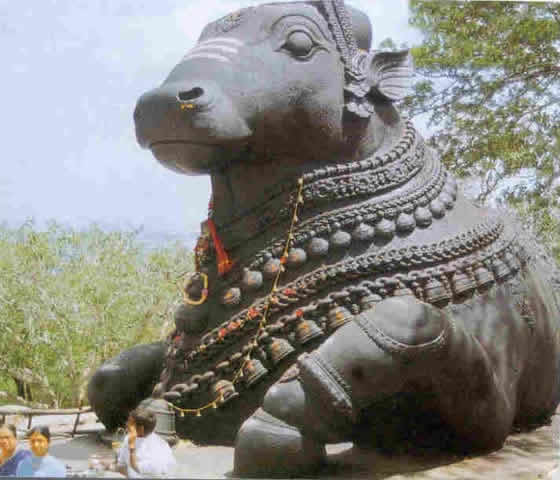
Figure <!–[if supportFields]> SEQ Figure \* ARABIC <![endif]–>1<!–[if supportFields]><![endif]–>– The Bull

The huge idol of Nandi (Bull) stands approximately 15 feet tall and 20 feet in width. This idol is said to have been carved out of a single rock. It was installed in 1537 by Kempegowda the First, the founder of Bangalore and a feudatory ruler under the Vijayanagar Empire. The Nandi is the vehicle of Lord Shiva.

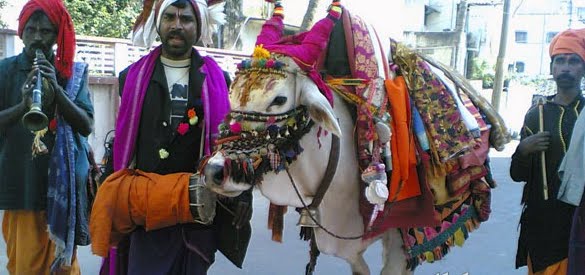
It is also very common to find a decorated bull and its handler parading on the streets of Bangalore. The appearance of the bull is seen as a good omen.


Figure <!–[if supportFields]> SEQ Figure \* ARABIC <![endif]–>2<!–[if supportFields]><![endif]–> – Decorated bull doing the rounds with its handlers

My only other association with the term ‘Bull’ having reference to the restaurant ‘The Bull and Bush’ in http://samundarbaba.blogspot.in/2010/09/person-perception.htmland the bar ‘Cock and Bull’ in http://samundarbaba.blogspot.in/2012/11/we-went-to-sakleshpur.html
Incidentally bullfightingwas banned in the Spanishautonomous community of Cataloniaby a vote of the Catalan Parliament in July 2010. The ban came into effect on 1st January 2012. The last bullfight in the region took place in Barcelona in September 2011.


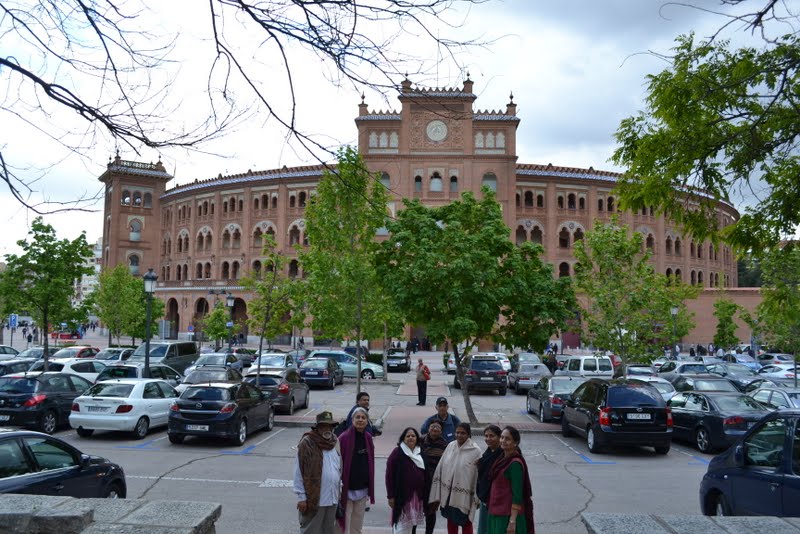
Figure <!–[if supportFields]> SEQ Figure \* ARABIC <![endif]–>3<!–[if supportFields]><![endif]–> – Plaza de Toros de Las Ventas

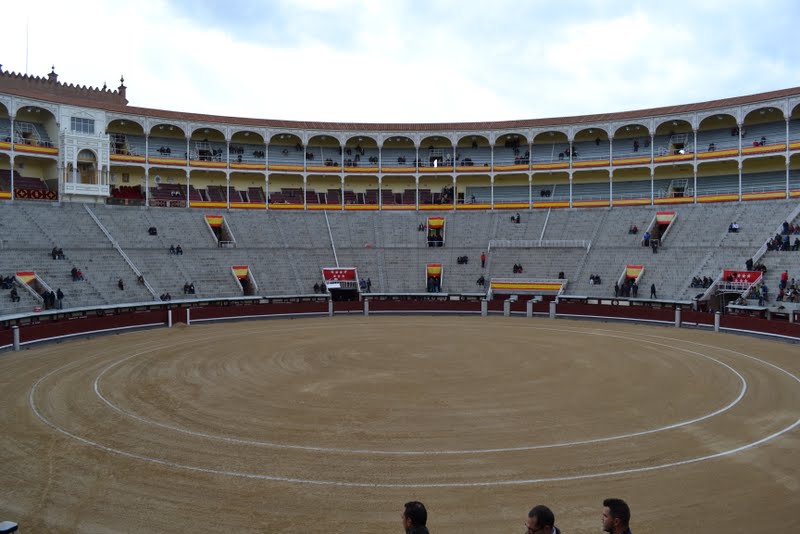
I went to watch a bull fight in the ‘Plaza de Toros de Las Ventas’ a famous bullring in Madrid. “Las Ventas” is divided into a ring or arena and a group of zones called “patios”. The arena has a diameter of 60 meters. The seating capacity is divided into 10 “tendidos” (group of 27 rows around the arena), some of them in the shade and the rest in the sun. It has a capacity of 23,000 spectators.


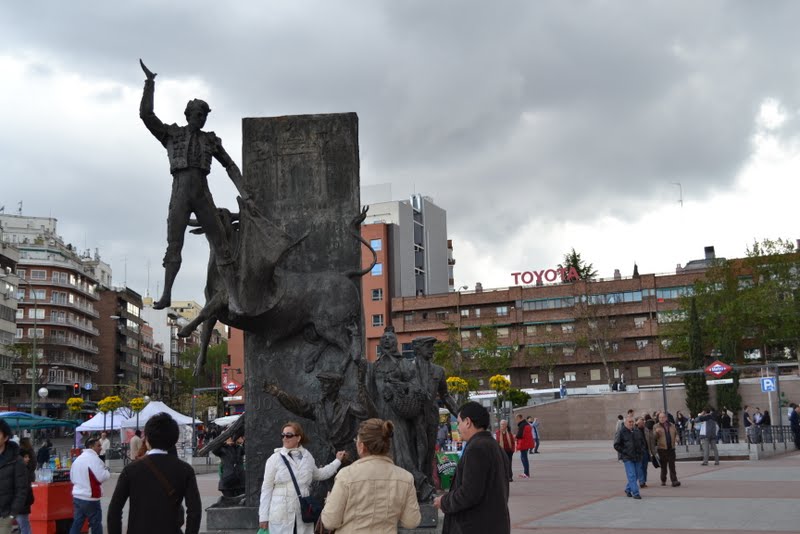
Figure <!–[if supportFields]> SEQ Figure \* ARABIC <![endif]–>4<!–[if supportFields]><![endif]–> – Toreros statue outside Las Ventas bullring, Madrid, Spain


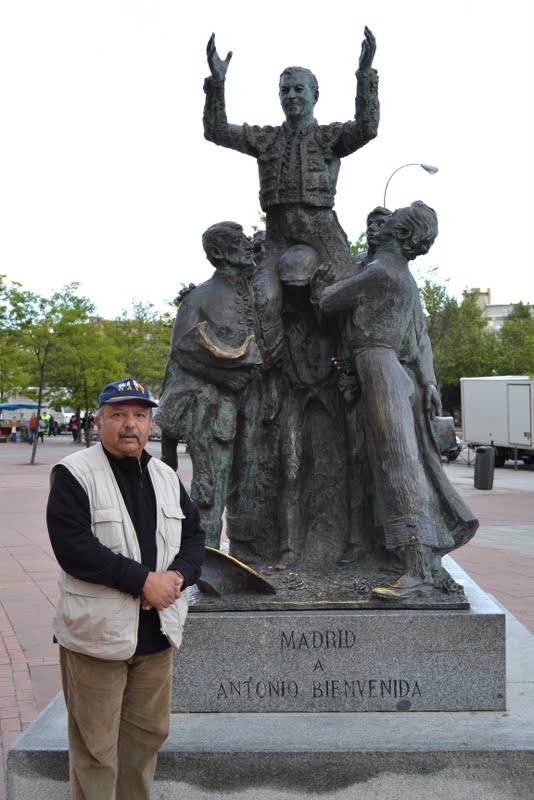
Figure <!–[if supportFields]> SEQ Figure \* ARABIC <![endif]–>5<!–[if supportFields]><![endif]–> – Antonio Bienvenida a very famous Spanish bullfighter


Figure <!–[if supportFields]> SEQ Figure \* ARABIC <![endif]–>6<!–[if supportFields]><![endif]–> – The arena


Figure <!–[if supportFields]> SEQ Figure \* ARABIC <![endif]–>7<!–[if supportFields]><![endif]–> – Waiting in somewhat tremulous anticipation

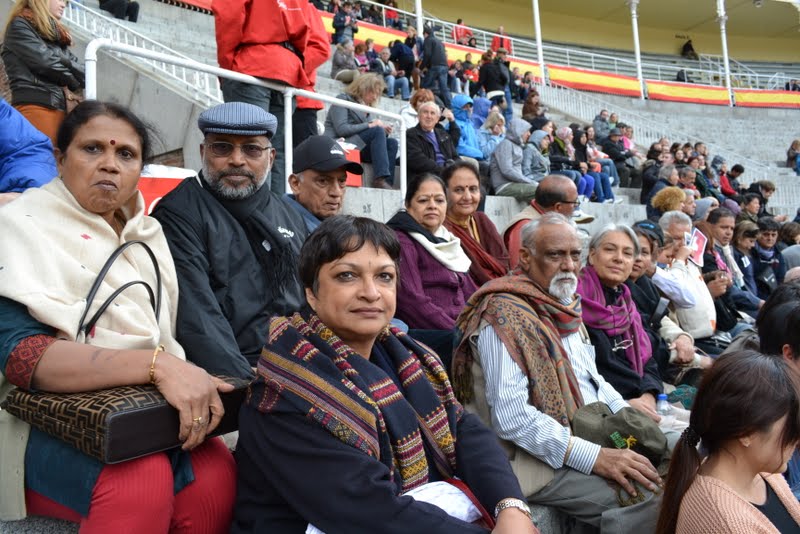
Spectators arrive in hoards to watch the bull fight. The whole place gets filled up with fans eagerly waiting to see the action – girls, boys, children, old people, make up the scene. Food and drinks are freely available to add to the spectacle. As time progresses the crowd becomes restless and starts cheering. The mood inside is charged and electric. Finally the bugles sound the commencement .The Picadors enter the scene with aplomb and are received with thunderous applause. For the crowd there is no going back – the action has commenced. The crowd enter into a trance – a make believe world reflecting the virtues of human power over animals. It’s not about survival – hunting in the jungle to kill, eat and stay alive. We are not in the Paleolithic age, when man competed with animals to rule the earth. This crowd is now in the year 2013 AD in modern Spain, waiting to satisfy its meanest instincts – to maim, wound, draw blood and kill.


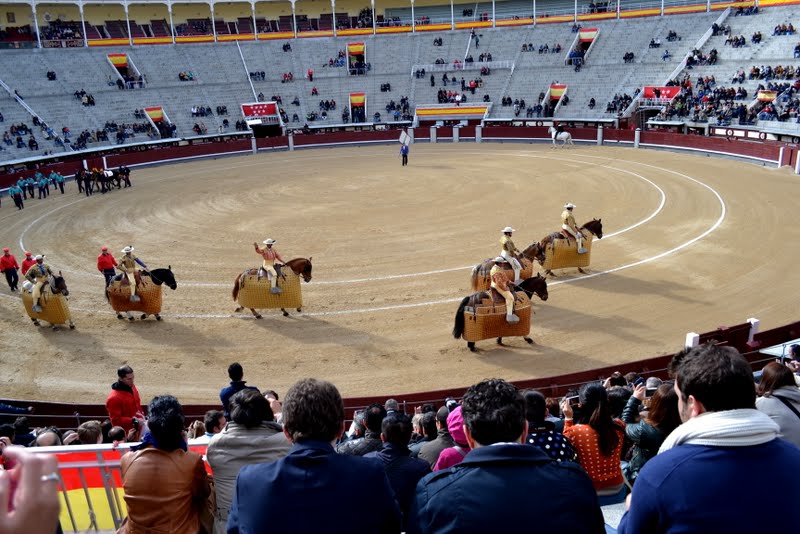
Figure <!–[if supportFields]> SEQ Figure \* ARABIC <![endif]–>8<!–[if supportFields]><![endif]–> – Picadors enter the scene

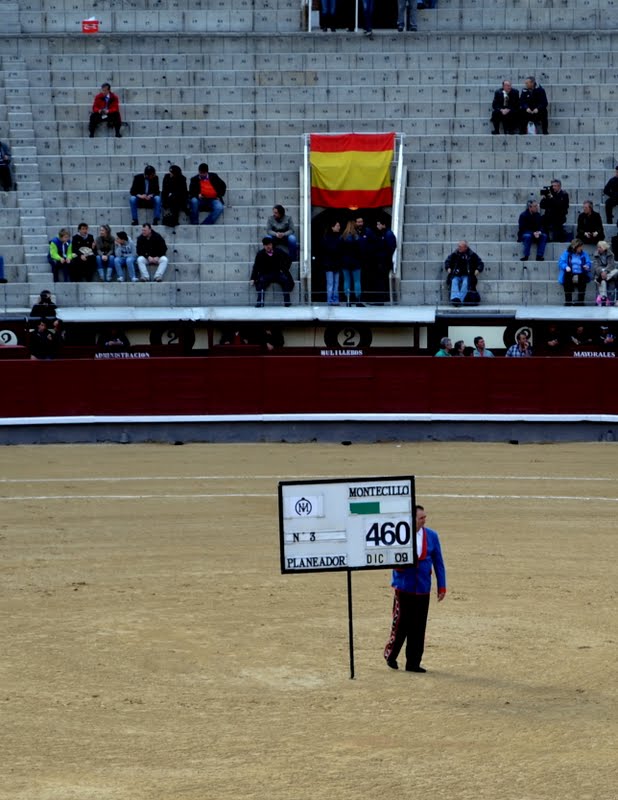
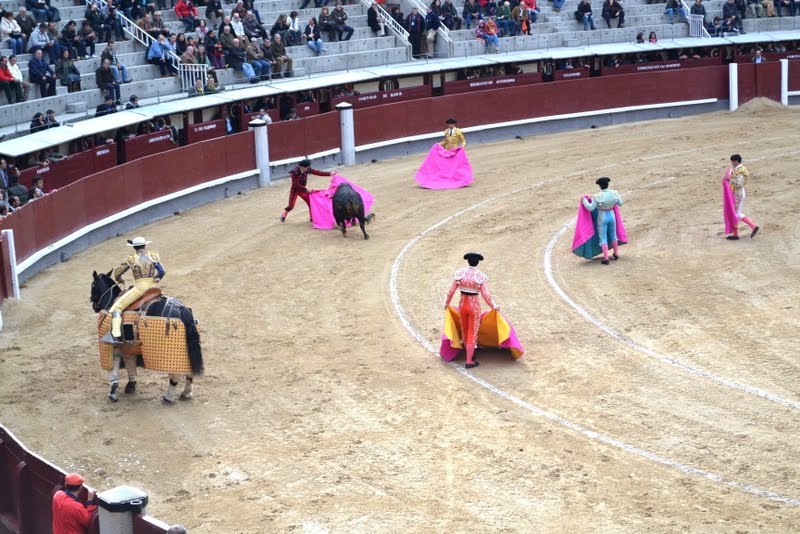
The Picadors along with various henchmen enter the arena with fanfare. As in a military parade, they go around the arena waving and saluting. The crowd explodes in approval. Then a man holds a placard proudly proclaiming the details of the bull – mainly its weight.


Figure <!–[if supportFields]> SEQ Figure \* ARABIC <![endif]–>9<!–[if supportFields]><![endif]–> – 460 Kg bull

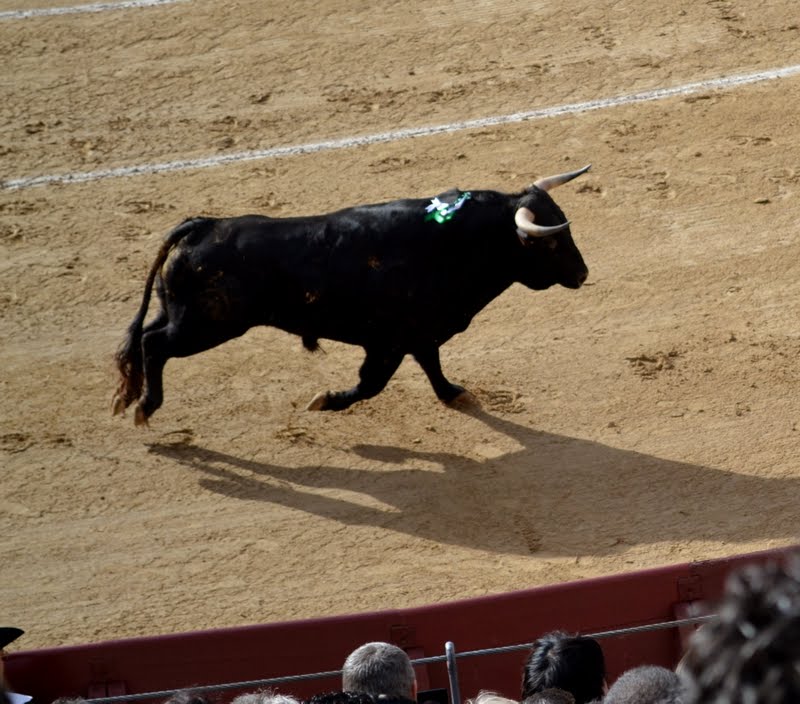
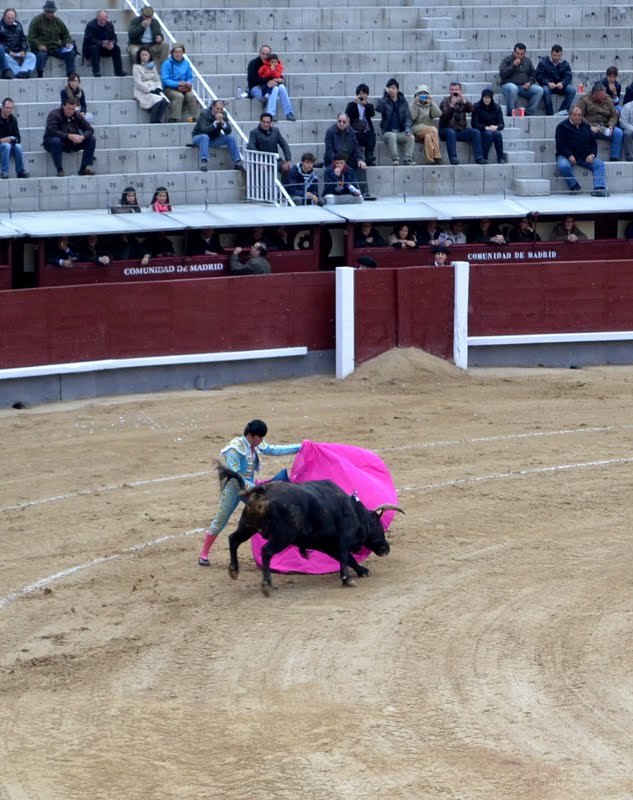
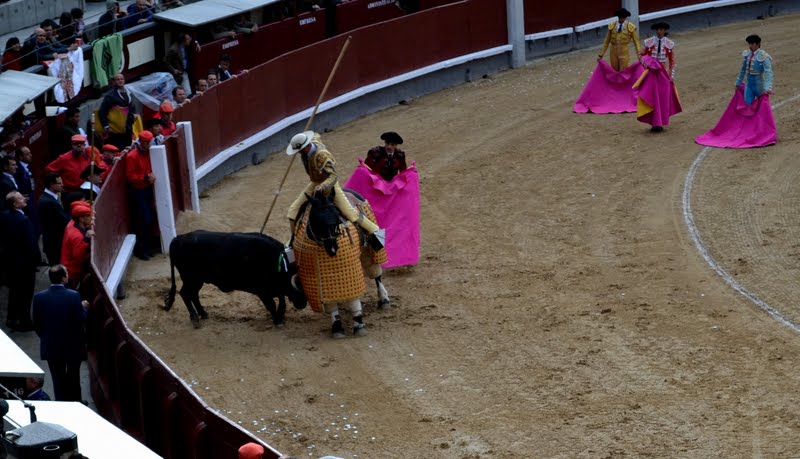
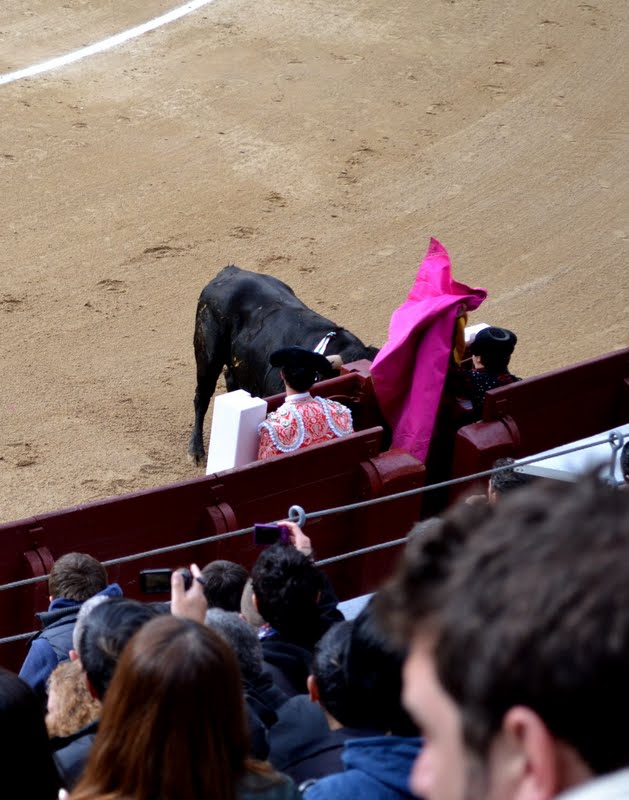
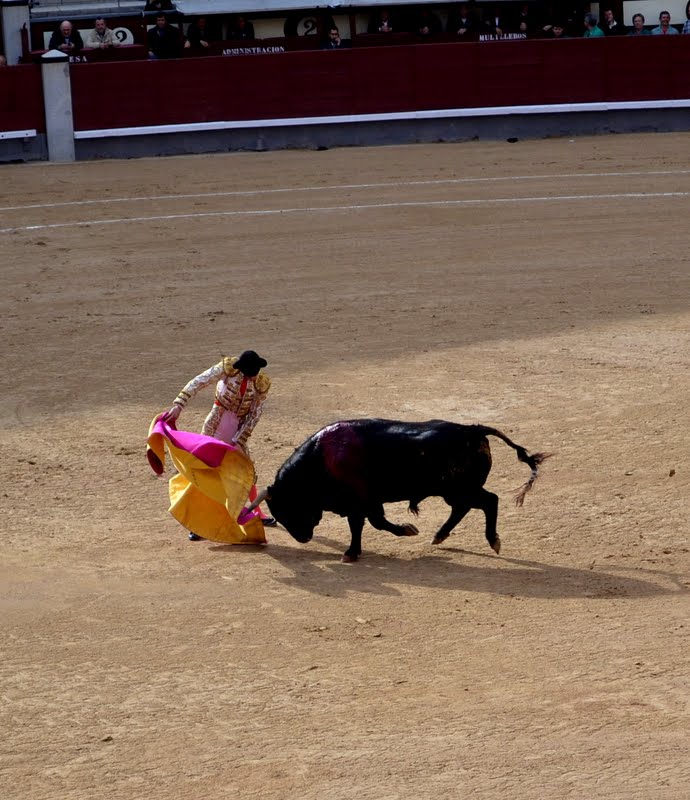
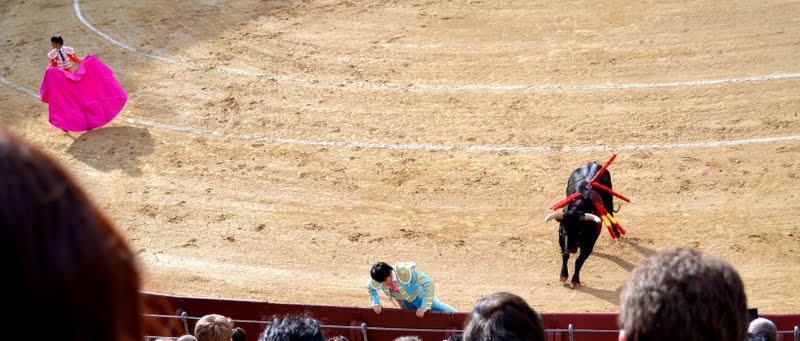
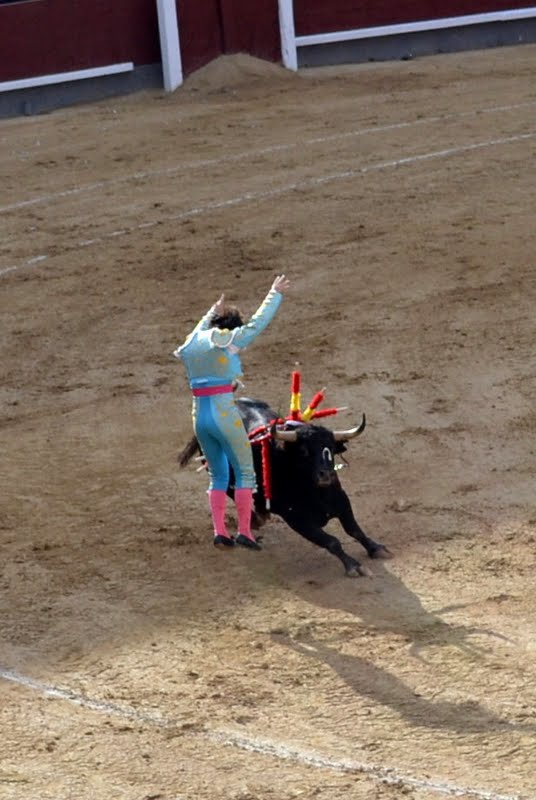
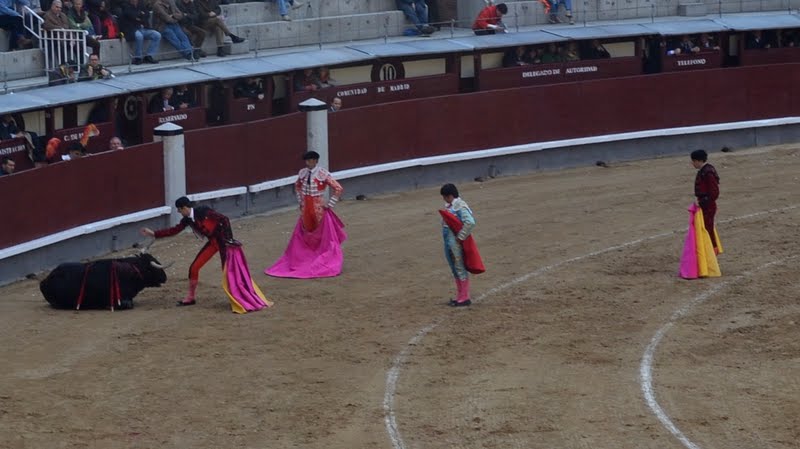
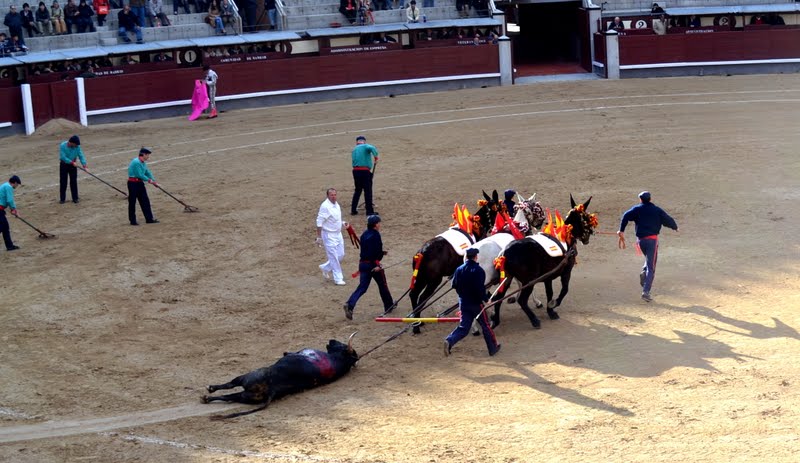
The most anticipated event of the day happens. All of a sudden, the bull appears in the arena. The animal is totally confused and bewildered not knowing what to do and where to go. It is in a strange and unfriendly environment. I later learnt that the bull has been severely handicapped during the last two days, with the primary aim of making it weak, disoriented and submissive. Only a sick mind can do this. The bull has already been maimed with a short spear marking the spot for further mutilation. Bull fighting has been glorified over centuries as a contest between a wild and uncontrollable beast and a brave Matador. The junior Matador commences his serious business of tiring the animal. The bull runs around the arena aimlessly, tiring itself in the bargain. The brave Picadors safely seated on horseback, wait for an opportune moment to drive a javelin-like spear into the bull’s back. The horse is protected by a metal blanket as the bull stops to gorge. The Picador bravely inserts the spear into the bull and it starts to wriggle free from pain. The Picador is relentless in his pursuit and with single minded devotion continues to stab and gorge the bull. The bull charges in anger and our heroic men take shelter behind a steel wall. The crowd applauds and shows their marked appreciation by waving out white handkerchiefs. As the bull bleeds, the chief matador enters the act, teasing and further wounding the animal with the Banderillas a sharp, harpoon-like barbed instrument. These are plunged into the bull’s body repeatedly. Five to six Banderillas are pierced with surgical precision as the bull staggers and groans in pain. During all this acts of bravery the Matador is helped by Picadors and a number of assistants. The bull has no chance and is cornered. In a final act of subhuman cowardice the Matador plunges a knife into the tired and helpless bull. The bugle blares, heralding the end of a gruesome display of a one sided ugly sport. The bull never had a chance from the very beginning. A medieval sport without any meaning continues to thrive in modern Spain – encouraged by the locals and tourists. I understand a top Matador is paid up to 350,000 Euros for every fight and he does four in a year. As the defenseless and maimed bull falls, he attacks it once again to seal the killing. The worst happens thereafter. The dead bull is unceremoniously dragged by horses out of the arena as the crowds boo and jeer him. Now at peace for the first time, the bull departs the arena after twenty minutes of the most atrocious and unfair treatment by so called civilized men.

The barbaric show is over. We cannot take it any longer. We decide to call it quits and skip the next three fights. We slowly troop out, with heads hanging in shame, guilt and a deep sense of remorse. Never again! Some are bound to say ‘Why the first time itself?


Figure <!–[if supportFields]> SEQ Figure \* ARABIC <![endif]–>10<!–[if supportFields]><![endif]–> – All of a sudden, the bull appears in the arena


Figure <!–[if supportFields]> SEQ Figure \* ARABIC <![endif]–>11<!–[if supportFields]><![endif]–> – The junior Matador commences his serious business of tiring the animal


Figure <!–[if supportFields]> SEQ Figure \* ARABIC <![endif]–>12<!–[if supportFields]><![endif]–> – The brave Picador safely seated on horseback waits for an opportune moment to drive the javelin like spear into the bull’s back


Figure <!–[if supportFields]> SEQ Figure \* ARABIC <![endif]–>13<!–[if supportFields]><![endif]–> – The bull charges in anger and our heroic men take shelter behind a steel wall


Figure <!–[if supportFields]> SEQ Figure \* ARABIC <![endif]–>14<!–[if supportFields]><![endif]–> – As the bull bleeds the chief matador enters the act


Figure <!–[if supportFields]> SEQ Figure \* ARABIC <![endif]–>15<!–[if supportFields]><![endif]–> – Five to six Banderillas are pierced with surgical precision

Figure <!–[if supportFields]> SEQ Figure \* ARABIC <![endif]–>16<!–[if supportFields]><![endif]–> – Matador is helped by Picadors and a number of assistants


Figure <!–[if supportFields]> SEQ Figure \* ARABIC <![endif]–>17<!–[if supportFields]><![endif]–> – Matador plunges a knife into the tired and helpless bull.

Figure <!–[if supportFields]> SEQ Figure \* ARABIC <![endif]–>18<!–[if supportFields]><![endif]–> – Defenseless and maimed, the bull falls, he attacks it once again to seal the killing


Figure <!–[if supportFields]> SEQ Figure \* ARABIC <![endif]–>19<!–[if supportFields]><![endif]–> – The dead bull is unceremoniously dragged out

On our return to the hotel Jayanti wrote a poem to get the horrid spectacle out of her system.
With a flurry of tradition
The toreadors and other horsemen
Walk into the ring
Flourish their capes
Arrogant and sure
Excitement fills the air
Anticipation fills the lungs
I enter
Look around,
I do not know why I’m here
They have pierced me
and sent me in
My blood boils,
I scent danger
They tease and
arouse my worst instincts
I charge wildly
this way and that
A dance of death-
Dodging me, they wound me
Again and again
Wildly helpless, bloodied and still strong
I charge
The rider on horse back
uses his three headed spear
The Toreador makes his move
Alas! I can take no more
I die as the thundering sound of applause fills the air
**************

We visited Madrid – 30 May 2013

All of us were really excited to see Madrid, as it happened to be our last place of visit. In 14 days, we had gone around Spain and Portugal and travelled almost 3000 KM in a bus. The journey to Madrid was accompanied by rain and snow fall. Unusual, for this time of the year. The weather was really cold and we were prepared for it, this time around. Cold weather somehow manages to heighten ones mood and people become active and chirpy.

The travel with ‘Trafalgar’ is a different kind of experience. On the plus side – it is meticulously organized, time management is first-rate, choice of hotels is good and the transport and the guides are excellent. Trafalgar covers a lot of ground and we were able to see many cities in the duration of 14 days. David Nadal did a creditable job as our tour director. However the coverage of the cities needs a lot of tweaking. Our stay in Barcelona and Valencia could have been better handled. Most of the good places of visit are covered under ‘Optionals’ for which one has to pay extra.

Going on your own with time on hand is undoubtedly the best way to travel. Our trip to Greece with Nair and Sudhi was excellent. We visited Athens and Santorini. With Athens as base we went to Delphi, three islands cruise and places around Athens. I suppose, it largely depends on the country one visits – it’s better to go on an organized tour in China – may be the same holds good when you visit Vietnam and Cambodia.

Whichever way one decides to travel, the bottom line should be –travel extensively. It breaks monotony, you stand to gain knowledge and return wiser. I personally feel that travel makes you a better person.

Spain and Portugal took us to a different Europe.Only when you travel you realize how vastly different countries in Europe are, in spite of their small size and closeness.’I visited Europe’ makes absolutely no sense.One has to further qualify by saying Greece,Italy or Denmark  – the same holds good with India. We are very vast and each state is different.I think there is nothing wrong in people demanding a separate state to enhance their identity – be it Telengana,Gorkhaland,Vidharba etc  

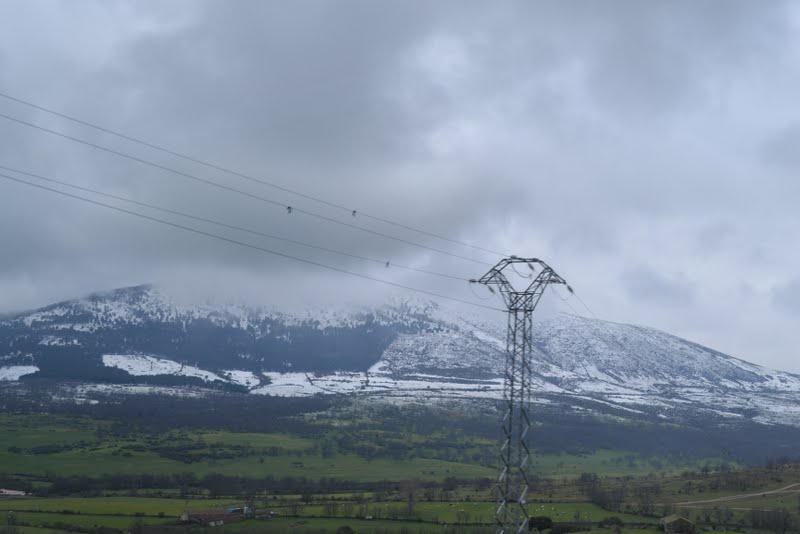
Figure <!–[if supportFields]> SEQ Figure \* ARABIC <![endif]–>1<!–[if supportFields]><![endif]–> – Drive up to Madrid

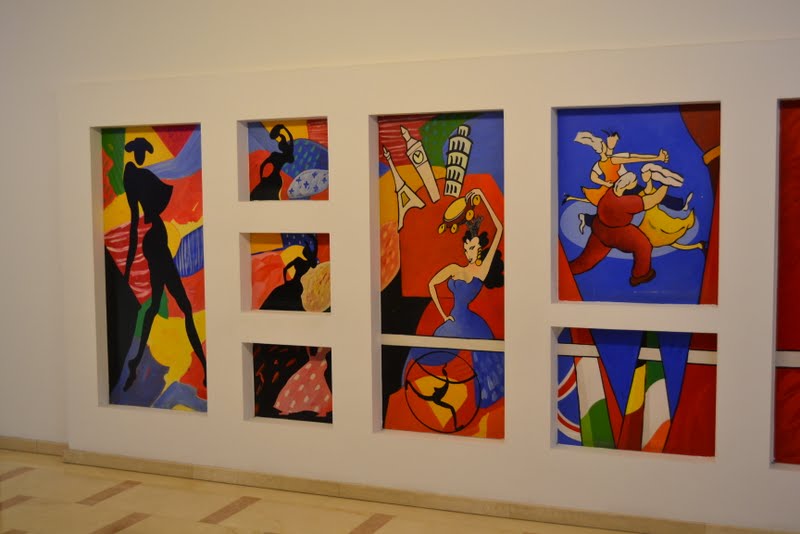
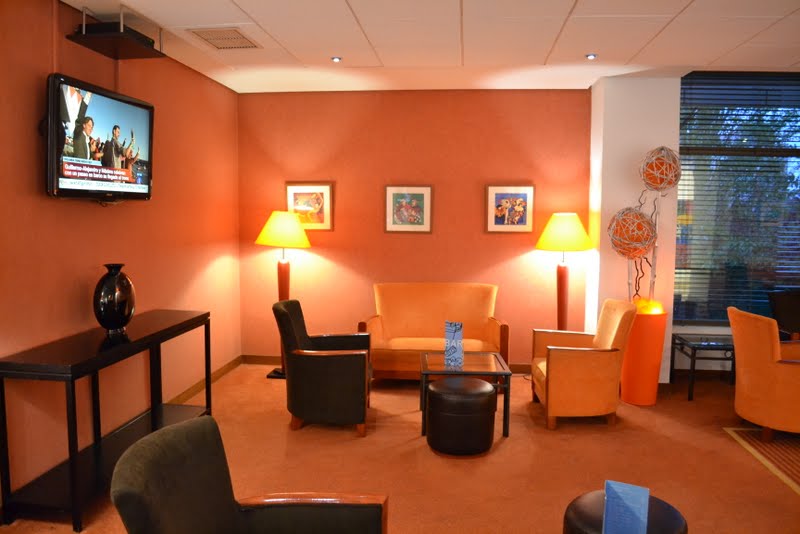
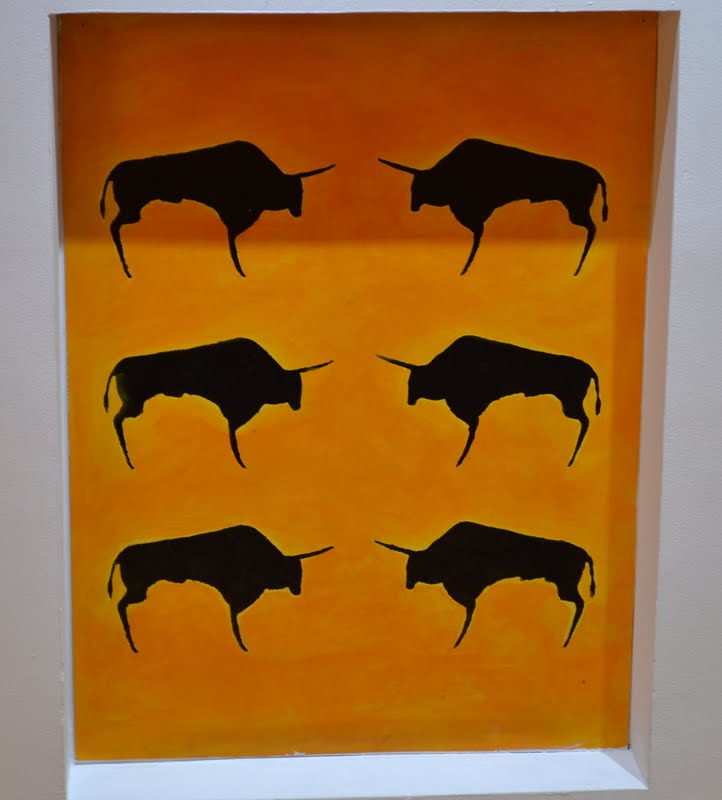
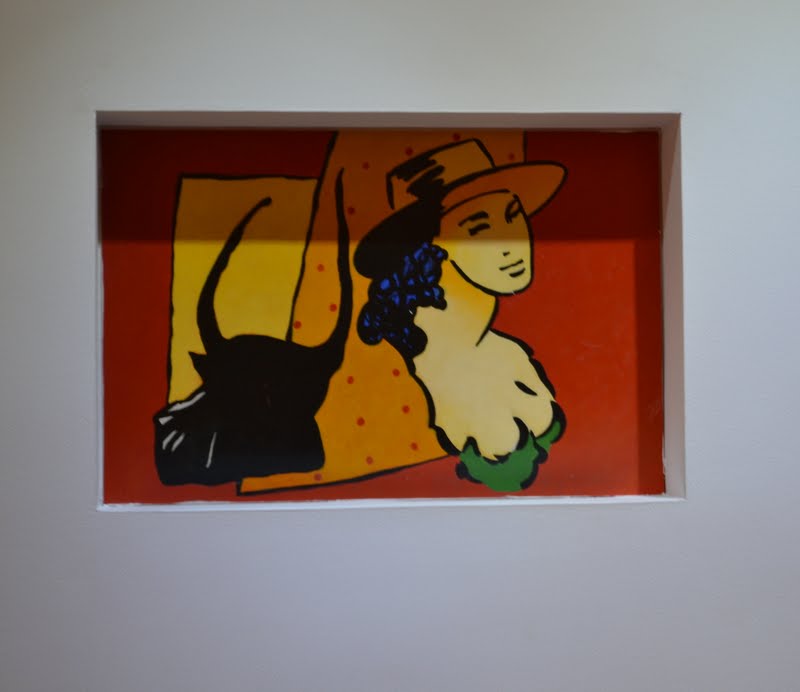
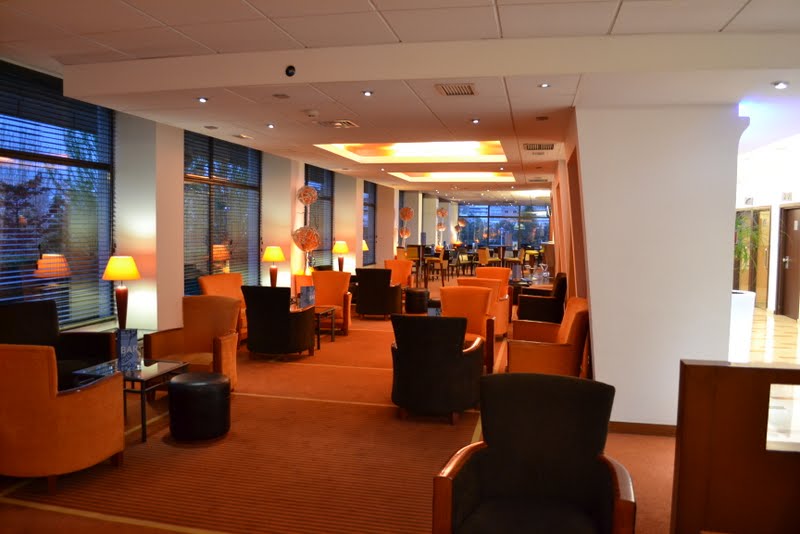
Finally we reached Madrid and moved into a very stylish hotel ‘Novotel Madrid Puente De La Paz’. The inner lobby immediately catches your attention. A series of wall paintings and well appointed furniture makes up the place.


Figure <!–[if supportFields]> SEQ Figure \* ARABIC <![endif]–>2<!–[if supportFields]><![endif]–> – The painting in the recess gives an additional appeal


Figure <!–[if supportFields]> SEQ Figure \* ARABIC <![endif]–>3<!–[if supportFields]><![endif]–> – A well appointed sitting area

Figure <!–[if supportFields]> SEQ Figure \* ARABIC <![endif]–>4<!–[if supportFields]><![endif]–> – Cannot keep the bull away


Figure <!–[if supportFields]> SEQ Figure \* ARABIC <![endif]–>5<!–[if supportFields]><![endif]–> –   Senora with a bull


Figure <!–[if supportFields]> SEQ Figure \* ARABIC <![endif]–>6<!–[if supportFields]><![endif]–> – An excellent anteroom to wind down after a hectic day

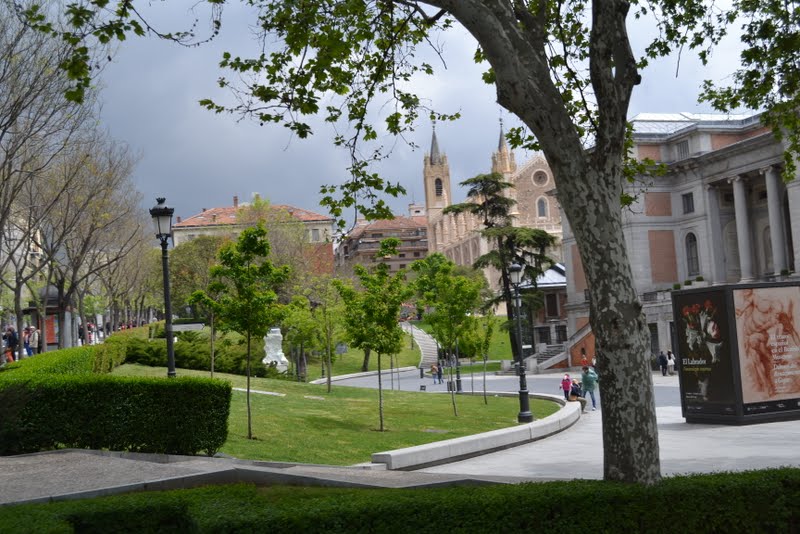
Madrid is the capital of Spain and its largest city. The population of the city is roughly 3.3 million. The city is located on the Manzanares River.  We went on a city tour in the afternoon. The city is full of parks, trees and avenues. The central part of the city is very pretty and well preserved. The rest of the city is modern with brick and cement structures. Madrid was once a village and it was very common then for farmers to take their cattle for a walk in the centre of the town. One can see the cattle paths even today. The city was founded by the Muslims in the 9th century. In the 16thcentury palaces were built to attract the nobility. Finally the capital moved from Toledo to Madrid. The city population has grown from a meager 20.000 to 600,000 inhabitants to become one of the best destinations in Europe.
When the clock tower in Madrid strikes at midnight on the new Year eve 31st Dec – people in Madrid eat 12 grapes for 12 gongs.This event is show on all TV channels.Imagine millions of people eating grapes at the same time.


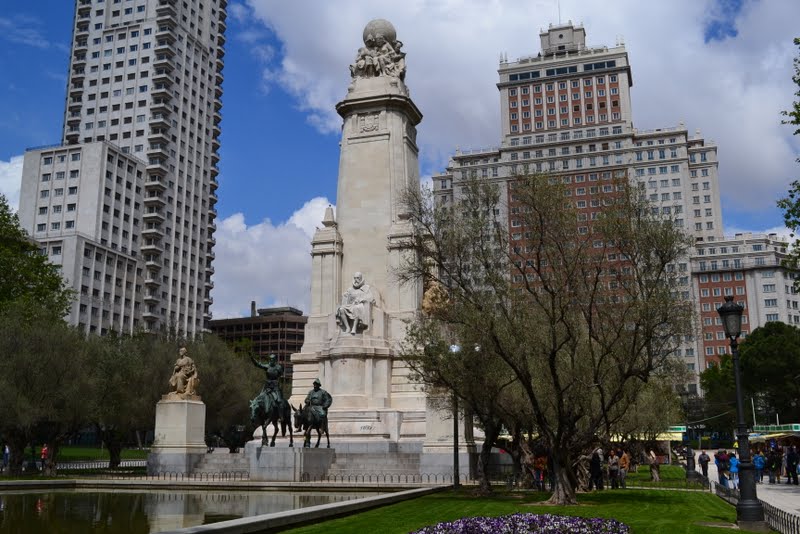
Figure <!–[if supportFields]> SEQ Figure \* ARABIC <![endif]–>7<!–[if supportFields]><![endif]–> – Plaza de Espana

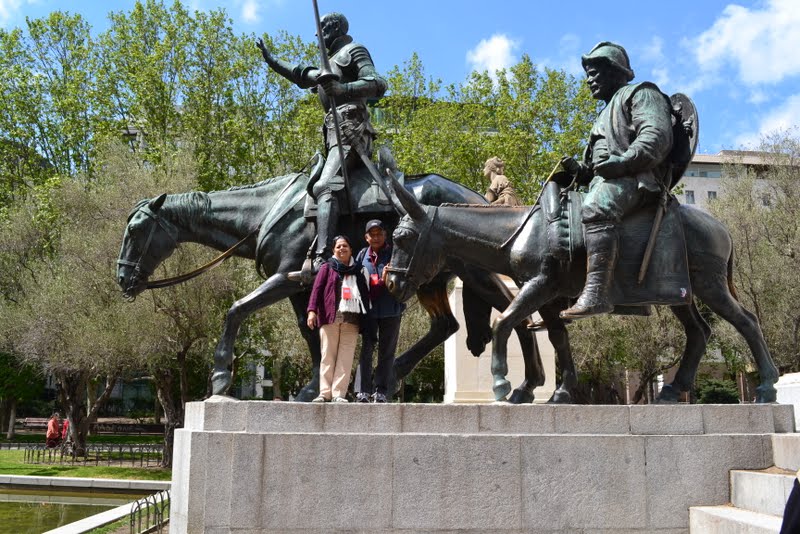
In the center of the plaza is a monument to Spanish novelist, poet and playwright Miguel de Cervantes saavedra, designed by architects Rafael Martínez Zapatero and Pedro Muguruza and sculptor Lorenzo Coullaut Valera. The tower portion of the monument includes a stone sculpture of Cervantes, which overlooks bronze sculptures of Don Quixote and Sancho Panza. Next to the tower, there are two stone representations of Don Quixote’s “true love”, one as the simple peasant woman Aldonza Lorenzo, and one as the beautiful, imaginary Dulcinea Toboso.
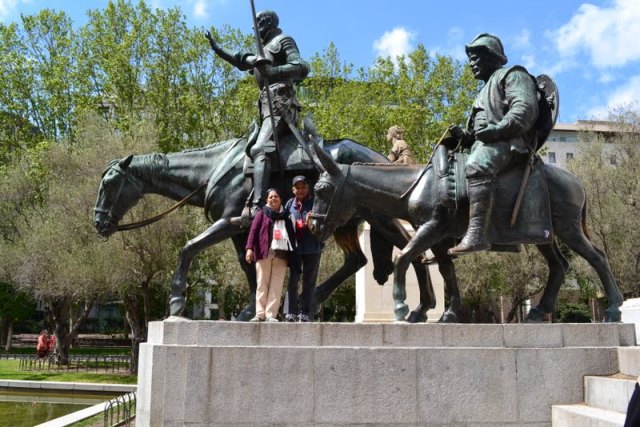

Figure <!–[if supportFields]> SEQ Figure \* ARABIC <![endif]–>8<!–[if supportFields]><![endif]–> –  Bronze sculptures of Don Quixote and Sancho Panza. Dore and Lalitamma – Many memories.

After i had taken this photograph,Dore walked up to me and said ‘I will always cherish this photograph”.He thereafter went on to recollect a piece of family history. This is what he had to say 

“When we were all appreciating the huge & impressive statue of Don Quixote, I recalled the contribution of my late father D.V.Seshagiri Rao,Professor & Author, in making this unique character known to Kannada readers. Apart from some original work to his credit,he added  translations of a few well known works from a couple of other languages to the Kannada literary wealth. Included in this was, his translation of Don Quixote by CerVantes. Pity not a copy is available now. But, if I remember right, published sometime in early 50s. He didn’t know Spanish.Obviously, he translated from an English translation; but am not sure which one was it, as it appears, there are more than one.

Instead of giving the usual title ‘ Don Quixote ‘ he chose ” Ailuveerana Sahasagalu”.Roughly meaning ” The Adventures of a crazy warrior “. I believe the book was well received. In fact, after reading his Kannada translation,I was tempted to read the English version also.It is no easy job to bring out in a translation, the nuances and unique features of the original work with the same effect. But, my father,instead of resorting to literal translation,brought out the essence and typical characteristics of the hero, I believe, in a telling way appealing to the Kannada readers. Evidently, a lot of effort on his part.Watching the statue was really a nostalgic as well as a memorable event.

A truly remarkable achievement 
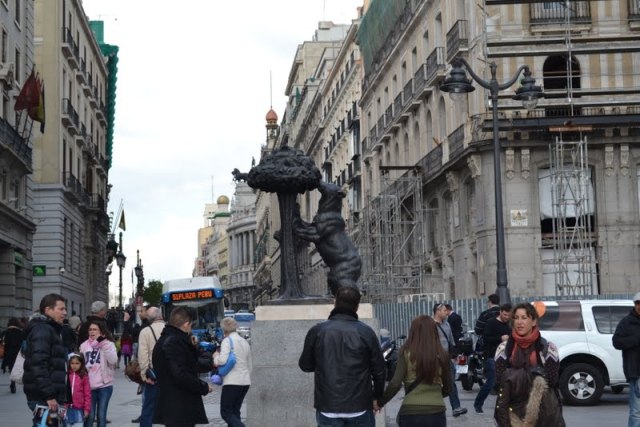

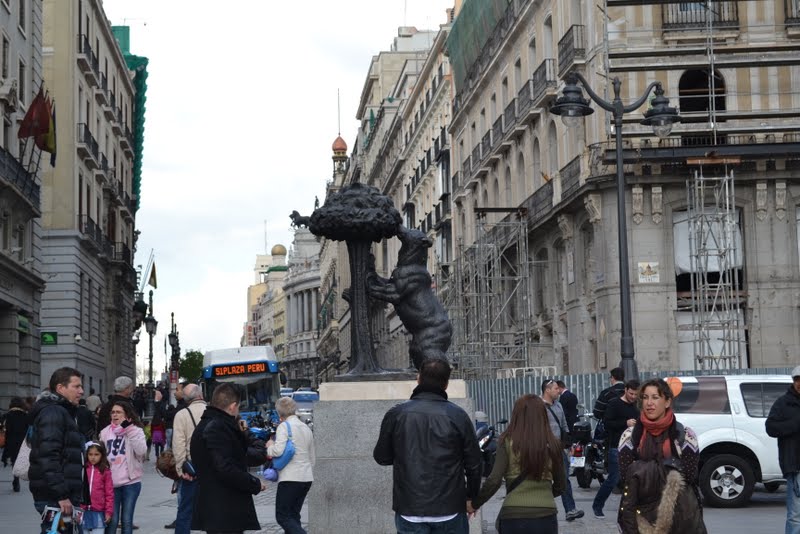
Figure <!–[if supportFields]> SEQ Figure \* ARABIC <![endif]–>9<!–[if supportFields]><![endif]–> – Statue of a bear and a mulberry tree at the Puerta Del Sol Square


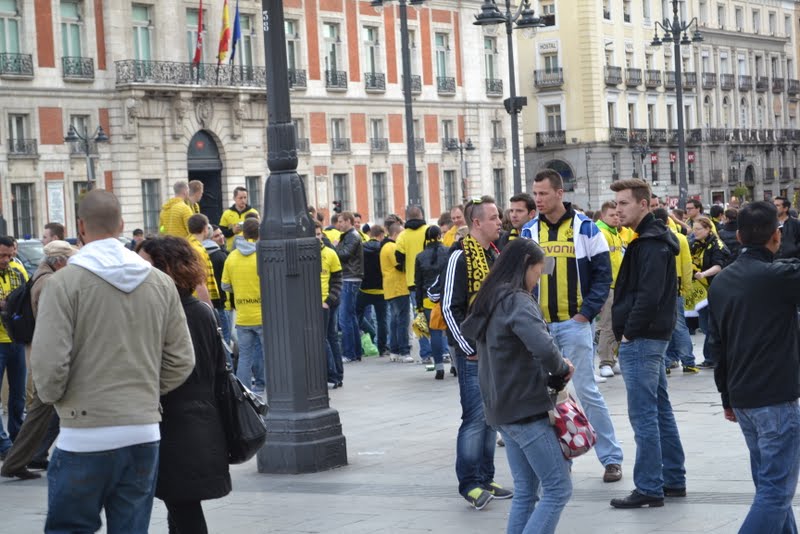
Figure <!–[if supportFields]> SEQ Figure \* ARABIC <![endif]–>10<!–[if supportFields]><![endif]–> – On the day we were in Madrid there was a big football match between Germany and Spain.

German supporters are in yellow. The atmosphere was electric with the square reverberating with noise, shouting, catcalls and the rest. Smell of beer was omnipresent.


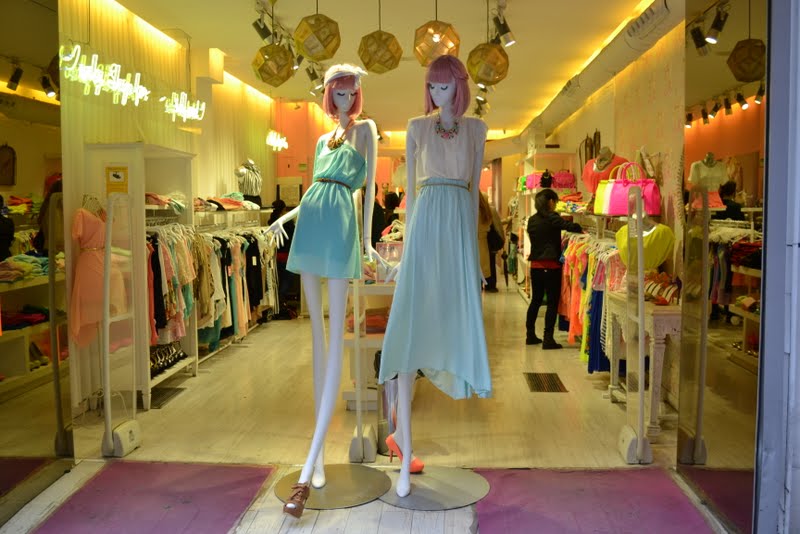
Figure <!–[if supportFields]> SEQ Figure \* ARABIC <![endif]–>11<!–[if supportFields]><![endif]–> – A very trendy shop


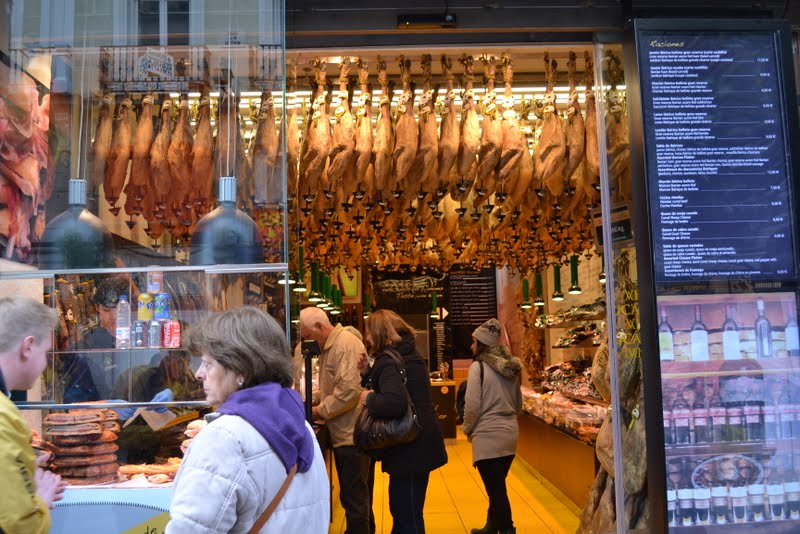
Figure <!–[if supportFields]> SEQ Figure \* ARABIC <![endif]–>12<!–[if supportFields]><![endif]–> – Meet the meat


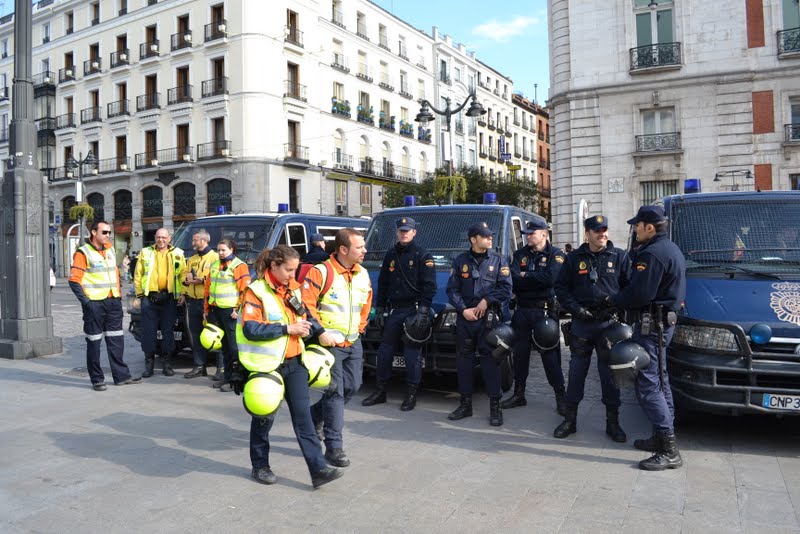
Figure <!–[if supportFields]> SEQ Figure \* ARABIC <![endif]–>13<!–[if supportFields]><![endif]–> – Police ready for any eventuality after the football match


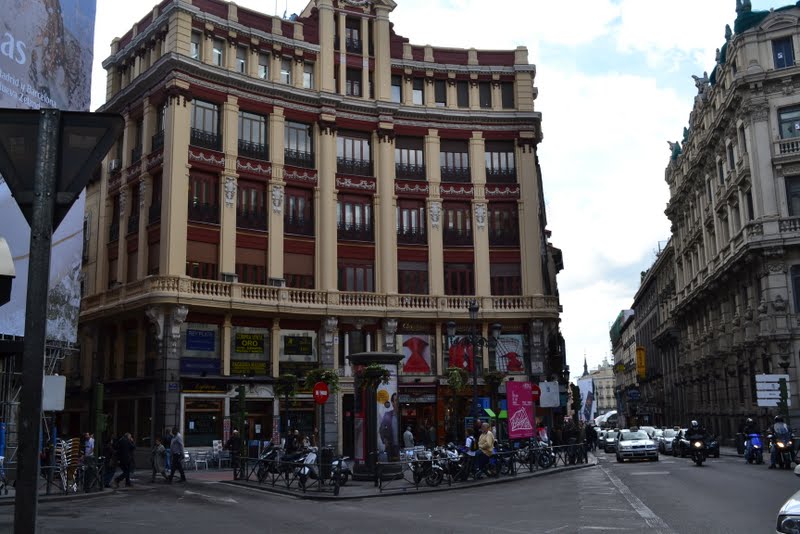
Figure <!–[if supportFields]> SEQ Figure \* ARABIC <![endif]–>14<!–[if supportFields]><![endif]–> – Part of the inner city


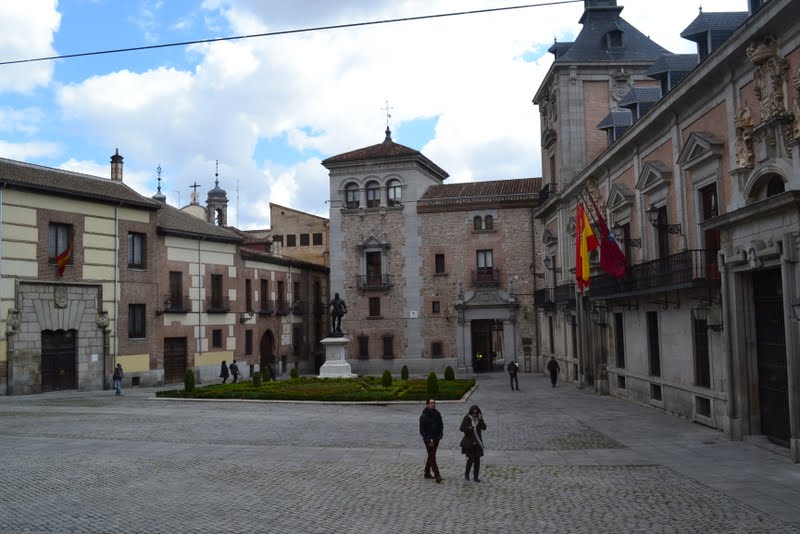
Figure <!–[if supportFields]> SEQ Figure \* ARABIC <![endif]–>15<!–[if supportFields]><![endif]–> – A beautiful square


Figure <!–[if supportFields]> SEQ Figure \* ARABIC <![endif]–>16<!–[if supportFields]><![endif]–> – Part of old Madrid. Cannon marks are still visible on the wall.


Figure <!–[if supportFields]> SEQ Figure \* ARABIC <![endif]–>17<!–[if supportFields]><![endif]–> – Modern city image


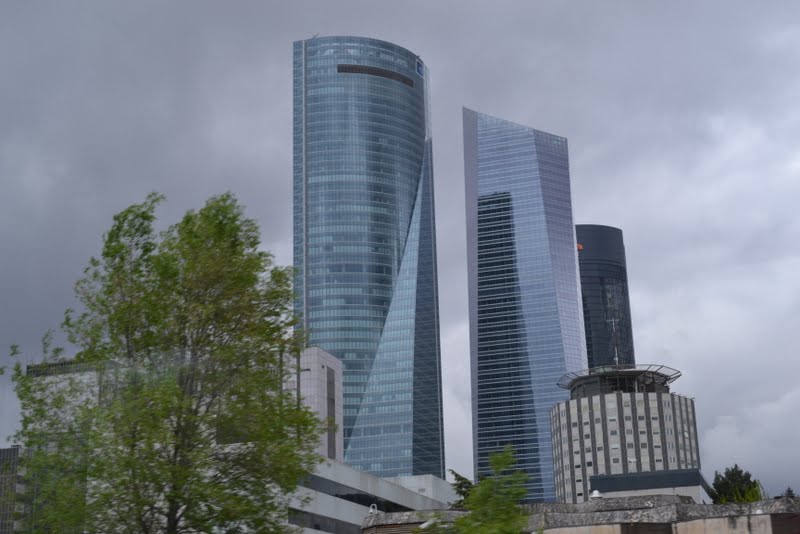
Figure <!–[if supportFields]> SEQ Figure \* ARABIC <![endif]–>18<!–[if supportFields]><![endif]–> – Sky Scrapers of Madrid


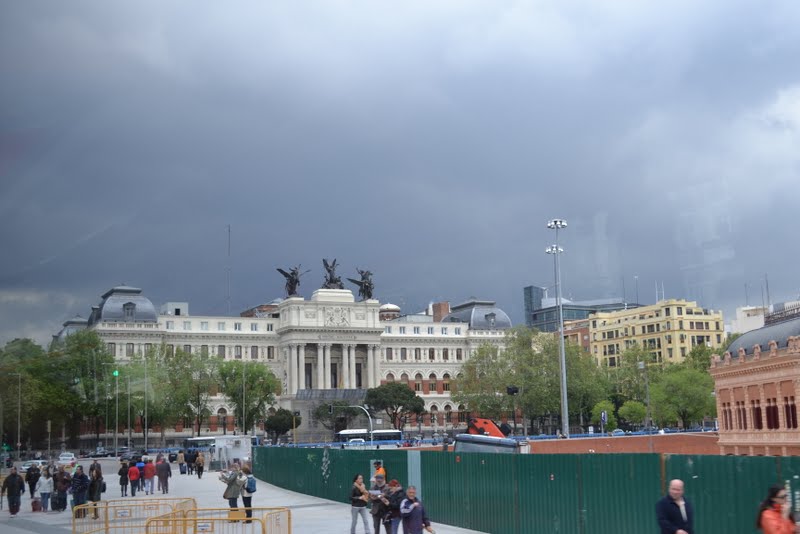
Figure <!–[if supportFields]> SEQ Figure \* ARABIC <![endif]–>19<!–[if supportFields]><![endif]–> – A very imposing government building


Figure <!–[if supportFields]> SEQ Figure \* ARABIC <![endif]–>20<!–[if supportFields]><![endif]–>  – Public parks adorn the city
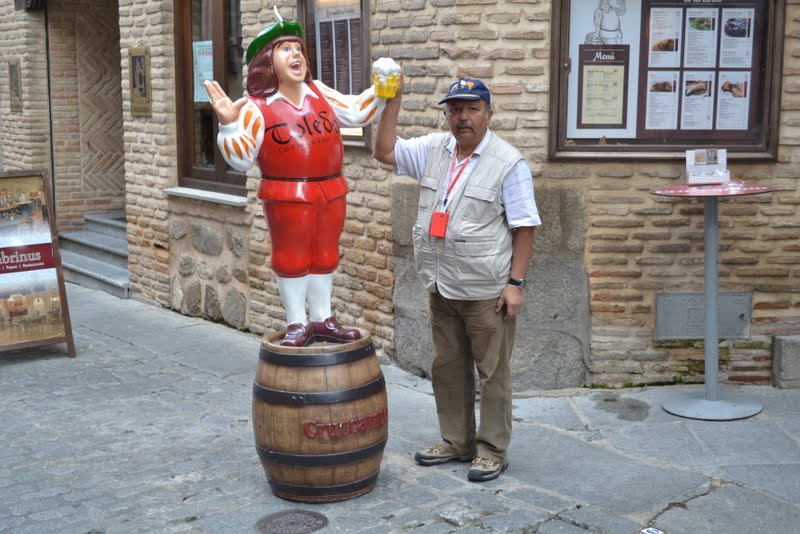
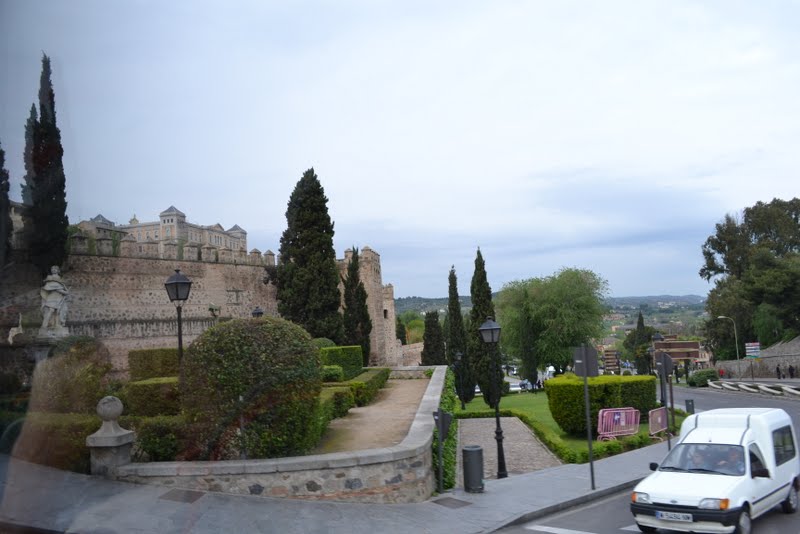
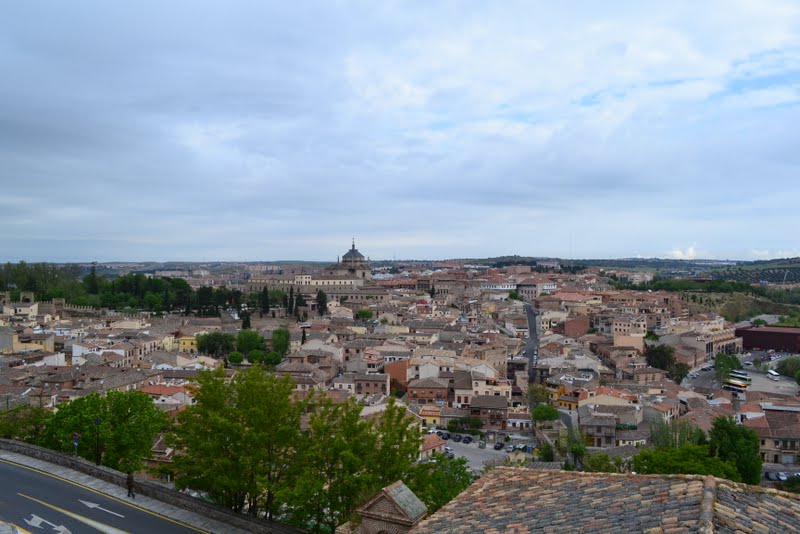
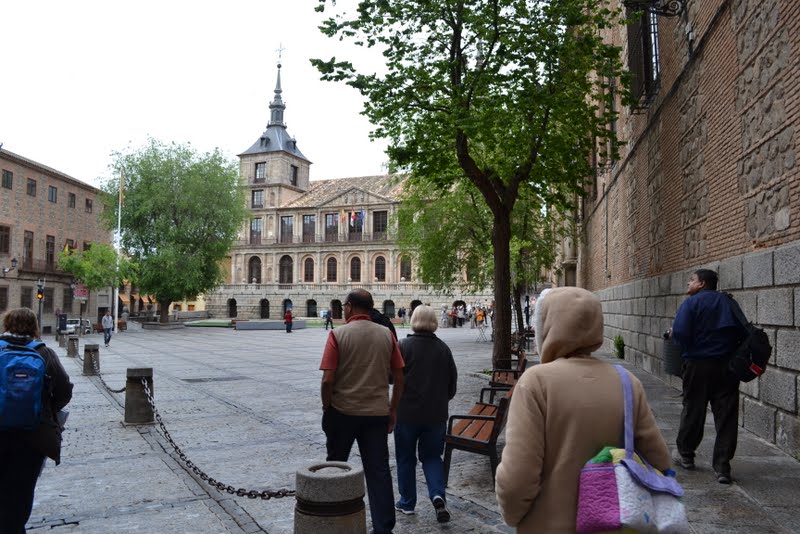
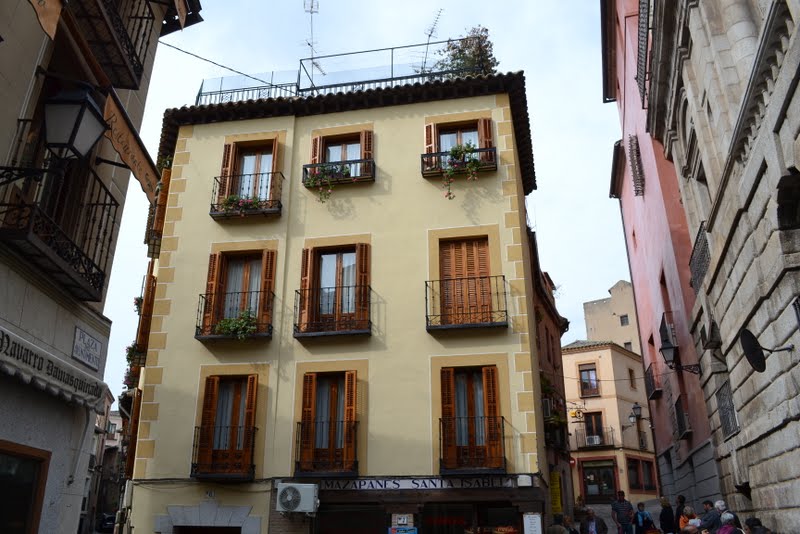
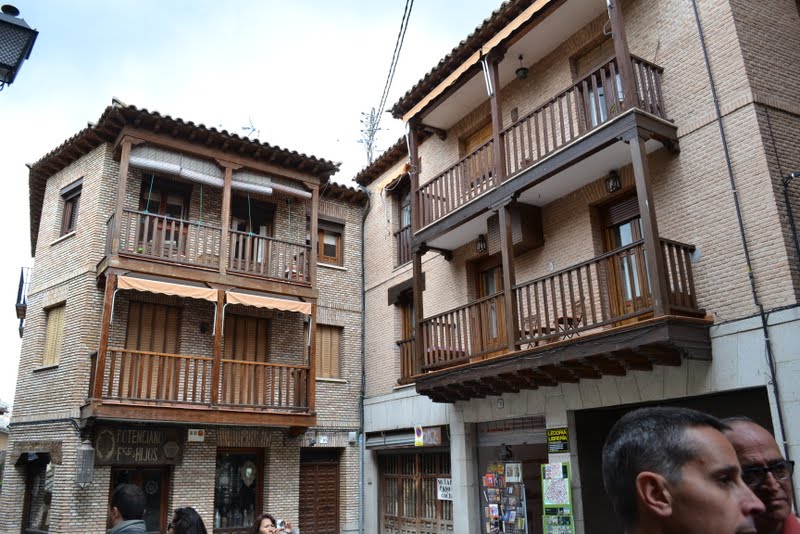
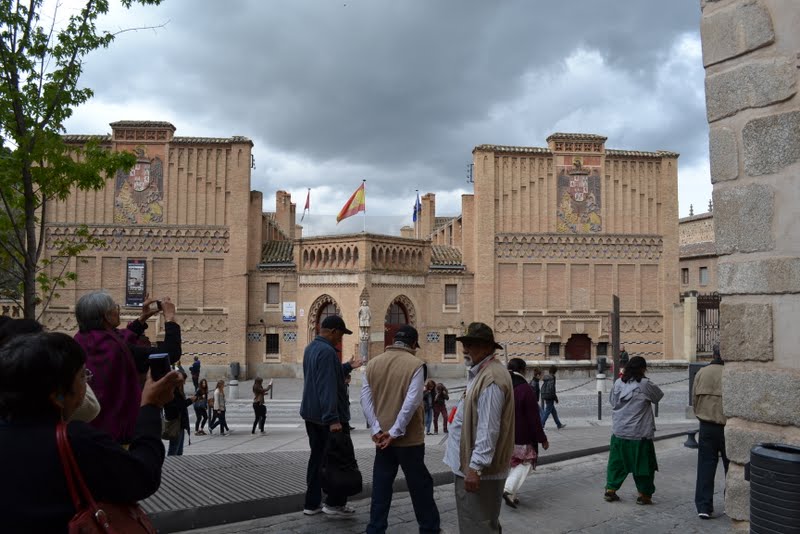
Toledo. Next morning we visited Toledo. It is known as the “Imperial City” for having been the main venue of the court of Charles I, and as the “City of the Three Cultures”, having been influenced by a historical co-existence of Christians, Jews and Muslims. It is also known as ‘City of Tolerance’. Toledo is very famous for its steel. Toledo steel, known historically as unusually hard and has been a traditional sword-making, steel-working center since about 500 BC, and came to the attention of Rome. Soon, it became a standard source of weaponry for Roman legions. Toledo water in which the steel is tempered gives it the unusual strength.

Figure 21 – Cheers to Toledo


Figure <!–[if supportFields]> SEQ Figure \* ARABIC <![endif]–>22<!–[if supportFields]><![endif]–> – Toledo’s Alacazar palace now houses a museum of military history


Figure <!–[if supportFields]> SEQ Figure \* ARABIC <![endif]–>23<!–[if supportFields]><![endif]–> – City of Toledo


Figure <!–[if supportFields]> SEQ Figure \* ARABIC <![endif]–>24<!–[if supportFields]><![endif]–> – City square

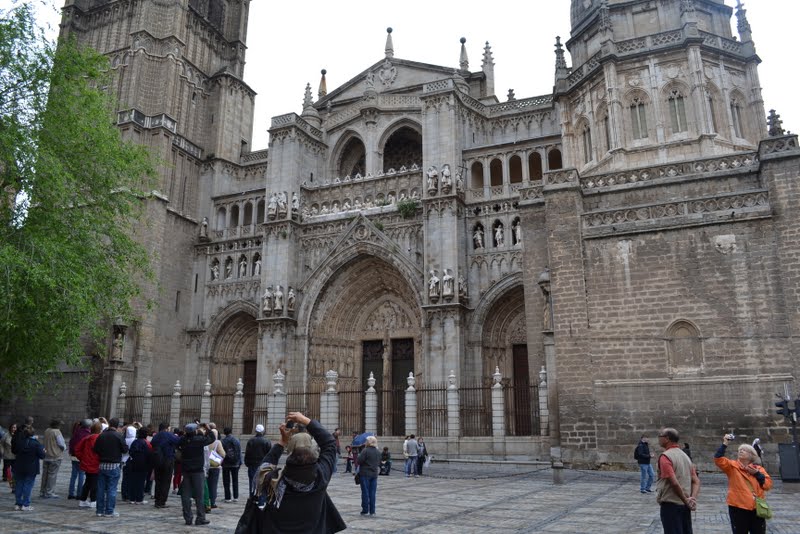
Figure <!–[if supportFields]> SEQ Figure \* ARABIC <![endif]–>25<!–[if supportFields]><![endif]–> – View of the church

The cathedral has four entrances – one each for the King, nobility, the rich and finally for the common people.


Figure <!–[if supportFields]> SEQ Figure \* ARABIC <![endif]–>26<!–[if supportFields]><![endif]–> – Where ever one goes the windows steal the show


Figure <!–[if supportFields]> SEQ Figure \* ARABIC <![endif]–>27<!–[if supportFields]><![endif]–> – Another example


Figure <!–[if supportFields]> SEQ Figure \* ARABIC <![endif]–>28<!–[if supportFields]><![endif]–> – Yet another square


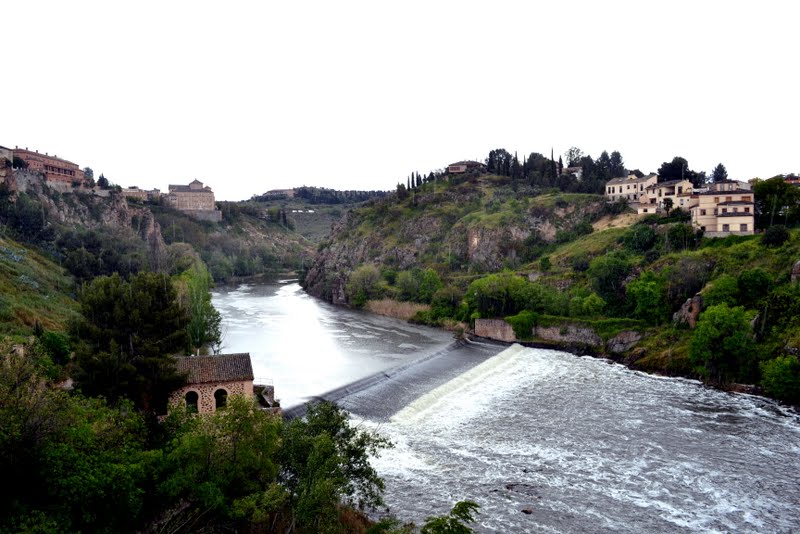
Figure <!–[if supportFields]> SEQ Figure \* ARABIC <![endif]–>29<!–[if supportFields]><![endif]–>The city straddles the Maumee River

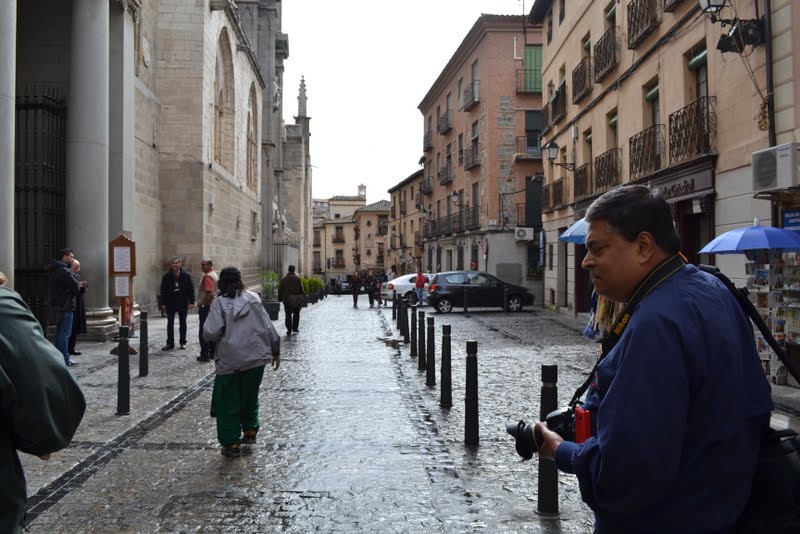
Figure <!–[if supportFields]> SEQ Figure \* ARABIC <![endif]–>30<!–[if supportFields]><![endif]–> – A very clean walkway


Figure <!–[if supportFields]> SEQ Figure \* ARABIC <![endif]–>31<!–[if supportFields]><![endif]–> – Sanctum Sanctorum


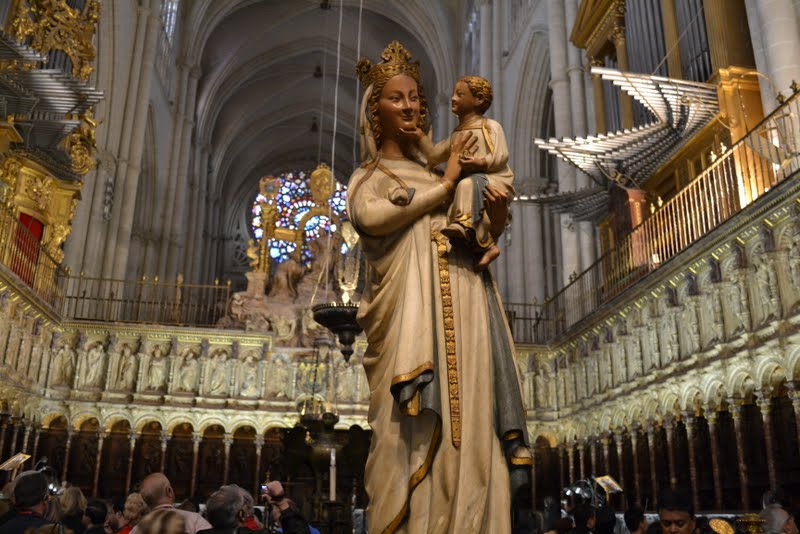
Figure <!–[if supportFields]> SEQ Figure \* ARABIC <![endif]–>32<!–[if supportFields]><![endif]–> – The Smiling Virgin in the Cathedral of Saint Mary of Toledo, Spain


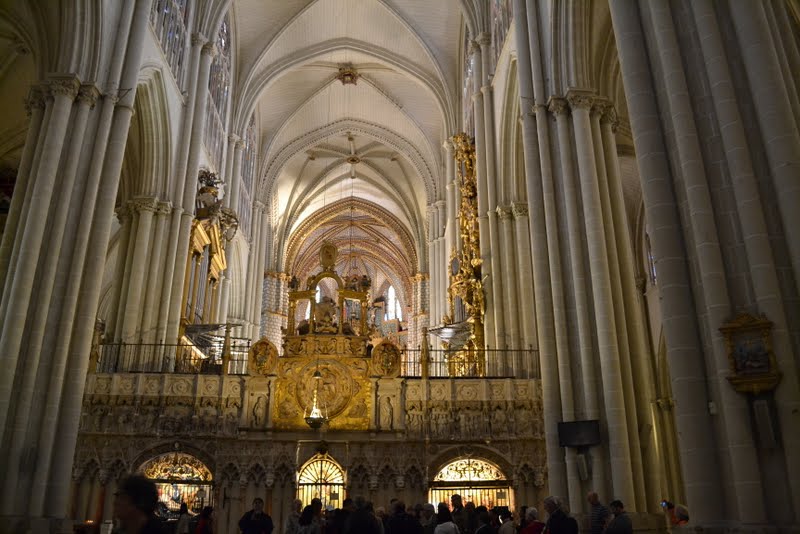
Figure <!–[if supportFields]> SEQ Figure \* ARABIC <![endif]–>33<!–[if supportFields]><![endif]–> – Vaulted ceiling, high altar, and Reja of the main chapel


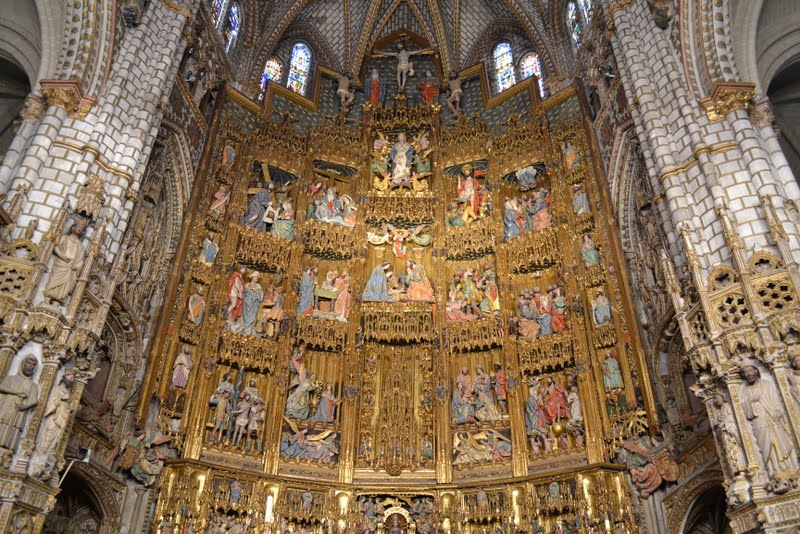
Figure <!–[if supportFields]> SEQ Figure \* ARABIC <![endif]–>34<!–[if supportFields]><![endif]–> – The retable of the Cathedral of Toledo is an extremely florid Gothic altarpiece; it is one of the last examples of this artistic style.


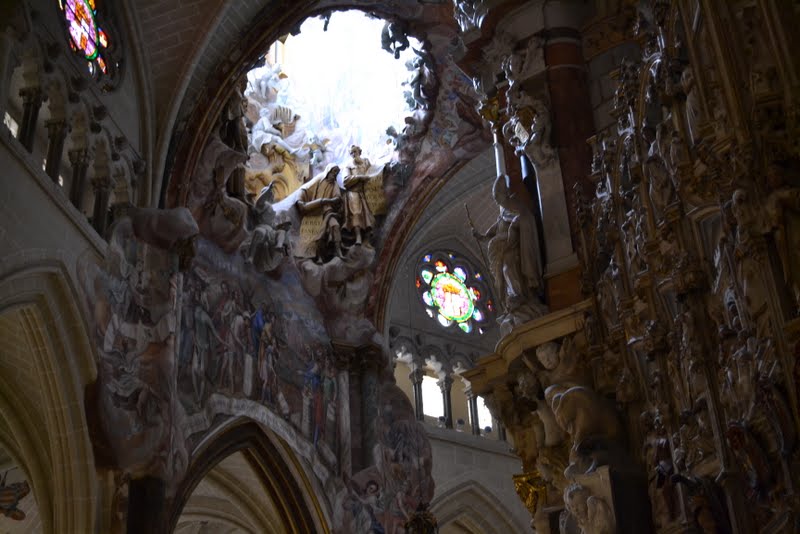
Figure <!–[if supportFields]> SEQ Figure \* ARABIC <![endif]–>35<!–[if supportFields]><![endif]–> – El Transparente

One of the most outstanding features of the Cathedral is the Boroque altarpiece called El Transparente. Its name refers to the unique illumination provided by a large skylight cut very high up into the thick wall across the ambulatory behind the high altar, and another hole cut into the back of the altarpiece itself to allow shafts of sunlight to strike the tabernacle


Figure <!–[if supportFields]> SEQ Figure \* ARABIC <![endif]–>36<!–[if supportFields]><![endif]–>– Jai enjoying the morning


Figure <!–[if supportFields]> SEQ Figure \* ARABIC <![endif]–>37<!–[if supportFields]><![endif]–> – Nuns making marzipan

Marzipan is a confection consisting primarily of sugar or honey and almond, sometimes augmented with almond oil or extract. It is often made into sweets; common uses are marzipan-filled chocolate and small marzipan imitations of fruits and vegetables. According to one version, marzipan was invented by nuns of the Convent of San Clemente in Toledo.

The Convent supposedly came up with this delectable stuff in the 16th century, when there was a famine on. Almond trees grow like weed in and around Toledo, so the nuns ground up the almonds, mixed them with sugar, and hey presto – marzipan.


Figure <!–[if supportFields]> SEQ Figure \* ARABIC <![endif]–>38<!–[if supportFields]><![endif]–> – Some are tired, some lost in their own thoughts, others confused and the rest waiting for the beer time


Figure <!–[if supportFields]> SEQ Figure \* ARABIC <![endif]–>39<!–[if supportFields]><![endif]–>– Remotely operated stumps to keep the tourist vehicles away. The local have electronic remote to lower them

We went to a local restaurant to spend the last night of our stay in Spain. The wine and food was excellent.


Figure <!–[if supportFields]> SEQ Figure \* ARABIC <![endif]–>40<!–[if supportFields]><![endif]–> – A befitting closure to our long trip


Figure <!–[if supportFields]> SEQ Figure \* ARABIC <![endif]–>41<!–[if supportFields]><![endif]–> – Kats and Nair with an heightened sense of overall well being and happiness.


Figure <!–[if supportFields]> SEQ Figure \* ARABIC <![endif]–>42<!–[if supportFields]><![endif]–> – Madrid–Barajas Airport is the main international airport. Departures – Terminal 4.

Finally we bid good bye to Madrid on 02 May 3013