Cusco located in the Urubamba valley of the Andes mountain range is a fascinating city that was the capital of the Inca Empire. Cusco is a Unesco World heritage Site and is one of Peru’s most visited cities as it is the largest and most comfortable city from which tourists can begin visits to Machu Picchu, the sacred valley of the Incas, and other Inca sites in the region. Cusco is a beautiful city with well preserved colonial architecture, evidence of a rich and complex history. The city itself represents the center of indigenous Quechua culture in the Andes, and by merely walking the streets one sees the layers of history. Spanish colonial buildings erected directly atop Inca walls line the square, while a bustling nightlife that tourists love to experience, flourishes in their midst. At 11,150 ft above sea level, altitude sickness can be a problem. Same as Leh. For most travellers, Cusco is the highest point on their trip or any trip for that matter and altitude sickness is a big problem for some tourists. A major earthquake on 21 May 1950 caused the destruction of more than one third of the city’s structures.
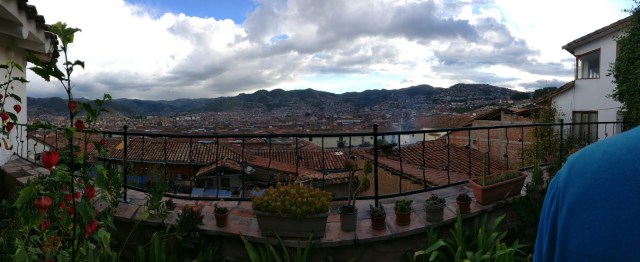 |
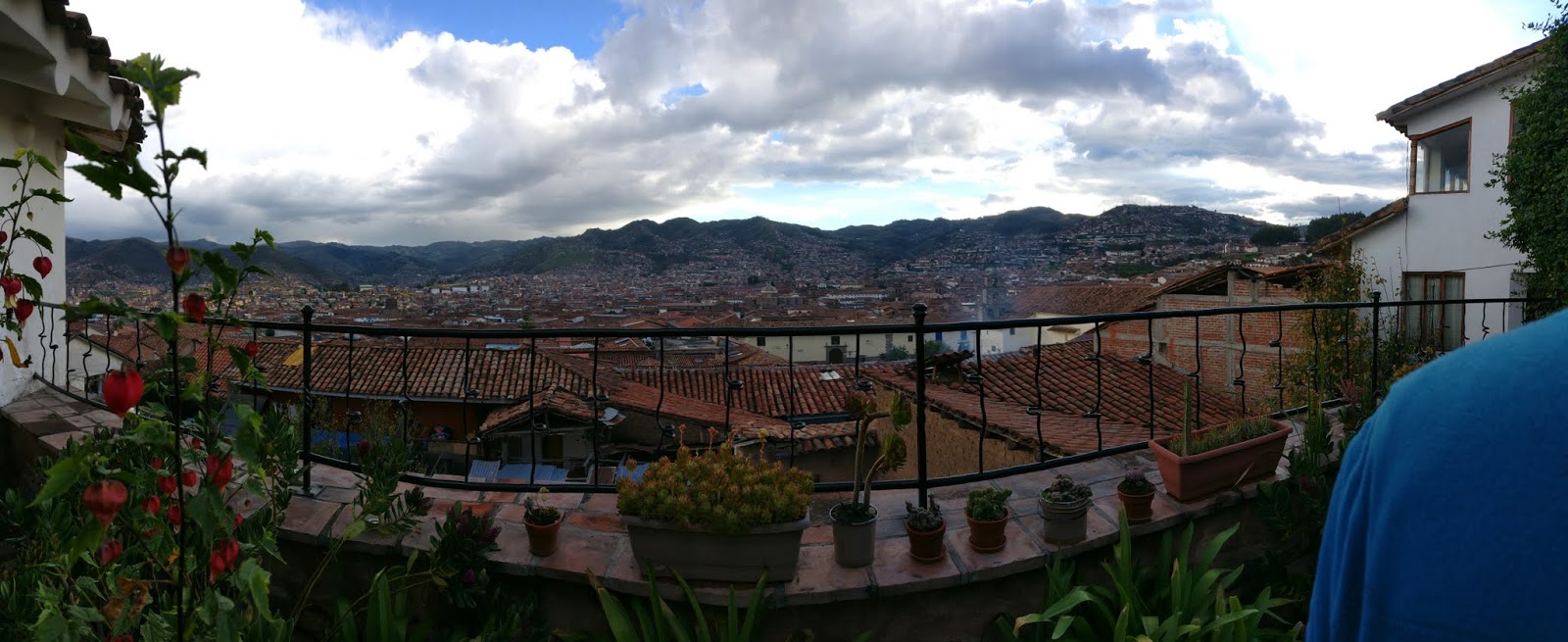
| Panoramic view of Cusco from the hotel balcony |
We flew into Cusco from Lima on the morning of 05 May. We had booked our accommodation in La Morada Suites through the internet. We had made the choice based on the inputs from the net. It promised a majestic view of the city from the balcony and an excellent ambiance.
As we approached the hotel the taxi driver informed us that the road leading to the hotel was very narrow and he would not be able to negotiate the car. He dropped us at the San Blas square leading to the hotel. To our horror we found that we had to walk up a considerable distance up a fairly steep and narrow street to reach the hotel. High altitude had already started to take effect and walking up a slope was a huge task. We finally reached the hotel after many stops, totally exhausted and short of breath. Even a 300 meter walk was too much to take. After checking in, we also realized that the rooms were duplex, the bedroom on the top floor and the bathroom and the toilet on the ground floor. We soon realized that getting down to the bathroom and struggling back to the bed at night was a herculean task. Some of us had to visit the toilet a number of times during the night. Carrying a camera and a small bag pack in high altitude can be an ordeal. The elderly should choose a hotel which is reachable by a taxi and with a lift facility.
As planned, we decided to stay put in the hotel and get acclimatized to the high altitude. To help matters, the hotel provides ‘Coca Tea’. Coca tea, also called mate de coca, is an herbal tea made using the leaves of the coca plant, which is native to South America. It is made either by submerging the coca leaf or dipping a coca tea bag in hot water. The tea is most commonly consumed in the Andes mountain range, particularly Argentina, Bolivia, Columbia and Peru. It is greenish yellow in color and has a mild bitter flavor similar to green tea with a more organic sweetness. The leaves of the coca plant contain alkaloids which, when extracted chemically are the source for cocaine base. However, the amount of coca alkaloid in the raw leaves is small. Something that may surprise you is the open sale of coca leaves and coca tea in markets, cafes and even supermarkets. Where coca leaves really come in handy, however, is for the treatment of altitude sickness, something that many visitors to Cusco will experience. The benign properties of the plant are somewhat of a ‘miracle medicine’, and are highly effective at treating the symptoms of altitude sickness, or ‘soroche’. In addition to frequent helpings of coca tea we also took ‘Sorojchi Pills’ twice a day throughout our stay in Cusco and all of Bolivia.
Once we started feeling better we enjoyed Cusco, the hotel and all of its surroundings. We went out for a stroll in the evening and did some shopping. We had carried a few MTR Bangalore ready to eat food packets, which came in extremely handy in the high altitude. The next morning we went off to Machhu Picchu and spent the day after visiting the city and its outskirts. The city is extremely old but maintained very well. Medieval architecture can be seen everywhere.
The city is throbbing with tourists and there are a number of restaurants and pubs offering the best of cuisine and drinks. The city has a very vibrant night life and one can hear music till the wee hours. Cusco was home to an all time high of 4.57 million tourists in 2016.In spite of this staggering number, the city is extremely clean and the entire infrastructure is in good shape. This speaks volumes about the strength of their civic administration. There is a lot to learn from them.
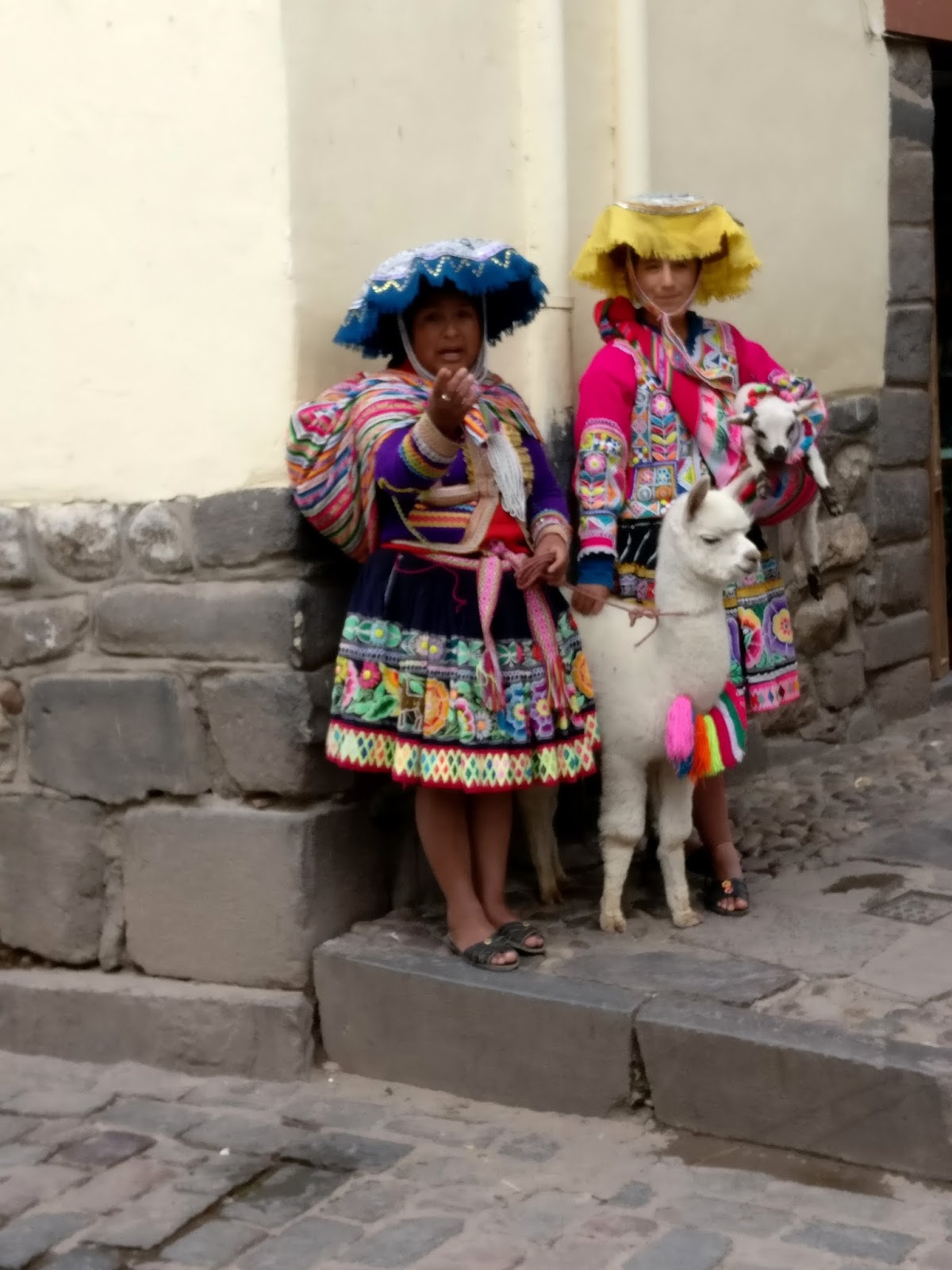
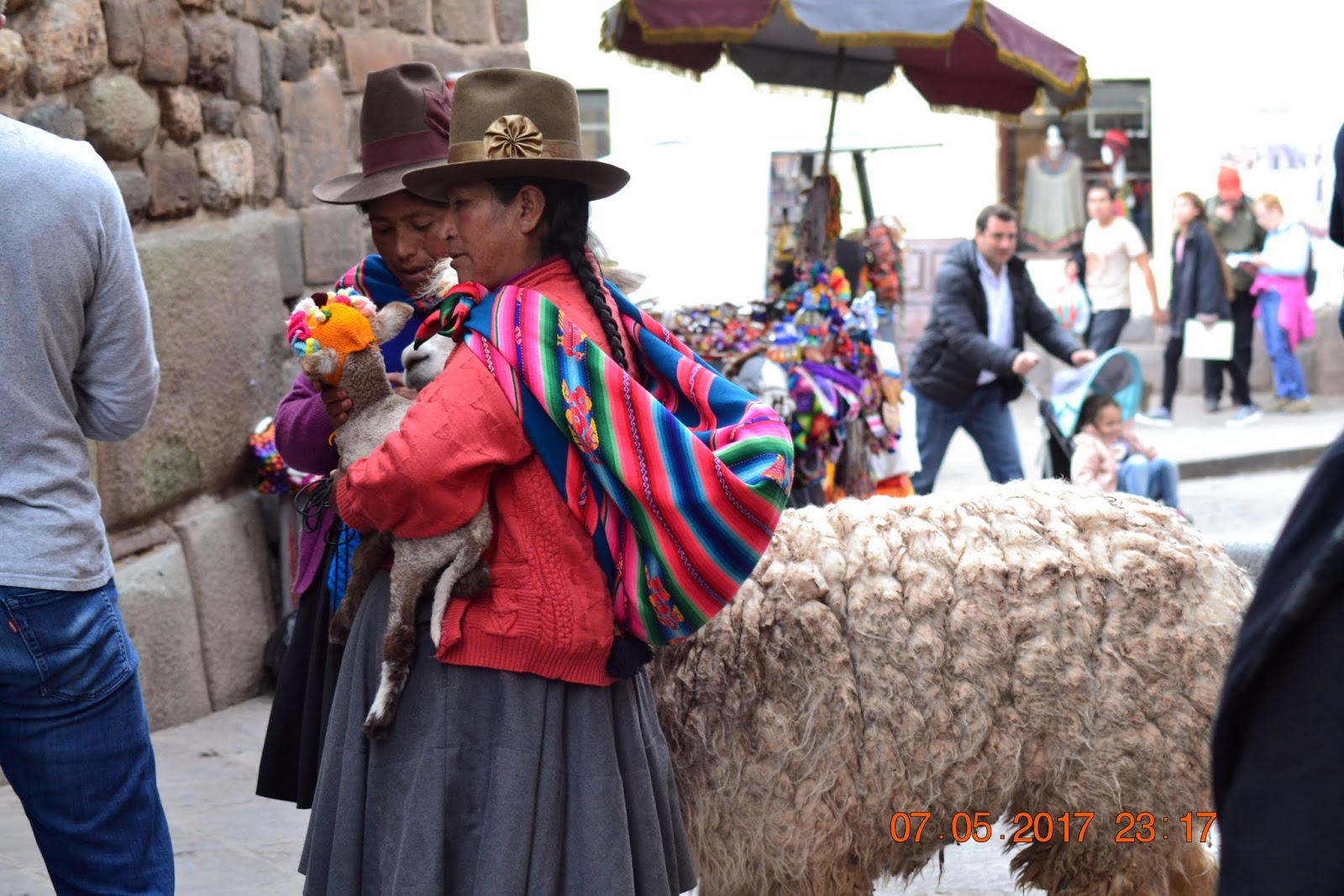
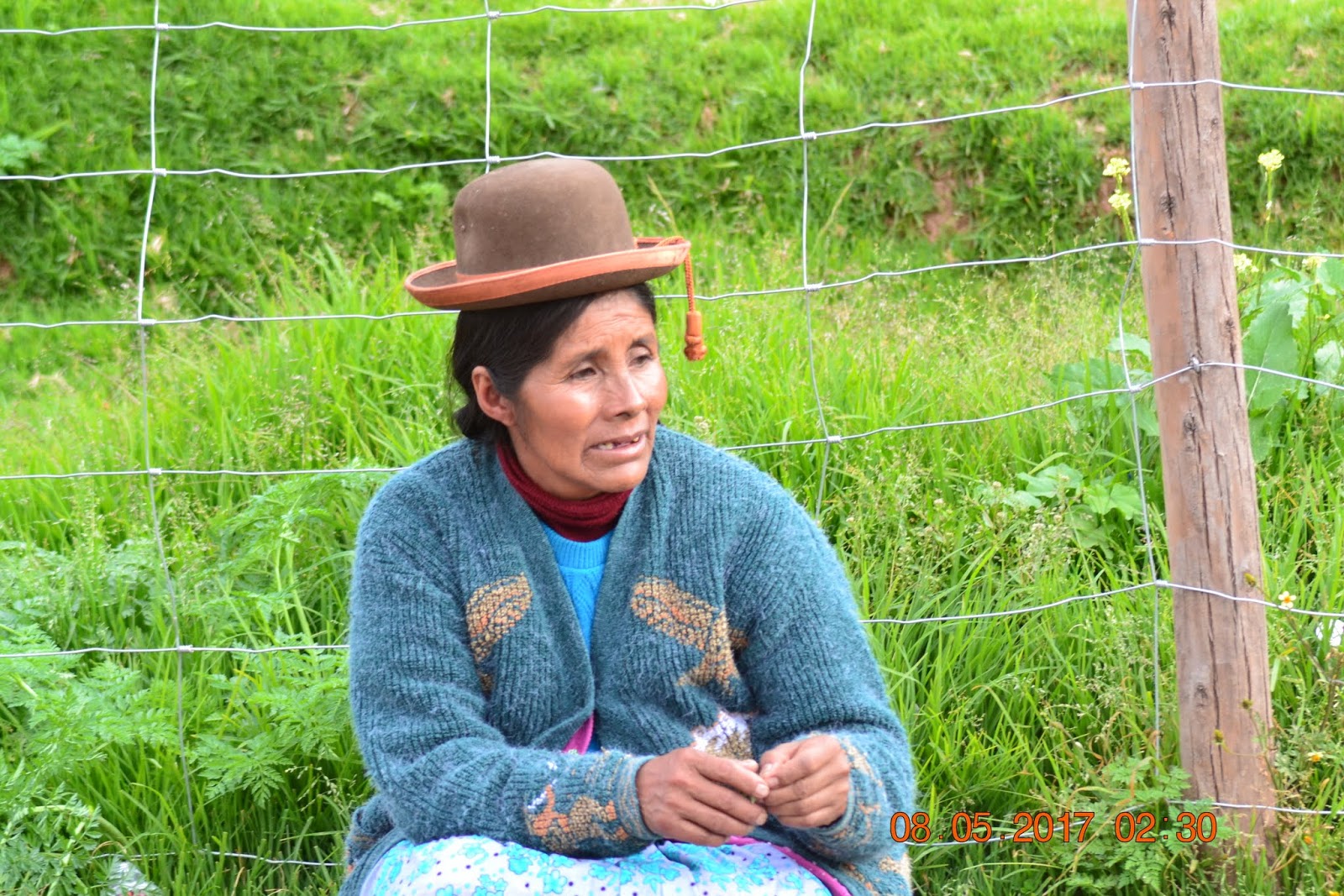
We went on a city tour on foot with a guide and later on in an open bus. We visited an Inca village and participated in a tribal ceremony heralding peace and happiness to all the tourists. The indigenous people, especially the women are colorfully dressed and most of them wear top hats or Monteras. We were told that these hats are very unique and represent different parts of Peru. They also wear Polleras which are very colorful. Most women wear many layers of Polleras. All of us bought sweaters, headgear and shawls made from the famous Alpaca wool.
In spite of high altitude sickness and the intermittent rain, the visit to Cusco was worth it.
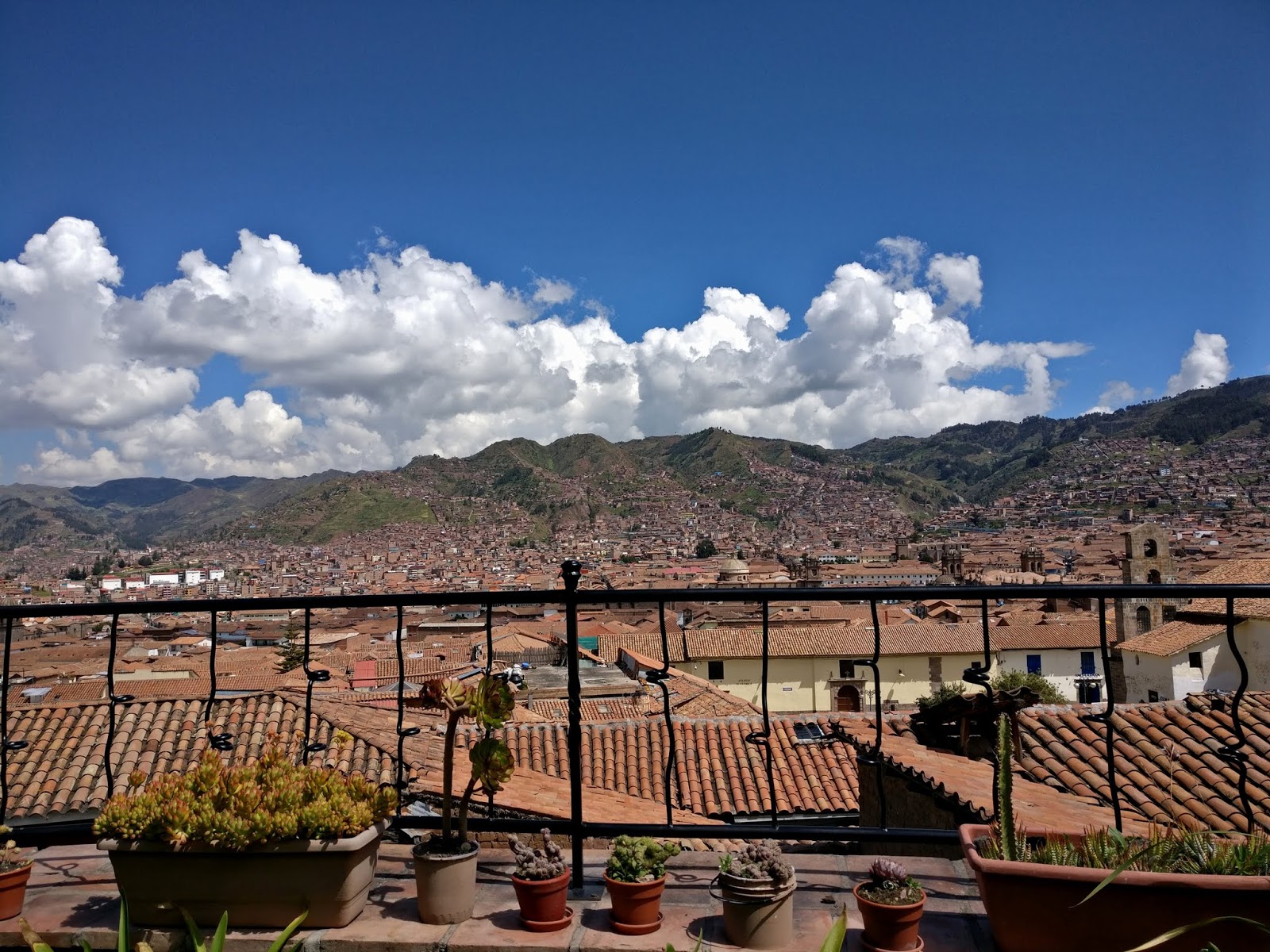
View from the hotel
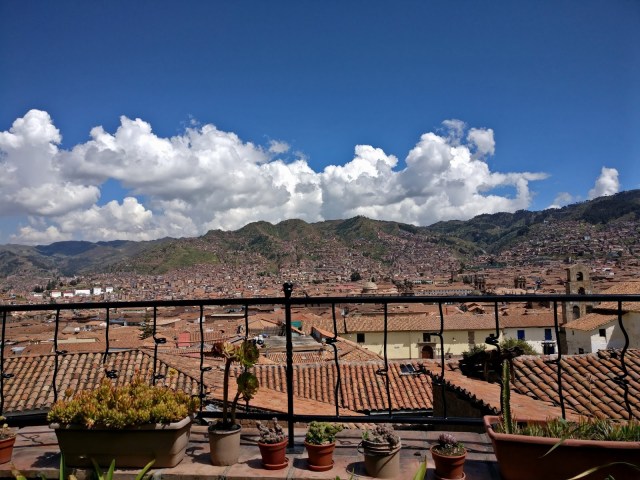 |
| Cusco situated in a valley surrounded bu hills all around |
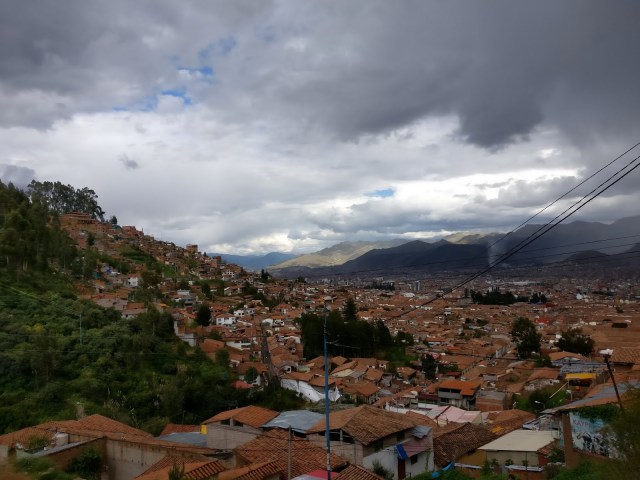 |
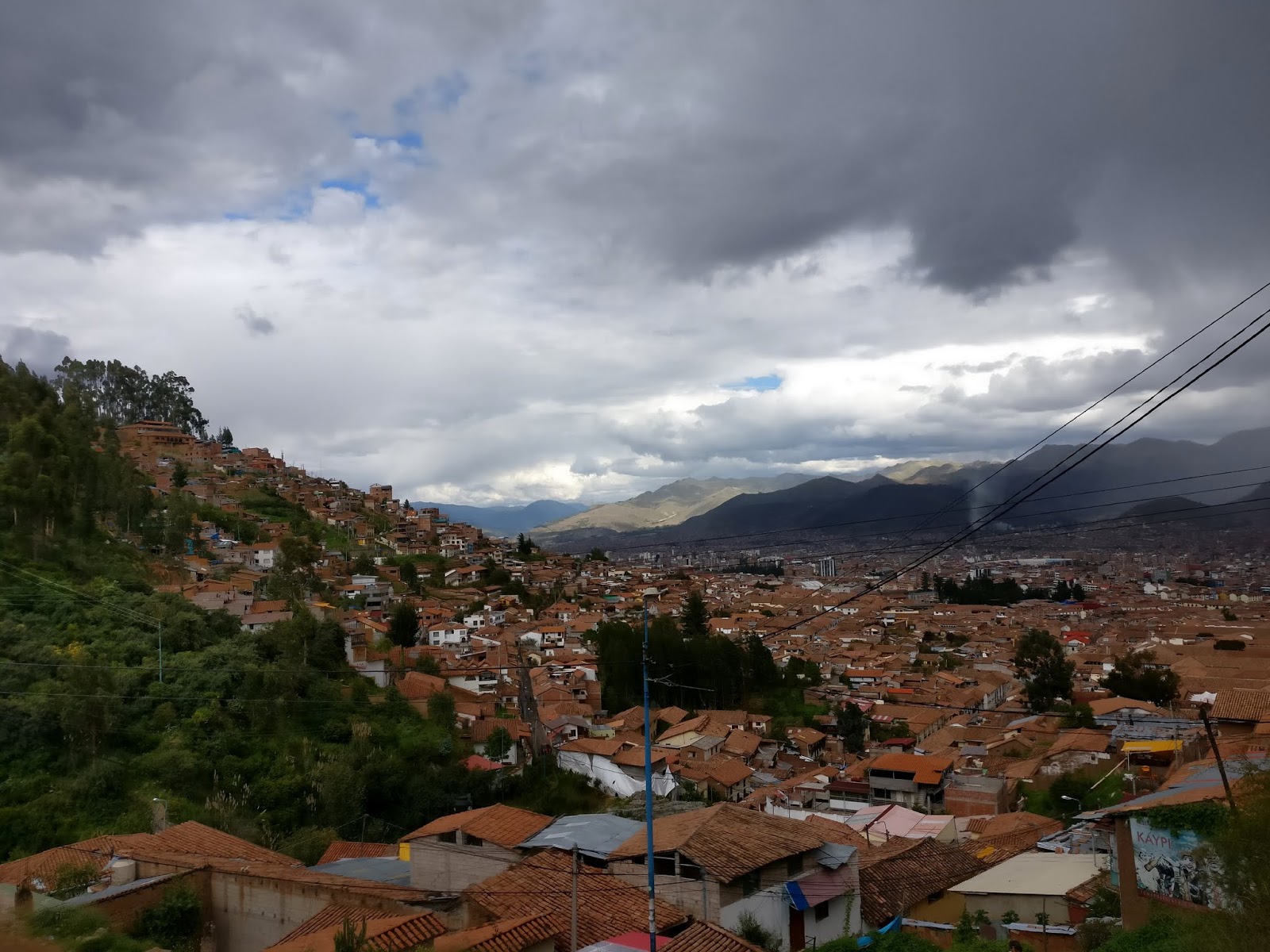
| The brown house tops merge excellently with the blue and grey sky
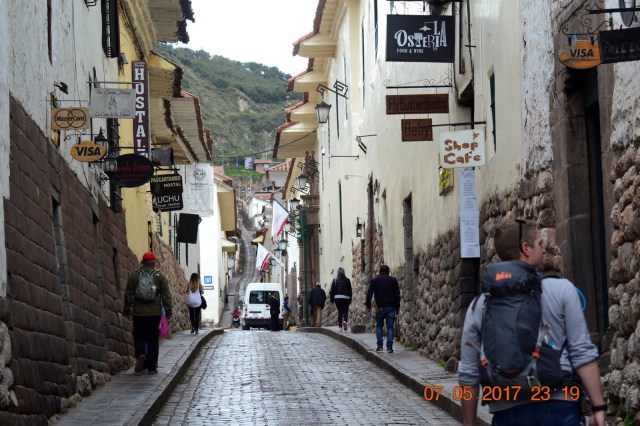
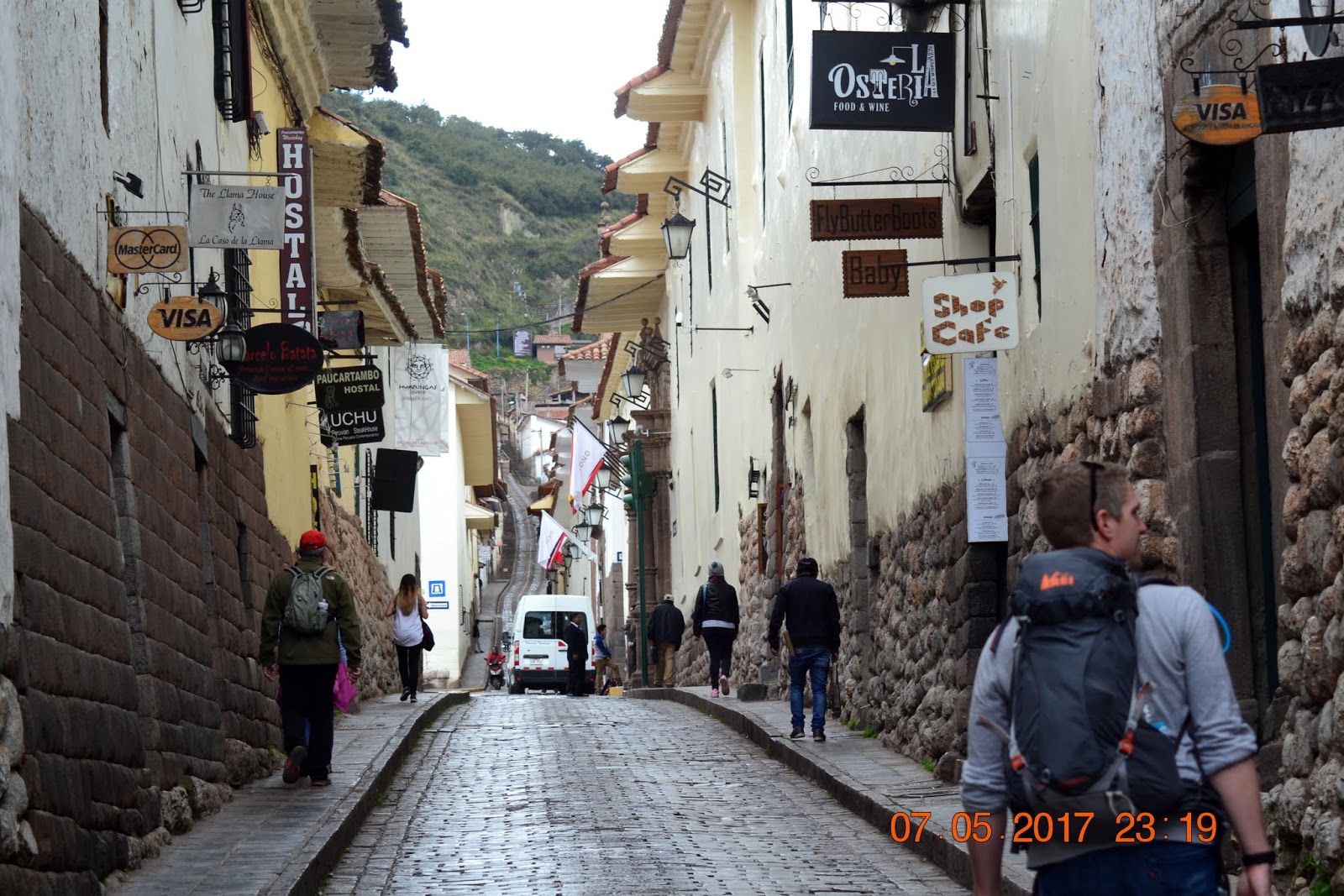
Clean streets of Cusco
|
 |
| All the city attractions are in walking distances |
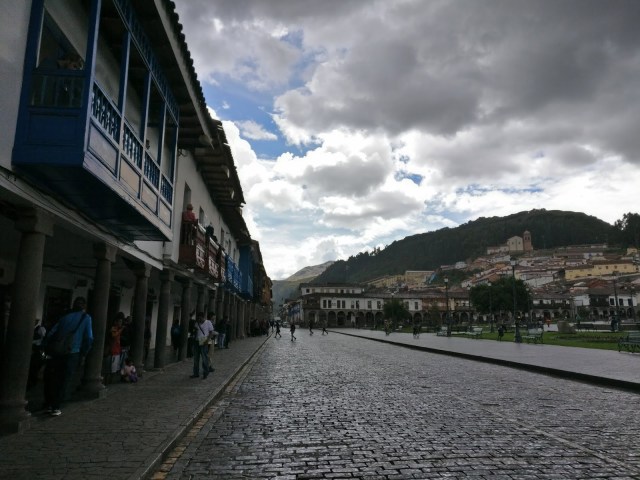 |
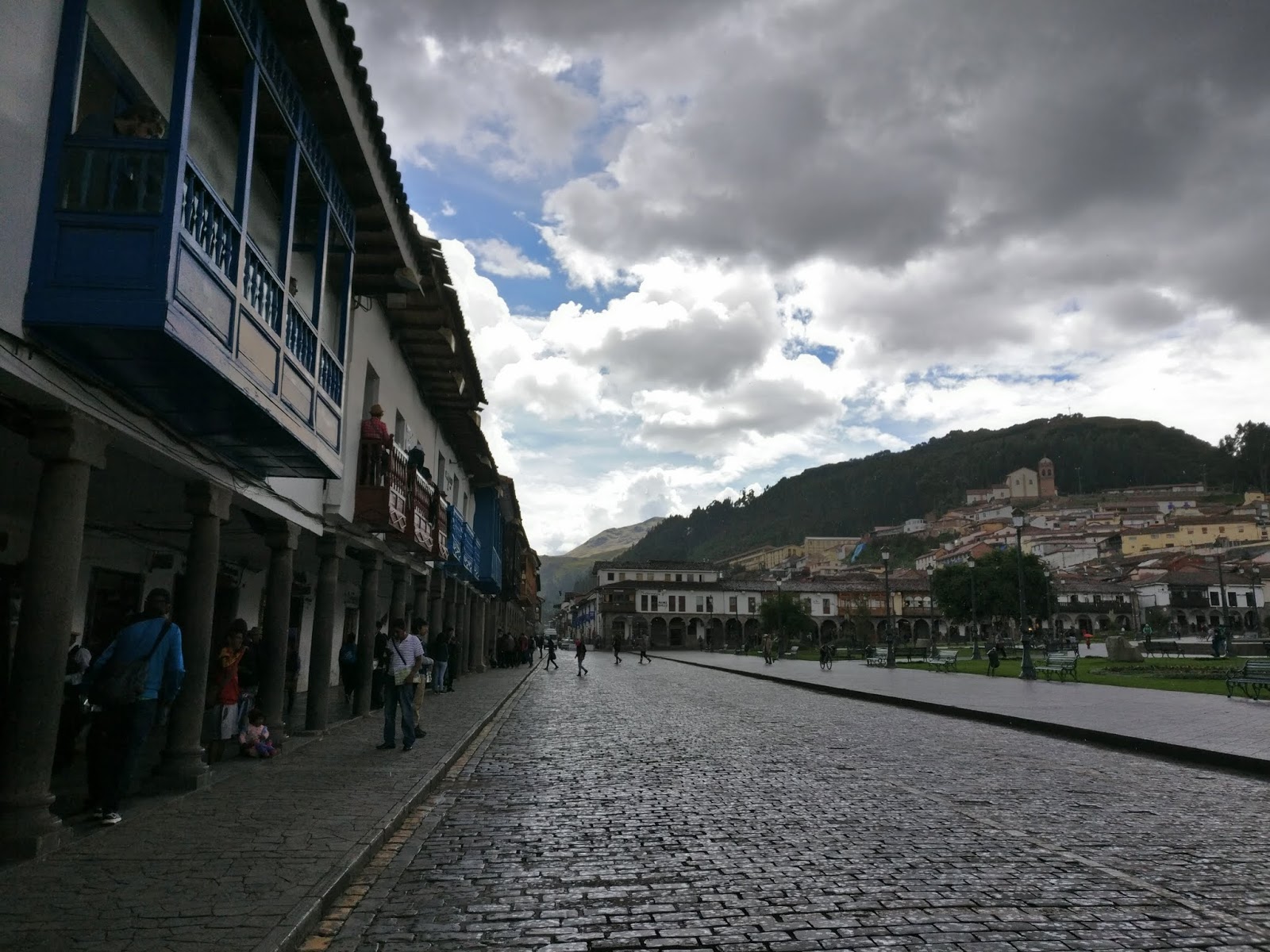
| The city centre street |
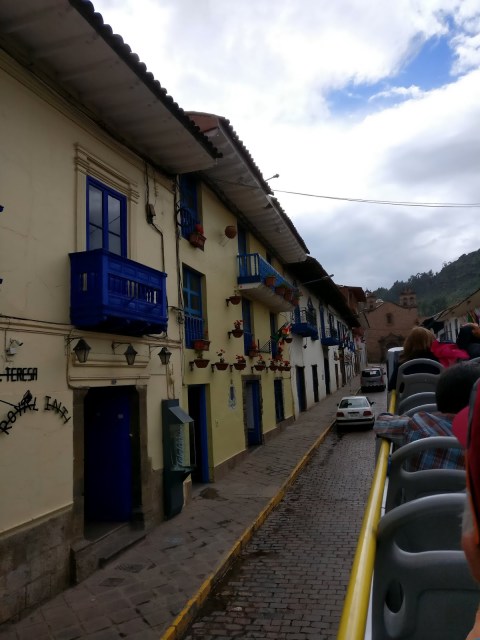 |
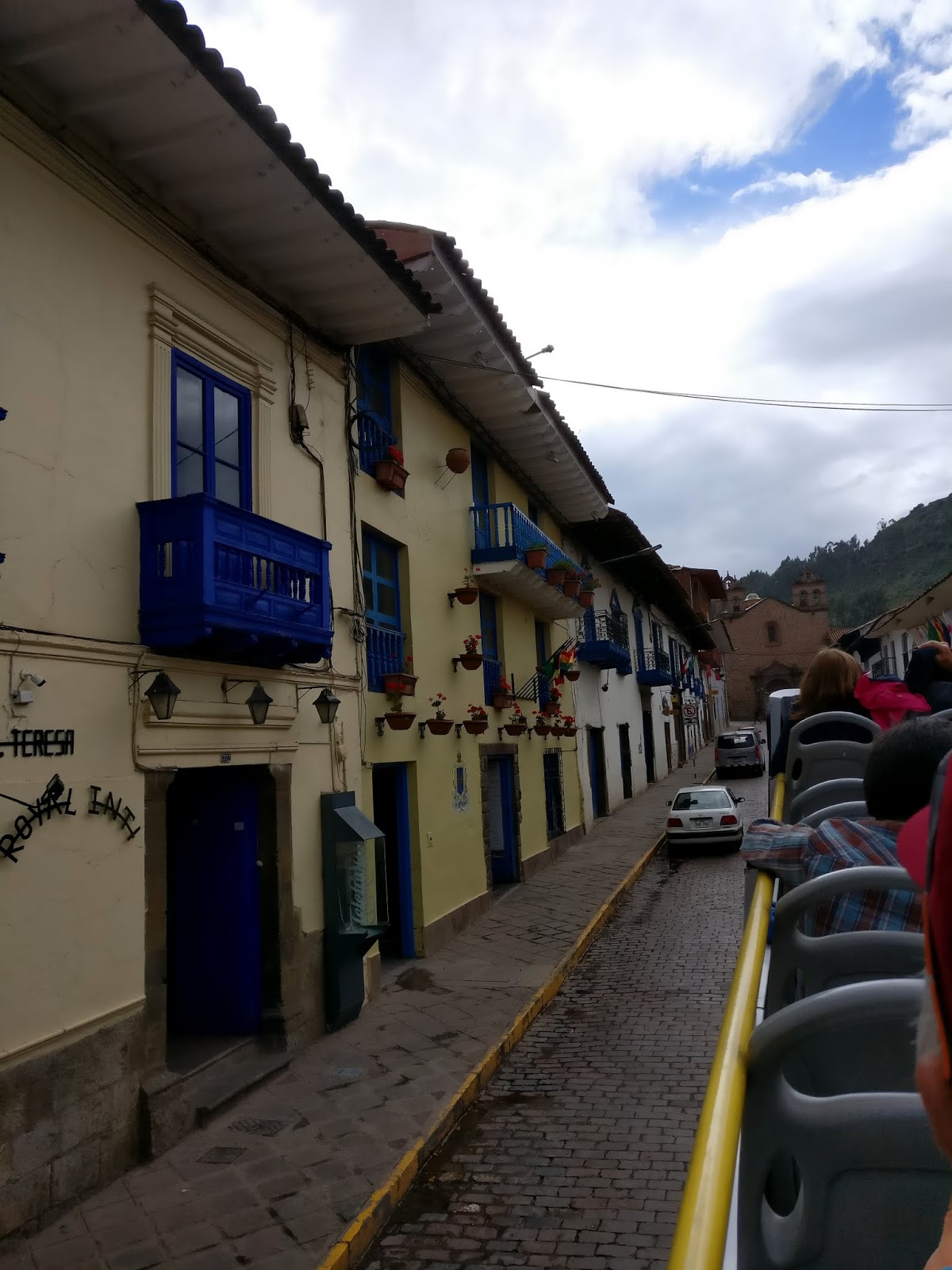
| Houses with small balconies are all over |
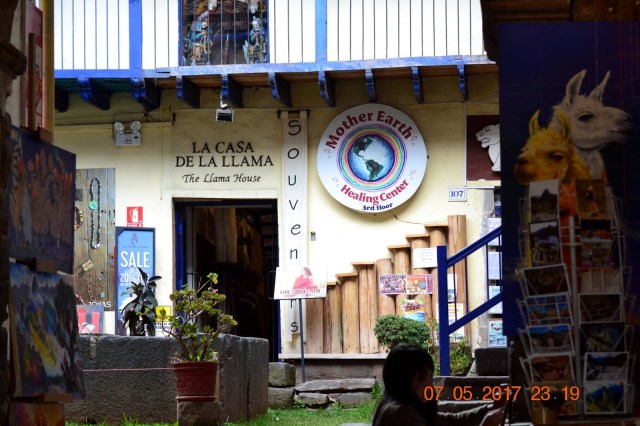 |
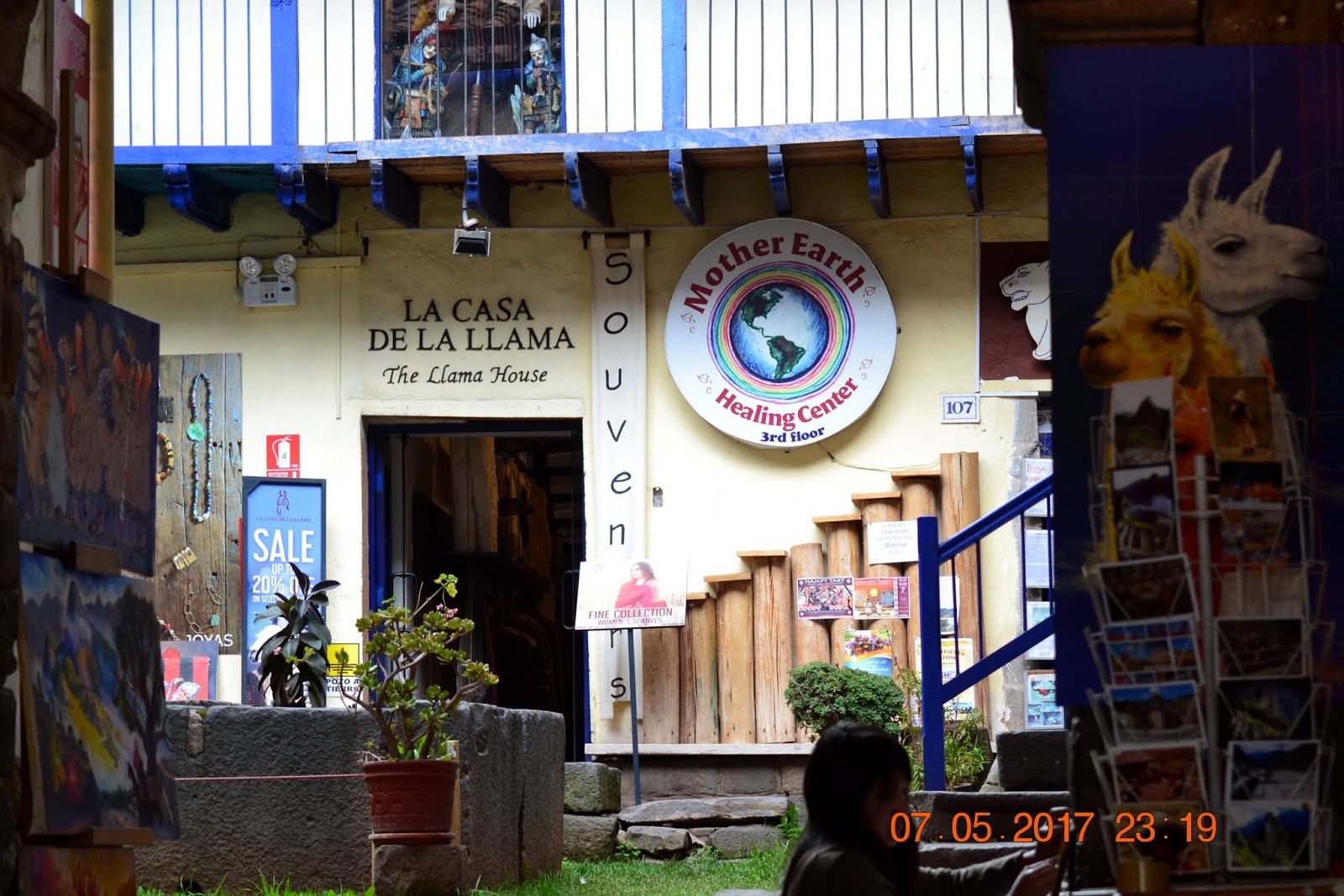
| There are a number of healing centers attracting tourists for alternate therapies
Indigenous women
|
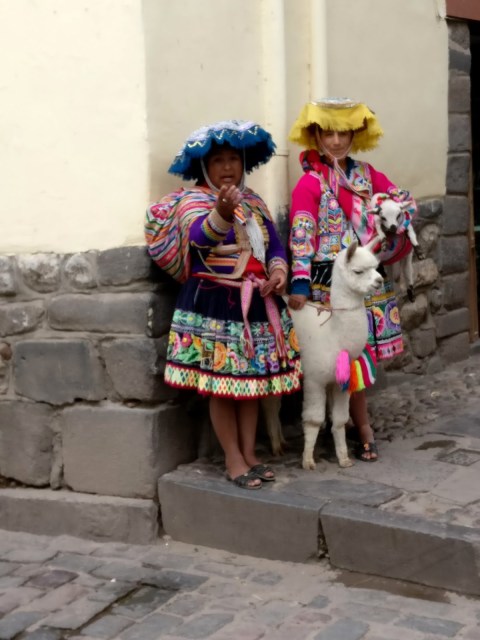 |
| Women dressed in colorful traditional attire – Polleras |
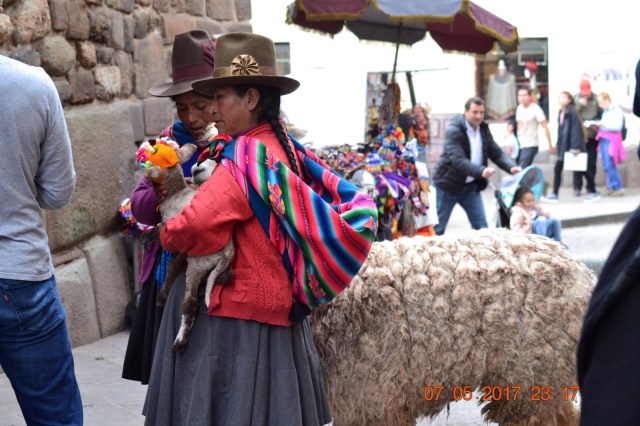 |
| A Lamma always accompanies them |
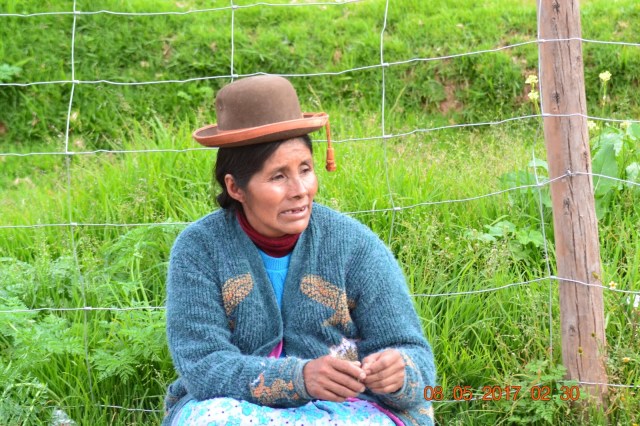 |
| Top hats or Monteras
|
Spanish Architecture dating back to 1600
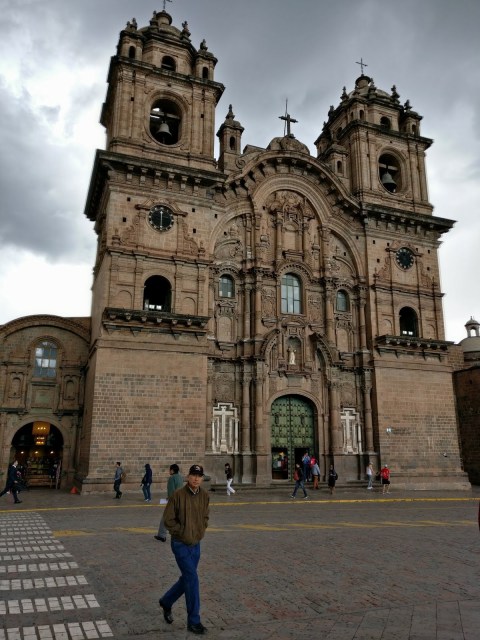 |
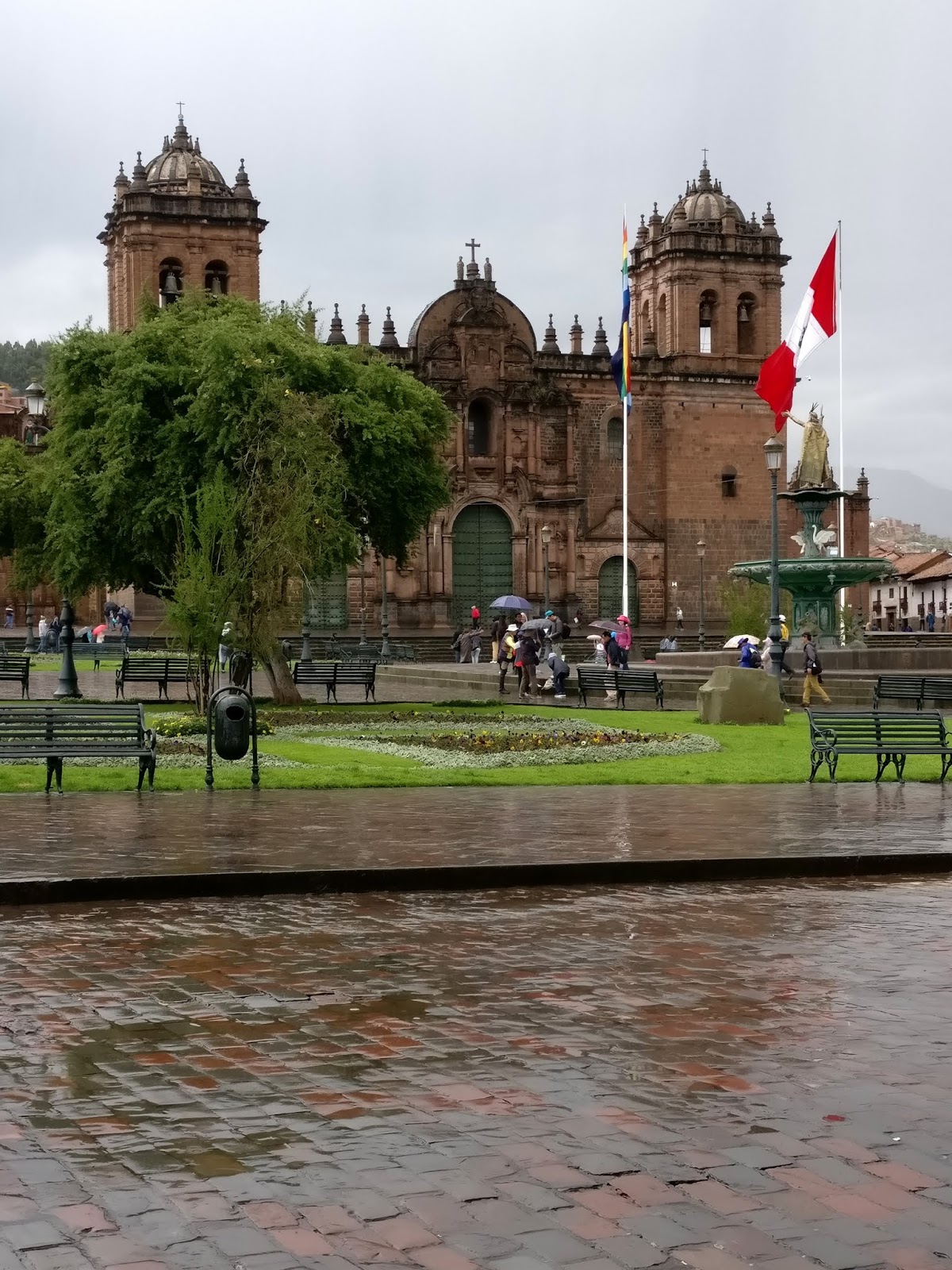
| Cusco Cathedral, is the mother church of the Roman Catholic Archdiocese of Cusco built in 1654. The cathedral is located on the Plaza de Armas. The cathedral was designated a UNESCO World Heritage Site under the City of Cuzco listing in 1983 |
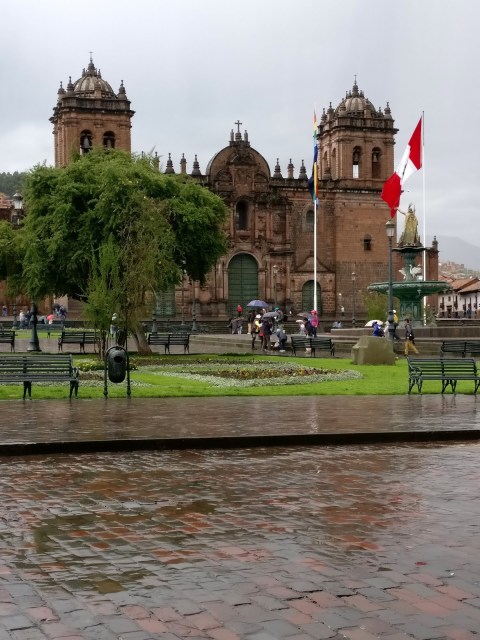 |
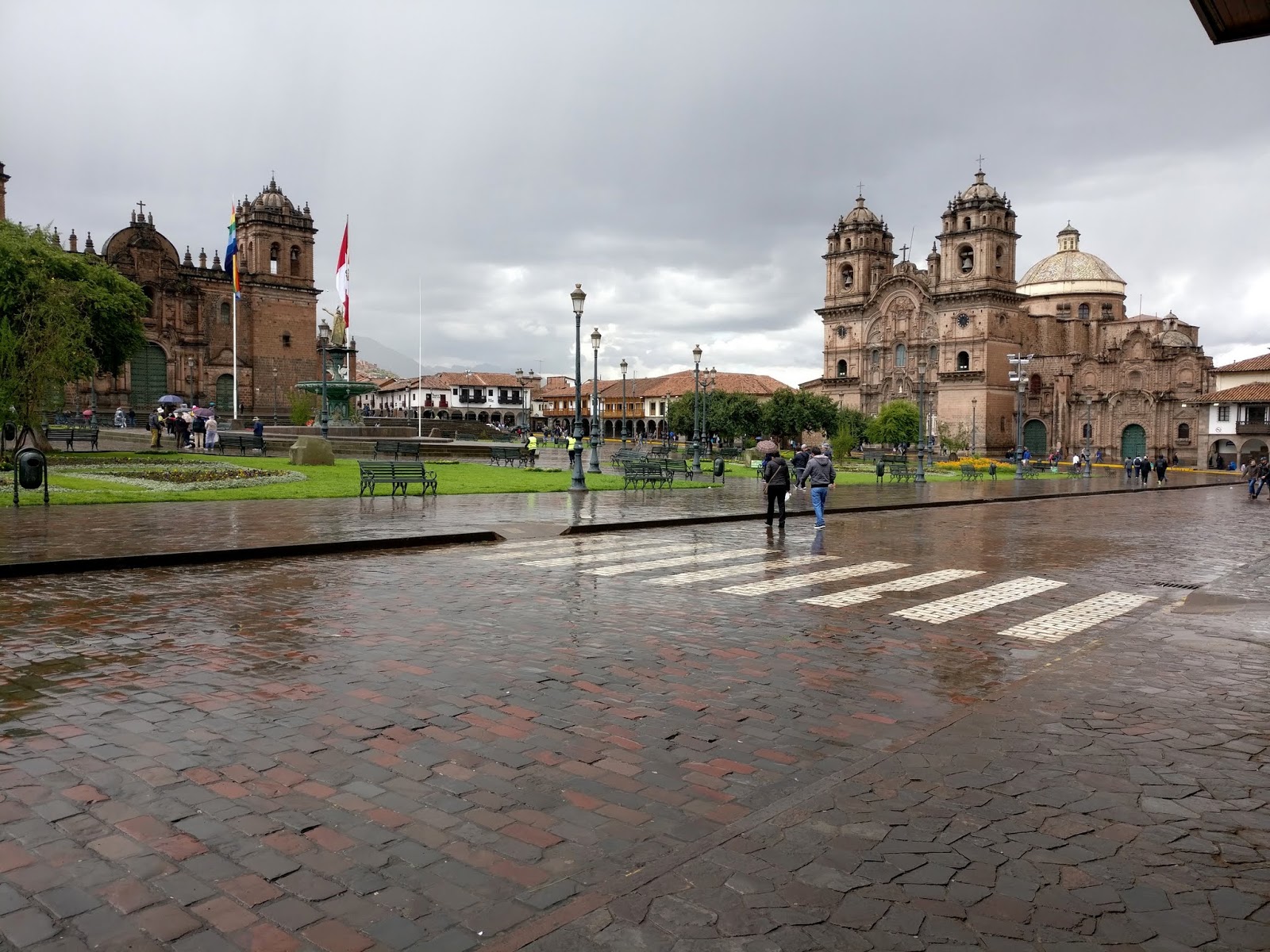
| From a distance |
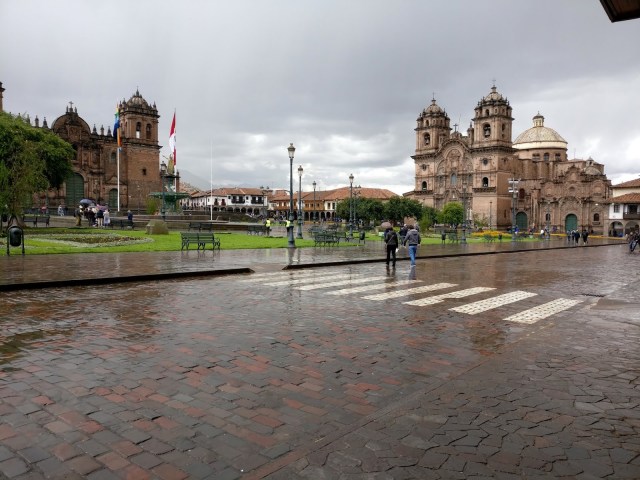 |
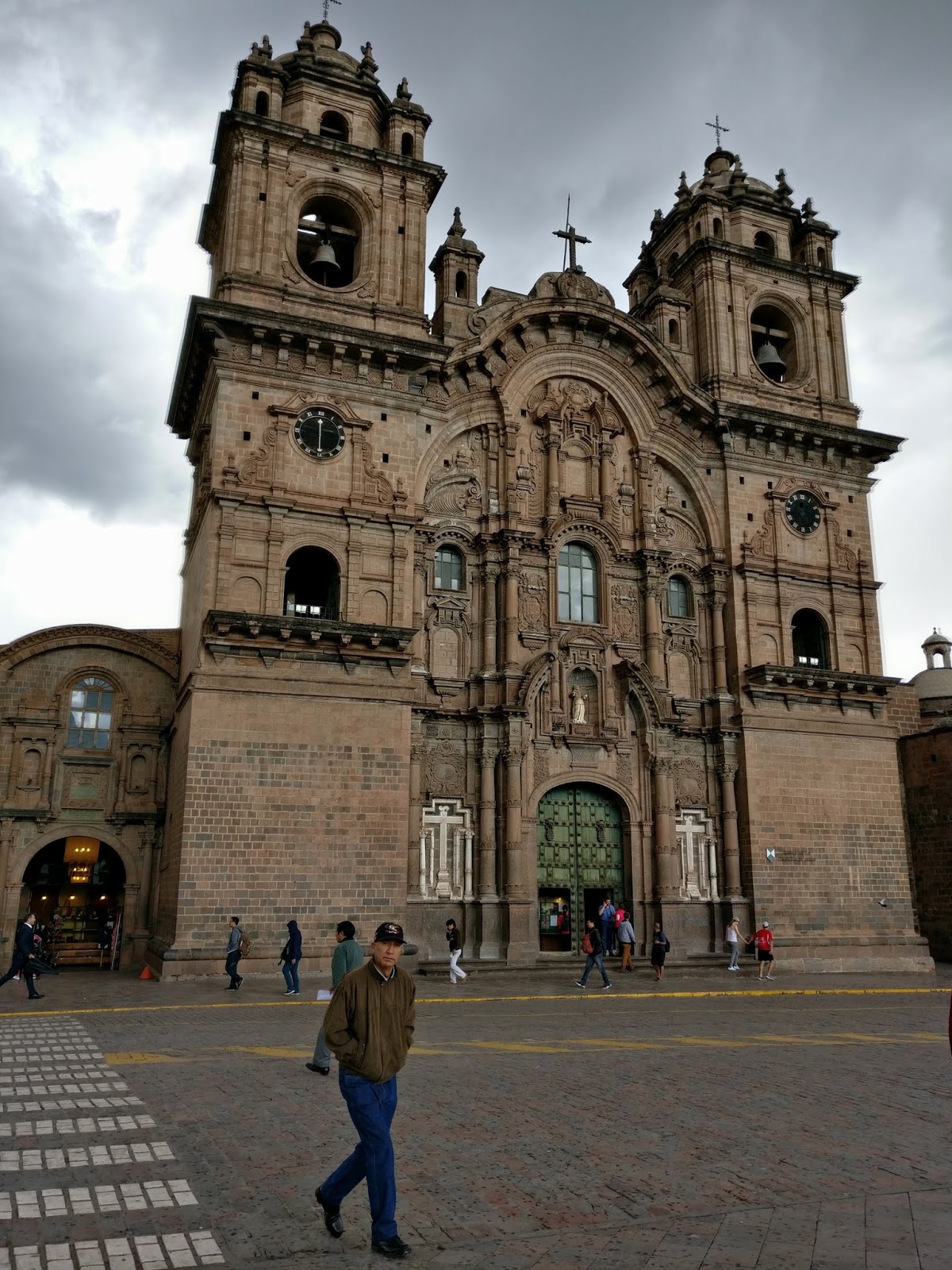
| The Iglesia de la Compania de Jesus dates from the latter part of the 16th century, when it was built by the Jesuits, and stands alongside the cathedral, on the Plaza de Armas. |
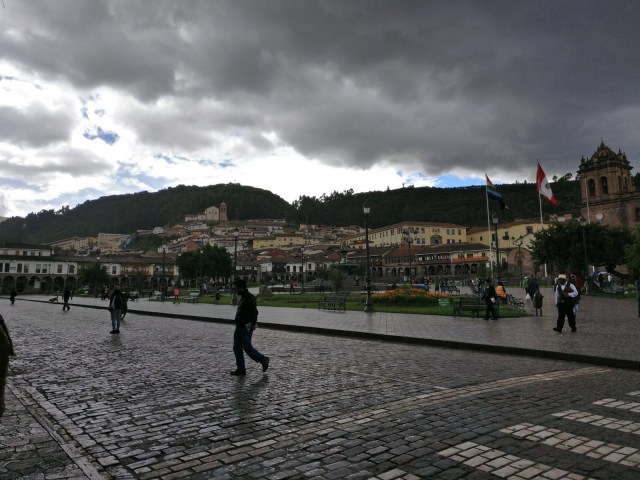 |
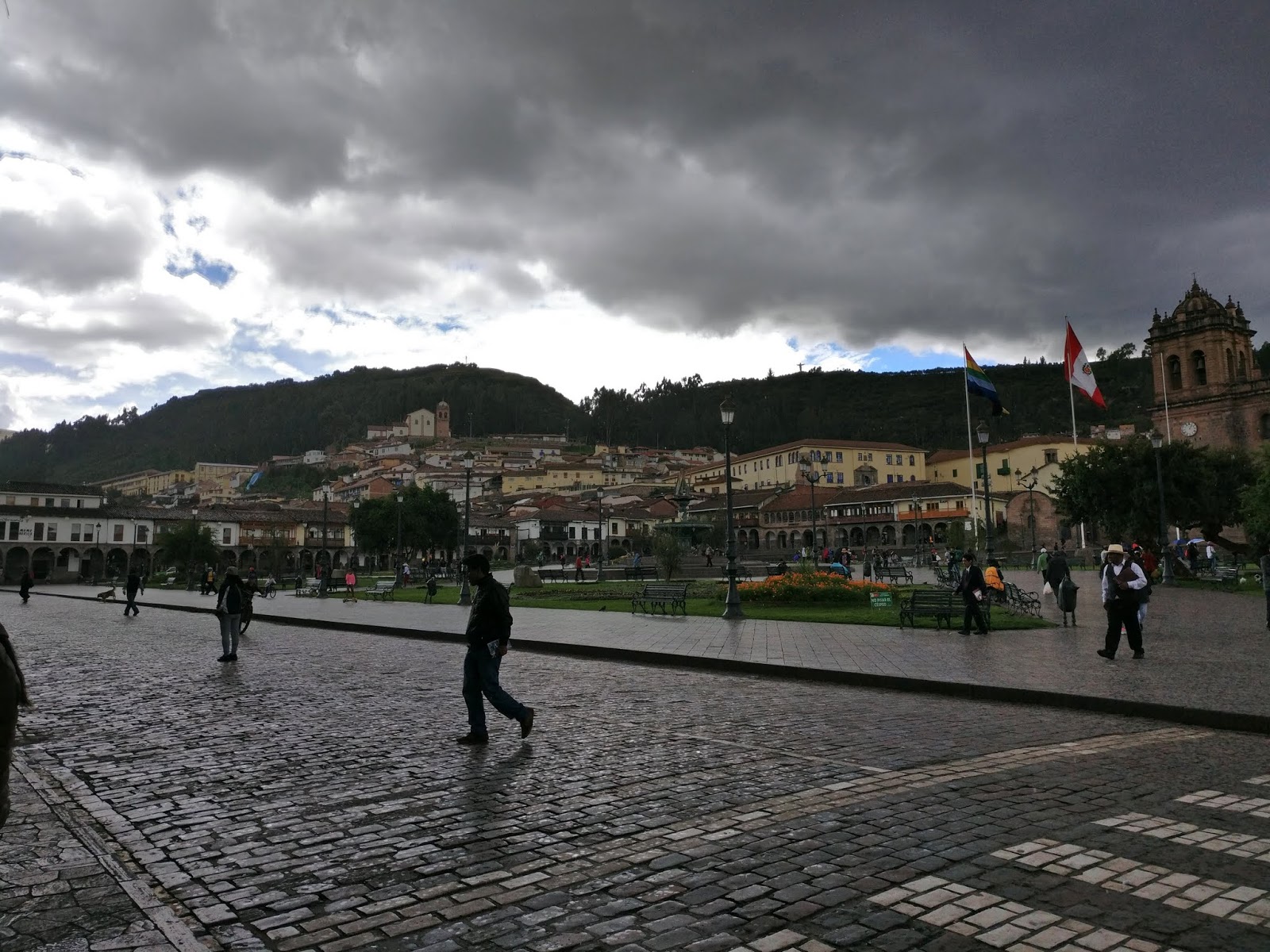
| City view – The sky was overcast throughout the day |
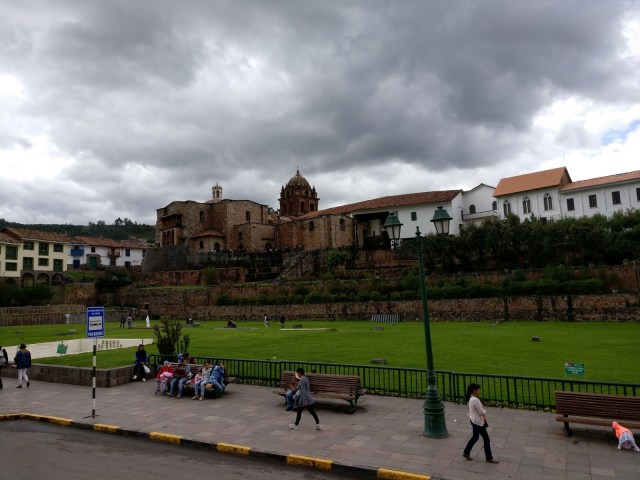 |
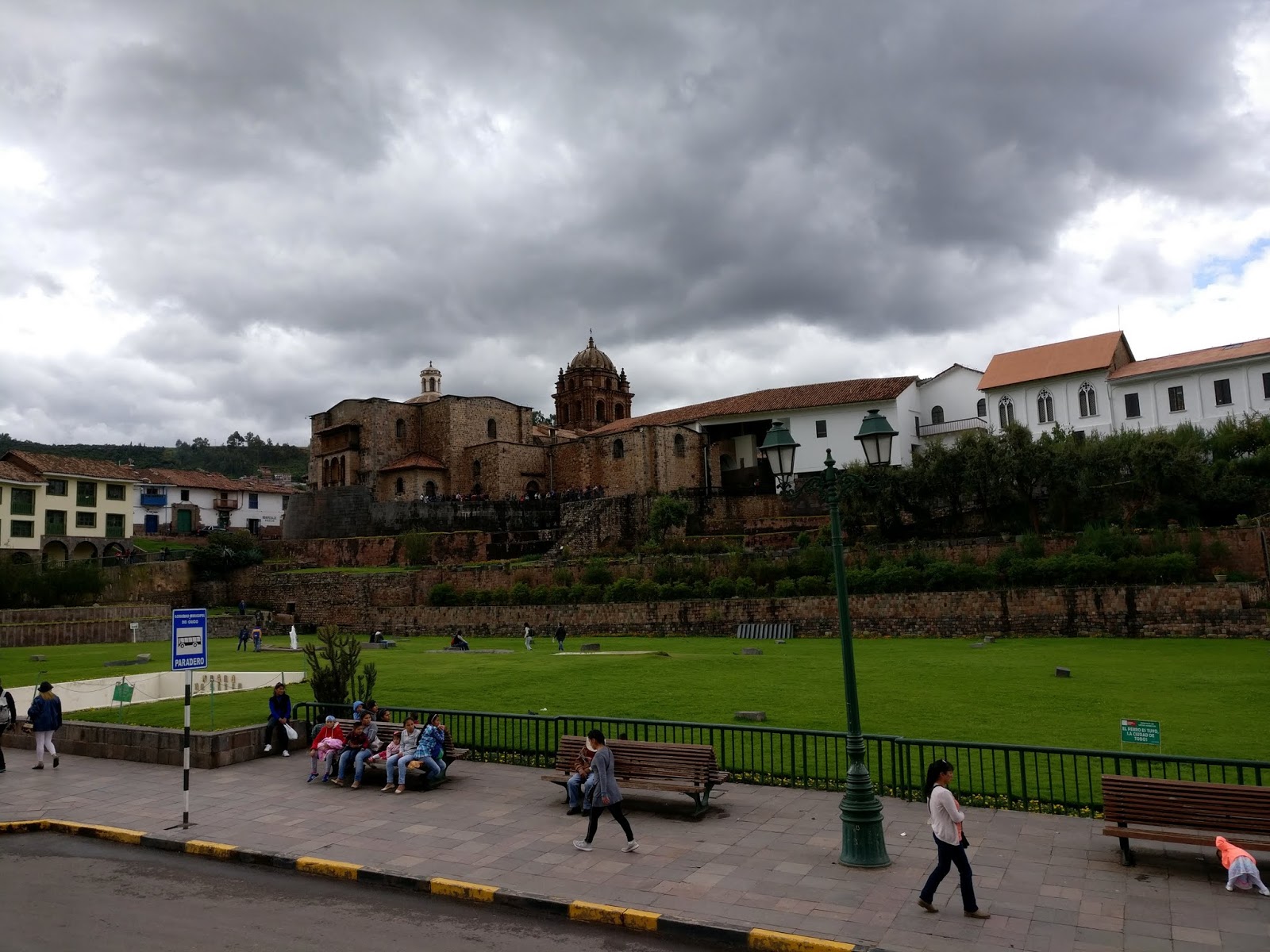
| In Inca times, Qurikancha (Quechua for ‘Golden Courtyard’) was literally covered with gold. It is said that the mummified bodies of several previous Inca kings were kept here, brought out into the sunlight each day and offered food and drink, which was then ritually burnt. |
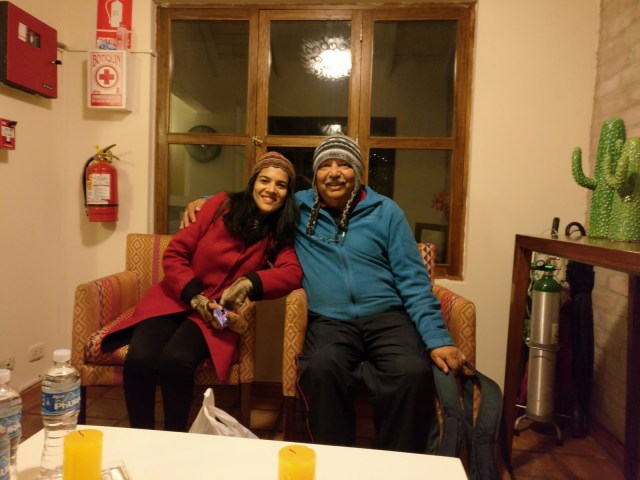 |
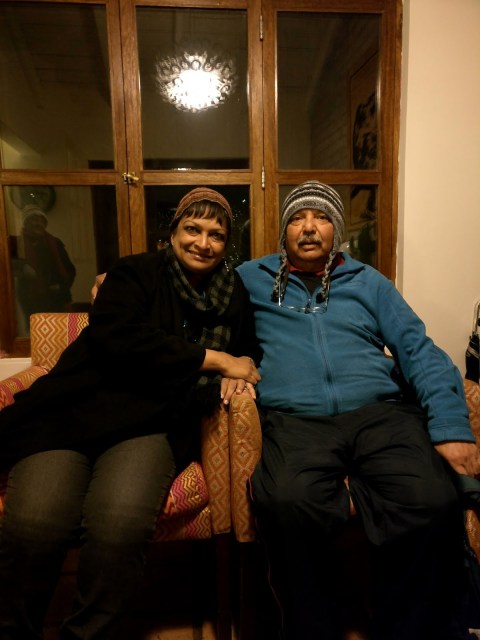
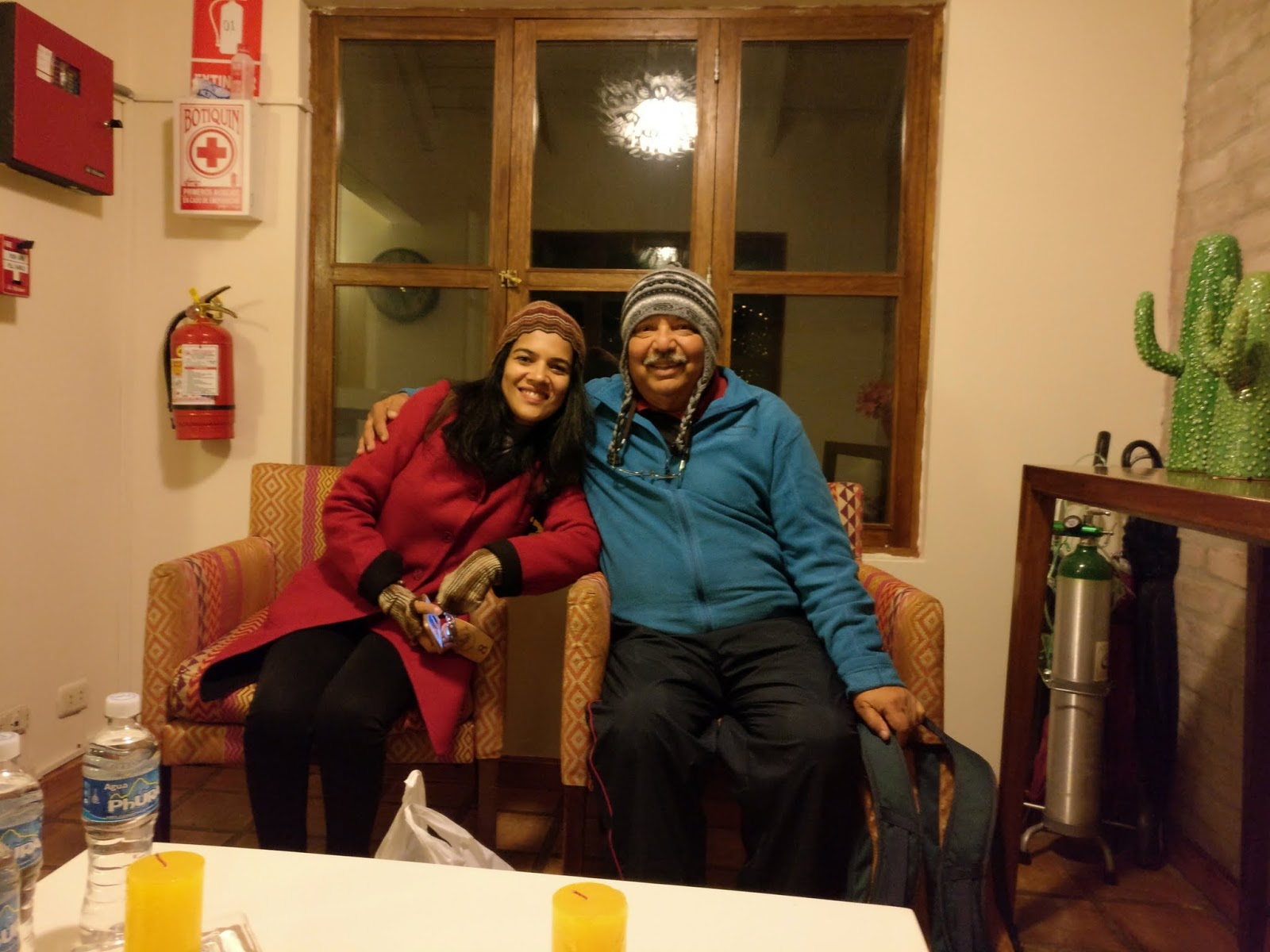
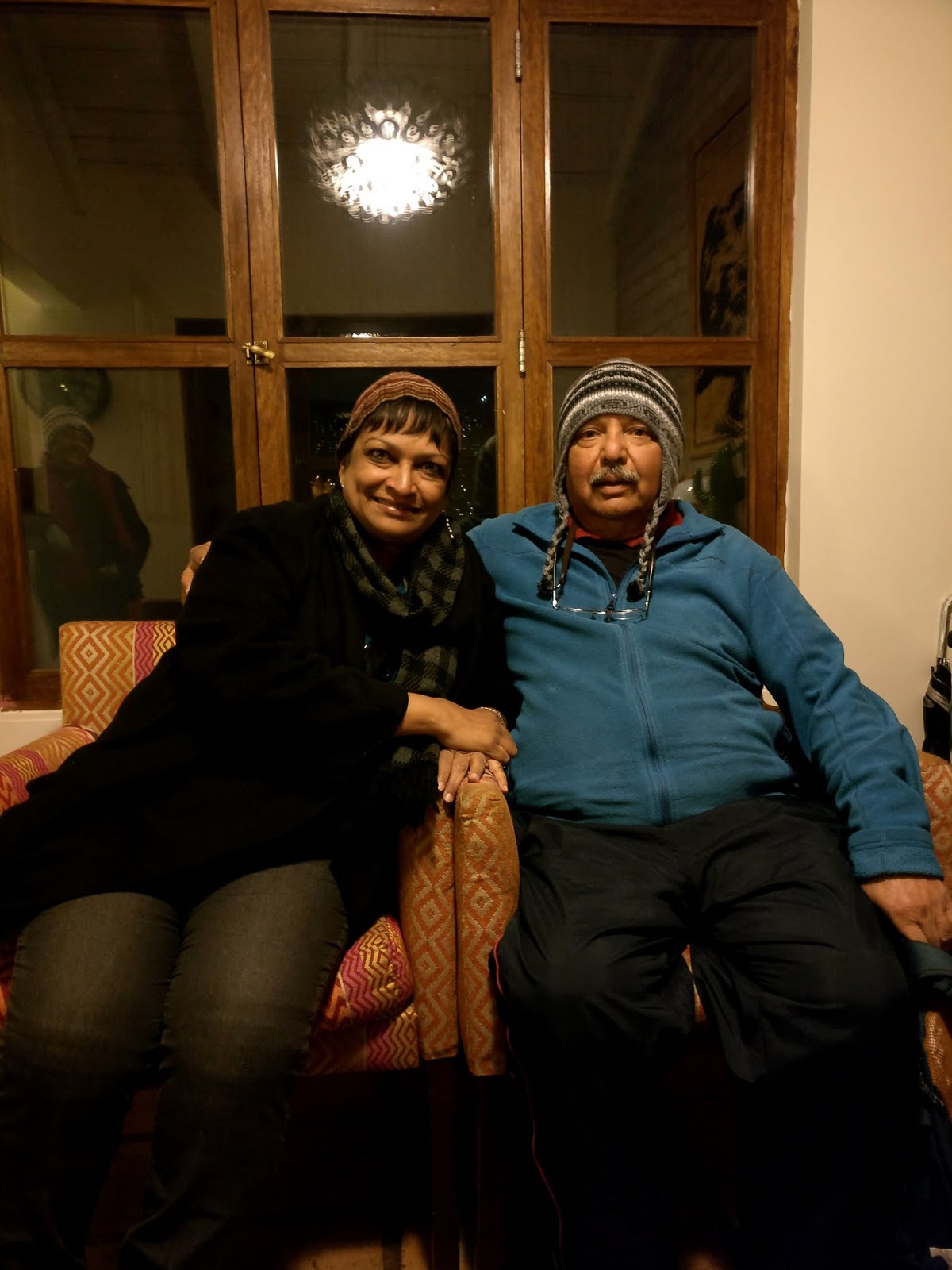
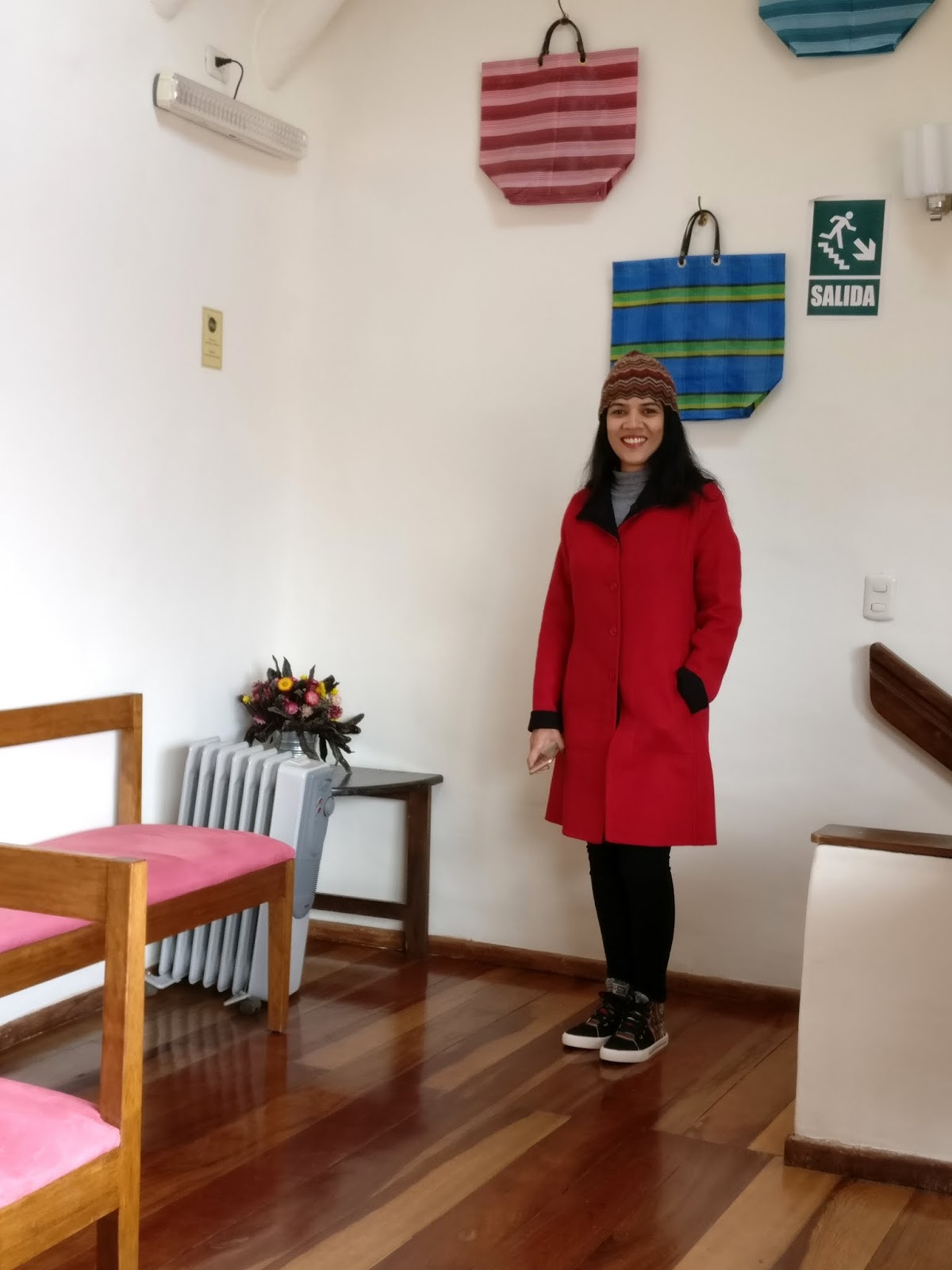
| Photo op in the hotel lobby |
 |
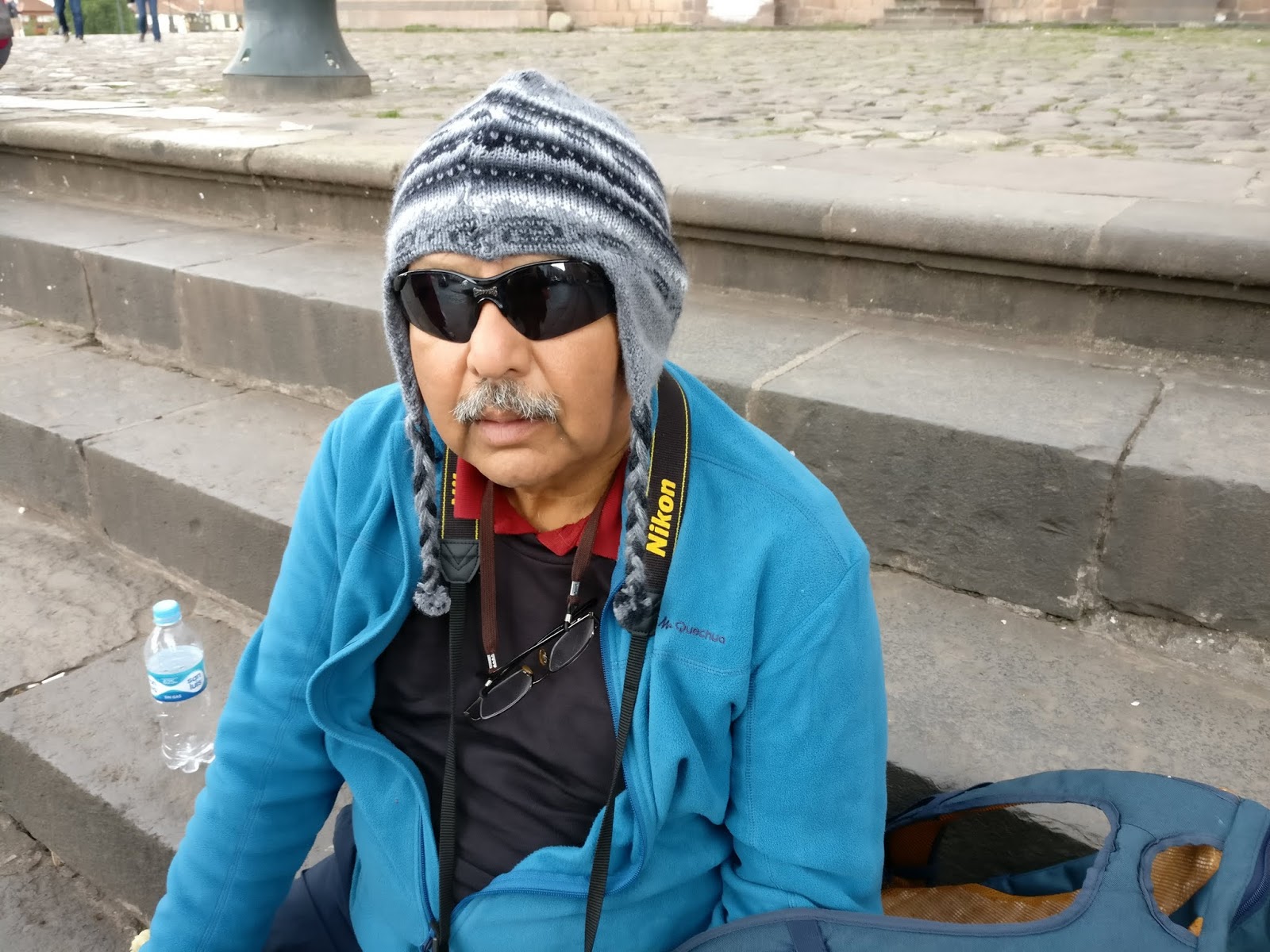
| Peruvian headgear keeps you very warm |
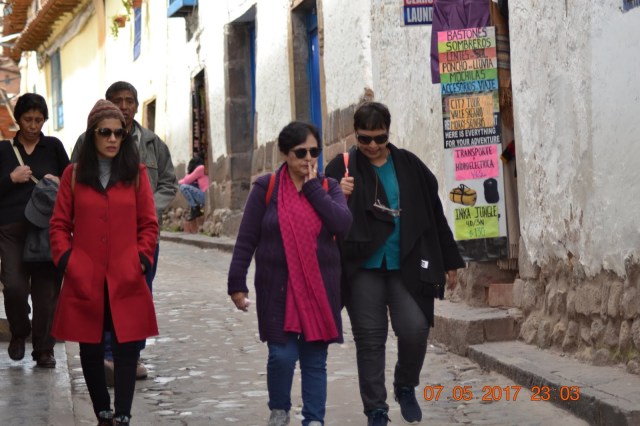 |
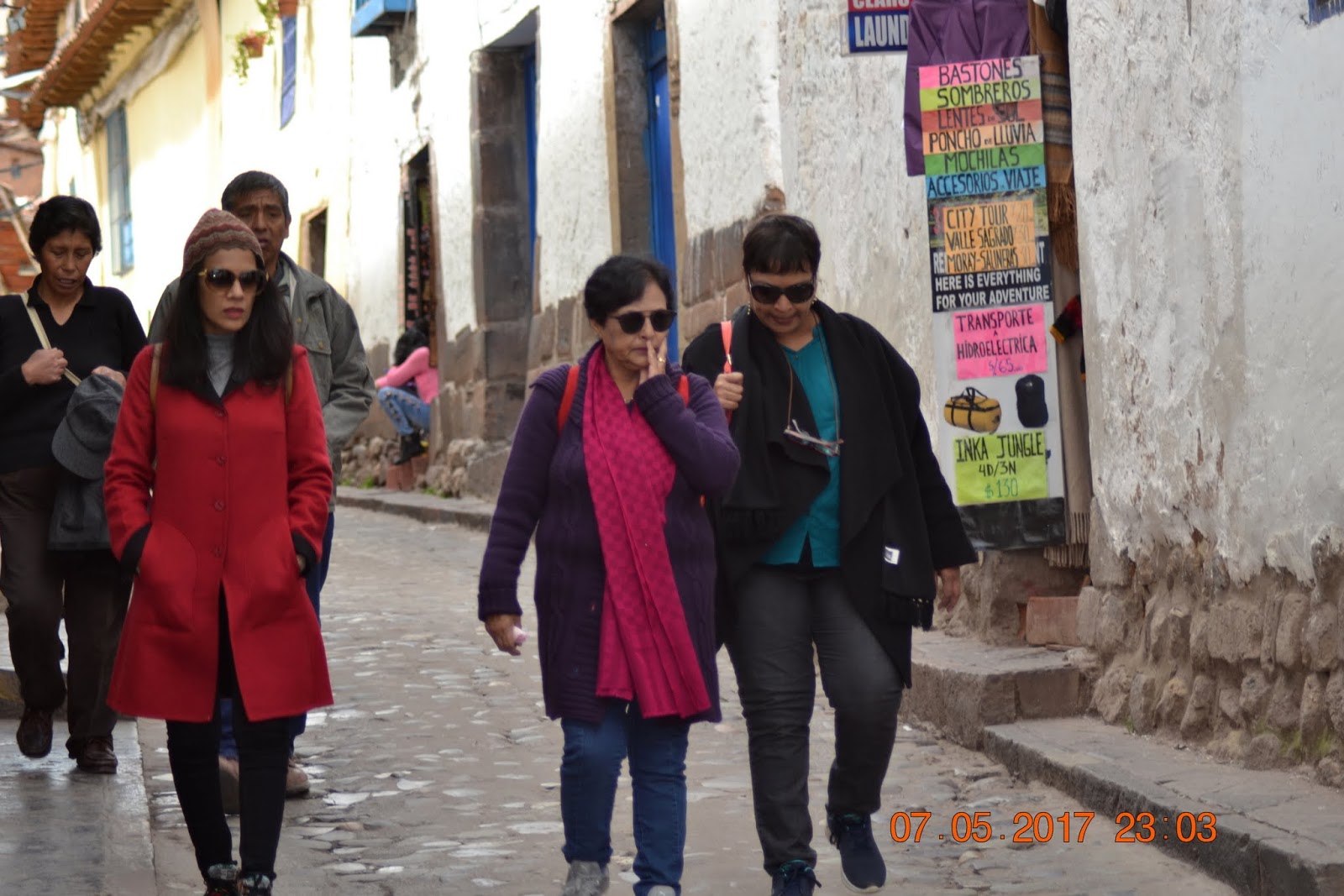
| The girls on a stroll |
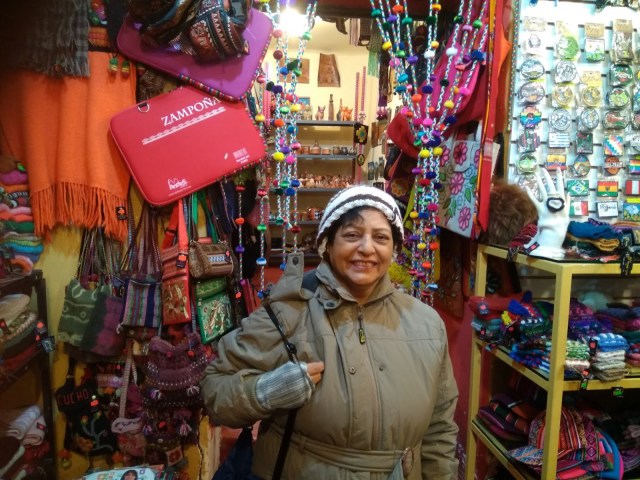 |
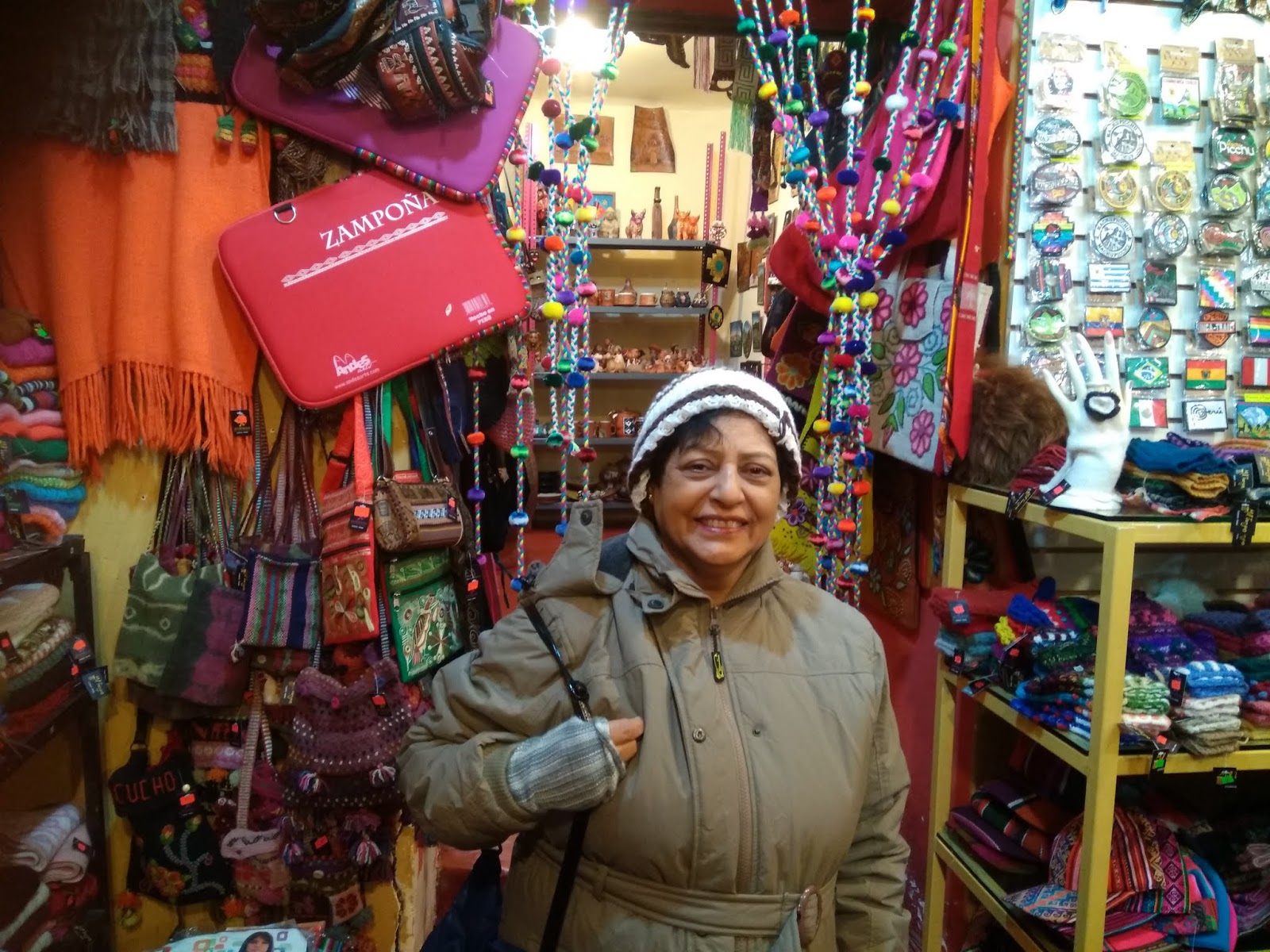
| Rita all smiles after a very happy shopping experience |
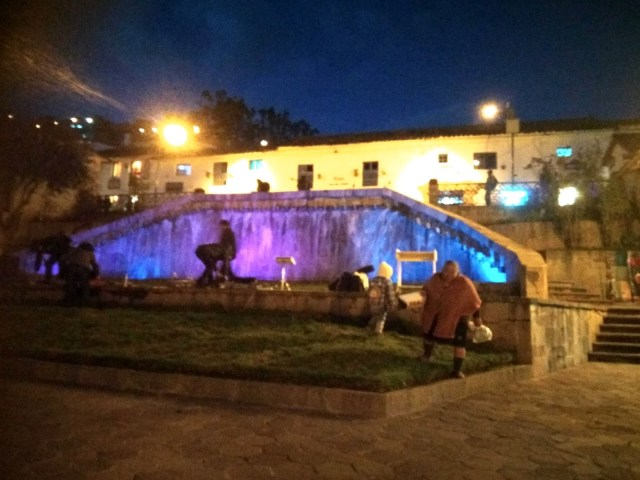 |
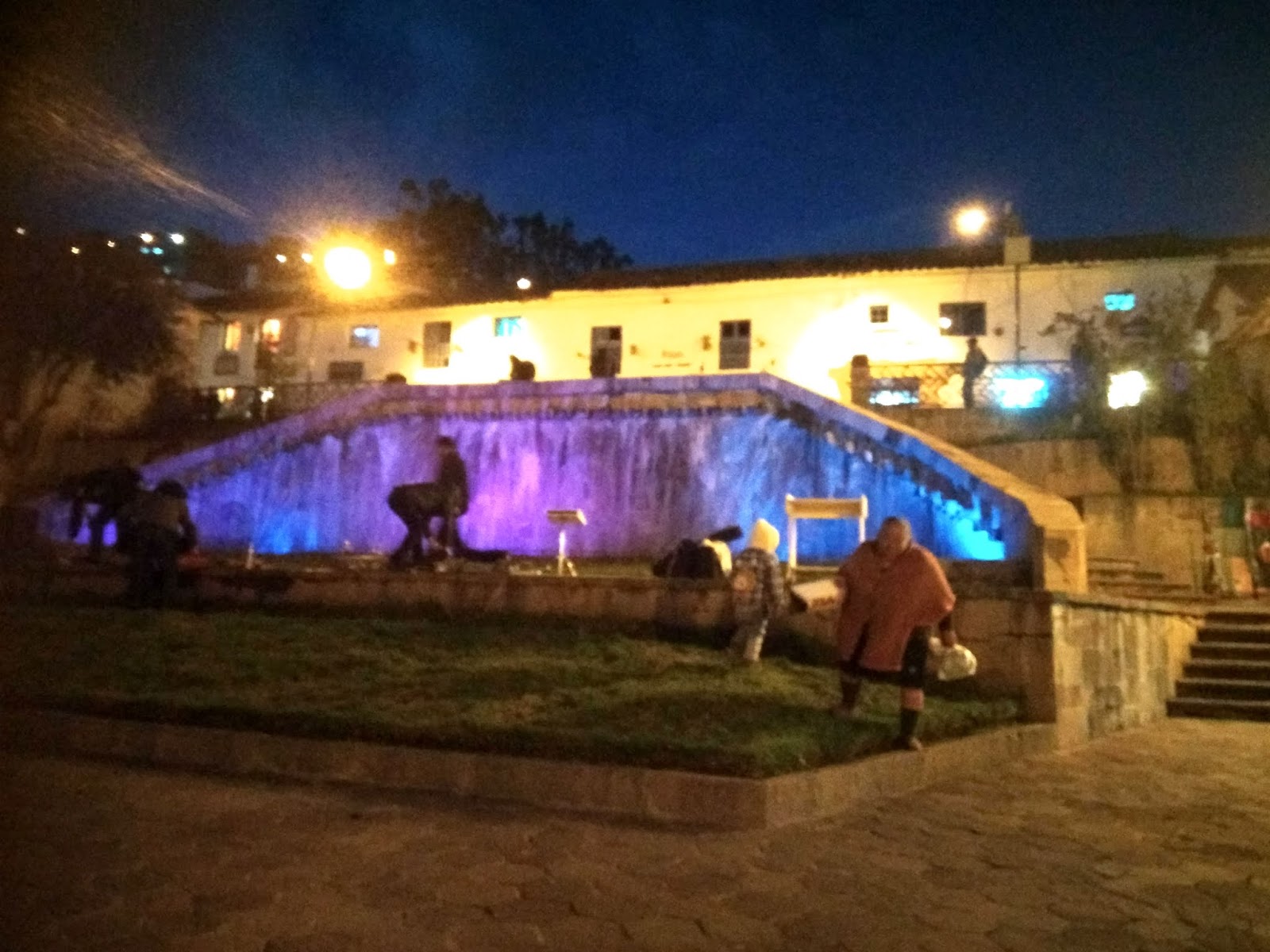
| San Blas square leading to the hotel |
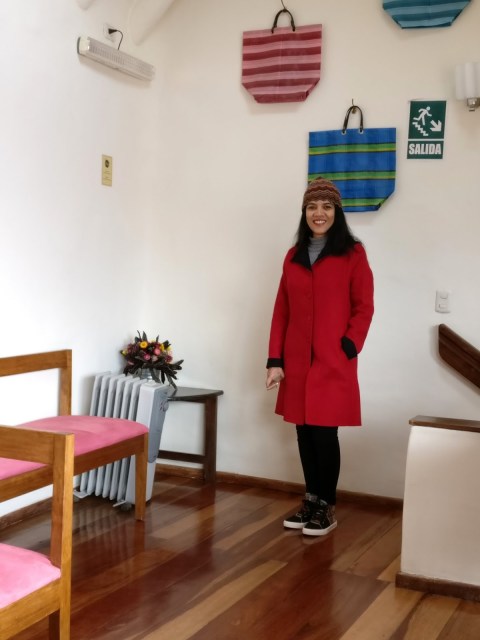 |
| Sushama modelling with her new Peruvian coat |
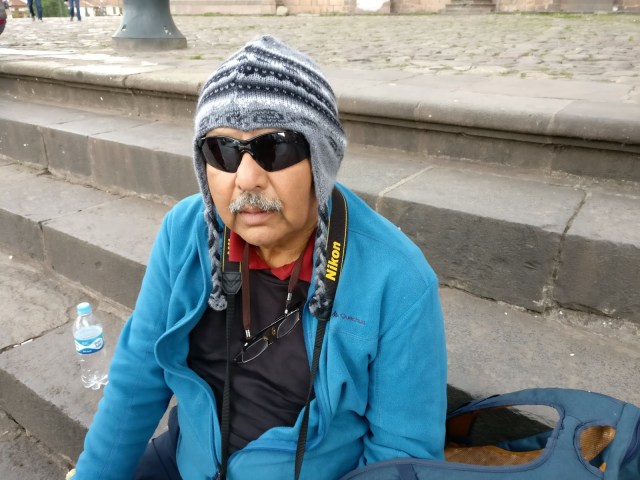 |
| Very local |
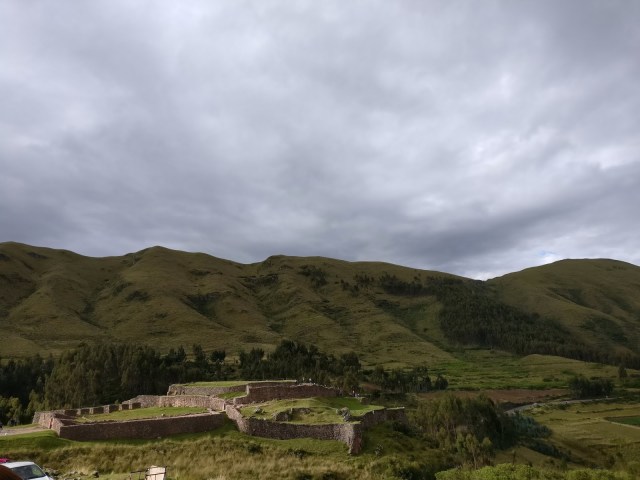 |
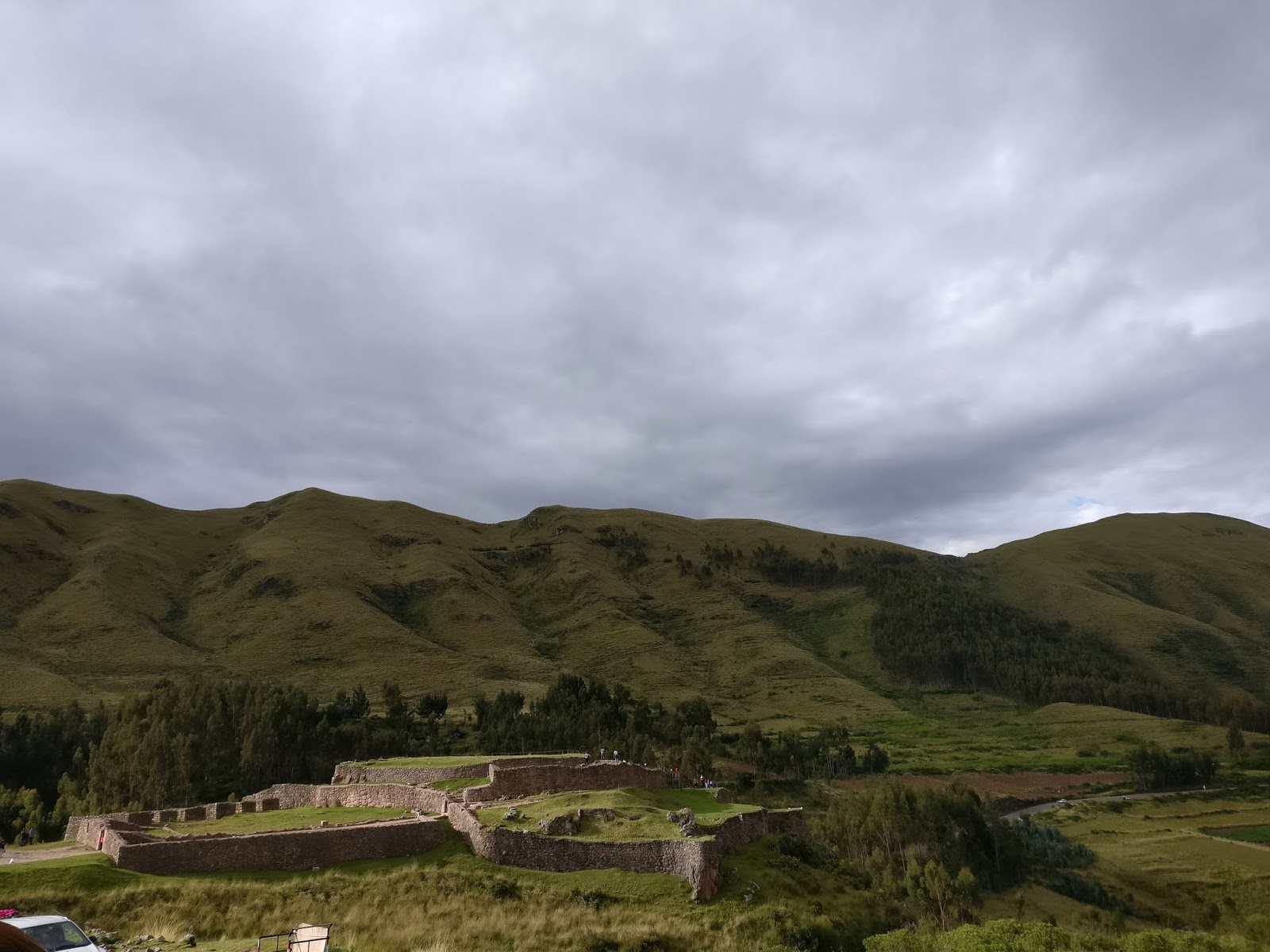
| The Southern Valley of Cusco is full of curious myths and great archaeological sites from the times of the Incas. |
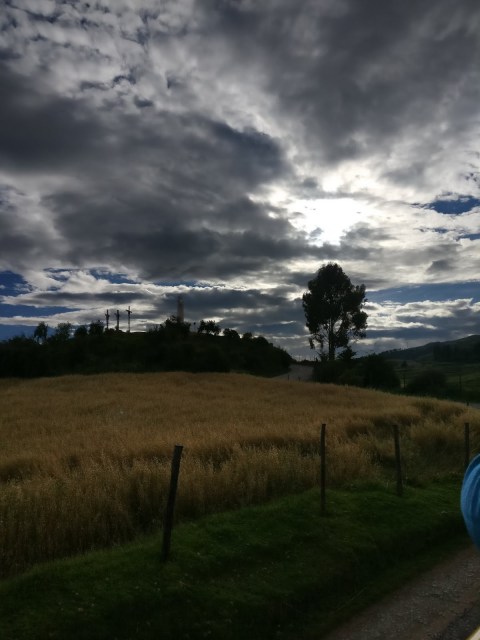 |
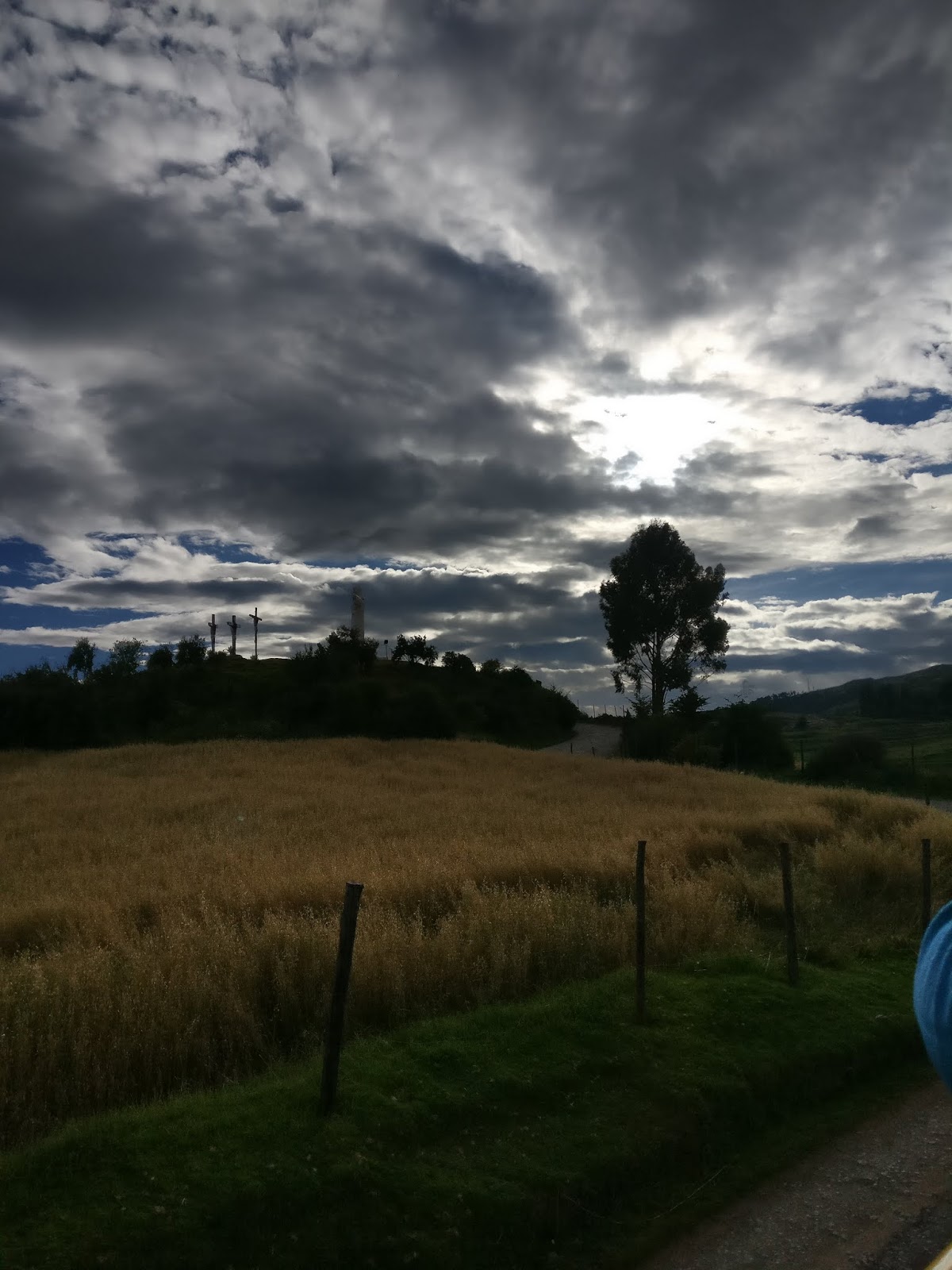
| A view of the country side |
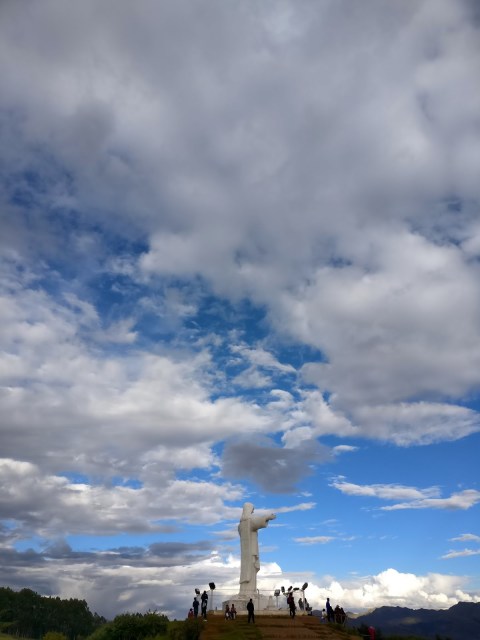 |
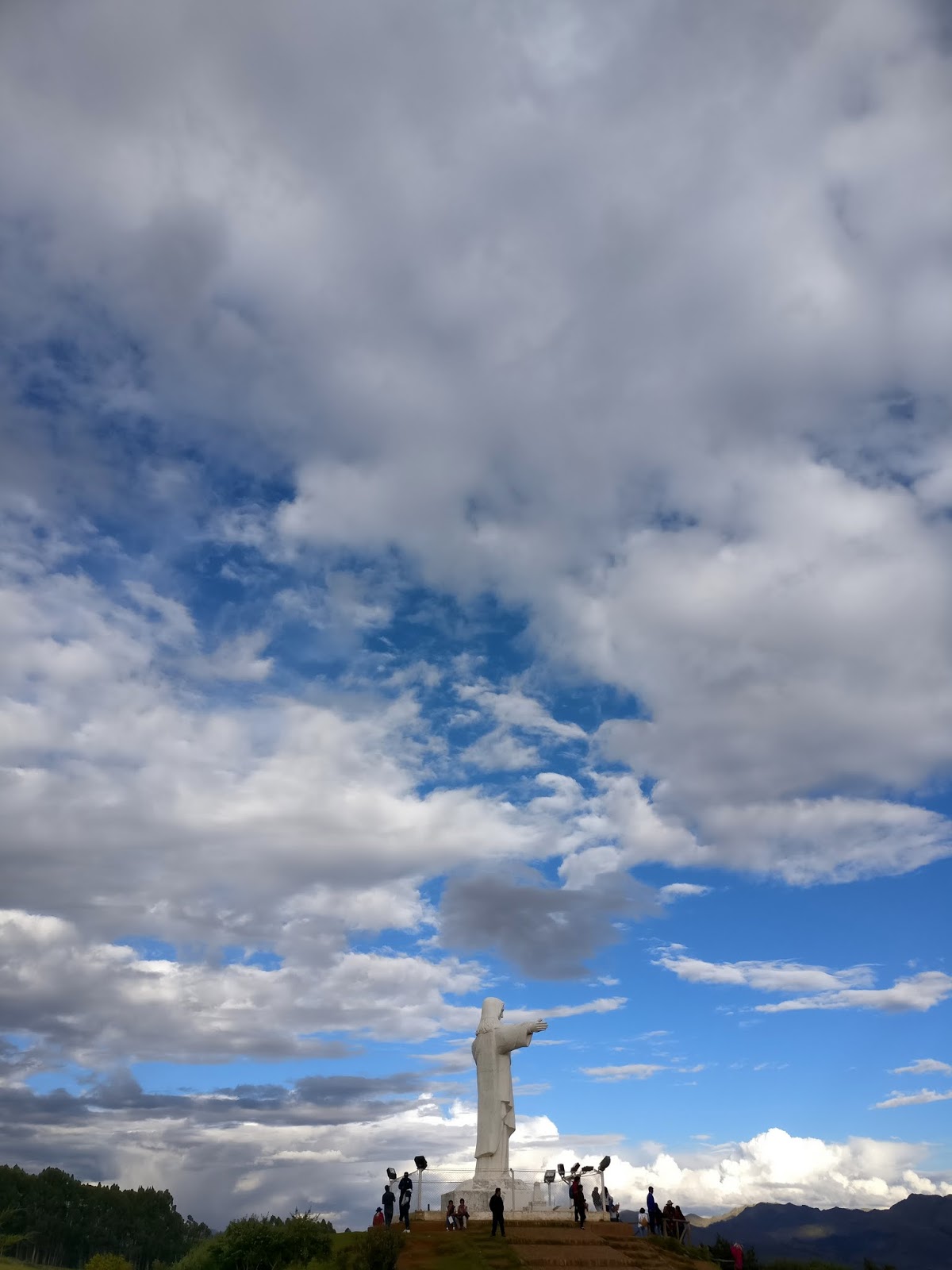
| Perched high above the colonial centre of Cusco, Cristo Blanco is a large statue of Jesus Christ that can be seen across the city. Towering some 8 meters (26 feet) high the white structure was a gift from Arabic Palestinians who sought refuge in Cusco after World War II. The statue depicts Christ extending his arms outwards, very similar to Rio´s Christ the Redeemer, but in miniature format |
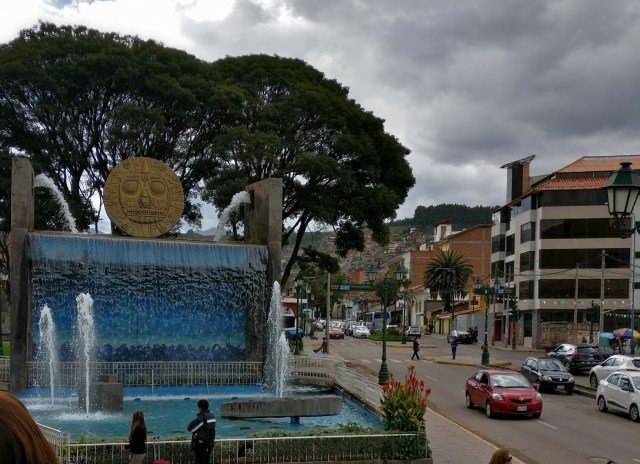 |
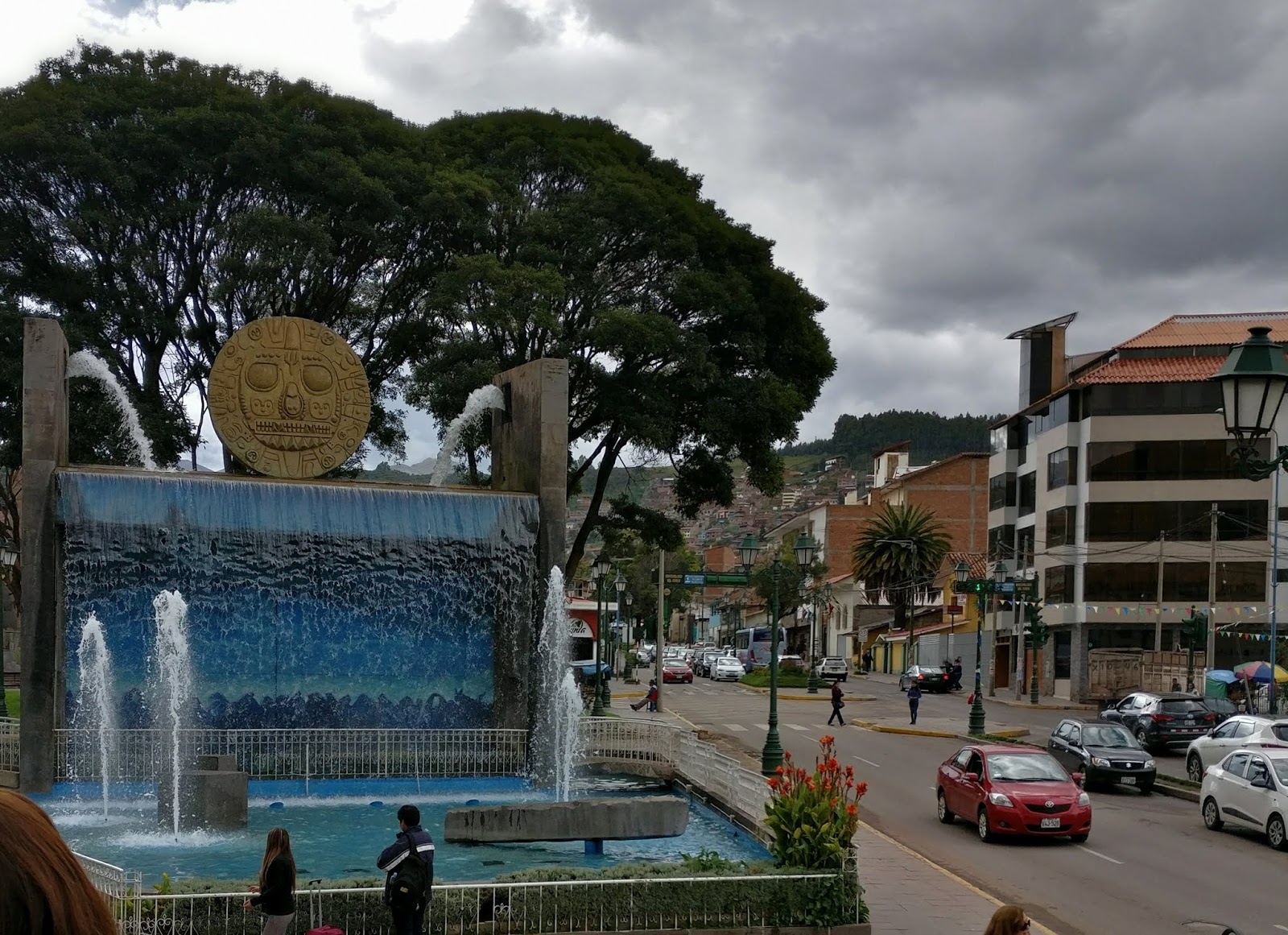
| City centre and open architecture |
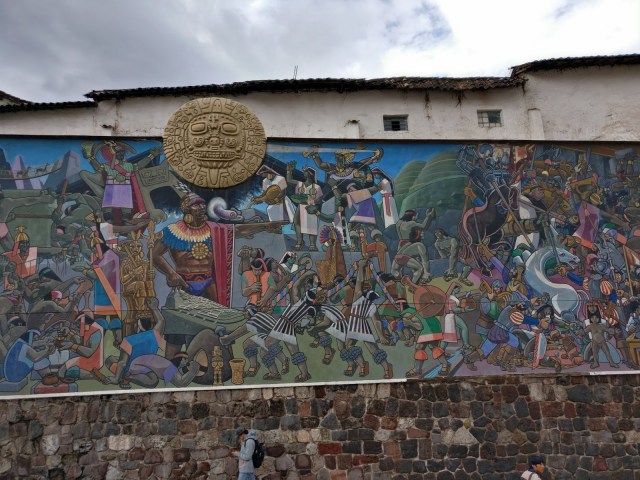 |
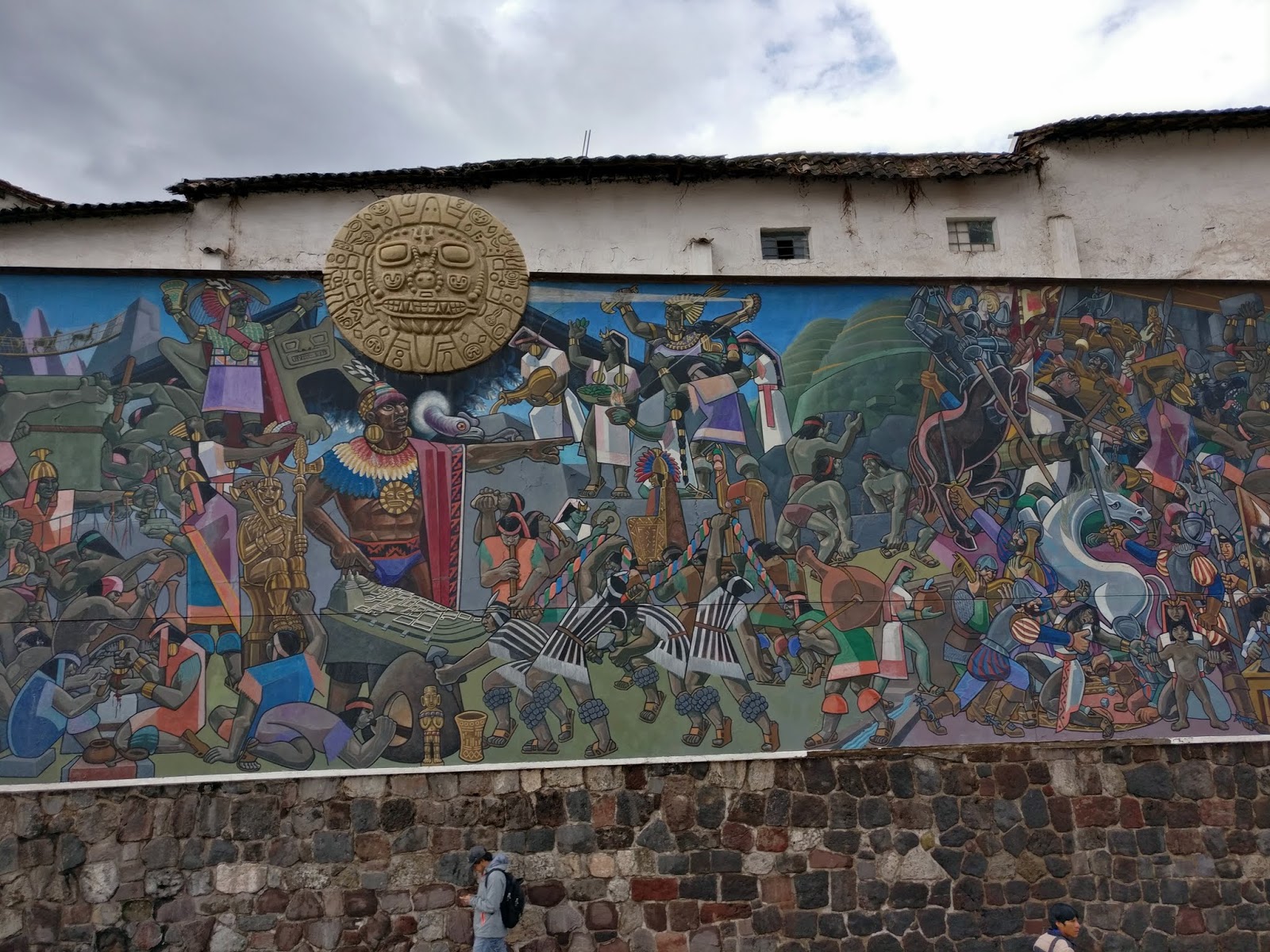
| Another example of street art |
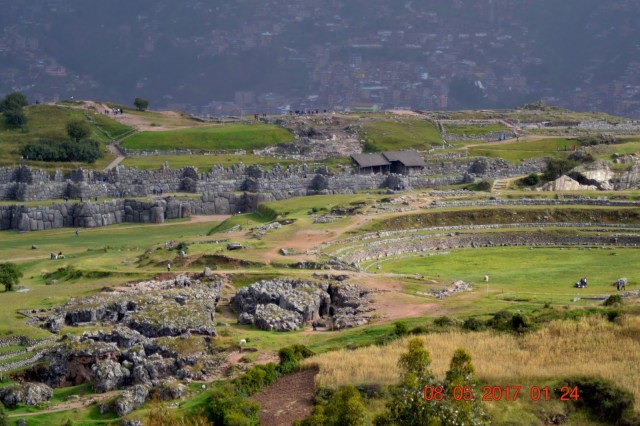 |
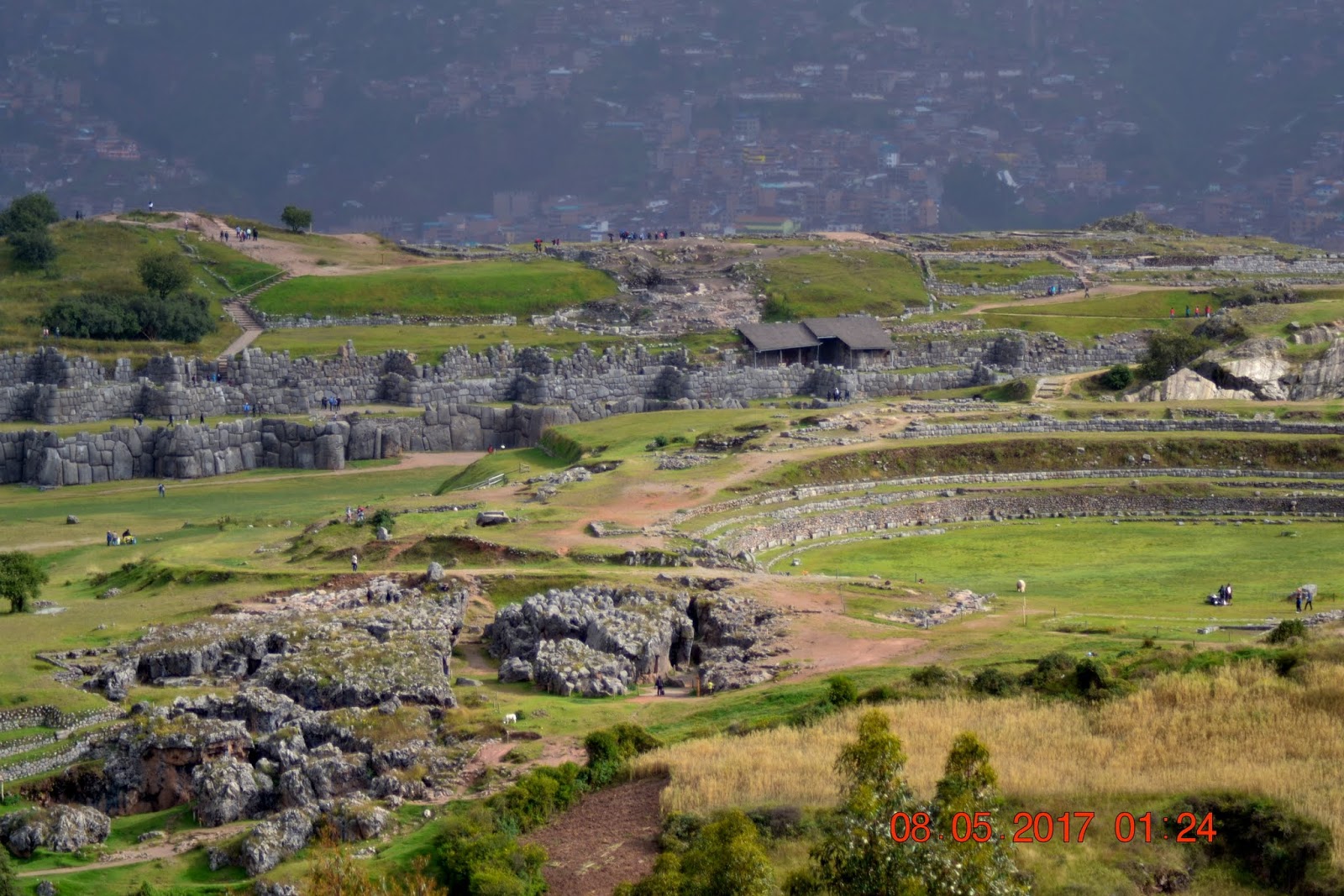
| Old Inca sites in the Southern valley
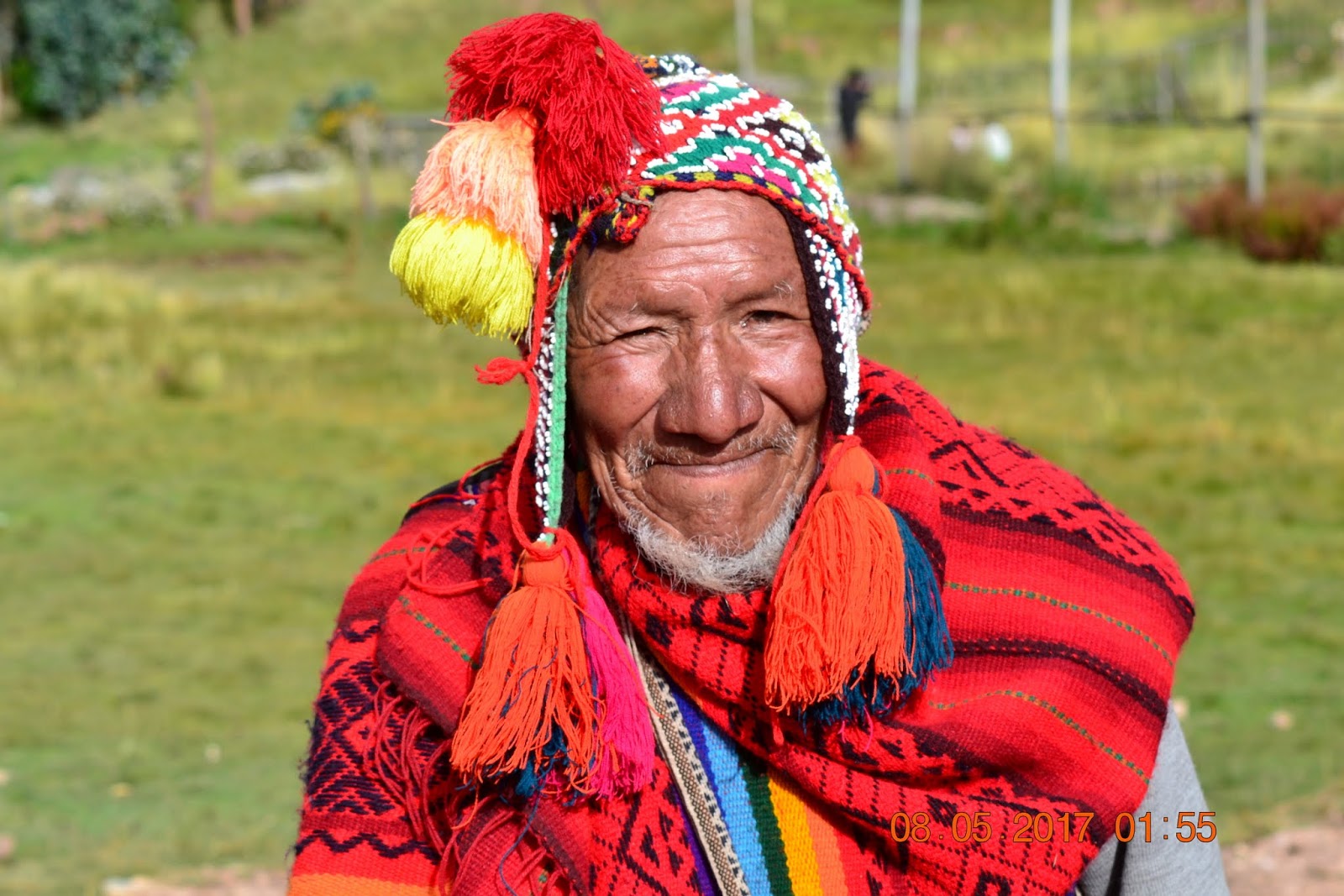
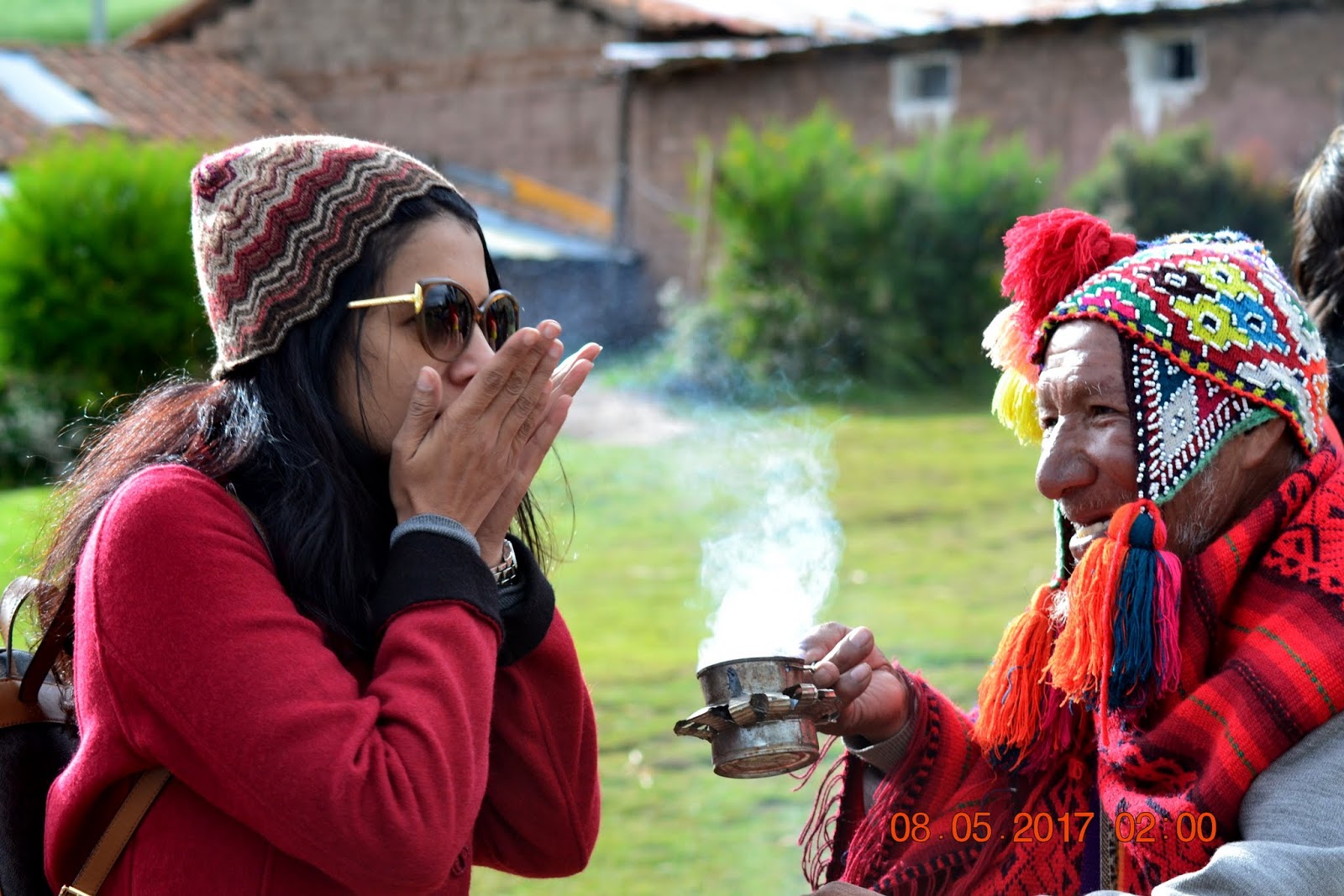
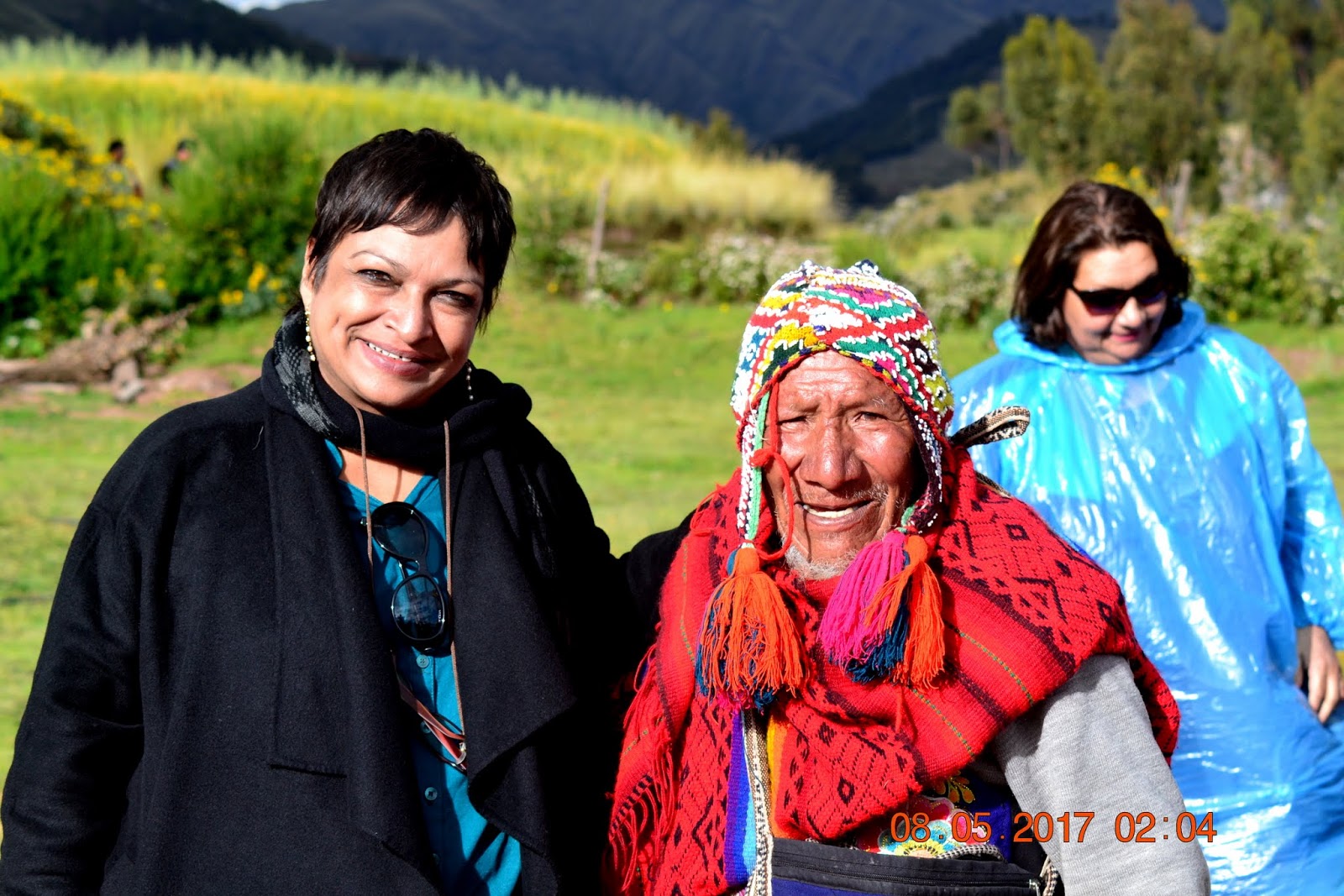
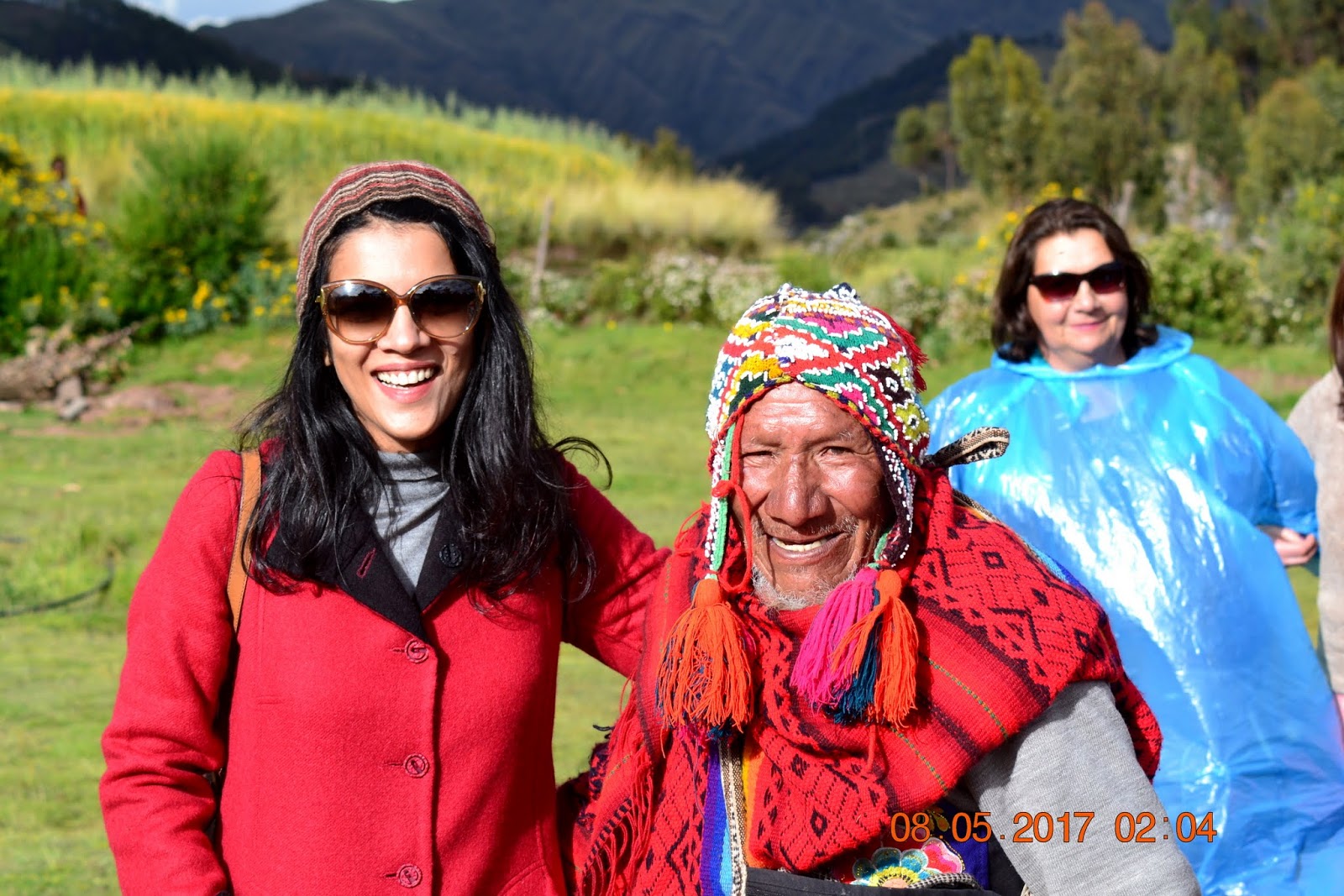
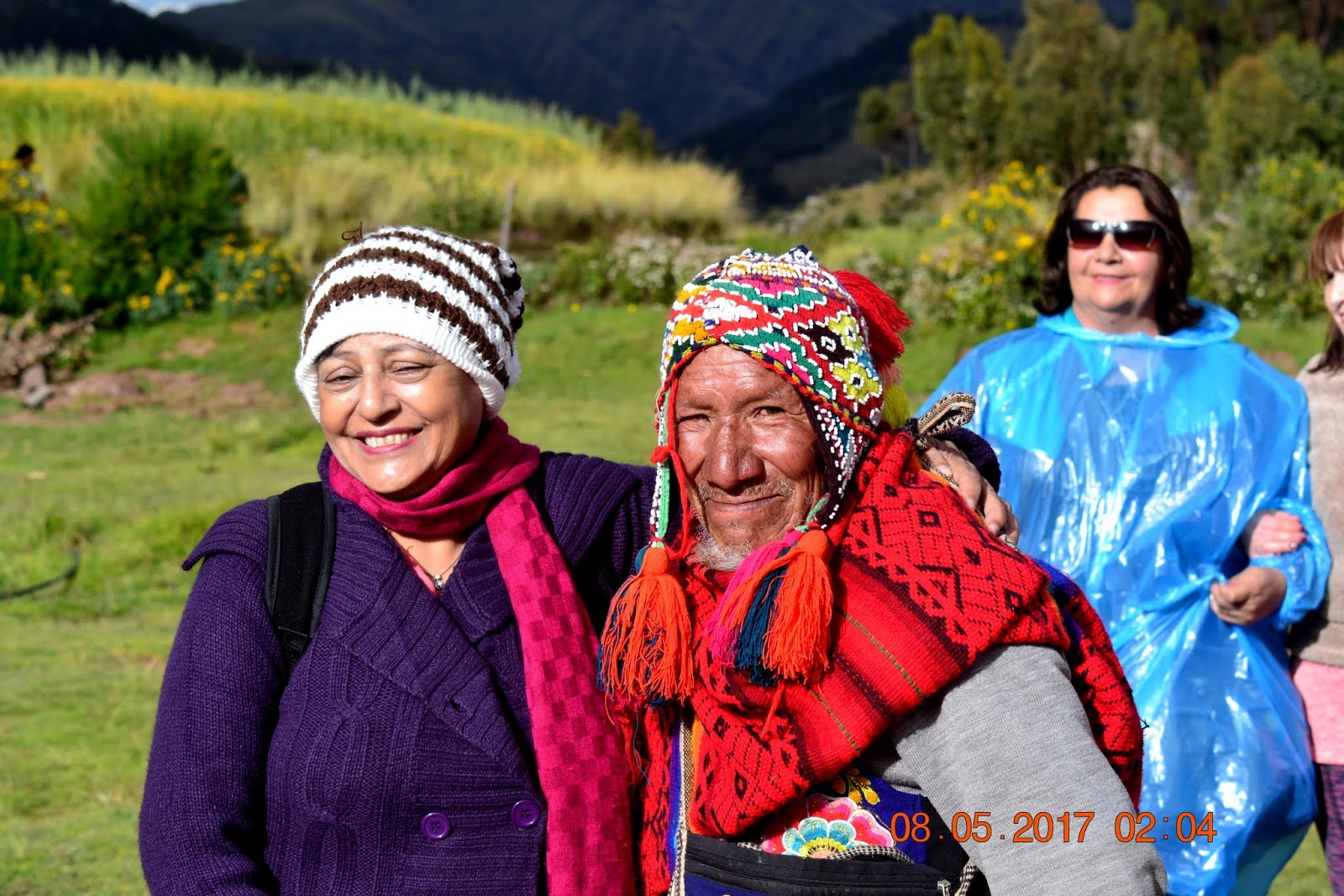
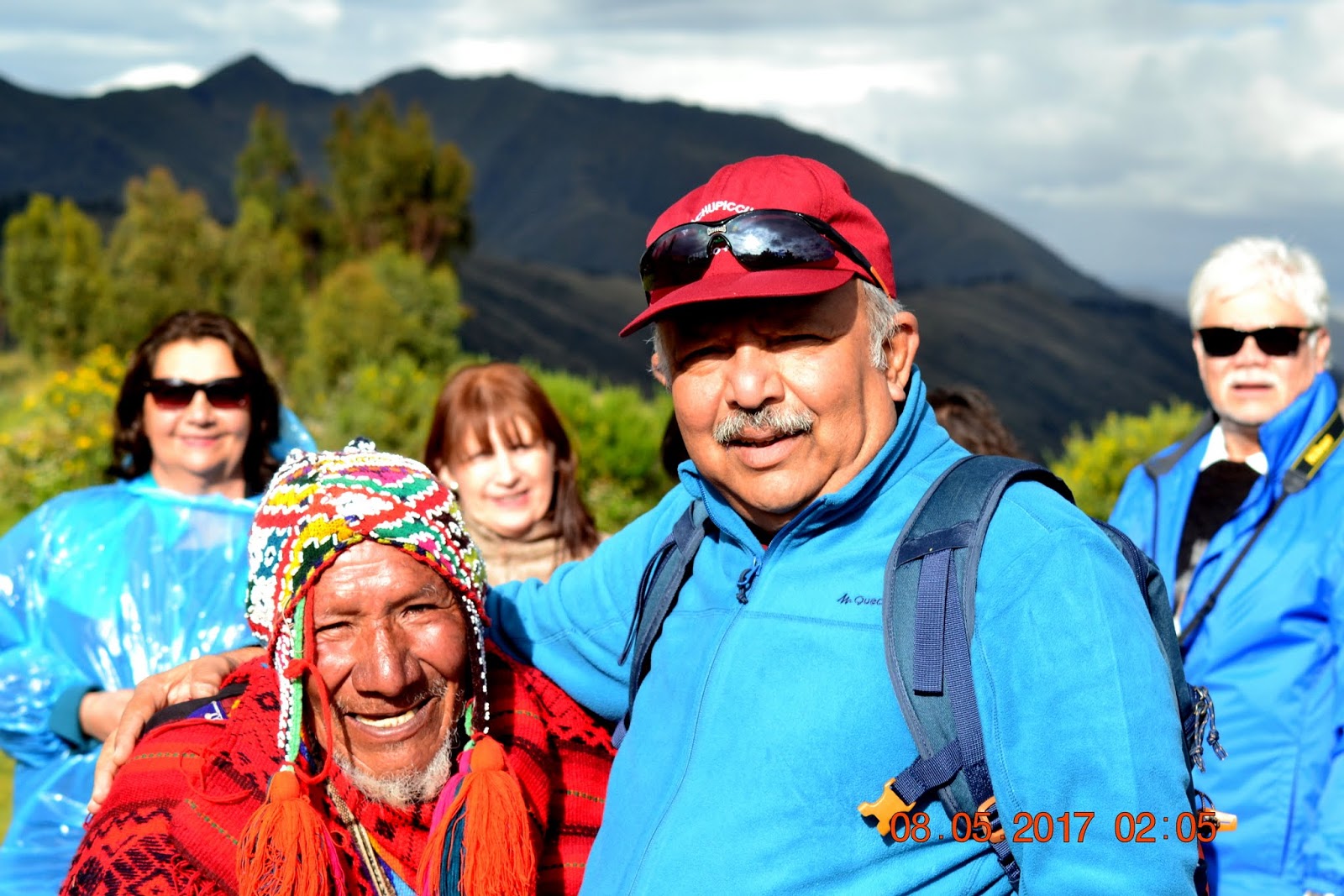
Participating in Inca ceremony for health and happiness in a village on the outskirts of Cusco
The Inca priest
Sushama being blessed
Jai with priest
Sushama very happy after being blessed
Rita is all thrilled
Finally my turn to pose
|

 Captain's Corner
Enjoyed the post. Educative
LikeLike